Tag: Project Updates

  • Jumper Launches JUMP Token Sale on Legion, Spins Out Super-App for Onchain Finance

    Jumper Launches JUMP Token Sale on Legion, Spins Out Super-App for Onchain Finance

    Jumper Unveils Independence and Token Sale as it Aims to Become Onchain Finance Super-App

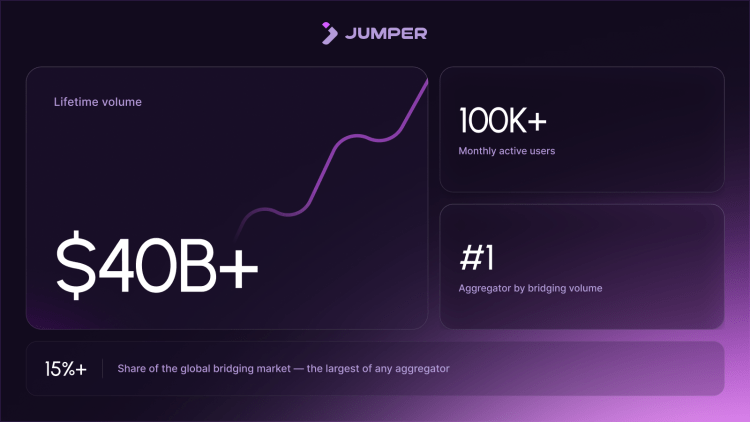
    British Virgin Islands – September 28, 2026 – Jumper, a leading consumer application for onchain asset movement and trading, today announced its transition to an independent company and plans for its inaugural JUMP token sale via Legion. The move marks a significant growth phase for the platform, which has already facilitated over $40 billion in lifetime volume and boasts more than 100,000 monthly active users, establishing itself as the top aggregator by bridging volume.

    Expanding Ambitions Beyond Bridging

    Initially gaining traction through cross-chain trading, Jumper is now broadening its scope with the ambition to become the definitive super-app for onchain finance. This envisioned platform will serve as a single destination for users to execute a wide range of financial activities, including swapping assets, bridging between blockchains, trading perpetual futures, accessing tokenized stocks and other real-world assets, and exploring yield opportunities. Ultimately, Jumper aims to provide access to any asset available on the blockchain.

    “Bridging was the starting point for Jumper, and we’ve grown into the #1 aggregator by bridging volume with more than 15% market share,” stated Marko Jurina, CEO of Jumper. “As more financial assets move onchain, the opportunity gets much bigger than bridging. We want Jumper to become the application users open whenever they want to trade, invest, or move value onchain.”

    New Products and Strategic Spin-off

    Jumper has already expanded its offerings to include advanced trading and real-world assets. Its upcoming major launch, Jumper Perps, is set to aggregate perpetual futures venues into a unified trading experience and is expected to go live in the coming weeks. Each new product is designed to generate fresh volume and revenue for Jumper while enhancing the value proposition for its existing user base by consolidating onchain activities within a single application.

    Originally incubated within LI.FI, Jumper is now being established as a standalone venture with its own dedicated capital, leadership, and strategic roadmap. The two entities will focus on different aspects of onchain finance growth: LI.FI will concentrate on orchestration infrastructure, while Jumper will serve as the consumer-facing application.

    JUMP Token Sale and Token-First Ownership Model

    The upcoming Legion sale will represent Jumper’s first capital raise. The proceeds are earmarked for accelerating product development, user acquisition, and expanding distribution across Jumper’s evolving product suite. The JUMP token is slated for a separate launch following the fundraising process.

    This fundraising structure underscores Jumper’s commitment to a token-first ownership model, aligning stakeholders through a single asset. “Jumper is not conducting a separate equity financing round alongside JUMP token, reflecting a deliberate decision to align the key stakeholders,” Jurina explained. “Users, contributors and investors will hold the same asset. We believe the token should be the only way to have ownership and exposure to the value being created by Jumper. There shouldn’t be one group holding equity and another group holding a token.”

    Jurina further elaborated on the company’s philosophy: “Getting here has meant pushing against a lot of incumbent processes and thinking that still treat the token as something separate from the underlying business. We think that model needs to change. If crypto is serious about creating new forms of ownership, the people who use, support, and build these businesses should be able to participate directly in the value they help create. We want Jumper to be at the forefront of that shift. We believe token-first ownership should become an industry standard, and we want to help lead that change.”

    About Jumper

    Jumper is positioned as the super-app for onchain finance, consolidating a comprehensive range of onchain products and assets under a single interface. Users can seamlessly swap, bridge, access yield opportunities, trade perpetual futures, and discover diverse assets, from major cryptocurrencies and memecoins to tokenized stocks and other real-world assets. Jumper simplifies the complexities of various blockchains, protocols, and liquidity venues, offering a more streamlined, asset-centric trading experience. Currently, Jumper stands as the #1 aggregator by bridging volume, with over $40 billion in lifetime volume and more than 100,000 monthly active users.
  • Binance Wallet Now Accepts USDT for Gas Fees Across Four Major Blockchains

    Binance Wallet Now Accepts USDT for Gas Fees Across Four Major Blockchains

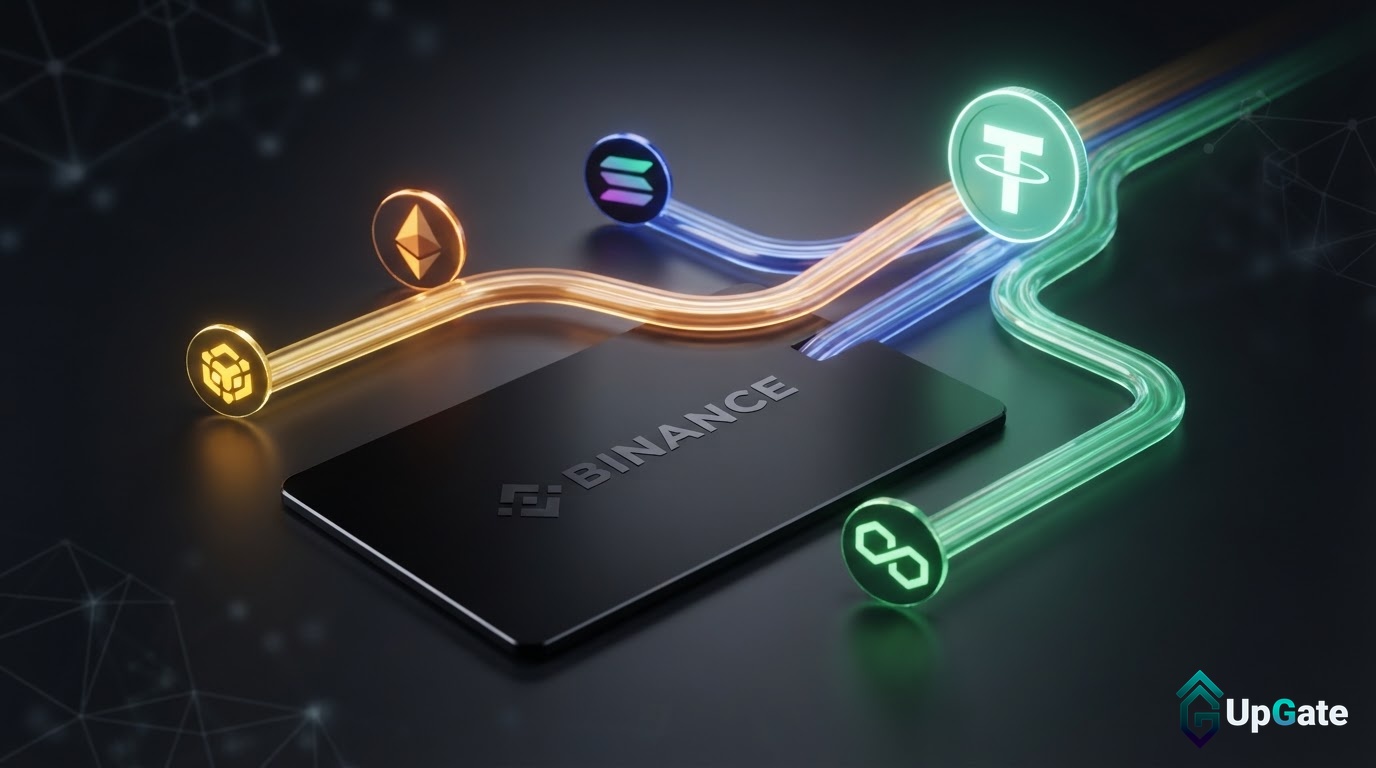
    Binance Wallet has introduced a new feature allowing users to pay network gas fees with USDT across four major blockchain networks: BNB Smart Chain, Ethereum, Solana, and TRON. This update aims to simplify cryptocurrency transactions by eliminating the need for users to hold the native tokens of these blockchains for gas payments.

    According to Binance’s FAQ, this functionality enables users to conduct transactions, including those involving tokens other than USDT, without needing to pre-acquire native cryptocurrencies like BNB, ETH, SOL, or TRX to cover gas costs. The equivalent cost of the gas fee is deducted directly from the user’s USDT balance.

    TRON Network Promotion Offers Zero Gas Fees

    For transactions on the TRON network, Binance is offering a limited-time promotion. From September 23, 2026, to December 22, 2026, qualifying TRON transfers will incur zero gas fees. This promotion is backed by TRON DAO. Following the promotional period, a standard fee of 1 USDT per transaction will be applied to TRON transfers.

    User Benefits and Ecosystem Integration

    This new functionality is integrated within the Binance ecosystem, providing a direct pathway for users who already hold USDT on the platform. It eliminates the need for additional steps such as bridging funds, setting up new wallets, or learning unfamiliar interfaces. The introduction of a predictable 1 USDT flat fee for TRON transactions after the promotion also positions Binance Wallet to compete with centralized exchange withdrawal fees, offering a clear benchmark for comparison.

    Unspecified Details

    While the feature offers significant convenience, certain details remain unspecified. The exact criteria for ‘qualifying TRON transfers’ eligible for the zero gas fee promotion are not detailed. Additionally, the specific technical mechanisms by which Binance Wallet handles the underlying gas payments are not publicly disclosed.

    The update to Binance’s FAQ detailing this feature was made on September 25, 2026.

    Why This Matters

    The materials describe a narrow update: Binance Wallet has introduced a feature enabling users to pay gas fees with USDT instead of the native tokens of the respective blockchains. The exact definition of ‘qualifying TRON transfers’ for the zero gas fee promotion is not specified.

    Broader Context

    Source materials place the factual news in this context: One of crypto’s most persistent annoyances has a new workaround.

  • OpenZeppelin Security Development Suite Now Available for TRON Network Developers

    OpenZeppelin Security Development Suite Now Available for TRON Network Developers

    OpenZeppelin, a recognized leader in smart contract security and development, has integrated its comprehensive suite of tools and audited libraries with the TRON network. This integration aims to equip developers building on TRON with enhanced security features and a more streamlined development process, according to the organizations involved.

    Why This Matters

    The materials describe a narrow update: OpenZeppelin’s security-focused development framework, including audited smart contract libraries and upgrade tools, is now available for developers building on the TRON network. The integration aims to enhance the security and development experience for applications built on the TRON network by leveraging OpenZeppelin’s established security standards and tools.

    Broader Context

    Source materials place the announcement in this context: OpenZeppelin is the security standard for onchain finance and secure smart contract development.

    Enhanced Security and Development Tools for TRON

    The integration makes OpenZeppelin’s security-focused development framework, including its audited smart contract libraries and upgrade tools, accessible to the TRON developer community. According to OpenZeppelin, this initiative is designed to offer developers trusted building blocks for creating tokens, managing access control, facilitating governance, and developing evolving applications. The framework incorporates built-in security checks and AI-assisted development support.

    “Developers need primitives they can trust on the network they are deploying to,” stated an OpenZeppelin representative. “Bringing our contracts and tooling to TRON lets teams keep the assurances they know from other ecosystems, while accounting for the network-specific requirements that matter in production. The goal is a robust path from first line to production.”

    This integration is expected to lower development friction for builders on the TRON network, providing them with stronger foundations for applications designed to operate at scale. OpenZeppelin’s offering for TRON includes its Contracts Wizard, enabling developers to generate secure, audited smart contracts tailored for the TRON environment.

    TRON Network’s Growing Ecosystem

    The TRON network, founded in September 2017 with its MainNet launching in May 2018, has experienced significant growth. As of September 2026, the network hosts the largest circulating supply of USD Tether (USDT) stablecoin, exceeding $94 billion. TRONSCAN data indicates that as of the same date, the TRON blockchain has recorded over 405 million total user accounts, more than 15 billion total transactions, and over $29 billion in total value locked (TVL).

    According to TRON DAO, the community-governed organization dedicated to accelerating internet decentralization, TRON continues to support a growing range of applications across stablecoins, decentralized finance, payments, and other on-chain use cases. The integration of OpenZeppelin’s tools is seen as a step to further bolster the network’s capabilities and developer ecosystem.

    OpenZeppelin, founded in 2015, has been involved in numerous security engagements, surfacing over 10,000 vulnerabilities before they reached production. The company’s security-focused development framework is widely recognized across the blockchain industry.

    This integration is anticipated to increase developer confidence and potentially enhance application scalability on the TRON network by providing access to OpenZeppelin’s established security standards and tools, adapted for TRON’s specific network capabilities. The move supports TRON’s broader objective of “Moving Trillions, Empowering Billions.”

  • 0G Expands Wrapped Token (W0G) to Ethereum, Solana, Base, and Robinhood Chain for Enhanced Cross-Chain Utility

    0G Expands Wrapped Token (W0G) to Ethereum, Solana, Base, and Robinhood Chain for Enhanced Cross-Chain Utility

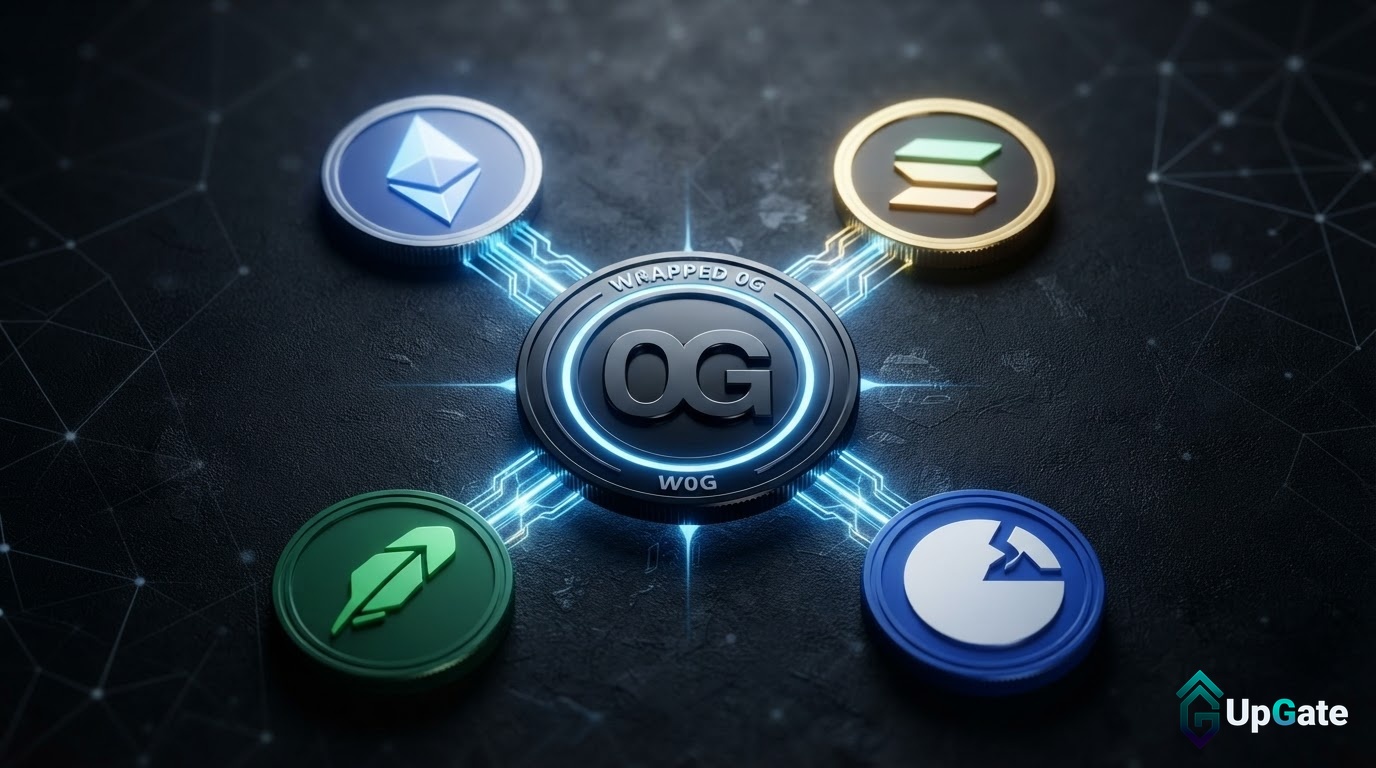
    0G has expanded the availability of its wrapped token, W0G, across Ethereum, Solana, Base, and Robinhood Chain. This strategic multi-chain deployment aims to significantly enhance the accessibility and utility of 0G’s native token, enabling users to trade, bridge, and stake it across these diverse blockchain networks.

    The expansion allows users to interact with the 0G token without being tethered to a single chain, a move that broadens its reach within the broader cryptocurrency ecosystem. Cross-chain operations are facilitated by Chainlink’s Cross-Chain Interoperability Protocol (CCIP), a technology designed to enable secure communication and asset transfers between different blockchains.

    0G operates as a modular Layer-1 blockchain specifically developed for AI workloads. Its technology stack encompasses data availability, storage, compute, and settlement, all running on an EVM-compatible chain known as 0G Chain. The network reports performance metrics of approximately 11,000 transactions per second per shard with sub-second finality.

    Strategic Ecosystem Integration

    The inclusion of Ethereum and Solana is a strategic move to leverage their established user bases and liquidity. Ethereum remains a dominant force in the DeFi ecosystem, while Solana has gained traction for its retail trading activity. The addition of Base further broadens reach through its integration with a major exchange and growing user base.

    The expansion to Robinhood Chain is noted as a particularly interesting aspect, given Robinhood Chain’s positioning as a hub for tokenized real-world assets. While specific fee data for Robinhood Chain is not detailed, it has previously shown periods exceeding $1 million in fees alongside substantial decentralized exchange volume.

    This multi-chain expansion aligns with 0G’s broader mission to provide infrastructure for decentralized AI. The wrapped token functionality is intended to support this by offering greater flexibility for users and developers interacting with the 0G ecosystem.

    Related Developments

    In related developments, 0G’s mainnet, Aristotle, launched on September 21, 2025. The project also announced ComFi, a finance layer for AI computation, on September 21, 2026. Additionally, 0G unveiled Ascend, a liquid staking product designed to allow 0G holders to earn staking rewards while maintaining liquidity.

    The exact date of the wrapped token expansion and specific contract addresses for each deployment were not provided. However, the expansion signifies 0G’s effort to integrate its AI-focused blockchain infrastructure into various DeFi ecosystems, potentially increasing adoption and interoperability.

    Why This Matters

    The materials describe a narrow update: 0G, a modular Layer-1 blockchain for AI workloads, has launched its wrapped token, W0G, on Ethereum, Solana, Base, and Robinhood Chain. The exact date of the wrapped token expansion is not specified.

    Broader Context

    Source materials place the factual news in this context: 0G is a modular Layer-1 blockchain built for AI workloads.

  • ZetaChain Votes to Migrate to Solana, Embraces AI Future

    ZetaChain Votes to Migrate to Solana, Embraces AI Future

    ZetaChain Holders Vote to Shut Down Native Layer 1, Migrate ZETA Token to Solana

    ZetaChain token holders have overwhelmingly approved Proposal 68, a decision that will see the project sunset its self-built Layer 1 blockchain and migrate the ZETA token to Solana. This move marks a significant strategic pivot for the cross-chain interoperability project, which raised $27 million three years ago, now fully redirecting its focus to its AI application, Anuma.

    Strategic Shift to AI Application

    ZetaChain token holders voted on Sunday to close down the project’s native Layer 1 public blockchain and migrate the ZETA token to Solana. This decision comes from a project that, three years ago, raised $27 million with the mission of achieving “omnichain interoperability,” but will now cease maintaining its own underlying blockchain.

    Governance Proposal 68 concluded on Sunday at 10:58 AM ET with 99.4% in favor, 0.3% against, and 0.3% abstaining. The participation rate stood at 58%, exceeding the required 40% quorum.

    Rationale Behind the Decision

    ZetaChain was built on the Cosmos SDK, a framework that necessitates project teams coordinating with dozens of independent validators for every upstream security announcement and patch. The team stated in the proposal that AI tools are making vulnerabilities easier to identify, citing a patch on August 25th of this year as an example, and anticipating more such instances in the future.

    Last month, Cosmos Labs disclosed an attack on six Cosmos EVM chains. While ZetaChain was not directly affected, the attackers successfully stole and cashed out approximately $5.7 million. The vulnerability had been reported by researchers months prior, but testers had mistakenly assessed it as unexploitable on a live network.

    For ZetaChain, the burden of maintaining a Cosmos SDK chain has become less advantageous than concentrating all resources on the application layer.

    Anuma: The New Focus

    The ZetaChain team launched its AI application, Anuma, in February of this year. The application claims to have over 300,000 users and has processed more than 1 million requests across 35 AI models. Anuma’s core differentiator lies in its cryptographic memory system, where user memories are self-owned and can flow across models, applications, and agents.

    ZETA token holders can lock their tokens in exchange for AI service credits. The team stated in their announcement that the Solana AI toolchain currently lacks an “application layer” – a product that people use daily, where memories are self-owned and can move between different models.

    Migration Details and Timeline

    The current proposal does not set a date for the chain closure. The ZetaChain mainnet will continue to operate until a second round of governance proposals establishes the following details: the snapshot block height for balances, the chain closure block height, the token swap process, and guidelines for cross-chain asset withdrawals.

    The ZETA token will become a native SPL token on Solana at a 1:1 ratio, with no changes to its ticker or total supply. Existing token release schedules will also remain unaffected. However, this plan does not cover ZETA deployed on Ethereum and BNB Chain.

    The team emphasized that the second round of proposals will not be put to a vote until exchanges confirm the token swap mechanism, and no clear timeline has been provided. Current ZETA staking operations will continue normally, but the team is still evaluating how staking rewards will be handled on Solana.

    Project Evolution and Market Reaction

    ZetaChain completed a $27 million funding round in August 2023, with investors including Blockchain.com and Jane Street Capital. At the time, the vision was clear: developers could utilize assets from Bitcoin and Ethereum within the same application without bridges or wrapping. Cross-chain smart contracts became a reality after the mainnet launched in January 2024.

    However, over the past three years, the project team has shifted its focus from “interoperability infrastructure” to “AI applications.” ZETA has seen a roughly 2.5% decrease in the past 24 hours, with the market reacting calmly to this change in direction.

    ZetaChain’s decision reflects a broader trend observed in 2026: many projects are realizing that building their own L1 is not the only path forward, especially in AI application scenarios. Developers are seeking user traffic and mature ecosystem toolchains rather than maintaining a chain’s validator set and upgrade schedules.

    Solana has been actively building its AI toolchain in recent years, attracting a large number of AI-native applications. By bringing ZETA into this ecosystem, ZetaChain is essentially betting the remaining token value and user base on the growth of Solana’s AI narrative. The risk lies in the possibility that if Anuma fails to establish a strong foothold in the competitive AI application layer, the project could lose both its underlying infrastructure and its application-level traction.

    Another point of focus will be the details of the second round of proposals. The smooth migration of 300,000 Anuma users and ZETA token holders’ assets after the chain closure will directly determine whether this transition is perceived as a “strategic refocusing” or a “desperate measure.”

  • Injective Meridian Mainnet Upgrade Approved by Stakers, Introduces Regulated Token Standards

    Injective Meridian Mainnet Upgrade Approved by Stakers, Introduces Regulated Token Standards

    Injective’s Meridian Mainnet Upgrade proposal has received approval from approximately 99% of INJ stakers, paving the way for the introduction of regulated token standards on its EVM layer. The upgrade, scheduled to go live on September 24, 2026, at block height 184,394,000, aims to facilitate the compliant issuance of real-world assets (RWAs) and enhance institutional adoption.

    The Meridian Mainnet Upgrade (IIP-701) introduces features designed to allow token issuers to integrate regulatory requirements directly into their assets on the Injective EVM. This move is intended to position Injective as a platform where institutions can balance blockchain efficiency with regulatory compliance. The upgrade also unifies MultiVM markets, enabling seamless trading and settlement for tokenized assets across different virtual machine environments. Furthermore, Meridian initiates early testing of private Request-for-Quote (RFQ) transaction flows, which are considered foundational elements for Injective’s planned privacy platform, CypherOS.

    Beyond these features, the upgrade incorporates improvements to market execution mechanics, risk controls, and oracle reliability. This development follows Injective Institutional Services receiving SEC transfer agent registration, effective August 19, 2026. The Injective Mint tool was launched in July 2026, providing the necessary tooling for token creation, followed by the SEC registration in August. The Meridian upgrade delivers the on-chain compliance infrastructure to connect these elements.

    This strategic sequencing of developments highlights Injective’s focus on building a compliant ecosystem for institutional activity. By making compliance a protocol-level feature rather than an application-level add-on, regulatory requirements are automatically inherited by all applications built on Injective. This approach aims to simplify the process for issuers, eliminating the need for custom compliance solutions for each deployment.

    The high staker support for the Meridian upgrade is not unprecedented for Injective, as the prior Vulcan upgrade also received over 99% staker support. The voting window for the Meridian upgrade closed on September 22, 2026, with the deployment set for two days later, indicating a rapid turnaround.

    The Meridian upgrade positions INJ as a potential settlement asset for institutional RWA trading activity. As tokenized securities are issued, traded, and settled on Injective, the demand for the native token to cover transaction fees and participate in governance is expected to increase. The upgrade is scheduled to go live on September 24, 2026.

    Why This Matters

    The materials describe a narrow update: The Meridian Mainnet Upgrade (IIP-701) was approved by approximately 99% of INJ stakers. The Meridian upgrade is Injective’s biggest institutional play yet.

    Broader Context

    Source materials place the factual news in this context: Injective’s governance process delivered a near-unanimous result.

  • Chainlink Expands Core Services to Arc and MOVA Chain, Enhancing Interoperability and Institutional Infrastructure

    Chainlink Expands Core Services to Arc and MOVA Chain, Enhancing Interoperability and Institutional Infrastructure

    Chainlink has expanded its core services, including Data Feeds, Data Streams, and the Cross-Chain Interoperability Protocol (CCIP), to two new blockchain networks: Arc, Circle’s institutional layer-1 blockchain, and MOVA Chain, a network focused on decentralized finance (DeFi).

    This expansion marks a significant step in providing institutional-grade infrastructure and enhancing cross-chain communication. Arc’s mainnet launched on September 16, 2026, with Chainlink’s services integrated prior to its activation. Chainlink’s Data Feeds went live on September 9, followed by Data Streams on September 15, offering crucial oracle coverage and low-latency market data. CCIP, Chainlink’s cross-chain messaging protocol, was activated on Arc’s mainnet on September 16, aligning with the network’s launch.

    Arc is designed as a permissioned layer-1 blockchain for institutional use, featuring a validator network that includes major financial entities such as BlackRock, Visa, Mastercard, DTCC, and ICE. A notable feature of Arc is that gas fees are paid in USDC, simplifying operations for participants by removing the need to manage volatile native assets.

    On MOVA Chain, Chainlink’s CCIP went live in July 2026. This integration is set to bolster MOVA Chain’s capabilities in stablecoins and DeFi applications by providing secure cross-chain messaging. By adopting CCIP, MOVA Chain gains immediate connectivity to a broader ecosystem spanning over 50 chains, bypassing the need for custom bridging solutions.

    Chainlink’s strategic expansion to these networks is part of a broader initiative to bolster blockchain interoperability and facilitate institutional adoption. Earlier in 2026, Chainlink expanded CCIP to MegaETH and World Chain, with the Chainlink Runtime Environment (CRE) going live on World Chain in February. Chainlink had previously tested its services on Arc’s testnet before the mainnet launch, allowing developers to build and test applications in a pre-production environment.

    The integration on Arc, with its institutional backing and the use of USDC for gas fees, underscores a trend towards enterprise-grade blockchain solutions. For MOVA Chain, the adoption of CCIP strengthens its position within the DeFi landscape by enabling seamless cross-chain communication. The growing number of chains supported by CCIP, now exceeding 50, enhances the overall utility and network effect of Chainlink’s interoperability protocol, benefiting all connected projects.

    Why This Matters

    The materials describe a narrow update: Chainlink has integrated its core services, including Data Feeds, Data Streams, and the Cross-Chain Interoperability Protocol (CCIP), onto Arc, Circle’s institutional layer-1 blockchain, and MOVA Chain, a DeFi-focused network. Chainlink’s expansion to Arc and MOVA Chain accelerates institutional blockchain adoption by providing core infrastructure and cross-chain interoperability.

    Broader Context

    Source materials place the factual news in this context: Chainlink has extended its core services to two new networks: Arc, Circle’s institutional layer-1 blockchain, and MOVA Chain, a DeFi-focused network that adopted Chainlink’s Cross-Chain Interoperability Protocol in July 2026.

  • Zcash NU7 Upgrade Confirmed for November Launch, Boosting Block Speed 3x

    Zcash NU7 Upgrade Confirmed for November Launch, Boosting Block Speed 3x

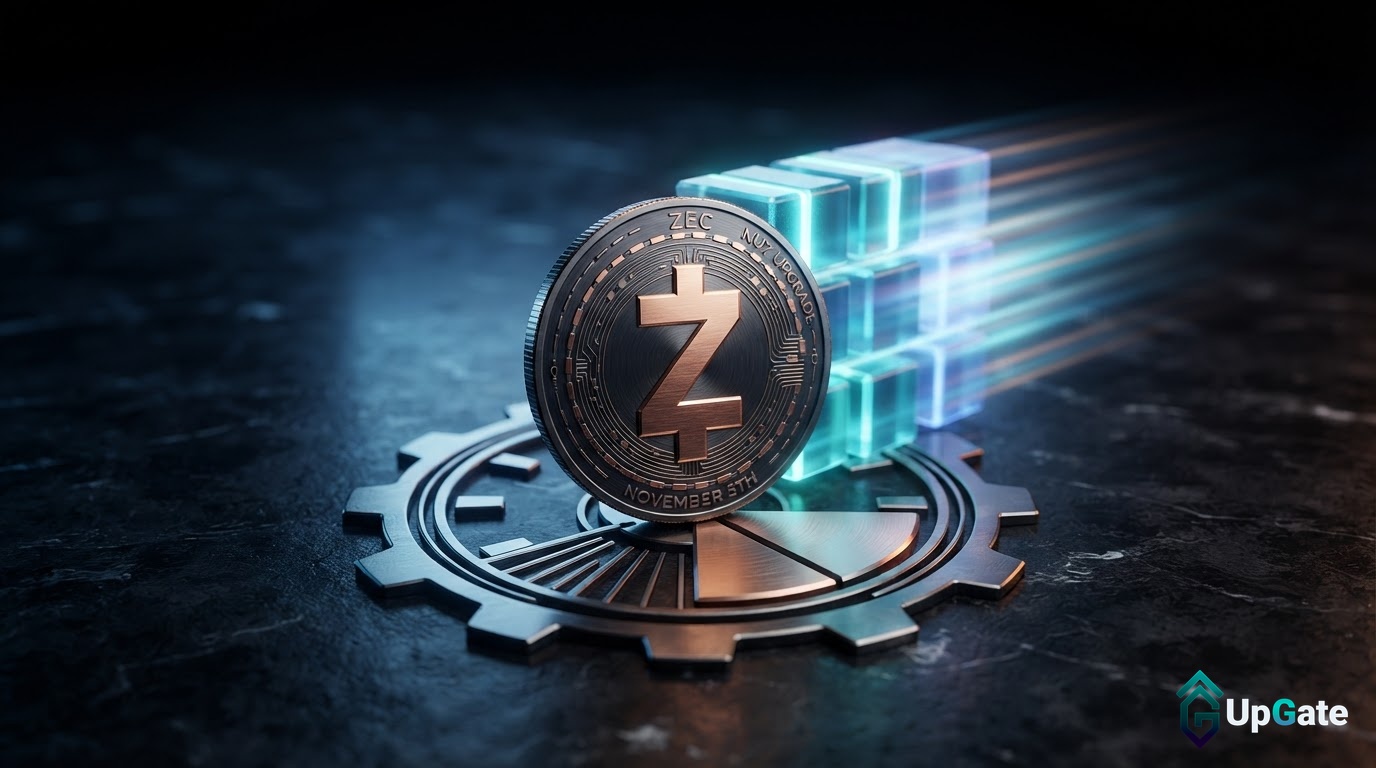
    Zcash Confirms NU7 Upgrade for November 5th Mainnet Launch, Halving Mechanism Intact

    The Zcash development team has finalized the schedule for the NU7 upgrade, targeting November 5th for its mainnet launch. The upgrade will significantly reduce block times from 75 seconds to 25 seconds, effectively tripling block production speed, while retaining the cryptocurrency’s halving mechanism. This news has spurred a notable surge in ZEC’s price, with the token climbing 20% in a single day and outperforming the broader privacy coin sector.

    NU7 Upgrade Details and Timeline

    The NU7 upgrade is slated to go live on the Zcash mainnet on November 5th. Developers have reached a consensus on the timeline, with the testnet scheduled to launch earlier on October 6th. A final decision on the mainnet launch block height will be made on October 20th, contingent on the testnet’s performance.

    A core change in NU7 is the compression of Zcash’s block interval from 75 seconds to 25 seconds. Alongside this speed enhancement, the upgrade will also disable the version 4 transaction format and integrate the “Network Sustainability Mechanism” (NSM).

    Network Sustainability Mechanism and Halving

    The configuration of the NSM has been the most contentious and critical aspect of NU7. A recent vote among ZEC holders overwhelmingly supported retaining the halving mechanism, with 98.9% in favor. Additionally, 99.9% of weighted votes approved the faster block production proposal. The adopted NSM version preserves Zcash’s existing halving schedule, with the previously removed miner subsidy set to be reintroduced starting February 2031.

    This design effectively defers short-term inflationary pressure over a five-year period, signaling a clear control on dilution for ZEC holders. The retention of the halving mechanism means the reward for miners will continue to be cut in half approximately every four years, aligning Zcash with Bitcoin’s scarcity narrative.

    Impact on Ecosystem and ZEC Price Action

    Sean Bowe, a developer, emphasized that NU7 will not introduce new transaction formats, minimizing potential disruption for wallet users. However, full nodes, indexers, and block explorers will require adjustments to accommodate the new 25-second block cadence. These ecosystem development teams are expected to manage these changes within the two-month window between October and November.

    Following the confirmation of the upgrade timeline, ZEC’s price experienced a significant uplift. The cryptocurrency saw a roughly 20% increase in the 24 hours leading up to Thursday, with the privacy token sector generally outperforming the market. Data from Glassnode indicates that the privacy coin sector is currently at 213% of its October 2025 peak, while a basket of privacy coins excluding ZEC has seen an approximate 85% gain over the past year. ZEC’s recent performance demonstrates a clear strength relative to its peers.

    The threefold increase in block production speed through NU7 directly enhances Zcash’s transaction throughput capacity, offering substantial benefits for privacy-focused payment use cases. However, the faster 25-second block times also introduce pressure on node synchronization and confirmation times, making the performance of the October testnet a key point of observation. Another factor to monitor will be whether Zcash’s recent price surge is intrinsically linked to the NU7 narrative. If the upgrade does not translate into corresponding ecosystem adoption, the short-term gains may revert to fundamental market drivers.

  • Zcash NU7 Upgrade Set for November 5th: Faster Blocks, Preserved Halving Schedule

    Zcash NU7 Upgrade Set for November 5th: Faster Blocks, Preserved Halving Schedule

    Zcash is gearing up for its NU7 mainnet upgrade, scheduled for November 5th, which aims to significantly reduce block processing times to 25 seconds while integrating a mechanism to preserve its future halving schedule. The upgrade follows a planned testnet launch on October 6th.

    The NU7 upgrade will decrease Zcash’s target block spacing from the current 75 seconds to 25 seconds. This adjustment includes the disabling of version 4 transactions and the implementation of the Network Sustainability Mechanism (NSM). According to Zcash developer Sean Bowe, the NSM is configured to maintain Zcash’s halving schedule, with a provision for reintroducing previously removed supply beginning in February 2031.

    Community support for the upgrade is robust, as evidenced by recent voting results. ZEC holders overwhelmingly backed the proposed changes, with approximately 98.9% supporting the preservation of the halving schedule and 99.9% of the Zcash (ZEC)-weighted vote in favor of the faster-block proposal. A definitive decision on the mainnet upgrade and its activation height is slated for October 20th, pending an evaluation of NU7’s performance on the testnet.

    Sean Bowe noted that NU7 is not expected to introduce new transaction formats and should have minimal impact on user wallets. However, he cautioned that full nodes, indexers, and block explorers may require adjustments to accommodate the upcoming changes. The precise activation height for the mainnet upgrade remains contingent on the testnet performance assessment.

    This upgrade arrives amid a notable increase in ZEC’s market activity. On Thursday, ZEC experienced a price rise of approximately 20% within a 24-hour period. This trend is part of a broader outperformance in the privacy coins sector, which, according to Glassnode data, was 213% above its level at Bitcoin’s October 2025 peak. A basket of privacy coins excluding ZEC has seen an 85% increase over the past year.

    The NU7 upgrade signifies a substantial technical and economic evolution for Zcash. Its successful implementation will depend on a smooth deployment and the long-term efficacy of the NSM in managing the network’s economic model, all underpinned by strong community backing.

    Why This Matters

    The materials describe a narrow update: Zcash developers are targeting November 5th for the NU7 mainnet upgrade, which will reduce block times from 75 seconds to 25 seconds, disable version 4 transactions, integrate the Network Sustainability Mechanism (NSM) to preserve the halving schedule, and reintroduce removed supply starting February 2031. Full nodes, indexers, and block explorers may require adjustments due to NU7.

    Broader Context

    Source materials place the factual news in this context: NU7 will cut Zcash block times to 25 seconds and preserve its halving schedule, with testnet activation planned for Oct. 6.

  • Circle Launches $649M USDC and $7M EURC on Arc

    Circle Launches $649M USDC and $7M EURC on Arc

    Circle Shifts Strategy, Launches Own Blockchain to Control Stablecoin Infrastructure

    Circle, the company renowned for issuing the widely used USDC stablecoin, has taken a significant strategic turn by launching its own Layer 1 blockchain, Arc. The public mainnet for Arc went live on September 16, 2026, marking a departure from Circle’s previous approach of supporting multiple existing blockchains. This move, described by CEO Jeremy Allaire as potentially the most pivotal launch in the company’s history, sees Circle not only issuing stablecoins but also building the underlying infrastructure for their transactions.

    Arc’s Core Innovation: USDC as Native Gas Token

    A key feature of Arc is its innovative use of USDC as the native gas token. Transaction fees on the network are designed to be approximately $0.01, with all payments denominated exclusively in USDC. This integration aims to streamline operations and enhance the utility of its flagship stablecoin.

    Deterministic Finality and Broad Stablecoin Support

    Arc distinguishes itself with sub-second deterministic finality, a characteristic that ensures transactions are settled almost instantaneously and without any ambiguity. This contrasts with the probabilistic finality common in many traditional blockchains, where transactions gain confirmation over time. Arc eliminates this uncertainty.

    Furthermore, the blockchain launched with support for over 22 fiat-linked stablecoins, extending beyond just USDC and EURC. Arc also incorporates Circle’s StableFX product, facilitating atomic foreign exchange settlements between various stablecoin pairs.

    Strong Institutional Backing and DeFi Integration

    Circle announced its founding validator cohort on August 5, 2026, which notably includes major financial players such as BlackRock, Visa, and Mastercard. The network commenced operations with more than 100 institutional participants, encompassing banks, asset managers, and decentralized finance (DeFi) protocols.

    The DeFi ecosystem is already showing early adoption, with protocols like Aave and Morpho actively building on Arc, providing the chain with immediate functional utility from its inception.

    Tokenomics and Strategic Deployments

    Circle initiated Arc with a genesis mint of 10 billion ARC tokens. A presale conducted prior to the launch successfully raised approximately $222 million, valuing the network at $3 billion on a fully diluted basis. This presale price suggests early investors acquired ARC tokens at roughly $0.022 each.

    The deployment of $649 million in USDC on Arc represents a substantial initial liquidity injection. As the issuer, Circle benefits from vertical integration, allowing it to mint and deploy funds directly.

    The $7 million EURC deployment, while smaller, carries significant symbolic weight. EURC, Circle’s euro-denominated stablecoin, has experienced slower growth compared to USDC. Its native integration into Arc, coupled with the StableFX settlement system, is expected to stimulate greater activity within euro-denominated DeFi markets.