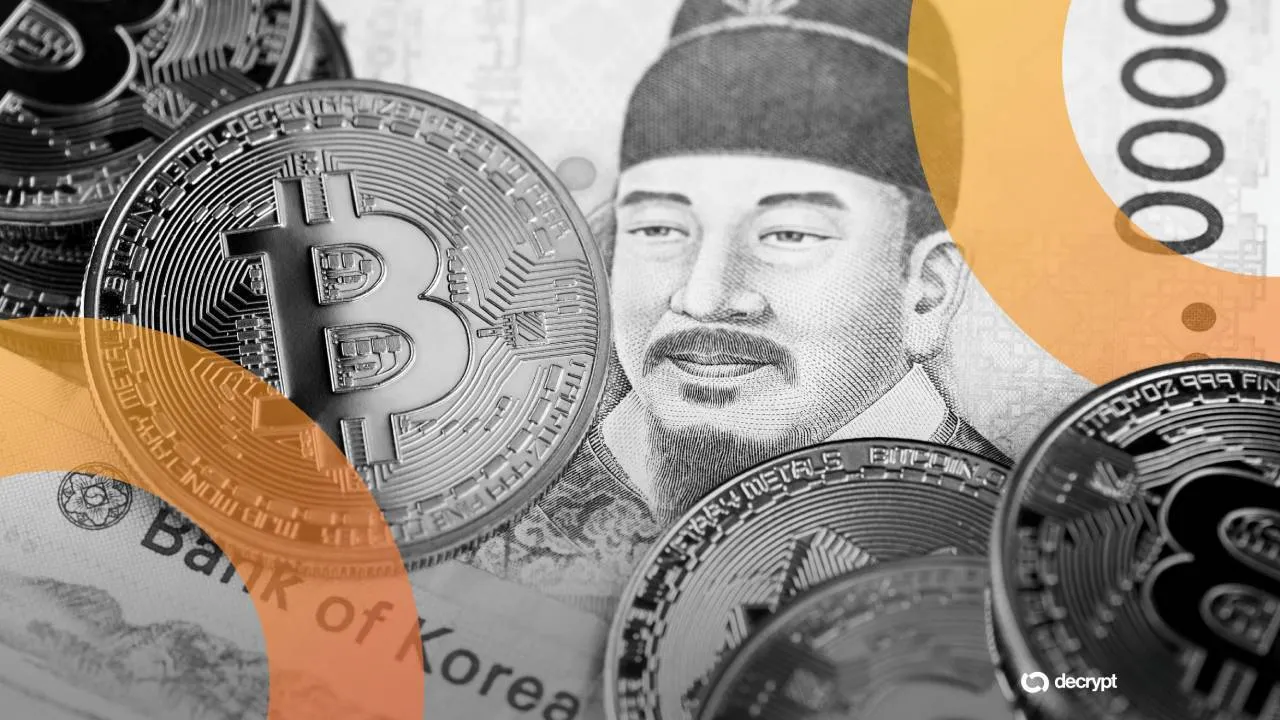
The Bank of Korea is advancing its central bank digital currency (CBDC) initiative, Project Hangang, into its second phase. This expansion will involve up to 500,000 users and test the use of real government money, introducing new functionalities aimed at improving user experience and exploring potential efficiencies in fund disbursement. However, the pilot’s progression also intensifies discussions around financial surveillance and the extent of government control over digital transactions.
Phase 1 of Project Hangang, which ran from April to June 2025, involved 81,000 users and 12,000 merchants across seven participating banks. Despite generating 114,880 transactions, only 42% of users actively spent any funds, highlighting an engagement challenge. According to a review by the HRF CBDC tracker, the first phase reportedly cost banks approximately 30 to 35 billion won for infrastructure development.
To address the engagement issue, Phase 2, set to begin in September, will incorporate features designed to mimic traditional banking services. These include biometric fingerprint approvals for transactions, person-to-person (P2P) wallet transfers, automatic top-ups from linked bank accounts, recurring auto-payments, cash receipt generation, and interest payments. The pilot will also expand to include nine banks, with Gyeongnam Bank and iM Bank joining the original seven.
Programmability and Control
A significant aspect of Phase 2 is the testing of government subsidy disbursements using programmable tokens. This feature aims to streamline the distribution of public funds and potentially reduce fraud by embedding spending rules directly into the digital currency. According to the Bank of Korea, this implementation could give the central bank greater oversight on how government funds are utilized for specific purposes.
However, the programmability of these tokens has raised concerns among civil liberties organizations and researchers. While attractive for targeted subsidy distribution, critics worry that such features could be extended to impose broader restrictions on citizens’ spending, such as setting expiry dates on balances, limiting spending categories, or enabling wallet freezes without court orders. Unlike cash, every CBDC transaction is logged on a central ledger, which raises concerns about financial surveillance, a point also noted by researchers at Lawfare regarding China’s digital yuan.
Kim Dong-seop, head of the Bank of Korea’s Digital Currency Planning Team, described the project’s design as “a middle ground between a CBDC and a stablecoin.” This approach involves the Bank of Korea issuing a wholesale CBDC for interbank settlements, with commercial banks then creating deposit tokens for consumer and merchant use. For businesses, the pilot will assess whether these deposit token payments can offer lower interchange fees compared to traditional card networks.
Broader Context and International Comparisons
The expansion of Project Hangang occurs within a broader context of evolving digital currency policies. South Korea’s new Bank of Korea Governor, Shin Hyun-song, made the pilot a centerpiece of his policy address after taking office in April 2026. Meanwhile, Hana Bank is reportedly designing systems for a won-backed stablecoin, and the Ministry of Economy and Finance plans to update a 76-year-old national asset law to classify cryptocurrencies as national assets.
Internationally, regulatory approaches to digital currencies vary. In contrast to South Korea’s pilot, the United States recently enacted a four-year ban on CBDC issuance, with the 21st Century ROAD to Housing Act becoming law on July 11 without President Donald Trump’s signature. China’s digital yuan has already implemented features like expiry dates on stimulus payments, which Beijing frames as an anti-hoarding measure but critics view as financial coercion.
The Bank of Korea has stated that the second phase will run open-ended, without a fixed close date, laying the groundwork for potential commercialization. The pilot’s progression highlights the complex balance between technological innovation, potential economic benefits, and the critical considerations of user privacy and governmental control in the digital age.
Why This Matters
The materials describe a narrow update: The Bank of Korea is launching the second phase of its CBDC pilot, Project Hangang, which will involve up to 500,000 users and test the use of real government money. The exact start date for Phase 2 of Project Hangang (beyond ‘September’).