Tag: Regulation & Policy

  • Senate Democrats Voice Concerns Over Trump’s Crypto Ties Amid Legislative Deliberations

    Senate Democrats Voice Concerns Over Trump’s Crypto Ties Amid Legislative Deliberations

    Top Senate Democrats have voiced criticism regarding President Donald Trump’s increasing engagement with the cryptocurrency industry, citing potential conflicts of interest as Congress deliberates on digital asset legislation. These concerns stem from reported financial interests in crypto assets, which lawmakers believe warrant close examination.

    Five senior Senate Democrats have publicly expressed their reservations. According to Senate Democrats, these disclosures are particularly relevant as lawmakers are currently negotiating key pieces of crypto legislation. Separately, Rep. James Comer has warned that Democrats would pursue investigations into Trump if they regain control of the House.

    Market participants are observing these developments closely. Traders are watching whether policy headlines begin to outweigh macro drivers in influencing market sentiment. While daily crypto trading volume remains healthy, hovering around $80 billion, and Bitcoin dominance is holding above 58%, suggesting a preference for established assets, the political climate introduces a layer of uncertainty.

    Bitcoin has seen some price movement this week, climbing more than 6% and briefly trading around the $63,000 to $64,000 range before easing slightly. The cryptocurrency is currently trading between $62,000 and $63,000. Meanwhile, Ethereum has outperformed on the week, while Solana continues to trade sideways.

    Markets have largely priced in expectations for regulatory progress, with investors continuing to watch for stablecoin legislation and a clearer market structure framework, both viewed as long-term positives for the industry. However, the path forward for digital asset legislation is fraught with uncertainty. The final text of the broader market structure bill has yet to be released, and several policy issues remain unresolved. Disagreements over unrelated measures in the House have also slowed legislative momentum, making the legislative timetable uncertain.

    The bullish case for Bitcoin, according to market analysis, is straightforward: tangible progress on digital asset legislation could see Bitcoin challenge the $65,000 region. However, the base case suggests political wrangling could drag on without derailing the legislation, potentially leaving Bitcoin trading between roughly $61,000 and $65,000 for the next few weeks. The bearish scenario hinges on politics rather than charts; a loss of the support area around $61,000 to $62,000 could lead to a significant downturn. Traders positioned in large-cap assets at current levels are essentially buying a policy lottery ticket, with meaningful upside if the bill clears but limited near-term edge if it stalls.

    For traders seeking asymmetric setups, the early-stage presale market is also being explored. The presale for Maxi Doge ($MAXI) is currently priced at $0.0002828, with $4.8 million raised to date. This project is described as a meme token built on Ethereum, focusing on a meme-first marketing engine and dynamic APY staking.

    Why This Matters

    The materials describe a narrow update: Five senior Senate Democrats have publicly criticized President Trump’s increasing involvement with the crypto industry, expressing concerns about potential conflicts of interest due to his reported financial interests in crypto. The final text of the broader market structure bill has yet to be released.

    Broader Context

    Source materials place the factual news in this context: Bitcoin price remains constructive as it trades around $62,000 to $63,000, while Trump and crypto legislation continue to shape market expectations.


  • Japan’s Regulatory Path and Institutional Engagement Create Potential Market for XRP Amidst Ongoing Legislation

    Japan’s Regulatory Path and Institutional Engagement Create Potential Market for XRP Amidst Ongoing Legislation

    Japan is accelerating its modernization of digital asset regulations, a move that, coupled with significant institutional engagement, suggests the country could become a substantial growth market for XRP. Over the past several months, Japan has proposed legal reforms to classify many cryptocurrencies as financial instruments, a step that could pave the way for spot exchange-traded funds (ETFs). Concurrently, a more investor-friendly tax regime has been introduced.

    This evolving regulatory environment creates a distinct landscape for digital assets, particularly for XRP. In contrast to the prolonged legal battle in the United States where XRP’s classification as a security was contested by the SEC, Japanese regulators have consistently treated XRP as a crypto asset. This regulatory clarity has been instrumental in establishing one of XRP’s strongest international footholds, according to available information.

    Ripple and its partner SBI have been actively leveraging this environment. The launch of Ripple’s stablecoin, RLUSD, in Japan, following approval from the Japan Financial Services Agency (JFSA), marks a significant step. Furthermore, SBI is pursuing the creation of what could be the first Japan-based XRP ETF, having filed for the product. SBI Ripple Asia has also been working to expand cross-border payments across the region, with SBI VC Trade noted as one of Japan’s largest XRP-friendly exchanges.

    Potential for New Financial Products

    The proposed ETF products, which reportedly included Bitcoin (BTC) and XRP, highlight a conviction that Ripple’s token could become a core institutional asset in the country. Proper regulatory frameworks are seen as key to attracting additional investments from larger players and institutions. XRP has generally benefited from Japan’s proactive approach to crypto regulation.

    However, the path to launching new financial vehicles like spot crypto ETFs is not yet complete. The legislation still needs to go through the entire process before such products can be officially permitted. This ongoing legislative process introduces a degree of regulatory uncertainty regarding the exact timelines for these potential market developments.

    Despite these procedural steps, the overall direction of Japan’s legal reforms for digital assets is becoming clearer. This evolving framework, combined with the active participation of institutional players like SBI, could be significantly beneficial for XRP, positioning Japan as a key market for its future growth, though legislative processes for products like ETFs are still ongoing.

    Why This Matters

    The materials describe a narrow update: Japan is modernizing its digital asset framework, proposing to classify cryptocurrencies as financial instruments for spot ETFs and introducing a more investor-friendly tax regime. Legislation for spot ETFs still needs to complete the entire process before such financial vehicles are allowed to launch.

    Broader Context

    Source materials place the factual news in this context: Even in times when XRP and the company behind it were not in good shape in their home country, Japan has long stood out as a major ally.

  • Apple Sues OpenAI Over Alleged Trade Secret Theft

    Apple Sues OpenAI Over Alleged Trade Secret Theft

    Apple has filed a lawsuit against OpenAI and two former employees, alleging that the artificial intelligence company used stolen trade secrets in its consumer hardware development.

    Lawsuit Details

    The complaint, lodged on Friday in the U.S. District Court for the Northern District of California, names Chang Liu, a former senior system electrical engineer at Apple, and Tang Yew Tan, an ex-executive involved in iPhone and Apple Watch design. OpenAI Foundation, OpenAI Group PBC, and io Products are also listed as defendants.

    Apple claims that Liu, who departed the company in January after an eight-year tenure, failed to return a company laptop and subsequently gained access to Apple’s internal systems through an authentication vulnerability.

    “While employed by OpenAI, Mr. Liu also exploited a rare, previously unknown authentication bug to access Apple’s shared network folders,” Apple’s attorneys stated in the complaint. “Upon discovering that he had this unauthorized access to Apple’s systems, Mr. Liu did not report it, return his stolen Apple-issued work laptop, or delete the program that allowed the access.”

    The tech giant alleges that Liu downloaded numerous confidential hardware files, including details on unreleased products, engineering presentations, technical specifications, and proprietary project data.

    Allegations Against Former Executive

    Apple also accuses Tan, who spent 24 years at Apple before becoming OpenAI’s chief hardware officer, of leveraging confidential information from his time at Apple to benefit OpenAI.

    The lawsuit asserts that Tan used internal Apple project names during OpenAI interviews and inquired about unreleased products. Apple further alleges that candidates were instructed to bring “actual parts” for “show and tell.”

    Additionally, Apple claims that OpenAI’s recruitment process solicited “CAD/design artifacts,” prototypes, supplier information, and specifics about employees’ work on Apple hardware.

    Representatives for Apple and OpenAI did not immediately respond to a request for comment.

    Broader Context

    This legal action follows OpenAI’s recent $6.4 billion acquisition of io Products, a hardware startup founded by former Apple designer Jony Ive. Ive is not named in the current complaint.

    According to the filing, OpenAI’s hardware division has recruited over 400 former Apple employees. Apple states it approached OpenAI in February with concerns about confidential information being transferred to the company but received no response.

    The lawsuit emerges amidst a separate trade secret dispute between OpenAI and Elon Musk’s xAI. In September, xAI sued OpenAI, alleging that the ChatGPT maker recruited former employees to acquire confidential source code, training methodologies, and data center strategies. OpenAI denied these accusations, and a federal judge dismissed the lawsuit in June, ruling that xAI failed to demonstrate that OpenAI encouraged a former employee to disclose confidential information.

    The current lawsuit marks a significant shift from the earlier relationship between Apple and OpenAI. In 2024, Apple had integrated OpenAI’s technology to power Siri as part of its Apple Intelligence initiative. However, earlier this year, Apple opted to partner with Google’s Gemini to power its next generation of AI models, following delays that impacted its own rollout.

  • Democrats Demand Senate Hearings on Trump’s Crypto Windfall

    Democrats Demand Senate Hearings on Trump’s Crypto Windfall

    Senators Demand Hearings on Trump’s Crypto Holdings After $1.2 Billion Income Revealed

    Democratic senators are calling for congressional hearings into President Donald Trump’s cryptocurrency holdings, citing new financial disclosures that revealed over $1.2 billion in income for him last year.

    Five Senate Democrats—Elizabeth Warren (D-MA), Richard Blumenthal (D-CT), Gary Peters (D-MI), Dick Durbin (D-IL), and Ron Wyden (D-OR)—stated that the disclosures have raised significant concerns regarding potential conflicts of interest, foreign influence, and Trump’s role in shaping cryptocurrency policy while simultaneously profiting from the industry.

    “The disclosures heighten concerns about the president pushing Congress to pass crypto legislation in favor of the very industry he’s cashing in on, the administration’s moves to exempt cryptocurrencies and service providers from existing financial services regulations, and its steps to weaken enforcement, including by disbanding the Department of Justice’s National Cryptocurrency Enforcement Team,” the lawmakers said in a statement Friday.

    The senators who signed the letter are the leading Democrats on the Senate Banking, Investigations, Homeland Security, Judiciary, and Finance committees, respectively. They have formally requested that all of these bodies convene hearings to examine the president’s cryptocurrency dealings.

    The group specifically highlighted that Trump’s disclosures indicated that unknown “third-parties” hold a stake in his family’s crypto company, World Liberty Financial. Notably, UAE royals purchased a 49% stake in the firm last year.

    This request for hearings comes as the Trump administration is actively urging Congress to pass the Clarity Act, a significant bill aimed at formally legalizing most cryptocurrency activities in the United States. The legislation has faced considerable delays, primarily due to disagreements over ethics provisions that would govern the president’s ability to issue and endorse digital assets while in office.

    Trump’s financial disclosure report, released last month, showed he earned more than $1.2 billion from crypto-related ventures. This includes over $635 million tied to his Trump meme coin and more than $588 million from token sales connected to World Liberty Financial. The disclosures also revealed that Trump holds tens of millions of dollars worth of Bitcoin and Ethereum.

    The Clarity Act advanced out of the Senate Banking Committee in May, with two Democrats breaking ranks to support its progression. However, the lawmakers cautioned that a resolution on ethics language remains a prerequisite for their votes on the Senate floor.

    Supporters of the legislation contend that it must be passed by Congress by August to become law this year, given the approaching November midterm elections.

  • Housing Bill With CBDC Ban Likely to Become Law Despite Presidential Objection

    Housing Bill With CBDC Ban Likely to Become Law Despite Presidential Objection

    A significant housing bill that includes a ban on the issuance of a U.S. central bank digital currency (CBDC) through the end of 2030 is poised to become law, even though President Donald Trump has stated he will not sign it. This development is due to the bill having passed both the House of Representatives and the Senate with veto-proof majorities, meaning it can automatically become law if the president does not actively veto it by the end of Friday.

    President Trump announced on Thursday that he would not sign the 21st Century ROAD to Housing Act, citing the Senate’s failure to pass the SAVE America Act as one reason for his refusal. However, under the U.S. Constitution, a bill passed by Congress automatically becomes law after 10 days if the president does not sign or veto it, provided Congress remains in session. This deadline for the housing bill expires at the end of Friday.

    The legislation previously cleared the Senate with a vote of 85-5 and the House with a vote of 358-32. These margins indicate that Congress could potentially override a presidential veto if one were issued. A White House spokesperson, reached by Decrypt, declined to comment on whether Trump intends to issue a formal veto before the deadline, directing inquiries to the president’s Truth Social post.

    The 21st Century ROAD to Housing Act is primarily designed to stimulate U.S. housing construction by reducing regulations and limiting the ability of institutional investors to purchase residential properties. A key provision added to the bill prohibits the Federal Reserve from issuing a central bank digital currency until the end of 2030. Privacy advocates have expressed concerns that a government-issued digital dollar could enable federal surveillance of Americans’ financial transactions, and this CBDC ban was reportedly welcomed by such groups.

    The Federal Reserve has been researching CBDC technology but has previously stated that it would not issue such a currency without explicit authorization from Congress.

    Despite President Trump’s stated intention not to sign, the bill’s strong bipartisan support in Congress suggests it is likely to become law. The primary uncertainty remains whether the president will formally veto the legislation before the Friday deadline. If a veto is issued, Congress would need to muster a two-thirds majority in both chambers to override it, a threshold they have already demonstrated they can meet.

    Why This Matters

    The materials describe a narrow update: President Trump announced he would not sign the 21st Century ROAD to Housing Act because it included a ban on a U.S. central bank digital currency (CBDC). The bill is expected to automatically become law if the President does not veto it by midnight Friday, as it previously passed both chambers of Congress with veto-proof majorities. Whether President Trump intends to formally veto the legislation before midnight Friday remains uncertain.

    Broader Context

    Source materials place the factual news in this context: President Donald Trump said Thursday he will not sign a bipartisan housing bill that includes a multi-year ban on the issuance of a U.S. central bank digital currency, or CBDC. The bill is expected to automatically become law if the President does not veto it by midnight Friday, as it previously passed both chambers of Congress with veto-proof majorities.

  • Circle Receives OCC Approval for National Trust Bank, Navigating Regulatory Landscape

    Circle Receives OCC Approval for National Trust Bank, Navigating Regulatory Landscape

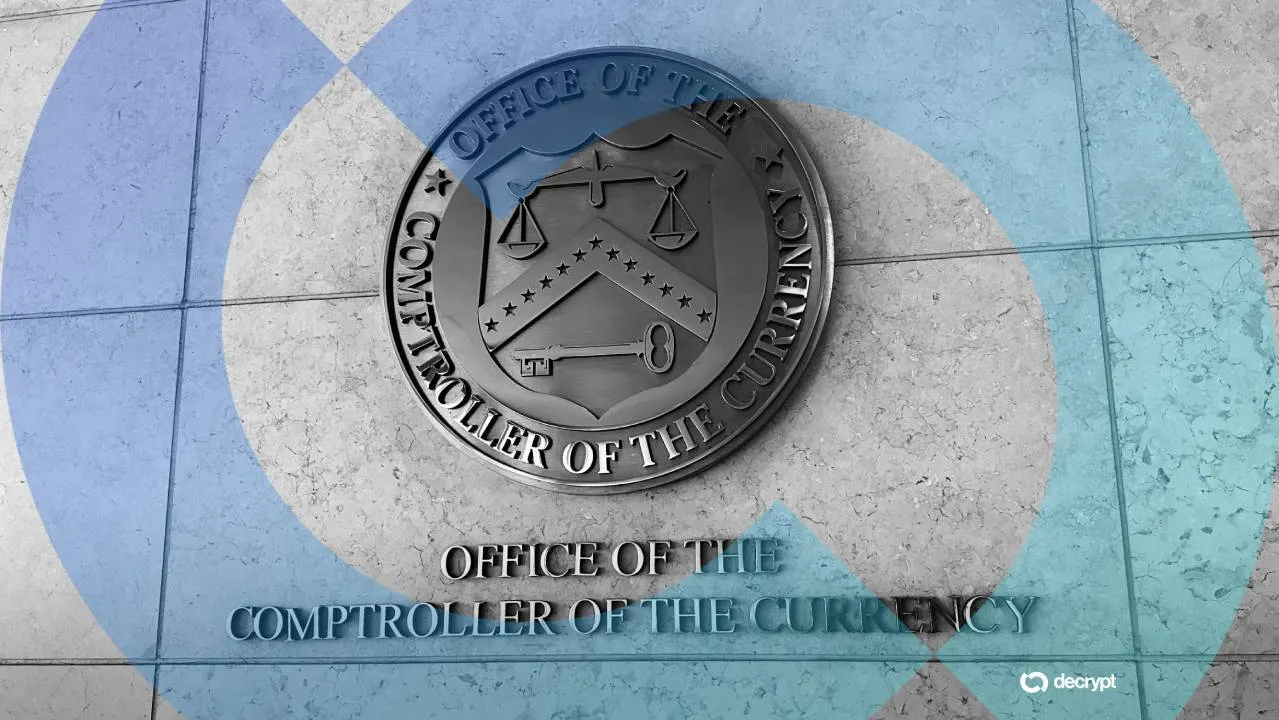
    Circle, the issuer of the stablecoin USDC, has received final approval from the U.S. Office of the Comptroller of the Currency (OCC) to establish a national trust bank. This development signifies a transition for the company from state-specific regulations to a federal banking framework.

    Circle has stated that this transition is intended to enhance its capabilities in safeguarding customer assets and managing reserves. The company indicated that the OCC approval integrates the infrastructure supporting its $73.2 billion stablecoin, USDC, into a federal banking system designed for safety, soundness, and transparency. Circle has described this move as a step toward building a new fundamental money layer for the internet.

    On Friday, the day of the announcement, Circle’s stock price reportedly increased by 8.4%, reaching as high as $73.80 during pre-market trading. The stablecoin USDC currently holds a valuation of $73.2 billion.

    This approval aligns with a broader trend of increased banking access for crypto firms under the current administration. In December, entities such as Ripple, BitGo, Fidelity Digital Assets, and Paxos received similar approvals from the OCC. More recently, Sony Bank indicated it had received conditional OCC approval for a national trust bank.

    Market Competition and Industry Dynamics

    The stablecoin market is also experiencing increased competition. Late last month, over 140 financial and technology firms, including Mastercard and BlackRock, backed a new initiative called Open USD. This development suggests a growing landscape of potential alternatives and challenges to existing stablecoin models.

    Circle’s relationship with Coinbase is also noteworthy. Coinbase has a revenue-sharing agreement with Circle concerning the interest income generated from USDC reserves, which are largely held in U.S. Treasuries. Coinbase CEO Brian Armstrong has previously praised such developments.

    Regulatory Scrutiny and Uncertainties

    However, these approvals have faced scrutiny. Some lawmakers, including Sen. Elizabeth Warren, have raised concerns regarding the process by which these charters were granted. Trade groups like the Digital Chamber have defended the OCC’s actions.

    While Circle’s move into a federal banking framework is reported, uncertainties remain regarding the long-term impact of the OCC’s approach to digital assets, the extent to which other crypto firms will pursue national charters, and the competitive response to initiatives like Open USD. It is important to note that Circle’s approval does not constitute a formal endorsement of all stablecoins by the OCC, nor does it may provide the future success or stability of any specific crypto firm.

    Why This Matters

    Circle’s OCC approval signifies a significant regulatory step, moving it into a federal banking framework. This could have implications for its operations and the broader stablecoin market, which is facing increasing competition and ongoing regulatory debate.

    Broader Context

    Under President Donald Trump’s second administration, financial regulators have shifted their stance toward digital assets, leading to increased banking access for crypto firms. This trend has coincided with both opportunities for digital asset companies and scrutiny from lawmakers.

  • Circle Obtains Final OCC Authorization for National Trust Bank

    Circle Obtains Final OCC Authorization for National Trust Bank

    Circle has obtained the final authorization from the US Office of the Comptroller of the Currency (OCC) to establish and operate Circle National Trust, a national trust bank. This development places the company’s trust bank under direct federal oversight, a move Circle executives described as a significant milestone.

    The national trust bank charter will enable Circle to provide fiduciary cryptocurrency custody services, including for its own USDC reserves. The company may also extend these services to institutional clients, though this may depend on demand.

    Circle applied for this charter a year ago and received conditional approval later in 2025. As reported at the end of 2025, Circle was among the companies that received initial conditional approval from the US OCC. This final authorization suggests the establishment of Circle National Trust.

    According to Circle, federal oversight of the trust bank is intended to set a new standard for transparency and governance for its infrastructure. This is seen as unlocking a new phase for adoption, where financial institutions can build on public blockchains with greater clarity and confidence.

    This development follows similar approvals for other entities, such as Ripple, which secured approval to establish Ripple National Trust Bank. These actions are viewed as steps toward integrating blockchain technology into the US financial system. Other cryptocurrency-focused companies like BitGo, Digital Assets, and Paxos were also mentioned in the context of earlier approvals.

    “OCC approval to establish Circle National Trust marks a defining step in bringing blockchain technology and digital assets into the core of the U.S. financial system,” commented Jeremy Allaire, Co-Founder, Chairman, and CEO of Circle. He added that federal oversight sets a new standard for transparency, governance, and scale for Circle’s infrastructure.

    The company stated that it continues to build on its long-standing regulatory strategy. The extent to which Circle will extend custody services to institutional clients remains dependent on demand.

    Why This Matters

    The materials describe a narrow update: Circle has obtained the final license from the OCC to launch its national trust bank, Circle National Trust. Whether Circle will extend custody services to a limited number of institutional clients depends on demand.

    Broader Context

    Source materials place the factual news in this context: The entity behind the second-largest stablecoin announced earlier today that it has secured the necessary license from the US Office of the Comptroller of the Currency (OCC) to launch First National Digital Currency Bank, N.A., which will operate as Circle National Trust.

  • Judge’s XRP Ruling Delivers Fresh Blow

    Judge’s XRP Ruling Delivers Fresh Blow

    Federal Judge Analisa Torres, the jurist behind XRP’s pivotal 2023 securities ruling, has issued another decision drawing significant market attention, leaving XRP price predictions in a state of flux as the token hovers around $1.09. The market appears to be adopting a wait-and-see approach, with traders holding back on substantial moves until the legal landscape clarifies.

    Judge Torres is most recognized for her July 2023 ruling in the Securities and Exchange Commission’s (SEC) case against Ripple. In a split decision, she determined that programmatic sales of XRP on exchanges did not constitute securities, while institutional sales were classified as investment contracts. This ruling has since become a cornerstone legal precedent in the cryptocurrency space. Even following the settlement between the SEC and Ripple in 2025, her judicial opinions continue to hold considerable sway.

    A New Ruling, Familiar Scrutiny

    The judge’s latest decision stems from a separate case, yet market participants are actively seeking implications for XRP. The cryptocurrency market often exhibits a tendency to connect disparate events, sometimes preemptively. The lasting impact of this latest ruling will hinge on how regulators and courts interpret it in the coming months.

    XRP’s Steady Chart Amidst Legal Uncertainty

    For the time being, XRP has maintained its chart structure despite the ongoing legal developments. Price action has remained relatively stable, though a lack of strong conviction is evident. As is typical in financial markets, certainty is highly valued, and the current situation presents another complex legal puzzle rather than a definitive answer.

    Trading Range and Market Inertia

    XRP has been trading within a narrow range of $1.07 to $1.10 over the past 24 hours, reflecting a market that has yet to identify a clear directional bias. The past week’s trading activity has seen a broader range from approximately $1.05 to $1.16, establishing well-defined support and resistance levels. Traders are awaiting a significant catalyst, but the chart has thus far offered little beyond sideways movement.

    Recent announcements regarding Ripple partnerships have failed to dislodge XRP from its current trading band. While positive news can influence markets, its impact can sometimes be gradual. Nevertheless, the pattern of higher lows remains intact, sustaining buyer interest and preventing a complete sell-off.

    Potential Bullish and Bearish Scenarios

    A bullish outlook for XRP would involve a defense of the $1.05 to $1.07 support zone, followed by a reclaim of the $1.16 resistance level. A decisive breakout above this point could pave the way for a move towards $1.25, an area where previous selling pressure was observed. Such a development would provide a more dynamic trading environment for bulls.

    The prevailing scenario suggests continued consolidation between $1.07 and $1.16 until a legal or macroeconomic catalyst shifts the market’s balance. Conversely, a firm close below $1.05 would undermine the current technical structure, potentially leading traders to focus on the $1.00 level as the next significant support.

    The Search for Asymmetric Upside

    With XRP trading sideways around $1.10, following a protracted legal battle and a settlement that appears to have already factored in positive outcomes, a pertinent question arises: where does the potential for significant upside lie? Established large-cap cryptocurrencies with resolved regulatory issues often experience gradual growth rather than explosive rallies.

    Traders seeking early-stage exposure with a different risk-reward profile are increasingly directing their attention toward infrastructure presales.

    LiquidChain ($LIQUID) is a Layer 3 infrastructure project founded on the premise that fragmented liquidity across Bitcoin, Ethereum, and Solana represents a primary obstacle in cross-chain decentralized finance.

    The project’s Unified Liquidity Layer aims to integrate these three ecosystems into a singular execution environment. It features Single-Step Execution, Verifiable Settlement, and a Deploy-Once Architecture, enabling developers to access liquidity from BTC, ETH, and SOL without the need for chain-specific redeployments.

    The LiquidChain presale is currently priced at $0.01478 per $LIQUID, with approximately $890,000 raised to date. Investors interested in evaluating the technical architecture before committing capital are encouraged to research LiquidChain.

  • AscendEX Faces Withdrawal Woes Amidst ZachXBT Concerns

    AscendEX Faces Withdrawal Woes Amidst ZachXBT Concerns

    AscendEX Ceases Operations Amidst Regulatory Shift and Liquidity Concerns

    AscendEX, a cryptocurrency exchange, announced it ceased operations on July 1, coinciding with the end of the European Union’s Markets in Crypto-Assets (MiCA) transition period. The move has drawn scrutiny, with blockchain investigator ZachXBT raising alarms about the platform’s liquidity and its ability to process customer withdrawals.

    Regulatory Hurdles and Market Pressures Cited

    In its official statement, AscendEX attributed its shutdown to challenging market conditions and the stringent requirements of the MiCA regulation. The new EU framework has reportedly made it difficult for several crypto firms to continue operating in the region without obtaining the necessary authorizations.

    Following the decision to wind down, access to user accounts has been restricted to offboarding processes, and automated withdrawals have been suspended. The exchange indicated that all withdrawal requests will now undergo manual review, which may lead to delays, require additional user information, or result in unprocessed requests.

    “We are not in a position to give assurances about timing or amounts today,” the notice stated. “No account holder or group of account holders is given priority outside the documented review process.”

    Investigator Highlights Liquidity Shortfalls

    ZachXBT previously shared on Telegram that numerous AscendEX users had experienced significant delays, ranging from days to weeks, in processing their withdrawal requests, with some ultimately going unfulfilled. The investigator’s analysis suggested that AscendEX’s hot wallets held minimal reserves of major assets like USDT, ETH, USDC, and SOL, pointing to potential liquidity challenges.

    Community reports have corroborated these claims, with many users reporting that their attempts to move funds out of the exchange had been stuck in an “initiating” status for over a week. ZachXBT further alleged that the platform has yet to process user transactions valued in the seven figures.

    He has urged affected users to pursue legal avenues, including filing police reports and engaging with relevant national regulators, to hold the platform accountable.

    A Tumultuous History

    Founded in 2018 by George (Jing) Cao, AscendEX was once a prominent player in the cryptocurrency market. However, the exchange suffered a significant hack in December 2021, resulting in the loss of approximately $78 million in digital assets.

    In its shutdown announcement, AscendEX emphasized that financial and operational issues heavily influenced its decision. The firm revealed that a planned strategic transaction intended to bolster liquidity had failed. Combined with prevailing market conditions, these factors compelled the company to reassess its financial standing and explore all available options for its account holders.

    AscendEX advised users to submit any complaints through its official channels and stated that it would provide updates on any subsequent steps, particularly if insolvency proceedings were initiated.

  • Labour MPs Push for Permanent Ban on Cryptocurrency Political Donations

    Labour MPs Push for Permanent Ban on Cryptocurrency Political Donations

    Labour MPs are preparing to introduce amendments to the UK’s Representation of the People Bill that would permanently ban political donations made in cryptocurrency. This proposed change aims to address concerns that anonymous digital-asset transfers could be used to channel foreign money into British politics, following a temporary moratorium imposed in March.

    According to The Guardian, MPs on Parliament’s all-party anti-corruption group are canvassing support for several amendments to the bill. A key proposal seeks to replace the government’s current moratorium on crypto donations with a permanent ban. This amendment is reportedly gaining broad backing among Labour MPs, amid ongoing scrutiny of the finances of the Reform UK party and its leader, Nigel Farage.

    Liam Byrne, the Labour chair of the business select committee, is reportedly behind the crypto ban amendment, which had gathered at least 20 signatures by midday Thursday, according to the paper. Byrne stated that some politicians appear willing to go to “extraordinary lengths” to avoid scrutiny of their finances and urged colleagues to support the changes as a safeguard for UK democracy.

    Other proposed amendments include one from former cabinet minister Anneliese Dodds to cut campaign spending limits by nearly a third, from £34 million to £24.4 million, with Dodds arguing that the UK faces “an arms race in funding political campaigns.”

    Yuan Yang is proposing limits on the amount of money a party can hold when it is first established, following reports that Rupert Lowe’s Restore Britain launched with £2.5 million without declaring its source. Additionally, an amendment from Mark Sewards aims to introduce checks on donations that could be part of foreign attempts to undermine British democracy.

    The UK government imposed a moratorium on crypto political donations in March, following the government-commissioned Rycroft Review. The review warned that the anonymity of digital-asset transfers could be exploited to channel foreign money into British politics. Philip Rycroft, who authored the review, had suggested a temporary “interlude” rather than a permanent ban to allow regulations to catch up.

    Campaigners have advocated for a complete ban for months, citing the Electoral Commission’s perceived lack of tools to trace cryptocurrency donations and pointing to existing outright bans in Ireland and Brazil.

    The push to strengthen the bill comes as pressure mounts over the funding of Reform UK. The party accepted cryptocurrency donations in June 2025 and has received millions of pounds from expat crypto billionaires Christopher Harborne and Ben Delo, though these specific donations were not made in cryptocurrency.

    Nigel Farage is also under investigation by the Parliamentary Standards Commissioner regarding a £5 million gift from Christopher Harborne, received shortly before he announced his intention to run as an MP in June 2024. Farage has stated he was under no obligation to declare the gift and is entitled to spend it as he wishes. However, the transaction reportedly triggered a suspicious activity report from bankers who were unable to trace the ultimate origin of the funds. Farage has denied any wrongdoing.

    Ministers have indicated they will propose tougher measures for the elections bill when it returns to the Commons on July 14. Government amendments are expected to include a £100,000 cap on donations from expats for their first year in the UK. A proposal for a £100,000 cap on all individual donations, floated by Stella Creasy, is understood to have less support.

    The Representation of the People Bill is expected to return to the Commons on July 14.

    Why This Matters

    The materials describe a narrow update: Labour MPs are seeking to amend the Representation of the People Bill to permanently ban political donations made in cryptocurrency. Whether the proposed amendments will be accepted and become law.

    Broader Context

    Source materials place the factual news in this context: Labour MPs are preparing to force the UK government to permanently ban political donations made in cryptocurrency, theGuardianhas reported.