Tag: Regulation & Policy

  • Circle Faces Scrutiny Over USDC Freeze Policy Following Criminal Complaint

    Circle Faces Scrutiny Over USDC Freeze Policy Following Criminal Complaint

    Circle Faces Criminal Complaint Over Stance on Recovering Stolen Crypto

    A criminal complaint filed by Wisconsin prosecutors against Circle, the company behind the USDC stablecoin, has reignited a critical debate: why does the world’s second-largest stablecoin issuer appear significantly less inclined than its competitor Tether to assist law enforcement in recovering stolen cryptocurrency?

    An investigation by the International Consortium of Investigative Journalists (ICIJ), published on July 8, highlights three key issues fueling this discussion. Circle maintains that it only freezes funds upon receiving valid legal orders. The company also disputes claims that it possesses the capability to simply “burn” and reissue stolen tokens, and it rejects allegations from New York prosecutors that it profits from leaving frozen assets untouched. Critics, however, argue that this policy leaves victims of scams in limbo while their funds disappear.

    The current legal challenge originated from a romance scam in Walworth County, Wisconsin. A resident, identified only as “Victim #1,” was persuaded to purchase USDC and transfer approximately 381,000 tokens to what was later revealed to be a fraudulent investment platform. After investigators successfully traced the funds, a judge issued an order for Circle to freeze the associated wallet, a directive the company promptly followed.

    Months later, the court escalated its actions, ordering Circle to invalidate the frozen tokens and issue an equivalent amount of new USDC to the Walworth County Sheriff’s Office. Circle refused, citing a lack of technical ability to burn and reissue USDC held within a third-party wallet. Prosecutors responded by filing a criminal complaint, a rare move against a company of Circle’s stature.

    Circle subsequently petitioned the court to dismiss the case, asserting that the Wisconsin court lacked jurisdiction and that prosecutors had disregarded alternative proposals it had put forth to compensate the victim. Thomas Binger, the Walworth County prosecutor, stated that the dispute underscores the speed at which scammers can move funds, often outpacing the legal system.

    The Wisconsin case is not the sole instance raising concerns. Earlier this year, New York prosecutors informed U.S. senators that Circle typically requires court orders before freezing USDC and has not consistently returned stolen funds even after courts have authorized their release. Given that stablecoin transactions settle within seconds, investigators contend that valuable time is frequently lost before the necessary legal documentation is finalized.

    New York prosecutors also leveled a more serious accusation, arguing that Circle continues to earn interest on the reserve assets backing frozen USDC. This, they contend, provides the company with minimal financial incentive to expedite the return of those funds. Circle has not acknowledged this claim.

    Blockchain researcher Yury Serov estimates that at least 119 million USDC tokens are currently frozen. While these tokens cannot be moved, they remain backed by reserve assets unless a permanent removal process is initiated.

    Circle’s technical explanation has also drawn criticism. Joshua Cooper-Duckett of Cryptoforensic Investigators told ICIJ that the company could modify its smart contracts to facilitate the burning and reissuing of tokens held in third-party wallets. Circle did not respond when questioned about its capacity to implement such changes.

    A detail from the court filings notably caught the attention of investigators. Circle disclosed that it had previously discussed a victim compensation process with federal prosecutors that involved permanently freezing stolen tokens before issuing replacement USDC. The company did not clarify whether this arrangement extends beyond federal cases.

    The disparity between Circle and Tether’s approaches is stark. Data from AMLBot indicates that Tether froze approximately $3.3 billion in USDT across more than 7,200 wallets between 2023 and 2025. In contrast, Circle froze about $109 million in USDC during the same period, a difference of roughly 30 times by value.

    Part of this discrepancy can be attributed to Tether’s burn-and-reissue mechanism. After freezing stolen USDT, the company can destroy those tokens and issue uncompromised replacements to law enforcement or victims. Tether states it has already reissued around $1.1 billion and frozen $4.7 billion linked to illicit activities. Circle does not currently offer a similar public process for third-party wallets, although its court filings suggest it has engaged in discussions about comparable arrangements with federal authorities.

    The companies also draw a line in different places regarding intervention. Tether has indicated that it sometimes acts before court involvement if law enforcement requests assistance. Circle, conversely, maintains that it only acts through formal legal channels, arguing this approach safeguards users from wrongful or politically motivated freezes. Investigators counter that by the time such orders are issued, stolen cryptocurrency is often long gone.

    Milwaukee County detective Scott Simons told ICIJ that he has encountered over a dozen cases where Circle either declined an early freeze request or where a court order arrived too late. For many victims, he noted, the outcome is simply that their money is lost.


  • Sony Bank’s Stablecoin Plan Advances with Conditional OCC Charter

    Sony Bank’s Stablecoin Plan Advances with Conditional OCC Charter

    Sony Bank has received conditional approval from the U.S. Office of the Comptroller of the Currency (OCC) to establish a national trust bank, a step toward its plan to issue a dollar-backed stablecoin. The approval, reported on July 6, allows its subsidiary, Connectia Trust, to prepare for operations expected in 2027, pending the fulfillment of remaining regulatory conditions.

    Connectia Trust, a wholly owned subsidiary, is slated for establishment this month with $40 million in capital. This entity will manage the issuance and reserves for a dollar-denominated stablecoin. Sony Bank stated the trust aims to create a “medium- to long-term business foundation” for its digital asset ventures. The bank previously indicated to Nikkei its intention for U.S. customers to use the token for digital content purchases across Sony’s ecosystem, potentially lowering transaction fees.

    The U.S. market for this stablecoin initiative is enabled by the GENIUS Act, federal legislation passed last year that outlines reserve and disclosure rules for dollar-pegged tokens. This aligns with Sony’s broader digital asset strategy, including the launch of its Ethereum layer-2 network, Soneium, in early 2025. Sony’s blockchain partner, Startale, introduced a separate dollar stablecoin on Soneium last year. For its own token, Sony Bank has engaged infrastructure firm Bastion for issuance, reserve management, and custody.

    Sony Bank’s application follows similar moves by other crypto and payment firms seeking federal trust status. In December, the OCC conditionally approved Circle, Ripple, BitGo, Fidelity Digital Assets, and Paxos. A national trust charter allows firms to custody assets, manage reserves, and issue stablecoins under federal supervision, but prohibits them from accepting cash deposits or making loans.

    Despite the conditional approval, Sony’s initiative faces opposition. The Independent Community Bankers of America urged the OCC to reject the Connectia Trust application in November, arguing it would permit Sony to issue deposit-like stablecoins while circumventing the insurance and regulations governing traditional banks. Senator Elizabeth Warren (D-MA) has also contended that the OCC has improperly granted charters to firms not qualifying under the National Bank Act. Cody Carbone, CEO of the Digital Chamber, countered in May that these criticisms “misread both the statute and the OCC’s longstanding charter authority.” A U.S. banking lobby has also considered legal action regarding these charters.

    Connectia Trust currently exists as a plan. The conditional nod requires Sony Bank to satisfy all outstanding OCC conditions before its stablecoin can launch, a process anticipated to conclude in 2027. The global stablecoin market cap is currently over $308 billion.

    Broader Context

    Source materials place the factual news in this context: Sony Bank has secured conditional approval from the U.S. Office of the Comptroller of the Currency to establish a national trust bank, moving Japan’s Sony Financial Group closer to issuing its own dollar-backed stablecoin.

    Why This Matters

    This development signifies Sony Bank’s strategic move into the stablecoin market, aiming to integrate digital assets into its existing ecosystem and potentially reduce transaction costs for consumers. The initiative is supported by the GENIUS Act, which provides a regulatory framework for such tokens in the U.S., and aligns with Sony’s broader digital asset strategy, including its Ethereum layer-2 network, Soneium. However, the path forward involves meeting remaining regulatory conditions and navigating opposition from traditional banking groups and political figures concerned about the implications of national trust charters for stablecoin issuers.

  • Interpol: 20-Year-Old Moved $123M in Romance Scam Crypto

    Interpol: 20-Year-Old Moved $123M in Romance Scam Crypto

    Global Anti-Fraud Operation Nets Thousands of Arrests, Millions in Seized Assets

    A sweeping global anti-fraud operation has resulted in over 5,800 arrests and the interception of $293 million in illicit assets, Interpol announced. The initiative, dubbed Operation First Light 2026, targeted sophisticated criminal networks engaged in social engineering fraud and money laundering, highlighting the pervasive nature of these crimes across 97 countries and territories.

    Romance Scams and Crypto Laundering at the Forefront

    Among the notable cases highlighted by the operation was a 20-year-old individual whose cryptocurrency wallet moved more than $122.5 million in just 10 months. This activity was part of a scheme to launder money stolen from victims of romance scams. Thai police apprehended two individuals in connection with this case. Interpol stated that the operators funneled proceeds into a mix of cryptocurrencies and employed cross-chain token swaps, a technique that shifts funds between different blockchains to obscure their origin and destination.

    Operation First Light 2026: A Coordinated Global Effort

    The coordinated crackdown, which ran from mid-January to the end of April, saw authorities make 5,811 arrests. In addition to the financial assets seized, investigators identified over 142,000 victims. The operation also led to the blocking of 31,014 bank accounts and the analysis of more than 152,000 cases. Some of these asset freezes were facilitated by I-GRIP, an Interpol mechanism designed to halt the flow of both traditional and virtual assets.

    Exploiting Human Psychology for Criminal Gain

    Tomonobu Kaya, head of Interpol’s financial crime and anti-corruption center, emphasized that criminal syndicates “exploit human psychology to manipulate their targets.” He added that global security against such threats requires a united front, stating, “no country can stay safe unless all of them push back together.”

    The “Pig Butchering” Scam Modus Operandi

    Romance scams, often referred to as “pig butchering,” typically begin with a stranger cultivating a relationship over an extended period before directing the victim towards a fraudulent cryptocurrency investment. Once victims’ funds are transferred, launderers rapidly move to obfuscate the trail by transferring funds across blockchains and swapping between different tokens, making it difficult for investigators to track the money.

    Evolving Tactics in Crypto Laundering

    This pattern has become more entrenched as enforcement efforts have intensified. According to Ari Redbord, a former U.S. Treasury official now with blockchain analytics firm TRM Labs, criminal operations are increasingly relying on stablecoins, low-fee blockchain networks, and rapid cross-chain swaps. These tactics are used to “fragment movement and buy time,” a trend observed after Interpol officially designated scam-compound networks as a transnational threat impacting victims in over 60 countries.

    The Scale of Financial Losses

    The financial implications of these scams are substantial. United Nations investigators estimate that “pig butchering” operations generated tens of billions of dollars between 2020 and 2024, with many operations originating from fortified compounds in Southeast Asia that utilize trafficked and coerced labor. Cambodia has since enacted legislation that could result in life imprisonment for scam operators, and U.S. courts have imposed lengthy sentences, including a 20-year prison term for an individual linked to a $73 million laundering scheme.

    Thailand: A Frontline in the Fight Against Crypto Fraud

    Thailand, bordering regions in Myanmar and Cambodia where many scam compounds operate, finds itself on the front lines of this battle. According to a 2025 case study by TRM Labs, Thailand’s Cyber Crime Investigation Bureau receives approximately 800 complaints daily, the majority involving cryptocurrency-enabled fraud or money laundering. Bangkok has become a frequent location for the arrest of suspects, including a Portuguese national accused of $580 million in crypto and card fraud, who was apprehended there in 2025.

    AI and Layered Networks Fueling Scam Inflows

    Blockchain analytics firm Chainalysis estimated a surge in cryptocurrency scam inflows in 2025, with the average scam payment more than tripling to $2,764. This increase is attributed to fraudsters incorporating artificial intelligence, phishing kits, and layered laundering networks into their operations.

    Operation First Light, funded by China’s Ministry of Public Security and supported by regional policing bodies, represents one campaign within a broader global effort. Interpol’s identification of over 142,000 victims within a single four-month period underscores the immense challenge facing law enforcement agencies worldwide.

  • SEC’s 2026 Agenda Proposes Crypto and IPO Rule Changes, Awaiting Public Input

    SEC’s 2026 Agenda Proposes Crypto and IPO Rule Changes, Awaiting Public Input

    The U.S. Securities and Exchange Commission (SEC) has unveiled its 2026 Regulatory Agenda, detailing 38 proposed rules designed to ease compliance for cryptocurrency firms and reduce costs for initial public offerings (IPOs). These proposals are now subject to a public comment period and further review before any final rules are enacted.

    Key Crypto Initiatives Under Consideration

    The agenda outlines several key initiatives for the crypto sector. These include the development of tokenization standards, modernization of custody rules for on-chain assets, and the potential introduction of a safe-harbor framework to ease compliance burdens for early-stage crypto projects. The SEC is also reviewing the definition of ‘qualified custodian’ to better accommodate tokenized assets and is examining broker-dealer requirements for digital assets to align them with their unique characteristics. Furthermore, proposed amendments to Crypto Market Structure aim to update the rules governing cryptocurrency trading on alternative trading systems.

    Proposed IPO Cost Reductions

    For companies pursuing public offerings, the SEC suggests lowering costs through revised disclosure forms and modified eligibility criteria for simplified registration. SEC Chairman Paul Atkins indicated that these proposed changes are intended to encourage more domestic IPOs and bolster business confidence in innovating within the U.S. market.

    Stated Goals and Investor Protection

    SEC Chairman Paul Atkins stated that the regulator aims to support President Trump’s objective of making America the crypto capital of the world. He also emphasized that investor protection measures will remain functional, even as the agency continues to pursue securities law violations. “We are embracing innovation to bring more products onshore, creating clear rules of the road for capital raising with crypto assets, and providing clarity as to how market participants can custody and facilitate trading of tokenized securities on-chain,” Atkins wrote. He added that the primary goal is to instill confidence in businesses to innovate in the U.S. market.

    The Regulatory Path Forward

    The proposed rules are now entering a public comment phase, with final rules expected to be considered later this year. The ultimate outcome of these proposals remains uncertain, as they must undergo review and potential modification based on public feedback.

    Related Legislative Developments

    In parallel, legislative efforts continue. The CLARITY Act, which addresses rules for cryptocurrency trading on alternative trading systems, missed its July 4 signing target. Having passed the House in 2025 and cleared the Senate in May, the bill is currently awaiting a full Senate floor vote. Lawmakers have a limited window before the August recess to finalize work on this crypto market structure bill.

    The SEC’s 2026 Regulatory Agenda signifies a notable activity in the agency’s approach to digital assets and capital markets. However, the proposed nature of these rules means their final form and impact are contingent upon the regulatory process, including public input and further deliberation.

    Why This Matters

    The materials describe a narrow update: The SEC’s 2026 Regulatory Agenda includes 38 proposed rules aimed at easing compliance for crypto companies and providing regulatory safeguards for blockchain transactions. The exact year the CLARITY Act passed the House and cleared the Senate.

    Broader Context

    Source materials place the factual news in this context: The US Securities and Exchange Commission (SEC) has launched its 2026 Regulatory Agenda.

  • SEC’s 2026 Crypto Rulemaking Agenda Signals Proactive Regulatory Path

    SEC’s 2026 Crypto Rulemaking Agenda Signals Proactive Regulatory Path

    The U.S. Securities and Exchange Commission (SEC) has formally placed three cryptocurrency-related rulemaking initiatives on its 2026 regulatory agenda, signaling a proactive approach to establishing market structure and offering clarity for digital assets. This move compresses the timeline for market participants who may have anticipated regulatory changes primarily through legislative action.

    Broader Context

    Source materials place the factual news in this context: The CLARITY Act remains unsigned as of early July.

    Scope of Rulemaking

    The three core areas targeted for rulemaking include the offer and sale of crypto assets, amendments to broker-dealer financial responsibility rules as they apply to crypto assets, and Exchange Act amendments concerning crypto trading on alternative trading systems (ATSs) and national securities exchanges. According to the Agency Rule List, these initiatives aim to provide a structured exemptive regime and clarity for the evolving digital asset landscape.

    Implications for Market Participants

    For token issuers navigating registration ambiguity, the potential for codified safe harbor provisions is a significant development. The SEC has previously proposed an innovation exemption for tokenized securities, and this rulemaking could formalize or refine those conditions. The specifics, thresholds, timelines, and the definition of sufficiently decentralized governance remain unresolved, which is precisely why the rulemaking notice is consequential, according to the primary source.

    The agenda also addresses broker-dealer rules, specifically targeting rules such as 15c3-1, 15c3-3, 17a-3, and 17a-4. Furthermore, the rulemaking aims to clarify whether existing ATS registration frameworks apply as-is or require a parallel crypto-specific track for crypto trading. The coming rulemaking could codify previous conditions outlined by the SEC for DeFi platforms to operate without registering as broker-dealers, or potentially tighten them, a distinction that may determine compliance burdens for interface providers and aggregators.

    Political and Executive Context

    According to the primary source, SEC Chair Paul Atkins framed the agenda as embracing innovation, bringing more products onshore, and providing clarity regarding tokenized securities. This framing aligns with an executive mandate, with the Commission’s efforts reportedly tied to President Trump’s goal to make the U.S. the world’s crypto capital. The political tailwind behind the crypto regulation overhaul is noted, though political will and regulatory execution are described as separate variables, with these agenda items being proposals, not final rules.

    The SEC’s decision to queue its own rulemakings now compresses the timeline for market participants, suggesting a Commission building its own regulatory framework in parallel with Congress rather than waiting for legislation. This proactive stance may accelerate market participant adaptation to new regulations.

    Uncertainties and Next Steps

    However, significant uncertainties persist. The precise details, thresholds, timelines, and the definition of sufficiently decentralized governance for crypto asset offerings are yet to be determined. Additionally, it remains unclear whether existing ATS registration frameworks will apply as-is or require a parallel crypto-specific track, and whether front-end interface providers and aggregators will face full broker-dealer registration burdens or a narrower compliance path.

    These rulemaking items are proposals, and the SEC’s agenda reflects an intent to provide clarity and potentially create safe harbors, aligning with broader political objectives. The specifics of these initiatives will be crucial for market participants seeking to navigate the evolving regulatory landscape.

  • Payward Secures $22 Million Arbitration Award Against Former Auditor Mazars USA

    Payward Secures $22 Million Arbitration Award Against Former Auditor Mazars USA

    Payward, the parent company of cryptocurrency exchange Kraken, has been awarded $22 million in arbitration against its former auditor, Mazars USA, following the auditor’s abandonment of a nearly completed audit. Payward is seeking to have this award entered as a final judgment by the Delaware Court of Chancery.

    According to Arjun Sethi, co-CEO of Kraken, the auditor’s withdrawal occurred during a period Payward claims was associated with reputational harm and financial losses, particularly during what critics describe as ‘Operation Choke Point 2.0’—a campaign to pressure banks into cutting off the crypto industry. Sethi stated that when an auditor walks away without findings, the client is left to repair reputational damage at a significant cost.

    Mazars USA had audited Kraken’s financials for three years, delivering two clean opinions. However, the firm quit the third audit in December 2023, days before its completion. Mazars reported in writing that it had no disagreement with management, no concerns about integrity, and found no fraud before withdrawing. The firm cited legal uncertainty, including an SEC complaint filed against Kraken weeks prior, as a reason for its withdrawal.

    This dispute unfolded against a backdrop of increased regulatory scrutiny on the crypto industry. In December 2022, Mazars Group had already halted its proof-of-reserves work for the crypto sector. In January 2023, regulators including the Federal Reserve, FDIC, and OCC issued a joint statement warning banks about crypto risks. Around the same time, the FDIC sent approximately 25 ‘pause letters’ to 24 banks, which advocates say instructed lenders to halt or reconsider crypto-related activities.

    The SEC had filed a complaint against Kraken weeks before Mazars abandoned its audit. This suit was later dismissed with prejudice in March 2025, with no penalties or admission of wrongdoing by Kraken, noted as part of a broader shift in regulatory approach.

    In a related development, Kraken co-founder and former CEO Jesse Powell’s home was raided by federal agents in March 2023. The investigation was reportedly closed about two years later with no charges filed.

    Sethi has pointed to these events as a reason to support legislative efforts like the Clarity Act, a bill aimed at dividing oversight of digital assets between the SEC and the CFTC. The Clarity Act cleared the Senate Banking Committee in May with a 15-9 vote, after passing the House in the previous year, but has faced hurdles and requires further votes to become law.

    Payward’s claim in arbitration centered on the reputational and financial damage was associated with by Mazars’ abrupt departure from the audit. Sethi argued that proving a lawful crypto business deserves ordinary banking and professional services should not require winning a legal fight.

    Uncertainties remain regarding the exact date of the arbitration award announcement and the specific years the Clarity Act passed the House and cleared the Senate Banking Committee. The full extent of legal uncertainty cited by Mazars and whether the firm acted independently or under pressure are also points of ambiguity. The precise reasons for the SEC’s initial complaint against Kraken and the full impact of ‘Operation Choke Point 2.0’ on the broader crypto industry are also not fully detailed.

    Why This Matters

    The materials describe a narrow update: Payward, the parent company of Kraken, received a $22 million arbitration award from its former auditor, Mazars USA. The exact date of the Tuesday announcement.

    Broader Context

    Source materials place the factual news in this context: Operation Choke Point 2.0 is a widely used term for what critics describe as the Biden administration’s unofficial campaign to pressure banks into cutting off the crypto industry after the collapse of FTX.

  • Bankers Flag Farage’s £5M Gift From Crypto Billionaire

    Bankers Flag Farage’s £5M Gift From Crypto Billionaire

    Bankers Flagged £5 Million Gift to Nigel Farage to UK Crime Agency

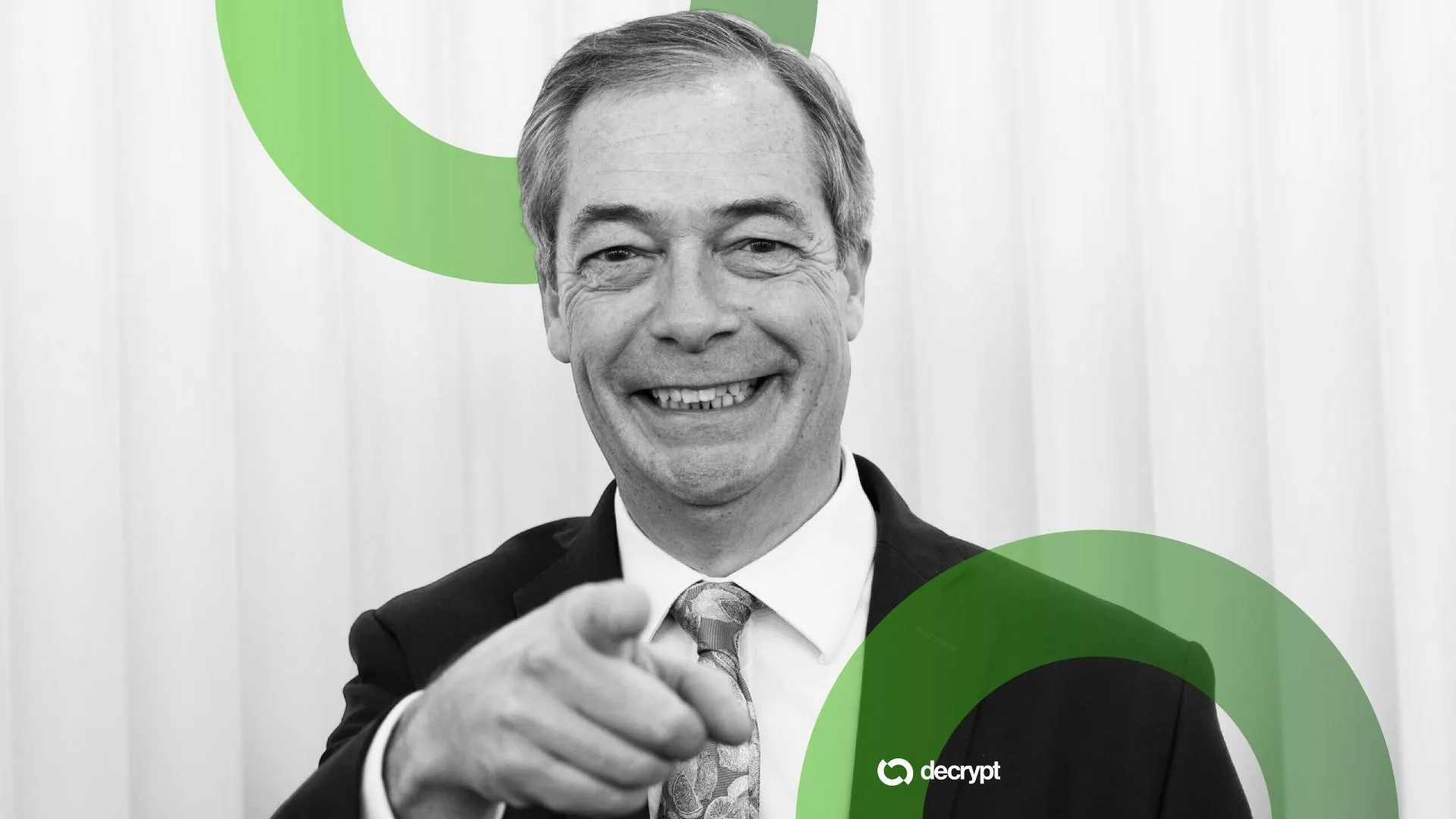
    Bankers flagged a £5 million donation to Nigel Farage from billionaire Tether investor Christopher Harborne to the UK’s National Crime Agency (NCA), according to a report by The Guardian.

    The financial institution filed a suspicious activity report (SAR) with the agency on May 16, 2024, The Guardian reported, noting that the bankers were unable to trace the ultimate origin of the funds. A SAR is not an accusation of wrongdoing but rather a notification prompting the agency to review a transaction for potential further investigation.

    Harborne, a British businessman based in Thailand, who owns a 12% stake in USDT issuer Tether and ranks sixth on The Sunday Times Rich List, has also made substantial donations to the Reform UK party.

    Banks are particularly vigilant with transactions involving “politically exposed persons” (PEPs), who are considered to be at a higher risk of bribery or corruption. Financial Conduct Authority (FCA) guidance mandates that firms adopt a “risk-based and proportionate approach to PEPs when considering money laundering risks.” Harborne’s cryptocurrency holdings further elevated this risk from a banking perspective, The Guardian stated, due to the inherent difficulty in tracing funds moving in and out of digital assets.

    Farage told The Guardian that he was unaware of the SAR and had “no reason to doubt the ultimate source of the money.” He asserted that the information had been “illegally obtained” by the newspaper and claimed he had no knowledge of any discussions with the NCA concerning transactions involving him.

    The NCA declined to confirm or deny to The Guardian whether it had received any report, citing the confidentiality of SARs and the potential for breaching this confidentiality to constitute a “tipping off” offense under the Proceeds of Crime Act.

    Discrepancies in Donation Timeline Emerge

    Harborne’s lawyers informed The Guardian that Farage received the funds on April 5, 2024. However, financial industry sources cited by the newspaper indicated that at least a portion of the £5 million arrived after May 23, 2024, the date Farage announced his decision not to stand in that year’s general election, citing it was “not the right time for me.” He later reversed this decision days later to contest the Clacton seat.

    This timeline appears to conflict with an account in a new book, “The Farage Factor” by Conservative peer Michael Ashcroft. The book suggests that Reform UK was already preparing to launch Farage’s candidacy by mid-May, having enlisted a GB News producer to assist with promoting a planned announcement event.

    Farage has characterized the donation as an “unconditional gift” and has provided various explanations for its purpose, including security funding, a reward for his Brexit advocacy, and as “nobody’s business,” stating he could use it for luxury items like Ferraris.

    Scrutiny Over Declaration and Potential By-Election

    Farage has argued that he was not obligated to declare the gift as he was not a politician at the time of receipt. According to The Guardian’s reporting, he became a “person of significant control” of Reform’s corporate entity on May 1, 2024, and served as the party’s honorary president from March 2021 to June 2024.

    Parliament’s standards commissioner is already investigating whether the failure to declare the funds breached parliamentary rules. The Labour party has accused him of evading scrutiny over the gift.

    Hours before The Guardian’s latest report, Farage stated his intention to force a by-election in his Clacton seat. However, this move appeared to backfire on Tuesday night as the Conservatives, Labour, the Greens, the Liberal Democrats, and Restore Britain all announced they would not field candidates, dismissing the contest as a “circus.”

    Should Farage be re-elected, he would still face the ongoing standards inquiry and any subsequent reprimand.

    Separately, George Cottrell, a convicted fraudster with connections to an offshore crypto casino, has called for an investigation into Farage’s “failure to declare financial support.” The Reform UK leader has denied that the benefits required declaration, and Cottrell denies having expected any reciprocal benefit.

  • RBI Reportedly Renews Push for Crypto Restrictions Amid Financial Stability Concerns

    RBI Reportedly Renews Push for Crypto Restrictions Amid Financial Stability Concerns

    The Reserve Bank of India (RBI) is reportedly renewing its advocacy for policies that would restrict cryptocurrencies and privately issued stablecoins, according to internal government documents reviewed by Reuters. This intensified push is driven by ongoing concerns within the central bank regarding financial stability and monetary sovereignty.

    The RBI’s stance, as detailed in the documents, suggests a policy leaning towards prohibiting banks and financial institutions from holding, trading, or otherwise gaining exposure to cryptocurrencies and privately issued stablecoins. Officials reportedly view such a prohibition as a means to keep digital assets outside the regulated financial system and to mitigate potential risks. A specific concern highlighted by the RBI relates to stablecoins, particularly those pegged to foreign currencies or the rupee, due to their potential to affect domestic monetary sovereignty and financial stability, especially during periods of economic stress.

    Despite the RBI’s reported internal advocacy for stricter measures, India has not implemented an outright ban on cryptocurrency trading. The sector currently operates within a regulatory grey zone. Major lenders in the country generally avoid direct exposure to cryptocurrencies, having received multiple warnings from the central bank. This cautious approach from financial institutions reflects the central bank’s persistent concerns and the lack of clear regulatory guidelines.

    Adding to the complexity of the crypto landscape in India, the country’s tax department has also raised concerns about the increasing difficulty in tracking cryptocurrency transactions. This challenge is particularly pronounced when transactions are routed through offshore exchanges, peer-to-peer rupee trades, or private self-custody wallets. Data from 2023 indicates a significant gap in tax compliance, with fewer than a quarter of the approximately 645,000 individuals who engaged in crypto transactions reporting them on their tax returns. India currently imposes a 30% tax on crypto gains, with overseas platforms, valuation discrepancies, and unclear ownership further complicating compliance efforts for taxpayers.

    The RBI’s renewed focus on restricting crypto activities, coupled with the tax department’s warnings about tracking difficulties and low compliance, points to a potentially challenging regulatory environment for digital assets in India. While a formal prohibition has not been enacted, the central bank’s persistent concerns and the existing tax framework create significant uncertainty for the crypto sector. The exact timeline for any potential formal prohibition or specific regulatory actions remains unclear, as do the precise measures the RBI might pursue if a full ban is not implemented. These uncertainties highlight the evolving and complex nature of cryptocurrency regulation in India.

    Why This Matters

    The materials describe a narrow update: The Reserve Bank of India (RBI) has reportedly reiterated its support for a policy that leans towards prohibiting cryptocurrencies and privately issued stablecoins. The exact timeline for any potential formal prohibition by the RBI.

    Broader Context

    Source materials place the factual news in this context: The source article is a report from Reuters.

  • SEC’s Crypto Safe Harbor Expected This Month

    SEC’s Crypto Safe Harbor Expected This Month

    SEC Signals Crypto Rulemaking Imminent

    The U.S. Securities and Exchange Commission (SEC) announced Tuesday its intention to unveil long-awaited cryptocurrency rulemaking as early as this month, moving closer to establishing a regulatory framework for certain crypto-related activities in the United States.

    An updated SEC agenda for 2026 indicates a potential July release for the proposed rules, which would then be subject to a public comment period. These regulations are expected to govern the offering and sale of crypto assets, and will also incorporate “certain exemptions and safe harbors” for various forms of on-chain financial activity.

    This agenda update represents the most concrete sign to date that the SEC is preparing to formally introduce its “Regulation Crypto” proposal. SEC Chair Paul Atkins had previously hinted at the plan for months, initially suggesting a rollout in January.

    The proposed exemptions would offer crypto companies assurance that activities in specific areas, such as tokenized securities and decentralized finance (DeFi), would not result in enforcement actions from the SEC.

    “To deliver on President Trump’s goal to ensure that the United States is the crypto capital of the world, we are embracing innovation to bring more products onshore, creating clear rules of the road for capital raising with crypto assets, and providing clarity as to how market participants can custody and facilitate trading of tokenized securities onchain,” Atkins stated Tuesday.

    In March, the SEC chair indicated that a crypto safe harbor could apply to startups valued up to $5 million seeking to experiment with crypto assets within their first four years. It could also extend to entrepreneurs raising up to $75 million through investment contracts involving certain crypto assets, and to specific crypto assets once their creators have ceased all essential managerial efforts.

    Atkins had previously stressed that the uncertain status of Congress’s Clarity Act—a comprehensive bill aimed at legalizing most crypto activity in the U.S.—had influenced the SEC’s timeline for its own crypto regulations.

    Following over a year of legislative uncertainty, the Clarity Act faces a critical juncture in the Senate over the next few weeks. Industry stakeholders widely believe that if the bill does not pass by August, it is unlikely to become law this year, given the approaching November midterm elections.

  • China Quietly Restricts AI Exports, Mimicking US Policy

    China Quietly Restricts AI Exports, Mimicking US Policy

    U.S. Deploys AI “Kill Switch” in June, China Explores Similar Measures for July

    Beijing has engaged in quiet discussions with its leading artificial intelligence companies over the past month regarding restrictions on access to their advanced models, according to Reuters. Chinese authorities reportedly met with representatives from Alibaba, ByteDance, and the startup Z.ai to explore limiting overseas access to the nation’s most sophisticated AI systems, including those not yet released.

    The meetings, convened by China’s Ministry of Commerce, involved discussions on imposing limits on both closed-source and open-weight models, the latter being accessible for local modification by developers. Officials also reportedly raised the possibility of classifying unauthorized disclosure or theft of proprietary AI technology as an offense under China’s national security law. Separately, proposals were floated to restrict the types of investors eligible to fund domestic AI startups.

    The precise scope of any potential restrictions remains under debate, with some sources suggesting measures might only apply to future models rather than existing ones. No definitive timeline has been established, and the implementation of any new regulations is uncertain.

    While the practicalities of such restrictions are unclear, a summary published in a Supreme People’s Court journal from a May roundtable on open-source AI regulation offered potential insights. Chinese legal experts proposed a three-tier system: basic open-source tools would require a simple government filing, more advanced technologies would undergo security reviews before release, and the most sensitive frontier models would be barred from public release or restricted to domestic use.

    This proposed structure would represent a significant shift for Chinese AI companies, whose global growth has largely stemmed from open access. Alibaba’s Qwen series, for instance, has gained considerable traction on Hugging Face, a major repository for open-source AI models. ByteDance’s Doubao is a prominent AI product within China, and Z.ai’s GLM-5.2 has garnered attention from U.S. researchers for its performance comparable to top American models, offered at a significantly lower API access cost.

    Any decision to restrict overseas access could increase costs for businesses that have come to rely on Chinese models as more affordable and less restricted alternatives to U.S. frontier systems. Concerns have also been amplified by the possibility that advanced cybersecurity models, such as Anthropic’s Mythos—which the U.S. administration restricted in June—could be reverse-engineered and used against Chinese systems, adding a defensive urgency to the discussions.

    On June 12, Anthropic received a directive from the U.S. Commerce Department’s Bureau of Industry and Security to suspend all access to its Claude Fable 5 and Mythos 5 models for foreign nationals, including its non-citizen employees. Due to the technical challenges of selectively restricting API access, Anthropic temporarily withdrew both models globally. This marked the first instance of the U.S. applying export controls to a deployed AI model rather than the underlying hardware. The models were reinstated on June 30 after Anthropic updated its safety classifiers and the Commerce Department lifted the restrictions.

    A similar pattern unfolded four days prior with OpenAI, Anthropic’s chief competitor. The company released its GPT-5.6 Sol, Terra, and Luna models, disclosing that it had previewed them with the U.S. government and, at Washington’s request, initially provided access to approximately 20 vetted partners. OpenAI has stated that government-gated access “shouldn’t become the long-term default.” President Trump’s executive order on AI issued in June had already encouraged developers to voluntarily submit frontier models for federal cybersecurity review prior to public release. A framework defining “covered frontier models” and the conditions for government pre-release access is expected by August 1.

    Beijing has reportedly been closely monitoring these developments. Officials expressed alarm that Anthropic’s Mythos cybersecurity model could be weaponized against Chinese infrastructure to exploit software vulnerabilities. Additionally, concerns have been raised in China regarding allegations that Anthropic may be employing spyware-like tactics to track Chinese users.

    Qihoo 360 founder Zhou Hongyi publicly voiced these concerns at ISC.AI 2026 in Beijing, advocating for China to develop domestic equivalents and unveiling Tulong Feng, a homegrown AI vulnerability agent.

    The tiered structure proposed in China’s Ministry of Commerce discussions mirrors the U.S. approach to chip export controls over the past three years, a policy that has arguably narrowed rather than widened the technological gap with China.

    Beijing has been progressively tightening its regulatory perimeter. In April, its state planning agency ordered Meta to divest its $2 billion acquisition of AI startup Manus, citing national security concerns under China’s foreign investment review mechanism. Moonshot AI and StepFun were required to obtain government approval before accepting U.S. capital in funding rounds. Furthermore, a broader regulatory package introduced in early June extended scrutiny to cross-border transactions involving Chinese technology and data.

    The prevailing logic since the viral success of DeepSeek R1 in early 2025 has been that U.S. restrictions on frontier AI create a natural market for Chinese open-weight models. Chinese open-weight models saw a dramatic surge in usage on OpenRouter, a key global AI distribution hub, rising from less than 2% in late 2024 to approximately 61% by mid-2026. The U.S. defensive posture, therefore, inadvertently provided Beijing with a global distribution advantage that was not solely based on technical superiority.

    This dynamic, however, hinges on the continued openness of Chinese models. If Beijing restricts overseas access to its frontier systems, whether closed-source or open-weight, this advantage could diminish. Z.ai’s GLM-5.2, for example, built its value proposition on borderless access under an MIT license; any restriction on this distribution would undermine its core appeal.

    An analysis of the June U.S. controls highlighted a structural challenge that also applies to Beijing: national AI restrictions often struggle to remain purely national. The U.S. order on Anthropic, for instance, encompassed foreign nationals within the United States, including Anthropic’s own non-citizen employees. Data from MacroPolo indicates that over two-thirds of top-tier AI researchers in the U.S. received their training abroad, with foreign-born individuals comprising up to 70% in leading labs. Nationality-based access controls aimed at adversaries can inadvertently exclude the very engineers needed to address the vulnerabilities that prompted the restrictions. China faces a similar challenge in reverse. ByteDance and Alibaba are reportedly accelerating the rollout of humanlike agent features ahead of Chinese AI regulations scheduled to take effect on July 15, demonstrating Beijing’s capacity to implement restrictions on a defined schedule, independent of market feedback.

    This potential shift could pose challenges for smaller labs and developers worldwide who rely on open-source technologies, an area where China has been a leading contributor.

    French President Macron warned at the G7 summit that European governments would cease purchasing U.S. AI products if access could be abruptly curtailed. Canadian Prime Minister Carney described concentrated AI dependence as a “strategic mistake.” Both reactions implicitly assumed that Chinese AI would serve as an unconstrained alternative.