Tag: Regulation & Policy

  • French Minister: 77 Crypto Kidnappings Prompt New Security Plan

    French Minister: 77 Crypto Kidnappings Prompt New Security Plan

    French Authorities Report Surge in Crypto-Related Kidnappings, Unveil New Security Strategy

    France has seen a significant rise in cryptocurrency-related criminal cases, with 77 incidents involving kidnappings, extortion, or attempted kidnappings recorded since the start of the year.

    Interior Minister Laurent Nuñez disclosed the figures on June 30 during a meeting with the Association of Digital Asset Holders (ADAN). This marks a substantial increase from the 45 cases reported in 2025.

    While acknowledging the sector’s concerns, Nuñez described the incidents as serious but highlighted the effectiveness of emergency security measures implemented a year ago. He reported that approximately 200 individuals have been arrested in connection with these crimes, either after attacks occurred or before they could be carried out.

    As a recent illustration, the minister cited the apprehension of suspects linked to an incident in the Somme region within eight hours of the crime. The victim in that case had utilized a dedicated emergency hotline established for members of the cryptocurrency sector.

    Nuñez also noted that 724 individuals within the industry are now registered on the government’s immediate identification platforms, representing an 11% increase in participation. While specific details of the government’s forthcoming actions are yet to be fully revealed, the minister indicated that all departments within the Interior Ministry have developed a new security strategy that is “more ambitious” than previous initiatives.

    Three-Pronged Security Plan Targets Intelligence, Cooperation, and Coordination

    The new security plan is structured around three core priorities. The first focuses on enhancing intelligence sharing. Nuñez emphasized the importance of robust intelligence gathering on criminal networks, particularly as perpetrators of these crimes are sometimes located outside of France.

    The second priority aims to deepen cooperation with ADAN by establishing a network of experts to bridge the gap between cryptocurrency industry participants and relevant government officials.

    The third priority centers on improving operational coordination among law enforcement agencies to more effectively disrupt criminal groups. This also includes strengthening collaboration with countries where individuals believed to be orchestrating these attacks are based.

    International Cooperation Crucial in Combating Crypto Crime

    The minister underscored the continued essential role of cooperation with foreign authorities. He pointed to the June 2025 arrest in Morocco of a Franco-Moroccan man suspected of orchestrating a series of kidnappings targeting the crypto industry. Among the victims was David Balland, co-founder of Ledger. Nuñez stated that this arrest led to the swift cessation of the attacks.

    Similar criminal activities have persisted globally. In March, a cryptocurrency holder known online as ‘Sillytuna’ reported being forced by armed assailants to surrender approximately $24 million in digital assets during a violent robbery. The victim recounted that the attackers used weapons and threatened kidnapping and sexual assault unless he transferred control of his crypto holdings.

    Blockchain investigators subsequently tracked the stolen funds as they were moved across various networks and converted into privacy coins, a tactic designed to impede tracing efforts.

  • Gillibrand Proposes Ban on Politicians Launching Meme Coins

    Gillibrand Proposes Ban on Politicians Launching Meme Coins

    Gillibrand Renews Call for Ban on Politicians’ Crypto Ventures After Trump Earnings Report

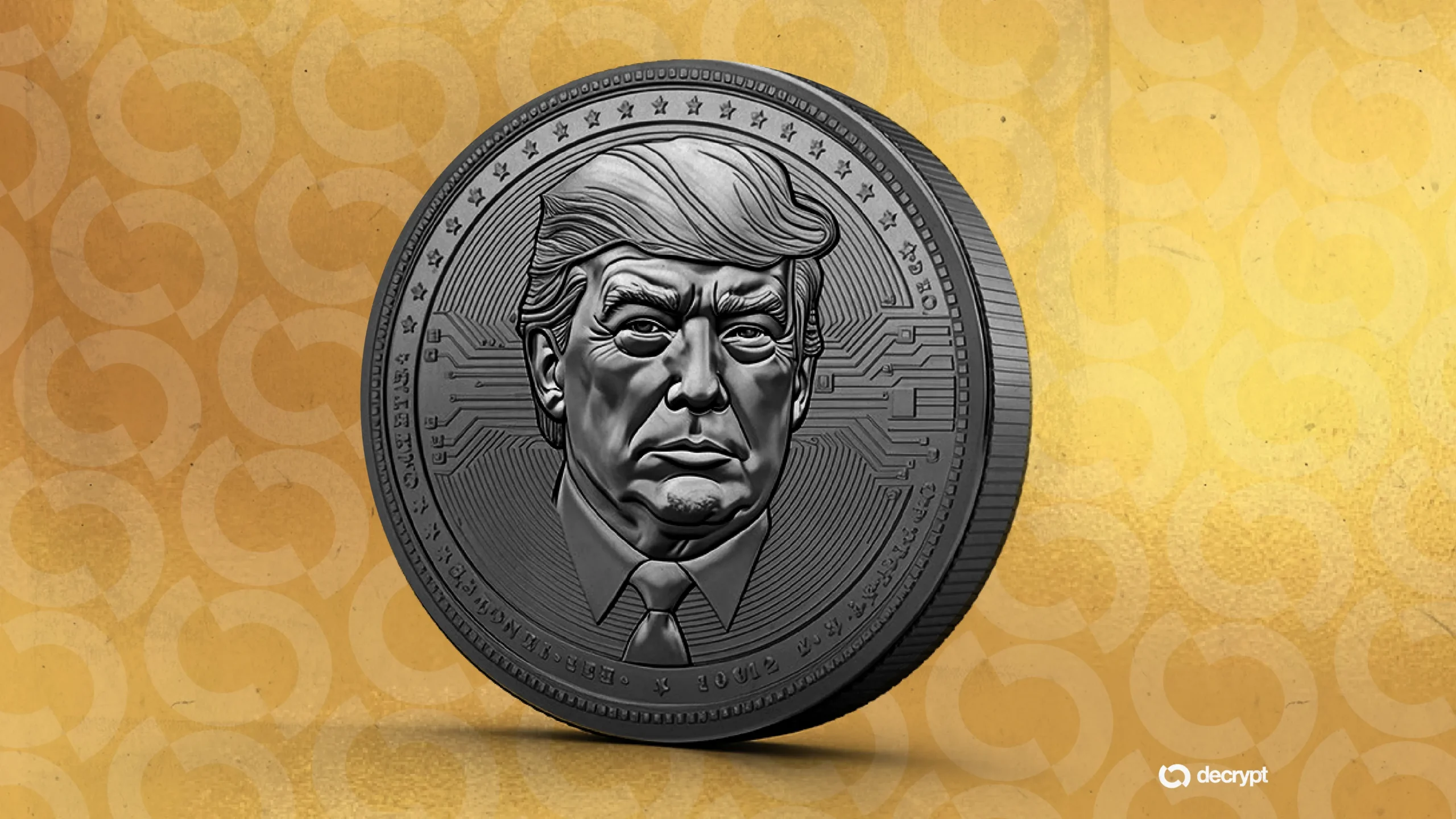
    Following revelations this week that President Donald Trump generated over $1.2 billion from his cryptocurrency activities last year, New York Senator Kirsten Gillibrand has reiterated her call for a prohibition on the issuance and promotion of digital assets by politicians and their spouses.

    The proposed ban would encompass meme coins, a sector from which both Trump and First Lady Melania Trump reportedly profited significantly over the past year. The president alone is said to have earned more than $635 million from a single Solana-based meme coin.

    “This is a commonsense requirement that should get broad bipartisan support—public officials and their spouses should not be issuing meme coins,” Gillibrand stated in a press release.

    She added, “We cannot let self-dealing destroy an opportunity to strengthen consumer protections, crack down on illicit finance, and expand economic opportunity for the millions of Americans our financial system has left behind.”

    Gillibrand, recognized as one of the more pro-cryptocurrency Democratic senators, has been at the forefront of advocating for ethical conduct among congressional staff. Earlier this year, she spearheaded a bipartisan initiative to prevent members of Congress from trading on prediction markets, amid increasing concerns about potential insider trading. These concerns have been amplified by allegations that individuals close to the White House may be unfairly benefiting from non-public information.

    She has also been a vocal proponent of banning stock trading for public officials while they are in office.

    “The time to act is now—and that must include ethics reforms that prohibit members of Congress, the president, and their spouses from cashing in on their office,” she asserted.

    Ethical considerations have also been a significant hurdle in advancing key cryptocurrency legislation, such as the Clarity Act market structure bill. In May, the senator indicated that the bill would not proceed without an ethics provision specifically addressing President Trump’s activities.

    However, even as the bill advanced through a crucial Senate vote, an agreement on ethical guardrails for public officials had not yet been finalized. Despite this, researchers at Galaxy estimate the bill’s chances of passing this year have diminished to approximately 50-50, attributing the uncertainty to time constraints rather than issues with the bill’s content.

  • Binance Unveils Major User-Facing Update

    Binance Unveils Major User-Facing Update

    Binance Expands to Philippines Amid EU Regulatory Scrutiny

    The world’s largest cryptocurrency exchange, Binance, is facing significant challenges with European Union financial regulators, a situation that has sparked concern among its user base. Despite these European hurdles, Binance has simultaneously bolstered its global footprint with its official entry into the Philippines.

    The expansion was announced by Binance’s co-founder and chief customer service officer, Yi He, via her personal X account. She shared a document indicating that the Securities and Exchange Commission (SEC) in the Philippines has granted final approval to Blockshoals Technologies Inc. to pilot its financial products and services within the regulator’s sandbox environment.

    Under this crypto-asset intermediary model, Blockshoals’ Stratbox will provide Filipino users with access to a suite of offerings facilitated by its global crypto-asset service provider (CASP) partner, Binance.

    Binance founder Changpeng Zhao, widely known as CZ, also acknowledged the development, retweeting Yi He’s post and commenting, “Real liquidity for Philippines.”

    The move into the Philippines has been met with mixed reactions from users. Some view the expansion as a positive step for cryptocurrency adoption in the region. However, others are skeptical, suggesting the announcement is an attempt to divert attention from Binance’s ongoing regulatory issues in the European Union.

    The exchange recently withdrew its Markets in Crypto-Assets (MiCA) license application from the Hellenic Capital Market Commission (HCMC) in Greece. This decision leaves Binance without the necessary authorization to operate within the EU after July 1. Binance has stated that user assets remain secure and reiterated that Europe is a crucial market for its operations, expressing hope to secure the required permit in the near future. In the interim, some clients have reported receiving withdrawal instructions from the company, while others appear unaffected.

    Adding to its European regulatory pressures, a group of 1,700 UK investors has initiated a collective lawsuit against Binance and CZ in London’s High Court. The claimants allege that the exchange offered unregulated products, resulting in substantial financial losses, and failed to provide adequate client protection.

  • Farage Faces Scrutiny Over Alleged Crypto Lobbying

    Farage Faces Scrutiny Over Alleged Crypto Lobbying

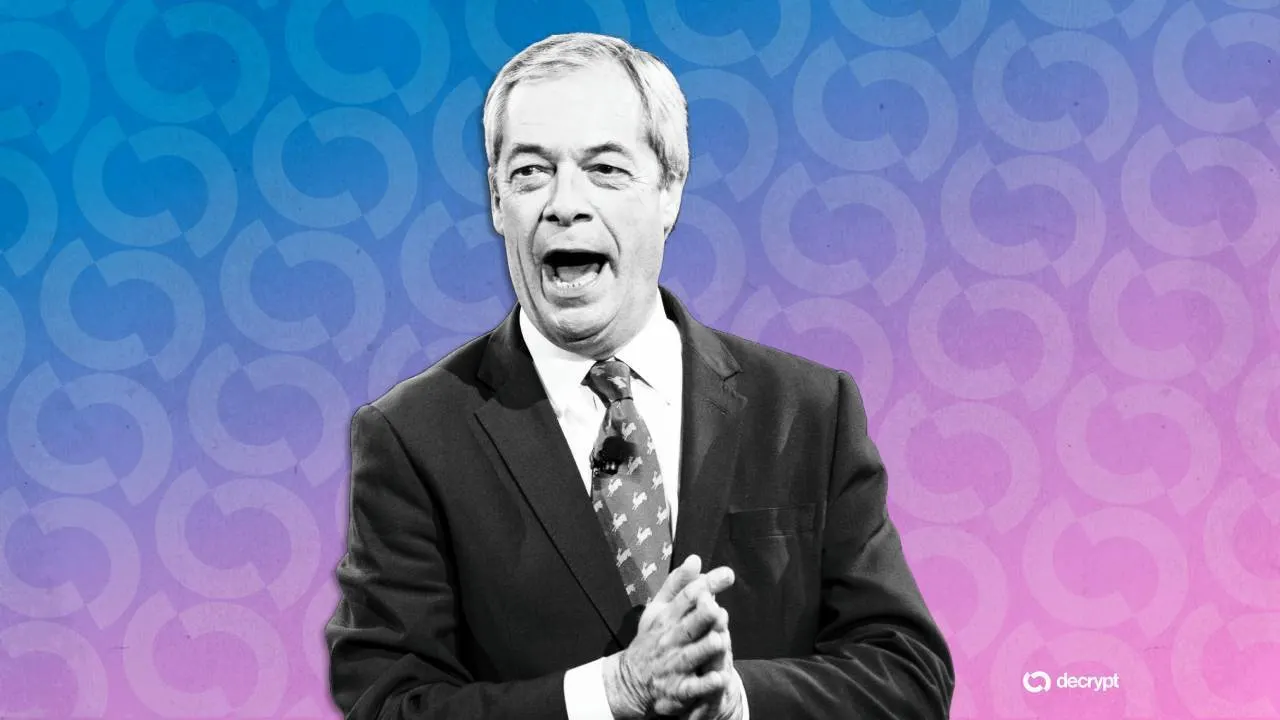
    Reform UK leader Nigel Farage is reportedly facing an investigation by Parliament’s standards watchdog over allegations that he lobbied the Bank of England on cryptocurrency policy in a manner that could benefit his largest donor. The donor, a significant investor in stablecoin issuer Tether, has provided substantial financial backing to Farage.

    Standards Watchdog Investigation

    Phil Brickell, a Labour MP and chair of the parliamentary group on anti-corruption and responsible tax, has formally requested that the Parliamentary Commissioner for Standards, Daniel Greenberg, scrutinize Farage’s interactions with the central bank. Parliamentary regulations prohibit MPs from contacting officials or ministers on behalf of individuals who have paid them for a period of 12 months following such a payment.

    Brickell stated to The Guardian that prior to meeting with the Governor of the Bank of England, Farage “openly championed Tether, criticised proposed restrictions on stablecoins and vowed to challenge the Bank’s approach.” He added that Farage has since “claimed credit for persuading the Bank to soften its position.”

    Allegations of Undue Influence

    The complaint centers on a private meeting last September where Farage reportedly urged Governor Andrew Bailey to abandon plans for a central bank digital currency, often referred to as “Britcoin.” Farage has previously declared he would go to prison to prevent its implementation. He later claimed responsibility for influencing the Bank to moderate its stance. Last week, the Bank dropped a proposed £20,000 cap on individual stablecoin holdings, a measure Farage had publicly opposed.

    A second Labour MP, Joe Powell, has written to Governor Bailey seeking details of the meeting. Powell argued that “Decisions relating to the UK’s financial system, including those involving bank digital currencies, must be made in the public interest and on the basis of rigorous, independent assessment, not shaped behind closed doors to benefit individual financiers.”

    Brickell emphasized that the case extends beyond the cryptocurrency sector, focusing on whether an MP who has “received millions from one individual” should advocate for policies that could increase the value of that donor’s investments.

    Donor and Financial Links

    The donor in question is Christopher Harborne, a British billionaire based in Thailand. Harborne holds a 12% stake in USDT issuer Tether and is ranked sixth on The Sunday Times Rich List.

    The Reform UK leader accepted an undeclared £5 million ($6.7 million) gift from Harborne before standing in the July 2024 general election. At the time of the gift, Farage had not announced his intention to run for Parliament, and the donation was not disclosed to parliamentary authorities.

    According to The Guardian, Farage also received two £25,000 political donations from Harborne in January 2025 and February 2026, designated for trips to the U.S. and the Chagos Islands. Furthermore, Reform UK received an additional £15 million from the billionaire between August of last year and February. Daniel Greenberg is conducting a separate investigation into whether Farage should have declared the £5 million personal gift.

    Responses and Denials

    Both Farage and Harborne have asserted that the billionaire sought no reciprocal benefits. However, Farage’s explanations for the £5 million gift have varied, shifting from a contribution to his security, to a reward for his Brexit campaigning, and most recently, to funds he can spend as he wishes. He has described the gift as “unconditional” and “a purely private matter.” Reform UK has dismissed the broader allegations as “utter rubbish,” while Labour has accused Farage of evading scrutiny.

    The Bank of England stated that the September meeting was part of its regular engagement with political figures and acknowledged that Farage and Bailey held differing views on the digital pound. The Bank has not released any minutes from the meeting.

    Farage has previously positioned himself as a “champion” of the cryptocurrency space, advocating for the UK to establish a Bitcoin strategic reserve and pushing for reduced capital gains taxes on digital assets.

  • Trump Defends $1.2B Crypto Gains: ‘No Illegality, No Wrongdoing’

    Trump Defends $1.2B Crypto Gains: ‘No Illegality, No Wrongdoing’

    Trump Defends Billions in Crypto Earnings, Citing No Illegality

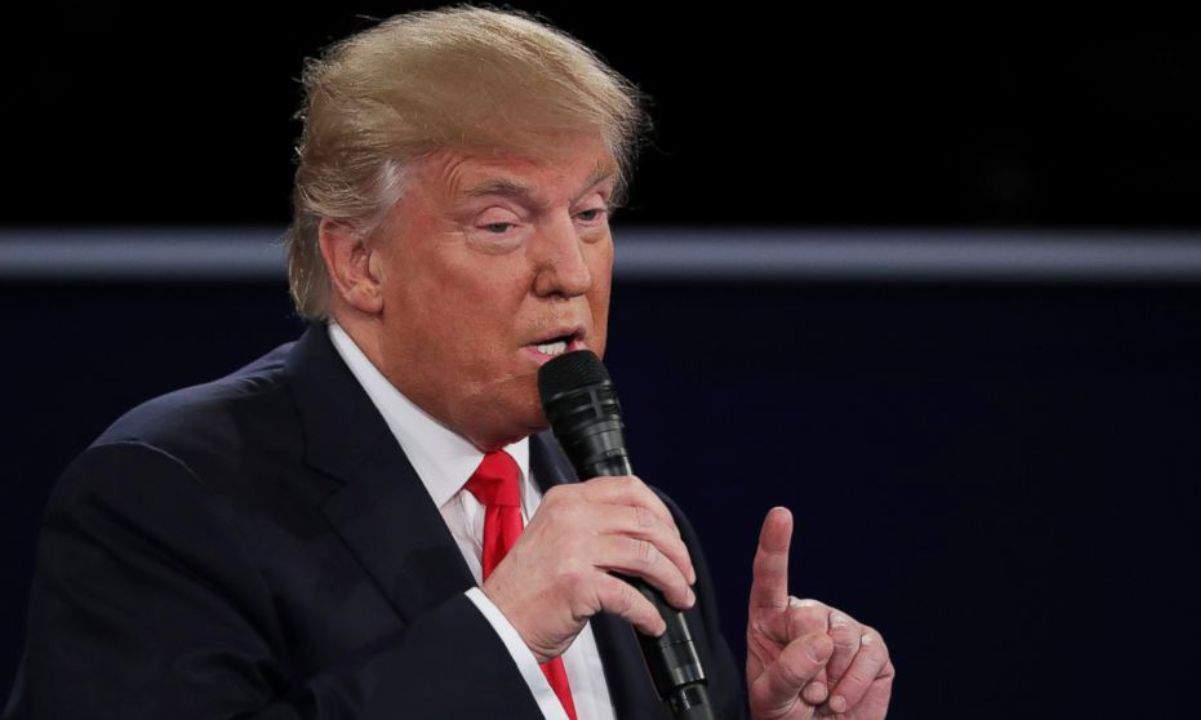
    President Donald Trump has defended his family’s substantial cryptocurrency earnings, asserting that there is “nothing illegal” and “nothing wrong” with businesses generating billions of dollars while he occupies the White House. The comments come just days after new federal financial disclosures revealed the extent of his digital asset holdings and crypto-related income, reigniting debate over the compatibility of a sitting president’s private business interests with public office.

    Financial Disclosures Detail Massive Windfall

    During a July 2 interview with CNBC’s Joe Kernen at the White House, Trump addressed the significant financial gains highlighted in his annual disclosure. The 927-page document, released by the U.S. Office of Government Ethics, indicated that the president’s income exceeded $2.2 billion in 2025, with a substantial portion derived from cryptocurrency. This included $594 million from World Liberty Financial (WLFI), a decentralized finance (DeFi) venture he co-founded with his sons, and $636 million from the sale of Trump-branded meme coins. Reports also suggest he holds over $50 million in Bitcoin in a cold wallet.

    When questioned about his awareness of his family’s crypto activities, the president initially responded, “No,” before quickly amending, “I could know about it. I didn’t, I mean, there’s nothing illegal, there’s nothing wrong with it. I could know.”

    Trust Structures and Family Involvement

    Trump emphasized that his assets are managed through trusts overseen by his sons, Eric and Donald Jr., as well as by external investment firms with whom he has no direct contact. “I don’t even know who they are,” he stated, adding that he does not discuss investment decisions with his sons. This suggests that nearly any business transaction involving his children could potentially be viewed as a conflict of interest, given the broad scope of presidential policy.

    “I tell my kids: stay away from as much as you can stay away from. But they also have a life,” Trump told Kernen.

    Crypto as a Strategic Industry

    The U.S. president reiterated his stance that cryptocurrency represents a strategic industry that the United States cannot afford to cede to global rivals. “The way I look at crypto is if we’re not going to do it, China’s going to get it,” he said. “It’s a big deal, and anything we do, I want to be number one in, and we’re number one in crypto.”

    The White House had previously dismissed allegations of conflict of interest following the disclosure, asserting that Trump and his family have not engaged in conduct that conflicts with the public interest.

    Criticisms of Trump’s Crypto Earnings

    Despite the White House’s dismissal, prominent Bitcoin critic Peter Schiff remains unconvinced. In a podcast aired on June 3, the economist argued that Trump’s earnings are intrinsically linked to his presidency rather than representing ordinary investment returns. Schiff posited that buyers of Trump-branded tokens were essentially purchasing access and political influence, rather than making conventional investments. Data from CoinGecko indicates that the Official Trump (TRUMP) and Melania Meme (MELANIA) tokens are trading significantly below their peak values, down 97% and 99% respectively, a point Schiff used to support his argument about influence-buying.

    “It’s really a way to bribe the president,” Schiff alleged. “You don’t have to give him money directly; just buy his token, because who else would buy the token? It’s a lousy investment.”

  • Law Enforcement Group Backs CLARITY Act, Potentially Swaying Senate Vote

    Law Enforcement Group Backs CLARITY Act, Potentially Swaying Senate Vote

    Law Enforcement Group Backs Crypto Bill, Potentially Shifting Senate Vote

    The National Organization of Black Law Enforcement Executives (NOBLE) has publicly endorsed the Clarity Act, marking a significant moment as the first major law enforcement organization to support the cryptocurrency regulation framework. The group sent a letter to Senate Majority Leader John Thune and Minority Leader Chuck Schumer, urging backing for the legislation ahead of a crucial August legislative period.

    This endorsement challenges the prevailing opposition narrative and could offer political cover for moderate Democrats whose support for the bill is contingent on resolving concerns about enforcement.

    In their communication, NOBLE stated that the bill’s provisions “provide law enforcement with meaningful new capabilities while preserving longstanding criminal enforcement authorities.” This directly refutes claims that the legislation would create significant gaps in enforcement capabilities. The organization specifically highlighted enhanced tools to combat money laundering, digital asset kiosk crime, and unlicensed money transmitting businesses as tangible benefits for investigators.

    The endorsement carries structural weight, as it divides the law enforcement community at a time when Democratic senators, including Angela Alsobrooks, have indicated their votes depend on the resolution of these specific law enforcement objections. While NOBLE’s support alone does not guarantee the 60 Senate votes required for passage, it weakens the bipartisan opposition and strengthens the proponents’ position in final negotiations.

    Four prominent law enforcement organizations – the National Sheriffs’ Association, the International Association of Chiefs of Police, the National District Attorneys Association, and the National Association of Assistant United States Attorneys – remain formally opposed to the bill. Their primary objection centers on Section 604, which incorporates the Blockchain Regulatory Certainty Act (BRCA). This section aims to establish regulatory safe harbors for non-custodial blockchain developers and DeFi infrastructure providers.

    Critics argue that these carve-outs could exempt certain entities from Bank Secrecy Act obligations and money-transmitter laws, potentially creating blind spots for illicit activities such as narcotics trafficking, sanctions evasion, and terrorist financing.

    NOBLE’s counterargument is that the Clarity Act designates digital-asset intermediaries as financial institutions for Anti-Money Laundering (AML) purposes. This would mandate customer identification, due diligence, and suspicious-activity reporting. The organization also emphasized in its Senate letter that the bill “does not alter the longstanding federal criminal authorities that investigators and prosecutors rely upon every day.”

    The most probable path to resolution involves targeted amendments that refine the BRCA safe-harbor language to address the concerns of prosecutors and police associations, without undermining the regulatory certainty sought by the industry.

    Beyond the enforcement debate, the bill’s market structure provisions are also noteworthy. The Senate version explicitly classifies Bitcoin and Ethereum as digital commodities under the jurisdiction of the Commodity Futures Trading Commission (CFTC). This designation aims to resolve the long-standing regulatory turf war between the Securities and Exchange Commission (SEC) and the CFTC, which has contributed to regulatory uncertainty for years. Major banks and asset managers are reportedly awaiting this clarity to proceed with the large-scale tokenization of equities and real-world assets.

    Senators Cynthia Lummis and Tim Scott, the chairman of the Senate Banking Committee, are pushing for a floor vote before the chamber’s recess begins on August 10. Senator Scott has stated that “the Clarity Act provides clear rules of the road for digital assets, protecting consumers and helping keep the future of finance in America.”

    Senator Lummis has publicly criticized Senator Elizabeth Warren’s opposition to the bill’s progress, particularly in light of former President Trump’s disclosure of significant cryptocurrency income, which has added political friction to an already contested ethics section of the legislation.

    Negotiators returned from the July recess on July 13, and the House Financial Services Committee held a hearing on July 17 focused on the bill’s innovation framework. The remaining legislative work involves reconciling the versions from the Senate Banking and Agriculture Committees into a single package, finalizing the DeFi enforcement language, and resolving ethics provisions. These provisions would restrict senior officials and members of Congress from operating cryptocurrency enterprises they oversee, a measure some Republicans have also expressed reservations about.

    With the August deadline approaching, NOBLE’s endorsement shifts negotiating leverage towards the bill’s supporters, though substantive amendments are still required. The ability of the Senate to reconcile outstanding provisions before the recess remains a key variable. Bloomberg Intelligence currently rates the bill’s passage probability for August at 60%, while crypto bill watchers on Polymarket estimate a 40% chance for the full year.

  • Treasury Sanctions 130+ ISIS-Linked Tron Wallets

    Treasury Sanctions 130+ ISIS-Linked Tron Wallets

    Treasury Sanctions ISIS-Linked Crypto Wallets, Primarily on Tron Network

    The U.S. Treasury Department has imposed sanctions on over 130 cryptocurrency wallet addresses linked to ISIS, with a significant majority operating on the Tron blockchain.

    The department’s Office of Foreign Assets Control (OFAC) added 134 crypto wallets to existing sanctions against ISIS-K, the Islamic State’s affiliate active in Afghanistan, Pakistan, and Central Asia. Of these, 131 were identified on the Tron network and three on Monero.

    According to blockchain analytics firm Chainalysis, the sanctioned Tron addresses have collectively received more than $1.4 million since 2023 and disbursed over $880,000 during the same period. Chainalysis also reported that stablecoin issuer Tether has frozen the balances associated with all 131 sanctioned Tron wallets.

    ISIS-K’s media wing, the al-Azaim Media Foundation, has a documented history of soliciting cryptocurrency donations through websites and messaging platforms. Chainalysis indicated that several of the newly sanctioned wallets transferred cryptocurrency to exchanges based in Syria.

    The Tron blockchain, founded by cryptocurrency entrepreneur Justin Sun, has previously been utilized by entities subject to U.S. government sanctions or scrutiny. Earlier this year, Tether froze $344 million worth of USDT held in Tron wallets that federal authorities had flagged for connections to illicit activities.

    The latest sanctions targeting ISIS-related Tron wallets occur amidst a notable deterioration in Sun’s relationship with the family of former President Donald Trump. Sun, once a prominent financial supporter of the Trump family’s cryptocurrency ventures, filed a lawsuit in April against their crypto platform, World Liberty Financial, alleging unlawful freezing of his tokens and removal of governance rights.

    World Liberty has since filed a countersuit for defamation, accusing Sun of orchestrating a campaign to depress the token’s price and subsequently defaming the company after his assets were frozen.

    In a separate action on Wednesday, OFAC also sanctioned two Brazilian nationals and four companies connected to the criminal organization Primeiro Comando da Capital (PCC). The department alleges these entities used cryptocurrency to move more than $30 million in drug trafficking proceeds, generated in the United States, back to Brazil.

  • OpenAI Offers US Government $42 Billion Stake: Report

    OpenAI Offers US Government $42 Billion Stake: Report

    OpenAI in Talks to Grant U.S. Government 5% Stake

    OpenAI has engaged in discussions with the Trump administration regarding the potential transfer of a 5% equity stake in the company to the U.S. government, according to a report by the Financial Times, which cited two individuals familiar with the negotiations. At OpenAI’s valuation of $852 billion from its March funding round, this proposed stake would be worth approximately $42.6 billion.

    OpenAI CEO Sam Altman is reportedly framing this proposal as a means to democratize the economic benefits of artificial intelligence, asserting it as the most effective strategy to ensure Americans participate in the sector’s expansion. The Financial Times reported that Altman presented this idea directly to President Trump, Commerce Secretary Howard Lutnick, and Treasury Secretary Scott Bessent.

    The proposed structure would draw inspiration from sovereign wealth funds, such as the Alaska Permanent Fund. Established in 1976, this state-owned fund invests surplus oil revenues and distributes annual dividends to state residents.

    The initiative is not limited to OpenAI. Altman is reportedly seeking similar 5% equity concessions from other prominent U.S. AI developers, including Anthropic, Google, and Meta, to be channeled through the same governmental vehicle. As of now, none of these companies have indicated any interest in participating.

    This development follows OpenAI’s limited release of GPT-5.6 just days prior. The White House’s Office of the National Cyber Director had requested a restricted rollout while officials worked on a testing framework for advanced AI systems. This marked the second instance of government intervention within the month. Anthropic, for example, operated under emergency export controls for much of June, with its Mythos 5 and Fable 5 models restricted, after the Defense Department had previously designated the company a “supply chain risk.” Access was reportedly restored this week.

    OpenAI has demonstrated a more cooperative stance than Anthropic concerning its dealings with the U.S. government, entering into partnerships where Anthropic declined.

    Equity has emerged as the administration’s preferred method for managing its relationships with technology companies. Last August, the government acquired a 9.9% stake in Intel for $8.9 billion, converting CHIPS Act grants into shares at $20.47 each. This position is now valued at well over $50 billion. AMD and Nvidia have agreed to cede 15% of their chip revenues from China in exchange for export licenses. President Trump stated in May that he believed he should have negotiated a larger stake in Intel.

    The Financial Times characterized the discussions as conceptual and in their early stages, noting that any potential agreement would likely require Congressional approval.

    Should this deal materialize, it would represent the first time Washington holds equity in a private AI company. For OpenAI, which is currently navigating a confidential IPO filing and an investigation by a coalition of 42 state attorneys general, the potential benefits of such an arrangement may outweigh the complexities.

    Senator Bernie Sanders, who met with Altman recently, is advocating for legislation that would mandate the largest AI companies to surrender 50% of their equity to a public fund, with the proceeds distributed to Americans as direct payments. Both OpenAI and Anthropic have filed confidentially for IPOs, meaning any government equity stake agreed upon now would precede the dilution of ownership that typically accompanies a public offering.

  • Peirce: Senate CLARITY Act Vote Expected Before August Recess

    Peirce: Senate CLARITY Act Vote Expected Before August Recess

    Peirce Optimistic CLARITY Act Will Pass Senate This Summer

    SEC Commissioner Hester Peirce expressed optimism on the “Searching for Mana” podcast, stating she anticipates the CLARITY Act will pass the full Senate this summer. Her remarks lend significant weight to a timeline the market has viewed as ambitious, though not entirely out of reach.

    The bill previously cleared the House with bipartisan support in July 2025, a 294–134 vote, and advanced from the Senate Banking Committee in May 2026 by a 15–9 margin. While these represent substantial procedural milestones, the legislation still requires a floor vote, a merged text from differing House and Senate versions, and a presidential signature to become law.

    Peirce’s position as a sitting SEC commissioner and former Senate Banking Committee staffer means her public statements carry considerable authority, offering insight into the remaining procedural hurdles. Her assertion suggests that the agency’s leadership views the summer timeline not as an aspirational goal, but as a tangible expectation.

    The path forward involves merging the text approved by the Senate Banking Committee with a parallel bill from the Agriculture Committee, which focuses on commodities and derivatives. Following this consolidation, the merged text must secure 60 votes to overcome a cloture motion, a threshold that necessitates sustained bipartisan cooperation.

    Bipartisan Support and Industry Urgency

    While Democrats Ruben Gallego of Arizona and Angela Alsobrooks of Maryland joined all 13 Republicans on the committee, a positive indicator, committee votes do not always translate directly to floor support.

    The urgency surrounding the CLARITY Act is palpable. Over 100 cryptocurrency firms and trade associations have publicly urged Senate leadership to advance the bill. Furthermore, Treasury Secretary Scott Bessent has emphasized its passage as crucial for maintaining U.S. financial leadership and the dollar’s reserve status.

    Unlike agency guidance, which can be reversed by future administrations through no-action letters and staff bulletins, statutory clarity provided by legislation is permanent. This distinction makes the current legislative window particularly significant for the digital assets market, extending beyond immediate news cycles.

    Key Provisions of the CLARITY Act

    Peirce detailed the bill’s core components, which aim to delineate jurisdiction over crypto assets between the SEC and the Commodity Futures Trading Commission (CFTC). This division would be based on a three-tiered classification system.

    “Digital commodities,” such as Bitcoin and Ethereum, and likely Solana, would fall under CFTC oversight for spot market regulation, a framework currently absent in existing statutes. Assets deemed “investment contracts” would remain under SEC jurisdiction, while “permitted payment stablecoins” would be jointly supervised.

    A critical element of the CLARITY Act is the clarification of the Howey Test. Under current law, determining whether a token constitutes an investment contract involves a fact-intensive analysis that the SEC has applied inconsistently, leaving issuers and secondary market participants vulnerable to retroactive enforcement. The bill seeks to codify a clearer standard for applying this test, addressing the ambiguity that has hindered the listing of major Layer 1 tokens on U.S. exchanges.

    Peirce has long advocated that the previous enforcement-first approach blurred the lines between legitimate builders and bad actors. This provision would offer developers a statutory framework, replacing a landscape of contradictory staff positions.

    The CLARITY Act also includes over 16 safeguards against illicit finance, not loopholes, such as applying the Bank Secrecy Act and Anti-Money Laundering rules to crypto, introducing new sanctions against Iran, and enabling exchanges to freeze illicit funds.

    Developer Liability and a “Rare Window”

    The bill also addresses developer liability, a distinct but related concern. Under previous SEC policies, software developers faced potential repercussions when their protocols were used by third parties in ways regulators later deemed unlawful. The CLARITY Act would shield developers from such liability in cases where a decentralized network lacks a centralized intermediary exercising control, a provision that directly impacts DeFi protocol builders and open-source contributors operating under significant legal uncertainty.

    Peirce characterized the current moment as a “rare window” with substantial “regulatory goodwill,” urging stakeholders to “use that to build things that last, things that matter.”

    SEC Chair Paul Atkins has echoed this sentiment, signaling a unified direction from the agency’s leadership. In remarks to the Economic Club of New York and in a Fox News interview, Atkins stated that President Trump has challenged the agency to position the U.S. as the global crypto capital and criticized the previous administration’s approach to digital assets. Atkins pledged to attract innovators back to the U.S. to build under American law, a commitment that aligns with Peirce’s comments and suggests a shared understanding of the bill’s importance. The Trump administration’s significant financial ties to the crypto sector lend considerable political weight to this commitment.

  • UK Investors Sue Binance, Former CEO Zhao for $200M

    UK Investors Sue Binance, Former CEO Zhao for $200M

    UK Investors Launch $200 Million Lawsuit Against Binance and Founder

    Approximately 1,700 United Kingdom investors have initiated a group lawsuit in London’s High Court, targeting cryptocurrency exchange Binance and its founder, Changpeng Zhao, also known as CZ. The claimants allege that the defendants unlawfully sold high-risk crypto derivatives products to retail investors without the necessary authorization.

    Allegations of Unauthorized Sales

    The plaintiffs contend that between late 2019 and 2020, Binance offered products such as leveraged tokens, options, contracts, and futures without approval from the UK’s Financial Conduct Authority (FCA). The lawsuit, filed under the Financial Services and Markets Act, categorizes these derivatives as “specialized investments” under relevant regulations. Despite the UK regulator banning Binance from selling these complex products in 2021, the exchange allegedly continued to offer them to its users.

    Accusations of Aggressive Promotion

    The crypto traders also accuse Binance of actively promoting these products through various channels, including advertising campaigns, online materials, social media posts, and email communications.

    Hannah Sharp, a partner at the law firm representing the investors, stated that her clients have incurred significant financial losses and expressed determination to hold CZ and the exchange accountable. The Financial Times reported that individual traders lost sums ranging from tens of thousands to millions of dollars. The claimants are now seeking approximately $200 million in compensation.

    Binance’s Response

    Binance has not yet formally responded to the specific accusations within the lawsuit but has confirmed its awareness of the proceedings. A company statement read, “We do not comment on ongoing litigation. We will defend against these claims through the appropriate legal process in due course.”

    Broader Regulatory Challenges

    This legal action adds to a growing list of regulatory and legal hurdles Binance has faced in recent years. Notably, the exchange recently failed to secure an EU crypto license. Following this setback, Binance initially indicated it would cease services in the region. However, CZ later reaffirmed the company’s commitment to Europe, stating plans to seek a permit through an alternative jurisdiction.

    This development comes after the European Securities and Markets Authority (ESMA) mandated that all unauthorized digital asset firms cease operations by July 1 if they had not obtained a MiCA license by the deadline. Industry executives anticipate that this directive could impact over 80% of crypto platforms operating in the region.

    UK regulators have consistently adopted a cautious stance on cryptocurrencies, frequently warning the public about their high-risk nature. The FCA recently introduced its long-awaited rules for the sector, which will require firms to adhere to financial safety standards, comply with anti-money laundering and market abuse laws, and meet consumer protection requirements.