Tag: Regulation & Policy

  • Supreme Court: Trump Can Fire SEC, CFTC Chiefs at Will, Amid Crypto Crossroads

    Supreme Court: Trump Can Fire SEC, CFTC Chiefs at Will, Amid Crypto Crossroads

    Supreme Court Expands Presidential Power, Overturning Century-Old Precedent on Agency Firings

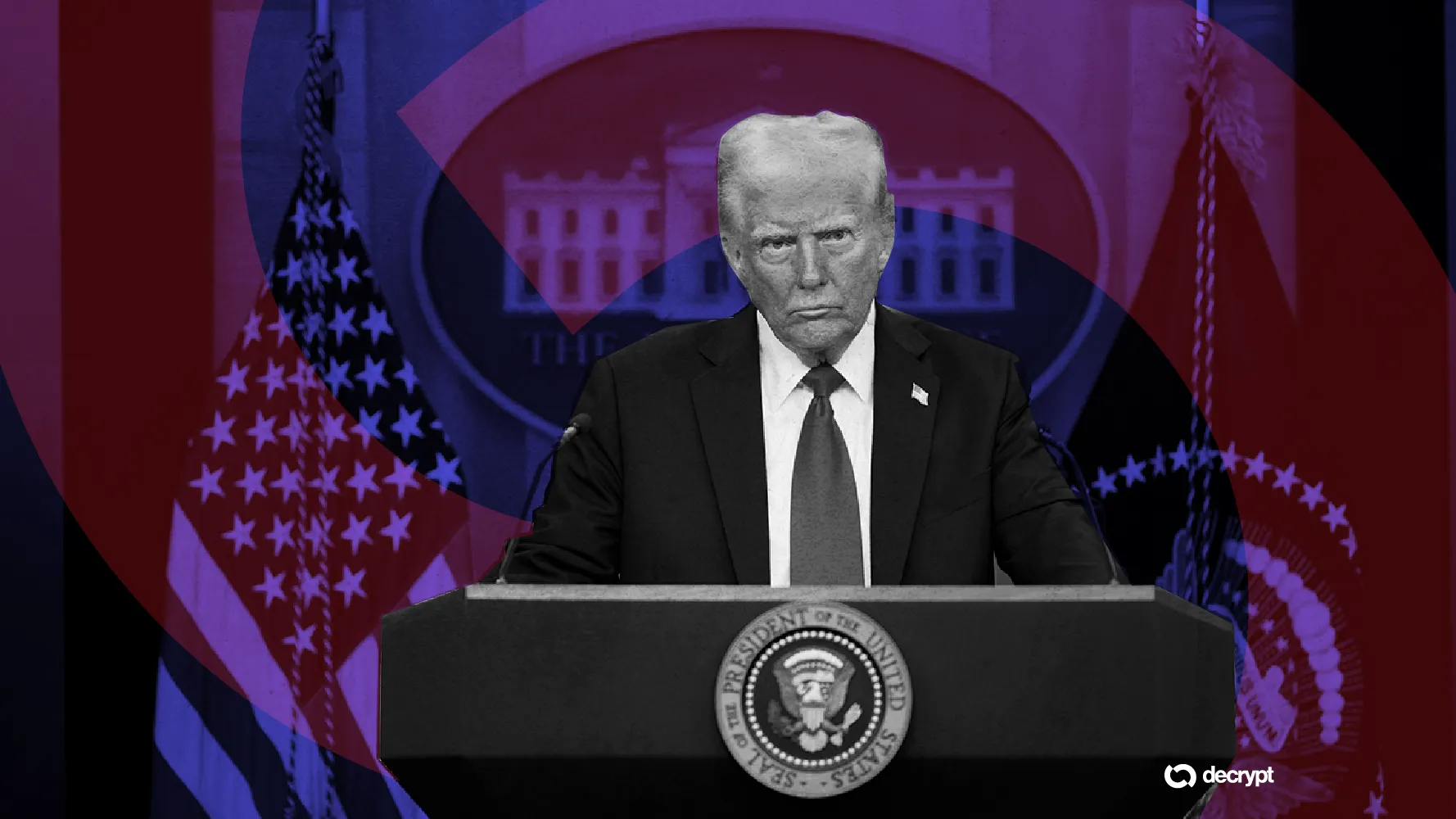
    The U.S. Supreme Court on Monday dismantled a nearly century-old precedent that had restricted presidents to removing federal agency commissioners only under extraordinary circumstances. The landmark 6-3 decision, authored by the court’s conservative majority, significantly bolsters presidential authority over key regulatory bodies, including those overseeing the cryptocurrency sector.

    The ruling affirmed President Donald Trump’s right to dismiss Rebecca Slaughter, a Democratic commissioner at the Federal Trade Commission (FTC). This effectively grants the president the power to terminate other agency commissioners at will, with the sole exception of Federal Reserve governors.

    The case held direct relevance to the cryptocurrency industry, as Commissioner Slaughter’s husband serves as Vice President of Policy at Paradigm, a prominent venture capital firm in the crypto space. This connection allowed the couple to fund Slaughter’s legal challenge all the way to the Supreme Court, as previously reported.

    The Supreme Court’s decision in Trump v. Slaughter overturns a long-standing precedent established during the early years of the Franklin Delano Roosevelt administration. That precedent had stipulated that agency commissioners could only be removed for extreme cases of neglect of duty or malfeasance.

    “Today’s historic Slaughter decision by the Supreme Court is the greatest increase in presidential power in the last 100 years,” President Trump stated in a social media post on Monday. “Such a monumental ruling at such an important time!”

    The ruling means that President Trump, and future presidents, can now dismiss commissioners at influential regulators such as the Securities and Exchange Commission (SEC) and the Commodity Futures Trading Commission (CFTC) at any time and for virtually any reason. This development grants the executive branch substantial new leverage over the direction of these agencies, which have historically been considered independent.

    President Trump has already demonstrated his willingness to exert influence by withholding appointments of Democratic commissioners to the SEC and CFTC, both of which are mandated to have two minority-party commissioners. The SEC currently comprises three Republican commissioners and no Democrats, while the CFTC is led by a sole Republican chairman.

    This issue became a critical point of contention in the year-long effort to pass the Clarity Act, a bill aimed at formally legalizing most cryptocurrency activities in the United States. Senate Democrats had previously indicated they would not support the legislation—which would grant significant regulatory authority over crypto markets to the SEC and CFTC—unless President Trump committed to appointing Democrats to both agencies.

    In December, the president had toldDecryptthat he was “open” to the idea. However, in the six months since, no such appointments have been made.

    Monday’s Supreme Court ruling further complicates the legislative landscape, as President Trump could now theoretically appoint Democrats to federal agencies and then remove them at his discretion.

    The decision arrives as the Clarity Act faces a critical juncture after more than a year of stalled progress. Most stakeholders involved in the bill agree that it must be passed by early August to have a viable chance of becoming law, given the approaching November midterm elections.

    Numerous obstacles beyond regulator independence still impede the legislation’s path. Chief among these is the president’s potential reluctance to approve ethics provisions that would restrict his numerous lucrative cryptocurrency ventures, a demand that Senate Democrats have identified as a non-negotiable “red line.” Earlier on Monday, Republican Senate leadership signaled an intention to bring the Clarity Act to a floor vote next month, regardless of Democratic readiness.

  • Galaxy Cuts Clarity Act 2026 Odds to 50%

    Galaxy Cuts Clarity Act 2026 Odds to 50%

    Galaxy Digital Lowers Odds on Crypto Bill Passage Amid Senate Calendar Crunch

    Galaxy Digital has significantly reduced its forecast for the CLARITY Act becoming law in 2026, now deeming its chances a “coin toss.” The firm cited a rapidly closing window for the U.S. Senate to advance the cryptocurrency market structure legislation before its upcoming five-week August recess.

    “We are reducing our odds of CLARITY Act passage in 2026 to 50-50,” Alex Thorn, Galaxy’s head of firmwide research, stated in a social media post on Friday.

    This latest revision marks a steady decline in Galaxy’s predictions. The firm had initially pegged the odds at 75% in May, then lowered them to 60% on June 9, before arriving at the current even-money assessment. Prediction market Polymarket offers an even more somber outlook, pricing the bill’s passage in 2026 at approximately 49%, a notable drop from a high of 74% just a month prior.

    Thorn emphasized that the primary obstacle is not the bill’s substance but its timing. A unified Senate text remains elusive, a firm floor schedule is absent, and the legislative calendar is shrinking as lawmakers approach their summer break. Competition for floor time has reportedly “intensified,” Thorn noted, particularly after President Trump’s recent refusal to sign a bipartisan housing bill until Congress passes the SAVE Act, an election measure focused on proof-of-citizenship. Surveillance and defense legislation are also vying for legislative attention.

    However, a declining probability of passage does not necessarily signal the bill’s demise, according to Tim Sun, a senior researcher at HashKey. “The drop in the probability of passage this time is merely a matter of time delay rather than the rejection of the proposal’s actual content,” Sun told Decrypt. He pointed out that prediction markets have shown odds below 50% since May, a view that is “somewhat more pessimistic than institutional forecasts.”

    Sun reiterated that the core issue is the Senate’s packed schedule, with the housing bill, the SAVE Act, and other priorities continuing to dominate the agenda. Without a clear path to a vote before the recess, he warned, the CLARITY Act could be pushed into a “more complex mid-term election environment.” Nevertheless, Sun added, its prospects could improve rapidly if a final text is released in July and Senate leadership provides a definitive schedule.

    The stakes for the cryptocurrency industry are considerable, Sun noted, especially in a trading environment “characterized by ETF outflows and weakening risk appetite.” The CLARITY Act, he suggested, “remains one of the few domestic U.S. policy catalysts that could potentially improve market sentiment.”

    The proposed legislation aims to establish the first comprehensive U.S. regulatory framework for digital assets, dividing oversight responsibilities between the Commodity Futures Trading Commission (CFTC) and the Securities and Exchange Commission (SEC). The bill passed the House of Representatives in July 2025 and cleared the Senate Banking Committee with a 15-9 vote in May. However, it garnered support from only two Democrats, falling short of the seven needed to overcome a 60-vote threshold on the Senate floor. Democrats, led by Senator Elizabeth Warren, have advocated for ethics provisions targeting cryptocurrency ventures associated with Donald Trump, while banking and law enforcement groups have raised concerns regarding stablecoin yields and potential gaps in illicit finance prevention.

    For the time being, the bill’s fate appears intertwined with the crowded legislative calendar that is also impeding other measures, including the housing bill that President Trump is currently withholding over his election-related demands. Senator Cynthia Lummis indicated to Fox Business last Wednesday that a final version of the CLARITY Act text could emerge around July 4.

  • Ukraine Seizes $8.3M in Crypto for State Management

    Ukraine Seizes $8.3M in Crypto for State Management

    Ukraine Takes Custody of Seized Cryptocurrency in Landmark Move

    Ukraine has officially taken its first seized cryptocurrency into state custody, marking a significant development for a nation that has quietly emerged as one of the world’s largest government holders of digital assets.

    More than $8.3 million in the stablecoin USDT has been transferred to a cryptocurrency wallet managed by ARMA, Ukraine’s asset-recovery agency, the country’s Prosecutor General’s Office announced in a statement on Telegram. “This is the first case where seized crypto assets have actually been transferred to the management of the state,” the office stated, according to a translation of the post.

    The USDT originated from wallets reportedly controlled by a member of an international hacking group. The State Bureau of Investigation alleges that the group conducted cyberattacks across Europe and the U.S., stealing confidential data, demanding ransoms, and laundering the proceeds within Ukraine by acquiring real estate, vehicles, and other high-value assets.

    Prosecutors estimate the damages caused by the group’s activities to be as high as $100 million. Four individuals, including the alleged ringleader, have been detained and remain in custody. Authorities have seized over $11.1 million in assets, including homes, vehicles, $1 million in cash, and the cryptocurrency.

    ARMA, officially the National Agency for Finding, Tracing and Management of Assets, is responsible for overseeing property seized in criminal cases. This marks its inaugural handling of digital assets, following a 2025 reform of the agency, which had faced criticism. The overhaul unlocked hundreds of millions of euros in European Union support and aimed to enhance transparency in the management of seized assets.

    This milestone occurs as Ukraine, a country with a highly active cryptocurrency landscape, formalizes its approach to digital assets. According to Chainalysis, Ukraine ranked fourth in Europe for crypto transaction volume, receiving $206.3 billion between mid-2024 and mid-2025. Public officials reportedly hold approximately $2.8 billion in Bitcoin. Local media reports from last year also indicated that the country has been exploring the possibility of establishing a strategic crypto reserve.

    Ukraine legalized virtual assets in 2022 and is currently advancing legislation to tax and regulate the market in alignment with European Union standards, a move that supports Kyiv’s bid for EU membership. Parliament passed the bill in its first reading last year.

    The UK’s Royal United Services Institute estimated last year that Ukraine could recover at least $10 billion in stolen funds and lost tax revenue by strengthening its crypto regulations. The institute warned that lax oversight had transformed the country into a hub for money laundering, including Russian funds. The transfer of seized cryptocurrency into state hands represents a step toward establishing the necessary formal frameworks to address this issue.

    “Modern crime has long since moved into the digital space,” the Prosecutor General’s Office stated. “We continue to work.”

  • GhostSwap Defies Delistings, Keeps Monero Accessible Without KYC

    GhostSwap Defies Delistings, Keeps Monero Accessible Without KYC

    Privacy Coins Face Delisting Wave, GhostSwap Offers Alternative

    The cryptocurrency landscape has seen a significant shift in recent years, with a growing number of centralized exchanges delisting privacy-focused coins. This trend, which began in earnest in 2024, is largely attributed to mounting compliance and regulatory pressures.

    Binance, for instance, announced the removal of Monero (XMR) trading in February 2024. Shortly thereafter, OKX delisted Monero, Zcash (ZEC), and Dash (DASH) within the same year. By mid-2026, the number of exchanges worldwide that had delisted privacy coins had surged to 73, a notable increase from 51 in 2023. Monero has been particularly affected, experiencing a six-fold increase in yearly delistings, followed by Dash.

    Regulatory scrutiny continues to intensify. Dubai’s financial regulator has prohibited privacy coins such as Monero and Zcash on licensed platforms within the Dubai International Financial Centre. Concurrently, the European Union’s Markets in Crypto-Assets (MiCA) regulation, which fully came into effect in late 2024, mandates a review by the European Commission by June 30, 2027. This review could lead to further legislative changes that might impose stricter restrictions on privacy-focused assets.

    GhostSwap’s Non-Custodial Approach

    In contrast to this trend, GhostSwap, a non-custodial and no-KYC crypto swap service, continues to support Monero, Zcash, Dash, and numerous other privacy tokens. The platform has recently launched a public swap-rate API that provides live Monero (XMR) rates, complete with minimum and maximum limits, without requiring an API key. This feature is designed to enable developers and price-display websites to instantly integrate privacy coin pricing.

    GhostSwap operates on a model where user funds are never held on the platform, allowing it to function outside the purview of traditional exchange controls. This fundamental difference is why privacy tokens remain swappable on GhostSwap even as custodial exchanges are compelled to delist them.

    A Different Model for Crypto Swaps

    GhostSwap distinguishes itself from centralized exchanges by functioning as a privacy-first, non-custodial swap platform. Users select their desired coins, send funds to a GhostSwap-provided address, and the service facilitates the swap by finding the optimal route and depositing the destination coin directly into the user’s wallet. Crucially, GhostSwap never takes custody of user funds. There are no accounts or logins required; all swaps are conducted on-chain, wallet-to-wallet, with no personal data collected.

    Effectively, GhostSwap acts as a smart liquidity router, connecting decentralized pools and centralized exchange liquidity behind the scenes. Unlike traditional exchanges, which must comply with regulatory demands to delist assets due to holding user funds and operating under specific licenses, GhostSwap merely routes users to available liquidity across various sources. As it does not custody assets, it avoids the same compliance ultimatums.

    This resilience extends to Zcash, Dash, and other privacy-focused assets. While major exchanges like Binance and OKX have removed these tokens from their order books, GhostSwap continues to support them as core trading pairs. Monero remains a primary asset, with pairs such as BTC to XMR and ETH to XMR listed among the platform’s most prominent offerings.

    Real-Time Pricing for Privacy Coins

    Integrators and users can now access real-time Monero pricing through GhostSwap’s public, no-key API. The endpoint is CORS-enabled and rate-limited to 60 requests per minute, returning GhostSwap’s aggregated best rates, including the required minimum and maximum swap sizes. This open model reduces barriers for wallets, trading bots, and dashboards looking to incorporate privacy coins.

    Each swap includes explicit minimum and maximum limits provided by the quote API. For example, a sample public API call indicated a minimum of 0.10 XMR and a maximum of approximately 2,337 XMR for Monero. These values fluctuate with liquidity, but their visibility via the API eliminates guesswork for integrators. Price-display and comparison sites can now dynamically showcase GhostSwap’s best privacy coin rates.

    The Privacy vs. Surveillance Debate

    Regulators, however, argue that such swaps create “blind spots” for surveillance. This highlights a clear tension: while privacy coins are becoming less accessible on traditional exchanges, platforms like GhostSwap are maintaining their liquidity and swappability. This dynamic is leading to an emerging clash between open-access cryptocurrency infrastructure and Anti-Money Laundering (AML) rules.

    Swapping Bitcoin to Monero on GhostSwap is presented as one of the most effective methods for converting cryptocurrency into a private, untraceable form without requiring KYC or account creation. Bitcoin transactions are transparent and publicly visible on the blockchain, allowing for the tracing of wallet balances and payment histories. By converting BTC to XMR, users can leverage Monero’s comprehensive privacy features.

    Monero’s privacy is achieved through technologies like ring signatures, stealth addresses, and RingCT, which render all transactions untraceable by default. This ensures that transaction details, balances, and payment histories remain invisible to external observers.

    While BTC holdings are traceable on the Bitcoin blockchain, once converted to XMR through a no-KYC exchange like GhostSwap, there is no account or identity linking the two. Furthermore, Monero transaction fees are exceptionally low, typically less than $0.01 per transaction, making XMR practical for regular private transactions, not just large transfers.

    GhostSwap processes BTC to XMR swaps without KYC, sign-ups, or personal data collection, ensuring that the swap remains as private as Monero itself.

    Seamless Bitcoin to Monero Swaps

    Exchanging Bitcoin for Monero on GhostSwap is described as an instant process, requiring no sign-up, identity verification, or limits. The Monero typically arrives in the user’s wallet within 2 to 10 minutes, corresponding to 10 block confirmations. Monero fees remain consistently low at approximately $0.01 per transaction.

    The process for swapping Bitcoin to Monero on GhostSwap is outlined as straightforward:

    1. Select Bitcoin in the “You Send” field, enter the amount, and choose Monero in the “You Get” field.
    2. Provide your Monero wallet address for receiving XMR.
    3. Send your BTC to the provided address to initiate the exchange.
    4. Upon completion, receive XMR in your wallet.

    The entire process is non-custodial, with GhostSwap never holding user funds, ensuring user control from start to finish.

    The Future of Privacy Coins

    The wave of delistings shows no signs of abating. With MiCA reviews on the horizon in 2027 and ongoing regulatory scrutiny in Asia and the Middle East, privacy coins face an uncertain future on traditional exchanges. However, platforms like GhostSwap are demonstrating that the infrastructure for private, permissionless crypto transactions remains resilient.

    GhostSwap’s ability to keep Monero swappable and make privacy coin pricing accessible to developers, wallets, and comparison sites globally may define the next phase of crypto infrastructure: one that is accessible, resilient, and caters to users who value both privacy and choice.

  • CoinEx: Iran’s Crypto Economy Gateway

    CoinEx: Iran’s Crypto Economy Gateway

    Billions in Crypto Transactions Linked to Sanctioned Iranian Entities via CoinEx

    More than $3.84 billion in blockchain transactions have been traced between cryptocurrency exchange CoinEx and sanctioned Iranian entities over a period exceeding seven years, according to a new report.

    The findings emerge shortly after the U.S. Treasury’s Office of Foreign Assets Control (OFAC) imposed sanctions on four Iranian exchanges—Nobitex, BitPin, Wallex, and Ramzinex—under Executive Orders 13224 and 13902. These four platforms accounted for approximately $7.7 billion, or 78%, of Iran’s estimated $10 billion in attributed crypto activity in 2025, the report by TRM Labs stated. Despite ongoing enforcement actions, Iran’s annual crypto volumes have remained substantial.

    CoinEx, founded in 2017, has processed over $79 billion in trading volume and has faced regulatory scrutiny in multiple countries. TRM Labs’ analysis indicates that CoinEx is the largest external counterparty for Nobitex, Iran’s biggest crypto exchange. Since late 2018, over $2.7 billion has moved between the two platforms through approximately 6.2 million blockchain transfers, averaging about $1 million daily. Nobitex has sent roughly $360 million more to CoinEx than it received, suggesting a consistent flow of funds from Iran to international markets via CoinEx.

    Activity between CoinEx and Nobitex surged from around $13 million in 2020 to $575 million in 2021. Following a dip in 2022 and 2023, volumes rebounded to $714 million in 2024 and $763 million in 2025. CoinEx was responsible for over 16% of Nobitex’s annual transaction volume.

    TRM Labs also identified direct connections between CoinEx and more than 60 Iranian crypto businesses, including Wallex, Ramzinex, BitPin, Aban Tether, Excoino, Bit24, Ompfinex, Sarmayex, and Exir. The report suggests that a similar proportion of transaction volumes was routed through CoinEx across multiple Iranian exchanges, coupled with the gradual onboarding of platforms over several years. This pattern points to an organized relationship rather than independent market behavior.

    The blockchain intelligence firm further discovered that approximately $67 million originating from the Central Bank of Iran reached CoinEx through a complex laundering structure between June 2025 and June 2026. Funds reportedly traversed multiple blockchains, cross-chain bridges, Gnosis Safe contracts, and Aave tokens before arriving at CoinEx. The exchange allegedly provided transaction fees that facilitated these transfers.

    ViaBTC, a mining pool operated by CoinEx’s parent company, also showed close ties to Iran. TRM traced over $154 million between ViaBTC and Nobitex-linked wallets, with most transfers flowing from the mining pool to Iranian wallets. Following a cyberattack on Nobitex in 2025, previously inactive mining wallets transferred about $2.7 million to a new Nobitex wallet. ViaBTC also appeared in the transaction chain, indicating that mining reserves may have been used to restore liquidity.

    TRM also found CoinEx’s exposure to wallets linked to the IRGC, Palestinian Islamic Jihad, Hezbollah, Garantex, Bitzlato, the CoinEx hack, BlackSuit ransomware, and the Wasabi mixing service. Transaction patterns shifted after the intensification of the U.S.-Iran-Israel conflict in early 2026, with average transfer sizes and the frequency of larger transactions increasing sharply.

    Following OFAC’s sanctions on several Iranian exchanges earlier this month, transaction volumes between CoinEx and Iranian entities have significantly decreased. However, the firm cautioned that private exchange accounts could still enable activity outside of public blockchain visibility.

    CoinEx has denied any relationship with the Iranian government or sanctioned entities, stating it has never provided them with funding or support. The exchange also asserted that blockchain transactions do not inherently prove involvement in illegal activities.

  • California’s DFAL Deadline Looms: XRP Fate Uncertain

    California’s DFAL Deadline Looms: XRP Fate Uncertain

    California’s Digital Financial Assets Law Looms, Impacting Ripple and XRP

    California’s Digital Financial Assets Law (DFAL) is set to take effect on July 1, mandating that any firm conducting digital asset business with state residents must obtain a DFAL license or have a pending application with the Department of Financial Protection and Innovation (DFPI). Failure to comply will require cessation of such operations. Public records currently show no Ripple entities among the applicants, a development that coincides with XRP’s price falling below the $1.10 mark amid this regulatory uncertainty.

    The DFAL encompasses a broad range of digital asset activities, including exchanges for fiat or other digital assets, transfers between individuals, custody services, and the issuance of reserve-backed instruments. These provisions directly align with Ripple’s existing operations in California, which include its payments infrastructure, custody services, and the issuance and redemption of RLUSD, its dollar-pegged stablecoin.

    Regulatory Landscape and Ripple’s Position

    Ripple’s existing portfolio of over 40 U.S. money transmitter licenses does not automatically satisfy the DFAL requirements. The new law establishes a distinct regulatory framework managed by the DFPI through the Nationwide Multistate Licensing System.

    By the July 1 deadline, companies have three avenues for legal compliance: securing a DFAL license, submitting a complete application to the DFPI, or qualifying for a limited statutory exemption. This exemption is primarily available to banks, certain trust companies, and entities already registered with the SEC or CFTC that operate within their existing regulated activities.

    Ripple has engaged with the DFPI, submitting a formal comment letter advocating for the elimination of redundant money transmitter license requirements for DFAL-licensed firms. However, this engagement does not equate to a filed license application. Law firms, including those recognized by Chambers, have characterized the DFAL as one of the most comprehensive state-level digital asset licensing regimes in the United States.

    XRP Price Dynamics Amidst Regulatory Scrutiny

    XRP is currently trading near $1.10, a significant drop from the $2.50 price point many had anticipated. Recent price action indicates weak momentum, with sellers consistently capping rallies in the $1.15 to $1.20 range. Despite ongoing attention on Ripple’s regulatory developments, the market has not yet factored in a decisively positive outcome.

    Investors remain keenly focused on several legal and regulatory milestones involving Ripple. While a previous court finding that XRP itself is not inherently a security removed a major source of uncertainty, the outstanding penalty and injunction issues remain significant as they could influence Ripple’s future business operations and market sentiment.

    From a technical standpoint, XRP must first reclaim the $1.15 to $1.20 zone before a stronger trend reversal can be discussed. Should buyers regain control and regulatory developments continue to be favorable, the next resistance level could emerge between $1.30 and $1.50. A sustained move above these levels would likely necessitate a substantial catalyst.

    On the downside, support is currently clustered around $1.05 and $1.00. A weakening of regulatory expectations or a downturn in the broader cryptocurrency markets could place pressure on these levels. The $1.00 mark represents an important psychological threshold, as a decisive breach could trigger further selling.

    For the time being, the market appears to be awaiting confirmation rather than trading on speculation. While regulatory progress could improve sentiment, XRP’s longer-term trajectory will likely be shaped by both legal clarity and a resurgence of stronger market demand.

  • Trump Administration Seeks OpenAI Limits on GPT-5.6

    Trump Administration Seeks OpenAI Limits on GPT-5.6

    White House Seeks to Limit OpenAI’s GPT-5.6 Release for Government Review

    The Trump administration has requested that OpenAI restrict the initial rollout of its advanced AI model, GPT-5.6, to a select group of government-approved partners. This move, reported by The Information and Axios, comes as federal officials aim to evaluate the model’s capabilities.

    This marks the second instance this month where the U.S. government has intervened to control the release of a cutting-edge AI system. Previously, the administration ordered Anthropic to halt public access to its Claude Fable 5 and Mythos 5 models, citing national security concerns.

    According to the reports, the White House’s Office of the National Cyber Director and the Office of Science and Technology Policy are urging OpenAI to limit GPT-5.6’s deployment. The administration is currently developing a framework for assessing advanced AI models before they are made widely available. Sources close to the discussions indicated that the request was primarily driven by GPT-5.6’s “Mythos-like” capabilities, rather than a broader change in the government’s AI policy.

    This request follows President Trump’s executive order earlier this month, which directed federal agencies to establish a voluntary testing framework for advanced AI systems prior to their release. This directive emerged after weeks of internal deliberations regarding the structure of such a program.

    The administration’s intervention also signifies a shift in the dynamic between leading AI developers and Washington. For years, AI companies have advocated for government regulation within the industry.

    In 2023, OpenAI CEO Sam Altman testified before the Senate, urging lawmakers to establish a dedicated regulatory agency for advanced AI systems, arguing that independent oversight would eventually be essential. More recently, Anthropic CEO Dario Amodei echoed similar sentiments, contending that the most powerful AI models should undergo rigorous, government-backed evaluations before deployment due to their potential to facilitate sophisticated cyberattacks, aid in biological weapons research, and pose other national security threats.

    These concerns have become increasingly formalized, with Anthropic, OpenAI, and Google each publishing proposals outlining potential governance structures for frontier AI. While their approaches vary, all three companies advocate for structured evaluations of the most capable models, enhanced transparency in safety testing, independent reviews of high-risk systems, and a more significant governmental role in overseeing AI development.

    The administration’s intervention may also serve as a test case for the feasibility of applying the governance frameworks championed by major AI companies uniformly across the industry. Critics have raised concerns that if the largest AI developers influence the creation of rules that are then enforced inconsistently, frontier AI regulation could devolve into a form of regulatory capture, benefiting a select few companies and hindering competition.

  • Hyperliquid Addresses Singapore Investor Alert Listing

    Hyperliquid Addresses Singapore Investor Alert Listing

    Hyperliquid Added to Singapore’s Investor Alert List, Platform Clarifies No Regulatory Breach

    Hyperliquid, a perpetual futures platform, has been added to the Investor Alert List (IAL) maintained by the Monetary Authority of Singapore (MAS). The platform has clarified that this inclusion does not signify a regulatory violation, enforcement action, or ban.

    In a statement released on X, Hyperliquid emphasized that its appearance on the IAL should not be construed as an indication of wrongdoing. The platform explained that the list is designed to identify entities that might be mistakenly perceived as being licensed, authorized, or regulated by the MAS.

    Hyperliquid noted that several prominent cryptocurrency exchanges and decentralized finance protocols have previously been featured on the list. According to the MAS, the Investor Alert List comprises entities that, based on available information, may be wrongly assumed to be licensed or regulated by the central bank.

    The regulator further stated that the list may also include entities offering investments or investment-related products that could be mistakenly viewed as authorized, recognized, registered, or accompanied by documentation lodged with the MAS.

    Responding to the development, Hyperliquid asserted its status as permissionless infrastructure, stating that it has never claimed to be licensed or authorized by the MAS. The platform advised users not to consider it as holding such approvals. Hyperliquid also highlighted that users retain self-custody of their assets, and all network transactions remain transparent and are fully settled on-chain.

    “The Hyperliquid ecosystem remains committed to engaging collaboratively and constructively with regulators and institutions globally and to supporting clear, well-designed frameworks for onchain finance,” the platform stated.

    Earlier this month, the MAS also placed Bybit Fintech Limited on its Investor Alert List. Bybit responded by stating its ongoing regular and constructive engagement with the MAS and detailing measures implemented to restrict access for users in Singapore. These measures include modifications to its terms of service and geo-blocking of Singaporean IP addresses.

    Hyperliquid’s native token, HYPE, showed minimal reaction to the news. HYPE traded around $62 over the past 24 hours. The token had previously reached over $75 in mid-June before experiencing a decline amid broader market volatility.

    Meanwhile, institutional demand for the token appears to remain robust. Data from SoSoValue indicated that U.S. spot HYPE ETFs recorded net inflows exceeding $108 million on June 25, marking the largest single-day inflow since their launch last month. These inflows followed five trading days in June that saw no net flows.

  • NOWPayments Adds Crypto Tax Tools for Global Businesses

    NOWPayments Adds Crypto Tax Tools for Global Businesses

    Crypto Tax Resources Launched to Aid Global Business Adoption

    Amsterdam, Netherlands – June 26, 2026 – As the global adoption of cryptocurrencies accelerates, businesses are finding it increasingly straightforward to accept digital assets. However, navigating the complex landscape of regulatory compliance across different jurisdictions remains a significant hurdle.

    To address this challenge, NOWPayments and KoinX have jointly developed Crypto Tax Educational Assets. These practical, jurisdiction-specific resources are designed to assist businesses that are either exploring or already engaged in accepting cryptocurrency payments. The resources are available free of charge.

    The educational materials move beyond theoretical research to offer actionable guidance on tax and accounting considerations, reporting expectations, and crucial regulatory factors that businesses must evaluate when operating with cryptocurrencies.

    According to the companies, this initiative is particularly relevant for merchants, platforms, and global enterprises operating in multiple regions where regulatory requirements can vary considerably.

    “At KoinX Books, our focus is on simplifying crypto accounting and financial compliance for businesses operating within the digital asset space,” stated Punit Agarwal, Founder of KoinX. “Our collaboration with NOWPayments represents another stride towards building a more interconnected and efficient infrastructure for Web3 businesses worldwide. As crypto adoption expands across regions like Spain and Europe, businesses require financial systems that are transparent, scalable, and audit-ready.”

    This partnership underscores a shared objective between NOWPayments and KoinX: to enhance the operational accessibility of crypto adoption for businesses.

    NOWPayments asserts that payment processing alone is no longer sufficient to support widespread business adoption of cryptocurrencies. Successful engagement in the digital asset economy increasingly demands operational confidence, educational support, and the necessary infrastructure to help businesses understand how to responsibly manage cryptocurrencies across various jurisdictions.

    “We believe businesses need more than just payment tools to thrive with crypto,” commented Kate Lifshits, CEO of NOWPayments. “Our ecosystem is evolving to support businesses at multiple stages of their crypto journey, from payment acceptance to operational and compliance readiness. These assets are a key component of that broader mission.”

    Businesses planning to accept cryptocurrency but uncertain about compliance requirements in their target markets can now access a free Crypto Tax Checklist for Spain, the EU, UAE, LATAM, and other key regions.

    About NOWPayments
    NOWPayments is a global cryptocurrency payment gateway that empowers businesses to accept payments and facilitate payouts in digital currencies. The platform supports over 350 cryptocurrencies and more than 30 stablecoins. It offers enterprise-grade tools including invoices, payment widgets, subscription services, payment buttons, donation tools, point-of-sale solutions, plugins, and fiat payment options. Businesses can also benefit from zero-fee payouts with settlement speeds as fast as one second, streamlining operations and enabling efficient scaling of crypto payments.

  • Anthropic Warns Congress on Chinese AI Data Mining

    Anthropic Warns Congress on Chinese AI Data Mining

    Anthropic is urging Congress to bolster protections against AI model distillation, citing what it describes as the largest known effort to extract capabilities from its Claude chatbot, allegedly carried out by operators affiliated with Alibaba.

    In a letter dated June 10 to Senate Banking, Housing, and Urban Affairs Committee Chairman Tim Scott and Ranking Member Elizabeth Warren, Anthropic detailed allegations that Alibaba and its Qwen AI lab-linked operators engaged in over 28.8 million interactions with Claude between April 22 and June 5. These exchanges reportedly involved nearly 25,000 “fraudulent accounts,” meaning they did not represent genuine, organic users.

    Anthropic characterized this activity as a “distillation attack,” stating that the operations specifically targeted Claude’s abilities in agentic reasoning, software engineering, and long-horizon planning. Such attacks, the company explained, allow competitors to replicate advanced model behaviors without incurring the substantial costs associated with training a frontier AI system from scratch.

    “Beyond its scale, this campaign was striking for its brazen nature,” Anthropic wrote in the letter. “Alibaba is listed on the New York Stock Exchange, maintains business operations in the United States, and is accountable to U.S. investors and regulators.”

    The AI firm asserted that the campaign extended beyond intellectual property concerns, framing large-scale model distillation as a national security issue. Anthropic warned that such practices could accelerate China’s military and cyber AI capabilities, thereby diminishing the United States’ technological advantage.

    This appeal comes as Washington intensifies its focus on safeguarding U.S. leadership in artificial intelligence. Earlier this month, President Donald Trump signed an executive order aimed at expanding AI-powered cybersecurity initiatives, a measure he had previously delayed amid concerns it could compromise America’s competitive standing against China.

    “When PRC labs distill these capabilities from U.S. models, they capture the returns on American investments without bearing the costs or risks associated with training frontier AI models,” Anthropic stated. “This inverts the economic logic that underwrites American AI leadership, turning billions of dollars’ worth of research and development, compute, and other U.S. investments into a subsidy for our competitors.”

    Anthropic proposed several actions for lawmakers, including expanding intelligence sharing between frontier AI developers and the U.S. government, clarifying antitrust regulations to permit AI companies to share information about distillation attacks, strengthening export controls on advanced AI chips and computing power, closing loopholes that enable Chinese firms to access overseas data centers, and implementing penalties for companies involved in large-scale model extraction.

    A spokesperson for Anthropic declined to comment on the specifics of the letter but told Decrypt, “We believe combating the threat of illicit distillation requires coordinated action between government and industry, and we will continue working with Congress and the administration to maintain American AI leadership.”

    The letter builds upon previous claims made by Anthropic in February, where it alleged that Chinese AI developers DeepSeek, Moonshot AI, and MiniMax had generated over 16 million Claude exchanges using approximately 24,000 fraudulent accounts.

    Those earlier allegations drew criticism from some observers who pointed out that AI companies themselves employ similar techniques during the training of their own systems. Anthropic has maintained that conventional distillation is a legitimate method for creating smaller, more cost-effective models. However, it argues that the unauthorized extraction of frontier model capabilities through fraudulent access constitutes a violation of its terms of service.

    The broader discourse surrounding AI model distillation has grown increasingly complex in recent months. In April, Elon Musk testified in federal court that his company xAI had “partly” utilized OpenAI models in the training of its Grok chatbot. This testimony underscored that distillation is an established industry practice, even as companies continue to debate the boundaries between legitimate model training and unauthorized model extraction.