Tag: Regulation & Policy

  • South Korea Busts Crypto Laundering Ring Linked to $11M Cambodian Scam

    South Korea Busts Crypto Laundering Ring Linked to $11M Cambodian Scam

    South Korean Police Target Crypto Laundering for Cambodia-Based Phishing Ring

    South Korean authorities have apprehended dozens of individuals accused of laundering funds for a Cambodia-based phishing operation through cryptocurrency transactions. The crackdown comes as an expert from Chainalysis warns that the ecosystem of scam compounds in Southeast Asia continues to pose a “persistent concern” despite years of efforts to dismantle criminal networks.

    The Seoul Metropolitan Police Agency’s crime investigation division reported that 23 suspects have been referred for charges including violations of the Foreign Exchange Transactions Act and the Specific Financial Information Act. Two individuals, identified only as A and B, have been detained, according to local media.

    In addition to these arrests, 33 other suspects were apprehended for allegedly engaging in the illegal exchange of $4.1 million (6.3 billion won) in cryptocurrency. The alleged ringleader, known only as C, remains at large and is now the subject of an Interpol Red Notice.

    Investigators also secured approximately $431,000 (650 million won) in illicit proceeds through pre-indictment confiscation.

    Police stated that the group, acting under C’s directives, moved around $11.1 million (16.8 billion won) between February 2024 and April 2025. Their method involved purchasing the USDT stablecoin, transferring it between domestic and overseas exchanges, and then cashing out into foreign currency or South Korean won for a fee.

    A review of over 11,300 linked accounts revealed 265 instances of phishing-related harm, encompassing voice phishing and investment fraud, with a total value of $17 million (25.7 billion won).

    Authorities urged the public to exercise caution, emphasizing that “acting as an agent for another person’s virtual asset trading or exchanging virtual assets for Korean Won can also be subject to punishment.”

    Persistent Threat in Southeast Asia

    Xue Yin Peh, head of investigative strategy and collections for APAC at Chainalysis, told Decrypt that increased international scrutiny has yielded concrete results against the “persistent problem” of scam compounds and their associated illicit networks. She highlighted significant actions from the past year, including the recovery of 61,000 Bitcoin by UK authorities and a $15 billion forfeiture linked to the Prince Group, noting these cases signify “a meaningful shift toward dismantling the global financial infrastructure that supports crypto fraud.”

    However, Peh observed that transnational criminal networks have “demonstrated significant flexibility and resilience,” relocating within and beyond Southeast Asia and adapting their operational models as enforcement tightens. These networks rely on a broad illicit ecosystem comprising laundering networks, infrastructure, and trafficked labor, which she described as “remarkably resilient,” with new service providers “quickly filling gaps left by enforcement takedowns.”

    Stablecoins like USDT remain the preferred tool for illicit fund flows because, as Peh explained, criminals utilize them “for largely the same reasons legitimate users do”: liquidity, portability, and relative price stability. She added that on-chain transactions are “transparent and traceable,” and issuers can freeze funds once illicit activity is detected.

    Peh believes that cases like this “certainly can, and already have” bolstered the argument for enhanced global oversight of stablecoins. She suggested that stablecoin issuers should be integral to the “fraud-prevention front line” and that clearer legal frameworks are necessary to facilitate coordination among issuers, exchanges, banks, and authorities when victim funds are at risk.

    In November, Interpol designated scam-compound networks as a global transnational threat. The same month, U.S. agencies established a multi-agency Scam Center Strike Force to track illicit funds. The Strike Force has since frozen, seized, and forfeited over $580 million in cryptocurrency linked to networks operating out of Burma, Cambodia, and Laos.

    Around the same period, Taiwanese prosecutors charged 62 individuals in connection with the network of Cambodian tycoon Chen Zhi, chairman of Prince Group. Chen Zhi was extradited to China earlier this year amid allegations linking his business empire to cyber scam networks.

    In April, Cambodia enacted its most stringent anti-scam legislation to date via royal decree, imposing potential life sentences on compound operators. However, analysts have cautioned that such measures might merely shift the illicit trade across borders rather than eradicate it.


  • Musk’s xAI Lawsuit Against OpenAI Dismissed

    Musk’s xAI Lawsuit Against OpenAI Dismissed

    Judge Dismisses xAI’s Trade Secret Lawsuit Against OpenAI

    A federal judge has dismissed xAI’s trade secret lawsuit against OpenAI, ruling that Elon Musk’s artificial intelligence company failed to demonstrate that the ChatGPT maker improperly obtained confidential information related to its Grok chatbot.

    In an order issued Monday, U.S. District Judge Rita Lin granted OpenAI’s motion to dismiss the case without leave to amend. The judge concluded that xAI did not provide sufficient evidence that OpenAI encouraged a former xAI engineer to disclose trade secrets during the recruitment process.

    “xAI insufficiently pled inducement in the prior complaint because it offered no nonconclusory allegations allowing a reasonable inference ‘that OpenAI told or encouraged’ xAI’s former employees to exfiltrate its confidential information,” the order stated.

    This ruling marks the second legal setback for Musk, who co-founded OpenAI before leaving in 2018, in his ongoing dispute with OpenAI and its CEO, Sam Altman.

    Last month, a federal jury rejected Musk’s $150 billion lawsuit, which alleged that OpenAI, Altman, and co-founder Greg Brockman had abandoned the organization’s original nonprofit mission by transitioning to a commercial structure and strengthening its ties with Microsoft.

    The most recent lawsuit focused on a presentation given by Xuechen Li, a former xAI engineer, during his recruitment by OpenAI. xAI claimed that OpenAI targeted Li specifically because of his work on Grok 4’s reinforcement learning and post-training systems, and accused the ChatGPT developer of knowingly seeking confidential information about these efforts.

    Judge Lin rejected this argument, writing that “merely asking Li to discuss his previous work—a routine part of the hiring process—does not allow a plausible inference that OpenAI induced Li to reveal anything confidential or secret about that work.” She added that accepting xAI’s theory could “potentially expose employers to liability any time they inquire about a candidate’s past work.”

    The judge also found that xAI failed to prove that OpenAI knew or should have known Li disclosed trade secrets during the presentation.

    “These allegations are insufficient to support a reasonable inference that OpenAI knew or should have known that Li disclosed xAI trade secrets during his presentation,” Lin wrote. “It is not clear how much detail Li shared about xAI’s reinforcement learning techniques. Similarly, while xAI does not allege that Li actually displayed the slide deck during his presentation, even assuming he did, the level of detail contained in the slides remains unclear.”

    The decision comes as Musk recently became the world’s first trillionaire, following SpaceX’s record-breaking initial public offering, which valued the company at approximately $1.77 trillion and solidified its status as one of the globe’s most valuable corporations.

    SpaceX (SPCX) shares continued to climb on Monday amid a broader market surge, influenced by the announcement of a ceasefire between the U.S. and Iran. The company’s stock rose nearly 20% by the close of trading, finishing the day at $192.50, which brings its valuation to over $2.5 trillion.

  • Europe Crypto Firms Face MiCA Deadline Crunch

    Europe Crypto Firms Face MiCA Deadline Crunch

    Europe’s Crypto Landscape Faces Reckoning as MiCA Deadline Looms

    Brussels, Belgium – A significant portion of the cryptocurrency industry operating in Europe faces a stark choice: comply with the European Union’s new Markets in Crypto-Assets (MiCA) regulation or cease operations within the bloc. With the transitional period set to expire on July 1, 2026, a mere 17% of crypto firms previously registered under national frameworks have successfully obtained full licensing under MiCA.

    Of the more than 1,200 crypto firms that held national Virtual Asset Service Provider (VASP) registrations across the EU, only approximately 210 have converted to the new Crypto-Asset Service Provider (CASP) licenses. This leaves a substantial 83% of these entities in a precarious position, having either missed the application window, are currently navigating a process without legal standing to continue operations, or have quietly exited the market.

    The European Securities and Markets Authority (ESMA) has been unequivocal: there will be no intermediate status after July 1. Companies will either be authorized under MiCA or will be in breach of EU law. The concept of “pending authorization” does not grant the right to continue serving EU clients; this is the operative legal reality as the deadline approaches.

    MiCA establishes a unified licensing regime for crypto exchanges, custodians, brokers, portfolio managers, and lending platforms that serve EU clients. Prior to MiCA, these firms had to contend with a fragmented landscape of national registration standards, where rules varied significantly from one member state to another. MiCA consolidates this into a single framework, with one authorization granting EU-wide passporting rights.

    The application deadline in December 2024 initiated an 18-month grandfathering period under Article 143 of the regulation, which concludes on July 1. Firms that have secured CASP licenses from national competent authorities in countries such as France, Germany, Luxembourg, Ireland, or the Netherlands can now offer their services across all 27 EU member states. Those that have not completed this process are legally obligated to halt their operations.

    The comprehensive MiCA framework mandates adherence to stringent rules covering governance, custody standards, conflicts of interest, prudential safeguards, client asset protection, disclosure obligations, market abuse, and complaint handling.

    For stablecoin issuers, MiCA’s earlier phase in June 2024 already significantly altered the European market. Reserve requirements and redemption rules were first applied to asset-referenced tokens and e-money tokens. The ongoing pressure on the distribution of Tether’s USDT within the EU is a direct consequence of this earlier regulatory phase.

    The 17% conversion rate is a critical indicator, highlighting the narrowness of the currently licensed market. Industry snapshots suggest an even more concentrated landscape, with reports indicating around 14 exchanges holding trading approval and 183 entities with full authorization across 20 EEA states. This licensed market is geographically concentrated in jurisdictions that were early movers in crypto regulation, such as Luxembourg, France, and Ireland, which had established licensing pipelines and processed a higher volume of applications.

    While the passporting advantage offers a strong economic incentive to secure authorization in any single member state, the application process itself demands significant legal, compliance, governance, and capital resources, which many smaller firms lack. Smaller exchanges and non-EU platforms catering to EU retail clients are identified as the most vulnerable categories. Global exchanges based outside the EU that have not established authorized EU subsidiaries will face the same operational halt as unlicensed domestic operators, as MiCA’s scope is determined by client location, not the firm’s headquarters.

    Major licensed players include Kraken, Coinbase, Bitstamp, OKX, Crypto.com, and Bitpanda. The regulation’s impact is also evident in the market for stablecoins like USDC and EURC.

  • iGaming Faces Regulatory and Growth Pressures

    iGaming Faces Regulatory and Growth Pressures

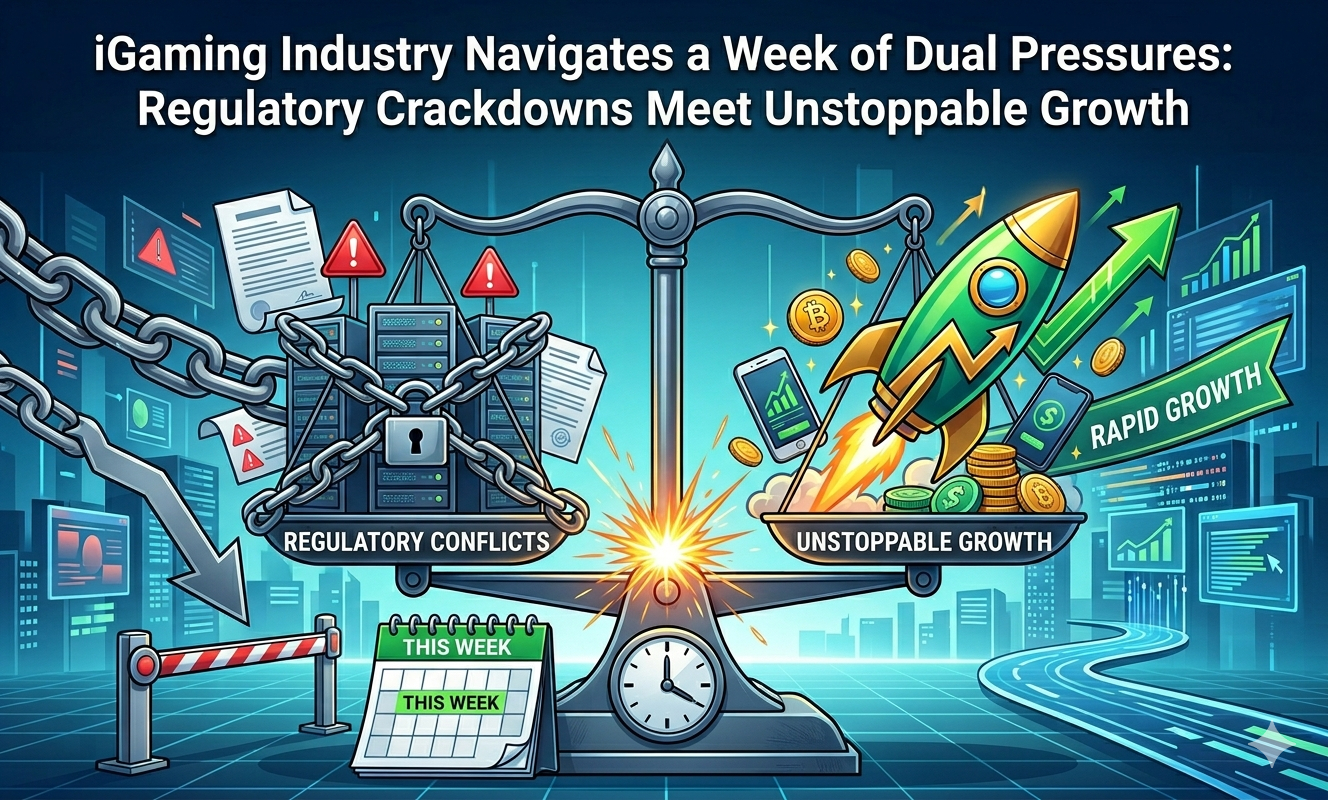
    iGaming Sector Faces Dual Pressures of Intensifying Regulation and Global Expansion

    Norwich, United Kingdom – June 15, 2026 – The iGaming industry is navigating a complex landscape defined by heightened regulatory scrutiny and persistent global market expansion, according to a new industry overview released by NyesteCasino.com, a prominent iGaming analysis resource. Operators are grappling with a delicate balance between risk management and aggressive growth strategies, a challenge underscored by U.S. Senate hearings, evolving legal interpretations, the localization of crypto casinos, and a surge in World Cup betting activity.

    Across the United States, Europe, Southeast Asia, and South America, regulators have been tightening rules concerning prediction markets, sweepstakes casinos, and the use of credit cards for deposits. Simultaneously, online gambling platforms, content providers, and policy advisors have accelerated product innovation and launched targeted, region-specific sports marketing campaigns.

    NyesteCasino.com’s analysis suggests these developments signal a significant structural shift within the industry, where agility in compliance is rapidly becoming as crucial for success as product quality. Despite increasing regulatory headwinds, the pace of innovation and sustained market demand indicate continued sector growth.

    Prediction Markets: A Battlefield of Courts, Congress, and Cross-Border Bans

    The week commenced with a highly anticipated hearing before the U.S. Senate Commerce Subcommittee, titled “No Sure Bets.” Held on May 20 under the chairmanship of Senator Marsha Blackburn, the session signaled further deliberations to come. A central point of contention emerged between American Gaming Association CEO Bill Miller and former Congressman Patrick McHenry regarding the future of prediction markets. Miller argued that sports event contracts function as clandestine betting operations, circumventing state licensing, tax regulations, and integrity safeguards. McHenry, representing the Coalition for Prediction Markets, countered that existing Commodity Futures Trading Commission (CFTC) oversight is effective.

    Adding to the legal complexities, on May 22, a panel from the Ninth Circuit Court of Appeals rejected stay requests from both Kalshi and Polymarket, refusing to halt state enforcement proceedings in Nevada and Washington. The court ruled that a federal preemption defense under the Commodity Exchange Act alone does not establish federal jurisdiction. This decision strengthens the ongoing dispute in the New Jersey appeals court, which had previously upheld an injunction against Kalshi, and further accelerates the process towards a potential Supreme Court review of state jurisdiction over event contracts.

    In Indonesia, the Ministry of Communication and Digital Affairs classified Polymarket as an online gambling site, disregarding its crypto-based structure, and requested a national ban on the platform on May 25. This action was prompted by a viral contract concerning whether President Prabowo Subianto would resign before the end of his term in October 2029, which generated approximately $46,000 in trading volume. Polymarket is now inaccessible in over 33 jurisdictions worldwide, including India, Brazil, and Singapore, with more countries implementing bans.

    State-Level Regulations: Tennessee Enacts Anti-Sweepstakes Bill

    State-level restrictions on online gambling law have also emerged in Tennessee. Governor Bill Lee signed two significant bills into law during the week. Senate Bill 2136 designates Tennessee as the ninth U.S. state to completely ban sweepstakes casinos and dual-currency systems, empowering the attorney general to enforce the ban. Senate Bill 1992, the second bill signed by the governor, classifies anyone who deliberately influences the outcome of an event while holding a prediction market contract with a Class E felony. These legislative actions are expected to influence other state legislatures considering similar regulations.

    Europe and Brazil: Tax Proposals, Ad Restrictions, and Credit Bans

    The European Parliament held a plenary debate on May 20 concerning a proposed EU-level gambling levy. Budget Commissioner Piotr Serafin confirmed that the Commission is actively evaluating this option, alongside levies on digital services and crypto-assets, as part of the next Multiannual Financial Framework. Proponent Member of the European Parliament Victor Negrescu estimated the levy could generate between €2 and €4 billion annually for education, youth, and addiction prevention programs. However, opponents from the EPP and ECR blocs voiced concerns regarding subsidiarity, competitiveness, and national tax sovereignty, with any operational package anticipated for January 2028.

    In anticipation of the FIFA World Cup tournament, scheduled from June 11 to July 19, Belgium’s Kansspelcommissie and the Netherlands Gambling Authority issued formal advertising warnings to licensed operators. France’s ANJ reported a year-on-year increase of over 25% in operator marketing budgets as the tournament approaches. Meanwhile, Brazil formalized rules on May 25 to prohibit Pix Crédito as a deposit method on regulated betting platforms. This move was partly influenced by a Folha de São Paulo audit that revealed major banks, including Bradesco and Banco do Brasil, were still processing credit transfers into betting accounts as recently as mid-May.

    Editorial Perspective

    “This week clearly illustrates that the iGaming sector is entering a phase where regulatory acumen is as strategically vital as product development,” stated the editorial team at NyesteCasino.com. “The debate surrounding prediction markets alone spans courtrooms, congressional hearings, and international bans, and it remains far from resolved. Operators adept at tracking and adapting to this multi-jurisdictional complexity, while simultaneously executing World Cup campaigns and localization strategies, will be best positioned for the latter half of 2026.”

  • Philippines Tightens Crypto Listings, Bans Privacy Coins

    Philippines Tightens Crypto Listings, Bans Privacy Coins

    Philippines Tightens Crypto Regulations with New Listing Rules

    The Philippines is reinforcing its oversight of cryptocurrency markets with new guidelines for digital asset listings. The Bangko Sentral ng Pilipinas (BSP), the nation’s central bank, has mandated that all licensed Virtual Asset Service Providers (VASPs) must implement stringent due diligence and accreditation procedures before making digital assets available to consumers.

    Promoting Financial Stability and Consumer Protection

    According to a memorandum signed by Deputy Governor Lyn Javier, these new rules are designed to “promote financial stability and protect the financial welfare of customers by ensuring that VA services are provided in a safe, sound, and consumer-centric manner.”

    Ban on Privacy Coins

    In a significant move, the central bank has also prohibited the listing or support of anonymity-enhancing cryptocurrencies, commonly known as privacy coins, by VASPs.

    Enhanced Monitoring and Delisting Thresholds

    The latest directive requires exchanges to continuously monitor their listed assets and establish specific thresholds that would trigger suspensions or delistings. These triggers include the loss of liquidity, issuer insolvency, involvement in scandals or scams, de-pegging from a stable value, material security breaches, or misleading disclosures.

    Alden Yburan, head of crypto at GCash, described the new listing standards as “long overdue” and a “minimum bar any responsible platform should already be applying.” He believes that stronger listing requirements will ultimately lead to “better products.”

    However, Yburan expressed mixed feelings about the ban on privacy coins. He acknowledged that assets like Monero and Zcash “exist for legitimate reasons,” as privacy is a “foundational value in crypto, the ability to transact without surveillance.” Yet, he also noted the Philippines’ significant remittance market, stating, “PH is remittance-heavy, we can’t be positioning the ecosystem as a trusted financial infra while simultaneously allowing anonymity-enhancing assets to flow freely.”

    Compliance with Securities Regulations

    The memorandum also highlights that platforms may need to comply with securities regulators. If a token is offered as a security, VASPs will be required to adhere to “the SEC’s CASP Rules and Guidance.”

    A Dual Regulatory Landscape

    The Philippines ranks ninth globally on Chainalysis’s 2025 Global Crypto Adoption Index, reflecting strong grassroots adoption in the Asia-Pacific region. The new listing rules fit into a regulatory framework where crypto firms are accountable to two distinct authorities: the Securities and Exchange Commission (SEC) for crypto-asset service providers on the securities side, and the BSP for licensing VASPs involved in payment and transaction services. Firms must meet the requirements of both bodies independently.

    Last June, the SEC introduced Memorandum Circular No. 5, which mandated crypto-asset service providers (CASPs) to register locally, maintain $1.8 million (₱100 million) in paid-up capital, store customer data within the Philippines, and report to both the SEC and the Anti-Money Laundering Council. By August, the SEC had blocked access to 10 offshore platforms, including OKX, Bybit, Kraken, and KuCoin.

    Luis Buenaventura, President at the Blockchain Council of the Philippines, previously commented that the SEC’s rules created “a competitive advantage for licensed players” and that the broader crackdown would steer users toward compliant services.

    Legislative Efforts and Binance’s Return Bid

    Lawmakers are also exploring separate initiatives, including Senate Bill 1330, which proposes to place the national budget on-chain, following public outcry over approximately $9.2 billion in flagged public works spending.

    Meanwhile, global crypto exchange Binance is seeking to re-enter the Philippine market through a local partner, BlockShoals Technologies Inc. BlockShoals received initial clearance from the SEC in November under the StratBox regulatory sandbox, according to local media reports. However, the BSP has clarified that neither Binance nor BlockShoals currently holds a VASP license, and participation in the sandbox “doesn’t substitute for central bank licensing.”

    The SEC has since refined its stance, reclassifying Binance as a “global crypto-asset service provider” rather than a global VASP. The commission now requires BlockShoals to integrate with a licensed domestic VASP within 90 days before it can onboard any users through Binance’s infrastructure.

  • US Orders Anthropic to Halt Claude Fable, Mythos AI

    US Orders Anthropic to Halt Claude Fable, Mythos AI

    U.S. Government Orders AI Firm Anthropic to Halt Access to Advanced Models Over Security Concerns

    The U.S. government has issued an emergency directive ordering AI company Anthropic to immediately suspend access to its two most powerful artificial intelligence models, Claude Fable 5 and Claude Mythos 5, for all foreign nationals. The order, citing national security concerns, was issued on Friday, just days after the models were released.

    The directive prohibits any foreign national, whether inside or outside the United States, from accessing the models. To ensure compliance with the sweeping order, Anthropic was compelled to disable the models for its entire customer base.

    While the government’s directive did not specify the exact nature of the national security concern, it is understood that officials believe a method for bypassing or “jailbreaking” the publicly available Fable 5 model has been discovered. Mythos 5, which has fewer safeguards and is particularly adept at identifying cybersecurity vulnerabilities, was only accessible to a select group of partners.

    Anthropic has disputed the severity of the government’s findings. The company stated that it reviewed a demonstration of the alleged bypass technique and concluded that the identified vulnerabilities appear relatively simple. Furthermore, Anthropic asserted that other publicly available AI models can achieve similar results without requiring any bypass.

    The company also indicated that the government has so far provided only verbal evidence of a potential, narrowly defined, and non-universal jailbreak. This bypass reportedly involves instructing the model to read a specific codebase and identify software flaws. Anthropic claims to have verified that the capabilities demonstrated are already widely available from competing models, including OpenAI’s GPT-5.5.

    While complying with the directive, Anthropic expressed concerns that the action sets a dangerous precedent. “If this standard was applied across the industry,” the company stated, “we believe it would essentially halt all new model deployments for all frontier model providers.” Access to all other Anthropic models remains unaffected, and the company is working to restore access to the restricted models as soon as possible.

    Key Figure Claims Refusal to Cooperate Led to Export Control

    David Sacks, co-chair of the President’s Council of Advisers on Science and Technology, posted on X on Saturday that a “highly credible, trusted partner” of both Anthropic and the U.S. government, while testing Fable, discovered a jailbreak of its safeguards. According to Sacks, the administration requested that Anthropic CEO Dario Amodei fix the vulnerability or deactivate the model, but Amodei allegedly refused.

    Sacks further claimed that Anthropic’s response contradicted its public statements on AI safety and regulation, a stance recently reiterated by Amodei in a blog post. “Anthropic prioritized the continued offering of the consumer model over safety,” Sacks wrote. He added that the administration issued the export control reluctantly, expressing surprise at Anthropic’s lack of cooperation with a “reasonable safety request.” Sacks characterized Anthropic’s reaction as being “very much at odds with their branding and ethos as a safe AI research community.”

    The administration, Sacks noted, hopes Anthropic will resolve the issue, allowing Fable 5 to be re-released. He stated that the administration values Anthropic’s technical capabilities and believes the issue is resolvable, concluding, “The ball is in Anthropic’s court.”

    This development follows earlier friction between Anthropic and the U.S. government this year. The AI firm reportedly refused to sign an expanded agreement that would have permitted mass domestic surveillance and the use of fully autonomous lethal weapons systems. Following the breakdown of those talks, President Donald Trump criticized the company, and the Department of Defense designated Anthropic as a “supply chain risk,” a label the firm has challenged legally. More recently, reports suggested a cooling of tensions as the government sought to utilize Claude Mythos and other models.

  • SEC’s Rule 611 Repeal Could Unlock Tokenized US Stocks

    SEC’s Rule 611 Repeal Could Unlock Tokenized US Stocks

    SEC Proposes Scrapping Key Rule, Paving Way for Tokenized Stocks in DeFi

    The U.S. Securities and Exchange Commission (SEC) has taken a significant step that could fundamentally alter the landscape for tokenized stocks and decentralized finance (DeFi) by proposing to rescind Rule 611 of Regulation NMS. This move, announced on June 11, targets the trade-through prohibition that has dictated stock order routing since 2005, alongside Rule 610(e), which prohibits locked and crossed quotations.

    The implications for tokenized equities are immediate and profound. Alex Thorn, head of research at Galaxy Digital, described the proposal as “one of the biggest unlocks yet for tokenized stocks,” removing what he characterized as “one of the biggest structural barriers to tokenized US equities trading in DeFi.”

    The proposal is now subject to a 60-day public comment period before the SEC considers a final rule.

    The SEC stated that the proposed rescission of Rules 611 and 610(e) aims to reduce costs for market participants and foster competition and innovation, allowing market forces to shape the evolution of U.S. equity markets.

    This action is part of the SEC’s broader Project Crypto initiative, launched in August 2025 to modernize the regulatory framework for digital assets and blockchain technology in U.S. markets. If finalized, the repeal of Rule 611 would represent the most impactful development within this initiative to date.

    Rule 611, known as the Order Protection Rule, was a cornerstone of Regulation NMS when adopted in 2005. It prevents trades from being executed at a price inferior to the best protected quote available on any other registered exchange, effectively embedding the National Best Bid and Offer (NBBO) into every equity transaction across all trading venues.

    However, this rule presents a structural challenge for tokenized equities within the current framework. DeFi’s Automated Market Makers (AMMs) price trades algorithmically based on the pool price at the moment of execution, typically using a constant-product formula, rather than routing to the NBBO. Thorn explained that any AMM pool offering tokenized U.S. stocks would “commit trade-throughs constantly and arguably be an illegal trading center.” Rule 610(e) exacerbates this issue, as AMMs cannot halt trades when a better quote exists elsewhere, leading to continuous violations.

    The SEC’s proposed alternative is a principles-based best execution framework applied at the broker-dealer level, rather than on each individual trade across venues. This shift would enable AMM-based tokenized equities by requiring brokers interacting with DeFi pools to demonstrate policies reasonably designed to achieve best execution for clients overall, without mandating NBBO compliance on every atomic swap.

    Commissioner Hester Peirce, in her supporting statement, argued that the existing Order Protection Rule had “helped fuel disorder” by encouraging exchange proliferation and stifling innovation, rather than genuinely protecting investors.

    Tokenized equities are a rapidly growing segment within the broader real-world asset (RWA) category, attracting institutional capital focused on creating on-chain versions of traditional financial instruments. Companies like Robinhood and Kraken have been developing tokenized stock capabilities. The SEC had reportedly prepared a separate innovation exemption for authentic tokenized versions of exchange-listed U.S. equities, backed 1:1 by underlying shares held by a qualified custodian, but postponed its release last month following concerns raised by traditional exchange officials regarding execution.

    The rescission of Rule 611 addresses the fundamental incompatibility that made such an exemption legally precarious. Policy analysts at TD Cowen’s Washington Research Group anticipate a final SEC vote on the rescission by the first quarter of 2027, assuming a standard comment and reproposal cycle. This timeline aligns with other market structure reforms under the broader Regulation NMS modernization.

    International regulatory developments are also increasing pressure. Japan’s recent reclassification of crypto assets as financial instruments indicates that other jurisdictions are not waiting for Washington to act.

    The competitive landscape is shifting rapidly. Wall Street is actively building the infrastructure for tokenization, with institutions like Citi and DTCC, along with a growing number of prime brokers, already engaged in on-chain settlement infrastructure. The removal of Rule 611 effectively clears the last major regulatory hurdle for AMM-based tokenized U.S. equity trading to operate at scale.

  • Binance Convert: Stocks from 0.01 USDC

    Binance Launches Tokenized US Stocks, Offering Fractional Ownership

    Binance, the global cryptocurrency exchange, has introduced “bStocks,” a new offering that allows users to trade tokenized securities representing fractional ownership of US shares. These bStocks are issued by BTech Holdings Limited, an affiliate of Binance.

    Understanding bStocks

    bStocks are classified as certificates that represent an interest in underlying financial instruments held by the issuer. Crucially, they do not grant holders direct ownership of the actual shares in the listed companies. Instead, each bStock is backed 1:1 by a US share held by a regulated custodian.

    This new product marks a significant development as bStocks are the first tokenized securities to be admitted to the Financial Services Regulatory Authority (FSRA) Official List. They are issued under an FSRA-approved prospectus and are traded on a Recognised Investment Exchange.

    Access and Trading Features

    Eligible Binance users can now access bStocks through the “Convert” feature on the Binance platform, with entry points starting as low as the equivalent of 0.01 USDC. This allows for fractional exposure to US stocks.

    Key features of bStocks include:

    • Low Entry Point: Access fractional US stock exposure from just 0.01 USDC equivalent.
    • 24/7 Trading: Trade on the spot market without being restricted by traditional market hours.
    • Full Backing and Verifiability: bStocks are fully backed by real shares held at a regulated custodian and are publicly verifiable.

    The availability of bStocks may vary depending on a user’s country or region of residence and their verification status.

    How to Access bStocks

    For users KYC-verified in eligible countries and regions, bStocks can be accessed via the “Convert” function on the Binance App. The process involves tapping “Convert,” searching for the desired bStock, entering the amount, and confirming the purchase.

    For users verified in other eligible regions, bStocks can be accessed via “Convert” on the Binance Web platform. The bStocks feature will be integrated into upcoming app upgrades (iOS version 3.16.0 and Android version 3.16.3). On the Binance Web, users can navigate to “Trade,” select “Convert & Block Trade,” search for their preferred bStock, enter the amount, and confirm the trade.

    Binance encourages users to start building their bStocks portfolio today, joining millions of other users on the platform.

    Binance reserves the right to amend or cancel this announcement at any time and for any reason without prior notice. The information provided is not intended as an offer, solicitation, promotion, recommendation, or invitation to buy or sell securities. Tokenized Securities are not offered, sold, distributed, made available, or accessible in the United States or to U.S. persons. They have not been registered under U.S. securities laws, and no public offering will be conducted in the United States or other jurisdictions outside the ADGM. By accessing this product, users represent and warrant that they are not U.S. persons, are not located in the United States, are not acting for the account or benefit of any U.S. person, and will not transact in Tokenized Securities from within the United States.

  • Garlinghouse Rebuts Dimon’s Crypto Attacks

    Garlinghouse Rebuts Dimon’s Crypto Attacks

    Ripple CEO Criticizes JPMorgan’s Dimon Over CLARITY Act Remarks

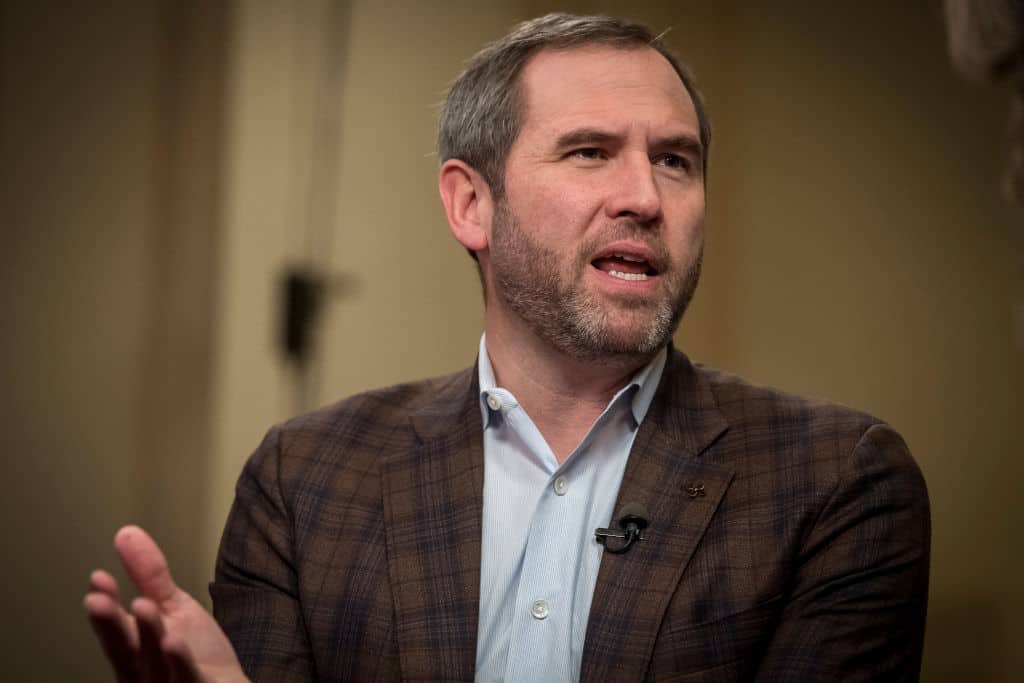
    Ripple CEO Brad Garlinghouse has publicly criticized JPMorgan Chase CEO Jamie Dimon for his recent statements attacking the CLARITY Act, a proposed piece of legislation concerning cryptocurrency regulation. Garlinghouse accused Dimon of consistently dismissing the crypto industry for years while misrepresenting the bill’s actual purpose.

    During an interview with Fox Business host Maria Bartiromo, Garlinghouse directly addressed comments Dimon made earlier this month. In those remarks, the banking executive alleged that Coinbase CEO Brian Armstrong was lobbying for the bill in Washington and claimed the proposed legislation would weaken protections against money laundering and violations of the Bank Secrecy Act.

    Garlinghouse suggested that Dimon was either intentionally attempting to undermine support for the CLARITY Act or fundamentally misunderstanding its provisions.

    “As much as we can talk about whether or not Brian Armstrong is representing the industry, he is not; he is representing Coinbase, and in certain ways he is going to look out for Coinbase’s best interest,” Garlinghouse stated. “But at the end of the day, I think what Jamie Dimon did was a disservice. He’s representing that this reduces compliance concerns, that it makes it easier to do bad things. That’s just not true. It’s either intentional misrepresentation or even negligent to try to make support for the Clarity Act go away.”

    Dimon’s criticism of the bill and Armstrong was also evident at the Reagan National Economic Forum last month. At the event, Dimon stated that banks would not accept the bill in its current form and made disparaging remarks about Armstrong, reportedly saying, “He’s the only one, and he’s spending hundreds of millions of dollars in Washington on this thing. He’s full of shit.”

    Economist Peter Schiff has also weighed in, criticizing Dimon’s comments and arguing that stablecoin issuers should not be subjected to the same banking regulations as traditional lenders. Schiff, a known critic of the crypto industry, differentiated stablecoins, which he noted are typically fully backed and invested in U.S. Treasuries, from banks that operate with FDIC insurance and engage in riskier lending practices. He asserted that stablecoins serve a legitimate purpose.

    The CLARITY Act is currently progressing through Congress but is encountering increasing opposition from major financial institutions. The bill’s primary objective is to delineate regulatory oversight for different types of cryptocurrencies, assigning responsibilities between the Securities and Exchange Commission (SEC) and the Commodity Futures Trading Commission (CFTC) in an effort to reduce regulatory ambiguity in the United States.

    After passing the House in 2025, the legislation moved through the Senate Banking Committee last month. However, it still requires further debate in the full Senate. A significant point of contention involves provisions related to stablecoin yields, which banks contend could permit crypto firms to offer interest-like returns without adhering to the same regulatory requirements imposed on traditional financial institutions.

  • Americans Bet $34 Billion on Offshore Prediction Markets

    Americans Bet $34 Billion on Offshore Prediction Markets

    Americans may have contributed as much as $34 billion to offshore prediction market trading volumes in the 12 months leading up to April 2026, according to a new study commissioned by the Coalition for Prediction Markets. This industry group includes regulated operators such as Kalshi, Crypto.com, and Coinbase.

    The research, conducted by Rutgers professor Harry Crane, a member of the CFTC Innovation Advisory Committee, compared data from offshore platforms—those that do not permit U.S. users and are not regulated by the Commodity Futures Trading Commission (CFTC)—with platforms exclusively serving U.S. users or non-U.S. users.

    “As a share of all U.S. prediction market activity (including regulated and offshore platforms), we estimate 12.5–31.5% of U.S. prediction market volume occurs on offshore platforms,” the study stated.

    “Based on current third-party estimates of industry growth, U.S.-based activity on offshore prediction markets could grow to an estimated $133 billion in annual volume by 2030, assuming constant relative market shares of regulated and offshore markets,” the study added.

    Offshore Market Activity

    Harry Crane analyzed the largest offshore prediction market exchanges, which are prohibited from serving U.S. users. His findings indicate that between $11 billion and $34 billion in offshore prediction market activity originates from U.S. users, a figure described as a conservative estimate.

    Polymarket’s Role

    The study highlighted Polymarket, the largest offshore platform, estimating that approximately $10.6 billion to $26.7 billion of its $55.6 billion in trailing 12-month trading volume was attributable to U.S. users, despite their technical prohibition on the platform. Polymarket, which was compelled to move offshore by the CFTC in 2022, announced last fall that it had received regulatory approval to operate in the U.S. Since then, it has gradually launched its regulated Polymarket U.S. platform, though the study’s data did not separate volumes from this new entity due to reliability concerns. Data from a Dune dashboard indicates that the regulated U.S. version of Polymarket has posted approximately $5 billion in notional volumes to date.

    A representative for Polymarket did not immediately respond to a request for comment.

    Broader Concerns

    While Polymarket was the largest offshore market examined, the study also analyzed data from other unregulated markets, including Opinion, Predict, Limitless, and Myriad. (Myriad is a product of Decrypt’s parent company, Dastan).

    The Coalition for Prediction Markets, comprised of regulated operators, views this trend as a significant concern, arguing that offshore markets do not adhere to the same standards as those operating under U.S. regulations.

    “Americans are using VPNs to access unregulated, offshore prediction market platforms that offer contracts on death and war,” the Coalition posted on X. “Now, we finally know how big this market is.”

    The Coalition further stated, “These platforms are not subject to the same customer verification requirements, anti-money laundering controls, or market integrity oversight that protect American traders.”

    Regulatory Scrutiny

    The findings emerge as the CFTC faces increasing pressure and scrutiny. On Wednesday, the agency proposed new rules that would ban market outcomes dependent on war or assassination. However, states and lawmakers have been pushing back against the CFTC’s regulatory approach and the expanding scope of prediction markets under its purview.

    CFTC Chairman Mike Selig has maintained a firm stance on the agency’s jurisdiction over these platforms, stating in February, “see you in court,” as states began challenging the regulator’s authority. Earlier this week, Democratic Senator Elizabeth Warren sought clarification on the regulator’s oversight capabilities, questioning its effectiveness in regulating prediction markets, particularly in light of significant workforce reductions.