Tag: Regulation & Policy

  • Treasury Sanctions Sinaloa Cartel Figures for Crypto Laundering

    Treasury Sanctions Sinaloa Cartel Figures for Crypto Laundering

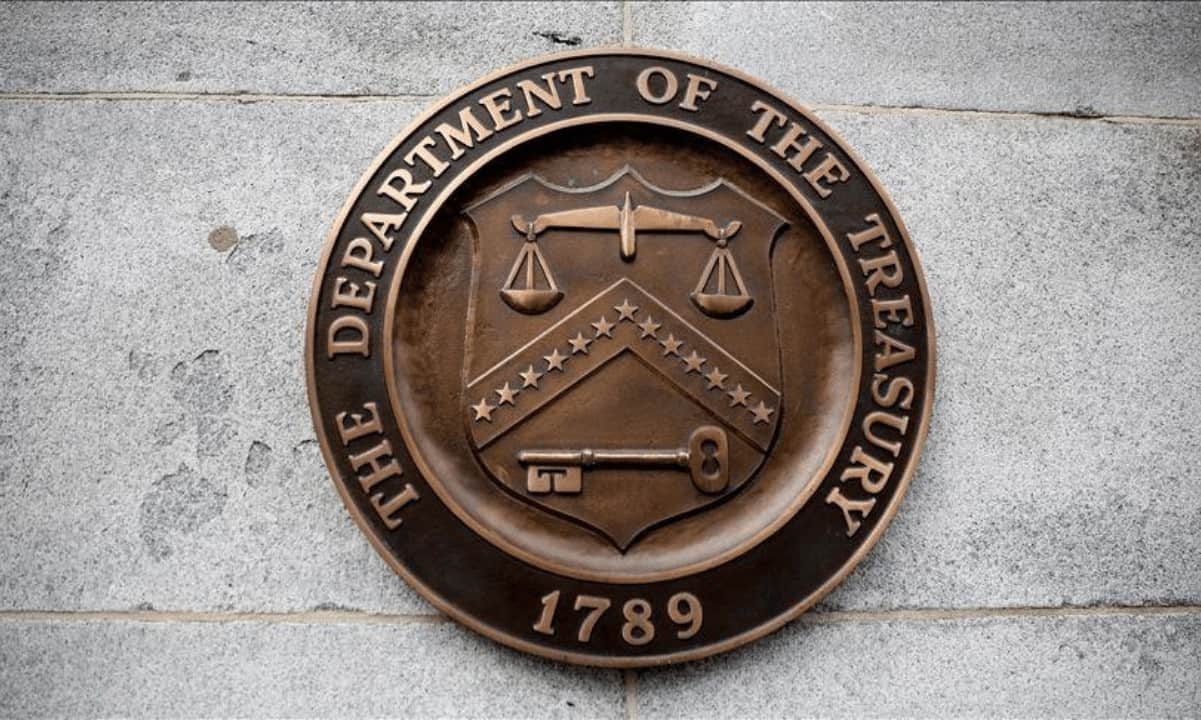
    The U.S. Treasury Department’s Office of Foreign Assets Control (OFAC) has imposed sanctions on individuals and entities linked to a Mexican cartel involved in drug trafficking and the laundering of illicit proceeds through cryptocurrency networks.

    Cartel’s Financial Operations

    According to a Treasury press release, the sanctioned individuals and entities lead networks that launder profits from fentanyl and other narcotics trafficking for the Sinaloa Cartel. These laundering schemes utilize blockchain networks to transfer funds back to Mexico.

    A multi-year investigation by U.S. authorities revealed that Jesus Gonzalez Penuelas heads the drug trafficking network in the U.S., while Armando de Jesus Ojeda Aviles leads the profit laundering operations on behalf of the Sinaloa Cartel. The cartel, which has been designated a Foreign Terrorist Organization (FTO) by the U.S., is responsible for numerous violent deaths in Mexico and drug-related deaths in America.

    The Sinaloa Cartel is run by the sons of imprisoned drug trafficker Joaquin “El Chapo” Guzman Loera, with assistance from the recently sanctioned individuals. While directing drug trafficking operations from Mexico, Aviles relies on associates like Penuelas and Rodrigo Alarcon Palomares to collect cash and facilitate transfers through cryptocurrency addresses. The cartel traffics in drugs including cocaine and methamphetamine.

    Legal Action and Cartel Activity

    A U.S. District Court in Colorado indicted Palomares in April 2024 for laundering drug proceeds. He was subsequently found guilty on three counts of laundering drug proceeds via cryptocurrency. During his arrest in October 2023, Mexican authorities found weapons and ammunition in his possession. Despite Palomares’ arrest, the Sinaloa Cartel’s trafficking activities have continued to grow.

    Aviles’ network includes Mexico-based drug suppliers, money brokers, and coordinators of large wire transfers across the U.S. He is also affiliated with Los Chapitos, a violent faction of the Sinaloa Cartel, and has become the group’s primary money launderer following the murder of his predecessor, Mario Alberto Jimenez Castro.

    Additional Sanctions

    In addition to Aviles and Penuelas, the Treasury also announced sanctions against Jesus Alonso Aispuro Felix, businessman Alfredo Orozco Romero, Amalia Margarita Romero Moreno, and Liliana Orozco Romero, among others. Most of these associates serve as money brokers, security advisors, and trusted front persons.

    The sanctions are part of an effort to protect American communities and citizens. Treasury Secretary Scott Bessent stated, “As President Trump has made clear, this Administration will not allow narco-terrorists to flood our borders with poison.”


  • Argentina’s AI Fails to Predict Typo

    Argentina’s AI Fails to Predict Typo

    Argentina Unveils AI-Driven Social Policy Initiative, Prompting Scrutiny

    Argentina’s Ministry of Human Capital has announced an ambitious initiative, the “Gemelo Digital Social” (Social Digital Twin), claiming it can predict the future of social policy using artificial intelligence. President Javier Milei unveiled the project on Friday via X, calling it a “paradigm change in social policy.” He concluded the announcement with his and Donald Trump’s slogans, “MAGA. VLLC!”

    The system is designed as a virtual replica of Argentine society, incorporating data from various government and private sources. AI will simulate scenarios, anticipate impacts, and optimize policy decisions in real-time. The goal is to shift Argentina from a “reactive state” to a “predictive state” capable of modeling poverty, tracking subsidies, and mapping human capital development.

    Digital twins are established technology, used in engineering and urban planning. Argentina’s government claims this is the first application of the concept to social policy on a national scale. The system would aggregate data, identify patterns, project scenarios, and convert social experience into “public intelligence.” This involves a centralized database drawing from health, income, education, and consumption data, processed by an AI model to inform policymakers.

    This concept is not entirely unprecedented. In 2025, the U.K. Ministry of Justice was reported to be building an AI system to predict potential criminal behavior. That program sparked controversy, drawing comparisons to the film “Minority Report.” While Argentina’s stated purpose is social optimization, the underlying architecture is similar: using aggregated personal data to inform predictions.

    Technical Glitches and Political Backlash

    The promotional video announcing the “Gemelo Digital” was quickly met with ridicule due to numerous errors. A graphic displayed a missing accent mark, and a full-screen declaration contained a grammatical error and a misspelling.

    Developer and tech commentator Maximiliano Firtman criticized the video, citing grammar and spelling errors, a “fake minister” presented with holograms, and the use of the Amazon AWS logo.

    This incident follows a pattern. Recently, an official photo of President Milei went viral because it featured an AI-generated image of the Casa Rosada (presidential palace) visible through a window, creating a visual duplication. The presidency’s digital communications team appears to have recurring issues with unsupervised AI output.

    The project has already faced political backlash. Opposition senator Agustín Rossi filed a formal information request, seeking transparency on the program’s legal framework, data protections, and citizen rights guarantees. Privacy experts have also raised concerns, as the mass aggregation of personal data requires strict anonymization protocols, which have not been announced.

    Analyst Julián Roó expressed concern that Argentina will become a “laboratory rat” for analyzing how society functions when algorithms classify citizens by risk, productivity, or behavior. Political analyst Pablo Munoz Iturrieta described the initiative as potentially the “wet dream of any authoritarian technocrat.”

    Senator Rossi’s information request is pending. The Ministry of Human Capital has not addressed the video errors or the data governance framework publicly.

  • Men Face Federal Charges for AI-Generated Deepfake Porn

    Men Face Federal Charges for AI-Generated Deepfake Porn

    Federal prosecutors this week charged two men with using artificial intelligence to generate and distribute non-consensual, sexually explicit images of women, representing a significant early enforcement action under the Take It Down Act.

    Charges Filed

    On Thursday, federal prosecutors in the Eastern District of New York filed charges against Arturo Hernandez of Texas and Cornelius Shannon of New Jersey in separate cases involving alleged AI-generated deepfake pornography.

    “The defendants used cutting-edge digital technology to create images that degraded and violated victims across the United States,” stated U.S. Attorney for the Eastern District of New York Joseph Nocella. “This case makes clear that posting deepfake pornography is not a victimless crime.”

    Prosecutors allege that Shannon and Hernandez posted thousands of AI-generated images and videos depicting real people—including actresses, singers, political figures, and recent high school graduates—engaged in sexual acts. The men allegedly uploaded more than 470 albums depicting over 140 women to websites, where the AI-generated images and videos received millions of views.

    Court filings indicate that the images appeared to use real, non-explicit photographs that were altered with AI software to create sexually explicit content. The men face up to two years in prison.

    Take It Down Act

    President Donald Trump signed the Take It Down Act into law in May 2025. The legislation makes it a federal crime to knowingly publish or threaten to publish non-consensual intimate imagery, whether authentic or AI-generated. It also mandates that online platforms remove reported content within 48 hours.

    The Take It Down Act garnered bipartisan support in Washington and comes as courts grapple with a rising number of lawsuits related to AI-generated deepfakes, including cases accusing Elon Musk’s xAI and its Grok chatbot of creating and distributing non-consensual sexualized images, including images depicting minors.

    Several states, including California, Texas, Florida, and Pennsylvania, have enacted similar laws targeting non-consensual intimate imagery and AI-generated deepfakes.

    In April, James Strahler, of Columbus, Ohio, became the first person convicted under the law after pleading guilty to federal charges involving over 700 AI-generated sexually explicit images of adults and children.

    “This predatory conduct represents a disturbing abuse of technology that inflicts emotional harm on victims, violating their privacy, dignity, and security,” said FBI Assistant Director in Charge James Barnacle Jr. in a statement. “The use of this emerging technology to victimize individuals is not innovative—it is criminal and will be pursued with the full force of the law.”

  • SEC Halts Tokenized Stock Exemption Over Concerns

    SEC Halts Tokenized Stock Exemption Over Concerns

    The Securities and Exchange Commission (SEC) has delayed plans to release a broad exemption that would have allowed U.S. crypto firms to trade tokenized stocks and other tokenized assets, Bloomberg reported on Friday. This decision slows a significant effort to integrate blockchain technology into mainstream securities markets.

    Delay Due to Feedback

    According to sources familiar with the matter, who spoke on condition of anonymity, the SEC staff had been preparing to release the “innovation exemption” as early as this week. However, the timeline has shifted as the SEC considers feedback from stock exchange officials and other market participants who have held discussions with agency staff in recent days.

    Key Concerns

    A primary point of contention is a provision that would permit trading in third-party tokens – digital representations of company shares issued without the knowledge or approval of the underlying corporations.

    This prospect has raised concerns among some former regulators and market experts, Bloomberg noted, who warn it could create complex issues for public companies trying to manage dividends and count shareholder votes as tokens become more widespread across networks.

    Commissioner’s Defense

    SEC Chair Paul Atkins had previously indicated the agency would soon unveil its proposed innovation exemption, which could serve as a regulatory sandbox for on-chain equities. The delay impacts companies preparing to launch tokenized asset projects under the anticipated framework.

    Amid criticism of the delayed exemption, SEC Commissioner Hester Peirce defended the proposal’s limited scope.

    “The framework was limited in scope and would facilitate trading only of digital representations of the same underlying equity security that an investor could purchase in the secondary market today, not synthetics,” Peirce wrote on X. She also acknowledged public interest in the rule, while criticizing the surrounding hyperbole.

  • Kalshi Launches Lobbying Group Amid Insider Trading Investigation

    Kalshi Launches Lobbying Group Amid Insider Trading Investigation

    Kalshi Launches Advocacy Group to Shape Perception of Prediction Markets

    Kalshi announced the formation of an advocacy group on Friday, aiming to influence policymakers’ views on prediction markets, positioning the move as a strategy to compete with sportsbooks and casinos.

    Group’s Mission and Focus

    Americans for Fair Markets (AFM) will actively counter “interests that are focused on protecting their monopolies and seeding lies,” according to a Kalshi blog post. The organization will concentrate on legislation that supports innovation, market integrity, and consumer protection.

    Strategic Advisor and Funding

    Kalshi stated that the group has appointed Taylor Budowich, a former senior White House staffer who resigned in September, as a strategic advisor. Budowich previously led communications for the White House and a pro-Trump super PAC.

    While the organization’s website uses a color scheme similar to Kalshi’s logo, Americans for Fair Markets has other members, a spokesperson told Decrypt. The spokesperson declined to disclose the group’s funding but described it as “well capitalized.”

    Context of Increased Scrutiny

    The launch of Americans for Fair Markets highlights Kalshi’s efforts to distinguish itself from its main competitor, Polymarket, and traditional betting platforms on Capitol Hill. Prediction markets are facing increased scrutiny from lawmakers due to concerns about insider trading.

    On Friday, House Oversight Committee Chair James Comer (R-KY) announced investigations into insider trading on Polymarket and Kalshi. The lawmaker cited suspicious bets on military actions related to Venezuela and Iran, which have led to arrests in the U.S. and Israel in recent months.

    Regulatory Differences and Industry Debate

    Although both platforms have recently enhanced their safeguards, Kalshi has emphasized its status as a federally regulated exchange under the CFTC. Polymarket also has a regulated platform in the U.S., but most of its bets are placed on its international counterpart.

    “A handful of legislators and a gaming lobby want to ban prediction markets outright,” AFM’s website states. “It would push them offshore—onto unregulated platforms with no identity verification, no consumer protections, no insider trading rules, and no cop on the beat.”

    However, the gaming lobby argues that prediction platforms are the ones engaging in deceptive practices, as American Gaming Association President and CEO Bill Miller made clear during testimony before Congress on Wednesday.

    “These so-called prediction markets are deceptively calling sports betting financial contracts and investing,” he said. “Despite messaging designed to beguile policymakers and the public, they are increasingly being exposed as backdoor sports-betting operations.”

  • Advocates Urge Congress to Update Bank Secrecy Act

    Advocates Urge Congress to Update Bank Secrecy Act

    Hearing on Modernizing Anti-Money Laundering Laws

    Executives from the cryptocurrency industry, policy researchers, and national security experts testified before a House subcommittee on Thursday, offering insights on how to modernize anti-money laundering (AML) laws in the age of artificial intelligence and digital assets.

    The House Financial Services Committee’s Subcommittee on National Security, Illicit Finance, and International Financial Institutions held a hearing on “Modernizing the BSA for Financial Crime in the 21st Century,” focusing on the Bank Secrecy Act (BSA), the 1970 law that mandates banks and financial institutions to report suspicious activity and large transactions.

    The hearing took place as crypto firms, banks, and civil liberties groups advocate for a shift in the BSA’s focus toward actionable intelligence rather than the volume of reports, while the Trump administration is expanding its reach over non-citizen customers.

    Ari Redbord, Global Head of Policy at TRM Labs, testified before the subcommittee, stating that North Korea stole over $2 billion in digital assets in 2025 and another $600 million in early 2026, while “pig butchering” networks defrauded Americans of more than $35 billion last year.

    Redbord warned that AI-enabled scam activity surged by 500% over the past year, and illicit funds now move across wallets within 24 to 48 hours. This compresses response windows to the point where “retrospective reporting frameworks are structurally incapable of generating a response in time” because “the framework that helped us win yesterday will not be enough to win today.”

    The Bank Secrecy Act is the foundation of U.S. anti-money laundering law, requiring banks and crypto firms registered as money services businesses to file suspicious activity reports, currency transaction reports for amounts over $10,000, and to verify customer identities.

    Subcommittee Chairman Warren Davidson (R-OH) opened the hearing by describing the BSA as a “bloated surveillance machine demanding endless reports without delivering proportional results,” noting that institutions file nearly 5 million suspicious activity reports (SARs) and 21 million currency transaction reports (CTRs) annually.

    Proposed Reforms and Concerns

    Redbord proposed formal recognition for stablecoin financial intelligence units like T3 FCU, a collaboration between Tether, TRON, and TRM that has frozen over $450 million in illicit USDT since September 2024, and a “digital asset hold law” granting exchanges a statutory safe harbor to freeze suspect funds pending law enforcement review.

    He also suggested that institutions should hold “the least amount of information that they need on an individual customer in order to make a decision” about illicit risk, warning that every new database is “a honeypot” for ransomware groups and state-sponsored hackers.

    During the hearing, Cato Institute researcher Nicholas Anthony argued that the problem with the BSA was not inefficiency but surveillance itself, stating that “the history of financial surveillance has been a history of ever-moving goalposts” from tax enforcement to “fraud and immigration.” He presented options ranging from adjusting thresholds for inflation to repealing the BSA regime entirely.

    John Court, general counsel at the Bank Policy Institute, supported reform rather than repeal, calling the Treasury’s proposed AML rule “a vast improvement” and advocating for higher reporting thresholds, simpler filings, risk-based oversight, and explicit approval for banks to use AI in transaction monitoring.

    Atlantic Council Senior Fellow Carole House cautioned against significant cuts to the framework, noting that reducing the compliance burden should not come at the cost of “opening the door to adversaries seeking to harm Americans and U.S. national security interests.”

    AI as a Point of Consensus

    AI was a point of consensus among most witnesses. Davidson, Redbord, Carole House, and Court all supported the broader use of machine learning and AI in transaction monitoring. Redbord was particularly enthusiastic, telling lawmakers that “AI investigative tools can compress weeks of manual analysis into minutes” and calling for federal funding of AI-native investigative tools across various agencies.

    The hearing occurred shortly after President Donald Trump signed an executive order directing regulators to strengthen customer due diligence and customer identification requirements under the BSA while expanding scrutiny around account ownership and financial risks associated with immigration enforcement. The order directs the Treasury to tighten BSA customer due diligence rules and flag risks tied to ITIN use, off-the-books wages, and foreign consular IDs, while also asking the CFPB to weigh potential deportation risks in lending decisions.

  • Republicans Launch Probe of Kalshi, Polymarket for Insider Trading

    Republicans Launch Probe of Kalshi, Polymarket for Insider Trading

    House Oversight Committee Launches Investigation into Prediction Market Platforms

    Investigation Focus

    The chairman of the House Oversight Committee announced Friday the launch of an investigation into the prediction market platforms Kalshi and Polymarket. The investigation will center on potential insider trading by users on both platforms, specifically concerning wagers that leverage non-public information, according to Committee Chair James Comer (R-KY).

    Congressional Action Considered

    “This growing pattern of insider trading activity on prediction market platforms indicates that Congressional action may be necessary,” Congressman Comer stated.

    Document Requests

    Comer sent letters to Kalshi CEO Tarek Mansour and Polymarket CEO Shayne Coplan on Friday, requesting a range of documents related to the companies’ internal operations. The requested information includes documentation and communications pertaining to know-your-customer (KYC) standards, policies and procedures for detecting suspicious trades, analysis of the impact of insider trading scandals on the companies’ reputations, and deliberations regarding wagers tied to armed conflicts.

    Specific Wager Scrutiny

    Comer has also requested that Kalshi and Polymarket provide internal communications and documents related to wagers on the Iran war and the U.S. attack on Venezuela earlier this year.

    Recent Events Prompting Inquiry

    The investigation follows the recent arrest of a U.S. soldier for allegedly placing Polymarket bets on the timing of American military actions using classified information. Additionally, Kalshi fined multiple U.S. politicians for betting on the outcomes of their own elections. Comer’s actions also appear to be influenced by a New York Times investigation that identified over 80 instances of potential insider trading on Polymarket.

    Growing Scrutiny of Prediction Markets

    In recent months, Kalshi and Polymarket have faced increased scrutiny from lawmakers concerned about the potential for widespread insider trading within the prediction market sector. Last month, the Senate unanimously passed a resolution banning its members and staff from trading on prediction markets.

    Platforms’ Response and Potential Risks

    In response to the growing pressure, both companies have taken steps to assure regulators that they are actively working to identify and eliminate insider traders on their platforms. However, this assurance could present challenges.

    “If they can catch this guy, why can’t you catch another?” said Dan Boyle, a partner at Boies Schiller Flexner and a former federal prosecutor focused on gambling-related fraud, referring to lawmakers’ potential concerns. Boyle added, “If their position was ‘We just don’t have the ability to catch some of these issues,’ that would be one position. But they’re making a push to show they have the [detection] technology, and they are able and willing to use it.”

    Republican-Led Investigation

    Unlike previous requests from Democratic lawmakers to investigate crypto firms, the House’s prediction market investigation is supported by Republican committee leadership. As the majority party in the House, the GOP leadership on the House Oversight Committee likely has the votes to issue legally binding subpoenas.

  • Polymarket Appoints Jupiter Executive to Head Japan Expansion

    Polymarket Appoints Jupiter Executive to Head Japan Expansion

    Polymarket Appoints Japan Representative, Eyes Regulatory Approval by 2030

    Polymarket has appointed a representative in Japan as it prepares to seek government approval to operate prediction markets in the country, according to Bloomberg. Sources familiar with the matter told the outlet that the company aims to secure regulatory authorization by 2030.

    Expansion Lead

    Mike Eidlin, who is listed as the head of Japan at the crypto firm Jupiter on his LinkedIn profile, has been appointed to lead Polymarket’s expansion in the country, Bloomberg reported.

    Current Restrictions

    Japan is currently on Polymarket’s list of restricted jurisdictions, where users are blocked from accessing the platform due to “regulatory requirements and compliance with international sanctions.”

    Legal Landscape

    The legal environment is strict. Japan’s Penal Code stipulates that habitual gamblers could face up to three years in prison, while operating a gambling business is punishable by between three months and five years of imprisonment.

    Company Statement

    A Polymarket spokesperson told Bloomberg that the firm has seen “meaningful organic interest from users” in Japan and Asia, adding that it is “always evaluating opportunities to expand access globally in compliant and locally appropriate ways.”

    Existing Presence

    The platform’s Japanese X account has already attracted more than 53,000 followers, and approximately 169 active Polymarket contracts are tied to Japanese events, including Bank of Japan rate decisions and political outcomes.

    Global Context

    Polymarket’s push into Japan comes amid a mixed global picture, as it competes with rival prediction market platform Kalshi. Polymarket posted notional volumes of $9.967 billion in April, down from $11.275 billion in March, according to DeFiLlama, while Kalshi saw volumes rise from $13.211 billion in March to $14.647 billion in April. Kalshi’s valuation reached $22 billion after a $1 billion raise in March, while Polymarket’s valuation is at $9 billion following a $2 billion investment from Intercontinental Exchange in October 2025.

    Regulatory Scrutiny

    Regulators in several jurisdictions are scrutinizing the prediction market sector. South Korea’s Korea Communications Standards Commission is examining whether Polymarket hosts illegal gambling content, according to local media outlets, while Indian authorities have blocked access to Polymarket and are in the process of blocking Kalshi, according to local reports citing an official at the Ministry of Electronics and Information Technology.

    U.S. Market

    Polymarket secured approval from the CFTC to re-enter the U.S. market last year, after being pushed offshore for operating a futures contract platform without a license. The prediction market platform has faced pushback from U.S. state gaming regulators, sparking a legal dispute between states and the CFTC and Department of Justice—with the federal agencies this week suing Minnesota over a newly signed bill that bans prediction markets in the state.

    Japanese Regulatory Changes

    Japan’s cabinet last month approved a bill that would reclassify cryptocurrencies as financial products under the Financial Instruments and Exchange Act, prohibiting insider trading and requiring annual disclosures from issuers.

  • Kraken Granted VARA License, Eyes Dubai Launch

    Kraken Granted VARA License, Eyes Dubai Launch

    Kraken, the cryptocurrency exchange, announced on Thursday that it has received regulatory approval to operate in Dubai. Its parent company, Payward, obtained preliminary broker-dealer and investment management authorization from the emirate’s Virtual Asset Regulatory Authority (VARA).

    Services Offered

    The authorization allows Kraken to offer virtual asset services to both retail and professional investors in Dubai, according to a company statement. The exchange will provide clients in the United Arab Emirates with spot and margin trading, over-the-counter services, staking, crypto transfers, and access to its institutional platform, Kraken Prime.

    UAE traders will have access to Kraken’s global order books across Europe, the United States, and Asia-Pacific markets. Customers can fund accounts and make withdrawals in dirhams through Payward FZCO, the locally regulated subsidiary.

    The company plans to expand its Dubai offerings to include derivatives, lending, and new investment products for qualified clients.

    Executive Commentary

    “Dubai wrote a rulebook for crypto before most jurisdictions even acknowledged the asset class,” said Arjun Sethi, Co-CEO of Payward and Kraken, in a statement. “That clarity is why real liquidity and institutional capital now sit in the UAE. Operating under VARA puts Kraken inside that perimeter, serving clients through a local, supervised entity rather than from offshore.”

    Sethi contrasted Dubai’s framework with other markets. “Clients in the UAE get the same order book, the same balance sheet, and the same multi-asset coverage we run in every other market,” Sethi said. “The difference is that the rulebook is written down and the supervisor is local.”

    Dubai’s Regulatory Framework

    Dubai established VARA in 2022 to regulate digital asset businesses, creating one of the world’s most comprehensive crypto frameworks. The authority has since licensed major exchanges, including Binance, Crypto.com, and OKX, as the emirate builds its position as a Middle Eastern crypto hub.

    VARA’s licensing categories cover trading, custody, and advisory services. The framework has attracted firms seeking regulatory clarity amid uncertainty in other jurisdictions, with institutional players particularly drawn to the defined operational requirements.

    Recent Developments

    Kraken joins several crypto firms recently navigating Dubai’s regulatory landscape. Ripple gained VARA approval for its RLUSD stablecoin earlier this year, while Animoca Brands secured a license as the authority tightened oversight measures. The regulator has also demonstrated enforcement capabilities, ordering KuCoin in March to cease services to Dubai residents for operating without proper authorization.

    Kraken filed last November for a still-pending U.S. IPO after raising $800 million in fresh funding at a $20 billion valuation. Payward also recently filed for a national trust bank charter from the U.S. Office of the Comptroller of the Currency.

  • Peirce to Leave SEC, Raising Questions

    Peirce to Leave SEC, Raising Questions

    The departure of Hester Peirce, a staunch advocate for innovation and cryptocurrency within the Securities and Exchange Commission (SEC), leaves behind a significant unfinished regulatory agenda. This agenda includes unwritten stablecoin rules, tokenization frameworks still in the discussion phase, and the absence of clear statutory guidelines for digital asset exchange registration.

    Unresolved Regulatory Landscape

    The SEC, now without Commissioner Peirce, faces the task of addressing these issues. Peirce, known in the industry as “Crypto Mom,” is set to join Regent University School of Law as an associate professor in November 2026, concluding her tenure at the SEC that began in January 2018. Regent University, based in Virginia, announced her appointment on May 19, alongside the hiring of former Solicitor of Labor Gregory F. Jacob.

    Peirce had previously indicated in March 2025 that she would not seek another nomination after her second five-year term expired in June 2025, and has since been serving in a holdover capacity. Her start date at Regent aligns with her planned departure from the SEC.

    Impact of Peirce’s Approach

    Under former chair Gary Gensler, the SEC focused on enforcement actions rather than publishing comprehensive rules for token offerings, DeFi protocols, and crypto exchange registration. Peirce consistently criticized this approach, labeling it “regulation by enforcement” in her dissenting opinions since 2020. She argued that enforcement actions lead to case-specific legal outcomes, lacking the broad guidance necessary for industry-wide compliance.

    Peirce dissented in several high-profile crypto enforcement cases, including the 2021 DeFi Money Market settlement, where she argued that some projects were “failed experiments” rather than fraudulent schemes, and that the commission’s approach created uncertainty.

    She also championed a token safe harbor proposal, which would have given development teams up to three years to achieve network decentralization before securities registration was required. Although the full commission did not adopt this proposal, market lawyers used it as a reference for structuring token launches.

    Legacy and Future Implications

    Peirce’s dissenting record on spot Bitcoin ETFs is arguably her most significant legacy. She consistently criticized the SEC’s repeated rejections, calling the agency’s stance “a paternalistic and lazy approach to innovation.” The 2024 approvals, which she viewed as “long overdue,” are partially attributed to the legal and political pressure generated by her sustained dissents. Her consistent, documented record provided a roadmap for outside counsel and courts.

    Most recently, Peirce led the SEC’s Crypto Task Force, launched in January 2025. The task force has held public roundtables, rescinded prior bank custody guidance, and incorporated industry experts to advise on tokenization frameworks and exchange rules. This task force, representing the institutional framework she established during her final period, will now continue its work without her.