Tag: Regulation & Policy

  • Trump Order Puts Crypto-Bank Access in Spotlight

    Trump Order Puts Crypto-Bank Access in Spotlight

    Wyoming Crypto Banks Could Gain Access to Federal Reserve Accounts

    Special purpose depository institutions in Wyoming, which are centered around cryptocurrency, may soon gain access to something they have long been denied: a Federal Reserve master account. A new executive order signed by U.S. President Donald Trump opens the possibility, alongside a broader effort to integrate crypto and financial technology companies into the U.S. banking system.

    Federal Reserve Role Under Review

    The order directs the Federal Reserve’s Board of Governors to assess whether uninsured depository institutions and non-bank financial companies dealing in digital assets should have direct access to Reserve Bank payment accounts and services. It also tasks the Fed with examining legal obstacles to such access and, if current law permits, establishing clear application procedures. Decisions on completed applications would be required within 90 days.

    This directive is part of a larger policy initiative. Trump signed the order on Monday, instructing federal regulators across multiple agencies to update their rules and facilitate collaboration between crypto and fintech firms and traditional financial institutions. The order sets a government-wide objective of reducing unnecessary barriers to entry and promoting cooperation between technology-driven financial companies and federally regulated banks.

    Agencies Given 90 Days to Comply

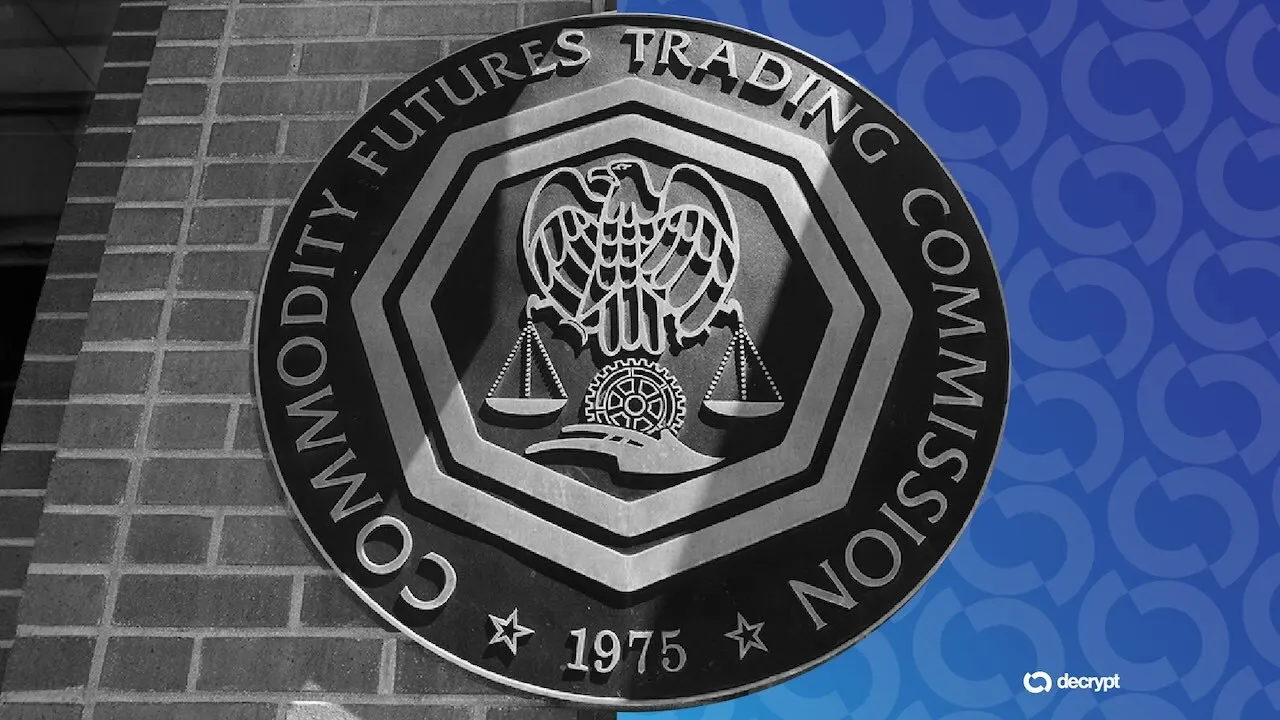
    The Securities and Exchange Commission, Commodity Futures Trading Commission, Office of the Comptroller of the Currency, and the Federal Deposit Insurance Corp are among the agencies required to take action. Each agency has been instructed to review its current supervisory practices within 90 days, with a focus on policies that may prevent fintech firms from partnering with federally regulated institutions.

    Regulators are also asked to explore ways to streamline the application process for fintech companies seeking bank charters, deposit insurance, and other federal approvals. The order emphasizes that the review should prioritize consumer protection, market integrity, and financial stability.

    The order defines fintech broadly, encompassing companies providing services related to digital assets, blockchain infrastructure, payment processing, custody, lending, brokerage, and securities market operations.

    Broader Policy Shift

    This move contrasts with calls from Sen. Elizabeth Warren, who has advocated for stricter limitations on banking access for crypto companies. Trump’s order takes the opposite approach.

    Of note, on the same day the order was signed, Trump’s media company, Truth Social, withdrew its SEC filings for a Bitcoin exchange-traded fund, a combined Bitcoin-Ethereum ETF, and a crypto blue chip ETF. This action was viewed as incongruous with the administration’s broader push to integrate crypto into the mainstream financial system.
  • Fairshake PAC Celebrates Primary Wins

    Fairshake PAC Celebrates Primary Wins

    On Tuesday, the cryptocurrency political action committee (PAC) Fairshake declared victory, claiming that six of its favored congressional candidates – backed by over $20 million in industry funding – had won primary races across the country.

    Crypto’s Role Questioned

    However, questions remain about whether cryptocurrency played a decisive role in the previous night’s elections.

    Fairshake, primarily funded by Coinbase, Andreessen Horowitz, and Ripple, supported five Republican candidates and one Democrat in Tuesday’s midterm primaries. Notably, all five Republican candidates had also received endorsements from former President Donald Trump.

    The election results underscored Trump’s continued influence over the Republican base, even as his approval ratings decline among the broader electorate. In Kentucky, Trump-backed challenger Ed Gallrein, a retired Navy SEAL, defeated Rep. Thomas Massie (R-KY), a well-regarded lawmaker who had drawn the former president’s ire for advocating the release of the Jeffrey Epstein files and criticizing the U.S.’s ongoing involvement in the war with Iran.

    “Do not ever doubt President Trump and his political power,” said Steven Cheung, the White House’s director of communications, following the results. “Fuck around, find out.”

    Tuesday’s primaries were widely viewed as a test of Trump’s sway over engaged Republican primary voters, and in that regard, the former president appeared to secure a decisive victory.

    In a statement, Fairshake celebrated the victories of its endorsed candidates as “a clear victory for pro-crypto leaders.”

    “This powerful bipartisan mandate is being heard across America from Georgia to Alabama to Kentucky,” a Fairshake spokesperson said.

    However, every Republican primary winner supported by the crypto PAC – Alabama Senate candidate Barry Moore, Kentucky Senate candidate Andy Barr, and Georgia congressional candidates Houston Gaines, Jim Kingston, and Clay Fuller – had previously received Trump’s endorsement.

    The sole Democratic congressional candidate backed by Fairshake on Tuesday, Georgia’s Jasmine Clark, was previously in a tight race with Rep. David Scott, an incumbent who had served in the House for over 20 years. However, Scott passed away last month at the age of 80.

    Limited Crypto Influence?

    Further suggesting a limited influence of crypto in Tuesday’s races, Fairshake did not run any advertisements on the subject of digital assets.

    A source familiar with the campaigns supported by Fairshake, however, emphasized that the super PAC spent millions of dollars on ads highlighting Trump’s endorsements, a factor they argued had a significant impact.

    “Trump’s endorsement obviously matters a ton, but it also needs to be communicated to voters,” the source said.

    Fairshake’s nearly $200 million spending on the 2026 midterms comes as special interest spending on U.S. elections reaches all-time highs. The high-profile defeat of Massie, a Trump critic, marked the most expensive House primary in American history, with total ad spending exceeding $32 million for a district with a population under 800,000.

    Pro-Israel super PACs, which have sought to unseat Massie for years, made the single largest contribution to that sum. Unlike the crypto PAC, ads run by pro-Israel PACs in the Massie race actually mentioned Israel.

  • South Carolina Bans CBDCs, Safeguards Crypto Users and Miners

    South Carolina Bans CBDCs, Safeguards Crypto Users and Miners

    Individuals, businesses, and Bitcoin miners in South Carolina now have legal protections for the use, custody, and mining of digital assets, following the signing of a new bill by Governor Henry McMaster.

    Key Provisions of the Bill

    Originally introduced in January 2025, Bill 163 also prohibits the state from using any central bank digital currency (CBDC), often referred to as a “digital dollar,” and from participating in any CBDC trials.

    The bill states that individuals and businesses cannot be prevented from accepting digital assets for legal goods or services, nor can they be restricted from using self-hosted or hardware wallets to maintain self-custody of their digital assets.

    Furthermore, the legislation prevents restrictions on digital asset mining businesses operating in industrial zones, provided they adhere to general sound pollution limits and do not overburden the electrical grid. The bill also clarifies that miners, node operators, and blockchain software developers are exempt from money transmitter licensing requirements.

    Legislative Process

    The Senate passed the bill in April 2025, after which it was referred to the House Labor, Commerce and Industry Committee in May. The committee issued a favorable report nearly a year later, in April. A House vote in early May resulted in 110 “yeas” and 1 “nay.”

    Related Legislation

    This crypto-friendly legislation is not the only such bill considered by the state’s general assembly. Last year, a South Carolina representative introduced the Strategic Digital Assets Reserve Act, also known as House Bill 4256.

    That bill proposed allowing the state treasurer to allocate up to 10% of certain public funds into Bitcoin, based on the general assembly’s finding that “inflation has eroded the purchasing power of assets held in state funds managed by the State Treasurer, as well as state retirement funds.”

    The bill was referred to the Committee on Ways and Means in March 2025, but has not been updated since.

    A representative for South Carolina Governor Henry McMaster did not immediately respond to a request for comment.

  • Japan Eyes Crypto Growth: Low Tax, ETF Access

    Japan Eyes Crypto Growth: Low Tax, ETF Access

    Japan’s Crypto Regulatory Shift

    Japan is undergoing a significant regulatory shift in the cryptocurrency space, potentially becoming a more attractive jurisdiction for crypto businesses. The country, which previously imposed a high tax rate of up to 55% on crypto gains, driving liquidity offshore, is now implementing new rules. These rules, effective June 1, will allow foreign trust-type stablecoins to operate as regulated payment instruments. This is part of a broader regulatory reform package being developed in Tokyo.

    Tax Reform and Reclassification

    Currently, Japan’s National Tax Authority classifies most crypto gains as “miscellaneous income,” subject to progressive tax rates that can reach 55%. This has led high-frequency traders, market makers, and Web3 startups to relocate to locations like Singapore and Dubai.

    The proposed reform aims to introduce a flat 20% settlement tax, mirroring the rate applied to equities and investment trusts under Japan’s Financial Instruments and Exchange Act (FIEA). The Japan Cryptoasset Business Association has highlighted that competing Asian hubs tax retail crypto gains at rates between 0% and 15%.

    Beyond the tax rate, the reclassification of crypto assets is crucial. For the 20% rate to apply, assets like Bitcoin (BTC) and Ethereum (ETH) must be reclassified as financial instruments under the FIEA, rather than remaining under the looser framework of the Payment Services Act. This reclassification would make spot and derivative ETFs legally viable, managed by licensed financial instruments business operators.

    Institutional Framework and Market Dynamics

    Japanese regulators are drawing inspiration from the U.S. market. The U.S. Securities and Exchange Commission’s (SEC) approval of Bitcoin ETFs in January 2024 led to billions in institutional inflows, validating a market structure that Japan has been unable to replicate under its existing legal framework.

    Japan’s institutional groundwork is already underway. Nomura’s digital-asset subsidiary Laser Digital and Mitsubishi UFJ Trust and Banking have been testing tokenized securities and fund units under existing FIEA frameworks. They have publicly stated that similar structures could be applied to spot Bitcoin and Ethereum products once classification and tax rules align.

    SBI Holdings has filed for crypto ETF products in Japan, positioning itself at the forefront of a potentially new domestic market.

    The Financial Services Agency’s (FSA) June 1 stablecoin framework is part of this institutional logic. SBI VC Trade is exploring licensed services involving USDC under the new rules, which reclassify qualifying foreign trust-type stablecoins as Electronic Payment Instruments under the Payment Services Act. This provides the regulated stablecoin infrastructure, licensed intermediaries, and equivalence standards for foreign issuers, which are essential for a functional ETF market.

    Global Context and Strategic Advantage

    Regulatory reform is occurring within a global context. The U.S. Senate Banking Committee advanced the CLARITY Act, which defines jurisdictional boundaries between the SEC and CFTC. The EU’s MiCA framework is already in effect, and Hong Kong has launched spot Bitcoin and Ethereum ETFs. Singapore maintains a 0% capital gains tax on crypto. Japan’s advantage lies in its substantial domestic savings pool.

    Analysts at Latham & Watkins have described Japan’s approach as a convergence toward a “rules-first but innovation-tolerant” stance, aligning more closely with MiCA than with the ongoing jurisdictional disputes in the U.S.

  • Trump Directs Fed to Examine Crypto Firms’ Master Account Access

    Trump Directs Fed to Examine Crypto Firms’ Master Account Access

    U.S. President Donald J. Trump signed an executive order on Tuesday directing federal financial regulators to streamline regulations within 90 days, potentially opening Federal Reserve payment systems to digital asset companies.

    Regulatory Review Mandate

    The order mandates that the Federal Reserve, Consumer Financial Protection Bureau, Securities and Exchange Commission, Commodity Futures Trading Commission, Federal Deposit Insurance Corporation, Office of the Comptroller of the Currency, and National Credit Union Administration complete their regulatory reviews by mid-August.

    The Federal Reserve faces the most specific directive: to submit a report within 120 days evaluating its legal authority to extend direct access to Federal Reserve payment accounts for non-bank financial companies, including digital asset firms. If existing law permits such access, the Fed must establish transparent application procedures and render decisions within 90 days of receiving complete applications.

    “The Federal Government must update regulations to allow integration of digital assets and innovative technology into traditional financial services and payment systems,” Trump stated in the order. The directive also calls for removing “overly burdensome and fragmented regulations and supervisory practices that form barriers to entry and primarily benefit incumbent financial services firms.”

    Industry Response

    Ari Redbord, Global Head of Policy and Government Affairs at blockchain analytics firm TRM Labs, called the order a “concrete step” toward positioning the U.S. at the forefront of digital asset adoption. He framed digital asset dominance as an “American strategic interest,” citing the sector’s rapid growth, which has seen stablecoins achieve a transaction volume of $33 trillion in 2025 and a market capitalization exceeding $300 billion.

    Existing Access and Applications

    The Federal Reserve has already begun granting limited access to crypto firms, with the Kansas City Fed approving a “limited purpose account” for Payward, the parent company of crypto exchange Kraken, in March 2026.

    This move followed the Fed’s board of governors’ discussion last year of “skinny” master accounts designed to enable access for select firms, representing a shift from the central bank’s historically restrictive stance toward digital asset companies seeking direct payment system access.

    To date, crypto companies including Coinbase, Circle, Ripple, Paxos, the Stripe-owned Bridge, and Crypto.com have received conditional approval for national trust bank charters from the Office of the Comptroller of the Currency. This approval allows them to offer some bank-like services, including federally regulated digital asset custody, staking, and trade settlement. In a letter to the OCC, Senator Elizabeth Warren (D-MA) argued that the approvals violated the National Bank Act and pose “serious risks” to the safety of the U.S. banking system.

    Trump-linked DeFi firm World Liberty Financial also has a pending application, which Warren has urged Comptroller of the Currency Jonathan Gould to either reject or review, describing it as being “at the center of perhaps the most disgraceful Presidential corruption scandal in U.S. history.”

  • Algorand Launches on Robinhood, Expanding Retail Access

    Algorand Launches on Robinhood, Expanding Retail Access

    Algorand (ALGO) is now fully tradable on Robinhood for U.S. retail users, ending a multi-year restriction stemming from the Securities and Exchange Commission’s (SEC) 2023 enforcement actions.

    Regulatory Overhang Lifted

    The listing reopens a domestic retail avenue for one of the tokens most affected by the SEC’s campaign to classify crypto assets as unregistered securities. The regulatory uncertainty was explicit. In June 2023, the SEC’s complaint against Coinbase specifically identified ALGO as an unregistered security, citing Algorand’s early token sales and promotional activities as evidence of an investment contract.

    Robinhood’s U.S. app had previously shifted ALGO to a view-only status, displaying price data but blocking trades. Robinhood Europe, operating under EU regulations where ALGO is treated as a standard crypto asset, continued to offer full ALGO spot trading during this period. This disparity between the company’s U.S. and European offerings highlighted the significant impact of regulatory jurisdiction on retail access.

    Shifting Regulatory Landscape

    The recent move by Robinhood indicates a reassessment of internal legal risk. The platform’s decision to support ALGO under its existing New York State Department of Financial Services license reflects its current view of the token’s regulatory risk profile.

    The broader regulatory environment has evolved since 2023. The SEC has moved away from its enforcement-focused approach that led to the ALGO security classification, and the CLARITY Act’s progress in the Senate suggests that legislative frameworks are emerging to replace the previous guidance-by-lawsuit approach.

    Robinhood’s action aligns with this trend, listing an asset that remains in a legal gray area but where the practical enforcement risk has decreased sufficiently to meet internal compliance standards.

    Strategic Alignment

    Robinhood’s acquisition of Bitstamp further supports this move. Bitstamp, now branded “Bitstamp by Robinhood,” has offered active ALGO/USD markets for years, meaning the necessary infrastructure and liquidity were already in place before the U.S. retail launch.

    This was as much an alignment exercise as a new listing. Community discussions on r/Algorand have characterized the development as a “validation” step, with the consensus being that re-establishing a presence on major U.S. retail brokerages is crucial for ALGO to regain significant domestic retail trading volume.

  • Crypto Compliance Project Completes First Trade After Nearly 10 Years

    Crypto Compliance Project Completes First Trade After Nearly 10 Years

    Prometheum Executes First Crypto Trades Amid Shifting Regulatory Landscape

    After years of industry skepticism and navigating a changing regulatory environment, Prometheum has launched its first cryptocurrency trades, aiming to prove its critics wrong by integrating digital assets with traditional investments under a single regulatory framework.

    The company, which has raised nearly $100 million since its founding almost a decade ago, began offering access to crypto trading last week. While the service currently focuses on Ethereum, founder and co-CEO Aaron Kaplan said the firm plans to introduce additional digital assets soon.

    “We’ve just kept our heads down and kept moving forward,” Kaplan told Decrypt. “Our goal is to be able to service the broker-dealer and [Registered Investment Advisor] channels and the major asset issuers, and I think that there’s a lot of comfort.”

    Industry Indifference

    This development comes as the broader market focuses elsewhere. While investors have embraced vehicles like spot Bitcoin ETFs following their debut in 2024, Prometheum’s long-awaited milestone has largely gone unnoticed by the wider crypto sector.

    This indifference stems from a contentious history. In 2023, Kaplan faced criticism for testifying before U.S. lawmakers that the SEC had established a clear path for compliance, effectively validating the enforcement tactics of then-SEC Chair Gary Gensler. While major players like Coinbase challenged the regulator in court, Prometheum pursued a business model that treated digital assets like Ethereum as securities.

    At the time, observers criticized Prometheum’s lack of trading volume, comparing the firm’s cautious approach to a “bicycle with no wheels” or a “vending machine with no snacks.”

    New Opportunities

    Now, however, the company is moving forward, and Kaplan believes Prometheum is well-positioned to capitalize on the tokenization of U.S. capital markets. With the launch of its corresponding clearing system, he argues that broker-dealers can now offer clients direct access to crypto alongside traditional assets, avoiding the management fees and “layer of abstraction” associated with ETFs.

    “This is good for crypto,” Kaplan said. “This is bringing in hundreds of millions of accounts that now all of a sudden could invest in crypto.”

    Regulatory Shift

    However, Prometheum’s launch occurs in a significantly altered landscape. The strict regulatory environment it was built to satisfy has changed. Following Gary Gensler’s departure from the SEC, the agency’s lawsuit against Coinbase was officially dropped and dismissed, along with most of the regulator’s other crypto-related lawsuits and investigations.

    Before executing its first transaction, Prometheum spent years building its custody infrastructure and securing regulatory approvals. In 2023, the firm became the first to receive a license from the SEC and FINRA to operate as a special purpose broker-dealer, allowing Prometheum to legally safeguard digital asset securities under federal law.

    Adding to the challenge, the exclusive regulatory advantage Prometheum spent years preparing for may no longer be necessary.

    Revised guidance released by the SEC last year indicated that the regulator’s specialized framework is optional. According to an analysis by the global law firm Winston & Strawn LLP, traditional broker-dealers can now custody digital asset securities under standard customer protection rules, without needing the license Prometheum obtained.

  • Minnesota’s Prediction Market Ban Promptly Sued by Trump Administration

    Minnesota’s Prediction Market Ban Promptly Sued by Trump Administration

    This week, Minnesota became the first state to ban prediction markets, a move swiftly challenged by the Commodity Futures Trading Commission (CFTC) and the Department of Justice (DOJ), who filed a lawsuit alleging the ban was illegal.

    This rapid sequence of events represents the latest escalation in a jurisdictional battle between states and the Trump administration concerning the future of prediction market platforms like Kalshi and Polymarket.

    State-Level Challenges

    Numerous states, representing a range of political affiliations, have sued prediction market platforms for failing to comply with state gambling laws. These states argue that wagers on prediction markets, including those related to sports, politics, and entertainment, constitute illegal, unlicensed gambling.

    Federal Jurisdiction Asserted

    Conversely, prediction market platforms maintain they are exempt from state-level regulation, asserting that their wagers, structured as event contracts, fall under the exclusive federal jurisdiction of the CFTC. The Trump administration has strongly supported this view, countersuing several states this year over the issue.

    The ultimate resolution of this conflict is likely to rest with the U.S. Supreme Court.

    Minnesota’s Ban and Federal Response

    On Monday, Minnesota enacted a law prohibiting prediction market platforms. Governor Tim Walz signed a bill making it a felony to create, operate, manage, or advertise such platforms within the state.

    Hours later, the CFTC and the DOJ filed a lawsuit, alleging that Minnesota’s ban violated federal law and infringed upon the regulator’s jurisdiction.

    The complaint stated that if Minnesota’s law is enforced, “the exchanges that offer these longstanding contracts—as well as those who partner with them—can be prosecuted as felons.” It further argued that this action constituted “a flagrant and unprecedented incursion into the Commission’s exclusive regulatory sphere” and requested a preliminary and permanent injunction.

    In a statement, CFTC Chair Mike Selig accused Walz of prioritizing “special interests” over “American farmers and innovators” by signing the ban into law. Selig highlighted the reliance of farmers, a significant constituency in Minnesota, on event contracts to mitigate weather and crop-related risks.

    However, farmers have long utilized CFTC-regulated futures contracts without drawing the attention of state gambling regulators.

    The controversy has emerged in the last 18 months with the introduction of new prediction market platforms offering bets on a wider range of subjects, including sports, military conflicts, the existence of aliens, and celebrity social media activity. These new offerings have drawn the ire of state regulators.

  • Warren: Crypto Bank Charters for Coinbase, Ripple Illegal

    Warren: Crypto Bank Charters for Coinbase, Ripple Illegal

    Senator Elizabeth Warren (D-MA) is seeking answers from the Office of the Comptroller of the Currency (OCC) regarding its approval of national trust bank charters for cryptocurrency companies during the Trump administration.

    Concerns Over Crypto Charters

    In a letter sent Monday to Comptroller of the Currency Jonathan Gould, Warren asserted that these approvals contravene the National Bank Act and pose “serious risks” to the stability of the U.S. banking system.

    “These companies are effectively crypto banks that want to evade the fundamental safeguards and obligations that come with being a bank,” Warren stated.

    The OCC has granted national trust banking charter applications to nine companies and their affiliates, including Coinbase, Circle, Ripple, Paxos, BitGo, Fidelity, Crypto.com, Stripe, and Protego.

    Since President Donald Trump’s return to office last year, the OCC, a division of the Treasury Department, has approved nine national trust banking charter applications for crypto-focused firms.

    National trust companies are subject to less stringent regulation than traditional banks, but they also have limitations on the services they can offer. They typically provide fiduciary services, such as managing assets on behalf of others, but do not accept customer deposits.

    Stablecoin and Regulatory Oversight

    Following the passage of the stablecoin-focused GENIUS Act last year, numerous crypto companies have applied for national trust banking charters to facilitate the issuance, redemption, and custody of stablecoins and their backing funds, among other functions. Stablecoins are cryptocurrencies typically pegged to the value of the U.S. dollar.

    In her letter to the OCC, Warren argued that these companies “look like crypto banks, not trust companies.”

    “The business plans include language that suggests the companies intend to engage in non-fiduciary custodial activities, facilitating payments and lending activities, and conducting stablecoin activities closely related to deposit-taking,” she explained.

    Warren has requested detailed information from the OCC about the crypto banks’ approved bank charters, including whether the regulator allows national trust companies to engage in non-fiduciary activities. She also requested copies of all correspondence between OCC officials and President Trump, his family, and his associates regarding the approval of crypto-focused national trust applications.

    Previous Confrontation

    The progressive senator and the OCC’s Gould previously clashed publicly in February during a Senate hearing. Warren questioned Gould about a pending national trust bank application from World Liberty Financial, a crypto company associated with the Trump family. Gould declined to commit to delaying or denying the application, leading Warren to accuse him of being “an accomplice” to alleged corruption.

    At an event earlier this month, World Liberty co-founder Zach Witkoff stated that the company is “in the final stages” of receiving conditional approval from the OCC.

  • Japan’s Ruling Party Eyes On-Chain Finance to Safeguard Yen

    Japan’s Ruling Party Eyes On-Chain Finance to Safeguard Yen

    Japan’s Ruling Party Eyes Stablecoins and Blockchain for Financial Infrastructure

    The ruling Liberal Democratic Party (LDP) in Japan is advocating for the integration of stablecoins, tokenized deposits, and blockchain-based settlement systems into the nation’s financial infrastructure, citing concerns that Japan risks falling behind in the global payments landscape.

    Five-Year Roadmap Proposed

    The LDP’s proposal calls on the Financial Services Agency to develop a five-year roadmap. It aims to position finance as Japan’s 18th growth investment field and clarify the potential applications of stablecoins, including payroll, tax payments, corporate funding, and cross-border transfers.

    The proposal states that these efforts “will help secure Japan’s on-chain financial sovereignty and safeguard its monetary sovereignty.” The draft was prepared by a digital policy working group within the LDP, chaired by party lawmaker Seiji Kihara, following discussions with banks, stablecoin issuers, tokenization firms, regulators, and academics since March. The party’s Policy Research Council formally approved the proposal on Tuesday.

    Key Areas of Focus

    To achieve its goals, the proposal outlines several key areas of focus. These include the central bank’s study of tokenized current account deposits, including a wholesale central bank digital currency (CBDC). Additionally, officials will review bank-issued stablecoins, the cross-border use of yen-denominated stablecoins, and the establishment of shared Asian regulations for tokenized assets, audits, Know Your Customer (KYC) procedures, Anti-Money Laundering (AML) measures, and counter-terrorist financing protocols.

    Industry Perspectives

    Industry observers suggest that the proposal would place Japan’s crypto policy within established financial frameworks, rather than pursuing a more experimental approach.

    Joshua Chu, a lawyer, lecturer, and co-chair of the Hong Kong Web3 Association, noted that Japan’s push for on-chain finance would operate under regulated money movement and market structures.

    Tokyo’s strategy centers on a conservative, fully KYC-compliant system designed to operate around the clock and be scalable enough for both money-laundering and securities regulators. Chu believes this approach could transform Japan’s overseas capital “paradox” into a stronger entry point for foreign institutions.

    Samar Sen, head of international markets at Talos, emphasized the significance of the initiative, stating that the momentum “cannot be ignored.” He pointed to Japan’s three-bank stablecoin initiative as an example of a bank-led effort that can translate pilot projects into real infrastructure.

    Sen acknowledged that Singapore and Hong Kong are further ahead in live tokenization and stablecoin activity. However, he highlighted Japan’s unique advantages, including its large financial institutions, deep capital markets, and a regulatory culture focused on long-term stability.

    Wish Wu, CEO and co-founder of Pharos, noted that Singapore and Hong Kong are “moving more aggressively” on commercialization. He suggested that Japan’s success hinges on its ability to transition swiftly from policy alignment and pilot programs to real on-chain financial usage at scale.

    Broader Implications

    This shift could have wider implications for Japan’s financial system.

    Al Qureshi, CEO and co-founder at Black Lake, suggested that stablecoins could serve as “a programmable layer for money movement and liquidity distribution” in Japan. This could increase “settlement velocity” and provide banks with a new channel for monetary policy transmission after decades of near-zero interest rates.

    Qureshi also noted that Japan’s strong banking and corporate ties could facilitate adoption if major institutions collaborate. However, he cautioned that execution remains a challenge, with legacy systems, manual processes, and “institutional inertia” potentially causing delays.

    Max Grabner, head of product at Range, emphasized the need for regulators to clarify how banks account for stablecoins and for tokenized deposits to have a shared clearing layer between institutions.

    Grabner believes that Japan’s “more open economy and financial system” could give it an edge over South Korea and China. He also suggested that foreign adoption of tokenized assets could create new demand for Japanese government bonds.