Tag: Technology & Innovation

  • Coinbase CEO: Key Changes Needed for Finance’s Evolution

    Coinbase CEO: Key Changes Needed for Finance’s Evolution

    Coinbase CEO Brian Armstrong has outlined the significant upgrades he believes are still needed for the financial system, emphasizing the importance of technological innovation and policy changes.

    Key Areas for Evolution

    In a post on X, Armstrong identified several key areas for industry development, including the tokenization of real-world assets (RWA), 24/7 global trading, stablecoin-based payments, AI-driven financial services, and innovation-friendly regulation.

    Tokenization and its Potential

    Armstrong stated that tokenizing assets like real estate, stocks, bonds, and funds on blockchain networks facilitates instant settlement, fractional ownership, and wider distribution. Financial institutions are increasingly exploring tokenization to modernize settlement processes, asset ownership, and investor access while remaining compliant with existing legal and financial frameworks.

    The International Monetary Fund (IMF) noted in an April 2 note that tokenization represents a fundamental reconfiguration of financial architecture. Industry forecasts estimate the RWA tokenization market could reach $5 trillion by 2030, largely driven by tokenized treasuries.

    Chainlink’s Sergey Nazarov previously noted that the migration of real-world assets onto blockchain networks is ongoing, regardless of cryptocurrency price fluctuations. He also highlighted the growth of on-chain perpetual markets tied to commodities like silver, which are becoming increasingly competitive with traditional financial systems.

    Global Trading and Payments

    Armstrong also advocated for 24/7 global trading with pooled liquidity, improved leverage, and greater capital efficiency. Regarding payments, he suggested stablecoins could support near-instant and low-cost global transfers, including agentic payments.

    The Role of AI and Regulation

    The Coinbase CEO further emphasized the role of AI-powered systems in enhancing risk management, credit assessment, compliance, fraud prevention, and financial advice while expanding access to capital. Coinbase has already reduced its workforce by approximately 14% as it shifts towards becoming a more AI-focused company. Armstrong previously noted that AI tools enable smaller teams to complete work faster, automate tasks, and operate more efficiently.

    On regulation, Armstrong argued for a shift away from uniform frameworks towards risk-based rules that encourage innovation and competition. He also advocated for open protocols and self-custodial wallets to broaden financial access.

    Additional Points

    Armstrong also highlighted the importance of easier capital formation for startups and described “sound money” as a hedge against inflation when fiat currencies face challenges.


  • Perplexity Launches Malware Detection Tool.

    Perplexity Launches Malware Detection Tool.

    Imagine you suspect someone poisoned a bottle of water in your house. To check, you drink from every bottle. That’s roughly how most security scanners work.

    Perplexity has open-sourced a new tool called Bumblebee that takes a different approach. It scans developer computers for infected software packages, malicious browser extensions, and compromised AI tool configurations without ever executing the code it finds. It reads the code, examining the ingredient label instead of consuming the food.

    The Problem: Supply Chain Attacks

    On May 11, a hacking group known as TeamPCP injected malicious code into over 160 software packages used by millions of developers worldwide, including packages from Mistral AI, UiPath, and a widely used React tool with 12 million weekly downloads. The attack spread automatically as developers installed those packages. Perplexity’s Bumblebee could have prevented this, the company claims.

    Software packages, particularly in the JavaScript ecosystem, can execute hidden scripts upon installation. This is precisely how the May 11 attack spread so rapidly. The malicious code activated automatically upon installation, before anyone detected any issues.

    A scanner that invokes the package manager to check for infections can trigger those same scripts. In essence, the act of searching for the malicious code can inadvertently activate it. Bumblebee avoids this by never calling any package manager. Instead, it reads raw metadata files—the records that describe what’s installed—without interacting with the software itself.

    Protecting AI Tool Configurations

    A novel feature of Bumblebee is its ability to scan MCP configuration files—the local files that instruct AI assistants like Claude or Cursor on which external services they are permitted to access.

    MCP connectors grant AI tools access to emails, databases, calendars, and code. If an attacker introduces a malicious connector into that configuration, the AI assistant could potentially leak credentials or execute unauthorized commands in the background. Most existing security tools do not currently check for this.

    Beyond MCP, Bumblebee covers browser extensions on Chrome, Edge, Brave, Arc, and Firefox, as well as editor plugins in VS Code and its forks. The entire scan is completed in a single pass, producing a clean, structured list of findings, and never modifying anything on the machine.

    Internal Use and Open Source Release

    Perplexity has been using Bumblebee internally to protect the systems behind its search product, its Comet browser, and its Computer AI agent. When a new threat emerges, Perplexity Computer drafts a catalog entry for it, a human reviews and approves it, and Bumblebee runs across all developer machines to check for matches.

    Bumblebee originated as an internal tool.

    According to Perplexity, securing its products for users begins with protecting the developer systems used to build them.

    Teams can create their own catalogs in the same manner. The tool includes a built-in threat directory populated with information from recent supply-chain attacks, including the May 11 campaign. The group behind that attack, tracked by Google under the alias UNC6780, has been conducting coordinated software poisoning campaigns since at least March 2026.

    Bumblebee is available free at github.com/perplexityai/bumblebee under the Apache 2.0 license, allowing users to run, modify, improve, and fork the tool without legal restrictions.

  • AI Startup to Pay for Masturbation, Report Says

    AI Startup to Pay for Masturbation, Report Says

    Joi AI, an AI companion startup, is offering to pay individuals $2,000 per month to participate in a study on the effects of guided masturbation. The company is seeking “masturbation consultants” to test its new “Daily Guided Masturbation” feature, which uses AI-generated voice sessions to guide users.

    The Role and Requirements

    The four-week role is open to adults aged 18 and older in the U.S. and the U.K. Participants will be required to document how regular use of the feature affects their stress levels, sleep quality, mood, and confidence. Ideal candidates are described as “articulate, observant, and impossible to blush,” with the ability to describe sensations in detail. The position offers flexible scheduling.

    Joi AI’s Perspective

    Julie Levin, Head of Brand and Communication at Joi AI, confirmed the legitimacy of the role to Decrypt, stating that the company has received a strong response to the job posting. The role involves testing and providing feedback on the mood-matched, AI voice-guided sessions, as well as the overall user experience. Participants will complete guided sessions and submit written questionnaires to the Joi AI team. Sample prompts will address whether the voice matched the selected mood, the immersiveness of the session, and any disruptions.

    The Broader Context

    Joi AI, which operates primarily through its website, offers AI-generated avatars, voice interactions, and personalized chat experiences focused on companionship and intimacy. The company rebranded from EVA AI in April 2025. Levin stated that Joi AI has over 1 million monthly active users worldwide and millions of interactions each month, but declined to disclose total download figures.

    Industry Trends and Concerns

    The hiring initiative comes as platforms like Replika and Character.AI have gained large user bases centered around AI-driven relationships and conversational experiences. Unlike AI assistants like Alexa or Siri, Joi AI operates in a niche market focused on sexual exploration, fantasy, and digital intimacy.

    Levin emphasized that Joi AI aims to make AI companionship more immersive, personalized, and emotionally responsive. The company is innovating features like Daily Guided Masturbation to integrate AI into people’s everyday wellness routines.

    The use of AI companions is becoming more prevalent, even among those in existing relationships, often without their partner’s knowledge. A recent report from the Wheatley Institute at Brigham Young University and the Institute for Family Studies found that nearly 30% of young adults in dating, engaged, or married relationships who regularly used AI romantic companions did not inform their partners.

    AI companion platforms are also facing increasing legal scrutiny, including lawsuits alleging psychological harm to minors and deceptive chatbot behavior.

    Purpose of the Campaign

    Levin stated that the hiring campaign was intended to generate discussion as well as recruit testers. The company is seeking thoughtful feedback while also sparking conversation about the growing use of AI for masturbation as a healthy habit.

  • Firefox Update Adds “Kill AI” Button

    Firefox Update Adds “Kill AI” Button

    The browser landscape is shifting, with Firefox introducing a novel approach: offering users the ability to disable AI features entirely.

    Project Nova Unveiled

    On May 21, Mozilla announced Project Nova, a comprehensive visual overhaul of Firefox scheduled for release later this year. The redesign promises a cleaner, more streamlined experience, featuring rounded tabs, a refreshed color scheme inspired by fire, and the return of a compact mode. However, the most significant feature for many users isn’t aesthetic.

    An Anti-AI Switch

    Mozilla is revamping its settings with user-friendly controls designed to simplify privacy choices, including the option to “turn off AI features entirely,” according to the official announcement. The focus is on transparency, avoiding hidden menus and manipulative design practices, and providing a straightforward off switch. The update also includes a graphic refresh to enhance the appearance of the new Firefox browsers.

    A Timely Move

    This development comes at a crucial moment. While Chrome has been quietly integrating an undeletable 4GB Gemini Nano model onto users’ computers, other browsers like Dia, Opera Neon, and Comet are aggressively developing AI-driven experiences that automate browsing and interact with tabs.

    The Rise of “No AI”

    This trend hasn’t been universally welcomed. Brave recognized the growing demand for a stripped-down browser and launched Brave Origin in April. This paid version ($60 one-time purchase, free on Linux) removes all AI features, including Leo (its AI assistant), Rewards, Wallet, VPN, Tor windows, and telemetry. The browser utilizes Privacy Pass blind token technology, ensuring the purchase isn’t linked to a user’s device identity.

    The creation of a paid product centered around “no AI, no bloat” highlights the existing demand for such a service.

    Firefox’s Strategy

    Firefox’s approach is more nuanced. Mozilla isn’t eliminating AI features entirely; its free built-in VPN and summarization tools will remain available. Project Nova aims to differentiate itself by giving users clear and honest control over these features. According to Mozilla’s announcement, “Firefox is still the only browser built for people, not platforms.”

    This statement could be interpreted as a direct critique of Chrome, which holds approximately 66% of the global browser market share and runs AI models in the background, often without explicit user consent. Firefox has experienced a decline in market share over the years, currently around 4.44% as of 2020, with no significant recovery since.

    Offering “off by default” as a key feature may be a gamble, but it could also represent the most transparent approach in the current browser market.

  • Bitcoin Worth Nearly $500B Vulnerable to Quantum Computing: Glassnode

    Bitcoin Worth Nearly $500B Vulnerable to Quantum Computing: Glassnode

    Bitcoin Vulnerable to Quantum Computing Threat

    Nearly one-third of all Bitcoin in circulation, representing over 6 million coins and valued at over $469 billion at the time of writing, is potentially vulnerable to theft if powerful quantum computers become a reality, according to a report published Wednesday by blockchain analytics firm Glassnode.

    The analysis examined the Bitcoin blockchain to identify coins with exposed public cryptographic keys. It found that 6.04 million BTC, or 30.2% of the total supply, is susceptible to quantum risk, while the remaining 13.99 million BTC shows no public-key exposure. This estimate of exposed coins is lower than some previous figures, which have been closer to 7 million BTC.

    The concern stems from the architecture of Bitcoin’s security. Each coin is controlled by a private key, which corresponds to a public key visible on the blockchain under specific circumstances. The potential threat is that a sufficiently advanced quantum computer, using an algorithm known as Shor’s algorithm, could theoretically recover a private key from a known public key.

    In such a scenario, any coin whose public key has already been revealed on-chain would be immediately vulnerable, requiring no transaction to be initiated.

    Categories of Exposure

    Glassnode divides the exposed supply into two categories. Structural exposure accounts for 1.92 million BTC, or 9.6% of the issued supply. These coins are locked in script formats that inherently reveal the public key, including early “pay-to-public-key” outputs associated with Bitcoin’s pseudonymous founder, Satoshi Nakamoto, legacy multisignature structures, and more recent Taproot outputs. Many of these coins may be effectively unrecoverable, such as those in lost wallets or dormant holdings that cannot be moved to safer address formats.

    The larger and more actionable category is what Glassnode terms operational exposure. This category totals 4.12 million BTC, or 20.6% of the issued supply. These coins were not initially vulnerable but became so through address reuse, a practice where a wallet receives multiple transactions at the same address, eventually broadcasting the public key during a spend and leaving any remaining balance exposed.

    Exchange Vulnerabilities

    Exchanges are significantly represented in this category. Within the operationally unsafe category, 1.66 million BTC, or 8.3% of the total supply, is exchange-related, accounting for approximately 40% of all operationally unsafe Bitcoin. The exposure varies significantly across platforms. Among the largest exchanges, Coinbase’s labeled balances appear largely concentrated in non-exposed structures, with only 5% exposed, while Binance and Bitfinex show comparatively high susceptible balances—85% and 100%, respectively.

    Glassnode emphasized that its findings should not be interpreted as a risk ranking or a signal of solvency for any particular firm, stressing that the data reflects custody design choices rather than imminent danger. Sovereign Bitcoin holdings fared considerably better, with the United States, United Kingdom, and El Salvador all showing zero quantum exposure.

    Mitigation Strategies and Future Developments

    The report does not predict when, or if, a quantum computer capable of cracking Bitcoin’s encryption will exist. Instead, it presents its analysis as a baseline, noting that for exchanges and custodians, address hygiene, reserve management, reduced key reuse, and migration planning are practical measures to reduce visible exposure.

    These findings come as quantum computing advances globally and as the Bitcoin developer community discusses protocol-level responses, including a proposed update known as BIP-360, which would introduce more quantum-resistant transaction formats. Another official proposal suggests freezing coins that are not migrated by a set deadline.

    Estimates for “Q-Day”—when a quantum computer becomes powerful enough to crack the cryptography securing blockchains like Bitcoin and Ethereum—range from 2030 to 2032 and beyond. On Thursday, the United States government announced that it will invest over $2 billion in quantum startups and planned foundries to fuel American industry.

  • Spotify, Universal Partner on AI Remix Tool

    Spotify, Universal Partner on AI Remix Tool

    Taylor Swift Fans Could Soon Remix Her Songs Legally on Spotify

    Spotify users may soon be able to legally generate AI remixes of Taylor Swift’s songs.

    Spotify and Universal Music Group announced licensing agreements on Thursday that will allow Spotify Premium users to create AI-generated covers and remixes using music from participating artists and songwriters.

    “The most valuable innovations in the music business always bring artists and fans closer together,” said Lucian Grainge, Chairman and CEO of Universal Music Group, in a statement. “That principle is at the heart of this pioneering AI-enabled superfan initiative, which is designed to support human artistry, deepen fan relationships, and create additional revenue opportunities for artists and songwriters.”

    Universal Music Group represents artists including Taylor Swift, Chappell Roan, The Weeknd, Sabrina Carpenter, Lana Del Rey, Post Malone, Billie Eilish, and Olivia Rodrigo.

    AI Music Controversy

    The debate over AI-generated music intensified in 2023 after a fake song using AI versions of Drake and The Weeknd’s voices circulated on Spotify and YouTube before Universal Music Group compelled platforms to remove it. More recently, Taylor Swift moved to trademark parts of her voice and image after AI-generated deepfakes and fake endorsements targeting the singer spread online.

    Tech Platforms Experiment with AI Remix Tools

    The announcement also coincides with increasing experimentation with AI remix tools by tech platforms. Earlier this week at Google I/O, YouTube introduced a Shorts Remix feature powered by Gemini that allows users to reimagine other people’s videos by turning them into anime clips, pixel art, or altered scenes with added characters and effects.

    Spotify stated that the new tool will launch as a paid add-on for Spotify Premium subscribers. Fans will be able to generate licensed covers and remixes using generative AI technology, while participating artists and songwriters will receive compensation tied to the AI-generated works created on the platform.

    “Solving hard problems for music is what Spotify does, and fan-made covers and remixes are next,” said Alex Norström, Spotify Co-CEO, in a statement. “What we’re building is grounded in consent, credit, and compensation for the artists and songwriters that take part.”

  • AI Romance Users Conceal Full Usage from Partners: 69%

    AI Romance Users Conceal Full Usage from Partners: 69%

    One in seven young adults in committed relationships regularly use AI romantic companion chatbots, and many are keeping this behavior secret from their partners, according to a new report from researchers at Brigham Young University, the Institute for Family Studies, and the Wheatley Institute.

    Study Findings

    The report, titled “Secret Soulmates,” surveyed 2,431 U.S. adults aged 18 to 30 who were dating, engaged, or married.

    “While general engagement with AI companions was high for both men and women, when looking across all results, some specific cautions appear warranted when it comes to young adult men,” the study stated. “Men were more likely to engage with AI companions, more likely to create sexual content with AI platforms and masturbate during these interactions, and more likely to prefer AI interactions to the interactions with their real-life partners.”

    Nearly 30% of regular users said their partner was unaware of the behavior. Another 11% said their partner was only somewhat aware, while 14% said their partner was mostly, but not fully aware.

    “Taken together, this means that half of regular AI companion users who were in committed relationships had either completely hidden or only partly disclosed their use of AI companion platforms,” the study concluded.

    A separate survey conducted in January by Gallup and the Harvard Business Review found that approximately one in ten adults aged 18 to 28 used AI chatbots as a girlfriend or boyfriend at least once a month.

    According to the study, 68% of frequent users said it was easier to discuss their feelings with their AI companion than with other people, and 60% wished their partners behaved more like the AI.

    Researchers also found that regular AI companion use was associated with lower relationship quality. Frequent users were 46% less likely to report stable relationships and 40% less likely to report high-quality communication with their partners.

    The only category where frequent users reported higher scores was physical intimacy satisfaction. Researchers cautioned that this result may reflect what they described as “fragile satisfaction” tied to conflict avoidance rather than healthier relationships.

    Married respondents reported higher rates of AI companion use than those who were dating, with over 17% of married young adults reporting regular interaction with AI companions. Men reported higher usage rates across most categories, though over 10% of women in committed relationships also reported regularly chatting or roleplaying with AI companions.

    Digisexuality and AI Companions

    Researchers describe the rise of AI romantic companions as part of “digisexuality,” a term used in academic research to describe sexual or romantic relationships experienced primarily through technology.

    Before the public launch of ChatGPT in 2022, the term was often associated with technologies like online pornography, sexting, virtual reality pornography, sex dolls, and robots.

    As AI chatbots became more conversational, the term expanded to include people forming emotional or romantic attachments to large language models and AI companions. Online communities such as Reddit’s r/AIRelationships, r/AIBoyfriends, and r/MyGirlfriendIsAI contain thousands of posts from users who describe chatbots as partners, spouses, or emotional companions.

    Researchers and online communities have also used related terms, including “technosexual,” “AIsexual,” and “wiresexual,” to describe people romantically or sexually involved with AI.

    Despite the growing digisexual subculture, researchers noted the level of secrecy surrounding AI companion use.

    “Whether this is due to embarrassment, concerns about their partner’s reaction, or struggles articulating the use of AI companions to a partner, many men appear content to engage with their secret soulmate in private, with little to no partner disclosure,” the study concluded.

  • DeepSeek Develops Claude Code, Backed by Beijing.

    DeepSeek Develops Claude Code, Backed by Beijing.

    DeepSeek Enters the Agentic Coding Arena

    DeepSeek, the Chinese AI lab spun out of the quantitative investment firm High-Flyer, is assembling a new team to develop “Code Harness,” an agentic coding tool designed to directly challenge Anthropic’s Claude Code and OpenAI’s Codex. The announcement came from DeepSeek engineer Deli Chen, who posted two job listings on X this week seeking a product manager and an R&D engineer. Both positions are based in Beijing.

    The company’s requirement for employees to be based in Beijing, rather than other tech hubs like Hangzhou or Shenzhen, underscores the city’s significance as the symbolic and political center of China’s technological ambitions. Beijing is also where the government’s relationship with the AI industry is most direct and closely monitored by Washington.

    “You can call it DeepSeek Code or something,” Chen wrote in the post, accompanied by laughing emojis.

    The job listings, also posted on High-Flyer’s recruitment platform, are unusually transparent about DeepSeek’s goals. The team’s internal formula is “Model + Harness = Agent.” The product manager role specifically requires experience with Claude Code, Codex, Cursor, GitHub Copilot, Manus, and OpenClaw, indicating DeepSeek’s intention to compete with these established agentic tools. Salary details for both positions were not disclosed.

    Agentic coding tools, which autonomously plan, write, test, and debug software projects, have become a key battleground in the AI industry. DeepSeek aims to capitalize on this trend.

    DeepSeek possesses a notable advantage: its latest model, DeepSeek V4, already functions natively within Claude Code. The V4 lineup, released on April 24, includes V4 Flash, optimized for speed and handling agentic tasks at $0.14 per million input tokens, and V4 Pro, the more capable tier, priced at $0.435 per million tokens during an introductory promotion ending May 31. In comparison, Anthropic’s flagship model, Claude Opus 4.7, costs $15 per million input tokens. This price difference could be significant for teams using continuous, loop-intensive agent pipelines.

    The development of Code Harness is about controlling the entire user experience. By building a harness, DeepSeek would manage the interface developers use, including checkpoints, terminal commands, rollback features, and integrations. This is where user loyalty is established, and where revenue is likely to follow.

    DeepSeek has a history of downplaying its capabilities before delivering significant results. When it released R1 in January 2025, the reasoning model caused a nearly $600 billion drop in Nvidia’s market capitalization, as it matched OpenAI’s o1 at a lower cost. Despite initial skepticism, DeepSeek has continued to innovate.

    No launch date has been announced for Code Harness.

  • Sui Enables Gas-Free Stablecoin Transfers with Fireblocks

    Sui Enables Gas-Free Stablecoin Transfers with Fireblocks

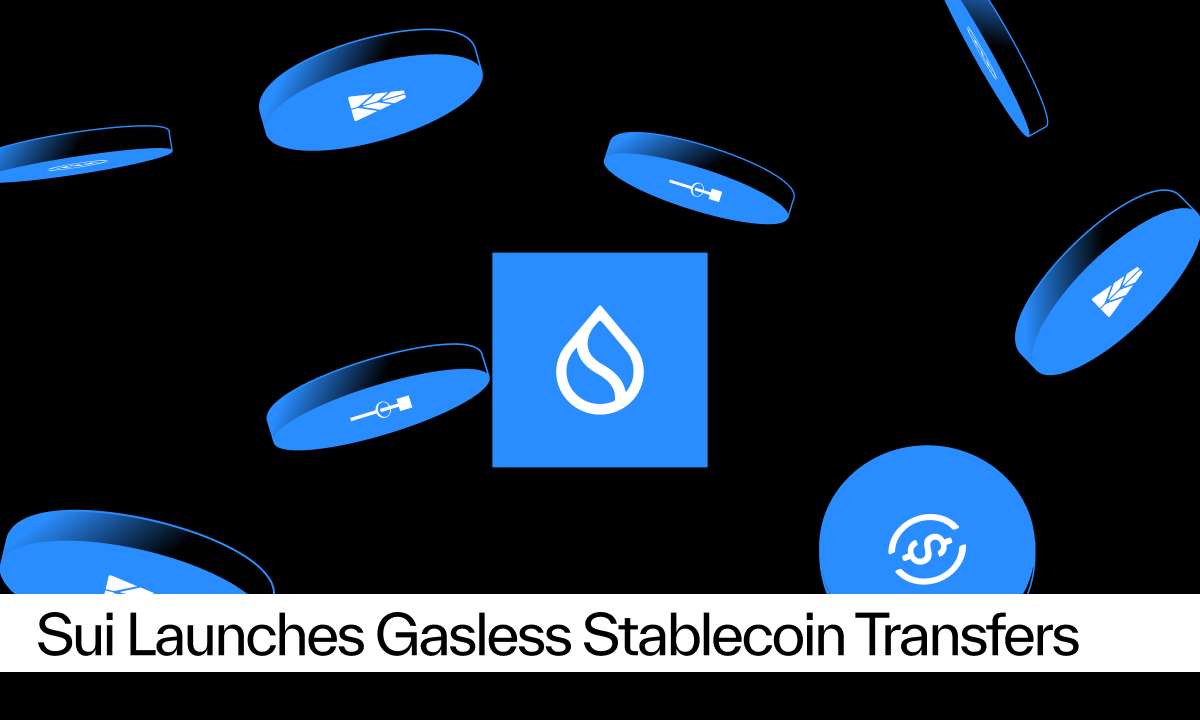
    Sui Launches Gasless Stablecoin Transfers

    Grand Cayman, Cayman Islands, May 20th, 2026 – Sui announced the launch of gasless stablecoin transfers, a new protocol-level feature enabling peer-to-peer stablecoin transfers without requiring users to hold SUI. This innovation reduces stablecoin transfer fees to $0.00.

    The feature allows users and businesses to send supported stablecoins on Sui without incurring gas fees or managing a separate SUI token balance. The rollout to validators is underway.

    Major stablecoins, including USDsui, suiUSDe, AUSD, FDUSD, USDB, USDC, and USDY, are supported. The feature aims to simplify payment workflows and eliminate the need to hold a separate token for transactions, a significant hurdle for stablecoin adoption.

    Fireblocks, a platform securing over $14 trillion in digital asset transactions, has integrated the new solution. Numerous institutional custodians and retail-facing wallets will also support gasless transactions at launch. This will allow users to send select stablecoins without holding or spending SUI on transaction fees.

    “Stablecoins are becoming a core part of global finance, but the infrastructure around them still creates unnecessary complexity,” said Adeniyi Abiodun, Co-Founder and CPO of Mysten Labs, the original contributor to Sui. “With gasless stablecoin transfers, we are one step closer in making Sui the global rail for payments, whether they are for businesses, AI agents, and consumers.”

    Fireblocks’ support enhances the institutional accessibility of Sui’s payments infrastructure, enabling enterprises and financial service providers to securely manage stablecoin activity on the network.

    “The future of payments will run on stablecoin rails, but the experience for institutions still needs to catch up,” said Ran Goldi, SVP Payments & Network at Fireblocks. “Sui is making all the right moves, with gasless stablecoin transfers that removes a major point of friction for enterprises building onchain payment flows and customer experiences.”

    Structural Change

    Gasless stablecoin transfers represent a structural change to how peer-to-peer transfers of supported stablecoins operate on Sui Mainnet. This is not a subsidy, sponsorship program, or temporary promotional initiative. In a competitive market, Sui aims to become the default stablecoin infrastructure for businesses seeking to reduce complexity and costs, traders seeking to avoid fees, and AI agents looking for the most cost-effective payment methods.

    Since August 2025, Sui has surpassed $1 trillion in stablecoin transfer volume. Its stablecoin ecosystem has expanded across institutional, retail, and developer use cases. Sui’s architecture and object-centric design support high-frequency payment activity with predictable performance and low operational overhead, making it suitable for emerging payment applications, agentic commerce, and enterprise-grade financial systems.

    These new protocol mechanisms reduce processing costs, and gasless stablecoin transfers eliminate gas pre-funding and volatile treasury management. This results in simpler infrastructure for institutions and a cost model that supports agentic commerce and autonomous systems. Free transfers ensure that gas fees never exceed the value of the payment, enabling micropayments at any scale.

    Ecosystem Momentum

    Recent momentum across the Sui ecosystem highlights the growing demand for scalable financial infrastructure and stablecoin-based payments. In 2026, four SUI exchange-traded products from 21Shares, Grayscale, and Canary Capital launched globally, expanding institutional access to the Sui ecosystem. Simultaneously, initiatives like Bridge-issued Sui Dollar (USDSui) and Ethena-issued eSui Dollar (SuiUSDe) have expanded Sui’s digital dollar ecosystem.

    Gasless stablecoin transfers are now rolling out on Sui Mainnet.

    About Sui

    Sui is a next-generation Layer 1 blockchain designed for scalable finance and global payments. Founded by the core team behind Meta’s stablecoin initiative and powered by an object-centric model, Sui makes assets, permissions, and user data programmable and ownable. Sui offers builders the tools to create high-performance payments and financial applications, including instant agentic payments.

    About Fireblocks

    Fireblocks is a digital asset infrastructure company, empowering organizations to build, manage, and grow their business on the blockchain. The platform streamlines stablecoin payments, settlement, custody, tokenization, trading, accounting operations, and compliance reporting. Thousands of organizations trust Fireblocks to secure over $14 trillion in digital asset transactions across 150+ blockchains.

  • Ripple and Project Eleven Partner on Quantum-Resistant XRP Ledger

    Ripple and Project Eleven Partner on Quantum-Resistant XRP Ledger

    A comprehensive audit of the XRP Ledger’s validators, custody systems, wallets, and networking layers is underway, led by quantum security firm Project Eleven in collaboration with Ripple. The review is part of a broader initiative to prepare the XRP Ledger ecosystem for a future where quantum computers could pose a threat to the cryptographic systems currently underpinning blockchains.

    Scope of Project Eleven’s Work

    Project Eleven describes the collaboration as one of the first major efforts in the industry to move post-quantum blockchain security from theoretical research into practical application. The firm stated that the work will produce actual code, real-world performance testing, and a roadmap for production. Plans also include developing hybrid signature systems that combine current cryptographic standards with quantum-resistant protections, along with a prototype quantum-secure custody wallet.

    Alex Pruden, CEO of Project Eleven, noted that most discussions surrounding quantum risk in the blockchain space have remained at the research level. He added that Ripple is approaching the issue as a practical engineering challenge.

    The XRP Ledger is designed for the quantum era, utilizing a native account-based architecture with built-in key rotation. This design allows businesses, projects, and users to seamlessly transition to quantum-resistant signatures while retaining the same r-addresses for their customers.

    Industry-Wide Transition

    The U.S. government has set a 2035 deadline for federal systems to transition away from encryption standards vulnerable to quantum attacks. Google and Cloudflare have both targeted 2029 for their respective transitions to quantum-safe systems.

    XRP Ledger’s Structural Advantages

    The XRP Ledger Foundation emphasized that the network is not starting from scratch. According to the foundation, XRPL already supports key rotation and coordinated validator upgrades, features that provide structural advantages as the broader ecosystem moves toward quantum-resistant cryptography.

    A key advantage highlighted by the foundation is that users and businesses will be able to switch to quantum-resistant signatures without changing their existing XRP wallet addresses. These addresses, known as r-addresses, are already recognized by customers, and maintaining them during a migration eliminates a significant technical and operational hurdle.

    J. Ayo Akinyele, head of engineering at RippleX, stated that the goal is to have XRPL production-ready well before quantum threats become a real danger.

    Project Eleven stated that the partnership with Ripple is its most comprehensive blockchain security engagement to date. The firm added that the cryptography protecting major blockchains, including Bitcoin, Ethereum, XRP, and Solana, could eventually be compromised by sufficiently advanced quantum computers.