Crypto Markets Remain Stable as Japan Raises Interest Rates to 30-Year High
Tokyo, Japan – Cryptocurrency markets showed resilience on Tuesday, holding steady even as the Bank of Japan implemented its first interest rate hike in 17 years, pushing benchmark rates to a three-decade high amid concerns over rising domestic inflation.
The Bank of Japan’s policy board voted 7-1 to raise its benchmark interest rate to approximately 1%, with the new guideline taking effect on June 17. Policymakers cited the risk of inflation exceeding the 2% target, driven by higher oil prices impacting consumer goods, and signaled expectations for further rate increases.
In a separate development, a relief rally had previously boosted crypto markets following President Trump’s announcement of a deal with Iran over the weekend. This de-escalation of tensions, which the Bank of Japan had linked to rising oil prices, propelled Bitcoin above $65,000 from its earlier low $60,000s. A formal signing of the deal is anticipated on Friday.
At the time of reporting, Bitcoin was trading around $66,000, a 1.1% decrease on the day, according to CoinGecko data. Sentiment on the prediction market Myriad, operated by Dastan, the parent company of Decrypt, remained predominantly bearish, with traders assigning a 64% probability to Bitcoin’s next move being a decline to $55,000.
The Bank of Japan noted that Japan’s economy has “recovered moderately” despite weakening factors associated with the Middle East. Strong corporate profits and a robust job market have helped to cushion the impact on economic activity. The central bank’s guidance suggests the broader economy is expected to align with a “baseline scenario” of moderate growth, albeit at a slower pace. Government measures aimed at mitigating energy costs are anticipated to reduce the risk of a sharp economic slowdown.
Tuesday’s quarter-point increase to 1% marks the highest level for Japan’s benchmark rate in over three decades, a level last seen in 1995.
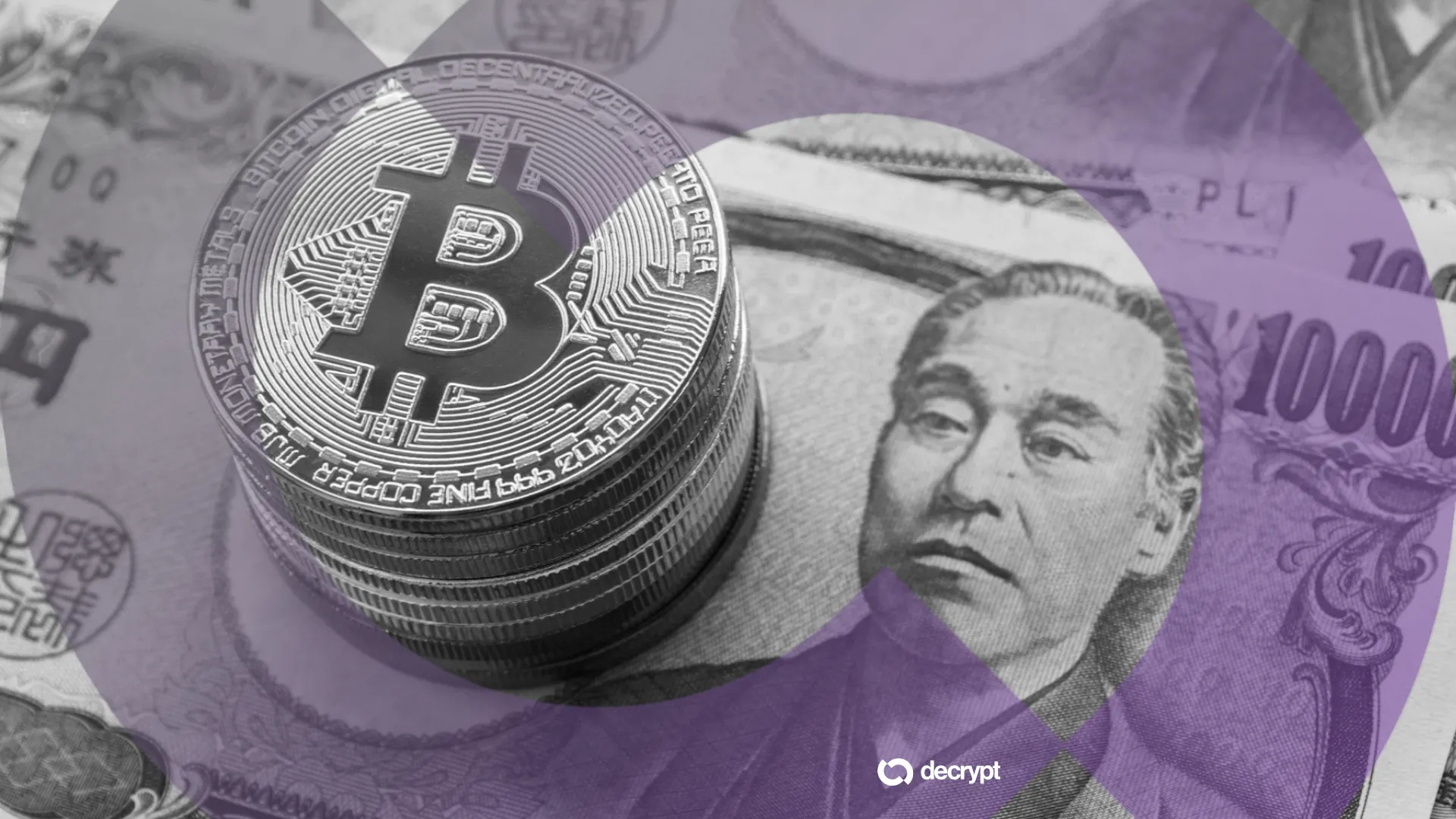
Historically, Bank of Japan rate hikes have exerted pressure on crypto markets by unwinding the yen carry trade. This strategy involves investors borrowing yen at low interest rates to invest in higher-yielding assets abroad, profiting from the interest rate differential while the yen remains weak.
Despite this historical precedent, Bitcoin and the broader crypto market remained stable following Tuesday’s rate hike, even as traders appeared to have anticipated a potential selloff.
The total market capitalization of cryptocurrencies hovered around $2.34 trillion, down 1.4% for the day, according to CoinGecko. Data from CoinGlass indicated a decrease in open interest for Bitcoin futures over the preceding day, suggesting traders had reduced their leveraged positions, thereby limiting the potential for a significant selloff.
“The Yen carry trade has failed to trigger any meaningful disruption in either crypto or global equities this time around,” Ryan Yoon, senior analyst at Tiger Research, told Decrypt. He added that the memory of previous carry trade scares is “still incredibly fresh,” leading investors to “refuse to panic” as the market appears to have “fully recovered” from earlier shocks.
Decades of low and negative interest rates have supported global markets, with Japan currently carrying public debt exceeding 200% of its GDP, the highest among advanced economies, according to IMF data.
Yoon suggested that the yen carry trade would likely remain “just another headline” unless Japan’s policy shift significantly drains liquidity from the U.S. market. He explained that once the market processes a narrative and realizes “the sky isn’t falling,” such scares “lose their power to move prices.”
Maksim Balashevich, founder and CEO of Santiment, commented that Japan’s rate hike held less market significance now, as it had been “priced in before.” He posited that “The ‘unknown’ events of the future, which aren’t fully priced in and able to move markets significantly, must be some other pieces of unveiling reality.”
Tuesday’s rate hike was accompanied by a commitment to increase bond purchases if long-term yields rise sharply, thereby capping the extent of monetary tightening. The Bank of Japan confirmed its intention to continue reducing these purchases by approximately ¥200 billion (about $1.3 billion) each quarter until early 2027, after which they are expected to stabilize near ¥2 trillion (approximately $12.5 billion).
Leave a Reply