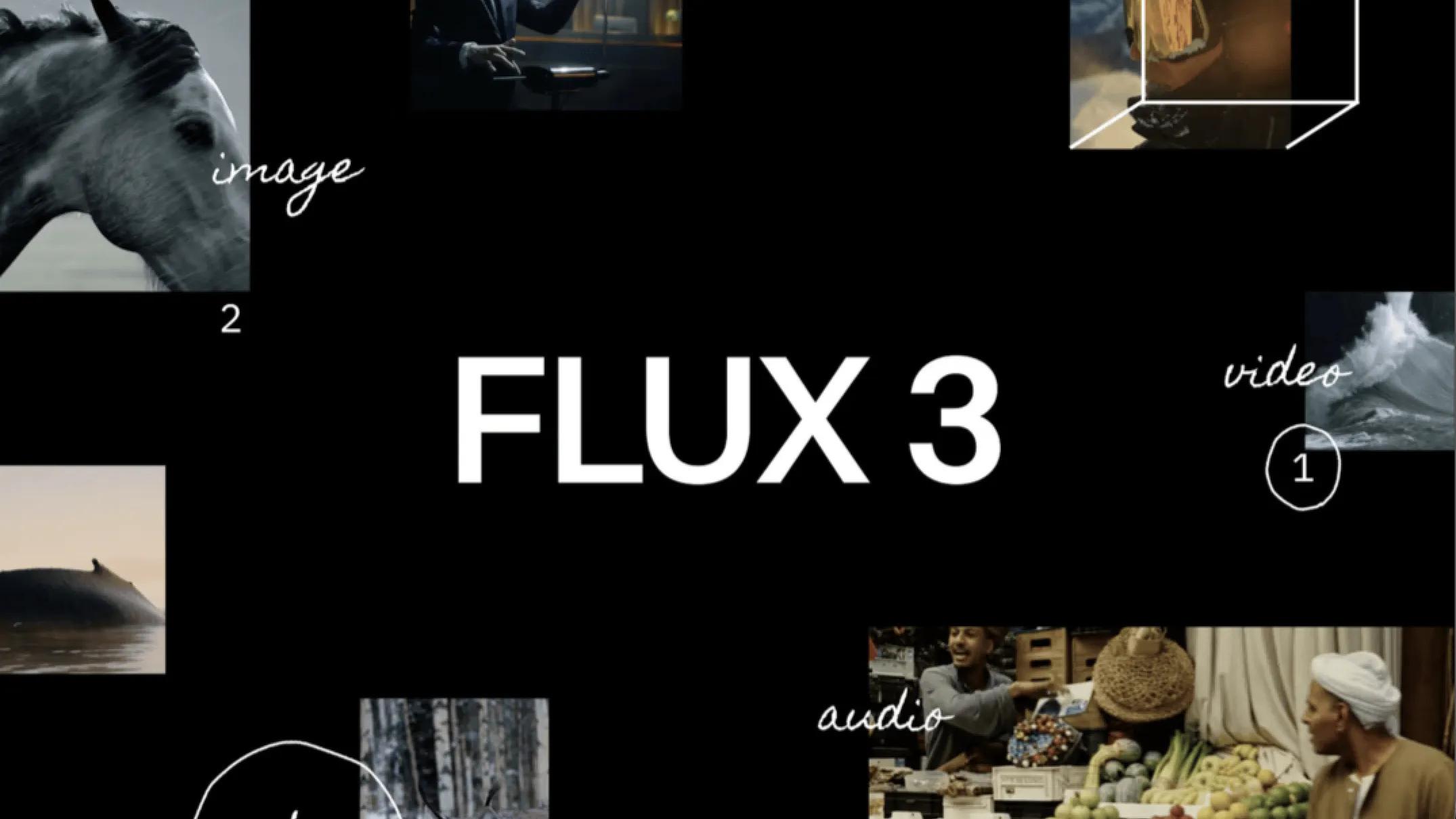
Black Forest Labs has released FLUX 3, an AI model capable of generating video with synchronized audio, and FLUX-mimic, a robotics application designed for physical tasks. The German company, founded in August 2024 by researchers involved in the original Stable Diffusion models, aims to advance AI’s interaction with the physical world.
FLUX 3 marks a significant evolution from previous iterations, moving beyond still image generation to produce video clips up to 20 seconds long. These videos are accompanied by synchronized audio, including dialogue, sound effects, and ambient noise. In comparative evaluations, human reviewers demonstrated a strong preference for FLUX 3’s output. According to BFL, reviewers favored FLUX 3 over Runway Gen-4.5 in 77% of comparisons and over Luma Ray 3.2 in 93%. The model also reportedly outperformed Gemini Omni and Seedance in 52% of evaluations.
Black Forest Labs frames FLUX 3’s video prediction capability as a foundational step toward understanding real-world physics, such as weight, contact, and timing. This understanding is considered crucial for AI to operate effectively in physical environments. This concept is realized in FLUX-mimic, which integrates FLUX 3’s video-prediction engine with a decoder that translates AI predictions into robot motions.
Automaker Audi is currently testing FLUX-mimic for tasks like fitting flexible door seals, a complex soft-body manipulation challenge that has historically posed difficulties for conventional automation. “Audi represents the kind of manufacturing partner we built FLUX-mimic for,” stated mimic co-founder Stephan-Daniel Gravert. Audi’s Christoph Schneider noted that the robots can now handle tasks that older machines could not.
Black Forest Labs has a history of developing competitive AI models. The company’s earlier open-source Flux models garnered recognition, with some users suggesting they met expectations previously set for models like Stable Diffusion 3.5. FLUX 1.1 Pro also reportedly topped the Artificial Analysis image arena in October. However, FLUX.2, released in November 2025, saw less popularity, and the open-source Flux was later surpassed by Alibaba’s Z-Image Turbo in late 2025.
FLUX 3 is not yet fully open source. The video and action generation features are currently available in early access through APIs and select partners, including mimic robotics. Black Forest Labs plans to release an open-weight Dev version for local use later in 2026, with image generation capabilities anticipated in the coming weeks. The full FLUX system is reported to react in approximately 101 milliseconds, a speed comparable to human visual reflexes.
Uncertainties remain regarding the precise timeline for the full release of FLUX 3’s image generation capabilities and the exact definition of ‘early access.’ The company has not provided detailed technical specifications beyond performance in preference tests.
Why This Matters
Black Forest Labs’ release of FLUX 3, an AI model capable of generating video with synchronized audio, and its integration into robotics via FLUX-mimic, signifies a notable advancement in multimodal AI. The company’s focus on understanding real-world physics through video prediction, as demonstrated by Audi’s testing of FLUX-mimic for complex manipulation tasks, highlights a potential shift towards AI models directly interacting with and performing physical work. This development positions Black Forest Labs as a competitive player in the rapidly evolving AI landscape, particularly in areas bridging digital generation and physical application.
Broader Context
Black Forest Labs released FLUX 3 on Thursday, marking a significant expansion into video generation with synchronized audio, moving beyond its previous capabilities in still image generation. This release places the company within the broader context of advancements in multimodal AI, where models are increasingly trained on diverse data types simultaneously to achieve more sophisticated outputs. The integration with robotics through FLUX-mimic, as exemplified by Audi’s application, further situates this release within the trend of AI moving from purely digital tasks to tangible, real-world applications.
Leave a Reply