Author: Admin_Up

  • Ethereum Faces Potential Correction as Key Resistance Holds Firm

    Ethereum Faces Potential Correction as Key Resistance Holds Firm

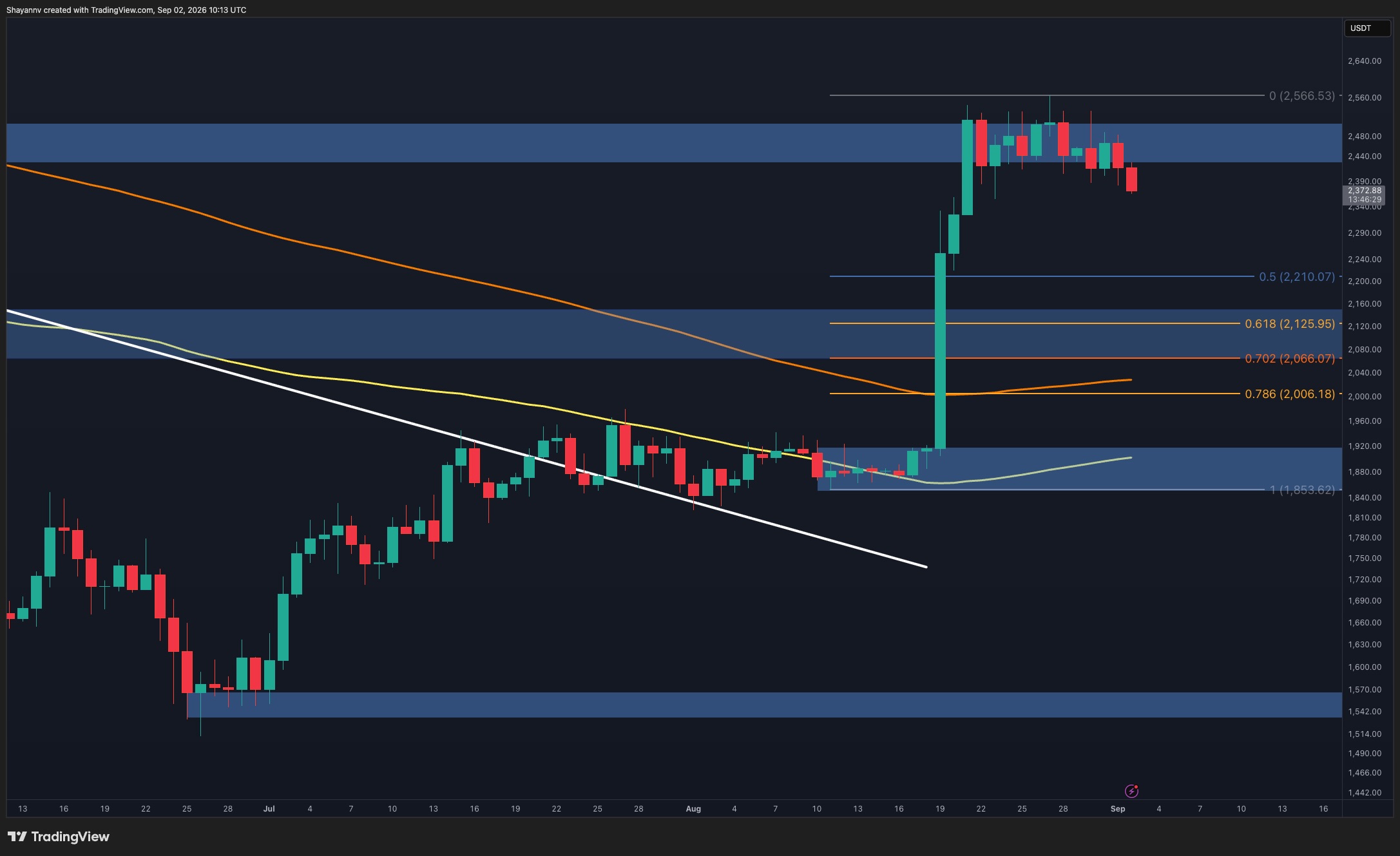
    Ethereum’s price is exhibiting signs of a corrective phase after failing to breach the critical resistance zone between $2.44K and $2.51K. This failure has coincided with a decline below its recent consolidation range, with technical indicators and liquidity levels suggesting potential downside targets. However, the broader bullish structure may remain intact.

    According to the analysis, Ethereum has fallen below the lower boundary of the $2.44K-$2.51K resistance zone and is currently trading near $2.37K. This follows multiple unsuccessful attempts by buyers to establish acceptance above this key area. The initial recent price movement, which propelled Ethereum from its $1.85K-$1.92K base, appears to have been exhausted in the short term, with recent price action indicating a gradual shift in favor of sellers.

    Technical Indicators Signal Corrective Momentum
    The data suggests that a weakening short-term structure could prompt Ethereum to seek liquidity at lower levels before buyers attempt another sustained advance. The market has cooled considerably following the recent rally, which carried ETH directly into the significant resistance zone. The latest rejection from the $2.48K-$2.50K area was followed by a sharp move lower, indicating that sellers are gaining control as the previous consolidation resolves to the downside.

    Identifying Downside Targets
    Technical pullback zones and support levels are being closely monitored. The first major technical pullback zone is identified around $2.21K-$2.31K. Given the vertical nature of the original rally, relatively little price structure was established between the current market and this area, making a deeper retracement toward it increasingly plausible if selling pressure continues. The next significant support is noted around the $2.07K-$2.12K region.

    Fibonacci retracement levels offer a roadmap for a potential correction. The 0.5 level is situated around $2.21K, while the 0.618 retracement near $2.13K overlaps closely with the broader $2.07K-$2.16K support zone. This confluence makes the $2.07K-$2.21K region an important potential demand area during a deeper pullback.

    Liquidity Levels Align with Technical Weakness
    Liquidation data reinforces the possibility of a near-term move lower. With Ethereum trading around the upper-$2.3K region, a substantial concentration of liquidation liquidity is visible immediately beneath the market, roughly between $2.32K and $2.36K. This downside liquidity represents a relevant near-term target on the heatmap. If the current decline continues, the market could be drawn toward this cluster as leveraged positions are cleared and liquidity is collected. Therefore, the liquidation data aligns with the weakening technical structure.

    Broader Context and Uncertainties
    It is important to note that the broader bullish structure would not necessarily be invalidated by such a correction. A recovery back above the $2.44K-$2.51K resistance zone would reduce the immediate bearish pressure and could put the $2.57K local high back in focus. Conversely, a recovery above the $2.43K-$2.51K zone would weaken the corrective scenario and indicate that the latest notable move lacked sufficient follow-through.

    Key uncertainties remain regarding whether buyers will regain control and the exact extent of any potential deeper pullback. The analysis suggests that a sweep of the liquidity below the current price could serve as the first objective of the developing pullback before the market determines whether a larger correction toward the major technical support zones is necessary.

    Why This Matters

    The materials describe a narrow update: Ethereum’s price has fallen below a recent consolidation range after failing to break through the $2. Whether buyers will regain control.

  • ETH Powers RWA Surge, But Can It Top Previous High?

    ETH Powers RWA Surge, But Can It Top Previous High?

    Ethereum’s Dominance in Tokenized Assets Outpaces Price Momentum

    While Ethereum (ETH) experienced a modest 3% dip today, the more significant development for the cryptocurrency’s ecosystem lies not in its immediate price fluctuations but in the substantial $17.5 billion in assets currently secured on its network. Despite this commanding presence in the tokenization of real-world assets (RWAs), this dominance has not yet translated into strong price momentum for ETH itself.

    As of late August 2026, tokenized real-world assets collectively held a distributed value exceeding $38.69 billion. Ethereum commands nearly 45% of this burgeoning market, a share more than triple that of BNB Chain’s $5.8 billion and quadruple Solana’s $4.0 billion.

    Key players in the tokenization space, such as Securitize and Ondo, have established their primary platforms on Ethereum. Furthermore, BlackRock’s BUIDL fund, a significant institutional offering, initially launched on Ethereum before expanding to six other blockchain networks. This indicates that Ethereum has solidified its position as the foundational trust layer for institutional adoption in this sector.

    However, institutional trust and market momentum operate on different dynamics. ETH has been trading within a narrow range for the past 48 hours, leaving traders more focused on potential price movements than on Ethereum’s share of the RWA market.

    Current Market Performance and Technical Outlook

    ETH is currently priced at $2,360, marking a 3% decrease over the last 24 hours. Intraday trading has seen fluctuations between $2,362 and $2,428, a relatively tight band for an asset attracting significant macroeconomic attention. Despite the cooling spot price, institutional accumulation patterns persist, a divergence that typically precedes a notable price movement in one direction.

    Analysts have identified $2,550 as a critical technical resistance level, acting as a ceiling that separates the current consolidation phase from a potential breakout. Immediate support levels are positioned at $2,438, followed by $2,383 and $2,350. A weekly close above $2,438 would maintain a bullish outlook for September and pave the way towards the $2,800–$2,920 range. Conversely, a breach below $2,350 could expose ETH to the $2,200–$2,000 zone.

    The relative strength of ETH against Bitcoin (BTC) is likely to be a deciding factor in which of these scenarios unfolds.

    Investor Sentiment and Rotation Dynamics

    ETH holders, witnessing a fourth consecutive day of range-bound trading, may be experiencing a degree of restlessness. While the current consolidation below $2,550 does not signal a collapse, it also lacks the conviction typically associated with strong upward momentum.

    Given Ethereum’s substantial market capitalization, even a decisive breakout to $2,800 represents a modest percentage gain compared to the potential returns offered by early-stage tokens. This dynamic is currently driving a rotation of capital towards presale opportunities.

    Emerging Presale Opportunities

    Maxi Doge ($MAXI), an ERC-20 meme token, has entered the market, drawing inspiration from “gym-bro” trading culture and embracing high-leverage trading. Priced at $0.0002836, the project has already raised $4.8 million in its presale phase, demonstrating significant investor interest without the backing of major exchange listings.

    Notable features of Maxi Doge include trading competitions exclusively for holders, with rewards for leaderboard performance, and a dedicated Maxi Fund treasury allocated for liquidity and strategic partnerships. An early-buyer incentive of a dynamic 65% APY for staking is currently active. Investors are advised to conduct thorough research before committing capital to Maxi Doge.

  • SEC Proposes Landmark Transfer Agent Rules Amid Tokenization Boom

    SEC Proposes Landmark Transfer Agent Rules Amid Tokenization Boom

    SEC Proposes Sweeping Overhaul of Transfer Agent Rules, Embracing Blockchain

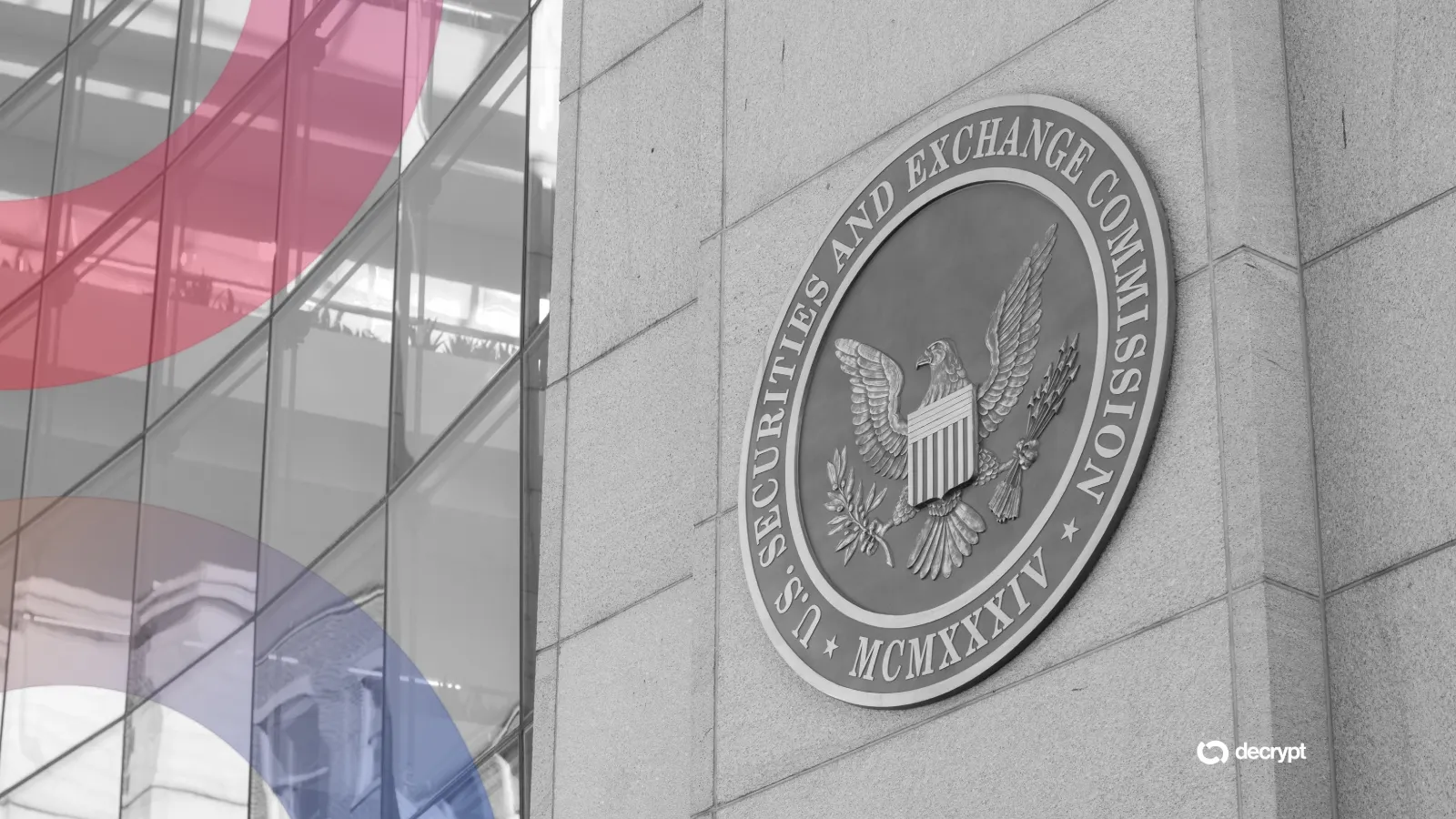
    The Securities and Exchange Commission (SEC) has unveiled its first significant update to transfer agent regulations since the early 1980s, proposing a comprehensive rewrite that extensively addresses blockchain recordkeeping and tokenized securities. The 421-page release, published Tuesday, signals a major shift in how the agency views the management of ownership records for financial instruments.

    Transfer agents are responsible for maintaining the official registry of security ownership, overseeing the issuance, cancellation, and transfer of securities. The current framework for these rules was largely established in the late 1970s and early 1980s.

    The SEC’s release acknowledges a growing trend of market participants seeking to integrate blockchain-native, or “onchain,” transfer agents into the U.S. market. Firms are actively developing models for blockchain-based recordkeeping, tokenized fund administration, and cross-chain interoperability. These innovations would necessitate transfer agents maintaining securityholder records on distributed ledgers and operating processes driven by smart contracts.

    Proposed amendments to Form TA-2 would require transfer agents to disclose the number of issues where their master securityholder file resides on a distributed ledger. Furthermore, tokenized issues would need to be categorized as either issuer-sponsored or third-party-sponsored. The SEC highlighted this distinction in a January 2026 staff statement, linking it to varying investor risks. Tokenization agents and distributed ledger platforms are now included alongside traditional service providers like banks and printers on a checklist.

    The commission is soliciting feedback on how to handle records stored solely on ledgers not exclusively controlled by the agent. It also seeks input on whether current rules permit agents to link a wallet address and quantity held to offchain records of a holder’s name and address, thereby enabling an onchain transfer to simultaneously update the master file.

    Commissioner Hester Peirce noted that the proposal has been in development for over a decade and encouraged comments on its implications for tokenization. The SEC last reviewed these rules in a 2015 concept release.

    Commissioner Mark T. Uyeda commented that the lack of rulemaking for over a decade led the Commission to adopt a “regulation-by-enforcement approach,” which he described as a fragmented strategy that offered neither clarity nor predictability. He added that distributed ledger technology and tokenization, which were nascent in 2015, are now fundamentally reshaping the core functions of transfer agents.

    SEC Chairman Paul S. Atkins stated that the updated rules would reflect the industry’s adoption of “electronic communications and blockchain technology.” The proposal also aims to eliminate an existing exemption rule, establish a uniform retention period for most records, and redefine the safeguarding rule as a risk-management requirement encompassing cybersecurity and business continuity.

    In a separate announcement, the SEC revealed the agenda for a September 17 roundtable discussion on 24-hour trading. The event will feature panelists from Robinhood, Nasdaq, DTCC, and overnight trading venues Blue Ocean and 24X. Public comments on the transfer agent proposal are due 60 days after its publication in the Federal Register.

  • OpenPayd Secures 43 US State Licenses, Integrates MSB USA Inc. to Bolster North American Operations

    OpenPayd Secures 43 US State Licenses, Integrates MSB USA Inc. to Bolster North American Operations

    OpenPayd has significantly expanded its regulatory presence in the United States by integrating MSB USA Inc. into its group and securing 43 state money transmitter licenses (MTLs). This strategic move aims to bolster its position in the US market and establish a more comprehensive regulatory foundation for its North American operations.

    The integration of MSB USA Inc., a US-based, state-licensed money services business, was finalized after obtaining the necessary regulatory approvals. This expansion enhances OpenPayd’s geographic reach, enabling it to better serve global clients already operating in the US or planning market entry.

    Financial Performance and Market Ambitions

    As of July 31, 2026, OpenPayd reported strong financial performance, with its annual recurring revenue (ARR) exceeding $96 million and its annualized transaction volume surpassing $300 billion. The company stated that it remains profitable and has not sought external capital. Currently, OpenPayd serves over 1,200 clients worldwide, including prominent financial and crypto firms such as Kraken, eToro, OKX, and B2C2.

    Further underscoring its growth and market ambitions, OpenPayd is preparing to enter the US public markets through a previously announced business combination with Titan Acquisition Corp. The companies anticipate this combination will result in OpenPayd becoming a publicly listed company on the Nasdaq under the ticker symbol “OP.” The transaction is expected to value OpenPayd at an equity value of up to $1.145 billion on a pro forma basis. The closing of this business combination is anticipated in the fourth quarter of this year, subject to customary closing conditions, including shareholder approval from Titan Acquisition Corp.

    Global Regulatory Footprint

    This US expansion follows OpenPayd’s recent authorization under the European Union’s Markets in Crypto-Assets (MiCA) framework, granted by the Malta Financial Services Authority. This dual regulatory footing across fiat and digital assets in both the US, UK, and Europe positions OpenPayd as a provider of regulated financial infrastructure on both sides of the Atlantic.

    OpenPayd Founder, Dr. Ozan Ozerk, commented on the significance of infrastructure in finance, stating, “Every era of finance has been defined by its infrastructure: correspondent banking wired together the twentieth-century economy; programmable money will power the twenty-first. The U.S. is at the forefront of this evolution, and with regulated foundations now spanning the U.S., U.K. and Europe – across both fiat and digital assets – OpenPayd has something few providers can claim: regulated infrastructure spanning both fiat and digital assets, on both sides of the Atlantic.”

    While the business combination with Titan Acquisition Corp. is progressing, certain customary closing conditions, including shareholder approval, are still pending.

    Broader Context

    Source materials place the factual news in this context: OpenPayd has announced expanded its regulatory presence in the United States after completing the integration of MSB USA Inc. into its group.

  • XRP ETFs Attract $170M from Institutions

    XRP ETFs Attract $170M from Institutions

    XRP ETFs Attract Significant Institutional Inflows Amidst Price Dip

    Despite a nearly 3% drop in Ripple’s XRP price, institutional investors are reportedly increasing their holdings, a trend that has quietly emerged as a significant narrative in the cryptocurrency market this quarter. The performance of spot XRP Exchange Traded Funds (ETFs) warrants a closer look before interpreting the current price dip as a sign of fundamental weakness.

    ETF Holdings and Inflows Surpass Expectations

    As of mid-August, seven U.S. spot XRP ETFs collectively hold 994.74 million XRP, supported by cumulative net inflows approaching $1.51 billion. Recent weekly data indicates that the XRP ETF complex experienced its strongest week since May, attracting $39.78 million in net inflows, with one trading session alone accounting for $18.38 million.

    On September 1st, spot ETF flows showed a clear rotation signal: XRP, Ethereum (ETH), and Solana (SOL) ETFs all posted inflows, while Bitcoin (BTC) funds experienced net outflows of $236.46 million. This occurred despite a broader market downturn of 4% on the same day.

    Institutional Accumulation Pattern Evident

    Further underscoring this trend, Q2 filings revealed that one institutional holder reportedly manages $86.5 million spread across five separate XRP funds. ETF inflow tracking suggests this is not an isolated incident but rather a consistent pattern of accumulation.

    Price Action Disconnect Puzzles Observers

    The key question now is whether XRP’s price action can keep pace with this burgeoning institutional narrative. Currently, it is not, and this disconnect represents the most compelling aspect of the current market dynamic.

    XRP’s 7-day performance stands at -7%, a more pronounced drawdown than its daily figures. Despite this, Ripple’s 24-hour trading volume, hovering near $2.56 billion, indicates that liquidity has not diminished; rather, the short-term direction has shifted bearishly. The price is currently testing the $1.33 support zone, with a further floor identified near $1.295. A more critical level to watch, should selling pressure intensify, lies between $1.23 and $1.25.

    While longer-term price targets for XRP remain optimistic, the current week is characterized as a test of support rather than a setup for a breakout.

    Retail vs.

    Institutional Dynamics

    A 7% weekly drawdown on a token that has attracted $1.51 billion in ETF inflows presents a peculiar market scenario. While institutions are actively buying, retail investors appear to be experiencing losses.

    This divergence often prompts traders to seek out earlier-stage investment opportunities where entry price remains a more significant factor. With an $85 billion market capitalization, XRP’s potential for upside is present but incremental. Achieving substantial capital multiplication at this scale typically requires a level of patience that many retail traders may not possess.

    Emerging Opportunities in Early-Stage Projects

    Projects like LiquidChain ($LIQUID), a Layer 3 infrastructure initiative, are positioning themselves to capitalize on this demand for earlier-stage plays. LiquidChain aims to consolidate liquidity from Bitcoin, Ethereum, and Solana into a single execution environment, enabling developers to deploy applications across all three ecosystems simultaneously, thereby avoiding fragmentation across bridges.

    The project’s presale has already raised $960,000 at a current price of $0.014951. Its core offerings include a Unified Liquidity Layer, single-step execution, and verifiable settlement. Investors interested in cross-chain infrastructure solutions may wish to research LiquidChain further.

  • ریپل: صندوق‌های ETF ریپل ۱۷۰ میلیون دلار جذب کردند؛ نهادها در حال افزایش سهام خود

    ریپل: صندوق‌های ETF ریپل ۱۷۰ میلیون دلار جذب کردند؛ نهادها در حال افزایش سهام خود

    ریپل نزدیک به ۳ درصد کاهش یافته است، کاهشی که همزمان با عکس‌العمل معکوس سرمایه‌گذاران نهادی در برابر وحشت رخ داده است. صندوق‌های قابل معامله در بورس (ETF) اسپات XRP به طور پنهانی به یکی از جذاب‌ترین جریان‌های سرمایه‌گذاری در بازار ارزهای دیجیتال در این فصل تبدیل شده‌اند و اعداد و ارقام پشت این ادعا ارزش بررسی دارند، پیش از آنکه فرض کنیم این افت معنای ساختاری دارد.

    هفت ETF اسپات XRP در ایالات متحده در حال حاضر ۹۹۴.۷۴ میلیون XRP را در اختیار دارند که تا اواسط ماه اوت با جریان خالص تجمعی نزدیک به ۱.۵۱ میلیارد دلار پشتیبانی می‌شود. داده‌های هفتگی نشان داد که این مجموعه بهترین هفته خود را از ماه مه ثبت کرده و ۳۹.۷۸ میلیون دلار جریان خالص ورودی داشته است، از جمله ۱۸.۳۸ میلیون دلار در یک جلسه معاملاتی.

    جریان ETFهای اسپات آمریکا

    • XRP: +۱۴.۳۸ میلیون دلار
    • ETH: +۱۰.۹۵ میلیون دلار
    • SOL: +۱۰.۱۹ میلیون دلار
    • BTC: -۲۳۶.۴۶ میلیون دلار

    صندوق‌های بیت‌کوین شاهد خروج خالص سرمایه بودند، در حالی که ETFهای XRP، اتریوم و سولانا همگی شاهد ورود سرمایه بودند؛ این یک سیگنال چرخش واضح است، علیرغم اینکه بازار گسترده‌تر امروز ۴ درصد کاهش یافته است.

    علاوه بر این، طبق گزارش‌های سه ماهه دوم، یک نهاد سرمایه‌گذار به طور گزارش شده ۸۶.۵ میلیون دلار را در پنج صندوق مجزای XRP سرمایه‌گذاری کرده است. ردیابی جریان ETF نشان می‌دهد که این یک مورد استثنایی نیست؛ بلکه الگویی از انباشت سرمایه است.

    اکنون سوال این است که آیا روند قیمت می‌تواند با روایت نهادی همگام شود؟ در حال حاضر، این اتفاق نمی‌افتد و این شکاف واقعیتی است که باید به آن توجه کرد.

    XRP در عملکرد ۷ روزه خود با ۷- درصد مواجه است که افت شدیدتری نسبت به رقم روزانه دارد. حجم معاملات ۲۴ ساعته ریپل نزدیک به ۲.۵۶ میلیارد دلار نشان می‌دهد که نقدینگی خشک نشده است، بلکه جهت‌گیری کوتاه‌مدت به سمت نزولی تغییر کرده است. قیمت در حال حاضر منطقه حمایتی ۱.۳۳ دلاری را آزمایش می‌کند، با کف عمیق‌تر نزدیک به ۱.۲۹۵ دلار و یک باند حیاتی‌تر در محدوده ۱.۲۳ تا ۱.۲۵ دلار در صورت افزایش فشار فروش.

    اهداف قیمتی بلندمدت همچنان به سمت بالا اشاره دارند، اما این هفته یک آزمون برای حمایت است، نه یک سناریوی شکست.

    یک افت ۷ درصدی هفتگی در توکنی که با ۱.۵۱ میلیارد دلار جریان ورودی ETF پشتیبانی می‌شود، نوع عجیبی از درد است. نهادها در حال خرید هستند و سرمایه‌گذاران خرد در حال ضرر دادن.

    این شکاف تمایل دارد معامله‌گران را به سمت فرصت‌های اولیه سوق دهد که در آن‌ها قیمت ورود همچنان اهمیت دارد. با ارزش بازار ۸۵ میلیارد دلاری، پتانسیل رشد XRP از اینجا واقعی اما تدریجی است؛ دو برابر کردن سرمایه در این مقیاس نیازمند صبری است که اکثر معامله‌گران خرد ندارند.

    LiquidChain ($LIQUID) یک پروژه زیرساختی لایه ۳ است. این پروژه خود را برای همین پنجره اولیه آماده می‌کند. استدلال آن این است: ادغام نقدینگی بیت‌کوین، اتریوم و سولانا در یک محیط اجرایی، به توسعه‌دهندگان اجازه می‌دهد یک بار برنامه خود را مستقر کنند و به هر سه اکوسیستم دسترسی یابند، به جای پراکنده شدن در میان پل‌ها.

    پیش‌فروش ۹۶۰ هزار دلار با قیمت فعلی ۰.۰۱۴۹۵۱ دلار جمع‌آوری کرده است، که بر اساس لایه نقدینگی یکپارچه، اجرای تک مرحله‌ای و تسویه قابل تأیید ساخته شده است.

    کسانی که به دنبال فرصت‌های زیرساختی بین‌زنجیره‌ای هستند، می‌توانند LiquidChain را مستقیماً بررسی کنند.

  • اوپن‌پِی‌د با مجوز ۴۳ ایالت آمریکا، گام بزرگ خود را در این کشور برداشت

    اوپن‌پِی‌د با مجوز ۴۳ ایالت آمریکا، گام بزرگ خود را در این کشور برداشت

    OpenPayd با تکمیل ادغام MSB USA Inc. در گروه خود، حضور نظارتی خود را در ایالات متحده گسترش داد.

    گسترش حضور نظارتی در آمریکا

    این اقدام جدید، ۴۳ مجوز انتقال پول ایالتی (MTLs) را تحت پوشش این شرکت قرار می‌دهد. شرکت ارائه‌دهنده زیرساخت مالی مستقر در لندن، در بیانیه‌ای رسمی که توسط CryptoPotato منتشر شد، اعلام کرد که این حرکت موقعیت آن را در بازار آمریکا تقویت کرده و پایگاه نظارتی گسترده‌تری برای عملیات آن در سراسر آمریکای شمالی ایجاد می‌کند. MSB یک کسب‌وکار خدمات پولی دارای مجوز ایالتی در ایالات متحده است و این ادغام پس از دریافت تأییدیه‌های نظارتی لازم نهایی شد.

    چشم‌انداز آینده و رشد پایدار

    دکتر اوزان اوزرک، بنیانگذار OpenPayd، در بیانیه‌ای اظهار داشت: «هر دوره مالی با زیرساخت‌هایش تعریف شده است: بانکداری مکاتبه‌ای اقتصاد قرن بیستم را به هم پیوند داد؛ پول قابل برنامه‌ریزی، قرن بیست و یکم را پیش خواهد برد. ایالات متحده در خط مقدم این تحول قرار دارد و با پایه‌های نظارتی که اکنون در سراسر ایالات متحده، بریتانیا و اروپا – هم برای دارایی‌های فیات و هم دارایی‌های دیجیتال – گسترش یافته است، OpenPayd چیزی دارد که تعداد کمی از ارائه‌دهندگان می‌توانند ادعا کنند: زیرساخت نظارتی که هم دارایی‌های فیات و هم دارایی‌های دیجیتال را در هر دو سوی اقیانوس اطلس پوشش می‌دهد.»

    OpenPayd افزود که شبکه ۴۳ مجوز ایالتی، دامنه جغرافیایی آن را برای مشتریان جهانی که در حال حاضر در ایالات متحده فعالیت می‌کنند یا قصد ورود به این بازار را دارند، افزایش خواهد داد. این گسترش پس از مجوز اخیر این پلتفرم تحت چارچوب بازارهای دارایی‌های رمزارزی (MiCA) اتحادیه اروپا توسط سازمان خدمات مالی مالت صورت می‌گیرد.

    آمارهای منتشر شده توسط OpenPayd همچنان نشان‌دهنده رشد ارگانیک در سراسر کسب‌وکار آن است. تا تاریخ ۳۱ ژوئیه ۲۰۲۶، درآمد سالانه تکرارشونده (ARR) آن از ۹۶ میلیون دلار فراتر رفت، در حالی که حجم تراکنش سالانه از ۳۰۰ میلیارد دلار عبور کرد. این شرکت اعلام کرد که همچنان سودآور است و سرمایه خارجی دریافت نکرده است. در حال حاضر، این شرکت به بیش از ۱۲۰۰ مشتری در سراسر جهان، از جمله شرکت‌های رمزارزی و مالی مانند Kraken، eToro، OKX و B2C2 خدمات ارائه می‌دهد.

    ورود به بازارهای عمومی آمریکا

    OpenPayd همچنین در حال آماده‌سازی برای ورود به بازارهای عمومی ایالات متحده از طریق ترکیب تجاری اعلام شده قبلی با Titan Acquisition Corp. است. در ژوئن ۲۰۲۶، این دو شرکت توافق قطعی را اعلام کردند که بر اساس آن انتظار می‌رود این شرکت به یک شرکت سهامی عام در نزدک با نماد “OP” تبدیل شود. این معامله، ارزش OpenPayd را در ارزش سهام تا ۱.۱۴۵ میلیارد دلار بر اساس مبنای پیش‌بینی شده، ارزیابی می‌کند. انتظار می‌رود این ترکیب در سه ماهه چهارم سال جاری، مشروط به شرایط معمول بسته شدن معامله، از جمله تأیید سهامداران Titan، نهایی شود.

  • SEC: اولین بازنگری ۴۰ ساله در کارگزاران انتقال با تمرکز بر توکنیزاسیون

    SEC: اولین بازنگری ۴۰ ساله در کارگزاران انتقال با تمرکز بر توکنیزاسیون

    کمیسیون بورس و اوراق بهادار آمریکا (SEC) اولین بازنگری اساسی در قوانین خود در خصوص کارگزاران انتقال اوراق بهادار را از اوایل دهه ۱۹۸۰ میلادی پیشنهاد کرده است. این پیشنهاد که در گزارشی ۴۲۱ صفحه‌ای در روز سه‌شنبه منتشر شد، به طور مکرر به موضوع ثبت سوابق مبتنی بر بلاکچین و اوراق بهادار توکنیزه شده می‌پردازد.

    کارگزاران انتقال اوراق بهادار مسئولیت نگهداری سوابق رسمی مالکان اوراق بهادار ناشران را بر عهده دارند و وظایفی چون صدور، ابطال و انتقال اوراق را انجام می‌دهند. کمیسیون بخش عمده‌ای از قوانین فعلی را در اواخر دهه ۱۹۷۰ و اوایل دهه ۱۹۸۰ میلادی تصویب کرده بود.

    در این گزارش آمده است که فعالان بازار به طور جدی در تلاشند تا کارگزاران انتقال اوراق بهادار بومی بلاکچین یا “آن‌چین” را وارد بازار آمریکا کنند. شرکت‌ها در حال توسعه مدل‌هایی برای ثبت سوابق مبتنی بر بلاکچین، مدیریت صندوق‌های توکنیزه شده و قابلیت همکاری بین بلاکچین‌های مختلف هستند که این امر مستلزم آن است که کارگزاران، سوابق دارندگان اوراق بهادار را در دفتر کل توزیع شده نگهداری کرده و فرآیندهای مبتنی بر قراردادهای هوشمند را اجرا کنند.

    پیشنهادات جدید برای فرم TA-2، کارگزاران را ملزم می‌کند تا تعداد اوراق بهاداری را که فایل اصلی دارندگان اوراق بهادار آن‌ها در دفتر کل توزیع شده نگهداری می‌شود، گزارش دهند. همچنین، اوراق توکنیزه شده باید به دو دسته “تحت حمایت ناشر” و “تحت حمایت شخص ثالث” تقسیم شوند؛ تمایزی که کمیسیون در بیانیه‌ای در ژانویه ۲۰۲۶، آن را به ریسک‌های متفاوت برای سرمایه‌گذاران مرتبط دانسته است. کارگزاران توکنیزاسیون و پلتفرم‌های دفتر کل توزیع شده در کنار بانک‌ها و چاپخانه‌ها در فهرست ارائه‌دهندگان خدمات قرار می‌گیرند.

    کمیسیون در این گزارش پرسیده است که چگونه باید با سوابقی که صرفاً در دفتری نگهداری می‌شوند که کارگزار کنترل انحصاری بر آن ندارد، برخورد کرد. همچنین، این سوال مطرح شده که آیا قوانین فعلی به کارگزاران اجازه می‌دهند تا آدرس کیف پول و مقدار دارایی را به سوابق آف‌چین نام و آدرس دارنده متصل کنند، به گونه‌ای که انتقال آن‌چین منجر به انتقال فایل اصلی نیز شود.

    بازنگری در قوانین پس از یک دهه

    کمیسر “هستر پیرس” (Hester Peirce) اظهار داشت که این پیشنهاد بیش از یک دهه در دست بررسی بوده و از عموم خواسته است تا نظرات خود را در خصوص پیامدهای آن برای توکنیزاسیون ارائه دهند. آخرین بار در سال ۲۰۱۵، کمیسیون در قالب یک “انتشار مفهومی” (concept release) این قوانین را مورد بررسی قرار داده بود.

    کمیسر “مارک تی. اویدا” (Mark T. Uyeda) نیز گفت که بیش از یک دهه هیچ قانون‌گذاری جدیدی در این زمینه صورت نگرفته و کمیسیون در عوض رویکرد “قانون‌گذاری از طریق اجرا” را در پیش گرفته بود که استراتژی پراکنده‌ای بود و نه شفافیت و نه پیش‌بینی‌پذیری را فراهم می‌کرد. وی افزود که فناوری دفتر کل توزیع شده و توکنیزاسیون در سال ۲۰۱۵ به سختی مطرح بودند، اما اکنون در حال بازسازی کار اصلی کارگزاران انتقال اوراق بهادار هستند.

    رئیس کمیسیون بورس و اوراق بهادار، “پل اس. اتکینز” (Paul S. Atkins)، اعلام کرد که این قوانین، استفاده کارگزاران از “ارتباطات الکترونیکی و فناوری بلاکچین” را منعکس خواهند کرد. این پیشنهاد همچنین معافیت‌های موجود را لغو کرده، یک دوره نگهداری واحد برای اکثر سوابق تعیین می‌کند و قانون مربوط به حفاظت از سوابق را به عنوان یک الزام مدیریت ریسک که شامل امنیت سایبری و تداوم کسب‌وکار می‌شود، بازتعریف می‌کند.

    کمیسیون به طور جداگانه دستور کار نشست دور میزگردی را که در تاریخ ۱۷ سپتامبر برگزار خواهد شد، اعلام کرد. این نشست به موضوع معاملات ۲۴ ساعته اختصاص دارد و پنل‌هایی از شرکت‌های رابین‌هود (Robinhood)، نزدک (Nasdaq)، دی‌تی‌سی‌سی (DTCC) و پلتفرم‌های شبانه‌روزی بلو اوشن (Blue Ocean) و ۲۴ایکس (24X) در آن حضور خواهند داشت. مهلت ارائه نظرات در خصوص پیشنهاد کارگزاران انتقال اوراق بهادار، ۶۰ روز پس از انتشار آن در روزنامه رسمی فدرال (Federal Register) خواهد بود.

  • این ۳ سکه را در رابین‌هود چین این هفته دنبال کنید

    این ۳ سکه را در رابین‌هود چین این هفته دنبال کنید

    روبین‌هود چین (Robinhood Chain) در ماه گذشته شاهد افزایش چشمگیری در محبوبیت بوده و به موضوع داغ توییتر ارزهای دیجیتال، یا بهتر بگوییم X ارزهای دیجیتال، تبدیل شده است.

    بر اساس داده‌های DeFiLlama، ارزش کل قفل شده در این شبکه در ۳۰ روز گذشته ۹۳ درصد افزایش یافته و از پروژه‌هایی مانند Plasma، Avalanche، Sui و دیگران پیشی گرفته است.

    پلتفرم محبوب DexScreener که به کاربران امکان اسکن ارزهای دیجیتال تازه منتشر شده بر اساس زنجیره و نظارت بر عملکرد توکن‌های مختلف را می‌دهد، مملو از کوین‌های موجود در روبین‌هود چین است که نشان‌دهنده سطح علاقه این شبکه است. پلتفرم‌هایی مانند FOMO نیز با افزایش محبوبیت مفهوم معاملات اجتماعی، شاهد افزایش علاقه هستند.

    همانطور که CryptoPotato گزارش داد، حجم معاملات تجمیع شده از طریق بازارسازهای خودکار این شبکه به ۱.۳ میلیارد دلار رسیده است.

    اما کدام پروژه‌ها جذابیت بیشتری برای سرمایه‌گذاران دارند؟ بیایید نگاهی بیندازیم.

    PONS

    در ابتدا، PONS را داریم که ارز دیجیتال بومی پلتفرم Pons (dot) family است. همانطور که در اسناد خودشان توضیح داده شده است:

    «Pons مکانی برای راه‌اندازی و معامله توکن‌ها در روبین‌هود چین است. شما می‌توانید لانچ‌ها را مرور کنید، هر توکنی را برای مشاهده جزئیات آن باز کنید و مستقیماً از کیف پول خود معامله کنید. Pons هرگز وجوه شما را نگه نمی‌دارد. هر لانچ و معامله تراکنشی است که کیف پول شما درخواست تأیید آن را دارد.»

    بدون شک، PONS بازیگر اصلی و بزرگ در روبین‌هود چین است و در زمان نگارش این مطلب، ارزش بازاری حدود ۲۸۵ میلیون دلار دارد – که برای کوینی که کمتر از دو ماه پیش راه‌اندازی شده، چشمگیر است.

    عملکرد قیمتی آن در چند روز گذشته بسیار پرنوسان بوده است، به خصوص پس از اینکه Hyperliquid اعلام کرد از معاملات پرپچوال (perps) برای PONS پشتیبانی خواهد کرد. این توکن تا نزدیکی ۰.۵ دلار افزایش یافت، سپس به حدود ۰.۳۶ دلار سقوط کرد و دوباره به ۰.۴ دلار بازگشت که در زمان نگارش این مطلب در همین قیمت معامله می‌شود.

    PONS به عنوان اصلی‌ترین «بازی زیرساختی» در روبین‌هود چین تلقی می‌شود و بسیاری آن را با Pump.fun – یک لانچ‌پد جایگزین توکن که بخش عمده‌ای از «فصل میم کوین‌ها» در سولانا در سال ۲۰۲۴ را پشت سر گذاشت – مرتبط می‌دانند. با این حال، برخی ناظران بازار با احتیاط اظهار نظر کرده و اشاره می‌کنند که گسترش راه‌حل‌های موجود (مشابه خود Pump.fun) به روبین‌هود چین می‌تواند فشار جدی بر PONS وارد کند.

    CASHCAT

    اگر در چند ماه گذشته در X ارزهای دیجیتال فعال بوده‌اید، بدون شک داستان‌هایی از افرادی شنیده‌اید که پس از خرید و نگهداری میم کوین برجسته روبین‌هود چین – CASHCAT – در عرض چند روز میلیونر شده‌اند.

    واقعاً راهی برای توضیح ماهیت این توکن جز خواندن نامش وجود ندارد – دقیقاً همین است: یک میم کوین با تم گربه، که در حال حاضر با ارزش بازاری ۲۸۰ میلیون دلار، ۴۰ درصد در هفته گذشته افزایش یافته است. شکستن جزئیات سود آن در بازه‌های زمانی طولانی‌تر تقریباً غیرممکن است زیرا صفرها بسیار زیاد می‌شوند، اما این نیز داستانی قدیمی از چرخه‌های میم کوین در دنیای ارزهای دیجیتال است. به DOGE، SHIB، WIF، FARTCOIN و غیره فکر کنید.

    دارندگان آن ادعا می‌کنند که این بزرگترین و امیدوارکننده‌ترین میم کوین شبکه است، در حالی که بی‌شمار دیگر در تلاشند تا با ضرب سکه‌های میم کوین جایگزین در Pons موفقیت آن را تکرار کنند.

    DOGEAI

    همه چیز در این فضا به سرعت تغییر می‌کند و هوش مصنوعی شاید اصلی‌ترین مثال باشد. این توکن در واقع با سهام توکنیزه شده انویدیا (Nvidia) جفت شده است – با دلار آمریکا جفت نشده است، که یکی از مفاهیم جالب‌تر روبین‌هود چین است. به عبارت دیگر، «سگ» مستقیماً در برابر NVDA معامله می‌شود، که به طور گسترده به عنوان مهم‌ترین سهام در فضای هوش مصنوعی توصیف می‌شود.

    فعالیت معاملاتی همچنین خزانه توکن را افزایش می‌دهد، در حالی که کارمزدهای تولید شده یا سوزانده یا قفل می‌شوند.

    این موضوع، همراه با ویروسی بودن یک میم کوین با تم سگ، به آن اجازه داده است تا در چند روز گذشته هم در علاقه و هم در ارزش منفجر شود و به ارزش بازاری مشابه Cash Cat دست یابد.

    موارد فوق سه مورد از بزرگترین کوین‌ها در روبین‌هود چین از نظر ارزش بازار هستند. هیچ یک از این موارد نباید به عنوان مشاوره مالی یا توصیه تلقی شود. این مقاله صرفاً برای اهداف اطلاعاتی است.

  • Robinhood Chain Sees Growth in Network Activity and Token Market Capitalization

    Robinhood Chain Sees Growth in Network Activity and Token Market Capitalization

    The Robinhood Chain network has experienced a notable increase in its total value locked (TVL) and trading volume over the past month, attracting significant investor interest and the emergence of several prominent cryptocurrencies. According to data from DeFiLlama, the network’s TVL expanded by 93% in the past 30 days. The volume aggregated through Robinhood Chain’s automated market makers has reached $1.3 billion, as reported by CryptoPotato.

    Leading Token Performance

    Among the tokens gaining traction on the chain is PONS, the native cryptocurrency of the Pons (dot) family platform. Launched less than two months ago, PONS has achieved a market capitalization of approximately $285 million at the time of this writing. Its price action has shown volatility in recent days, particularly after Hyperliquid announced support for perpetual futures trading for PONS. The token experienced a price fluctuation, reaching a high near $0.5 before settling around $0.4. Market observers have identified PONS as a key infrastructure play on Robinhood Chain, with some associating it with Pump.fun, a platform known for its role in Solana’s meme coin activity. However, some market observers have expressed caution, noting that the expansion of similar solutions to Robinhood Chain could potentially create pressure on PONS.

    Another significant token on the network is CASHCAT, a meme coin that has garnered substantial attention. CASHCAT currently holds a market capitalization of $280 million and has seen a 40% increase in its market capitalization over the past week. Its performance is indicative of the speculative interest present on the Robinhood Chain, drawing parallels to past meme coin cycles involving tokens like DOGE, SHIB, and WIF.

    Emerging Concepts and Uncertainties

    In addition to these, the Robinhood Chain has seen the introduction of unique token concepts. One notable example is a token paired directly against tokenized Nvidia stock (NVDA), rather than against the US dollar. This approach, where a token trades directly against a significant stock in the AI sector, represents an interesting development on the network. The virality of meme coins, combined with trading activity, has contributed to the rapid growth in interest and value for some tokens on the chain.

    While the Robinhood Chain demonstrates expanding network activity and the emergence of high-value tokens, uncertainties remain regarding the long-term sustainability of PONS’s market position amidst potential competition. The exact period for significant gains of certain tokens beyond the past week is also difficult to ascertain due to the nature of their rapid ascent. Furthermore, the long-term impact of AI-themed tokens and their novel pairing mechanisms on the chain is yet to be determined. It is important to note that this information is strictly for informational purposes and should not be taken as financial advice or recommendation.

    Why This Matters

    The materials describe a narrow update: The Robinhood Chain network has seen a significant increase in total value locked (TVL) and trading volume, attracting a flood of new tokens and investor interest. The long-term sustainability of PONS’s market position given potential competition.

    Broader Context

    Source materials place the factual news in this context: Robinhood Chain has been booming in popularity throughout the past month, becoming the talk of town in crypto Twitter, or more like crypto X.