Author: Admin_Up

  • South Korea Pursues Criminal Case in First DeFi Rug Pull.

    South Korea Pursues Criminal Case in First DeFi Rug Pull.

    South Korea Prosecutes First DEX Rug Pull

    The Seoul Southern District Prosecutors’ Office has arrested and indicted five individuals in South Korea’s first criminal case targeting a rug pull executed on a decentralized exchange (DEX). The charges, brought under the Virtual Asset User Protection Act, which took effect in July 2024, cover market manipulation and fraud. The scheme resulted in 256 investors losing a combined 900 million won ($600,000) after liquidity was drained from the CATFI token pool.

    This case marks the first time South Korean authorities have applied the Act’s unfair-trading provisions to a DEX-based scheme, explicitly framing it as “the first legal prosecution of a crypto crime executed through a DEX.”

    The suspects were arrested on May 11, 2026, and formally indicted on May 27, 2026.

    Details of the CATFI Scheme

    The main suspect, identified by the surname Park, operated online as the influencer “Eth Father,” a fabricated persona used to generate artificial community interest in CATFI. Park and his associates launched the meme coin on a Solana-based DEX, pre-loading wallets with a significant token position before the public promotion campaign began.

    Using circular trading and coordinated wash trades across multiple wallets, the group inflated CATFI’s price 1,001-fold within 26 hours, attracting retail buyers before completely withdrawing liquidity. The organizers profited approximately 400 million won ($260,000), leaving 256 investors with worthless holdings.

    Two suspects were arrested and indicted for market manipulation. One was indicted without detention, while two others were charged with assisting the main suspect in evading authorities. One of these individuals allegedly spent three months in disguise to avoid arrest.

    Regulatory Implications

    DEXs have historically operated with limited regulatory oversight in most jurisdictions. The CATFI case represents a shift, as South Korean authorities are now applying the Virtual Asset User Protection Act’s unfair-trading clauses to on-chain DEX conduct.

    Prosecutors did not pursue charges under unregistered exchange or token-listing statutes. Instead, they relied on traditional fraud and market-manipulation provisions within the User Protection Act, arguing that circular trading, fake influencer promotion, and deliberate misrepresentation of insider token control constitute “fraudulent means, plans, or techniques” in digital asset trading. This legal approach means prosecutors do not require a registered entity or a centralized platform to bring charges; on-chain conduct is sufficient.

    The Seoul Southern District prosecutors emphasized their commitment to addressing actions that disrupt the digital asset market and undermine public trust.

    Broader Context

    The CATFI case is part of a broader trend in South Korea. The country introduced new regulations in 2026, including five-minute reconciliation requirements and automated kill switches for crypto platforms, alongside a new Digital Asset Act mandating a 100% reserve requirement for stablecoins. Authorities also signaled a reconsideration of the country’s long-standing ban on spot Bitcoin ETFs.

    Against the backdrop of $110 billion in crypto outflows through 2025, regulators have been systematically closing the gap between DeFi activity and formal oversight. South Korea’s enforcement posture is increasingly setting the pace for DeFi-specific cybercrime prosecution as global crypto regulatory frameworks evolve.

    Investigative Techniques

    Investigators built the CATFI case using wallet clustering to map insider token concentration, circular trading pattern analysis to identify wash-trade coordination across linked addresses, and off-ramp KYC intersection, the point at which pseudonymous wallets convert to fiat at a centralized exchange with identity verification requirements.

    The off-ramp exposure point is the structural vulnerability in every DEX-based rug pull. While operators can obscure their identity on-chain, converting proceeds to fiat requires passing through a regulated gateway.

    Online investigators initially identified the suspect wallets and filed complaints, but authorities temporarily closed the case after the group claimed they had been hacked. The Financial Services Commission later re-referred the matter, prompting a renewed forensic investigation that brought in both financial and tax authorities to complete the chain of evidence. The FSC’s re-referral was the turning point that unlocked the full forensic reconstruction.

    Analysts view the case as signaling the end of DEXs as an enforcement blind spot, noting that authorities are now integrating on-chain behavior, social promotion, and market manipulation into conventional prosecutorial theories. Modern blockchain forensics and KYC off-ramp tracing render pseudonymous branding and multi-wallet setups ineffective.

    DeFi regulation in South Korea has shifted from exchange oversight to on-chain conduct, sending a clear message to Solana meme coin operators who believed decentralization offered immunity.
  • Ripple Banking License Fuels XRP Price Speculation

    Ripple Banking License Fuels XRP Price Speculation

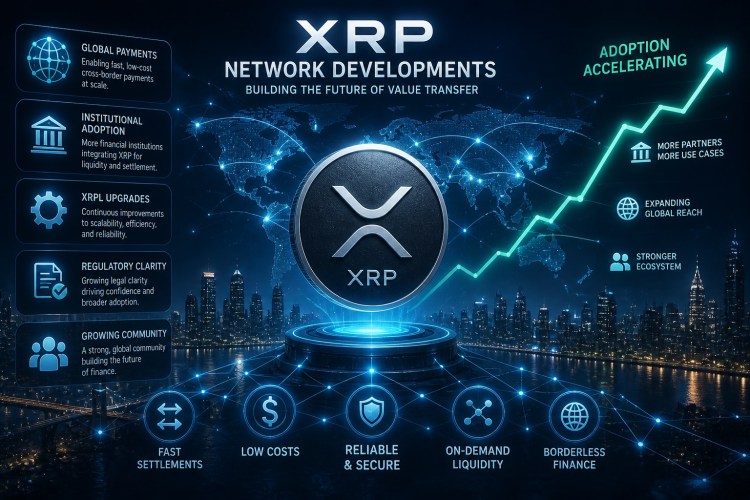
    Ripple’s pursuit of full banking status is a major topic of discussion within the XRP community, with some analysts and enthusiasts speculating whether this regulatory milestone could propel XRP to unprecedented price levels. The company’s financial standing, its expanding institutional presence, and developments within the XRP Ledger (XRPL) infrastructure are fueling ambitious forecasts, including a target of $25 per coin.

    Ripple’s Banking Approval: A Key Factor

    In December 2025, Ripple received conditional approval from the Office of the Comptroller of the Currency (OCC) for a national bank charter, a first for a crypto-native company. This charter paves the way for the establishment of Ripple National Trust Bank, which will handle custody and manage reserves for Ripple’s RLUSD stablecoin.

    A viral post on X from the XRP enthusiast account KingXRP claimed that Ripple had “officially obtained a banking license,” with its valuation exceeding $120 billion. While this statement reflects the excitement surrounding the development, it lacks crucial context. The OCC conditionally approved Ripple’s application to establish Ripple National Trust Bank. However, Ripple has also applied for a Federal Reserve master account, which would allow the trust bank to directly access FedWire and FedNow systems and hold dollar reserves at the central bank. Gaining this access would integrate Ripple into the core infrastructure of the U.S. payments system.

    What XRP Needs to Reach $25

    Ripple’s most recent publicly reported private valuation was approximately $40 billion following a $500 million strategic investment round. However, Ripple holds an estimated 42 billion XRP on its balance sheet. Approximately 4.5 billion to 6.4 billion XRP are held directly in company wallets, while roughly 33 billion XRP are locked in cryptographic escrow accounts. If Ripple holds 40 billion XRP and the price returns to $3, those holdings alone would be worth about $120 billion on paper.

    A move to $25 would require XRP to become more than just an asset reacting to news headlines, and its banking approval would need to contribute to a wider adoption cycle. With a current circulating supply of about 61.9 billion XRP, a $25 price would place its market value above $1.5 trillion. According to KingXRP, if XRP surpasses $25, Ripple’s balance sheet alone could exceed $240 billion, potentially positioning the company among the top 10 banks globally.

    Supporting the idea of banking approval driving broader adoption, infrastructure is being built on the XRP Ledger. One notable development involves RealFi Payment Solutions, which recently announced a partnership with Shopify to develop the first XRP Ledger-powered payment rewards application for global e-commerce.

  • Clarity Act’s Global Implications

    Clarity Act’s Global Implications

    The Clarity Act, a cryptocurrency bill in the United States, faces a crucial final vote on the Senate floor after a year of setbacks and internal disputes. The outcome carries significant weight, not only for the U.S. but also for the global landscape of cryptocurrency regulation.

    Global Implications of the Clarity Act

    If passed, the legislation would formally legalize most crypto activities in the United States. Given America’s influence on the global financial system, the bill’s provisions are expected to influence crypto regulations worldwide, according to stakeholders.

    Kristin Smith, president of the Solana Policy Institute, told Decrypt that the rest of the world is closely watching Washington. She noted that when the GENIUS Act, focused on stablecoins, was signed into law last summer, other countries quickly began developing similar frameworks. The United Kingdom, South Korea, and Canada subsequently introduced comparable stablecoin policies, while Hong Kong and Japan adjusted their existing regimes.

    Stablecoins, cryptocurrencies pegged to fiat currencies like the U.S. dollar, enable traders to enter and exit positions and send remittances without directly accessing traditional currencies. The GENIUS Act provided a regulatory framework for stablecoins, which had previously operated in a legal gray area. The Clarity Act, however, has a broader scope, establishing regulations for various cryptocurrencies, including decentralized finance (DeFi) ecosystems, and outlining measures to prevent money laundering and sanctions evasion.

    The bill would revise existing securities laws to include exemptions for newly defined crypto assets. Under this framework, the Commodity Futures Trading Commission (CFTC) would regulate most crypto tokens and trading platforms, with certain decentralized projects potentially exempt from regulatory oversight.

    Potential Impact and Concerns

    The Clarity Act’s passage could have a significant impact on the global economy, potentially leading to increased institutional crypto adoption and demand for crypto assets. Cody Carbone, CEO of the Digital Chamber, expressed concern that failure to pass the bill could cause the U.S. to fall behind other jurisdictions with existing regulatory frameworks.

    However, opponents of the bill, such as Senator Elizabeth Warren (D-MA), have raised concerns about its potential to facilitate money laundering and sanctions evasion. Warren argues that the bill could weaken global illicit finance standards, potentially leading to increased cross-border sanctions evasion, money laundering, and terrorist financing.

    During a recent committee vote, Senate Banking chair Tim Scott (R-SC) prevented Warren from introducing an amendment to the bill that would have tightened its DeFi-related provisions.

    Some critics remain skeptical that changes to the Clarity Act would effectively address illicit finance on a global scale. Bartlett Naylor, a financial policy analyst at Public Citizen, noted that countries like El Salvador have attracted crypto companies due to their lax regulations, which are unlikely to change regardless of the Clarity Act’s outcome.

  • Prediction Market Launches $100,000 World Cup Contest

    Prediction Market Launches $100,000 World Cup Contest

    Myriad Launches World Cup Prediction Market with $100,000 Prize Pool

    As the FIFA World Cup approaches next month, prediction market Myriad is launching a trading competition in partnership with the Layer-1 blockchain D.Energy, with a prize pool of $100,000.

    “We’re thrilled to be running this contest during the World Cup,” said Farokh Sarmad, Myriad Co-Founder and President. “With billions of viewers tuning in to the tournament from around the world, this is a great opportunity to showcase how prediction markets work around sports tournaments on a global stage.”

    Competition Details

    The FIFA World Cup 2026 Prediction Contest allows Myriad users to make predictions on every match in the competition, with over 75 multi-binary markets available at launch. The top traders and market makers will compete for a $100,000 prize pool.

    The top three traders will receive $20,000, $10,000, and $5,000 respectively, with the remaining $10,000 distributed among the rest of the leaderboard, which will run until the end of the contest.

    Top market makers will draw on a weekly pool of $5,000 in maker volume rewards throughout the contest. The leaderboard will reset each week.

    Partnerships and Recent Developments

    The competition builds on Myriad’s recent collaborations with Chainlink, whose oracles provide market resolution, and 55 Tech, its new tech partner for real-time sports data.

    Earlier this year, Myriad closed a seed investment round, which CEO Loxley Fernandes said would allow the prediction market to “invest aggressively in product development, liquidity, and market expansion.”

    Tournament Preview

    The World Cup is considered the world’s largest sporting event, with approximately 1.5 billion global viewers tuning in to the last final in Qatar, according to FIFA. This year’s event begins on June 11 with South Africa facing hosts Mexico. Myriad users currently give South Africa a 13% chance of winning.

  • Trump’s Crypto Pledge Fails to Lift Market

    Trump’s Crypto Pledge Fails to Lift Market

    Bitcoin’s price experienced a sharp $2,000 decline immediately following Donald Trump’s most explicit pro-crypto statement to date, where he vowed he would “never let crypto down.” The subsequent drop in Bitcoin’s price revealed the current market sentiment.

    Market Reaction

    Instead of initiating a sustained rally, the statement triggered a distribution event, liquidating leveraged long positions clustered near the $70,000 resistance level and pushing Bitcoin significantly lower within hours.

    Traders on Crypto Twitter are referring to this as the “Reverse Midas Touch,” a pattern where Trump’s most bullish pronouncements consistently lead to sell-offs rather than sustained buying. This dynamic is increasingly understood as a “sell-the-news” event, where political headlines provide exit liquidity for large holders rather than stimulating new structural demand.

    Trump’s Pro-Crypto Stance

    Trump’s statement, delivered in late May 2026 as part of an intensified effort to secure the crypto vote ahead of the next election cycle, positioned his administration as the definitive protector of digital assets in America.

    This rhetoric was directly linked to the White House’s concurrent legislative push, urging Congress to pass a comprehensive crypto market-structure bill that would reshape U.S. oversight of trading, stablecoins, and custody arrangements.

    This framing represented the most aggressive pro-crypto positioning Trump has adopted since reversing his 2021 stance, when he called Bitcoin a “scam.”

    His team has also accepted crypto campaign donations and launched NFT collections under the Trump brand, but the “never let crypto down” line was qualitatively different – a direct, unconditional promise. The market’s immediate response was therefore particularly telling.

    Price Action and Liquidation

    Bitcoin was trading near the $70,000 resistance zone when the statement was released. The rejection was immediate, with Bitcoin dropping approximately $2,000, leaving the asset well below that level within the same trading session.

    The decline was triggered by Iran’s retaliatory strike and the market’s anticipation of further escalation rather than a peace deal.

    Liquidation heatmaps indicated a dense cluster of long positions being cleared out at the $70,000 level, consistent with institutional or whale-scale selling into the retail enthusiasm generated by the headline.

    ETF Data and Market Sentiment

    ETF flow data further supported this picture. A $1.289 billion IBIT movement executed via a dark pool, the largest off-exchange trade of its kind on record, had already signaled that large holders were repositioning rather than accumulating. This behavior is indicative of distribution, not accumulation.

    This pattern has precedent. On May 18, 2026, Bitcoin fell approximately 2.4% to $76,500 after Trump issued a sharp geopolitical warning to Iran, with Ether falling 3.5% to $2,116 in the same move. Trump-related headlines have now triggered downside in crypto on multiple occasions, making the directional bias increasingly difficult to ignore.

  • Grok AI Predicts XRP Price for 2026

    Grok AI Predicts XRP Price for 2026

    Grok AI Predicts XRP Price Surge

    Grok AI, Elon Musk’s artificial intelligence platform, forecasts that XRP could reach a price between $5 and $8 by the end of 2026. This prediction is based on factors that appear more credible now than they did a year ago.

    Institutional Access and Market Dynamics

    The resolution of the Securities and Exchange Commission (SEC) lawsuit has significantly altered the landscape for institutional investment in XRP. The legal uncertainty previously deterred significant investment, regardless of the utility of XRP. With the lawsuit resolved, spot XRP exchange-traded funds (ETFs) have been approved and are attracting inflows. This opens doors for bank partnerships and the expansion of RippleNet.

    Grok’s analysis suggests that XRP will benefit from capital rotation as cross-border payment infrastructure matures and the XRP Ledger (XRPL) expands into tokenized assets and decentralized finance (DeFi). In a market that favors low-cost utility tokens, XRP’s positioning is advantageous as institutional money enters the market.

    Potential Risks and Price Consolidation

    While the outlook is bullish, potential risks remain. Macroeconomic downturns, slower-than-expected adoption, or profit-taking by long-term holders could limit XRP’s price gains, potentially leading to consolidation between $2 and $3.50. Even this scenario would represent a gain from current levels, but it would delay the achievement of higher price targets.

    Technical Analysis of Current Trading

    XRP is currently trading at $1.29 on the 4-hour chart. The price has been fluctuating between $1.33 and $1.55 for the past two months. Recently, a sharp decline dropped the price from $1.52 to $1.26, breaking through the range floor.

    This type of price movement can indicate either a breakdown or a liquidity grab followed by a reversal. The speed of the decline suggests the latter is more likely, but the next 48 to 72 hours will confirm this.

    The $1.29 to $1.30 zone is a critical support level. Holding this level and reclaiming $1.33 would be a bullish signal. Conversely, breaking below $1.26 could lead to a drop towards $1.20, a major daily support level.

    The Relative Strength Index (RSI) is at 32.88, indicating an oversold condition on the 4-hour chart. This setup often precedes a price rebound. For Grok’s end-of-2026 targets to remain viable, the $1.26 to $1.30 zone must hold. A recovery towards $1.50, followed by a break above $1.60, would signal a continuation of the larger price movement.

    Bitcoin Hyper: A Potential Investment Opportunity

    Some traders are shifting their focus away from large-cap cryptocurrencies. Bitcoin Hyper is positioning itself for this rotation, developing the first Bitcoin Layer 2 with Solana Virtual Machine integration. The project aims to provide fast, low-cost smart contracts on Bitcoin while maintaining its security.

    The presale has raised $32 million at $0.013679 per token, with high APY staking available for early participants. This investment carries a higher risk profile than investments on major exchanges, but it also offers greater potential upside.

  • XRP Faces Potential Drop to $0.75, Analyst Warns

    XRP Faces Potential Drop to $0.75, Analyst Warns

    XRP Faces Potential Downturn, According to Technical Analyst

    XRP’s weekly chart suggests a bearish continuation pattern, according to Aksel Kibar, a Chartered Market Technician (CMT) and experienced chart analyst. Kibar’s analysis indicates a possible price decline towards $0.75 if the current consolidation phase breaks down.

    Kibar, who posts under the TechCharts account on X, has over 15 years of experience in global equity market analysis. He previously worked as a senior technical analyst and fund manager at Yapi Kredi Bank in Turkey and the National Bank of Abu Dhabi. His expertise has been recognized by veteran commodity trader Peter Brandt, who has described Kibar as “the most accomplished pure classical chart analyst alive today.”

    Resistance at $1.60 Stalls XRP

    Kibar’s recent analysis of XRP is concise: “$XRPUSD 1.6 resistance. Latest consolidation below the resistance and can act as a bearish continuation.” The chart, sourced from Bitstamp’s weekly timeframe, shows XRP trading around $1.28 after failing to surpass the $1.60 resistance level. This level is significant as it previously served as a support zone during the 2025 range, which peaked around $3.45. After XRP lost this support, the same zone has become a resistance level.

    The current price action reveals a triangular consolidation pattern. The upper boundary of this triangle slopes downward from the failed recovery attempt, while the lower boundary rises from the post-breakdown lows. In classical charting, such a structure can resolve in either direction, but its location is crucial. A triangle forming after a major breakdown and below former support often signals a potential continuation pattern unless buyers can push the price back above the resistance.

    Kibar’s $0.75 target is derived from the pattern’s measured move. The widest part of the triangle spans from approximately $1.67 to $1.12, a range of about $0.55. If XRP breaks below the triangle near $1.30, subtracting the $0.55 range yields a downside objective near $0.75. This target is a projected extension of the current compression if the market confirms a breakdown. However, the setup requires confirmation through a decisive break below the triangle before it can be considered a completed bearish signal.

    Long-Term Trend Filter Adds to Bearish Outlook

    Kibar also incorporates a long-term trend filter in his analysis. In the cryptocurrency market, he often uses the 365-day exponential moving average as a primary directional filter. When the price is above this average, it generally supports a more constructive bias; when the price is below it, caution is advised, especially when rallies stall below resistance.

    In XRP’s case, the price is trading below the red long-term moving average at $1.74, while the average itself is above the current consolidation. This further reinforces the bearish interpretation. Buyers need to invalidate the triangle breakdown risk and also repair the broader trend structure by reclaiming lost resistance and moving back above the long-term average.

    At the time of reporting, XRP was trading at $1.29.

  • Crypto Market Dips Amid Iran Tensions, ETF Withdrawals

    Crypto Market Dips Amid Iran Tensions, ETF Withdrawals

    Crypto Market Plummets Amid Outflows and Geopolitical Concerns

    Bitcoin experienced a significant downturn on Thursday morning, falling below $73,000 and trading at $73,260, a 3.4% decrease in the last 24 hours. This marks a six-week low for the cryptocurrency.

    The price drop appears to be driven by two primary factors: escalating tensions in the Iran conflict and the largest single-day outflow from Bitcoin ETFs in 2024.

    Renewed strikes and the breakdown of ceasefire negotiations in Iran led to a 2.5% increase in oil prices and a general decline in risk assets. The optimism from the previous weekend’s peace deal quickly dissipated.

    The Bitcoin ETF landscape is particularly concerning. Tuesday saw outflows of -$733.40 million, the worst single day since January 29. Combined with Monday’s -$333.60 million, the two-day total outflow exceeds $1 billion. Eight consecutive trading days of outflows have now erased over $2.6 billion from Bitcoin ETFs since May 15.

    Other major cryptocurrencies also suffered losses. Ethereum fell below $2,000 for the first time since April, trading at $1,983 and down 33% year-to-date. Even HYPE, which has been a standout performer this year with a 123% YTD increase, is down 10% today, trading at $56.44. The $6.25 billion options expiry today, with max pain at $75,000, indicates the market is currently $1,700 below max pain heading into settlement.

    Broader markets also reflect the downturn, with gold down 1.4% at $4,386 and stock futures in the red, including a 0.5% drop in the Nasdaq. While the market is experiencing a widespread decline, the crypto market is feeling the effects most acutely.

    Crypto IPO Wave Could Create a $1 Trillion Public Market

    Jefferies anticipates a surge in crypto and blockchain-related public listings over the next two years, projecting the sector could become a $1 trillion public market within five years.

    The bank released this report following its first Digital Assets Investor Conference in New York, where 35 digital asset company executives met with approximately 150 institutional investors. The discussions marked a shift from previous years, with institutional investors now focusing on integrating blockchain infrastructure into core financial systems, including tokenized money market funds, private credit, and settlement networks, rather than solely speculating on Bitcoin price.

    Specifically, Jefferies is monitoring the IPO pipeline, which includes Kraken parent Payward (confidential S-1 filed, $20 billion valuation raise underway), Securitize (SEC-registered tokenization platform), Blockchain.com (S-1 filed last week), and Gemini.

    Beyond crypto-native companies, the bank identifies traditional financial firms, including settlement networks and payment processors, as potential candidates for public listings tied to blockchain infrastructure build-outs. This projection comes as Ledger, ConsenSys, and other firms have delayed IPO plans due to a 75% year-to-date decrease in crypto trading volumes. Fundstrat estimates that these processes are “70-80% along the way” and ready to accelerate once markets recover.

    Crypto’s Political Spending Is Shifting Republican

    While Fairshake and its affiliates remain a dominant force in crypto-driven elections, several new crypto PACs have emerged with a Republican focus, potentially shifting the bipartisan energy carefully cultivated over multiple campaign cycles. The Texas primary runoffs on Tuesday highlighted this shift.

    Crypto-focused political committees spent over $9 million in Texas, contributing to a series of primary victories for industry-aligned candidates across both parties. Notably, they helped oust Rep. Al Green, a vocal crypto critic, in a rare incumbent-on-incumbent primary runoff.

    The new Republican focus is coming from a second layer of PACs operating alongside FairShake. Fellowship PAC, associated with Tether and Cantor Fitzgerald, spent $500,000 supporting Texas Attorney General Ken Paxton’s successful challenge to incumbent Republican Sen. John Cornyn, a race FairShake’s bipartisan structure couldn’t enter. Paxton is more inclined towards crypto deregulation than Cornyn. The Winklevoss twins have also launched their own GOP-only groups.

    While FairShake continues its bipartisan efforts, newer PACs are exclusively Republican, creating a redundant political layer that covers both party tracks simultaneously. They have achieved some success so far.

    Google Engineer Busted for Inside Trading on Polymarket

    Michele Spagnuolo, a Google security engineer, has been arrested and charged with insider trading for allegedly placing bets on Polymarket based on Google search data, according to US officials on Wednesday.

    A complaint unsealed by the US Attorney’s Office for the Southern District of New York alleges that Spagnuolo used “material nonpublic information” to place bets on who would appear on Google’s list of most-searched-for individuals for 2025, after Polymarket began offering these markets last fall.

    Spagnuolo, 36, used the pseudonym AlphaRaccoon. He allegedly used confidential Google data to predict that singer D4vd would be named the most-searched person – a result announced publicly on December 4, 2025. He transferred $3.8 million in USDC to his Polymarket address to make the bets, and profited $1.2 million. He then moved those funds out using a swapping service and privacy tool, ultimately transferring the funds to a processor in Italy. He faces charges of commodities fraud, wire fraud, and money laundering.

    This is the second Polymarket insider trading case the SDNY has brought this year, the first involving Army Special Forces soldier Gannon Ken Van Dyke, who bet on the Maduro raid he participated in.

  • Exchange-Backed OP Chains Generate Almost $500M in Revenue, Says OP Labs

    Exchange-Backed OP Chains Generate Almost $500M in Revenue, Says OP Labs

    OP Labs announced that exchange-owned chains built on the OP Stack generated over $495 million in application revenue during the second half of 2025. This figure encompasses sequencer fees from transactions, revenue from applications integrated directly into exchange platforms, and onchain assets.

    Shifting Value Dynamics

    According to an official press release shared with CryptoPotato, OP Labs noted that exchanges historically depended on third-party networks, which captured a significant portion of the value generated from settlement activity, application fees, and broader onchain monetization linked to user activity.

    However, in the past year, applications running on exchange-owned chains built on the OP Stack have seen rapid expansion. OP Labs highlighted that Morpho’s total value locked (TVL) on Coinbase-backed Base increased from $48 million at the beginning of 2025 to over $960 million by the end of the year, representing nearly 20x growth. The company attributed this growth primarily to lending products integrated directly into the Coinbase app, rather than through wallet-based user acquisition.

    Base has now become Morpho’s second-largest chain globally and accounted for 32% of Morpho’s application fees in H2 2025, which OP Labs stated was 13 times that of Arbitrum and 60 times that of OP Mainnet.

    Expanding Onchain Market

    Meanwhile, Kraken’s Ink chain added over one million unique addresses since December 2024. OP Labs reported that less than 0.6% of those addresses had any prior onchain history with Kraken, while the remaining 99.4% represented net-new onchain wallets. This was presented as evidence that exchange-owned chains are expanding the overall onchain market rather than simply shifting existing users between networks.

    OP Labs further noted that Tydro, the Aave V3 white-label lending protocol launched on Ink in October 2025, reached $100 million in TVL within its first 24 hours and surpassed $500 million within 90 days. The company stated that comparable Aave deployments on neutral Layer 2 networks previously took between 142 and 721 days to reach similar milestones.

    Ecosystem Growth

    Optimism Foundation’s Chief Business Officer Kyle Jenke stated that the H2 figures demonstrated a shift from the previous system, where exchanges profited from trading while external networks captured subsequent value. He added, “Exchanges now own the settlement, distribution, and application layers their users transact on. They’re doing it on a shared standard precisely so they don’t fragment from each other in the process.”

    Across the broader ecosystem, OP Stack chains secured $16.33 billion in total value, held $6.8 billion in DeFi TVL, and processed 3.6 billion transactions during H2 2025. This represented an all-time high across more than 50 live chains, encompassing exchanges, consumer applications, financial infrastructure, and developer platforms.

    Additionally, regulated companies are also adopting the OP Stack for institutional blockchain projects. Bitpanda’s Vision Chain utilizes the OP Stack for institutional finance aligned with Europe’s MiCA and MiFID II regulations, while Japan’s Mitsui & Co. Digital Commodities launched the regulated precious-metals-backed Zipangcoin on OP Mainnet.

  • Samsung Invests $408 Million in South Korean Crypto Exchange

    Samsung Invests $408 Million in South Korean Crypto Exchange

    Samsung Affiliates Invest $408 Million in Crypto Exchange Upbit

    Three Samsung affiliates have collectively acquired a 4% stake in Dunamu, the operator of South Korea’s leading cryptocurrency exchange Upbit, for approximately 612.8 billion won ($408 million). The move, announced on May 28, reflects the growing trend of South Korean financial institutions seeking strategic positions within the country’s most valuable digital asset company.

    Transaction Details

    The shares will be purchased from a group of Kakao-affiliated funds, including Kakao Investment and Kakao Ventures, at a per-share price of roughly 439,250 won. This valuation implies Dunamu’s total corporate worth is approximately 15.3 trillion won, or roughly $11.1 billion, according to Wu Blockchain and the Korea Times. Samsung Securities will acquire a 2% stake, while Samsung SDS and Samsung Card will each take 1%. The transaction is scheduled to close on June 19, according to the Korea Times.

    Strategic Objectives of Each Affiliate

    Each Samsung entity has a distinct operational agenda for the investment, according to the Korea Times. Samsung Securities plans to strengthen cooperation on token securities issuance, distribution, and virtual asset services. Samsung SDS, the group’s IT and cloud arm, intends to combine its artificial intelligence, cybersecurity, and data management capabilities with Dunamu’s blockchain operational infrastructure. Samsung Card, the group’s payments unit, aims to build a digital asset payment ecosystem with Dunamu, potentially integrating with Monimo, Samsung Financial Networks’ unified financial platform, pending the introduction of won-based stablecoins in Korea. These objectives align with the pillars of South Korea’s Digital Asset Basic Act, expected to be finalized in 2026, according to the Korea Times.

    Broader Industry Context

    Samsung’s $408 million investment comes as South Korea’s institutional financial sector increasingly focuses on Dunamu. Earlier this month, Hana Bank agreed to purchase a 6.55% stake for approximately 1 trillion won ($670 million), according to the Korea Times. Hanwha Investment and Securities has also increased its Dunamu holdings to 9.84%, committing an additional 597.8 billion won, making it one of Dunamu’s largest non-founding shareholders, according to Wu Blockchain. Dunamu reported a net profit of 708.8 billion won on revenues of 1.56 trillion won in fiscal 2025 and handles over 80% of South Korean virtual asset trading volume, according to the Korea Times.

    A Samsung official told the Korea Times that the investment aims to strengthen each affiliate’s competitiveness in digital asset-related businesses. The official added that closer cooperation with Dunamu could help the companies secure leadership positions in Korea’s emerging digital asset market.

    This development signifies a critical moment for the integration of the nascent sector with Korean corporate conglomerates. Samsung’s investment in a crypto exchange, even at 4%, carries significant symbolic weight, indicating that South Korea’s most powerful industrial dynasty now views digital asset infrastructure as a core component of its financial services strategy for the coming decade.