Category: Uncategorized

  • Polymarket Launches Perpetual Futures, Restricting U.S. Users Amid Regulatory Scrutiny

    Polymarket Launches Perpetual Futures, Restricting U.S. Users Amid Regulatory Scrutiny

    Polymarket, a platform known for its prediction markets, has launched a new perpetual futures product named Perps. The product allows for leveraged trading on a variety of assets but is not available to users in the United States and several other regions due to regulatory considerations, including Polymarket’s prior settlement with the U.S. Commodity Futures Trading Commission (CFTC).

    The introduction of Perps signifies a significant expansion for Polymarket, moving beyond its traditional prediction market offerings into the derivatives space. The platform initially launched on September 3 with 10 markets, including cryptocurrencies like Bitcoin, Ethereum, and Solana, alongside commodities such as gold, silver, and WTI oil, and stock indices like the S&P 500 and Nasdaq 100. Within hours of its launch, the number of available markets expanded to 67.

    Perpetual futures are financial contracts that track an underlying asset’s price continuously without an expiration date. A funding rate mechanism is employed to keep these contracts anchored to the spot price, involving hourly payments between long and short traders. On Polymarket’s Perps, the funding rate is capped at 4% per hour in either direction. The platform offers varying levels of leverage depending on the asset class. For cryptocurrencies, stock indices, oil, gold, and silver, the maximum leverage is capped at 20x. Individual stocks, such as Tesla, Nvidia, Apple, and Coinbase, have a maximum leverage of 10x. Maintenance margin is set at half the maximum leverage rate, meaning a 20x leveraged position could be liquidated after a roughly 2.5% loss of its posted margin.

    Polymarket’s decision to exclude U.S. users from its new Perps product is directly linked to its 2022 settlement with the CFTC. The company was fined $1.4 million and ordered to wind down noncompliant contracts after being found to have operated an unregistered swaps facility. While Polymarket has since returned to the U.S. market with a separate, CFTC-regulated exchange, Polymarket US, the new global Perps product is not accessible to American traders.

    This move places Polymarket in a competitive landscape that is already seeing activity from other platforms. Kalshi, another prediction market platform, received CFTC approval for its Bitcoin perpetual futures contract on May 29, becoming the first onshore perpetual futures product in the United States. Kalshi has since expanded its offerings to include various altcoins and a copper contract.

    Furthermore, the decentralized exchange Hyperliquid is positioned as a significant competitor. Reports suggest Hyperliquid is in negotiations with the CFTC to potentially open its platform to U.S. traders, with discussions also involving Kraken’s parent company, Payward. Hyperliquid currently dominates on-chain perpetuals trading.

    Polymarket first teased its perpetual futures feature in April, initially indicating a 10x leverage cap. The current launch offers higher leverage limits for certain assets. The platform promoted the launch on X, suggesting complex trading strategies such as simultaneously going long on Bitcoin, betting on Federal Reserve actions, and shorting the S&P 500’s reaction, all within a single account.

    Polymarket’s expansion into perpetual futures highlights the ongoing challenges and strategic adaptations required for financial platforms operating in the evolving regulatory environment. The split market strategy, catering to international users with broader offerings while maintaining a separate, compliant entity for the U.S., reflects a common approach to navigating these complexities. The exact timing of Hyperliquid’s potential opening to U.S. traders and the outcome of its negotiations with Payward remain uncertain.

    Why This Matters

    The materials describe a narrow update: Polymarket, known for its prediction markets, has introduced a perpetual futures product named Perps. The exact date of Hyperliquid’s potential opening to US traders.

    Broader Context

    Source materials place the factual news in this context: Polymarket, the prediction market platform that rose to fame during the 2024 presidential election, opened its perpetual futures product to traders on September 3, extending a platform built around yes-or-no election and sports bets into leveraged derivatives.


  • South Korea Outlines Phased Securities Tokenization Roadmap, Stablecoin Integration by 2027

    South Korea Outlines Phased Securities Tokenization Roadmap, Stablecoin Integration by 2027

    South Korea’s Financial Services Commission (FSC) has detailed a phased roadmap for tokenizing securities, including stocks, bonds, and investment funds, with the initial phase slated to begin in February 2027. The plan also anticipates the eventual integration of a stablecoin-based payment system, though the timeline for later stages remains contingent on market adaptation and pending stablecoin legislation.

    The FSC’s three-stage plan aims to integrate blockchain technology into the nation’s securities market. Phase one, commencing in February 2027, will encompass privately pooled funds, bonds for institutional investors, unlisted stocks held via trust structures, and publicly offered fractional investment securities. Revised rules under the Financial Services and Capital Markets Act (FSCMA) and the Electronic Registration Act are anticipated by the end of September to support this initial rollout.

    Subsequent phases are designed to broaden the scope to all types of publicly offered securities. The more ambitious third phase targets the incorporation of an on-chain payment system linked to stablecoins. However, the FSC has stated that the progression of these later phases will depend on the success of the initial rollout, the market’s readiness to adopt tokenized securities, and the development of stablecoin legislation.

    Model standards for fractional investments have been established by the FSC, capping individual subscriptions at the lesser of 30 million won (approximately $22,200) or 5% of an issuance, and requiring issuers to reserve a minimum retail allocation. Retail investors may be subject to an annual cap of 100 million won ($74,000) in net purchases per exchange.

    Entities managing tokenized securities accounts will face new requirements, including a minimum equity of 4 billion won (about $2.9 million) and dedicated staff for account management, internal control, and IT security. Over-the-counter trading of tokenized securities will not necessitate a separate license, provided firms consult with the Financial Supervisory Service. The Korea Securities Depository is finalizing the technical checks required for securities firms to connect to the shared ledger.

    Potential challenges associated with tokenization have been highlighted by international bodies. The International Monetary Fund (IMF) warned in an April note that tokenization could eliminate settlement delays crucial for bank liquidity management and regulatory intervention during crises. The IMF identified liquidity pressure, insufficient oversight of smart contracts, and difficulties in policing cross-border assets as primary risks, suggesting that public infrastructure like central bank digital currencies (CBDCs) could help mitigate these issues.

    In a related regulatory action, South Korean authorities blocked domestic access to Polymarket in August, citing concerns over unlicensed gambling. This move aligns with global efforts to regulate digital asset platforms.

    The FSC’s plan marks a significant step toward modernizing South Korea’s financial infrastructure. However, the full realization of its ambitions, particularly the stablecoin payment system, remains subject to regulatory developments and market adaptation.

    Why This Matters

    The materials describe a narrow update: The FSC has announced a three-phase plan to integrate blockchain technology into its securities market, starting with privately pooled funds, bonds for institutional investors, unlisted stocks, and fractional investment securities in February 2027. The pace of phases two and three of the tokenization plan.

    Broader Context

    Source materials place the factual news in this context: South Korea’s Financial Services Commission unveiled a phased roadmap on September 4 for converting stocks, bonds and investment funds into blockchain-based tokens, with the earliest phase due to start in February 2027 once an amendment to the Electronic Registration Act takes effect.

  • Robinhood Rejects AMC’s Demand to Halt Stock Token Trading Amid Securities Law Dispute

    Robinhood Rejects AMC’s Demand to Halt Stock Token Trading Amid Securities Law Dispute

    Robinhood has publicly rejected AMC Entertainment’s demand to cease trading stock tokens that track AMC’s stock, escalating a dispute over securities laws and the nature of tokenized assets. Robinhood’s chief legal officer, Dan Gallagher, responded directly to AMC CEO Adam Aron’s public demand, stating, “Send your lawyers and we’ll educate them.” Robinhood CEO Vlad Tenev affirmed this stance, adding, “We stand behind Stock Tokens.”

    Adam Aron had accused Robinhood of marketing unregistered securities and undermining shareholder rights, demanding that Robinhood “voluntarily CEASE AND DECIST the trading of AMC stock tokens.” Aron also indicated that AMC’s legal counsel would explore options to force Robinhood to stop trading the tokens and that the company would raise its concerns with the Securities and Exchange Commission (SEC).

    Robinhood’s disclosures describe the tokens as debt securities issued by Robinhood Assets (Jersey) Limited. According to these disclosures, the tokens are not registered under U.S. securities laws and cannot be offered or sold within the United States or to U.S. persons. AMC’s core contention is that the tokens are being marketed in a way that misrepresents them as AMC stock and bypasses U.S. securities regulations.

    Legal experts suggest that AMC’s potential legal angles could involve claims of trademark misuse or a false association with AMC. However, they also note that Robinhood could counter these claims by clearly identifying the products as tracking tokens without AMC’s endorsement and limiting the use of AMC’s branding, potentially arguing for fair use. According to Miami crypto lawyer Russell Klein, if Robinhood provides clear disclaimers that the tokens are derivatives and not company shares, AMC may have limited recourse beyond legal threats and lobbying regulators. Klein also suggested that trademark law can permit the use of a company’s logo to identify it, and that traders are unlikely to believe they possess shareholder rights through these tokens.

    Daniel Lasko, general counsel at Arcus, questioned AMC’s ability to prevent such products, comparing the arrangement to an investment manager including a company’s stock in an ETF. Lasko argued that publicly traded companies have limited control over how their stocks are packaged into financial products and that tokenized stocks could potentially attract international investors, thereby promoting investment in U.S. capital markets.

    Tokenized stocks are blockchain-based assets designed to track or represent shares in publicly traded companies. This market segment saw significant activity, generating $15.1 billion in spot trading volume in the first quarter of 2026, according to CoinGecko. Robinhood first introduced tokenized stock trading for its European customers last summer. This move follows a previous instance where OpenAI objected to tokens bearing its name in July of the previous year, citing a lack of partnership or approval from Robinhood.

    The dispute between AMC and Robinhood highlights potential ambiguities in existing securities and trademark laws concerning novel blockchain-based financial products. The situation could also lead to increased regulatory scrutiny of such products by the SEC, as AMC has stated its intention to raise concerns with the commission. The ultimate legal outcome and the future regulatory treatment of tokenized stocks remain uncertain.

    Why This Matters

    The materials describe a narrow update: Robinhood, through its chief legal officer Dan Gallagher, publicly rejected AMC Entertainment’s demand to stop trading stock tokens that track AMC’s stock. Whether AMC will file a lawsuit against Robinhood.

    Broader Context

    Source materials place the factual news in this context: Robinhood has rejected AMC Entertainment’s demand to stop trading tokens tied to its stock, with the brokerage’s top lawyer challenging the theater chain to pursue its legal threats.

  • OpenReserve Secures National Bank Charter

    OpenReserve Secures National Bank Charter

    OCC Grants Conditional Approval for Blockchain-Native Bank

    Salt Lake City, UT – OpenReserve Bank, a fintech startup backed by prominent venture capital firms including Andreessen Horowitz, has received preliminary conditional approval from the Office of the Comptroller of the Currency (OCC) to establish a full-service national bank in Salt Lake City, Utah. The decision, issued on September 2, concludes a review process that began with OpenReserve’s application on April 13.

    OpenReserve Bank, which secured $25 million in seed funding led by a16z crypto with participation from Coinbase Ventures, Jump Capital, and Wintermute Ventures, is positioning itself as an “always-on” bank. Its model centers on continuous, blockchain-based settlement, a departure from the batch-processing systems like ACH and wire transfers used by traditional financial institutions.

    The approval is contingent upon OpenReserve meeting specific financial benchmarks. The bank must raise at least $210 million in initial paid-in capital, after accounting for organizational costs. Additionally, it is required to maintain a Tier 1 leverage ratio of at least 12% throughout its first three years of operation. Failure to meet the capital requirement within 12 months or to open for business within 18 months will result in the expiration of the approval.

    Diwakar Choubey, co-founder of OpenReserve and former executive at MoneyLion, emphasized that the decision to pursue a full-service national bank charter, rather than the national trust charter favored by many “crypto banks,” was a deliberate strategic choice. “We chose the national bank path deliberately,” Choubey stated in an announcement.

    This approach distinguishes OpenReserve from many of its peers in the cryptocurrency space. Companies such as Coinbase, Circle, Ripple, Paxos, and BitGo have opted for national trust charters, which permit custody and fiduciary services but prohibit deposit-taking and lending activities. A full national bank charter, once fully approved, will enable OpenReserve to engage in both.

    OpenReserve’s business strategy is built around tokenized deposits, treasury management, foreign correspondent banking, and a banking-as-a-service platform for institutional clients. The company also plans to establish a separate, wholly owned subsidiary to issue and redeem U.S. dollar-denominated, reserve-backed stablecoins. This subsidiary has not yet filed its own OCC application, and any stablecoin activities will need to comply with the GENIUS Act, the federal law governing stablecoin operations that took effect in July of last year.

    OpenReserve is not the only firm to receive a charter this week. The OCC also granted preliminary conditional approval to British fintech Revolut for a national bank based in Connecticut. Comptroller Jonathan Gould has described these approvals as part of an effort to integrate firms developing novel technologies into the federally supervised banking system.

    However, the OCC’s approach to chartering has faced scrutiny. In May, Senator Elizabeth Warren argued that a series of OCC approvals for crypto trust banks contravened the National Bank Act, stating that these firms “look like crypto banks, not trust companies.” Despite these concerns, the OCC proceeded to approve a national trust charter for the World Liberty stablecoin venture, which has ties to Donald Trump, in August.

    Under the current preliminary approval, OpenReserve has until September 2027 to secure the $210 million in capital and until March 2028 to commence operations. Failure to meet either of these deadlines will lead to the expiration of the conditional approval.

  • US Jobs Data Jolts Markets, BTC Pauses at $82K; Buying Strategy Returns

    US Jobs Data Jolts Markets, BTC Pauses at $82K; Buying Strategy Returns

    Bitcoin Stalls at $82K as Strong US Jobs Report Jolts Markets; Corporate Buyer Resumes Accumulation

    The cryptocurrency markets experienced another eventful week as August drew to a close, with Bitcoin (BTC) finishing the month in positive territory for the first time during a bear market, suggesting a significant shift in sentiment. However, Friday’s jobs report dramatically altered the landscape.

    Last Week’s Market Dynamics

    A week prior, Bitcoin briefly surpassed $81,000 on multiple occasions before being pushed back below $80,000. Most altcoins, however, posted substantial weekly gains. This rejection followed a hawkish stance from Fed Chair Kevin Warsh, which sent BTC down to just under $77,000 on Saturday morning. The cryptocurrency quickly rebounded, touching $79,000 on Sunday, only to fall again to $77,000 on Monday morning amidst escalating tensions between the US and Iran.

    Volatility and Breakout

    The primary cryptocurrency remained volatile in the subsequent days, trading within a narrow range between $76,400 and $79,000. Bitcoin tested the upper boundary on Wednesday morning, with bulls successfully defending it. A more significant upward movement occurred on Thursday.

    Bitcoin broke through its $79,000 resistance and surged past $80,000. In the early hours of Friday, it climbed to $82,400, its highest point since mid-May. While this level proved to be a ceiling, Bitcoin maintained a position above $81,000 until the release of a stronger-than-expected US jobs report.

    Jobs Report Impact and Weekly Winners

    The BTC price immediately dropped by $2,000, as the market anticipates the Federal Reserve will be more inclined to raise interest rates later this month. Despite the pullback, the weekly performance highlighted several clear winners. Zcash (ZEC) gained 20%, even surpassing $1,000 earlier today. Monero (XMR) was up 10%, and Uniswap (UNI) surged by nearly 40%.

    Cryptocurrency Market Overview Weekly, September 4.
    Source: QuantifyCrypto
    Market Cap: $2.775T | 24H Vol: $121B | BTC Dominance: 57.6%
    BTC: $79,270 (-0.35%) | ETH: $2,450 (-2.5%) | XRP: $1.39 (-1.5%)

    Corporate Buyer Resumes Bitcoin Purchases

    Monday began with significant news as the world’s largest corporate holder of Bitcoin resumed its purchases for the first time in over two months, acquiring 4,603 BTC for $370 million. This move comes as the company faces the challenge of buying back at higher prices after selling at lower levels.

    Gold’s August Reversal vs.

    Bitcoin’s Resilience

    Gold experienced a sharp decline, erasing all of its August gains. The precious metal had surged alongside BTC in mid-August, reaching $4,700 for the first time in months. However, it lost all its gains, even dipping below its starting price of $4,360 earlier this week. In contrast, Bitcoin remains up approximately 25% even after Friday’s correction.

    Expert Outlooks and Security Concerns

    Arthur Hayes, former CEO of BitMEX, advises investors to look beyond Fed statements and Kevin Warsh’s pronouncements, suggesting that the euro-yen exchange rate may be a more critical indicator for Bitcoin’s next move.

    Meanwhile, Trezor, the hardware wallet manufacturer, disclosed that a data breach involving its shipping partner, ShipMonk, is more extensive than initially reported. The number of affected US customers has risen to over 80,000, significantly higher than the initial estimate of 13,689.

    Bitcoin’s Historic August and Lingering Bear Market Doubts

    As previously noted, Bitcoin concluded August on an unexpectedly positive note, marking its first green August during a bear market. The asset closed the month with a nearly 25% surge, defying historical trends.

    Despite Bitcoin’s return above $80,000, Fidelity analysts remain cautious. They have pointed to historical patterns, suggesting that the bear market may not yet be over.

    This week’s analysis also includes chart reviews of Ethereum, Ripple, Cardano, Binance Coin, and Hyperliquid.

  • Ben Delo’s £4 Million Donation to Reform UK Subject to Regulatory Questions

    Ben Delo’s £4 Million Donation to Reform UK Subject to Regulatory Questions

    Ben Delo, a co-founder of the cryptocurrency exchange BitMEX, has made two cash donations totaling £4 million to the political party Reform UK. The payments, made on April 17 and April 30, bring Delo’s total contributions to the party this year to £8 million.

    These recent donations represent a significant portion of Reform UK’s fundraising, accounting for 75% of the party’s total donations in the quarter. According to Electoral Commission records, these were the two largest single gifts made to any British political party during that period. Reform UK’s total donations for the quarter reached £5.33 million, compared to Labour’s £3.59 million in the same timeframe.

    The donations were made in cash, following the UK’s ban on cryptocurrency political donations, which came into effect in March. This ban meant Reform UK, which had previously been a recipient of crypto donations, had to adjust its funding methods.

    Donor Background and Legal Issues

    Delo’s past legal issues have drawn attention to his donations. In 2022, he pleaded guilty to violating the Bank Secrecy Act in the United States. He was later pardoned by U.S. President Donald Trump in 2025, along with other BitMEX co-founders Arthur Hayes and Samuel Reed. Delo has publicly stated that he views the case as “a regulatory failing that isn’t even a crime in the UK.”

    Party Scrutiny and Funding Controversies

    The timing of Delo’s substantial donations coincides with wider scrutiny of Reform UK’s funding. Last Friday, two party officials, Dan Jukes and James Orr, stepped down following Channel 4 footage that appeared to show them arranging funding for party polling. Nigel Farage, the leader of Reform UK, has stated that the party has “taken no illegal money.”

    Further complicating the party’s financial landscape is a separate donation of £5 million from Christopher Harborne, a Thailand-based stakeholder in Tether. The Parliamentary Commissioner for Standards is currently considering whether Farage should have declared this personal gift.

    Regulatory Questions and Uncertainties

    There are ongoing uncertainties regarding the regulatory compliance of these donations. A key question is whether Ben Delo had been registered on the UK electoral register for the required 12 months to make donations exceeding £100,000 in a year, a rule implemented in March. The Electoral Commission has stated it is in touch with the Metropolitan Police regarding the funding allegations, though the police have not yet opened an inquiry.

    Reform UK has expressed confidence that it may not be required to return Delo’s £4 million donation. Farage has attributed the controversy surrounding the funding arrangements to “loose pub talk” by individuals not authorized to speak on behalf of the party.

    BitMEX, the exchange co-founded by Delo, is scheduled to close on September 23, following an announcement by its owner, HDR Global Trading, after a strategic review.

    Why This Matters

    Ben Delo’s recent large cash donations to Reform UK are significant but occur within a complex regulatory environment and amidst broader scrutiny of the party’s funding, with several uncertainties remaining.

    Broader Context

    Ben Delo is a BitMEX co-founder.

  • Zcash Surges to Decade High, Crushing Short Sellers

    Zcash Surges to Decade High, Crushing Short Sellers

    Zcash Surges Past $1,000, Reaching Near Decade High

    Zcash (ZEC) breached the $1,000 mark on Friday, achieving its highest price in nearly ten years and extending a remarkable rally that began from around $500 just a month prior. The cryptocurrency reached an intraday peak of $1,029 on Binance before settling near $984, representing a roughly 20% increase over the preceding 24 hours and marking a new all-time high.

    The privacy-focused coin’s market capitalization surged towards $17 billion, propelling ZEC past Dogecoin to become one of the ten largest cryptocurrencies, according to data from CoinMarketCap.

    The significant price jump above $1,000 caught many short sellers by surprise. Approximately $34.5 million in short positions were liquidated as Zcash’s price decisively crossed the psychological barrier, as reported by CoinGlass. This forced buying added to the upward momentum, contributing to the accelerating rally.

    A Squeeze Years in the Making

    Zcash is a prominent “privacy coin,” a category of cryptocurrencies designed for enhanced user anonymity, with Monero (XMR) being another well-known example. Launched in 2016 by cryptographer Zooko Wilcox and a research team, Zcash distinguishes itself from Bitcoin and Ethereum by employing zero-knowledge cryptography. This technology allows transactions to be validated without revealing sensitive details such as sender, receiver, or the amount transferred, while still ensuring the transaction’s legitimacy.

    The digital asset is currently experiencing one of the most striking uptrends in the cryptocurrency market, particularly for an established digital asset. Over the past 30 days, Zcash has gained approximately 94%, and its year-to-date performance exceeds 2,300%, outperforming all other large-cap crypto assets even after reaching an eight-year high in August. The launch of Grayscale’s Zcash ETF on NYSE Arca under the ticker ZCSH on August 25 provided brokerage investors with a more accessible route to invest in ZEC without the need for a cryptocurrency wallet.

    Technical Indicators Signal Strong Momentum

    Technical analysis of the daily chart reveals why some traders remain cautious despite the sustained upward trend. The Relative Strength Index (RSI) stands at 78.6, well above the 70 level typically considered overbought by traders. Concurrently, the 50-day moving average has crossed above the 200-day moving average, a bullish signal. This configuration suggests that short-term demand is currently outpacing long-term trends, which is generally favorable for new buyers.

    The Average Directional Index (ADX), which measures trend strength irrespective of direction, is currently at 48. This is significantly above the 25 mark that traders use to confirm the presence of a robust trend. With positive momentum outweighing negative momentum, the indicators point to a trend that remains strong enough to push through overbought conditions, at least in the short term.

    While Zcash is in a price discovery phase, the retracement levels at $892.94 and $808.63 are identified as logical support zones should the rally experience a cooling period.

    Broader Market Influences

    Zcash’s impressive performance is occurring even as Bitcoin has also seen significant gains. Both assets experienced a boost earlier in the week following remarks from Federal Reserve Governor Christopher Waller, which reduced expectations for an interest rate hike in September. This led to over $415 million in short liquidations across the broader cryptocurrency market.

    However, sentiment shifted on Friday morning. The Bureau of Labor Statistics reported that the U.S. economy added 162,000 jobs in August, significantly exceeding the consensus estimate of 56,000, with the unemployment rate holding steady at 4.1%. This news caused Bitcoin to fall back below $80,000 as traders began to price in a higher probability of a Fed rate hike at the September 15-16 meeting. The upcoming August Consumer Price Index (CPI) report, due next Friday, is now a key data point to watch.

  • Crypto Price Watch: ETH, XRP, ADA, BNB, HYPE

    Crypto Price Watch: ETH, XRP, ADA, BNB, HYPE

    Crypto Price Analysis: A Look at Ethereum, Ripple, Cardano, Binance Coin, and Hyperliquid

    This week’s market analysis delves into the performance of five prominent cryptocurrencies: Ethereum, Ripple, Cardano, Binance Coin, and Hyperliquid.

    Ethereum (ETH)

    Ethereum experienced a flat week, with its price holding steady above the crucial $2,400 support level. However, trading volume has been on a downward trend since its initial rally, and volatility has significantly diminished compared to earlier periods. While consolidation is a natural phase, it also presents a window of opportunity for sellers to re-enter the market. Nevertheless, as long as the key support at $2,400 remains unchallenged, buyers are expected to maintain control. For the rally to persist, ETH must stay above this level. While buyers currently appear dominant, the path towards the $2,800 mark could prove more challenging than in recent weeks.

    Ripple (XRP)

    XRP also saw minimal movement this week, registering a modest 2% gain. The cryptocurrency has been trading within a sideways range, confined between $1.3 and the resistance at $1.6. This price band has historically capped XRP’s movements between February and May of this year. To regain upward momentum, XRP will need to decisively break out of this range, which would likely coincide with a return of trading volume and increased volatility. Based on current price action, buyers hold an advantage, but this could shift if they fail to overcome the $1.6 resistance. Looking ahead, the market exhibits some indecision following a strong price surge. While a continuation of this upward trend could signal an end to the bear market, it remains too early to confirm. This uncertainty may be contributing to buyer hesitation.

    Cardano (ADA)

    Cardano closed the week 5% higher, buoyed by strong buyer activity that pushed the price to retest the $0.23 resistance level. At the time of this report, this resistance remains intact but could face renewed pressure from further buying. For Cardano to solidify a bottom above $0.15, the price must break through its current resistance. Buyers were previously rebuffed at this level in August, but a renewed push in September could prove successful. Looking forward, Cardano appears poised for a significant rally once the $0.23 level transitions into key support. A successful breakout could easily propel ADA towards the $0.30 and $0.40 targets, provided buying volume increases.

    Binance Coin (BNB)

    Binance Coin maintained a position above the $690 support this week but struggled to make substantial gains beyond it, resulting in a mere 1% increase over the past seven days. Despite a decrease in momentum, BNB is nearing a higher high. A price exceeding $745 would confirm this development and likely fuel a continuation of its rally towards the $900 mark. The market appears to be taking a brief pause before momentum potentially returns. While current price action favors a continued rally, confirmation of a higher high is needed to bolster confidence.

    Hyperliquid (HYPE)

    Hyperliquid successfully broke above the $85 resistance this week, closing 4% higher and establishing a new price record. The key question now is whether this level will hold as support or if sellers will reclaim it as resistance. Should sellers regain control, buyers may retreat to the $76 support level to defend recent gains. However, HYPE has been on a sustained rally for weeks without significant pullbacks or corrections, suggesting that a correction is eventually due. Looking ahead, Hyperliquid could continue its upward trajectory towards the psychological $100 level, where sellers might mount a defense. For now, observing the price reaction at $85 in the coming days will be crucial.

  • ACQUA1, Liquid Mercury Subsidiary, Completes Initial MERC Exchange Offering and Burns Tokens

    ACQUA1, Liquid Mercury Subsidiary, Completes Initial MERC Exchange Offering and Burns Tokens

    ACQUA1, LLC, a subsidiary of Liquid Mercury, has completed the initial closing of its MERC exchange offering. This transaction involved verified accredited investors exchanging MERC tokens for non-voting Class B units of ACQUA1. Following the closing, ACQUA1 burned 563,230,000 MERC, removing it from circulation as stipulated by its operating agreement.

    ACQUA1 operates Liquid Mercury’s Lab Company program, licensing its technology to companies that primarily tokenize real-world assets in exchange for fees and minority equity stakes. Liquid Mercury provides the underlying infrastructure for professional crypto trading and digital asset marketplaces, with its MERC token serving as the access and platform layer across its Pro, OTC, and RWA platforms.

    The initial closing occurred on September 1, 2026, with investors exchanging MERC for Class B units of ACQUA1 at a rate of 10 MERC per unit. The subsequent burning of 563,230,000 MERC on September 2, 2026, fulfills the requirement to burn 100% of received MERC within five business days of each closing. The MERC contract does not have a native burn function; tokens are removed from circulation by transfer to a dead address.

    This offering was conducted under Rule 506(c) of Regulation D of the Securities Act of 1933, exempting it from registration requirements. Consequently, the Class B units and associated ACQUA1 tokens were offered exclusively to verified accredited investors, as defined by Rule 501(a) of Regulation D, and were governed by ACQUA1’s confidential private placement memorandum and subscription documents.

    ACQUA1 tokens are considered restricted securities, subject to transfer limitations within ACQUA1’s operating agreement. Investors should be aware that these tokens may remain illiquid indefinitely, and there is no guarantee that Rule 144 will be applicable for their transfer. As of the publication date, the outstanding supply of MERC, excluding tokens in the dead address, stands at 5,436,770,000.

    Statements concerning future revenues, valuations, portfolio performance, and subsequent closings are forward-looking and subject to inherent risks and uncertainties. Actual results could differ materially from those projected.

    Why This Matters

    This event signifies a structured approach by Liquid Mercury, through its subsidiary ACQUA1, to integrate real-world asset tokenization with specific tokenomic mechanisms. The exchange of MERC for ACQUA1 units and the subsequent burn of MERC tokens directly impact the token’s supply and reflect a controlled participation model for verified accredited investors within this specific program. The reliance on Regulation D and the restricted nature of ACQUA1 tokens highlight the private, regulated framework of this initiative.

    Broader Context

    Source materials place the announcement in this context: ACQUA1 operates Liquid Mercury’s Lab Company program, licensing Liquid Mercury technology to companies primarily tokenizing real-world assets and receiving fees plus a minority equity stake in return.

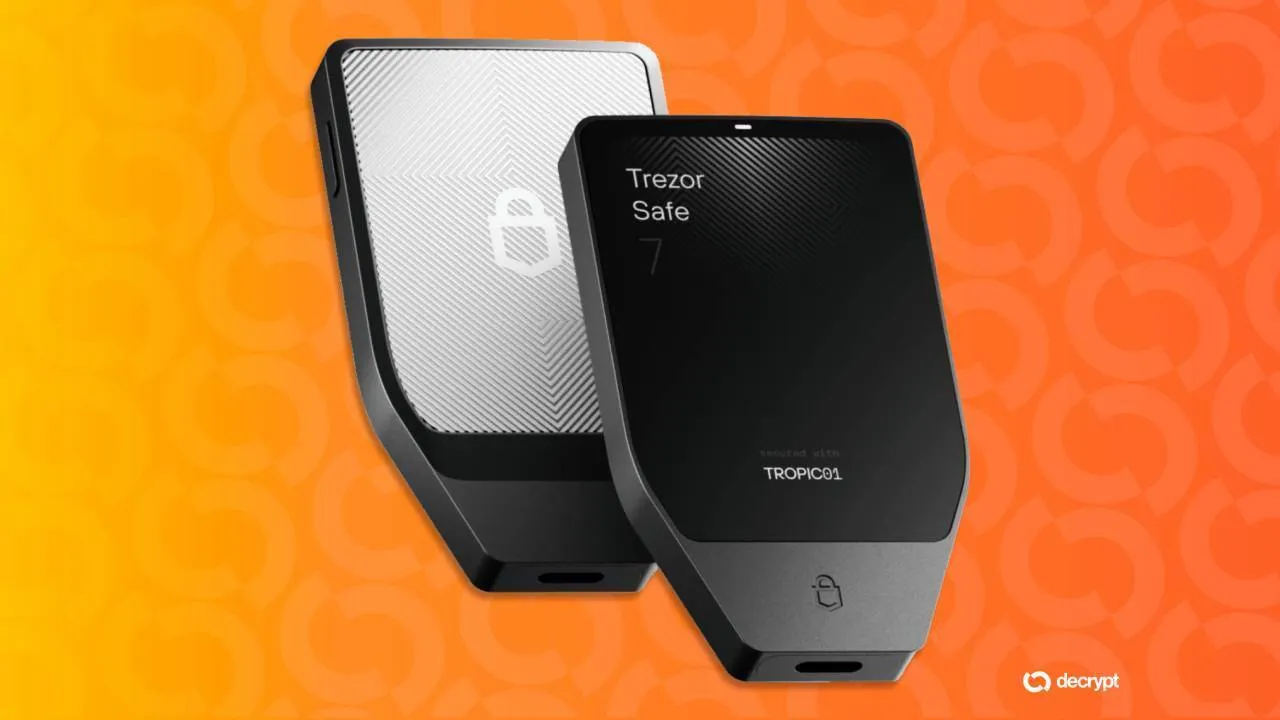
  • Trezor Data Breach Expands: 67,000 More Customers Affected, Raising Physical Security Concerns

    Trezor Data Breach Expands: 67,000 More Customers Affected, Raising Physical Security Concerns

    Trezor has disclosed an expanded data breach originating from its shipping provider, ShipMonk, affecting an additional 67,000 customers. This brings the total number of affected individuals to approximately 80,700. The exposed personal information includes names, email addresses, phone numbers, home addresses, and order numbers, raising significant concerns about customer privacy and physical security.

    Trezor stated that its own systems were not compromised, and private keys and wallet backups remain secure. The breach at ShipMonk is attributed to a SQL injection flaw in the analytics tool Metabase, which allowed unauthorized access to connected databases. This vulnerability was disclosed on August 6.

    The newly disclosed group of affected customers primarily consists of individuals in the U.S. who placed orders between November 2019 and August 2021. The exposure of home addresses is a particular point of concern, as it moves the risk beyond digital privacy to potential physical security threats. Trezor warned that “A letter carrying a name and home address signals ‘we can locate you.’”

    This incident significantly expands upon a previous disclosure in August, where Trezor reported a breach affecting 13,689 customers. Trezor had previously cited a 90-day deletion policy negotiated with its fulfillment partners as a reason for the limited scope of the initial breach. However, Trezor repeatedly asked for and received written confirmation that records had been deleted, in line with its contract and data policy, and expressed disappointment to learn they had not been.

    Some of the exposed records are nearly seven years old, dating back to November 2019. This longevity of data increases its potential utility for malicious actors, as “stolen data stays useful for years because people rarely move or change their numbers.”

    In addition to the Trezor and ShipMonk entities, the same breach wave also affected Framework and Tally. ShipMonk has reportedly received extortion emails attributed to the group ShinyHunters, though this attribution remains unconfirmed.

    This expanded breach follows a pattern of threats against hardware wallet owners. In February, owners of both Trezor and rival hardware wallet Ledger reported receiving forged letters demanding fictitious security checks. Trezor warned affected customers about risks to their physical security in light of these incidents and reiterated that wallet backups should never be shared or entered into websites.

    Uncertainty remains regarding whether ShipMonk had indeed deleted the records as per its contract and data policy. The attribution of extortion emails to ShinyHunters also remains unconfirmed. Trezor has emphasized that its own systems were not breached and that customer private keys and wallet backups are secure.

    Why This Matters

    This expanded data breach at Trezor’s shipping provider, ShipMonk, underscores the persistent risks to customer privacy and physical security. The exposure of personal information, including home addresses, for an additional 67,000 customers highlights the potential for long-term exploitation of data and challenges previous assurances about data handling practices. The incident serves as a critical reminder of the vulnerabilities inherent in third-party data management and the tangible threats faced by hardware wallet owners.

    Broader Context

    Source materials place the factual news in this context: Trezor repeatedly asked for and received written confirmation that those records had been deleted, in line with its contract and data policy, and said it was disappointed to learn they had not been. The intrusion traces to a critical SQL injection flaw in the analytics tool Metabase, disclosed on August 6, which let unauthenticated attackers steal credentials for connected databases. Uncertainty remains regarding whether ShipMonk had actually deleted the records as per contract and data policy, and the attribution of extortion emails to ShinyHunters remains unconfirmed.