Category: Uncategorized

  • Crypto Price Watch: ETH, XRP, ADA, BNB, HYPE

    Crypto Price Watch: ETH, XRP, ADA, BNB, HYPE

    Crypto Price Analysis: A Look at Ethereum, Ripple, Cardano, Binance Coin, and Hyperliquid

    This week’s market analysis delves into the performance of five prominent cryptocurrencies: Ethereum, Ripple, Cardano, Binance Coin, and Hyperliquid.

    Ethereum (ETH)

    Ethereum experienced a flat week, with its price holding steady above the crucial $2,400 support level. However, trading volume has been on a downward trend since its initial rally, and volatility has significantly diminished compared to earlier periods. While consolidation is a natural phase, it also presents a window of opportunity for sellers to re-enter the market. Nevertheless, as long as the key support at $2,400 remains unchallenged, buyers are expected to maintain control. For the rally to persist, ETH must stay above this level. While buyers currently appear dominant, the path towards the $2,800 mark could prove more challenging than in recent weeks.

    Ripple (XRP)

    XRP also saw minimal movement this week, registering a modest 2% gain. The cryptocurrency has been trading within a sideways range, confined between $1.3 and the resistance at $1.6. This price band has historically capped XRP’s movements between February and May of this year. To regain upward momentum, XRP will need to decisively break out of this range, which would likely coincide with a return of trading volume and increased volatility. Based on current price action, buyers hold an advantage, but this could shift if they fail to overcome the $1.6 resistance. Looking ahead, the market exhibits some indecision following a strong price surge. While a continuation of this upward trend could signal an end to the bear market, it remains too early to confirm. This uncertainty may be contributing to buyer hesitation.

    Cardano (ADA)

    Cardano closed the week 5% higher, buoyed by strong buyer activity that pushed the price to retest the $0.23 resistance level. At the time of this report, this resistance remains intact but could face renewed pressure from further buying. For Cardano to solidify a bottom above $0.15, the price must break through its current resistance. Buyers were previously rebuffed at this level in August, but a renewed push in September could prove successful. Looking forward, Cardano appears poised for a significant rally once the $0.23 level transitions into key support. A successful breakout could easily propel ADA towards the $0.30 and $0.40 targets, provided buying volume increases.

    Binance Coin (BNB)

    Binance Coin maintained a position above the $690 support this week but struggled to make substantial gains beyond it, resulting in a mere 1% increase over the past seven days. Despite a decrease in momentum, BNB is nearing a higher high. A price exceeding $745 would confirm this development and likely fuel a continuation of its rally towards the $900 mark. The market appears to be taking a brief pause before momentum potentially returns. While current price action favors a continued rally, confirmation of a higher high is needed to bolster confidence.

    Hyperliquid (HYPE)

    Hyperliquid successfully broke above the $85 resistance this week, closing 4% higher and establishing a new price record. The key question now is whether this level will hold as support or if sellers will reclaim it as resistance. Should sellers regain control, buyers may retreat to the $76 support level to defend recent gains. However, HYPE has been on a sustained rally for weeks without significant pullbacks or corrections, suggesting that a correction is eventually due. Looking ahead, Hyperliquid could continue its upward trajectory towards the psychological $100 level, where sellers might mount a defense. For now, observing the price reaction at $85 in the coming days will be crucial.
  • ACQUA1, Liquid Mercury Subsidiary, Completes Initial MERC Exchange Offering and Burns Tokens

    ACQUA1, Liquid Mercury Subsidiary, Completes Initial MERC Exchange Offering and Burns Tokens

    ACQUA1, LLC, a subsidiary of Liquid Mercury, has completed the initial closing of its MERC exchange offering. This transaction involved verified accredited investors exchanging MERC tokens for non-voting Class B units of ACQUA1. Following the closing, ACQUA1 burned 563,230,000 MERC, removing it from circulation as stipulated by its operating agreement.

    ACQUA1 operates Liquid Mercury’s Lab Company program, licensing its technology to companies that primarily tokenize real-world assets in exchange for fees and minority equity stakes. Liquid Mercury provides the underlying infrastructure for professional crypto trading and digital asset marketplaces, with its MERC token serving as the access and platform layer across its Pro, OTC, and RWA platforms.

    The initial closing occurred on September 1, 2026, with investors exchanging MERC for Class B units of ACQUA1 at a rate of 10 MERC per unit. The subsequent burning of 563,230,000 MERC on September 2, 2026, fulfills the requirement to burn 100% of received MERC within five business days of each closing. The MERC contract does not have a native burn function; tokens are removed from circulation by transfer to a dead address.

    This offering was conducted under Rule 506(c) of Regulation D of the Securities Act of 1933, exempting it from registration requirements. Consequently, the Class B units and associated ACQUA1 tokens were offered exclusively to verified accredited investors, as defined by Rule 501(a) of Regulation D, and were governed by ACQUA1’s confidential private placement memorandum and subscription documents.

    ACQUA1 tokens are considered restricted securities, subject to transfer limitations within ACQUA1’s operating agreement. Investors should be aware that these tokens may remain illiquid indefinitely, and there is no guarantee that Rule 144 will be applicable for their transfer. As of the publication date, the outstanding supply of MERC, excluding tokens in the dead address, stands at 5,436,770,000.

    Statements concerning future revenues, valuations, portfolio performance, and subsequent closings are forward-looking and subject to inherent risks and uncertainties. Actual results could differ materially from those projected.

    Why This Matters

    This event signifies a structured approach by Liquid Mercury, through its subsidiary ACQUA1, to integrate real-world asset tokenization with specific tokenomic mechanisms. The exchange of MERC for ACQUA1 units and the subsequent burn of MERC tokens directly impact the token’s supply and reflect a controlled participation model for verified accredited investors within this specific program. The reliance on Regulation D and the restricted nature of ACQUA1 tokens highlight the private, regulated framework of this initiative.

    Broader Context

    Source materials place the announcement in this context: ACQUA1 operates Liquid Mercury’s Lab Company program, licensing Liquid Mercury technology to companies primarily tokenizing real-world assets and receiving fees plus a minority equity stake in return.

  • Trezor Data Breach Expands: 67,000 More Customers Affected, Raising Physical Security Concerns

    Trezor Data Breach Expands: 67,000 More Customers Affected, Raising Physical Security Concerns

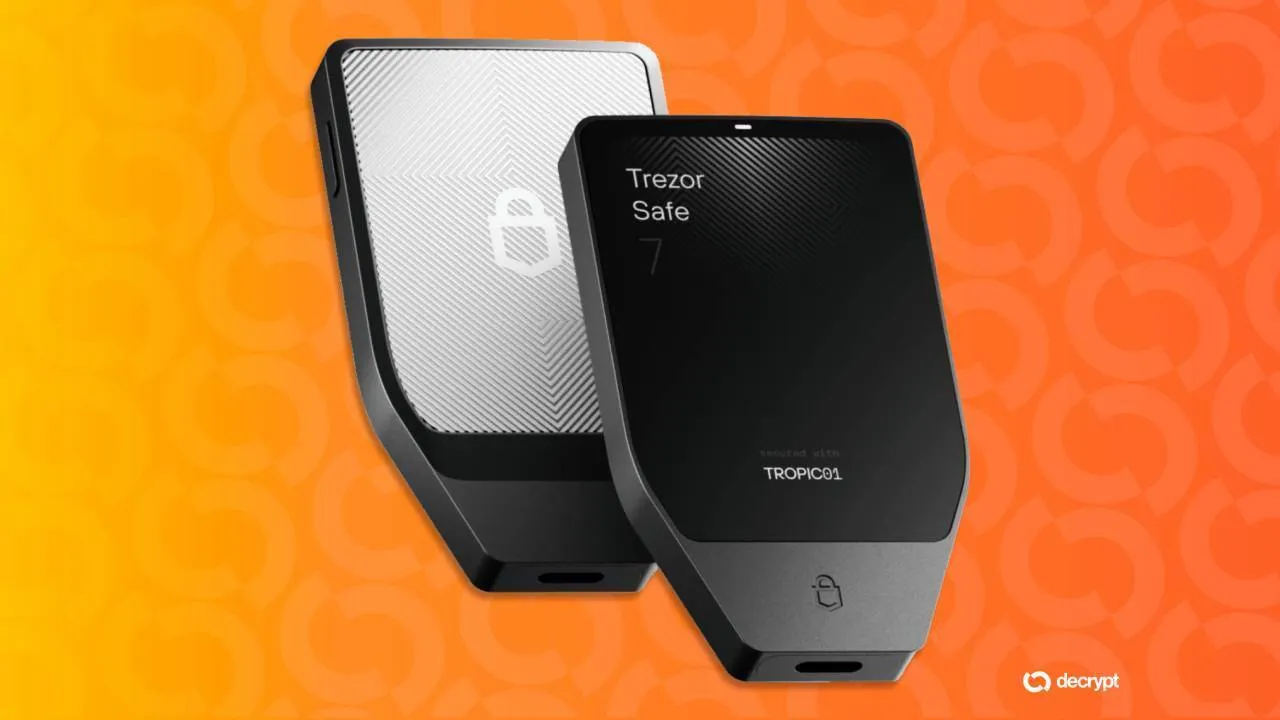
    Trezor has disclosed an expanded data breach originating from its shipping provider, ShipMonk, affecting an additional 67,000 customers. This brings the total number of affected individuals to approximately 80,700. The exposed personal information includes names, email addresses, phone numbers, home addresses, and order numbers, raising significant concerns about customer privacy and physical security.

    Trezor stated that its own systems were not compromised, and private keys and wallet backups remain secure. The breach at ShipMonk is attributed to a SQL injection flaw in the analytics tool Metabase, which allowed unauthorized access to connected databases. This vulnerability was disclosed on August 6.

    The newly disclosed group of affected customers primarily consists of individuals in the U.S. who placed orders between November 2019 and August 2021. The exposure of home addresses is a particular point of concern, as it moves the risk beyond digital privacy to potential physical security threats. Trezor warned that “A letter carrying a name and home address signals ‘we can locate you.’”

    This incident significantly expands upon a previous disclosure in August, where Trezor reported a breach affecting 13,689 customers. Trezor had previously cited a 90-day deletion policy negotiated with its fulfillment partners as a reason for the limited scope of the initial breach. However, Trezor repeatedly asked for and received written confirmation that records had been deleted, in line with its contract and data policy, and expressed disappointment to learn they had not been.

    Some of the exposed records are nearly seven years old, dating back to November 2019. This longevity of data increases its potential utility for malicious actors, as “stolen data stays useful for years because people rarely move or change their numbers.”

    In addition to the Trezor and ShipMonk entities, the same breach wave also affected Framework and Tally. ShipMonk has reportedly received extortion emails attributed to the group ShinyHunters, though this attribution remains unconfirmed.

    This expanded breach follows a pattern of threats against hardware wallet owners. In February, owners of both Trezor and rival hardware wallet Ledger reported receiving forged letters demanding fictitious security checks. Trezor warned affected customers about risks to their physical security in light of these incidents and reiterated that wallet backups should never be shared or entered into websites.

    Uncertainty remains regarding whether ShipMonk had indeed deleted the records as per its contract and data policy. The attribution of extortion emails to ShinyHunters also remains unconfirmed. Trezor has emphasized that its own systems were not breached and that customer private keys and wallet backups are secure.

    Why This Matters

    This expanded data breach at Trezor’s shipping provider, ShipMonk, underscores the persistent risks to customer privacy and physical security. The exposure of personal information, including home addresses, for an additional 67,000 customers highlights the potential for long-term exploitation of data and challenges previous assurances about data handling practices. The incident serves as a critical reminder of the vulnerabilities inherent in third-party data management and the tangible threats faced by hardware wallet owners.

    Broader Context

    Source materials place the factual news in this context: Trezor repeatedly asked for and received written confirmation that those records had been deleted, in line with its contract and data policy, and said it was disappointed to learn they had not been. The intrusion traces to a critical SQL injection flaw in the analytics tool Metabase, disclosed on August 6, which let unauthenticated attackers steal credentials for connected databases. Uncertainty remains regarding whether ShipMonk had actually deleted the records as per contract and data policy, and the attribution of extortion emails to ShinyHunters remains unconfirmed.

  • MEMONS Launches Integrated Digital Collectibles Platform

    MEMONS Launches Integrated Digital Collectibles Platform

    MEMONS has officially launched its digital collectibles platform, integrating capsule opening, collection management, and a marketplace to create a continuous user ecosystem. The platform, which went live on September 4th, 2026, in Los Angeles, California, allows users to obtain, collect, and trade digital cards of varying rarity.

    At its core, MEMONS offers a unified approach to digital collectibles. Users can acquire digital cards of different rarity levels through a ‘Capsule Opening’ feature. These cards can then be added to a personal collection, and subsequently traded with other users via the platform’s ‘Marketplace.’ This integration aims to foster an ongoing user experience, distinguishing MEMONS from traditional collectible services where engagement often ends with acquisition.

    The platform combines established concepts from the global collectibles market, such as collecting, scarcity, and trading, within a digital framework. This approach mirrors mechanics found in physical collectible card games, loot boxes, and gacha systems, adapted for a digital and Web3-native audience.

    MEMONS’ launch aligns with a broader trend in the Web3 space, where projects are increasingly expanding beyond token-centric and community-focused models. These evolving models often incorporate services that encourage active user participation, including IP integration, gaming, digital content, and marketplaces. MEMONS positions itself within this trend by aiming to become a scalable platform capable of connecting various IPs and Web3 projects.

    APEPE serves as MEMONS’ founding IP and core ecosystem partner, with the platform having been incubated within the APEPE ecosystem. This partnership represents the initial step in MEMONS’ strategy to integrate diverse IPs and Web3 communities.

    The MEMONS platform is accessible via its website: https://memons.io.

    Why This Matters

    The materials describe a narrow update: MEMONS, a digital collectibles platform, has launched. MEMONS connects Capsule Opening, Collection, and Marketplace functions within a single platform, unlike conventional collectible services that end once an item is acquired.

    Broader Context

    Source materials place the announcement in this context: MEMONS is a digital collectibles platform where users can obtain digital cards of various rarity levels by opening Capsules, collect them, and trade them with other users through the Marketplace.

  • Uniswap Acquires PONS Stake, Token Surges 40% to Record High

    Uniswap Acquires PONS Stake, Token Surges 40% to Record High

    Uniswap Labs Acquires Stake in PONS, Fueling Token Surge

    Uniswap Labs has acquired a stake in PONS as part of a strategic, long-term partnership, a move that propelled the PONS token to a new all-time high of $0.75.

    The acquisition coincides with a reported surge in activity on the PONS platform. Over the past 24 hours, more than 63% of the trading volume on the Robinhood Chain launchpad has transacted through the protocol.

    PONS announced the purchase on September 4, stating that the deal would strengthen its collaboration with Uniswap and foster “long-term alignment” between the two projects. The announcement did not specify the size of Uniswap Labs’ stake or the financial terms of the transaction.

    The market responded swiftly to the news. At the time of reporting, PONS was trading at $0.71, marking a 40.2% increase over the last 24 hours and an impressive surge of over 507% in the past week, according to CoinGecko data. The token had earlier reached a record high of $0.75 before a slight pullback, with its current price hovering just below that peak.

    Trading volume also saw a significant uptick, with $151.8 million exchanged in the preceding day, a 9% increase from the previous session. Looking at longer timeframes, PONS has demonstrated remarkable growth, climbing more than 1,769% in the last 14 days and over 2,713% for the month. This rally traces back to a low of $0.0033 in mid-July. The token has also appreciated by nearly 25% against Bitcoin.

    Since its inception, Pons has implemented deflationary mechanisms. The project reports that 29.34% of the total PONS supply has been burned to date, with 80% of protocol fees allocated to ongoing token buybacks and burns.

    In recent developments, the PONS team has expanded its platform by adding tokenized stock pairs, including those for UPS, Snap, Lululemon, Figma, Moderna, Pfizer, Rivian, Marvell, and Johnson & Johnson within the last day alone, with trading commencing shortly after. This expansion contributed to a significant portion of the Robinhood Chain’s launchpad volume, with over 63% of its total 24-hour volume of $400 million flowing through the PONS platform.

    The acquisition of a PONS stake by Uniswap Labs occurred in the same week that Uniswap’s native token, UNI, also experienced a notable climb. As previously reported, UNI gained as much as 32% over a seven-day period and has continued its upward trajectory, trading just below $6.40 at the time of this report, representing an increase of over 60% in the last 30 days.

  • FinCEN Links $12.7 Billion in Suspicious Activity to Southeast Asian Crypto Scams

    FinCEN Links $12.7 Billion in Suspicious Activity to Southeast Asian Crypto Scams

    The U.S. Treasury Department’s Financial Crimes Enforcement Network (FinCEN) has identified approximately $12.7 billion in suspicious financial activity linked to cryptocurrency investment scams operated from compounds in Southeast Asia. This analysis, based on reports filed by over 1,300 financial institutions between September 2023 and December 2025, highlights the sophisticated nature and significant financial reach of these illicit operations.

    FinCEN’s review encompassed 33,904 suspicious activity reports. Money services businesses, predominantly cryptocurrency firms, filed 55% of these reports, flagging $5.5 billion. Banks submitted 41% of the reports, accounting for $6.4 billion, while securities firms reported the remaining $784.5 million. The data indicates a substantial monthly growth in both the number of filings and the reported sums, averaging 10.9% and 18% respectively.

    Scammers employed a variety of tactics, utilizing at least 22 different digital assets, with Ethereum, USDT, and USDC being the most common. Blockchain analysis revealed that proceeds were consistently converted into stablecoins, primarily USDT, and then funneled through decentralized finance (DeFi) protocols or exchanges located outside the United States. A notable tactic observed was the reuse of collection addresses across multiple victims, a pattern that aided some firms in identifying the scams.

    While elder exploitation was present in about 25% of the reports, FinCEN’s analysis concluded that older adults are not disproportionately victimized compared to their share of the population. However, the FBI reported $4.8 billion in fraud losses among Americans over 60 in 2024, underscoring the severe financial impact on this demographic. Victims spanned all 50 states, with losses financed through various means, including retirement accounts, home equity lines, and personal loans. Some individuals suffered catastrophic losses, with one woman losing nearly $640,000 from her retirement fund and another victim losing over $1 million in six months.

    The operational hubs for these scams are primarily located in Cambodia, Laos, and Burma, with estimates suggesting hundreds of thousands of individuals staff these compounds, many of whom are reportedly trafficked through fake job advertisements. International law enforcement agencies, including Interpol, have warned that this scam model is spreading beyond Southeast Asia. In response, U.S. authorities have seized over $25 million tied to such schemes this year.

    FinCEN’s Rapid Response Program has a history of interdicting illicit funds, having secured $1.8 billion since 2015 and recovered over $1 billion for 5,790 American victims. Despite these efforts, FinCEN cautions that the observed increase in reported activity may partly stem from wider adoption of its search terms following a 2023 alert, and that the totals can include double-counted transfers, attempted payments, and filer errors. The agency also highlighted the severe psychological toll on victims, noting that some face risks of self-harm and directing them to resources like the 988 Suicide and Crisis Lifeline.

    Why This Matters

    The materials describe a narrow update: FinCEN analyzed 33,904 reports from 1,300 financial institutions, identifying approximately $12. The exact number of people staffing the compounds in Southeast Asia.

    Broader Context

    Source materials place the factual news in this context: The Treasury Department’s Financial Crimes Enforcement Network has tied roughly $12.7 billion in suspicious financial activity to crypto investment scams run out of Southeast Asian compounds, in an analysis and an alert published Thursday.

  • AMC CEO Adam Aron Criticizes Robinhood’s Unregistered Stock Tokens

    AMC CEO Adam Aron Criticizes Robinhood’s Unregistered Stock Tokens

    AMC Entertainment CEO Adam Aron has publicly criticized Robinhood for issuing “Stock Tokens” that track AMC’s share price without the company’s involvement or approval. According to Adam Aron, AMC has no connection to these tokens, does not condone them, and is investigating their legality.

    Robinhood’s documentation states these tokens are debt securities offering economic exposure to a share price without conferring rights to the underlying security or the issuing company. The tokens are not registered under U.S. securities laws and are not offered to U.S. persons. However, the base prospectus for the tokens received approval from Liechtenstein’s Financial Market Authority.

    AMC intends to instruct outside securities counsel to investigate the legality of these offerings, as stated by Adam Aron. This action highlights concerns regarding the regulatory status of tokenized securities.

    Robinhood’s Stock Tokens are issued by Robinhood Assets (Jersey) Limited. The company’s issuer page indicates that the Jersey entity “is not regulated,” and that the consents it holds do not constitute supervision or endorsement. This structure raises questions about oversight and investor protection.

    This is not the first instance of Robinhood issuing tokens tracking public companies. Last year, the platform airdropped tokens tracking OpenAI and SpaceX to European users. In response to those offerings, OpenAI said it had not partnered with Robinhood and did not endorse the product. Similarly, Anthropic and OpenAI warned this year that unauthorized vehicles selling exposure to their shares could leave buyers with nothing.

    SEC Commissioner Hester Peirce has previously cautioned that blockchains do not transform the nature of the underlying asset, suggesting that regulatory frameworks for traditional securities may still apply. The current situation with AMC’s stock tokens underscores the ongoing tension between financial innovation and regulatory compliance.

    Robinhood’s program reportedly covers more than 190 companies and is further restricted in Canada, the U.K., and Switzerland. The disclosures use the term ‘U.S. persons’ as defined in Regulation S.

    The legality of Robinhood’s stock tokens remains uncertain. It is also unclear whether Robinhood will face regulatory action, and the extent to which investors understand the rights associated with these Stock Tokens is also a point of uncertainty. AMC’s investigation into the legality of the tokens is ongoing.

    Why This Matters

    The materials describe a narrow update: Adam Aron, CEO of AMC Entertainment, expressed strong disapproval of Robinhood’s issuance of ‘Stock Tokens’ that track AMC’s share price. The legality of Robinhood’s stock tokens.

    Broader Context

    Source materials place the factual news in this context: Robinhood’s program covers more than 190 companies.

  • ZEC Short Suffers $18M Loss as Zcash Surges Past $1,000

    ZEC Short Suffers $18M Loss as Zcash Surges Past $1,000

    Zcash Surges Past $1,000, Triggering Massive Losses for Short Sellers

    The volatile nature of cryptocurrency markets has reasserted itself for several prominent altcoins, with privacy-focused Zcash (ZEC) leading the charge. The digital asset experienced a dramatic surge earlier today, reaching a new multi-year high of just over $1,000.

    This rapid ascent caught many traders off guard, including Garrett Jin. Data compiled by Lookonchain revealed Jin’s substantial losses stemming from a significant short squeeze.

    Analysts shared a screenshot from a wallet associated with Jin, illustrating a massive short position initiated for 32,760 ZEC, currently valued at over $33 million. This position was established at prices considerably lower than the current trading level of $444.

    In response to Zcash’s considerable rally over the past several days, Jin was compelled to repeatedly add to his short position. Ultimately, this led to a realized loss exceeding $18.5 million.

    The privacy coin has emerged as one of the top performers in the last 24 hours, with daily gains surpassing 21%. Its price climbed to $1,020, a level not seen in eight years. Furthermore, ZEC’s value has doubled since its breakout on August 19, when it was trading around $500.

    Data from CoinGlass indicated that the total value of liquidated ZEC positions reached $36 million, meaning Jin’s substantial loss represented half of the total liquidations.

  • CPUSDT Perpetual Contract Launches in Innovation Zone with 20x Leverage

    CPUSDT Perpetual Contract Launches in Innovation Zone with 20x Leverage

    Bybit Lists Cluster Protocol Perpetual Contract in Innovation Zone

    Cryptocurrency exchange Bybit has announced the listing of the CPUSDT Perpetual Contract, featuring the Cluster Protocol (CP) as the underlying asset and USDT as the settlement asset. The new contract is now available for trading in the platform’s Innovation Zone, offering users up to 20x leverage.

    The CPUSDT Perpetual Contract operates with a tick size of 0.00001 and a maximum leverage of 20x. The capped funding rate is set at 2.5%, with funding fees settled every four hours. Trading for the contract is available 24/7.

    The Innovation Zone designation signifies that the CPUSDT contract will incur a higher trading fee compared to other contracts on the Bybit platform. Further details regarding trading fees in the Innovation Zone can be found on Bybit’s help center.

    The official website for Cluster Protocol is https://www.clusterprotocol.ai/, and its official X account can be accessed at https://x.com/openprotocolfnd.

  • Binance to Distribute WDC and NVDA Cash Dividends via bStocks

    Binance to Distribute WDC and NVDA Cash Dividends via bStocks

    Tokenized Securities to Distribute Dividends via Multiplier Adjustment

    Binance, through its affiliate BTech Holdings NVDA Limited, will distribute dividends to holders of its tokenized securities, known as bStocks. These bStocks, classified as Certificates representing certain Financial Instruments, represent an interest in underlying securities held by the issuer, rather than direct ownership of the underlying shares. Holders of bStocks do not possess direct ownership of shares in the listed companies.

    On-chain holders of WDCB and NVDAB will receive their respective bStock dividends through a multiplier adjustment.

    Users holding WDCB as of the record date snapshot on September 8, 2026, at 00:00 UTC, will be eligible for dividend distribution. Similarly, users holding NVDAB as of the record date snapshot on September 10, 2026, at 00:00 UTC, will qualify for the dividend payout. Trading of WDCB/USDT and NVDAB/USDT pairs will remain unaffected.

    Service Suspensions for WDCB and NVDAB

    WDCB:
    The token conversion service for 1:1 swaps between WDC stock and WDCB bStocks will be suspended on September 4, 2026, at 23:30 UTC. Subsequently, deposits and withdrawals of WDCB tokens will be suspended on September 7, 2026, at 23:30 UTC. Users are advised to allow ample time for their WDCB token deposits to be fully processed before this suspension.

    NVDAB:
    The token conversion service for 1:1 swaps between NVDA stock and NVDAB bStocks will be suspended on September 9, 2026, at 23:30 UTC. On the same date and time, deposits and withdrawals of NVDAB will also be suspended. Users should ensure sufficient processing time for their NVDAB deposits prior to this cutoff.

    Deposits, withdrawals, and the token conversion service for both WDCB and NVDAB will resume once the dividend distribution is complete. No further announcements will be made regarding the resumption of these services. Users may subscribe to recovery notifications where available.

    Dividends earned from assets held in accounts other than the Spot Account, including but not limited to Savings and Margin Accounts, will be credited to the Spot Account. Binance will manage all technical aspects for users participating in this event.

    Dividend reinvestment and distribution will be processed after the deduction of applicable withholding taxes. Users are encouraged to consult company announcements for further details. A dedicated FAQ is available for more information on bStocks dividend distribution.

    Binance Convert will pause the conversion of WDCB and all associated trading pairs on September 7, 2026, at 23:30 UTC. Similarly, Binance Convert will pause the conversion of NVDAB and all associated pairs on September 9, 2026, at 23:30 UTC.

    Information regarding Western Digital and NVIDIA dividend histories can be found through their respective company resources.

    Binance reserves the right to amend or cancel this announcement at any time and for any reason without prior notice. The information provided in connection with tokenized securities is not intended as an offer, solicitation, promotion, recommendation, or invitation to buy or sell securities. Tokenized securities are not offered, sold, distributed, made available, or accessible in the United States or to U.S. persons. These securities have not been registered under U.S. securities laws, and a public offering will not be conducted in the United States or other jurisdictions, with the exception of the ADGM. By accessing this product, users represent and warrant that they are not U.S. persons, are not located in the United States, are not acting for the benefit of any U.S. person, and will not transact in tokenized securities from within the United States.