Category: Uncategorized

  • Filecoin Surges 15% Daily: Bullish Targets Revealed

    Filecoin Surges 15% Daily: Bullish Targets Revealed

    Filecoin Surges Amidst Broader Market Downturn, Analysts Eye Key Levels

    The cryptocurrency market experienced a setback on September 2, influenced by escalating tensions in the Middle East between the United States and Iran. However, amidst the general decline, certain digital assets, notably Filecoin (FIL), managed to maintain positive territory, even posting significant daily gains.

    Filecoin outperformed all cryptocurrencies within the top 100, surging by 15% and briefly trading above $0.80. As of this report, FIL is priced around $0.77, according to CoinGecko, marking a 25% increase over the past two weeks.

    While the precise catalyst for this resurgence remains unclear, market observers suggest that the upward momentum may persist. X user Crypto GVR recently indicated that FIL is approaching a critical zone that could signal a “next major trend shift.” This analyst highlighted the $0.50-$0.70 range as a “potential reversal area,” positing that a robust recovery and strengthening momentum could pave the way for a long-term push towards $2.

    Another analyst, known as The Boss, observed that FIL is nearing a significant technical juncture. The descending wedge pattern the token has been trading within has further compressed, bringing the price closer to its apex. “The lower boundary has continued to act as support, while the upper trendline keeps pressure on the recovery,” The Boss noted. “What has changed is the degree of compression. Price is spending more time near the lower part of the structure instead of expanding lower, making the wedge increasingly important.” This analyst cautioned that a breakout above the upper boundary would constitute the “first meaningful structural confirmation,” but until then, “the descending wedge remains intact.”

    JAVON MARKS offered a more optimistic outlook, believing that if FIL can sustain its current breakout, “sights remain on a major reversal & run,” particularly given recent improvements in the broader crypto market. This analyst projected a potential 1,200% surge to $2.94, followed by further ascents to $7.50 and $11.40. “We could be right at the start of this process, right now,” they concluded.

    It is worth noting that some market participants have capitalized on the recent price uptrend to secure profits. Crypto trader Mehmet GIZIK announced he had closed his FIL position, realizing a gain of $10,200. This decision aligns with the asset’s Relative Strength Index (RSI), which briefly exceeded 80 and now stands above 70. Such readings typically indicate that an asset has entered overbought territory and may be due for a correction, whereas readings below 30 are often seen as buying opportunities.

  • Fed Rate Cut Odds Plummet as September Hike Bets Surge

    Fed Rate Cut Odds Plummet as September Hike Bets Surge

    Fed Rate Hike Odds Surge, Bitcoin Faces Uncertainty

    Markets are increasingly pricing in a September interest rate hike by the Federal Reserve, with betting platforms like Kalshi showing a 59% probability for a 25-basis-point increase against 42% for no change. Other reports place the likelihood between 60% and 68% ahead of the Federal Open Market Committee meeting on September 15-16. Concurrently, the odds of a Fed rate cut have plummeted to a mere 1%, signaling a fading hope for such a move.

    This divergence between market expectations and potential Fed action presents a clear quandary for risk assets, including Bitcoin. Should the Federal Reserve maintain current rates while market sentiment leans towards an increase, the discrepancy between anticipated and actual outcomes could trigger a significant reevaluation of bearish positions.

    However, a simple rate hold by the Fed would not automatically translate into a bullish scenario for risk assets. The market’s reaction would also hinge on the accompanying communication from the central bank. A hold, coupled with dovish remarks from new SEC Chair Kevin Warsh, could potentially provide a boost to the cryptocurrency market.

    The recent repricing of rate expectations follows a public policy divergence. President Trump has voiced his opinion that U.S. interest rates are too high, while also expressing respect for Kevin Warsh’s mandate to make necessary decisions. Previously, Trump had indicated he would not have appointed Warsh to lead the Fed if he favored interest rate increases.

    Warsh’s recent address at Jackson Hole underscored concerns about inflation, suggesting that policymakers still have work to do if price pressures are not moving towards the Fed’s 2% target with sufficient speed.

    Following Warsh’s remarks, the rate market subsequently began to heavily price in a September rate increase as the most probable outcome. The current snapshot from the Kalshi market indicates a total trading volume of $31.3 million.

    Reported probabilities for a rate hike vary across different platforms and measurement times. This range of figures is more informative than any single data point, highlighting a clear shift in market sentiment towards tighter monetary policy less than three weeks before the upcoming meeting.

    President Trump’s objections to prevailing interest rates, juxtaposed with his stated respect for Warsh’s role, leave markets to interpret the Fed chair’s signals rather than the White House’s preferences. Warsh’s inflation-focused message from his Jackson Hole debut has emerged as a key reference point for the September decision.

    The shift in rate expectations has also coincided with broader market pressures. Nasdaq-100 futures were down 1.19% to 29,163.25, Dow futures fell by 341 points to 52,899, and S&P 500 futures declined 0.62% to 7,651.50 in premarket trading on Tuesday, according to FinanceFeeds.

    Meanwhile, WTI October crude oil futures rose 2.44% to $87.85, and Brent crude traded near $90, adding another inflation-sensitive factor to the market backdrop.

    Rate Decision vs.

    Market Expectations: A Crucial Distinction

    The distinction between the Fed’s actual rate decision and prevailing market expectations is paramount. A Fed hold would leave interest rates unchanged and, by itself, would not signal a shift towards easier monetary policy. It could only be interpreted as a dovish surprise if markets were strongly anticipating an increase immediately prior to the decision and if the Fed’s forward guidance did not counteract that surprise.

    For Bitcoin, this distinction means that a rate hold could prompt a reassessment of positions built around an anticipated rate hike, but it would not guarantee an upward price movement. A hold accompanied by language that keeps further tightening firmly in view would likely elicit a very different market reaction compared to a hold paired with softer guidance. Consequently, the decision, the accompanying policy statement, and the broader interpretation of inflation risks will need to be considered in conjunction.

    The wider macroeconomic environment further underscores the prevailing uncertainty. The 10-year Treasury yield has been trading in a range of approximately 4.75% to 4.80%, marking a fifth consecutive session of rising yields and reaching its highest level since January 2025, according to Trading Economics. Higher yields and oil prices were among the factors contributing to the pressure on risk assets observed in recent market movements.

    Potential Scenarios for the FOMC Meeting

    Three broad scenarios frame the approach to the September FOMC decision. If rate-hike odds remain elevated and the Fed holds rates with relatively soft guidance, the gap between market pricing and the actual decision could support a reassessment across risk assets, including Bitcoin. This scenario would be most consistent with discussions around a potential short squeeze.

    If the Fed decides to raise rates, the outcome would align more closely with the probabilities reported by platforms such as Polymarket, CME FedWatch, Fed funds futures, and Trading Economics.

    Should the Fed hold rates while emphasizing that further tightening remains a possibility, the perceived dovish surprise would be less pronounced. In any of these scenarios, the critical question will not only be whether the Fed alters interest rates but also how the decision compares with the expectations that have developed since the Jackson Hole symposium.

    Developments in inflation, Treasury yields, oil prices, and the evolving probabilities of rate changes will continue to shape the market backdrop leading up to the September 15-16 meeting. The available evidence suggests a market focused on the possibility of a rate increase, rather than a single definitive probability or a predetermined reaction in Bitcoin.

  • Sality Botnet Dismantled After Nearly Two Decades of Cryptocurrency Theft

    Sality Botnet Dismantled After Nearly Two Decades of Cryptocurrency Theft

    A multinational operation involving law enforcement agencies and cybersecurity firms has successfully dismantled the Sality botnet, a sophisticated cybercrime operation active since 2003 that evolved to focus on stealing cryptocurrency. The takedown, announced Tuesday, September 1, 2026, targeted the botnet’s infrastructure across the United States, Bulgaria, Hungary, and Romania.

    For the last eight years of its operation, Sality primarily engaged in cryptocurrency theft by hijacking user transactions. This was achieved through a tool known as EggJagger, which monitored infected computers’ clipboards for cryptocurrency wallet addresses. When a user copied a Bitcoin or Ethereum address to send funds, EggJagger would swap it with an address controlled by the botnet operator, diverting the cryptocurrency to their own wallets. This clipjacking technique meant that victims unknowingly sent their digital assets to the attackers.

    The operation to dismantle Sality was led by CrowdStrike and the U.S. Justice Department, with significant involvement from the FBI and the Defense Criminal Investigative Service. Law enforcement agencies seized Sality-linked domains in the U.S. and Europe. CrowdStrike’s Counter Adversary Operations team played a crucial role by redirecting infected machines to sinkholes controlled by the firm, effectively isolating over 15,000 machines worldwide.

    Before its focus on cryptocurrency, the Sality botnet was used for a variety of malicious activities, including credential theft, spam distribution, proxy services, and denial-of-service attacks. The operator, tracked by CrowdStrike as SALTY SPIDER, also occasionally used the botnet for targeted attacks. In September 2023, a denial-of-service payload was directed at AvanChange, a Russian cryptocurrency exchange.

    Sality’s longevity and resilience were partly due to its decentralized, peer-to-peer architecture, which lacked a central server that could be easily seized. Infected machines communicated directly with each other, making the botnet difficult to track and disrupt. The malware spread by attaching itself to executable files, regenerating without direct operator intervention.

    CrowdStrike estimates that the never-spent cryptocurrency portfolio associated with the botnet reached a peak value of approximately 147 million rubles (nominally $1.35 million USD) in January 2025. However, the exact total amount of cryptocurrency stolen by the Sality botnet remains uncertain, as does the full identity of the operator(s) behind SALTY SPIDER.

    While the botnet infrastructure has been disrupted, CrowdStrike warns that malware already present on infected machines will remain active until manually removed. The Shadowserver Foundation is collaborating with internet providers to notify victims of potential infections. The takedown highlights the persistent and evolving nature of cyber threats, particularly in the cryptocurrency space, and underscores the importance of sustained international cooperation in cybersecurity efforts.

    Why This Matters

    The materials describe a narrow update: A multinational operation led by CrowdStrike and the U. The exact total amount of cryptocurrency stolen by the Sality botnet.

    Broader Context

    Source materials place the factual news in this context: Sality botnet has circulated since 2003.

  • Liminal Launches Liminal Prime Suite for Institutional OTC and Stablecoin Liquidity

    Liminal Launches Liminal Prime Suite for Institutional OTC and Stablecoin Liquidity

    Liminal announced on September 2nd, 2026, the launch of Liminal Prime, a new enterprise software suite aimed at institutional clients seeking principal OTC dealing and stablecoin liquidity connectivity. This launch expands Liminal’s existing infrastructure, which includes institutional digital asset wallet and key-management solutions.

    Liminal Prime comprises three distinct products: White-Glove OTC, Electronic OTC (eOTC), and Bridge. These are designed to provide trading and liquidity access while integrating with established institutional governance and compliance frameworks. According to Liminal, the suite addresses a client-identified gap for trading and liquidity infrastructure that operates within existing compliance structures.

    Product Details:

    • White-Glove OTC: Intended for high-value, complex, and time-sensitive block trades, facilitated by a dedicated dealing desk.
    • Electronic OTC (eOTC): Offers both GUI and API-driven access to streaming and firm quotes for high-frequency digital asset transaction flows.
    • Bridge: A technology platform enabling institutions to request quotes from and trade directly with liquidity providers they have onboarded.

    Liminal stated that each product functions as an independent module, allowing for separate licensing and deployment, providing flexibility based on operational and regulatory needs. These products were developed through direct engagement with Liminal’s client base, including licensed exchanges, payment companies, financial institutions, and digital asset businesses.

    Liminal’s existing infrastructure has processed over US$100 billion in on-chain transactions across more than 20 blockchain networks for institutions in over 12 countries. Liminal Prime is positioned to support the next phase of institutional adoption, focusing on trading, liquidity access, and operational efficiency.

    Regulatory Considerations:

    Liminal noted that White-Glove OTC and eOTC are restricted and unavailable in the UAE, India, Singapore, and Taiwan. The availability of the Bridge product is subject to local regulatory requirements, though specific details were not provided. Liminal emphasizes that users are solely responsible for ensuring compliance with all local regulations before accessing its services.

    Liminal clarified its role in these offerings. For White-Glove OTC and eOTC, Liminal acts as the principal counterparty for its own account on every trade. For the Bridge product, Liminal is not the counterparty, does not operate an exchange or brokerage, and takes no custody of assets; its role is limited to routing quote requests and supporting communication between the institution and its chosen liquidity provider, with the trade and settlement occurring directly between those parties off-platform.

    Across all three products, Liminal Prime offers configurable reporting, audit-ready workflows, and integration with Liminal’s existing wallet and key-management infrastructure. The products support multiple blockchain networks and major digital asset pairs, designed to provide the transparency, governance, and operational controls required by institutions.

    Liminal Prime represents the initial phase of a broader infrastructure strategy, with the company planning to continue developing its product offerings as institutional participation in digital asset markets grows. The company’s objective is to serve as a trusted infrastructure partner for licensed institutions throughout their digital asset operations.

    Why This Matters

    The materials describe a narrow update: Liminal has launched Liminal Prime, an enterprise software suite offering principal OTC dealing and LP connectivity for institutional clients. The availability of Bridge is subject to local regulatory requirements.

    Broader Context

    Source materials place the announcement in this context: Liminal is a provider of institutional digital asset wallet and key-management infrastructure.

  • AI Moguls Fund Ad Surge Amidst Growing Data Center Opposition

    AI Moguls Fund Ad Surge Amidst Growing Data Center Opposition

    AI Backers Launch Multi-Million Dollar Ad Campaign in Key States Amidst Growing Data Center Opposition

    An advocacy group funded by artificial intelligence billionaires is launching a multi-million dollar advertising campaign in three crucial battleground states to counter growing public opposition to data centers. The effort, spearheaded by the super PAC Leading the Future, will target Kansas, Ohio, and Wisconsin, where the issue has become a significant factor in statewide political races.

    Build American AI, the group behind the campaign, issued a statement warning against allowing “the loudest and most extreme voices” to shape the nation’s technological future. While the exact budget remains undisclosed, the group confirmed it is in the millions of dollars.

    The push comes as public sentiment appears to be shifting. Polling conducted by the Annenberg Public Policy Center between June 16 and July 19 revealed that 61% of 1,320 U.S. adults surveyed opposed new data centers in their local areas. This marks a significant increase from a February and March survey, where only 49% expressed similar concerns. Opposition was widespread across the political spectrum, with majorities of Democrats (69%), Republicans (54%), and independents (53%) voicing their disapproval.

    Interestingly, overall views on artificial intelligence itself have remained relatively stable during the same period. However, concerns about data centers appear to be a distinct issue, with even heavy AI users expressing apprehension. “Even heavy AI users seem to be concerned about these very concrete worries,” noted Matthew Levendusky of the Annenberg Public Policy Center.

    The growing backlash has not gone unnoticed by political strategists. The National Republican Senatorial Committee has reportedly cautioned AI companies that the data center issue is becoming politically toxic. In Ohio, for instance, Democratic Senate candidate Sherrod Brown has made opposition to data centers a central theme of his campaign against Republican Senator Jon Husted. President Donald Trump weighed in on Monday, suggesting that communities resisting data centers risk becoming “backwards and poor” and urging them to “let Data Reign,” while also implying that China would welcome the backlash.

    The resistance is already having tangible effects on development. New York has implemented a moratorium on hyperscale data centers, Texas has temporarily halted approvals, and cities ranging from Austin to Jersey City have enacted outright bans. Data Center Watch reported that in the first quarter of 2026 alone, 75 projects worth approximately $130 billion were either blocked or delayed, a trend that lenders are beginning to factor into credit risk assessments.

    Analysts have warned that this widespread opposition could significantly slow the buildout of AI infrastructure, a scenario that has played out previously with the cryptocurrency mining industry. In Granbury, Texas, nine residents filed a lawsuit in May against MARA Holdings over noise pollution from its Bitcoin mining site, citing issues such as insomnia, headaches, and tinnitus. This lawsuit is one in a series of legal challenges targeting the mining industry.

    Some of these former Bitcoin miners are now pivoting to AI infrastructure, potentially facing similar hurdles. These companies often possess valuable interconnection rights, which can take years to secure, and are now leasing these to AI companies instead of using them for Bitcoin mining.

    Examples of this shift include TeraWulf, which signed a 20-year, $19 billion lease with Anthropic in July for a 401-megawatt campus in Kentucky. Hut 8 has committed a Texas site to a $9.8 billion AI lease, and IREN has entered into a $3.4 billion cloud deal with Nvidia.

  • Bitcoin: Your Escape From Government Wealth Control

    Bitcoin: Your Escape From Government Wealth Control

    Europe’s Push for Economic Independence and the Role of Household Savings

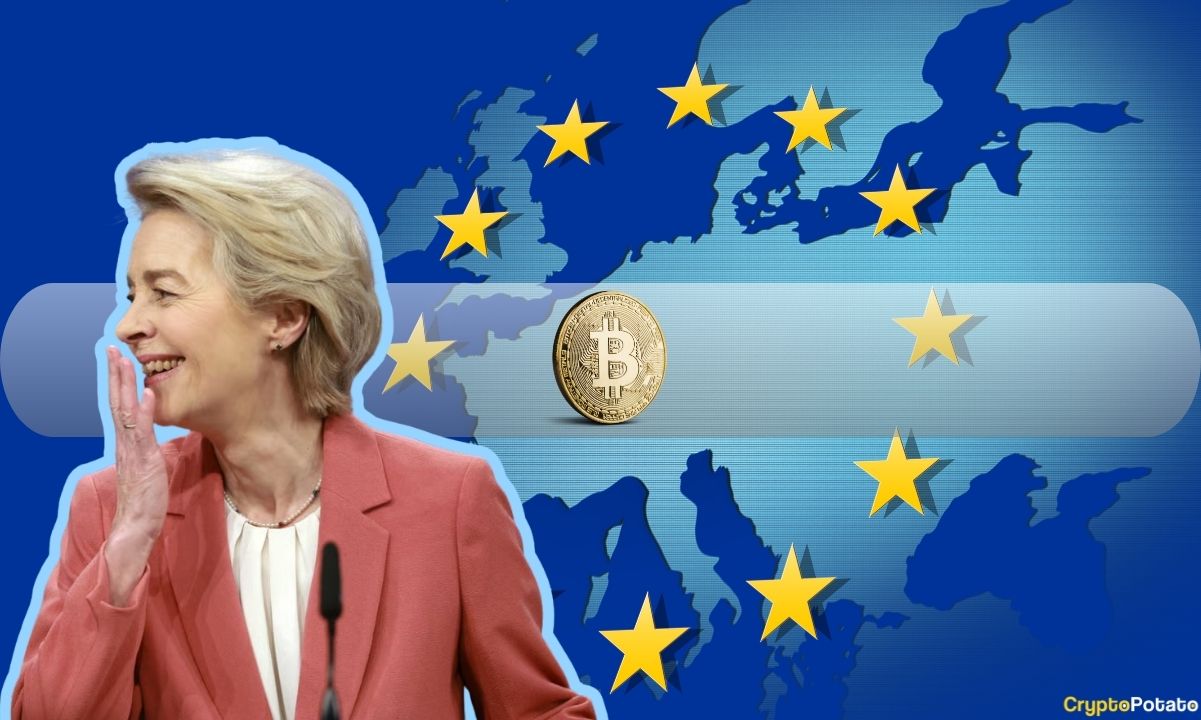
    European Commission President Ursula von der Leyen delivered a significant address at the annual “La Rencontre des Entrepreneurs de France 2026” conference on August 26th, a speech that has rapidly circulated across crypto-focused social media. Her core message underscored a changing global landscape, urging Europe to bolster its independence, industrial capacity, and strategic capital allocation.

    Von der Leyen posited that many foundational assumptions of the European Union’s economic model are no longer valid. She emphasized the need for the continent to become a proactive entity that “produces, invests and protects.” The era of unquestioned access to China, unfettered global trade, American strategic protection, cheap imported energy, and Western technological supremacy, she argued, is over.

    While acknowledging the validity of some of her points from a European perspective – particularly the challenges faced by companies due to high energy costs, regulatory hurdles, and intensifying competition from China – one particular aspect of her speech raises significant concern.

    The European Union currently holds approximately 10 trillion euros in household savings within bank accounts, with a substantial portion of Europe’s overall savings invested beyond the continent. Von der Leyen suggested that these savings need to be mobilized to support European businesses.

    Although the stated intention may be to stimulate economic growth, the language employed reveals a potentially troubling perspective on the relationship between private wealth and governmental objectives.

    The EU Commission President stated that households have €10 trillion sitting “idle” that could be “put to work” to invigorate the economy. This assertion, as reported, has drawn sharp reactions.

    From a policymaker’s viewpoint, household savings appear to be increasingly viewed not merely as personal assets, but as a potential economic catalyst that could be guided, incentivized, or regulated to achieve specific goals.

    This perspective is particularly noteworthy given Europe’s historically high taxation rates. Data indicates that four of the top five countries globally with the highest income tax rates are members of the European Union.

    A significant portion of economic output is already channeled to the state, yet this appears insufficient to meet the Union’s political and industrial ambitions.

    This raises a fundamental question: who should determine the purpose of an individual’s savings?

    After earning money, paying income taxes, and then incurring consumption taxes like VAT when spending, the notion that personal savings should be directed towards government-defined priorities, which may or may not align with individual interests, is a point of contention.

    This is precisely where Bitcoin emerges as a compelling alternative. Despite its inherent complexities, Bitcoin embodies a fundamentally different philosophy.

    As an asset without a central issuer, its total supply cannot be manipulated by institutions like the European Central Bank. Governments cannot arbitrarily increase Bitcoin’s supply to finance industrial expansion, nor can they dictate its issuance schedule.

    The finite supply of 21 million Bitcoin ensures a predictable scarcity. Furthermore, individuals can hold Bitcoin directly, without intermediaries, and if private keys are secured, the asset is theoretically resistant to confiscation and external control.

    This distinction is crucial and gains increasing relevance in the current geopolitical and economic climate.

    It is important to clarify that this analysis does not suggest an immediate intent by European politicians to seize private savings. However, as an EU citizen who has lived in the region for their entire life, the possibility cannot be entirely dismissed, especially in light of contemporary political trends.

    The author recalls attending a Bitcoin conference in Amsterdam where attendees were asked, “Why do you Bitcoin?” This, the author concludes, is their answer.

  • Ethereum Faces Potential Correction as Key Resistance Holds Firm

    Ethereum Faces Potential Correction as Key Resistance Holds Firm

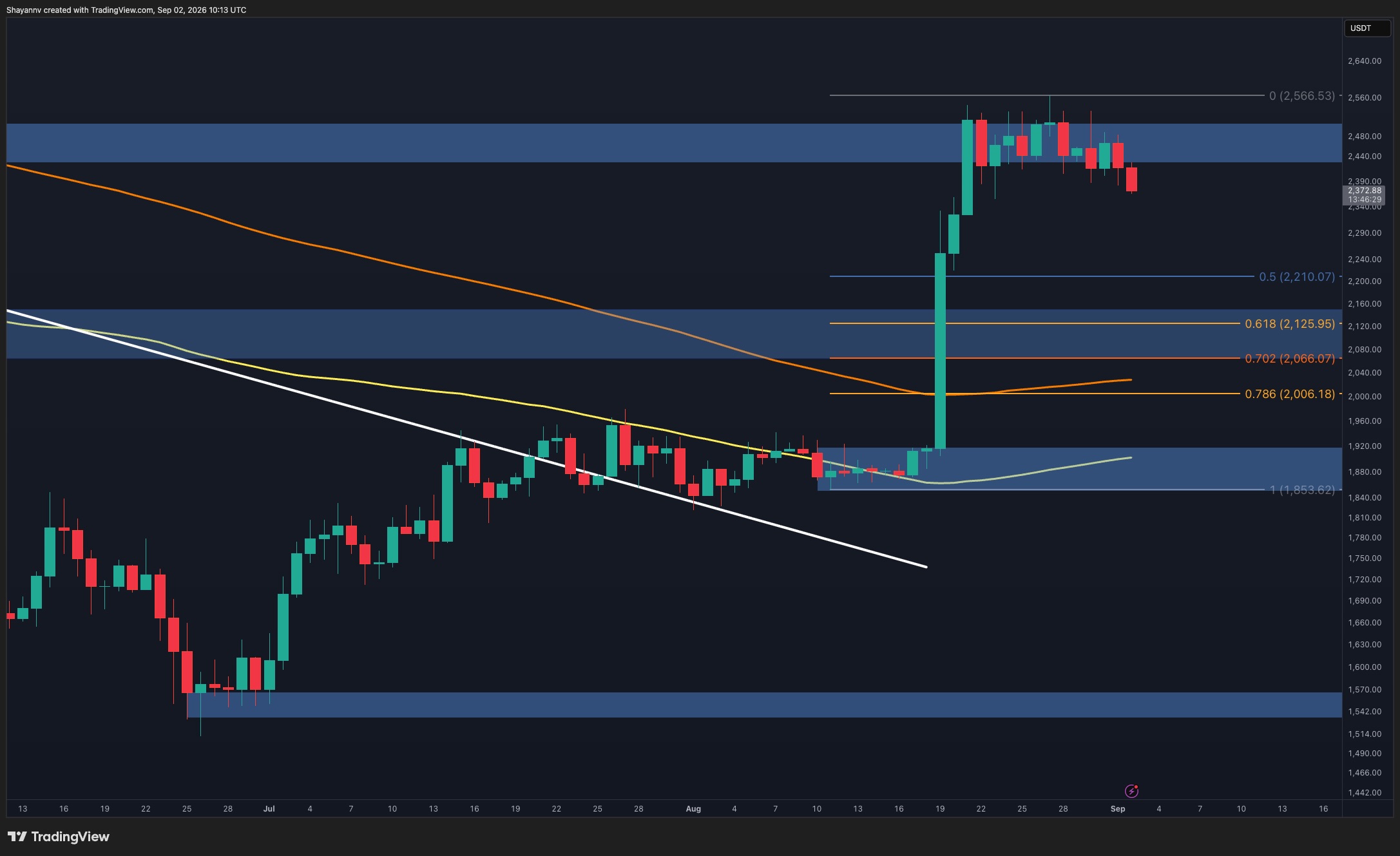
    Ethereum’s price is exhibiting signs of a corrective phase after failing to breach the critical resistance zone between $2.44K and $2.51K. This failure has coincided with a decline below its recent consolidation range, with technical indicators and liquidity levels suggesting potential downside targets. However, the broader bullish structure may remain intact.

    According to the analysis, Ethereum has fallen below the lower boundary of the $2.44K-$2.51K resistance zone and is currently trading near $2.37K. This follows multiple unsuccessful attempts by buyers to establish acceptance above this key area. The initial recent price movement, which propelled Ethereum from its $1.85K-$1.92K base, appears to have been exhausted in the short term, with recent price action indicating a gradual shift in favor of sellers.

    Technical Indicators Signal Corrective Momentum
    The data suggests that a weakening short-term structure could prompt Ethereum to seek liquidity at lower levels before buyers attempt another sustained advance. The market has cooled considerably following the recent rally, which carried ETH directly into the significant resistance zone. The latest rejection from the $2.48K-$2.50K area was followed by a sharp move lower, indicating that sellers are gaining control as the previous consolidation resolves to the downside.

    Identifying Downside Targets
    Technical pullback zones and support levels are being closely monitored. The first major technical pullback zone is identified around $2.21K-$2.31K. Given the vertical nature of the original rally, relatively little price structure was established between the current market and this area, making a deeper retracement toward it increasingly plausible if selling pressure continues. The next significant support is noted around the $2.07K-$2.12K region.

    Fibonacci retracement levels offer a roadmap for a potential correction. The 0.5 level is situated around $2.21K, while the 0.618 retracement near $2.13K overlaps closely with the broader $2.07K-$2.16K support zone. This confluence makes the $2.07K-$2.21K region an important potential demand area during a deeper pullback.

    Liquidity Levels Align with Technical Weakness
    Liquidation data reinforces the possibility of a near-term move lower. With Ethereum trading around the upper-$2.3K region, a substantial concentration of liquidation liquidity is visible immediately beneath the market, roughly between $2.32K and $2.36K. This downside liquidity represents a relevant near-term target on the heatmap. If the current decline continues, the market could be drawn toward this cluster as leveraged positions are cleared and liquidity is collected. Therefore, the liquidation data aligns with the weakening technical structure.

    Broader Context and Uncertainties
    It is important to note that the broader bullish structure would not necessarily be invalidated by such a correction. A recovery back above the $2.44K-$2.51K resistance zone would reduce the immediate bearish pressure and could put the $2.57K local high back in focus. Conversely, a recovery above the $2.43K-$2.51K zone would weaken the corrective scenario and indicate that the latest notable move lacked sufficient follow-through.

    Key uncertainties remain regarding whether buyers will regain control and the exact extent of any potential deeper pullback. The analysis suggests that a sweep of the liquidity below the current price could serve as the first objective of the developing pullback before the market determines whether a larger correction toward the major technical support zones is necessary.

    Why This Matters

    The materials describe a narrow update: Ethereum’s price has fallen below a recent consolidation range after failing to break through the $2. Whether buyers will regain control.

  • ETH Powers RWA Surge, But Can It Top Previous High?

    ETH Powers RWA Surge, But Can It Top Previous High?

    Ethereum’s Dominance in Tokenized Assets Outpaces Price Momentum

    While Ethereum (ETH) experienced a modest 3% dip today, the more significant development for the cryptocurrency’s ecosystem lies not in its immediate price fluctuations but in the substantial $17.5 billion in assets currently secured on its network. Despite this commanding presence in the tokenization of real-world assets (RWAs), this dominance has not yet translated into strong price momentum for ETH itself.

    As of late August 2026, tokenized real-world assets collectively held a distributed value exceeding $38.69 billion. Ethereum commands nearly 45% of this burgeoning market, a share more than triple that of BNB Chain’s $5.8 billion and quadruple Solana’s $4.0 billion.

    Key players in the tokenization space, such as Securitize and Ondo, have established their primary platforms on Ethereum. Furthermore, BlackRock’s BUIDL fund, a significant institutional offering, initially launched on Ethereum before expanding to six other blockchain networks. This indicates that Ethereum has solidified its position as the foundational trust layer for institutional adoption in this sector.

    However, institutional trust and market momentum operate on different dynamics. ETH has been trading within a narrow range for the past 48 hours, leaving traders more focused on potential price movements than on Ethereum’s share of the RWA market.

    Current Market Performance and Technical Outlook

    ETH is currently priced at $2,360, marking a 3% decrease over the last 24 hours. Intraday trading has seen fluctuations between $2,362 and $2,428, a relatively tight band for an asset attracting significant macroeconomic attention. Despite the cooling spot price, institutional accumulation patterns persist, a divergence that typically precedes a notable price movement in one direction.

    Analysts have identified $2,550 as a critical technical resistance level, acting as a ceiling that separates the current consolidation phase from a potential breakout. Immediate support levels are positioned at $2,438, followed by $2,383 and $2,350. A weekly close above $2,438 would maintain a bullish outlook for September and pave the way towards the $2,800–$2,920 range. Conversely, a breach below $2,350 could expose ETH to the $2,200–$2,000 zone.

    The relative strength of ETH against Bitcoin (BTC) is likely to be a deciding factor in which of these scenarios unfolds.

    Investor Sentiment and Rotation Dynamics

    ETH holders, witnessing a fourth consecutive day of range-bound trading, may be experiencing a degree of restlessness. While the current consolidation below $2,550 does not signal a collapse, it also lacks the conviction typically associated with strong upward momentum.

    Given Ethereum’s substantial market capitalization, even a decisive breakout to $2,800 represents a modest percentage gain compared to the potential returns offered by early-stage tokens. This dynamic is currently driving a rotation of capital towards presale opportunities.

    Emerging Presale Opportunities

    Maxi Doge ($MAXI), an ERC-20 meme token, has entered the market, drawing inspiration from “gym-bro” trading culture and embracing high-leverage trading. Priced at $0.0002836, the project has already raised $4.8 million in its presale phase, demonstrating significant investor interest without the backing of major exchange listings.

    Notable features of Maxi Doge include trading competitions exclusively for holders, with rewards for leaderboard performance, and a dedicated Maxi Fund treasury allocated for liquidity and strategic partnerships. An early-buyer incentive of a dynamic 65% APY for staking is currently active. Investors are advised to conduct thorough research before committing capital to Maxi Doge.

  • SEC Proposes Landmark Transfer Agent Rules Amid Tokenization Boom

    SEC Proposes Landmark Transfer Agent Rules Amid Tokenization Boom

    SEC Proposes Sweeping Overhaul of Transfer Agent Rules, Embracing Blockchain

    The Securities and Exchange Commission (SEC) has unveiled its first significant update to transfer agent regulations since the early 1980s, proposing a comprehensive rewrite that extensively addresses blockchain recordkeeping and tokenized securities. The 421-page release, published Tuesday, signals a major shift in how the agency views the management of ownership records for financial instruments.

    Transfer agents are responsible for maintaining the official registry of security ownership, overseeing the issuance, cancellation, and transfer of securities. The current framework for these rules was largely established in the late 1970s and early 1980s.

    The SEC’s release acknowledges a growing trend of market participants seeking to integrate blockchain-native, or “onchain,” transfer agents into the U.S. market. Firms are actively developing models for blockchain-based recordkeeping, tokenized fund administration, and cross-chain interoperability. These innovations would necessitate transfer agents maintaining securityholder records on distributed ledgers and operating processes driven by smart contracts.

    Proposed amendments to Form TA-2 would require transfer agents to disclose the number of issues where their master securityholder file resides on a distributed ledger. Furthermore, tokenized issues would need to be categorized as either issuer-sponsored or third-party-sponsored. The SEC highlighted this distinction in a January 2026 staff statement, linking it to varying investor risks. Tokenization agents and distributed ledger platforms are now included alongside traditional service providers like banks and printers on a checklist.

    The commission is soliciting feedback on how to handle records stored solely on ledgers not exclusively controlled by the agent. It also seeks input on whether current rules permit agents to link a wallet address and quantity held to offchain records of a holder’s name and address, thereby enabling an onchain transfer to simultaneously update the master file.

    Commissioner Hester Peirce noted that the proposal has been in development for over a decade and encouraged comments on its implications for tokenization. The SEC last reviewed these rules in a 2015 concept release.

    Commissioner Mark T. Uyeda commented that the lack of rulemaking for over a decade led the Commission to adopt a “regulation-by-enforcement approach,” which he described as a fragmented strategy that offered neither clarity nor predictability. He added that distributed ledger technology and tokenization, which were nascent in 2015, are now fundamentally reshaping the core functions of transfer agents.

    SEC Chairman Paul S. Atkins stated that the updated rules would reflect the industry’s adoption of “electronic communications and blockchain technology.” The proposal also aims to eliminate an existing exemption rule, establish a uniform retention period for most records, and redefine the safeguarding rule as a risk-management requirement encompassing cybersecurity and business continuity.

    In a separate announcement, the SEC revealed the agenda for a September 17 roundtable discussion on 24-hour trading. The event will feature panelists from Robinhood, Nasdaq, DTCC, and overnight trading venues Blue Ocean and 24X. Public comments on the transfer agent proposal are due 60 days after its publication in the Federal Register.

  • OpenPayd Secures 43 US State Licenses, Integrates MSB USA Inc. to Bolster North American Operations

    OpenPayd Secures 43 US State Licenses, Integrates MSB USA Inc. to Bolster North American Operations

    OpenPayd has significantly expanded its regulatory presence in the United States by integrating MSB USA Inc. into its group and securing 43 state money transmitter licenses (MTLs). This strategic move aims to bolster its position in the US market and establish a more comprehensive regulatory foundation for its North American operations.

    The integration of MSB USA Inc., a US-based, state-licensed money services business, was finalized after obtaining the necessary regulatory approvals. This expansion enhances OpenPayd’s geographic reach, enabling it to better serve global clients already operating in the US or planning market entry.

    Financial Performance and Market Ambitions

    As of July 31, 2026, OpenPayd reported strong financial performance, with its annual recurring revenue (ARR) exceeding $96 million and its annualized transaction volume surpassing $300 billion. The company stated that it remains profitable and has not sought external capital. Currently, OpenPayd serves over 1,200 clients worldwide, including prominent financial and crypto firms such as Kraken, eToro, OKX, and B2C2.

    Further underscoring its growth and market ambitions, OpenPayd is preparing to enter the US public markets through a previously announced business combination with Titan Acquisition Corp. The companies anticipate this combination will result in OpenPayd becoming a publicly listed company on the Nasdaq under the ticker symbol “OP.” The transaction is expected to value OpenPayd at an equity value of up to $1.145 billion on a pro forma basis. The closing of this business combination is anticipated in the fourth quarter of this year, subject to customary closing conditions, including shareholder approval from Titan Acquisition Corp.

    Global Regulatory Footprint

    This US expansion follows OpenPayd’s recent authorization under the European Union’s Markets in Crypto-Assets (MiCA) framework, granted by the Malta Financial Services Authority. This dual regulatory footing across fiat and digital assets in both the US, UK, and Europe positions OpenPayd as a provider of regulated financial infrastructure on both sides of the Atlantic.

    OpenPayd Founder, Dr. Ozan Ozerk, commented on the significance of infrastructure in finance, stating, “Every era of finance has been defined by its infrastructure: correspondent banking wired together the twentieth-century economy; programmable money will power the twenty-first. The U.S. is at the forefront of this evolution, and with regulated foundations now spanning the U.S., U.K. and Europe – across both fiat and digital assets – OpenPayd has something few providers can claim: regulated infrastructure spanning both fiat and digital assets, on both sides of the Atlantic.”

    While the business combination with Titan Acquisition Corp. is progressing, certain customary closing conditions, including shareholder approval, are still pending.

    Broader Context

    Source materials place the factual news in this context: OpenPayd has announced expanded its regulatory presence in the United States after completing the integration of MSB USA Inc. into its group.