Category: Uncategorized

  • XRP Market Analysis: Divergent Price and Sentiment Signals

    XRP Market Analysis: Divergent Price and Sentiment Signals

    XRP is currently trading around $1.07, having experienced a decline of over 7% in the past week. This price action occurs against a backdrop of significantly elevated social sentiment, with Santiment data indicating a ratio of 3.02 bullish comments for every bearish one over the last five weeks. This divergence between price and sentiment is often interpreted as a contrarian signal, suggesting that current optimism may not align with underlying price trends, a situation that introduces uncertainty regarding XRP’s immediate future.

    The broader cryptocurrency market has seen some recovery, with the total market value rising to approximately $2.13 trillion. Centralized exchange spot trading volumes also increased in June by 15.3% to $1.11 trillion, suggesting improving market participation. However, XRP’s recovery momentum has not matched that of other major cryptocurrencies like Ethereum, which has reclaimed the $1,800 mark. This suggests that buyers may be exercising selectivity in the current market, contributing to the ambiguity surrounding XRP’s independent trajectory.

    Analysts point to persistent seller pressure near key resistance levels for XRP, particularly around the $1.35 mark. Each attempt to breach this level has attracted fewer buyers, reinforcing it as a significant ceiling rather than a launchpad for further gains. The market has also experienced substantial liquidations, with over $160 million in leveraged positions being cleared, including approximately $108 million in short positions, underscoring ongoing volatility and trader activity.

    Analyzing Potential Market Scenarios

    Looking ahead, market observers suggest the most likely scenario involves XRP trading within a range of $1.00 to $1.20 as sentiment gradually cools. This period of consolidation could potentially build a more stable foundation for future price movements. However, uncertainties persist. A bearish scenario could emerge if support just above the $1.00 level fails, especially during a wider market selloff, potentially leading XRP to revisit the high $0.90s. This area is considered by some analysts as the next meaningful support level.

    For XRP to shift its trend convincingly, it would need to reclaim the $1.30 to $1.35 zone with expanding trading volume. While a bounce driven by Bitcoin’s strength would be encouraging, analysts suggest XRP needs to demonstrate independent momentum to solidify any recovery. The current setup for XRP, and many mid-to-large-cap altcoins, presents asymmetric downside risk with capped upside, particularly with a crowd that appears to be already positioned for gains.

    Alternative Investment Landscape

    In this environment, a rotation into earlier-stage infrastructure projects where price discovery is ongoing has been noted. For instance, LiquidChain, a Layer 3 infrastructure project focused on cross-chain liquidity, is currently in its presale phase, priced at $0.01479, having raised $900,000 to date. This project aims to fuse liquidity from Bitcoin, Ethereum, and Solana into a single execution environment.

    Ultimately, XRP’s current market position is characterized by ambiguity. While social sentiment is high, price action and technical resistance suggest caution. Investors should monitor buying pressure, resistance levels, and broader market conditions to navigate the potential outcomes for XRP, acknowledging that the extent of future buying pressure and the possibility of a wider market selloff remain key uncertainties.

    Why This Matters

    The materials describe a narrow update: XRP is trading around $1. Whether XRP can overcome seller pressure and resistance levels.

    Broader Context

    Source materials place the market analysis in this context: XRP prediction chatter is heating up even as the price slips, which is usually when markets like to play tricks.
  • June CPI Shows Monthly Drop, But Core Inflation and Fed Policy Uncertainty Remain

    June CPI Shows Monthly Drop, But Core Inflation and Fed Policy Uncertainty Remain

    The June Consumer Price Index (CPI) report indicated a notable monthly decrease, with the headline figure falling 0.4% month-over-month, marking the largest such drop since April 2020. This brought the annual inflation rate to 3.5%, falling below the Dow Jones consensus estimate of 3.8%. Following the announcement, Bitcoin prices experienced an increase.

    However, Federal Reserve policy considerations continue to center on core CPI, which excludes volatile food and energy prices. Core CPI remained flat month-over-month in June, holding an annual rate of 2.6%, which was below the forecast of 2.9%. This distinction is significant, as policymakers often view core and services inflation as more reliable indicators of longer-term inflationary trends. The energy index was a primary driver of the headline drop, slumping 5.7% in June, with gasoline and fuel oil prices falling more than 9%. Services ex-energy were flat, while shelter costs rose 0.1% and transportation services declined 0.3%.

    Despite the headline CPI beat, the Federal Reserve is widely expected to hold interest rates steady at its upcoming July FOMC meeting. Looking ahead, a 25 basis point rate hike in September is still anticipated by the market, which would bring the overnight rate to a range of 3.5%–3.75%. Fed Governor Christopher Waller has indicated that it would require several months of positive inflation readings to convince him that inflation is consistently returning to the Fed’s 2% target.

    Market participants are navigating this data divergence. While the softer headline inflation could theoretically influence rate-cut expectations, the Federal Reserve’s focus on core metrics suggests a continued cautious stance. This creates an environment of uncertainty for asset prices, including Bitcoin. Traders are monitoring key technical levels for Bitcoin, with nearby resistance around $64,000 and a downside reference point at $62,000, followed by prior support around $60,000. ETH is also facing resistance around $1,800.

    Some analysts suggest that while the headline print may appear constructive for cryptocurrencies in the short term, the underlying inflationary pressures, as indicated by core CPI, mean that market positioning could be vulnerable. The potential for a rapid unwinding of bullish positions exists if macroeconomic expectations reprice based on the Federal Reserve’s persistent focus on bringing inflation back to target. The path forward for inflation and the Federal Reserve’s response remain key uncertainties for investors and traders.

    Why This Matters

    The June CPI report showed a significant monthly drop in headline inflation, but the Federal Reserve’s continued focus on core inflation and the expectation of a September rate hike introduce persistent uncertainty for market participants, including Bitcoin. The distinction between headline and core inflation is crucial, as policymakers view core and services inflation as more reliable indicators of longer-term trends. While the headline beat might offer short-term optimism for risk assets, the underlying inflationary pressures indicated by core CPI suggest that market volatility and uncertainty are likely to persist.

    Broader Context

    Source materials indicate that the June CPI data showed a 0.4% month-over-month decrease, the largest since April 2020, bringing the annual inflation rate to 3.5%, below the Dow Jones consensus of 3.8%. Bitcoin prices rose following this announcement. However, core CPI, excluding food and energy, remained flat month-over-month at a 2.6% annual rate, a figure more closely watched by the Federal Reserve. Despite the headline figure, the Fed is widely expected to hike rates by 25 basis points in September. Fed Governor Christopher Waller has stated that several months of positive readings are needed to suggest inflation’s return to the 2% target.

  • U.S. Government Transfers Seized Crypto to Coinbase Prime Amid Unexplained Ambiguity

    U.S. Government Transfers Seized Crypto to Coinbase Prime Amid Unexplained Ambiguity

    The U.S. government has transferred approximately $288 million worth of seized Bitcoin and Ethereum to Coinbase Prime, according to on-chain tracker Arkham. The exact purpose of this transfer remains officially unexplained, leading to market speculation.

    The transaction, which occurred on Monday, July 13, 2026, involved roughly 3,800 BTC valued at $235 million and about 30,000 ETH valued at $53 million. The Bitcoin originated from funds seized in criminal cases linked to Ryan Farace, known as “Xanaxman,” and the defunct exchange BTC-e. These assets were routed through intermediary wallets before reaching Coinbase Prime. The Ethereum was tied to a money-laundering case involving Oracle employee Brian Krewson and was sent directly to a deposit address.

    Coinbase Prime was selected by the U.S. Marshals Service in 2024 to custody and trade forfeited digital assets. This established relationship suggests the transfers could represent the government moving assets into managed custody. However, the absence of a public explanation for these specific transfers has led some market observers to interpret them as a potential signal for a sell-off.

    “It’s not yet clear whether these inflows are in preparation for a sale or simply for the consolidation and custody of seized assets,” said Tim Sun, Senior Researcher at crypto exchange HashKey. He noted that large holders typically keep coins in cold storage, making such movements a subject of scrutiny.

    The context of these transfers is influenced by recent government initiatives. U.S. President Donald Trump’s executive order in March 2025 established a Strategic Bitcoin Reserve, stipulating that Bitcoin deposited into it “shall not be sold.” Crucially, the coins moved on Monday originated from active criminal cases and are handled separately from this reserve. Only Bitcoin that has “completed the final forfeiture process” is eligible for the reserve, with court-directed exceptions for law enforcement or victim restitution.

    Ethereum, unlike Bitcoin, is not subject to the Strategic Bitcoin Reserve’s rules. It falls under a separate Digital Asset Stockpile managed by the Treasury Department, which grants the government “greater freedom of disposal,” according to Sun.

    Adding to the complexity, the Strategic Bitcoin Reserve itself faces administrative and legislative uncertainty. Bills aimed at codifying the reserve with a 20-year holding rule have stalled in Congress, and the Treasury and Commerce departments are reportedly contesting control over these assets. Arkham continues to track U.S. government wallets holding approximately $20.6 billion in crypto, including 324,552 BTC, indicating that the $288 million transfer represents a relatively small portion of the total government holdings.

    Market participants are advised to distinguish between Bitcoin held within the reserve and the broader balance-sheet holdings of the U.S. government. The current transfers stem from active criminal cases and are not directly linked to the reserve’s non-sale policy. The lack of official explanation and ongoing administrative disputes contribute to the ambiguity surrounding the government’s intentions with these seized digital assets.

    Why This Matters

    The materials describe a narrow update: The U. Whether the government intends to sell the transferred crypto.

    Broader Context

    Source materials place the factual news in this context: The U.S. government transferred $288 million in seized Bitcoin and Ethereum to Coinbase Prime on Monday, on-chain tracker Arkham showed, reviving speculation that Washington could be preparing to sell crypto it has pledged to hold.

  • Ripple Labs Joins UK Treasury Taskforce on Tokenized Wholesale Finance

    Ripple Labs Joins UK Treasury Taskforce on Tokenized Wholesale Finance

    Ripple Labs has become a member of the UK HM Treasury’s Wholesale Digital Markets taskforce, a 54-firm initiative focused on exploring the potential of tokenized wholesale finance. The taskforce estimates that tokenized wholesale finance could contribute up to £33 billion to the UK’s annual economic output by 2035. Ripple’s participation is as a taskforce member, not an advisory lead or designated pilot operator, providing it a voice in shaping tokenization standards for UK wholesale markets.

    The taskforce is currently accepting industry feedback on its priorities and timelines until September 4, with its pilot program slated to launch in spring 2027. This move highlights the UK’s strategic push to innovate within financial markets through tokenization.

    The taskforce’s composition, featuring major financial institutions, signals a focus on institutional finance rather than crypto-native advocacy. Ripple’s strategic involvement aims to influence a market projected to scale significantly by mid-decade, especially if UK and US tokenization standards converge. Such convergence, particularly for cross-border repo and collateral settlement, could enhance the applicability of existing institutional infrastructure for cross-border payments.

    In parallel, Ripple has shared further details about the pressures it faced following the U.S. Securities and Exchange Commission’s (SEC) lawsuit filed in December 2020. CEO Brad Garlinghouse reported that company leadership considered shutting down Ripple within days of the SEC’s filing. Chief Technology Officer David Schwartz stated that external legal counsel advised that the business could not be saved and recommended executives seek a deal for their own protection. Garlinghouse later disclosed that Ripple incurred approximately $150 million in legal fees throughout the four-year legal battle. Schwartz subsequently clarified that some reports misinterpreted his comments, emphasizing that he never suggested Ripple was on the verge of shutting down.

    These disclosures offer retrospective context, framing the legal risk premium that influenced XRP’s pricing from 2020 until the case’s resolution. Regarding market performance, XRP is currently holding above a support band between $1.04 and $1.11. While recent price action shows three-wave structures, a reported bullish pattern has not yet emerged. A sustained hold above this support could lead toward $1.19 and then $1.25, whereas a break below would reinforce the broader downtrend. Year-to-date in 2026, XRP has increased by 3.89%, continuing a trend of positive annual returns: 47.6% in 2023, 31.2% in 2024, and 35% in 2025.

    Ripple’s participation in the UK taskforce adds a concrete regulatory and institutional data point to its positioning, though it is not expected to alter near-term XRP technicals. A more durable question remains whether Ripple’s early involvement in this government-backed tokenization program, alongside institutions managing trillions in assets, will translate into protocol-level adoption when the pilot program goes live in spring 2027. The UK’s established capital markets and credible regulatory system are considered foundational for its potential to become a global leader in tokenized wholesale finance.

    Why This Matters

    The article details Ripple Labs’ membership in the UK HM Treasury’s Wholesale Digital Markets taskforce, a 54-firm initiative exploring the potential of tokenized wholesale finance. It also provides retrospective context on past legal challenges faced by Ripple and their financial implications, framing past pricing pressures. The long-term question of whether Ripple’s early presence in the government-backed tokenization program will translate into protocol-level adoption remains uncertain.

    Broader Context

    Ripple Labs has joined the UK HM Treasury’s Wholesale Digital Markets taskforce, a 54-firm initiative that estimates tokenized wholesale finance could add up to £33 billion to UK annual economic output by 2035. Ripple’s participation is as a taskforce member, not an advisory lead or designated pilot operator.

  • XRP Nears End of Year-Long Correction: What’s Next?

    XRP Nears End of Year-Long Correction: What’s Next?

    XRP Nears End of Year-Long Correction, Analysts Predict Potential Bottom

    It was a year ago this month that the cross-border token XRP captured significant attention, surging to an all-time high after seven years of stagnation, a feat many deemed improbable.

    However, the subsequent period has seen a severe correction. In the months following its peak, XRP shed the $3.00 and $2.00 support levels, ultimately plummeting to $1.01 during a market downturn in late June and early July. Despite a minor rebound to $1.07 as of press time, the token’s price remains significantly depressed, trading over 70% below its previous all-time high.

    Amidst this downturn, analyst CasiTrades has offered a positive outlook for XRP bulls, suggesting that the token’s year-long correction may be nearing its conclusion.

    In her latest analysis of XRP’s price performance, CasiTrades identified a potential final five-wave impulse down on lower timeframes, which could lead the token to a major macro support level at $0.87. This sentiment is echoed by several other analysts, who anticipate XRP could bottom out somewhere between $0.80 and $0.90.

    CasiTrades’ projection for the anticipated downward movement outlines a sharp initial decline towards $0.93. This would be followed by a bounce to $1.00, which is expected to act as significant resistance. A rejection at this level, she posits, is likely to result in the aforementioned bottoming out at $0.87.

    “That final move would complete the macro Wave 2 correction and finish off the correction we’ve spent the last year building! The odds still favor one final low into support before the next major trend begins!” CasiTrades stated.

    Interestingly, analyst ChartNerd has presented a similar prediction for XRP, indicating that a series of lower highs could signal further trouble and push the token well below $1.00.

    CasiTrades, along with other analysts, believes this final downward leg is crucial for XRP to cleanse its current market structure and shake out “weak hands” before entering its next expansion phase. MikybullCrypto has also joined the optimistic chorus, suggesting that the token is forming a “massive” pattern.

    While MikybullCrypto has not provided a specific short-term target, he has a history of making bullish XRP forecasts, including a potential run to a new all-time high of $4.00 and beyond.

    $XRP
    What is coming for XRP will be massive
    I love the pattern formation pic.twitter.com/T7ZIHRmtzJ
    — MikybullCrypto (@MikybullCrypto) July 14, 2026

  • FLEOA Endorses Digital Asset Market Clarity Act with Conditions on DeFi Accountability

    FLEOA Endorses Digital Asset Market Clarity Act with Conditions on DeFi Accountability

    The Federal Law Enforcement Officers Association (FLEOA) has announced its endorsement of the Digital Asset Market Clarity Act (H.R. 3633), a legislative proposal concerning digital assets and decentralized finance (DeFi). However, the endorsement comes with specific demands aimed at strengthening accountability within DeFi systems and preserving federal investigative powers, as the bill faces a legislative deadline with the Senate’s August 8 recess approaching.

    The FLEOA outlined its conditions in a letter to the U.S. Senate Committee on Banking, Housing, and Urban Affairs. The association urged lawmakers to narrow DeFi protections, clarify accountability in DeFi, prevent firms from avoiding regulation by claiming decentralization, revise “specific intent” language for liability, and explicitly affirm that the bill does not curtail existing federal investigative powers. These demands represent key points of negotiation as the legislative session nears its recess.

    The approaching August 8 recess acts as a de facto deadline for advancing the bill this legislative session. Senator Cynthia Lummis framed the urgency on July 8, stating that passing the Clarity Act is likely the last chance to enact significant digital asset legislation before 2030. She warned that failure to pass the bill could result in other countries setting the rules for digital assets, leaving the U.S. to catch up for a decade.

    In June, concerns about Section 604 of the bill were raised by four law enforcement organizations, including the National District Attorneys Association and the National Association of Assistant United States Attorneys, prompting an invitation from the White House for a meeting in late June. During this period, the Major County Sheriffs of America shifted from opposition to a neutral stance, and the FLEOA moved towards active support with conditions.

    Further signaling support, the National Organization of Black Law Enforcement Executives (NOBLE) backed the bill nine days before the FLEOA’s statement. These sequential endorsements by law enforcement groups are being used to counter arguments that the Clarity Act would weaken the government’s ability to police crypto crime.

    Despite the FLEOA’s conditional endorsement, significant uncertainties remain regarding the bill’s final form and passage. The Banking and Agriculture Committee versions of the bill still require reconciliation before a floor vote can proceed. The outcome of negotiations concerning the FLEOA’s specific demands, particularly the DeFi liability language, will be crucial in determining the bill’s path forward.

    While proponents view the Clarity Act as progress toward balancing technological innovation with public safety, critics argue it could weaken the government’s ability to police crypto crime. For traders, the bill aims to strengthen the regulatory framework for digital assets, enhance DeFi accountability, and preserve investigators’ existing powers. The handling of DeFi liability language remains a central focus of scrutiny as legislative efforts continue.

    Why This Matters

    The materials describe a narrow update: The FLEOA announced its endorsement of the Digital Asset Market Clarity Act, a bill concerning digital assets and decentralized finance (DeFi). Whether the specific demands of the FLEOA will be incorporated into the final version of the Digital Asset Market Clarity Act.

    Broader Context

    Source materials place the factual news in this context: The FLEOA’s endorsement is conditional in practice.

  • Institutional Investors Increasingly Utilize On-Chain Financial Infrastructure

    Institutional Investors Increasingly Utilize On-Chain Financial Infrastructure

    Institutional investors are increasingly shifting from passive cryptocurrency exposure to actively utilizing on-chain financial infrastructure, including tokenized real-world assets (RWAs) and real-time settlement networks. This evolution, observed over the past 12 to 18 months, signifies a maturation of the digital asset industry and the development of specific regulations, according to Iskandar Vanblarcum, Managing Director of Crypto.com.

    Vanblarcum stated in a recent interview that institutions are moving beyond simply holding assets like Bitcoin or investing in ETFs. Instead, they are actively engaging with underlying blockchain technology. This includes leveraging tokenized RWAs as collateral for trading and utilizing blockchain networks for faster, more efficient settlement processes. These shifts are driven by the inherent benefits of blockchain technology, such as reduced friction, 24/7 access, and enhanced liquidity.

    Key Developments in On-Chain Utilization

    Firms are now integrating tokenized RWAs, such as BlackRock’s BUIDL tokenized fund, directly as active trading collateral. This integration serves as a blueprint for how traditional finance asset issuers can merge with regulated crypto platforms to create a more efficient financial system. Traditional banks are also exploring blockchain rails for resilient, low-cost cross-border payment ecosystems, with companies like Nedbank mentioned in this context. Furthermore, firms are adopting real-time blockchain settlement networks, like Lynq, to optimize capital efficiency through technologies such as “Yield-in-Transit.”

    Crypto.com’s Strategic Focus

    Crypto.com is actively focusing on expanding its offerings in tokenized RWAs and regulated prediction markets. Vanblarcum highlighted that the next era of finance will be “rebuilt on-chain,” with RWAs, collateral utility, and regulated prediction markets poised to reshape the global financial landscape. He noted that institutions demand high regulatory standards, strict security, and robust compliance frameworks.

    Prediction markets, in particular, are emerging as a significant area of interest. Vanblarcum likened their current stage to that of derivatives in the 1980s, with institutional capital recognizing their value but seeking regulated and secure platforms. Crypto.com has positioned itself to meet this demand, having secured a full suite of U.S. CFTC derivatives licenses, making it the first major crypto platform globally to achieve this.

    Challenges and Future Outlook

    Despite these advancements, challenges remain. Fragmented global regulatory frameworks and the legal classification of certain digital asset products may still be holding some investors back. Institutions will likely need to invest in specialized infrastructure to manage evolving compliance standards and potential technological vulnerabilities. Nevertheless, the trend indicates a growing convergence between traditional finance and digital assets, driven by the pursuit of efficiency, programmability, and 24/7 market access offered by blockchain technology.

    Why This Matters

    The shift by institutional investors towards active on-chain financial infrastructure utilization, as reported by Crypto.com’s Managing Director Iskandar Vanblarcum, highlights a significant maturation in the digital asset industry. This move is underpinned by the perceived benefits of blockchain technology, such as reduced friction and faster settlement, and is facilitated by the integration of tokenized real-world assets and the development of regulated prediction markets. However, uncertainties persist regarding fragmented global regulatory frameworks and the legal classification of certain digital asset products, which may influence the pace and extent of future institutional adoption.

    Broader Context

    This development is occurring within a broader market context where traditional financial entities are increasingly exploring and integrating blockchain technology to enhance efficiency and create new financial instruments. The evolving regulatory landscape plays a crucial role in shaping institutional participation, with firms like Crypto.com seeking to operate within established compliance frameworks.

  • Grok AI’s XRP Price Prediction: Analyzing Potential Amidst Significant Uncertainty

    Grok AI’s XRP Price Prediction: Analyzing Potential Amidst Significant Uncertainty

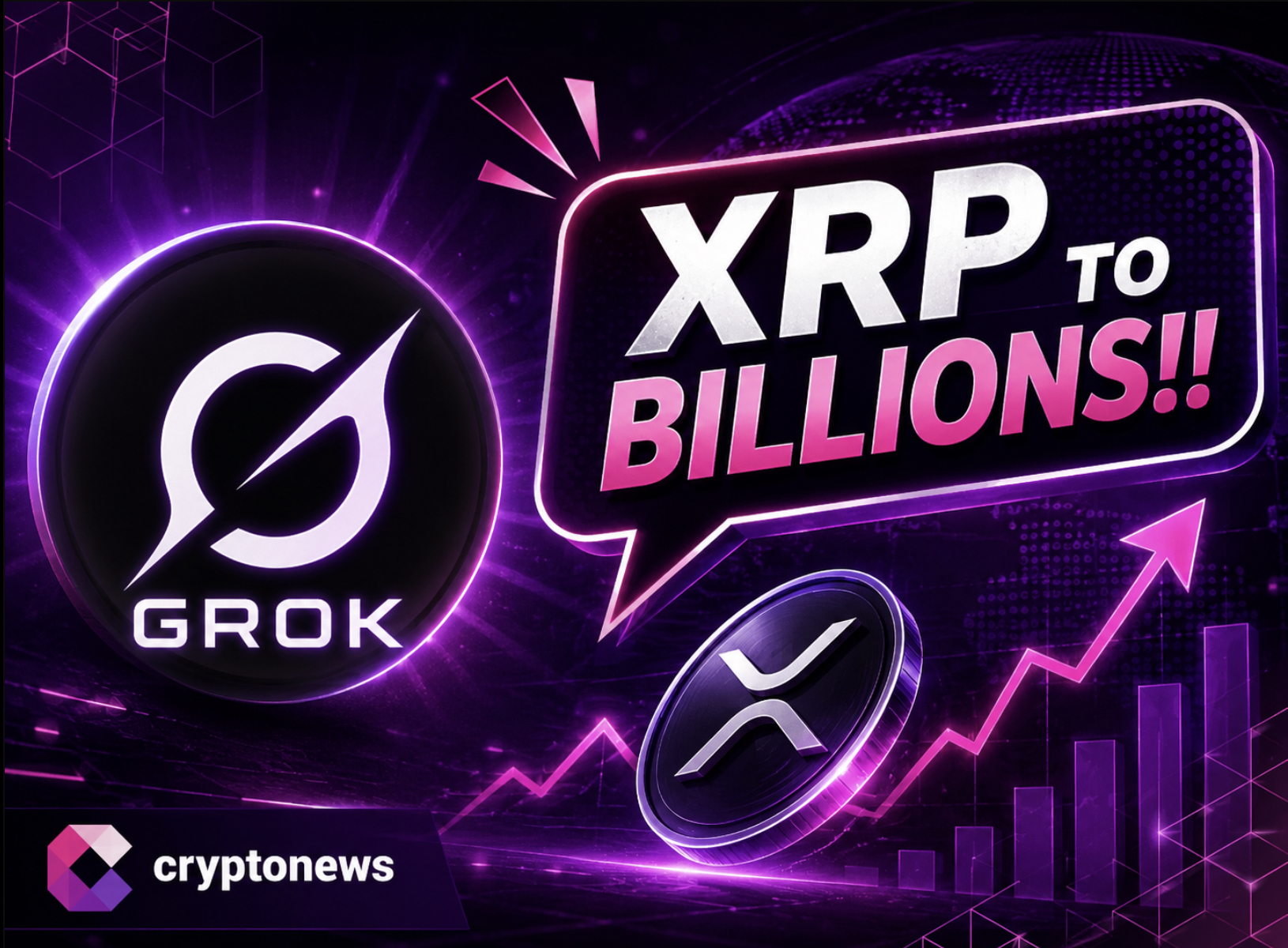
    Interpreting AI-generated price targets for digital assets like XRP involves navigating significant uncertainty, as predictions often outpace verifiable market indicators and technological adoption. Grok AI has issued a forecast suggesting XRP could reach three-digit prices by the end of 2026, a projection that warrants a closer look at its underlying assumptions and the broader market context.

    Currently trading around $1.06, XRP has experienced substantial corrections from previous highs, which reached approximately $3.65. According to Grok AI, its prediction is based on several factors, including XRP’s utility in facilitating fast and low-cost global payments, the growth of tokenized real-world assets on the XRP Ledger (XRPL) surpassing $4 billion, increasing institutional interest in cross-border settlements, and the potential for favorable regulatory developments. These elements, Grok AI suggests, could collectively drive XRP’s value significantly higher.

    The AI’s forecast posits that in a robust bull market, coupled with widespread adoption for remittances and tokenized assets, XRP could realistically achieve three-digit prices by the close of 2026. Some analysts, such as Pumpius, have even posited a future XRP valuation of $1,000 by 2027, contingent on optimal conditions including bank integration, regulatory support, and a rotation into altcoins. However, these projections are subject to considerable uncertainty.

    XRP’s foundational strengths lie in its role as a bridge asset for cross-border transactions, notably within Ripple’s On-Demand Liquidity network. The XRPL has demonstrated its capability in handling tokenized assets, with a current valuation exceeding $4 billion. The potential for improved regulatory clarity and the passage of pro-crypto legislation are also cited as factors that could encourage greater institutional adoption of XRP.

    Beyond the XRP prediction, the source material also mentions Bitcoin Hyper, a Bitcoin Layer 2 chain. It is described as a solution for real-time Bitcoin activity and ecosystem growth, with a presale price of approximately $0.0137 for its HYPER token. Over $32.9 million has reportedly been raised for the Bitcoin Hyper presale, which is noted to be in its final stages, offering potential staking rewards of 36%.

    However, the path to achieving ambitious price targets for XRP is fraught with challenges. The exact timing and magnitude of any potential price surge remain speculative. Future regulatory landscapes and the extent of institutional embrace are not guaranteed. Furthermore, the ambitious price points of $15,000 or $1,000 for XRP, linked to scenarios like replacing the SWIFT system, are highly speculative and lack concrete evidence for their realization.

    Similarly, the projected growth of Bitcoin Hyper in 2026 and beyond is an outlook rather than a certainty. The cryptocurrency market is inherently volatile, and predictions, whether from AI or human analysts, should be approached with a critical perspective. The resolution of past legal matters concerning XRP has removed some obstacles, but the broader market dynamics and adoption rates will ultimately shape its trajectory.

    In conclusion, while Grok AI’s prediction highlights potential upside for XRP based on its technological utility and evolving market conditions, significant uncertainties persist. Investors and market observers are advised to consider the inherent risks and speculative nature of such forecasts, focusing on fundamental factors and verifiable developments rather than solely on AI-generated price targets.

    This analysis is particularly relevant given the current crypto market’s volatility. XRP’s utility in global payments and the growth in tokenized assets on the XRPL, which has surpassed $4 billion, are key factual underpinnings. However, the speculative nature of price predictions, even from AI, underscores the need for caution.

    Why This Matters

    The materials describe a narrow update: Grok AI has issued a price prediction for XRP, forecasting it could reach three-digit figures by the end of 2026, citing factors like its utility in global payments, growth in tokenized assets, institutional interest, and potential regulatory tailwinds. The exact timing and magnitude of XRP’s potential price increase.

  • Crystal Intelligence Enhances Blockchain Analysis with ‘Ask Crystal’ AI Feature

    Crystal Intelligence Enhances Blockchain Analysis with ‘Ask Crystal’ AI Feature

    Crystal Intelligence has launched ‘Ask Crystal,’ an AI-powered analyst integrated into its Crystal Expert platform, designed to transform blockchain transfer analysis into structured, evidence-backed narratives. This new capability aims to accelerate decision-making for compliance, investigation, and risk teams.

    The ‘Ask Crystal’ feature analyzes blockchain transfers to deliver a clear narrative summary, with all conclusions supported by verifiable blockchain evidence. This addresses the significant time and cognitive load challenges faced by analysts who often must manually correlate scattered data across multiple screens, especially with increasing case volumes. Crystal Intelligence states that ‘Ask Crystal’ can replace minutes of manual correlation with a single, AI-generated read.

    “We are not automating the decision. We are giving every decision the full picture it deserves,” said Navin Gupta, Chief Executive Officer of Crystal Intelligence. The AI reads the complete on-chain activity behind any transfer, consolidating this information into a structured narrative.

    ‘Ask Crystal’ provides a comprehensive analysis across four key sections: a transfer overview, a detailed connections analysis of fund sources and destinations, an explanation of alert details by type and detection rule, and a trusted list check for prior interactions. This approach is intended to equip analysts with a complete view, streamlining their workflows.

    The Crystal Expert platform, now enhanced with ‘Ask Crystal,’ serves compliance teams, investigators, financial institutions, and regulators. It supports over 330 blockchains and tracks 110,000 attributed entities. Crystal Intelligence, based in Amsterdam, Netherlands, operates with ISO 27001 and GDPR compliance.

    The introduction of ‘Ask Crystal’ signifies an advancement in AI-driven solutions for the digital asset sector, aiming to boost efficiency and effectiveness in critical areas such as blockchain analysis, compliance, and risk management.

    Why This Matters

    The materials describe a narrow update: Ask Crystal is an on-demand AI analyst integrated into Crystal Expert that analyzes blockchain transfers to provide a structured, evidence-backed narrative, aiming to assist compliance, investigation, and risk teams in making faster decisions. The AI capability is designed to address the challenges faced by teams reviewing blockchain activity, such as climbing case volumes, scattered information across separate screens, leading to slow reviews, inconsistent decisions, and heavy cognitive load.

    Broader Context

    Source materials place the announcement in this context: The article is a press release from Crystal Intelligence announcing a new product feature.

  • INTWUSDT Perpetual Contract Launches with 20x Leverage

    INTWUSDT Perpetual Contract Launches with 20x Leverage

    Bybit Launches INTWUSDT Perpetual Contract with Up to 20x Leverage

    Cryptocurrency exchange Bybit has announced the listing of the INTWUSDT Perpetual Contract, with trading now live and offering users leverage of up to 20x.

    The new contract is also accessible through Bybit’s suite of Futures bots, including Futures Grid, Futures Martingale, and Futures Combo.

    Contract Specifications:

    • Contract Type: USDT Perpetual Contract
    • Contract Name: INTWUSDT
    • Underlying Asset: GraniteShares 2x Long INTC ETF (INTW)
    • Settlement Asset: USDT
    • Tick Size: 0.01
    • Maximum Leverage: 20x
    • Capped Funding Rate: 2.5%
    • Funding Fee Settlement Interval: Every 8 hours
    • Trading Hours: 24/7