Category: Uncategorized

  • KSTRUSDT Perpetual Contract Launches with 20x Leverage

    KSTRUSDT Perpetual Contract Launches with 20x Leverage

    Bybit Launches KSTRUSDT Perpetual Contract with Up to 20x Leverage

    Cryptocurrency exchange Bybit has announced the listing of the KSTRUSDT Perpetual Contract, enabling trading with leverage of up to 20x.

    The new contract is accessible through Bybit’s Futures bots, including Futures Grid, Futures Martingale, and Futures Combo.

    KSTRUSDT Perpetual Contract Specifications:

    • Underlying Asset: KraneShares STAR Market 50 ETF (KSTR)
    • Settlement Asset: USDT
    • Tick Size: 0.01
    • Maximum Leverage: 20x
    • Capped Funding Rate: 2.5%
    • Funding Fee Settlement Interval: Every 8 hours
    • Trading Hours: 24/7
  • Google Gemini AI’s Bitcoin Price Prediction: Analysis of Potential Scenarios and Market Factors

    Google Gemini AI’s Bitcoin Price Prediction: Analysis of Potential Scenarios and Market Factors

    Google Gemini AI has presented an analysis of Bitcoin’s future price trajectory, forecasting a potential range of $120,000 to $150,000 by the end of 2026. The AI’s outlook is underpinned by several key market dynamics, while also acknowledging significant potential risks.

    According to the AI’s assessment, Bitcoin’s current price around $64,135 is viewed as a foundational point for potential upward movement. The AI’s bullish case is predicated on three converging factors: ongoing inflows into Bitcoin spot Exchange Traded Funds (ETFs) that consistently reduce market supply; increasing adoption of Bitcoin as a corporate treasury reserve asset; and a projected macroeconomic shift towards global interest rate cuts, which could stimulate investment in higher-yielding assets.

    These elements, the AI suggests, are contributing to Bitcoin’s institutionalization as a core macroeconomic asset, potentially paving the way for a rally within the next 18 months. The prediction of $120,000 to $150,000 by year-end 2026 is based on these evolving structural forces.

    Conversely, Google Gemini AI also outlines a more severe bear case scenario. The AI indicates that persistent regulatory challenges or a widespread global recession could trigger significant risk-off liquidation, potentially driving Bitcoin’s price down to the $40,000 to $45,000 range. This downside projection is noted as being more pronounced than other forecasts, reflecting the AI’s consideration of substantial macroeconomic shock risks.

    From a technical standpoint, Bitcoin has demonstrated recent recovery signs. The cryptocurrency has moved back above $64,000, achieving its highest close since late May. This follows a rebound from June lows near $58,000, with chart patterns suggesting a series of higher lows. While daily momentum appears constructive, the broader downtrend originating from Bitcoin’s October highs near $127,000 has not yet seen a definitive technical reversal. A sustained break and hold above the $68,000 resistance level is identified as a key indicator for the potential initiation of the predicted upward trend.

    The analysis also touches upon early-stage infrastructure projects, such as LiquidChain. The article notes that projects with smaller market capitalizations can present opportunities for significant price movements if they effectively address market inefficiencies. LiquidChain is presented as a project aiming to mitigate multi-chain fragmentation in decentralized finance (DeFi) by establishing a unified execution layer for networks like Bitcoin, Ethereum, and Solana, with the objective of reducing cross-chain transaction costs. The presale for LiquidChain is currently priced at $0.01454, having raised just over $890,000, indicating it remains in an early, less-discovered phase.

    It is crucial to recognize that AI-driven financial forecasts, including those from Google Gemini AI, are inherently subject to uncertainty. The precise timing of macroeconomic shifts, the evolution of regulatory landscapes, and the ultimate success of emerging projects like LiquidChain remain unknown variables. The AI’s analysis offers a framework for potential future scenarios but should be considered one element among many for investors and observers.

    Why This Matters

    Google Gemini AI has predicted Bitcoin could reach between $120,000 and $150,000 by the end of 2026, citing compounding spot ETF inflows, expanding corporate treasury adoption, and a favorable macroeconomic shift toward global rate cuts as key drivers. The exact timing of the predicted Bitcoin price surge remains uncertain.

    Broader Context

    The article is part of a series covering Bitcoin predictions.

  • Ogle Warns of Meme Coin Collapse Risk: Concentrated Ownership and Low Liquidity Highlighted

    Ogle Warns of Meme Coin Collapse Risk: Concentrated Ownership and Low Liquidity Highlighted

    A crypto veteran, identified as Ogle, has issued a warning regarding the inherent volatility and potential for rapid collapse in small meme coins, particularly those with low liquidity. According to Ogle, concentrated ownership and the possibility of a few large holders selling off their stakes can lead to swift and dramatic price drops. Ogle explained on July 13 that “paper gains can disappear really fast when leverage, thin markets, and concentrated ownership collide.” He elaborated that if even a small number of significant holders decide to sell, especially in coins with limited trading volume, the price can plummet quickly. “If even two or three of these traders were to sell, it would trigger a major price drop, especially for smaller meme coins,” he stated.

    The meme coin CASHCAT, built on the Robinhood Chain, serves as a recent illustration of this phenomenon. Data indicates that CASHCAT experienced a surge of over 3,200% in the past week, reaching an all-time high (ATH) of $0.2288 and a market cap of approximately $226 million about a day ago. During this period, one trader reportedly turned an initial investment of around $838 into over $1 million in profit.

    However, the situation for CASHCAT took a sharp turn following the launch of a perpetual contract on Hyperliquid. Shortly after reaching its ATH, the coin’s value crashed by approximately 60%. This downturn coincided with the liquidation of about 90% of long positions. At the time of writing, CASHCAT was trading below $0.16, representing an over 18% dip in 24 hours and more than 30% below its ATH.

    Ogle, who is an advisor for World Liberty Financial, noted that while meme coins can offer quick returns, his own trading experience has yielded the most significant gains from utility-focused assets such as Solana, BNB, Ethereum, Litecoin, and Bitcoin. He described these as “slower plays that require patience,” suggesting that many traders may lose interest before these assets can deliver larger returns.

    The risk associated with meme coins is amplified when they are listed on perpetual futures exchanges. These platforms allow traders to use leverage, borrowing funds to place larger bets. When a price decline occurs, especially in a low-liquidity market, these leveraged positions can be rapidly liquidated, further accelerating the sell-off and price crash.

    Ogle’s warning highlights the critical interplay of concentrated ownership, low liquidity, and leverage in the meme coin market. While the allure of rapid gains is strong, the potential for equally rapid and substantial losses remains a significant concern for investors in this highly speculative sector. The CASHCAT incident underscores the fragility of such assets and the importance of understanding these underlying market mechanics.

    Why This Matters

    The materials describe a narrow update: A crypto trader named Ogle issued a warning about the inherent volatility and risk of collapse in small meme coins. The exact number of large holders who sold CASHCAT.

    Broader Context

    Source materials place the factual news in this context: The article is from CryptoPotato.

  • Bybit to Support Flare Network Upgrade

    Bybit to Support Flare Network Upgrade

    Bybit to Support Flare Network Upgrade

    Cryptocurrency exchange Bybit has announced its support for the upcoming Flare (FLR) network upgrade, version v1.14.0. The upgrade is scheduled to occur on July 14, 2026, at 12:00 PM UTC.

    In preparation for the network enhancement, Bybit will temporarily suspend deposits and withdrawals for Flare (FLR) starting at 11:30 AM UTC on July 14, 2026. The exchange has assured users that other trading activities will remain unaffected during this period.

    Bybit also stated that no further announcements will be made regarding the resumption of deposit and withdrawal services. Users seeking to be notified when these services are back online are advised to visit the Deposit or Withdrawal page and activate the “Set Alert” feature.

    Further details about the Flare network upgrade can be found in the official release notes.

  • San Francisco Protesters Demand Pause in Advanced AI Development Amid Growing Concerns

    San Francisco Protesters Demand Pause in Advanced AI Development Amid Growing Concerns

    Protesters marched through San Francisco on Saturday, targeting the offices of major artificial intelligence companies OpenAI, Anthropic, and Google DeepMind. Organized by Stop the AI Race, the demonstration called for a halt in the development of more powerful AI models and urged a greater focus on AI safety and alignment until stronger safeguards are established.

    The march extended beyond AI safety concerns, encompassing broader issues such as potential job losses, the environmental impact of AI, rising housing costs in San Francisco, and the increasing influence of large technology corporations. According to organizers, their goals have evolved from directly convincing CEOs to raising broader political awareness.

    Michaël Trazzi, a former AI researcher and organizer of the protest, told Decrypt that the group’s objectives have changed since their initial demonstration in March. “I think earlier this year I wasn’t thinking about raising political salience as much as I was thinking about convincing CEOs,” Trazzi said. “I think I’ve updated toward CEOs actually listening, given the multiple blog posts and some exchanges I had with one of them. I also think having protests is useful to show that people care.”

    This protest follows a similar event in March, which drew approximately 200 participants. Since then, the Stop the AI Race movement has continued its advocacy. Trazzi expressed encouragement regarding the growing support for the movement, noting endorsements from the NUHW (National Union of Healthcare Workers) and assistance with organizing from groups like AI Action and QuitGPT.

    Recent developments in the AI landscape have also drawn attention. In May, OpenAI introduced new safety features for ChatGPT aimed at detecting self-harm and violence in conversations. In June, the Donald Trump administration ordered Anthropic to suspend access to certain AI models due to potential cybersecurity risks. Earlier this month, the United Nations’ first independent scientific panel on AI concluded that “catastrophic harm” cannot be ruled out as AI technology advances rapidly, outpacing scientific understanding and government oversight.

    Organizers indicated plans to continue advocating for an international pause on frontier AI development and to encourage lawmakers to implement stronger oversight of advanced AI systems. OpenAI, Anthropic, and Google DeepMind did not immediately respond to requests for comment.

    Broader Context

    Source materials place the factual news in this context: Protesters again took to the streets of San Francisco, marching between the offices of OpenAI, Anthropic, and Google DeepMind, calling for a pause in the development of more powerful AI.

    Why This Matters

    Saturday’s protest highlights a growing public demand for a pause in advanced AI development and increased regulation. The demonstration, which targeted major AI companies, underscored concerns that extend beyond AI safety to include job security, environmental impact, and corporate influence. This advocacy reflects a broader societal debate about the trajectory of AI, with organizers aiming to raise political salience and encourage stronger oversight from lawmakers, as echoed by the UN’s recent warning about potential catastrophic harm from rapidly advancing AI technology.

  • OpenAI’s GPT-5.6 Guidelines Prioritize Outcome-First Prompting for Efficiency and Cost Savings

    OpenAI’s GPT-5.6 Guidelines Prioritize Outcome-First Prompting for Efficiency and Cost Savings

    OpenAI has introduced new prompting guidelines for its GPT-5.6 Sol model, signaling a significant shift towards an “outcome-first” approach. This strategy emphasizes defining desired results and stopping conditions over providing extensive, detailed instructions, aiming to enhance efficiency and reduce operational costs.

    The core principle of the updated guidance is to “define what good looks like, set the stopping conditions, and get out of the way.” OpenAI recommends trimming prompts by removing elements considered “noise,” such as repeated rules, unnecessary examples, and excessive scaffolding. The focus is now on the user-visible outcome, success criteria, stopping conditions, and hard constraints.

    This move towards leaner prompts has yielded quantifiable benefits in internal testing. According to the guidelines, simpler system prompts have coincided with a 10-15% improvement in evaluation scores for coding agents. Furthermore, these leaner prompts have resulted in a significant reduction in token usage, cutting total tokens by 41-66%, which in turn has coincided with cost reductions of 33-67%.

    Navigating Conflicting Instructions

    GPT-5.6 is reportedly more adept at handling prompt contracts and reconciling conflicting rules. However, the guide warns that this enhanced capability also means that conflicting rules can create more instability than missing detail. Unlike earlier models that might select one instruction when faced with a conflict, GPT-5.6 attempts to reconcile both, consuming reasoning tokens and potentially leading to slower, more expensive, and incorrect outputs. OpenAI heavily advises against using old tactics like absolute commands (e.g., “always do this,” “never do that”) to steer behavior, as they can now exacerbate instability.

    New Features and Considerations

    New features introduced with GPT-5.6 include a text.verbosity parameter. Because GPT-5.6 is more concise by default than its predecessor, GPT-5.5, older instructions to “be brief” can now over-correct and result in responses that are too short. Additionally, the guidelines introduce a section on Programmatic Tool Calling, which offloads work from the model’s judgment by using code to handle filtering, batching, or aggregating large intermediate outputs into compact results.

    Optimizing prompts for applications like the game “TYPE OR DIE” using these new guidelines has reportedly coincided with more efficient and coherent results. The shift encourages a more direct approach to AI interaction, where the desired destination is clearly defined, allowing the model to determine the most efficient route.

    While the new guidelines offer clear advantages in efficiency and cost, users should be mindful of the increased sensitivity to conflicting instructions. The emphasis is on clarity and conciseness, moving away from the extensive, multi-page system prompts that were common with earlier models. The new prompting guide was published in August 2025.

    Why This Matters

    The materials describe a narrow update: OpenAI’s new prompting guide for GPT-5. The exact nature and scope of ‘Programmatic Tool Calling’ beyond its described function.

    Broader Context

    Source materials place the factual news in this context: OpenAI published anew prompting guide for GPT-5.6 Sol, its newly released flagship model, and the main message will feel wrong to anyone who spent the last year writing multi-page system prompts: stop writing so much.

  • New Hampshire Enacts Blockchain Laws, Establishes Dispute Docket

    New Hampshire Enacts Blockchain Laws, Establishes Dispute Docket

    New Hampshire has enacted “The Blockchain Basic Laws” (HB 639), a legislative measure designed to protect cryptocurrency innovation and establish a dedicated dispute docket for blockchain-related matters. Governor Kelly Ayotte signed the bill into law last week.

    The new legislation aims to provide legal protections for blockchain developers, businesses, and individuals engaging with digital assets. According to New Hampshire Representative Keith Ammon, the bill’s primary sponsor, the laws “protect one of the most fundamental rights in the digital economy—the right of individuals to control their own digital assets through self-custody.” He added that they “provide clear legal protections for blockchain developers, miners, validators, entrepreneurs, and businesses building the next generation of financial technology.”

    A key provision of HB 639 is the establishment of a special blockchain dispute docket in the state’s superior court, intended to create a specialized venue for resolving legal conflicts arising from blockchain technology and cryptocurrency transactions.

    This legislative action follows New Hampshire’s previous engagement with cryptocurrency. In May 2025, the state passed a bill allowing its treasurer to invest up to 5% of public funds in Bitcoin, alongside other assets like gold and silver. Representative Ammon had previously described this move as a way for the state to “hedge against inflation in the future.”

    However, the state’s executive council recently blocked a proposal that would have enabled the New Hampshire Business Finance Authority to facilitate a Bitcoin-backed municipal bond, offering a counterpoint to the legislative efforts supporting blockchain innovation.

    Representative Ammon stated, “Today, with the signing of HB 639, we have taken another major step by enacting one of the most comprehensive blockchain rights laws in the country.”

    Why This Matters

    The enactment of HB 639, known as The Blockchain Basic Laws act, signifies New Hampshire’s legislative efforts to protect digital asset control and provide legal clarity for blockchain-related activities.

    Broader Context

    Governor Kelly Ayotte’s signing of HB 639 places it within the context of New Hampshire’s recent legislative actions concerning cryptocurrency, including a prior bill allowing state investment in Bitcoin.

  • Democrats Harden Opposition to Clarity Act as Crypto Bill Faces Deadline

    Democrats Harden Opposition to Clarity Act as Crypto Bill Faces Deadline

    Senate Democrats Launch Fierce Opposition to Sweeping Crypto Bill as it Nears Final Vote

    Key Democratic senators are mounting a vigorous campaign against the Clarity Act in its current form, as the expansive cryptocurrency legislation approaches a critical final legislative hurdle.

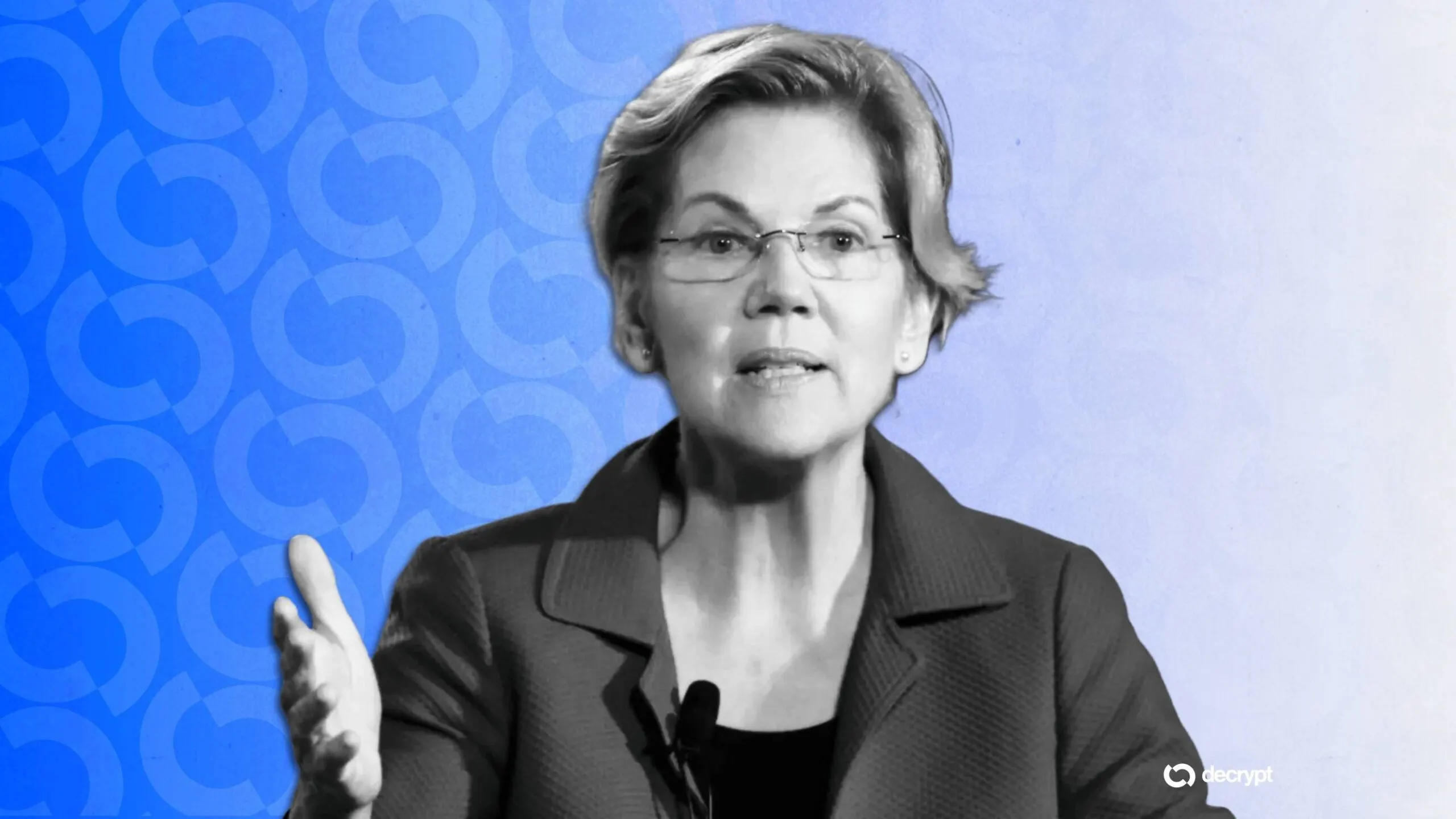
    On Monday, Senator Elizabeth Warren (D-MA) penned a letter to Senate leadership, advocating for the inclusion of provisions that would prohibit President Donald Trump and his family from profiting from the cryptocurrency sector. These restrictions have not yet been incorporated into the bill, despite recent disclosures revealing the president’s substantial earnings of over $1.2 billion from crypto ventures last year.

    “The crypto legislation heading to the Senate floor must prevent the president, vice president, senior administration officials, members of Congress, and their families from profiting off the crypto industry,” Warren stated. “Anything less would be a flagrant giveaway to the president and his family at the expense of the public.”

    On Tuesday, several other Senate Democrats, including potential 2028 presidential candidates Chris Murphy (D-CT) and Chris Van Hollen (D-MD), are scheduled to hold a press conference to voice their opposition to the Clarity Act. The event is expected to highlight not only the president’s cryptocurrency dealings but also the bill’s potential to broadly weaken financial oversight.

    While industry stakeholders contend that the Clarity Act, by legalizing most crypto activities in the United States, would enhance regulation of the nascent sector, critics argue it would significantly undermine financial regulations established in the aftermath of the Great Depression. They contend the bill would create exemptions for blockchain-based assets within these long-standing rules.

    The bill, which has been under consideration on Capitol Hill for over a year, now faces a decisive final push. Most involved parties agree that its passage is imperative before Congress’s upcoming August recess. Failure to do so risks the bill becoming entangled with the looming November midterm elections and the potential for shifts in control of the House and Senate.

    This leaves less than four weeks to secure the bill’s passage, with several key language-related issues still unresolved.

    Further complicating the legislative landscape is the dwindling number of active Republican senators. Mitch McConnell (R-KY) remains hospitalized following a health incident last month, and Lindsey Graham (R-SC) passed away unexpectedly over the weekend, though he is slated to be replaced.

    The Clarity Act requires a 60-vote majority in the Senate, necessitating the support of at least seven Democrats, and potentially more.

    On Monday, President Trump urged the Senate to pass the Clarity Act in tribute to the late Senator Graham, whom Trump described as a “big supporter” of cryptocurrency legislation. However, Graham was not directly involved in negotiations concerning the Clarity Act and rarely commented on the subject. Notably, he was the sole Senate Republican to co-sponsor the 2023 Digital Asset Anti-Money Laundering Act, a bill that cryptocurrency groups had criticized as “very anti-crypto.”

  • Ripple Achieves Full MiCA CASP Authorization, Highlighting European Crypto Market Compliance Divide

    Ripple Achieves Full MiCA CASP Authorization, Highlighting European Crypto Market Compliance Divide

    Ripple has secured full Crypto-Asset Service Provider (CASP) authorization under the Markets in Crypto-Assets (MiCA) regulation from Luxembourg’s financial regulator, the CSSF. This development, reported last week, positions Ripple as one of a limited number of digital asset firms to achieve full authorization ahead of the July 1, 2026, deadline, and underscores a growing compliance gap within the European crypto market.

    The MiCA regulation mandates that crypto firms operating within the European Economic Area (EEA) must secure full CASP authorization. Firms that were in the transitional period for Virtual Asset Service Providers (VASPs) without completed authorization by the July 1, 2026, deadline will be required to cease serving EEA customers. This regulatory cutoff is creating a clear bifurcation in the market, separating authorized entities from those that are not.

    Ripple’s regulatory standing in Europe is bolstered by its dual licenses: an Electronic Money Institution (EMI) license, which governs fiat and e-money activities, and the newly secured CASP authorization, which covers crypto-asset services such as custody and exchange. According to Ripple’s press release, this combination enables “end-to-end regulated crypto payments” for financial institutions, corporates, and businesses across all 30 EEA countries.

    Broader Context

    Source materials place the factual news in this context: MiCA (Markets in Crypto-Assets) regulation.

    Ripple’s Strategic Advantage

    Cassie Craddock, Managing Director for UK and Europe at Ripple, stated, “This CASP authorization means Ripple enters the post-transitional MiCA era fully compliant and ready to scale.” She added that institutions across Europe are looking to build their digital asset services alongside regulated partners, and Ripple is licensed and prepared to meet this demand.

    The stringent requirements for CASP authorization under MiCA include prudential capital requirements, organizational controls, senior management accountability, and ongoing supervisory obligations. These demands present a significant challenge for many crypto firms, particularly smaller operators who may lack the substantial institutional compliance infrastructure that Ripple brought to the process.

    Approximately 210 firms are reported to have reached MiCA-compliant status ahead of the July 1 cutoff, though this figure carries medium confidence. Ripple itself holds over 75 regulatory licenses globally, demonstrating a long-standing focus on regulatory compliance.

    Market Bifurcation and Divergence

    The practical result of the MiCA deadline is a market division. Crypto exchanges, custodians, and payment processors that have not secured full CASP authorization face an immediate choice: accelerate their authorization process or withdraw from the region. Firms that built their European presence on lighter-touch VASP registrations are now being asked to meet a substantially higher regulatory bar.

    In contrast to Ripple’s compliance, Tether CEO Paolo Ardoino has stated that Tether did not apply for a MiCA license, describing the regulation as “very dangerous when it comes to stablecoins.” He indicated that the rules could force issuers to park a significant portion of reserves in “uninsured cash deposits.”

    The European crypto regulation is setting a global precedent, influencing regulatory frameworks in other regions. While MiCA tightens the EEA perimeter, other jurisdictions are developing their own approaches, such as the CLARITY Act in the US, which pushes toward a comparable digital asset classification framework.

    Uncertainties remain regarding the exact number of crypto firms that failed to meet the July 1 MiCA deadline and are now exiting or accelerating their authorization. The specific implications for firms currently in the application process are also unclear, as is the long-term impact of this market bifurcation on innovation and competition within the European crypto sector. However, it is clear that any crypto firm still operating in Europe without CASP authorization is either actively pursuing an application or managing a withdrawal; there is no third option under MiCAR.


  • Christopher Nolan Questions Young Audiences’ AI Embrace, Highlights Tactile Storytelling

    Christopher Nolan Questions Young Audiences’ AI Embrace, Highlights Tactile Storytelling

    Filmmaker Christopher Nolan has expressed skepticism about young audiences’ acceptance of generative artificial intelligence, suggesting they are quickly identifying and rejecting content that he described as problematic. According to Nolan, this immediate and harsh judgment is a consequence of their upbringing in an online world. He also observed a “renewed interest in more tactile, more real forms of storytelling,” which he believes has emerged at an inopportune time for generative AI.

    Nolan, known for not using a smartphone and whose children are in their late teens and early twenties, shared these views during the press tour for his latest film. While he conceded that not all aspects of generative AI are “useless or meaningless” and that he employs visual effects (VFX) in films such as “Tenet,” “Dunkirk,” and “Interstellar,” his primary concern appears to be the audience’s reception of AI-generated content.

    The article notes that Nolan’s blockbusters often feature significant in-camera effects or practical elements, though he has also utilized CGI, such as for Two-Face’s scarred visage in “The Dark Knight.” His perspective highlights a potential disconnect between technological advancement and audience preference for authenticity.

    Nolan’s observations reflect a broader division within the film industry regarding the integration and implications of AI. Directors like Guillermo del Toro and Steven Spielberg have publicly expressed opposition or dismissed generative AI. Conversely, other prominent filmmakers are engaging with the technology. Martin Scorsese has joined AI firm Black Forest Labs as an adviser, and James Cameron sits on the board of Stability AI. Ben Affleck, who previously sold his AI startup InterPositive to Netflix, had expressed doubts about AI’s ability to create meaningful content.

    Meanwhile, companies like Utopia are actively developing AI video creation tools, such as PAI, which aims to maintain consistency across different scenes and cuts. This ongoing development suggests that AI’s presence in filmmaking is likely to continue evolving, regardless of audience or industry skepticism.

    The uncertainties surrounding generative AI in filmmaking remain significant. The exact nature of the content that young audiences are purportedly rejecting, the specific manifestations of the “renewed interest in more tactile” storytelling, and the ultimate extent of the “rift” within the industry are still unfolding. The future adoption and impact of AI video creation tools also remain subjects of speculation.

    Why This Matters

    Filmmaker Christopher Nolan’s critical perspective on generative AI highlights a tension between technological advancement and audience preference for authentic storytelling, a debate that is actively shaping the future of film.

    Broader Context

    Christopher Nolan is the director of ‘The Odyssey’.