Category: Uncategorized

  • Hayes Sells Crypto X: Investors Outraged

    Hayes Sells Crypto X: Investors Outraged

    Crypto Community Erupts Over Arthur Hayes’ Altcoin Sales

    Arthur Hayes, once a vocal proponent of several altcoins including WLD, ZEC, HYPE, and NEAR, has revealed he has sold nearly all of his holdings in these assets well before his previously stated price targets were met. This move has ignited a significant backlash from the cryptocurrency community, with many accusing Hayes of orchestrating hype around these tokens only to offload them at inflated prices.

    WLD Sale Follows SpaceX IPO Speculation

    Just days prior, Hayes had indicated he would hold his Worldcoin (WLD) position at least through the initial week of SpaceX’s anticipated Initial Public Offering (IPO), citing a shared connection with Elon Musk. He had predicted the IPO would be a “face-melting” event. However, his sentiment shifted dramatically after observing a sharp decline in SpaceX’s stock on Friday amidst a broader market downturn. Hayes attributed his decision to sell his WLD holdings to the perceived negative trajectory of the newly listed shares.

    On-Chain Sleuths Question Hayes’ Tactics

    Prominent on-chain investigator ZachXBT was among the first to publicly question Hayes’ recent actions. ZachXBT queried the amount of “exit liquidity” generated from Hayes’ followers in the preceding days and highlighted other substantial sales by the BitMEX co-founder.

    As previously reported, Hayes had divested his Zcash (ZEC) holdings shortly after developers disclosed a code vulnerability that had already been rectified by the time of his sale. Prior to that, he had also sold off his HYPE and NEAR tokens, despite having previously issued highly optimistic price predictions for both.

    Analysts Note Price Tops Coinciding with Sales

    Analysts at Lookonchain also drew attention to Hayes’ exits, noting that they occurred close to the peak prices of the respective assets. Notably, all of these cryptocurrencies experienced a decline in the hours following Hayes’ disclosure of his sales, eventually returning to levels seen before his bullish pronouncements.

    Community Accusations of Market Manipulation

    The reaction on social media platform X has been harsh, with some users labeling Hayes’ behavior as a “douchebag” move for promoting altcoins shortly before selling them. Others suggested that any traders who followed his recommendations were themselves “small scammers” who were ultimately “scammed” by Hayes, whom they characterized as a “big scammer.”


  • XRP RSI Hits Record Low Amid Market Watch

    XRP RSI Hits Record Low Amid Market Watch

    XRP’s Monthly Relative Strength Index Hits All-Time Low, Signaling Potential Oversold Conditions

    The XRP monthly relative strength index (RSI) has plunged to 41.64, marking the lowest reading this indicator has ever registered for the cryptocurrency. This figure dips below the previous low of 43.75, recorded in March 2020, a period when XRP bottomed out at $0.11 amidst one of the crypto market’s most severe downturns.

    A Signal With A Caveat

    While the current reading surpasses the 2020 low, it is not yet definitive. The month of June remains open, and data indicates that if XRP manages to recover to above $1.30 before the month concludes, the RSI could finish significantly higher than its current level, thereby diminishing the importance of this signal.

    Austin, a commentator within the XRP community who uses that moniker, was the first to publicly highlight the RSI’s decline. His initial chart indicated a drop to 42.64, which at the time was a new all-time low, as XRP slid to $1.18. Prices have since fallen further, pushing the RSI down to 41.62 at the latest check. The token is currently trading around $1.11, approximately 61% below its October 2025 peak of $2.84. This decline has persisted for several months without a substantial recovery.

    What History Suggests

    The 2020 episode provides a point of comparison, though it is a singular instance. The RSI bottom in that year coincided with what proved to be XRP’s price floor for that cycle. From that low, the token subsequently posted a series of higher lows, eventually reaching $1.96 in April 2021. A subsequent surge in November 2024 propelled it to a high of $3.40, representing a gain of roughly 580% from the October lows of that year.

    The broader cryptocurrency market has also experienced pressure this week. Bitcoin saw a decline towards the $63,000 mark after MicroStrategy, the firm associated with Michael Saylor, confirmed the sale of 32 BTC from its holdings exceeding 800,000 BTC. The total cryptocurrency market capitalization shed $330 billion over the past week.

    XRP’s Own Decline In Focus

    XRP’s market capitalization fell from $82.5 billion at the beginning of this week to approximately $69 billion at the time of writing, a decrease of roughly 15%. Reports indicate that the current price of $1.10 revisits levels last observed in early February.

    The RSI measures the speed and magnitude of recent price changes. A reading below 30 is traditionally considered oversold territory. XRP’s monthly reading of 41.64 remains above this threshold, though it represents a historically low level specifically for the token. The ultimate significance of this signal will depend on where the June candle closes in relation to its current RSI reading.

  • Dogecoin Tests Support: Breakdown or Rebound?

    Dogecoin Tests Support: Breakdown or Rebound?

    Dogecoin Nears Key Support as Market Declines

    Cryptocurrency analyst Ali Martinez has observed that Dogecoin has returned to a critical support level within a parallel channel following a recent market downturn.

    Dogecoin’s Parallel Channel Trajectory

    In a recent post on X, formerly Twitter, Martinez detailed Dogecoin’s current trading position relative to a parallel channel. This technical analysis pattern occurs when an asset’s price moves between two parallel trendlines. The upper trendline typically acts as resistance, while the lower trendline offers support, effectively confining the price within the channel. A breach of either level can signal a continuation of the trend in the direction of the breakout. An upward surge above the pattern suggests bullish momentum, whereas a fall below it indicates bearish sentiment.

    Parallel channels can be categorized by their orientation. An “ascending channel” features upward-sloping trendlines, while a “descending channel” has a downward slope. The pattern of most relevance here is a parallel channel that runs horizontally, parallel to the time axis, signifying a period of consolidation.

    Martinez shared a chart illustrating the parallel channel within which Dogecoin’s daily price has been trading for the past few months. The graph shows Dogecoin retesting the upper boundary of the channel in May but encountering resistance. Subsequently, the memecoin experienced a sharp decline, moving down the width of the channel to reach its lower level. During this descent, Dogecoin not only fell below the midway support but also lost its 50-day moving average.

    With Dogecoin now retesting the channel’s lowest trendline, its future trajectory remains uncertain. “As long as this support holds, I think a recovery toward $0.1019 and $0.1156 remains likely,” Martinez stated. “A breakdown, however, could expose the next major supply zone near $0.067.”

    Cardano’s Divergent Path

    While Dogecoin has yet to break out of its parallel channel, another altcoin, Cardano, has experienced a different outcome. Martinez highlighted in a separate X post that the weekly price of Cardano (ADA) recently fell below the support level of a long-term channel.

    Breakouts from parallel channels are often projected to be of a length equivalent to the channel’s width. Based on this principle, Martinez projected targets for Cardano: “$0.11 and $0.051.”

    Following the latest market drawdown, Dogecoin’s price has reached the $0.843 level.

  • Ripple IPO: Expert Forecasts Public Listing Timeline for XRP Investors

    Ripple IPO: Expert Forecasts Public Listing Timeline for XRP Investors

    SBI Holdings CEO Suggests Ripple IPO Could Be a Decade Away

    The prospect of Ripple Labs going public has resurfaced in discussions, fueled by SBI Holdings CEO Yoshitaka Kitao, who has provided one of the most concrete long-term timelines yet from a significant Ripple shareholder. Kitao, the chief executive and president of SBI, a major Japanese financial conglomerate, made remarks that have since garnered attention within the XRP community.

    Discussing his long-term investment strategy, Kitao indicated a willingness to invest between $626 million and $1.25 billion in Ripple upon its public debut.

    SBI Chief Believes Ripple Needs to Go Public

    The question of whether Ripple Labs will eventually list on a public exchange has been a persistent one for years, despite consistent efforts by Ripple executives to temper expectations regarding an Initial Public Offering (IPO).

    Speaking at a recent conference in Tokyo, Kitao stated his intention to make a substantial investment in Ripple when the company becomes publicly traded. He suggested that Ripple would be prepared to commit ¥100 billion, or even ¥200 billion, to fully realize its objectives.

    Intriguingly, the SBI Holdings CEO also projected that Ripple might go public in approximately 12 years, emphasizing his belief that such a move is necessary for the company. This timeline places a potential listing around 2038, well beyond the current economic cycle.

    Kitao’s comments carry weight because he is not merely an outside observer or an XRP commentator speculating on price catalysts. SBI Holdings has been a steadfast supporter of Ripple since 2016, investing in the company and co-founding SBI Ripple Asia, a joint venture aimed at leveraging Ripple’s technology for cross-border payments in Asia. SBI has publicly disclosed its ownership of approximately 9% of Ripple Labs, positioning it as one of the company’s largest external shareholders.

    Company Has Consistently Downplayed IPO Talk

    Speculation about a Ripple IPO has circulated for years, particularly following the conclusion of its legal dispute with the U.S. Securities and Exchange Commission in 2025. During this period, Ripple has also expanded its operations into areas such as custody services, stablecoin infrastructure, real-world asset tokenization, and strategic acquisitions.

    However, Ripple executives have consistently maintained that the company is not in a hurry to pursue an IPO. For instance, Ripple CEO Brad Garlinghouse dismissed IPO discussions last year, stating that the company did not require external funding.

    In January 2026, Ripple President Monica Long reiterated that the company intended to remain private, citing its strong balance sheet as sufficient to support continued growth without the need to raise capital from public markets. This stance aligns with Ripple’s recent success in private funding rounds, having raised $500 million at a valuation of approximately $40 billion in late 2025.

  • Cardano Plummets to 5-Year Lows Amidst Hoskinson Warning

    Cardano Plummets to 5-Year Lows Amidst Hoskinson Warning

    Cardano Faces Intense Scrutiny After Price Plunge to Five-Year Lows

    Cardano has been thrust into the spotlight following a dramatic price drop to its lowest point in over five years, igniting widespread concern throughout the cryptocurrency market. The sharp decline comes amid escalating anxieties about the ecosystem’s future, amplified by founder Charles Hoskinson’s recent warnings of potential headwinds. This has left investors grappling with whether ADA presents a historic buying opportunity or is headed for further declines.

    Cardano Price Collapse Captures Market Attention

    According to data from Santiment Intelligence, Cardano has rapidly become one of the most discussed assets in the crypto sphere. ADA’s price recently fell below $0.16, a level not seen since December 2020. This significant drop has fueled extensive industry-wide conversations and reignited interest in the network’s trajectory.

    Much of this heightened attention is attributed to growing unease surrounding Cardano founder Charles Hoskinson’s recent announcement of taking a hiatus. Compounding these concerns, Hoskinson cautioned that the ecosystem could face a wave of project failures and funding challenges, further contributing to the uncertainty surrounding ADA.

    Santiment observed an immediate market reaction, with both social media buzz and on-chain activity experiencing a sharp uptick. Cardano’s social dominance rose to approximately 0.52%, its highest point in 2026, indicating that more than one in every 190 cryptocurrency-related social media discussions centered on ADA. Concurrently, network activity saw a notable increase during this period of heightened volatility. Daily active addresses surged to 28,459, marking a four-month high. This spike suggests that users remain actively engaged with the network, as the price decline has spurred intense debate and bearish sentiment among traders.

    Dedicated Community Remains Resilient

    Despite the recent wave of negative sentiment, Santiment Intelligence highlighted that Cardano continues to benefit from one of the most committed communities in the cryptocurrency landscape. ADA holders have consistently demonstrated engagement across multiple market cycles, often providing support to the ecosystem even when institutional participation has been subdued.

    The analytics firm pointed out that the recent surge in daily active addresses indicates that many users are closely monitoring the network and its developments rather than abandoning Cardano amidst the price downturn. However, Santiment cautioned that while retail investors have historically been a driving force behind Cardano’s growth, the market may require a stronger influx of institutional interest and broader adoption catalysts to reverse the current downward trend.

    The coming weeks and months are poised to be critical for ADA. With the asset trading near multi-year lows, investors will likely be closely watching ecosystem expansion efforts, the success of new project launches, and any signs of renewed confidence from leadership. Positive developments in these areas could bolster the long-term vision championed by Cardano supporters and potentially attract new capital back into the ecosystem.

  • XRP Faces Potential 40% Plunge to $0.70

    XRP Faces Potential 40% Plunge to $0.70

    XRP Faces Steep Decline, Analysts Divided on Future Trajectory

    XRP’s value has plummeted, concluding a 22% retracement over the past month and falling below $1.10 for the first time since November 2024. This sharp downturn has ignited a critical question among investors: will the altcoin recover to the $1 mark soon, or is a further decline imminent?

    Bearish Technical Indicators Signal Caution

    Market expert Sam Daodu has highlighted a broadly bearish technical outlook for XRP across multiple timeframes. The token is currently trading below its 20, 50, 100, and 200-day moving averages, a configuration that typically indicates sustained seller dominance. Daodu noted that support is minimal once XRP trades at $1.09, with buyers historically showing interest around $1.05 and the $1 level serving as a significant psychological floor.

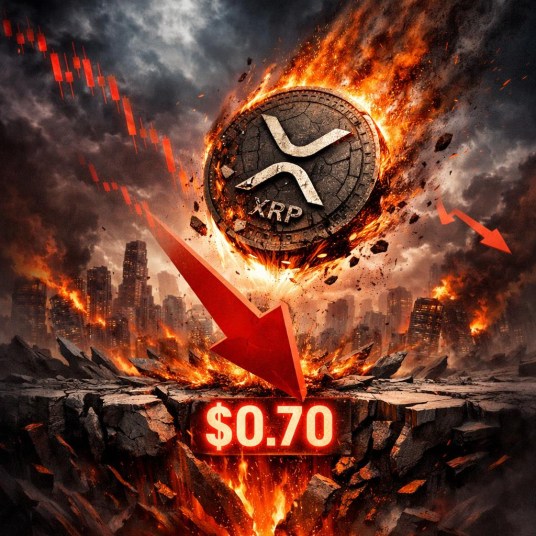
    Adding to the concerns, some chart analysts referenced in Daodu’s report suggest that if the current risk-off trend persists, XRP could experience an additional 40% drop, bringing its price down to approximately $0.70.

    On-Chain Data Paints a Contrasting Picture

    Despite the bearish technical signals, on-chain data presents a more optimistic narrative. The number of XRP wallets holding at least 10,000 tokens reached a record high of 332,230 in May and has continued to grow throughout the recent downturns. Furthermore, wallets holding one million or more XRP have seen a net increase of 42 new addresses since January, marking the first growth in “millionaire” wallets since September 2025.

    Whale activity also suggests a tightening of supply. Holders of 10 million or more XRP now control 45.83 billion tokens, representing 68.5% of the circulating supply – the highest concentration observed since May 2018. Additionally, whale outflow dominance on Binance recently surged to 91.4%, a level not seen since 2024. Historical data indicates that when Binance outflow dominance last reached similar peaks in October 2024, XRP subsequently rallied from around $0.50 to over $3 in the following months.

    A longer-cycle technical indicator also offers a glimmer of hope. XRP’s monthly Relative Strength Index (RSI) has entered the oversold reset zone for only the fourth time in 13 years. Each previous instance of this RSI reset preceded a significant reversal in XRP’s price direction, and Daodu suggests this fourth occurrence is now forming as XRP hovers around $1.09.

    Policy and Market Dynamics as Potential Catalysts

    While whale accumulation and long-term technical signals point towards a potential rebound, near-term catalysts are largely expected to stem from policy developments. Daodu identifies the CLARITY Act’s floor vote as a potential turning point for XRP’s outlook. The bill has advanced through the Senate Banking Committee and is now on the Senate Legislative Calendar, with a full Senate floor vote being the next crucial step.

    Standard Chartered has forecast that if the CLARITY Act is passed and the broader macroeconomic environment stabilizes, XRP could reach $2.80, with a bullish scenario projecting a rise to $8. Conversely, if the bill is delayed beyond the current legislative session, the bank suggests prices could retreat to around $0.53.

    Regarding the possibility of XRP falling below $1, Daodu’s assessment is conditional. He anticipates that the altcoin may test the $1 level before the current sell-off concludes, with the outcome dependent on two key factors.

    Firstly, the ability of Bitcoin (BTC) to reclaim and hold above $60,000 is critical. Daodu suggests that a slide in BTC towards $55,000 would likely drag XRP down, irrespective of its own fundamentals.

    Secondly, the CLARITY Act must receive a Senate floor vote before the August recess. If this vote occurs and the bill is approved, it could create sufficient upside potential to attract institutional investment, potentially triggering a rally from the downturn’s low point.

  • Hyperliquid Strategies Profitable Amidst Bitmine’s $10 Billion Losses

    Hyperliquid Strategies Profitable Amidst Bitmine’s $10 Billion Losses

    Crypto Markets Face Broad Sell-Off, Treasury Holdings Under Pressure

    Cryptocurrency markets experienced renewed pressure this week as a significant sell-off extended to some of the industry’s largest digital asset treasuries. By Friday, Bitcoin (BTC) had fallen back below the $60,000 mark for the first time this year, while Ethereum (ETH) traded around $1,550, and Hyperliquid (HYPE) hovered near $57.

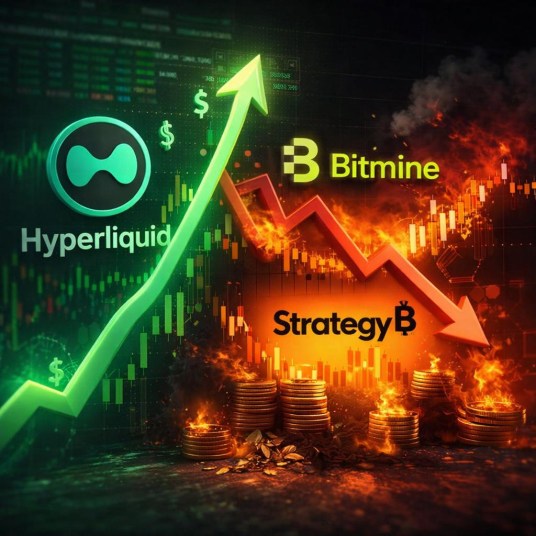
    While these declines impacted the broader market, the effects were most pronounced among companies heavily invested in BTC and ETH, notably MicroStrategy (MSTR) and Bitmine (BMNR). In contrast, Hyperliquid Strategies (PURR) has continued to register gains on an unrealized basis, underscoring its performance resilience against major market benchmarks.

    Hyperliquid Strategies Posts $1.2 Billion in Gains Amid Market Downturn

    Data from Artemis reveals that MicroStrategy and Bitmine are currently holding substantial unrealized losses, estimated at approximately $12.8 billion and $10.3 billion, respectively. Hyperliquid Strategies, however, presents a different financial picture.

    Artemis data further indicates that Hyperliquid Strategies stands as the sole major digital asset treasury company in the sector to remain in positive territory, boasting roughly $1.2 billion in unrealized gains, as illustrated in the accompanying chart.

    This divergence means that the financial strain observed across most crypto-linked balance sheets has not affected Hyperliquid to the same degree, even as prices experienced sharp contractions elsewhere. The market weakness has also impacted other significant public holders beyond the two leading companies. Lookonchain data shows that the recent retracement has widened, with SharpLink down $1.59 billion on ETH holdings and Metaplanet down $1.38 billion on BTC.

    The pattern is consistent: as BTC and ETH retrace, companies with concentrated holdings in these assets typically reflect the decline in their mark-to-market or unrealized reporting.

    Weekly BTC, ETH Pullback Hits MSTR, BMNR Stocks

    Bitcoin’s price action has been particularly noteworthy on a weekly basis. The cryptocurrency recorded a significant 20% retracement over the past week, a broader decline that has subsequently filtered down to equities and crypto proxies.

    MicroStrategy’s stock, MSTR, saw a 14% drop on Friday alone, trading around $115 per share. Bitmine’s stock, BMNR, also experienced double-digit losses on Friday, falling 12% to approximately $15.76 per share, adding to investor concerns.

    Hyperliquid’s native token, HYPE, also experienced a sharp decline during the same period, dropping 14%. Despite this pullback, Hyperliquid Strategies’ PURR token showed comparatively modest movement, with only a 1.2% retracement to $8.3 in the current trading session.

    These contrasting performances highlight a clear divergence: while MicroStrategy and Bitmine directly reflect the drawdown in BTC and ETH through substantial unrealized losses, Hyperliquid Strategies has maintained a comparative resilience, preserving positive unrealized performance even as the broader market experiences a sell-off.

  • US Banks to Pilot Tokenized Deposit Network

    US Banks to Pilot Tokenized Deposit Network

    Top US Banks Poised to Launch Tokenized Deposit Network

    Major Wall Street banks are reportedly preparing to launch a tokenized deposit network in the first half of 2027. The initiative is spearheaded by The Clearing House, a real-time payments company jointly owned by prominent financial institutions including JPMorgan Chase, Bank of America, Citigroup, and Wells Fargo.

    “The Bridge” Project Aims to Integrate Blockchain

    The project, dubbed “the bridge,” is designed to link traditional banking payment systems with blockchain infrastructure, enabling tokenized deposits to be transferred instantaneously with round-the-clock settlement. According to The Wall Street Journal, the underlying blockchain technology will be developed in partnership with a third-party vendor yet to be selected.

    David Watson, Chief Executive of The Clearing House, described the move as significant for the banking industry, noting that the future of on-chain payments and finance is undergoing a “radically different” transformation.

    Citigroup views the initiative as an enhancement of the existing role banks play within the financial system. Shahmir Khaliq, the firm’s head of services, stated that this development is “another step that effectively cements” banks’ positions in financing, money management, and capital markets.

    Navigating Stablecoin Concerns

    Simultaneously, banks have expressed reservations about stablecoins, fearing that their widespread adoption could lead to a diversion of deposits away from traditional financial firms. For months, financial and crypto institutions have been at odds over proposed legislation that would permit customers of crypto firms to earn interest on their stablecoin holdings.

    Network Accessibility and Potential Use Cases

    The report indicates that all U.S. banks will have access to the tokenized deposit network. Potential applications include real-time liquidity management, programmable treasury operations, and cross-border payments. The Clearing House anticipates that large multinational corporations will be among its initial users.

    However, Mark Monaco, head of global payment solutions at Bank of America, acknowledged that clients are not yet actively demanding tokenized deposits. He did, however, note a growing interest in the product, conceding that widespread adoption will likely take time.

    JPMorgan has already made inroads into tokenized deposits with its in-house JPM Coin system, which facilitates payments on its private blockchain. More recently, the firm also introduced a token on the Base network for its institutional clients.

    This latest development follows discussions last year among major financial institutions regarding the creation of a joint stablecoin through The Clearing House and Early Warning Services. While this remains under exploration, some banking executives, as reported by WSJ, are still uncertain about the broader benefits digital assets offer beyond cross-border payments.

  • FairGambling Unveils Crypto Casino Analytics Platform

    FairGambling Unveils Crypto Casino Analytics Platform

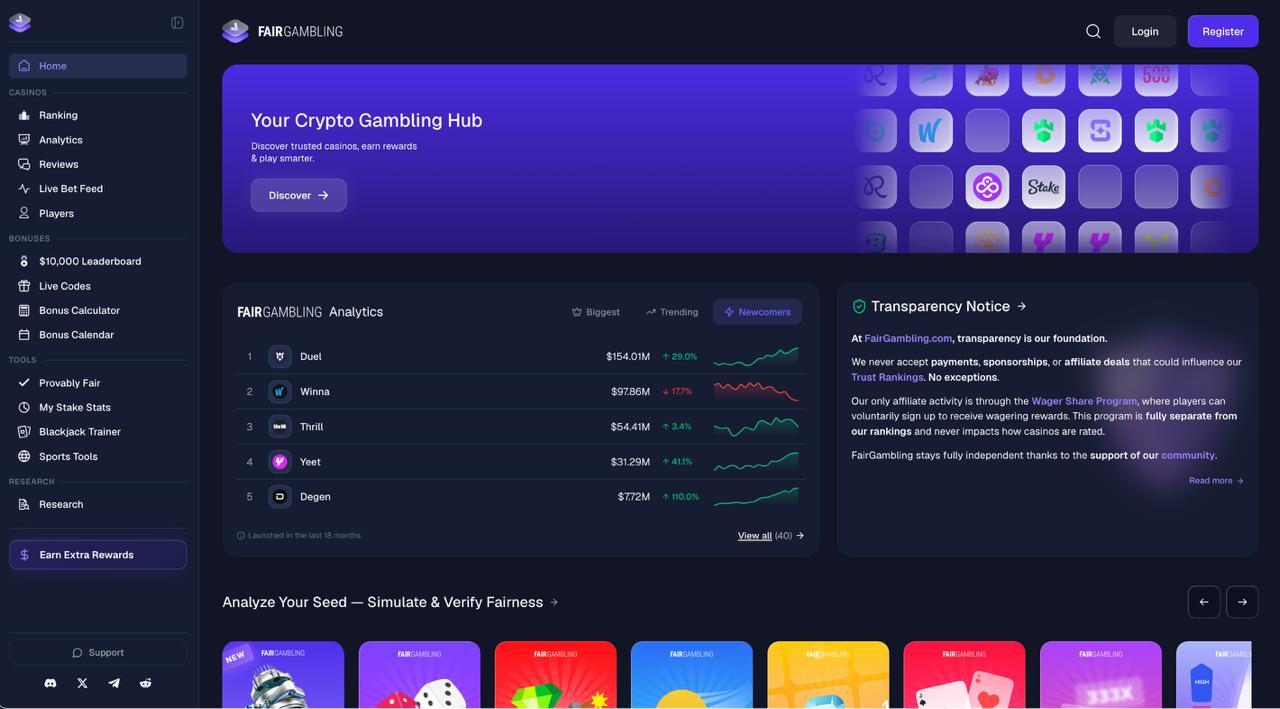
    FairGambling Launches Crypto Casino Review and Analytics Platform With Provably Fair Tools and Extra Rewards

    New York, USA – June 5th, 2026 – FairGambling, a new platform designed to enhance transparency and rewards for cryptocurrency casino players and Bitcoin gamblers, announced its public launch today. The platform integrates on-chain analytics, provably fair verification tools, independent reviews of crypto casinos, live feeds of bonus codes, and an exclusive rewards program offering up to 30% rakeback. This program extends across more than 40 prominent crypto casino operators, including Stake, Roobet, Shuffle, BC.Game, Gamdom, Bitcasino, 1win, Winna, Thrill, and Duel, with plans to expand its coverage further.

    FairGambling enters a market that saw over $80 billion in crypto casino deposit volume last year. The platform’s analytics layer is already monitoring more than $45 billion of this volume in real-time across the operators it covers. Despite the market’s significant scale, players have historically had limited tools to verify fairness, compare operators, or independently assess the flow of their funds.

    Built as a Utility Layer, Not Another Affiliate Site

    “Most casino review sites today are essentially just rankings and sign-up bonuses,” stated Seb, Co-Founder of FairGambling. “We aimed to create something fundamentally different. A space where players can genuinely observe on-chain activity, verify their own bets, compare casinos based on concrete data rather than marketing claims, and earn additional rewards. All of this is offered for free, with no strings attached. This is the gap we are addressing, and what is live today is merely the initial phase of our development.”

    The platform consolidates several player-centric tools into a single, accessible location:

    Data-Driven Casino Comparison

    In contrast to traditional affiliate sites that base casino rankings on commercial agreements, FairGambling’s ratings are derived from a weighted rubric that evaluates analytics, fairness, financial transparency, bonus structures, compliance, and security. Each operator profile provides details on deposit volumes, visibility of hot wallets, licensing information, no-KYC policies, and bonus testing results that illustrate the actual rewards players receive for a given wager amount. These metrics are presented in side-by-side comparisons against other operators.

    The analytics section is accessible to all visitors and displays live on-chain transaction flows, enabling players to distinguish operators processing substantial volume from those with minimal activity. This level of data insight has traditionally been exclusive to industry insiders.

    Community Reviews and Earning Crypto

    FairGambling places verified player reviews at the core of its review system. Verified users can earn cryptocurrency rewards for eligible contributions. To ensure authenticity and filter out the prevalence of fake reviews found on other online gambling review sites, the platform requires verification of casino activity, such as VIP tier or wager history, before approving reviews.

    “Trust in this sector has been eroded,” Seb added. “We understand that rebuilding it won’t happen overnight. However, by equipping players with the data, the tools, and the rewards to critically engage with the operators they use, we are laying a crucial foundation. Everything else will be built upon that.”

    The platform empowers players to identify the best crypto casinos based on data, verify the fairness of games, and earn supplementary rakeback in addition to existing casino offers. FairGambling is now live and accessible globally, subject to local regulations and eligibility criteria.

    About FairGambling

    FairGambling is a transparency and rewards platform for crypto casinos, designed to help players make more informed decisions across major Bitcoin and cryptocurrency gambling operators. The platform features on-chain casino analytics, independent crypto casino reviews and ratings, provably fair verification tools, live bonus code feeds, player statistics tools, a blackjack trainer, and an additional rewards program offering up to 30% extra rakeback. FairGambling currently covers over 50 crypto casino operators and has tracked more than $45 billion in historical deposit volume, with new operators being added regularly.

    For further information, users can visit FairGambling.com.

    Responsible gambling notice: FairGambling is not a casino and does not accept bets or process gambling transactions. The platform provides analytics, reviews, verification tools, and rewards related to third-party crypto casino operators. FairGambling is intended for users aged 18+ or the legal gambling age in their jurisdiction. Gambling involves risk and can be addictive. Please play responsibly and adhere to all applicable local laws.

  • ChatGPT’s Latest Prediction Disappoints XRP Holders

    ChatGPT’s Latest Prediction Disappoints XRP Holders

    The cryptocurrency market has experienced a dramatic downturn in recent weeks, far exceeding expectations from mid-May. Bitcoin (BTC) has fallen below the $60,000 mark for the first time since November 2024, while Ethereum (ETH) has plunged to a 14-month low. XRP has also succumbed to the selling pressure, dropping below critical support levels and reaching a 19-month low of under $1.10 on Friday.

    The immediate concern for XRP investors is whether the current support above the crucial psychological threshold of $1.00 will hold, or if the cross-border payment token is destined for a significant decline into the sub-dollar range.

    According to a new analysis from a prominent AI solution, the most probable initial bearish target for XRP, should it breach $1.00, is $0.90. This scenario appears increasingly likely given the prevailing market conditions. For context, Bitcoin’s recent dip below $60,000 marked its lowest point since before the U.S. elections in late 2024.

    Similarly, XRP has retreated to its lowest levels since that period in November 2024, currently trading below $1.10. Having broken through its last significant support at $1.00, this level is now under intense scrutiny, with a further downward move potentially testing it imminently.

    The AI model suggests that a drop to $0.90 would represent an additional 18%-20% decline for XRP and would likely be accompanied by continued weakness across the broader cryptocurrency market.

    However, the AI also outlined even more pessimistic scenarios should bullish sentiment completely evaporate. In a more extreme bearish outlook, XRP could fall to the $0.75-$0.80 range.

    A full capitulation scenario, while considered a “low-probability outcome,” envisions XRP dropping to $0.60. The AI platform noted that such a drastic decline would likely require a confluence of factors, including macroeconomic instability, a widespread crypto bear market, and the erosion of key positive narratives like ETF optimism and institutional adoption.

    Conversely, the AI also presented a more optimistic perspective, suggesting that XRP might be “approaching a point where conditions become favorable for a relief rally.” Drawing on historical data, particularly for previous Junes in U.S. midterm election years, the AI highlighted that “pessimism often preceded major recoveries.”

    Based on this, the AI outlined a potential for a swift rebound to $1.25 and even $1.40, contingent on buyers successfully defending the $1.05-$1.10 support region. The coming days, or even hours, will be crucial in determining whether this support holds.