Category: Uncategorized

  • Pump.fun’s Latest Experiment Takes Strange Turn

    Pump.fun’s Latest Experiment Takes Strange Turn

    Pump.fun Launches “GO” Platform, Offering Cash for Nearly Any Task

    The Solana meme coin launchpad Pump.fun has unveiled a new platform called GO, designed to pay users for completing a wide range of tasks, from the mundane to the extreme. The initiative, built on the slogan “Pay ANYONE to do ANYTHING,” has already seen a surge of users posting and attempting unusual challenges.

    A Global Bounty Board

    Launched on Thursday, GO allows users to create and complete bounties for any task, with the promise of “unlimited rewards.” Pump.fun stated in a tweet, “Humans & money are undeniably the most powerful tools on Earth. We’re combining both of them with GO: an all encompassing bounty platform where ANYONE can create or complete bounties for ANY task for UNLIMITED rewards.”

    Users connect their X (formerly Twitter) accounts and cryptocurrency wallets to the platform. They can then post a task and lock in rewards, starting at $5, which are held in escrow. Pump.fun reviews submissions and handles payouts.

    As of this report, GO listed 234 active bounties, with 494 submissions and an unclaimed pool of $118,000.

    High-Stakes and Bizarre Challenges

    The platform has featured some exceptionally high-paying, albeit often outlandish, bounties. One notable listing, which has since disappeared, offered approximately $2,650 for someone to get a token’s ticker tattooed on their forehead. Earlier, a bounty of up to $50,000 was advertised for a skydiver to land in a World Cup match dressed as a meme coin mascot, with strict requirements for verified, non-AI footage.

    The highest remaining bounty at the time of writing was worth roughly $23,525, seeking an interview with a family member of the individual responsible for Henry Nowak’s death or the lead police officer on the case. The listing emphasized the desire for at least two minutes of unedited footage and noted that “the more viral the interview the better.”

    Other significant bounties included $15,204 for breaking a running world record, $12,199 for organizing a “NEET March” in New York City, $11,034 to assist a token in winning Pump.fun’s hackathon, $3,989 for a “best butt contest,” and $9,103 for an interview with a billionaire on biological intelligence.

    Risky and Unconventional Tasks

    Further down the list, tasks become increasingly strange and, in some cases, dangerous. Bounties have included requests to set a branded car on fire, streak an NBA Finals game, fart through a megaphone during a lecture, pour milk over oneself, distribute 100 jars of pineapple Kool-Aid to homeless individuals, get Elon Musk to engage with a token on X, and bail someone out of jail.

    One participant in a bounty offering approximately $2,876 for quitting a job on camera livestreamed the event on Kick. The individual reported being fired from another job as a result, stating, “This was worth it for the sol.”

    Financial Realities and Concerns

    Despite the large advertised sums, actual payouts have been modest. The top earner since the launch collected $487.11 in a single payout, with other significant payouts reaching $346.72 and $275.49. The largest spender on the platform has disbursed $1,707 across 11 bounties.

    Musheer Ahmed, founder and managing director of Finstep Asia, expressed concerns about the platform’s escrow and moderation system, suggesting it might not be sufficient to prevent harmful bounties. He noted that automated moderation systems have historically struggled on platforms like Instagram and X, and that creators can circumvent these by coordinating with users off-platform.

    “It feels like it is an attempt by pump.fun to retain users/attract non-crypto native users,” Ahmed commented, drawing parallels to task-based content creators like MrBeast. He added that the initiative appears to have little to do with “tokens, NFTs, and crypto in general.”

    GO formalizes a pay-for-stunts incentive that has previously led to dangerous situations on Pump.fun. The launchpad had previously removed its livestreaming feature in 2024 following an influx of controversial streams involving animal cruelty, self-harm, and a faked suicide. Pump.fun reinstated livestreaming in early 2025 with enhanced moderation and has since focused on “creator capital markets,” linking viral stunts with tradable tokens.

    Pump.fun did not respond to a request for comment.

  • Hayes Dumps Zcash After Four-Year Counterfeit Bug

    Hayes Dumps Zcash After Four-Year Counterfeit Bug

    Hayes Liquidates Zcash Holdings Amidst Protocol Vulnerability

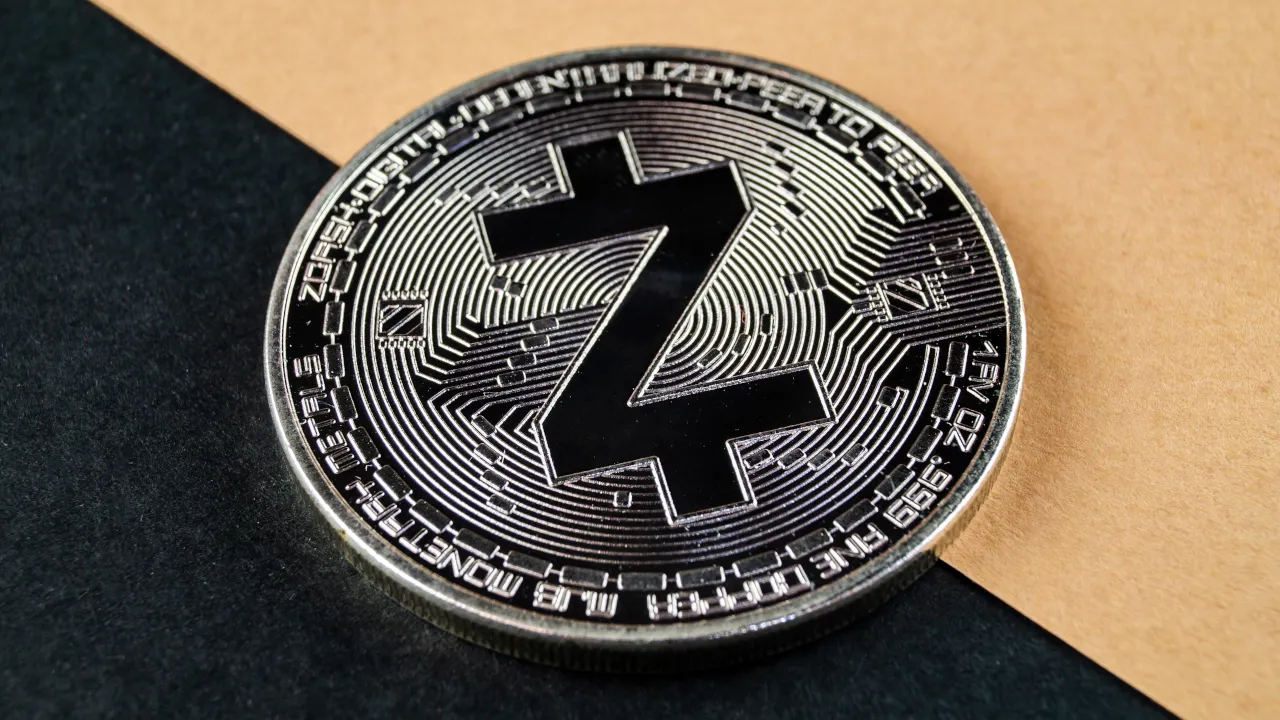
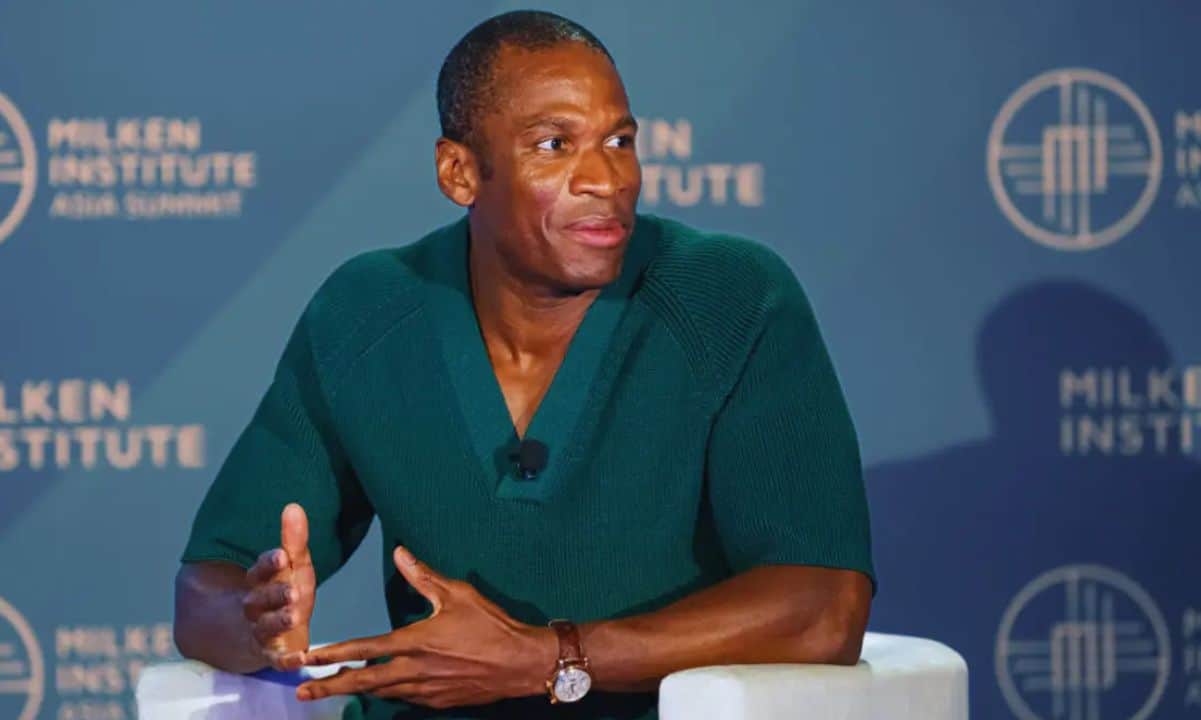
    Arthur Hayes, co-founder of BitMEX, confirmed on Tuesday that he has divested his entire Zcash (ZEC) holdings following the discovery of a critical bug within the protocol’s Orchard Pool. The vulnerability, which affects Zcash’s core shielded transaction layer, compounds a challenging period for the cryptocurrency.

    This liquidation marks the complete unwinding of Hayes’s self-proclaimed “Holy Trinity” portfolio, which previously comprised HYPE and NEAR tokens.

    Hayes announced the move on social media, stating, “The Holy Trinity is dead. Sadly due to the Orchard Pool exploit, I had to dump our entire $ZEC bag. While I think it’s extremely unlikely of any minting, it cannot be formally cryptographically proved impossible – The privacy from AI, govt, big tech narrative demands perfection…”

    The market is now grappling with whether Hayes’s decision was a calculated assessment of protocol risk or a reactive sell-off triggered by a flaw that undermined his confidence in privacy-focused cryptocurrencies as a category. Evidence suggests the former, a distinction that holds significance for those interpreting his exit as a market signal.

    Orchard Pool Vulnerability Detailed

    The Orchard Pool represents Zcash’s latest generation of shielded transaction circuitry, introduced with the NU5 upgrade in May 2022. It superseded the older Sapling pool and incorporated trustless zk-SNARKs through the Halo 2 proving system, eliminating the need for a trusted setup. The pool’s primary function is to facilitate fully private transactions, making its cryptographic integrity the cornerstone of ZEC’s value proposition.

    The bug, identified on May 29, 2026, by Shielded Labs security engineer Taylor Hornby, was attributed to an insufficient constraint in elliptic-curve multiplication within the halo2_gadgets crate. Hornby utilized AI-assisted formal methods, including Anthropic’s Claude Opus 4.8, in his discovery.

    In simpler terms, the flaw meant that specially crafted inputs could theoretically circumvent the circuit’s validation checks, potentially leading to the creation of counterfeit ZEC that would still pass Orchard’s verification processes.

    An emergency hard fork was implemented on June 3, 2026, to address the vulnerability. However, the period between the NU5 activation in 2022 and the June 2026 patch represents nearly four years during which the bug remained undetected, despite undergoing multiple expert audits.

    Implications for Holders and Market Sentiment

    A crucial aspect for ZEC holders is that, due to Orchard’s privacy architecture, it is cryptographically impossible to definitively prove that no counterfeit ZEC was minted during the four-year window. While there is no evidence of exploitation, the inability to guarantee total supply integrity represents a fundamental challenge to the “sound money” narrative that Electric Coin Co. has cultivated around ZEC.

    Hayes had previously identified Zcash as a high-conviction holding, classifying it as part of his “Holy Trinity” alongside HYPE and NEAR, which he described as his asymmetric altcoin investments. He had already liquidated his positions in HYPE and NEAR before turning his attention to ZEC, a sequence that some interpret as a methodical risk reduction rather than a panicked reaction.

    Hayes’s ZEC exit followed the public disclosure of the Orchard bug and the June 3 hard fork, indicating that his decision was made after the vulnerability became known. His stated reason was direct: “The probability of unauthorized minting is extremely low, but it cannot be proven cryptographically impossible,” he explained. He further elaborated that “The narrative of protecting privacy from AI, governments, and Big Tech demands perfection, a standard the bug undermined.”

    This rationale is framed not as a trader’s justification but as a thesis-driven decision. Hayes’s investment in ZEC was predicated on privacy coins occupying a unique ideological and technical niche, one that demands absolute cryptographic certainty, a standard that the Orchard bug has now compromised.

    This pattern of investment and exit is familiar to followers of Hayes’s public portfolio movements. He typically demonstrates strong conviction, offers public endorsement, and then executes a clean exit when the underlying thesis falters. Whether this constitutes disciplined risk management or a “shill, pump, dump, repeat” cycle, as previously documented, is a matter of interpretation. However, the Orchard bug provides a more substantial fundamental rationale for this exit than many previous instances. Hayes continues to hold Worldcoin (WLD), which was not part of the Trinity framework.

    Market Reaction and Technical Outlook

    Following the public disclosure of the bug, ZEC experienced a significant price drop, falling between 30% and 36% from its recent highs. The cryptocurrency declined from over $600 to approximately $390, resulting in a market cap reduction exceeding $3 billion.

    The price action saw ZEC break below its 20-day, 50-day, and 100-day exponential moving averages (EMAs) in succession. Traders are now closely monitoring the 200-day EMA support level, situated near $367, as the next critical price point.

    Hayes’s own exit occurred on average trading volumes, suggesting that his position did not mechanically influence the price; the market had already begun pricing in the protocol risk prior to his announcement.

    The current technical outlook for ZEC remains bearish until the $430–$450 zone is reclaimed on a closing basis. A break below $367 would usher ZEC into uncharted technical territory with limited historical support to draw upon.

  • Zcash Plummets 38% on Critical Counterfeiting Vulnerability Disclosure

    Zcash Plummets 38% on Critical Counterfeiting Vulnerability Disclosure

    Zcash Suffers Double-Digit Plunge After Critical Vulnerability Disclosure

    Zcash experienced a significant overnight drop of more than 10% after developers revealed a critical vulnerability in the protocol’s Orchard shielded pool. The flaw, which had the potential to allow undetectable counterfeiting for over four years, sent the privacy coin’s value plummeting.

    According to CoinGecko data, Zcash fell from a local high of $635 on Wednesday to an intraday low of $309 on Thursday. The cryptocurrency has since seen a slight recovery, trading around $330, marking a 37.8% decrease for the day.

    Vulnerability Details

    The security flaw was identified on May 29 by researcher Taylor Hornby, who utilized AI-assisted auditing tools. The vulnerability was located within two lines of code in the Orchard circuit, the cryptographic component responsible for Zcash’s shielded transactions. It would have enabled a malicious actor to create counterfeit ZEC within the shielded pool without leaving any on-chain trace. If exploited before its discovery, there would have been no cryptographic means to prove that counterfeiting had occurred.

    Shielded Labs, the organization spearheading Zcash development, stated in a disclosure post that the vulnerability was present from Orchard’s activation in May 2022 until an emergency fix was implemented on June 1, 2026. “Due to the privacy properties of Orchard and the nature of the bug, there is no definitive way to determine, using only cryptography, whether such exploitation occurred,” the post read.

    Reignited Debate on Privacy Coin Risks

    The incident has intensified discussions surrounding a perceived structural issue within privacy coins. Critics argue that, unlike Bitcoin or Ethereum where on-chain exploits are readily apparent, privacy-focused cryptocurrencies like Zcash can conceal successful attacks, making detection impossible.

    “Zcash enables a unique class of bugs where if they’re exploited, no one would know,” commented crypto analyst Udi Wertheimer on social media. “This unique class still exists. The fact that they fixed this specific bug is immaterial.”

    Joe Andrews, CEO of Aztec Labs, a privacy-focused product studio, noted that under-constrained elliptic curve checks, the category of flaw at the core of this vulnerability, are a common weakness in ZK circuits. He added that AI is accelerating the discovery of such bugs across the industry. Andrews suggested that a long-term solution involves formal circuit verification coupled with a secondary proof system, an approach already being considered by Ethereum. “Both systems must agree for a state transition to be valid, which drastically lowers the chances of bugs being exploited,” he explained.

    Market Reaction and Potential Impact

    Arthur Hayes, former CEO of BitMEX, announced that he had divested his entire Zcash holdings following the disclosure. He expressed concern that while direct inflation from the exploit is unlikely, the Orchard pool itself could face insolvency. This could lead to the dilution of shielded ZEC holders if counterfeit assets were to compete with legitimate ones for a finite pool balance.

    However, not all industry figures share the same level of alarm. Craig Salm, chief legal officer at Grayscale, suggested that exploitation prior to the patch was improbable. He argued that proving such exploitation would require an individual to have a deeper understanding of the codebase than all core developers combined and to have resisted the temptation to drain the pool during a bull market. “Seems unlikely to me,” Salm tweeted.

    Proposed Solutions and Future Outlook

    Shielded Labs has put forth a proposal for a network upgrade that would introduce a new shielded pool featuring turnstile accounting. This mechanism would allow for independent verification of Zcash supply integrity.

    Andrews believes that the proposed upgrade, which mandates that all coins be unshielded before entering the new pool, effectively limits the risk of prior exploitation to the current volume of shielded assets. “Formal verification of the new upgrade reduces risks substantially further,” he stated.

  • LBank Tops 25 Million Users Amidst AFA Partnership Growth

    LBank Tops 25 Million Users Amidst AFA Partnership Growth

    LBank Surpasses 25 Million Users Worldwide as AFA Partnership Continues to Drive Global Growth

    Singapore, Singapore – June 5th, 2026 – Global cryptocurrency exchange LBank announced today that its registered user base has now exceeded 25 million worldwide, a significant milestone in the exchange’s ongoing global expansion. This achievement comes less than a year after LBank became the Regional Sponsor of the Argentine National Football Team, a partnership credited with substantially increasing the exchange’s international visibility, fostering community engagement, and accelerating mainstream awareness of digital assets.

    Since forging its alliance with the reigning FIFA World Cup champions, LBank has aimed to cultivate a relationship that extends beyond traditional sponsorship. Through a series of global campaigns, fan-centric activations, and localized community initiatives, the collaboration has successfully merged the passion for football with the accessibility of digital finance, introducing Web3 concepts to audiences well beyond the established cryptocurrency ecosystem.

    As anticipation mounts for the world’s premier football tournament, LBank is set to launch its flagship Super League campaign on June 9th. The campaign will feature a substantial $5,000,000 prize pool, alongside premium rewards such as tickets to the FIFA World Cup 2026 Final, a 1,000g Gold Ball, and Bitcoin (BTC). Building on the momentum generated by its partnership with the Argentine Football Association (AFA), the campaign is designed to unite football enthusiasts, encourage community participation, and showcase digital asset innovation for millions of users globally.

    The past year has seen this momentum translate into tangible growth across the LBank ecosystem. The exchange has surpassed 25 million registered users globally, while daily trading volume has exceeded $10.5 billion, reaching new peaks amidst increasing participation from both retail and professional traders. Concurrently, LBank has continued to expand its product offerings. TradFi products, including tokenized U.S. Stocks, Metals, and other real-world asset markets, have generated over $2.5 billion in daily trading volume, emerging as one of the fastest-growing segments on the platform.

    Beyond its commercial expansion, this partnership period has also coincided with a new phase of community and brand development for LBank. The exchange has broadened its appeal among younger, digitally native audiences through brand collaborations, social-first engagement strategies, and innovative product experiences. From partnerships with globally recognized internet personalities like Nobodysausage to the introduction of interactive features such as Bullet Comments, LBank has consistently explored novel ways to integrate finance, culture, and community participation within a unified ecosystem.

    “World champions are not defined by a single victory, but by their ability to consistently perform at the highest level,” said Eric He, Community Angel Officer and Risk Control Adviser at LBank. “That philosophy strongly resonates with LBank’s journey. Since partnering with AFA, we have expanded our global community beyond 25 million users and continued pushing the boundaries of product innovation. The partnership has demonstrated that football is more than a sport—it is a universal language that connects people across cultures, just as digital assets are creating a more connected global financial ecosystem.”

    As the world looks ahead to the next chapter of international football, LBank remains committed to the core values that define champions on the global stage: ambition, resilience, and continuous progress. With a user base now spanning over 210 countries and regions, LBank is poised to continue building a more accessible, connected, and innovative future for digital assets worldwide.

    About LBank

    Founded in 2015, LBank is a premier global cryptocurrency exchange serving more than 25 million registered users across 210 countries and regions. Boasting a daily trading volume exceeding $10.5 billion and a decade of operation with an unblemished security record, LBank is dedicated to delivering a comprehensive and user-friendly trading experience. Through its innovative trading solutions, the platform has facilitated users in achieving average returns of over 130% on newly listed assets.

    LBank has listed over 300 mainstream cryptocurrencies and more than 50 high-potential altcoins. Recognized as a leader in categories such as 100x Gems, Highest Gains, and Meme Share, LBank distinguishes itself with rapid altcoin listings, unparalleled liquidity, and industry-first trading guarantees, positioning it as a preferred platform for crypto investors globally.

  • XRP Analyst Identifies Pre-Rally Signal

    XRP Analyst Identifies Pre-Rally Signal

    XRP Eyes Potential Surge as Rare Technical Signal Repeats

    XRP may be on the cusp of a significant price recovery, driven by a rare technical indicator that has historically preceded substantial rallies for the cryptocurrency. This signal, observed across multiple market cycles, is currently flashing again, prompting close attention from analysts.

    A Pattern Decades in the Making

    Analysis reveals that XRP’s price has been guided by a long-term ascending channel since 2017. The token is currently positioned just above the lower support boundary of this channel. This confluence of factors, coupled with a deeply oversold momentum reading, has captured the interest of market observers.

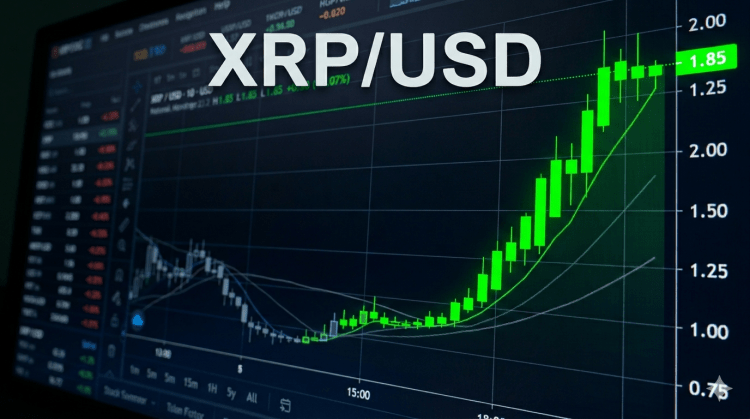
    The monthly Relative Strength Index (RSI) for XRP has dipped to 42.7, according to market commentator Celal Kucuker. This level is nearing the lowest points recorded in XRP’s trading history, a condition that has occurred only three times previously: in November 2015, March 2020, and August 2022. Each of these instances was followed by a notable upward price movement.

    Kucuker highlighted on social media that the monthly momentum indicator for XRP has reached similar extreme low zones before each major rally. The 2015 occurrence coincided with XRP trading within a symmetrical triangle pattern, with the price pulling back to around $0.0040 and the monthly RSI at 46.7, preceding the broad 2017 rally. In March 2020, amidst widespread market selling, the monthly RSI fell to 43.7, and XRP saw a low near $0.104 before climbing to $1.97 by April 2021. The third instance in August 2022 saw prices drop to $0.31 with the RSI at 43.9, ultimately leading to a rise to $3.40 by January 2025.

    What the Chart is Showing Now

    XRP has experienced a decline of over 10% in June alone, with the first four days of the month pushing the token to multi-month lows around $1.18. The past week saw a 9% decrease. Despite this selling pressure, reports indicate that XRP has maintained its position above the lower boundary of the ascending channel that has contained its price movements for nearly a decade.

    Kucuker’s analysis emphasizes that the current setup is distinguished by the simultaneous occurrence of two key conditions: the price holding at long-term structural support while the monthly momentum indicator has retreated to historically low levels. In previous cycles, momentum reached these depths either concurrently with the price bottom or just before a sustained recovery began.

    The Channel’s Upper End in Sight

    If historical patterns hold true, the initial price target would be the upper resistance line of the ascending channel. Reports suggest that each time XRP has tested the channel’s lower support, it has eventually trended towards the upper boundary.

  • Hayes Sells All Zcash Holdings Amid Major Flaw Discovery

    Hayes Sells All Zcash Holdings Amid Major Flaw Discovery

    Hayes Exits Zcash Holdings Amid Privacy Pool Vulnerability

    The cryptocurrency market was jolted on June 5 by the discovery of a significant vulnerability within Zcash’s Orchard privacy pool. The revelation prompted Arthur Hayes, co-founder of BitMEX, to liquidate his entire ZEC position mere hours after the flaw’s details became public.

    This sell-off has reignited a long-standing debate surrounding privacy-focused cryptocurrencies: can users truly trust systems where certain supply-related exploits might go undetected for extended periods?

    Hayes announced his decision on X, declaring “The Holy Trinity is dead” and confirming the sale of his ZEC holdings following reports of the Orchard Pool vulnerability. Zcash founder Zooko Wilcox and members of Shielded Labs initially disclosed the issue, noting that security researcher Taylor Hornby identified the flaw on May 29.

    According to the team, a malicious actor could have exploited this weakness to generate an unlimited supply of fake ZEC within Orchard, Zcash’s shielded transaction environment, without immediate detection.

    While developers acted swiftly to implement a fix by June 1, a critical concern remained: the inherently private nature of Orchard meant there was no cryptographic means to definitively prove whether the bug had been exploited prior to its resolution. This uncertainty appears to have been the decisive factor for Hayes.

    “While I think it’s extremely unlikely of any minting, it cannot be formally cryptographically proved impossible,” Hayes wrote, emphasizing that privacy-focused assets demand “perfection not improbability.”

    The market’s reaction was swift and severe. CoinGecko data indicated that ZEC plummeted by over 35% in the 24 hours leading up to the report, trading around $386 after reaching highs of $611 within the same timeframe. The token has also seen a nearly 27% decline over the past week and a more than 40% drop over two weeks. Trading activity surged by nearly 46% as investors scrambled to reassess risk, pushing daily spot volume above $1.7 billion.

    CoinGlass data revealed that the heightened volatility triggered approximately $49 million in liquidations over the past day, with long positions accounting for over $41 million of these losses.

    This marks the second instance in recent days where Hayes has divested a position shortly after expressing bullish sentiment. Just the previous day, he disclosed selling his HYPE and NEAR holdings, having previously projected HYPE could reach $150.

    The news of the vulnerability elicited varied responses from the crypto community. Investor Udi Wertheimer argued that privacy coins inherently carry a different risk profile than transparent blockchains, as counterfeit issuance can remain hidden for significant durations. He referenced a past Zcash inflation bug that was disclosed years after its existence.

    Others adopted a more tempered perspective. Mert Mumtaz, CEO of Helius, pointed out that major software bugs have been a recurring issue across the cryptocurrency landscape, including Bitcoin. He stated that the immediate priority is determining whether exploitation occurred before the patch was applied.

    Furthermore, Mumtaz highlighted that Zcash developers are already working on a future network upgrade designed to verify supply integrity through a migration to a new shielded pool.

    Barry Silbert, founder of Digital Currency Group, also countered the prevailing negative sentiment, asserting that the disclosure underscored Zcash’s robust security processes rather than revealing a systemic failure.

    “The AI-enabled assault on blockchains is here and I’m proudly on Team Zcash,” he posted.

  • HYPE Surges Amid Market Selloff as Whales Move $108M Off Exchanges

    HYPE Surges Amid Market Selloff as Whales Move $108M Off Exchanges

    HYPE Holds Strong Above $60 Amidst Market Selloff, Fueled by Institutional Accumulation

    HYPE is currently trading above the $60 mark, demonstrating remarkable resilience despite a recent market-wide selloff that has seen most cryptocurrency assets suffer significant losses. This relative strength has been further illuminated by data from Arkham Intelligence, which has uncovered a series of institutional-scale transactions in recent hours. These transactions appear to be transforming HYPE’s price stability from a noteworthy observation into a clearly documented behavioral signal.

    Institutional Withdrawals Signal Conviction

    Eight hours ago, three new wallets collectively withdrew 557,406 HYPE tokens, valued at approximately $40.2 million, from the Kraken exchange. Crucially, these tokens were immediately staked. This staking decision is a key differentiator from routine portfolio management, as tokens staked directly after withdrawal are committed to the network’s validator infrastructure rather than being positioned for immediate trading or sale. The intent behind this action is explicit.

    Six hours prior to that, another new wallet withdrew 180,000 HYPE, worth roughly $13.3 million, from Coinbase. This marks a second major exchange withdrawal concentrated within a compressed timeframe. In total, four new wallets were involved in four separate transactions, with over $53 million in HYPE withdrawn from Kraken and Coinbase – two of the world’s most regulated and scrutinized exchanges – within an eight-hour window. This occurred during a market downturn when most participants were moving in the opposite direction. The accumulation trend shows no signs of slowing, with new participants entering at new venues, exhibiting the same directional conviction that has characterized all documented institutional HYPE transactions in this series.

    Sustained Accumulation by a Single Wallet

    Arkham data also highlights the cumulative scale of activity from wallet 0x6436, which has been steadily accumulating HYPE since it first appeared in transaction flows three days ago. This address has now withdrawn a total of 761,357 HYPE tokens, valued at approximately $55.4 million, from exchanges over this compressed period. This represents a sustained, multi-session accumulation that has continued through the broader market selloff without interruption or reversal.

    The three-day timeframe is critical in distinguishing this activity from a large, one-off transaction. A single withdrawal could be attributed to rebalancing, custody migration, or other operational decisions that do not necessarily indicate a directional thesis. However, three consecutive days of withdrawals from exchanges, building a total exposure of $55.4 million, clearly describes a participant who has made a strategic decision regarding HYPE and is systematically executing against it, irrespective of broader market movements.

    The timing of this accumulation further strengthens the signal. The downturn in Bitcoin, the selling pressure across altcoins, and the general market uncertainty of the past week created an environment where most participants typically reduce exposure. Instead, wallet 0x6436 utilized this period to accumulate over $55 million in HYPE. When combined with the earlier mentioned withdrawals from Kraken and Coinbase within the same compressed window, the scale of institutional accumulation surrounding HYPE during this selloff has reached a level that the broader market may not have fully factored into the asset’s current valuation.

    HYPE Bulls Defend Key Support Levels

    HYPE is currently experiencing its first significant pullback after a powerful rally that propelled the token to new all-time highs near $75. The daily chart indicates a sharp rejection from this recent peak, with the price falling nearly 13% in a single session to close near $65. While this move appears substantial, it follows an almost uninterrupted advance from the $40 region in May.

    Despite this correction, the broader trend for HYPE remains decidedly bullish. The token is trading comfortably above its 50-day, 100-day, and 200-day moving averages, all of which are trending upward, confirming strong long-term momentum. The 50-day moving average, currently situated around $49, serves as the first major dynamic support level and remains well below current price action.

    Trading volume provides important context for recent price action. The rally to new highs was accompanied by a sustained increase in trading activity, suggesting genuine demand rather than a purely speculative surge. However, the recent selloff also saw elevated volume, indicating that some profit-taking has occurred following the parabolic advance.

    The critical area to monitor is the $64-$65 zone. This level coincides with the breakout region that initiated the final leg higher and is now acting as immediate support. If HYPE bulls successfully defend this area, the token could establish a higher low before attempting another move towards the $75 all-time high. A more significant correction would likely target the $58-$60 region, where previous resistance may now transition into support.

  • Crypto Options Expiry: Will Markets Plummet?

    Crypto Options Expiry: Will Markets Plummet?

    Bitcoin Options Set to Expire Amidst Market Downturn

    Approximately 26,000 Bitcoin options contracts, with a notional value of around $1.6 billion, are scheduled to expire on Friday, June 5. This expiration is smaller than last week’s end-of-month event, suggesting a limited impact on spot markets.

    The cryptocurrency market has experienced a significant downturn this week, with over $300 billion erased as Bitcoin weakens and altcoins like Ether face substantial losses. This decline occurs against a backdrop of ongoing military tensions between the U.S. and Iran, persistent global inflationary pressures, and a seemingly elusive diplomatic resolution.

    Options Expiry Details and Market Sentiment

    The current batch of Bitcoin options contracts exhibits a put/call ratio of 0.56, indicating a greater number of long contract sellers compared to short contract sellers. According to Coinglass, the maximum pain point is situated around $71,000, a level considerably higher than current spot prices, suggesting that a majority of these contracts may expire out-of-the-money.

    Open interest (OI) for Bitcoin options, representing the value or number of contracts yet to expire, remains highest at the $80,000 strike price on Deribit, totaling $1.6 billion. However, short sellers maintain a significant presence with $1.1 billion in OI at the $60,000 strike price. Overall BTC options OI across all exchanges has been declining, currently standing at $31.6 billion, as reported by Coinglass.

    Bitcoin spot is trading approximately $8,000 below the maximum pain level following a challenging week that saw $1.5 billion in liquidations and a brief dip below $62,000. Deribit noted that the market’s positioning is heavily skewed towards call options.

    Crypto derivatives provider Greeks Live observed that “With the price breaking below $70K, bears have become more aggressive, with significant increases in put positions at $68K, $65K, and $60K.”

    Ethereum Options Also Expiring

    In addition to Bitcoin options, approximately 153,500 Ethereum contracts are also set to expire, carrying a notional value of $266 million. The maximum pain point for Ether options is at $2,000, with a put/call ratio of 0.97. Total ETH options OI across all exchanges is approximately $5.7 billion.

    The combined notional value of all crypto options expiring today amounts to roughly $1.85 billion, marking a relatively modest event.

    Broader Market Collapse

    This week has been the most severe for cryptocurrency markets since early February, with the total market capitalization plummeting to a four-month low of $2.26 trillion.

    Bitcoin reached a low of $61,300 on Thursday and has shown little recovery above this level as of Friday morning. The asset remains more than 50% below its all-time high and is currently trading at the lower boundary of its range-bound channel, where significant support is located.

    Ether has experienced a sharp decline, hitting a 14-month low of $1,730, its current trading level. Further losses appear probable as the weekend approaches, potentially ushering in another red period for digital assets.

  • XRP Wave Structure Emerges: What’s Next?

    XRP Wave Structure Emerges: What’s Next?

    XRP Enters Critical Juncture as Wave Structure Nears Completion

    XRP has entered a pivotal stage as a long-anticipated wave structure, closely tracked by traders for months, finally begins to materialize. With increasing volatility and crucial price levels on the horizon, the cryptocurrency’s next movements could offer significant insights into whether XRP is nearing a bottom or poised for another downward leg before a sustained recovery can commence.

    Breaking Key Support as Long-Awaited Setup Unfolds

    According to analysis from CasiTrades, the cryptocurrency market is exhibiting the selling pressure that many analysts have predicted for months. Consequently, XRP has begun to fall below a key support level, indicating that the current correction may be entering a more decisive phase.

    The analyst explained that the development of smaller subwaves has been under close observation to ascertain whether the market’s ultimate downside target would be around $1.10 or the $0.87 support zone. Based on the current structure, CasiTrades believes XRP is forming a subwave 3 decline, a phase typically characterized as the strongest and fastest part of an Elliott Wave correction. Such waves often accelerate downside momentum, rapidly driving prices toward significant support areas.

    From a technical perspective, the 1.618 Fibonacci extension of the current move suggests a target near $0.92. This level sits just above the long-discussed $0.87 support zone, reinforcing the notion that XRP could be approaching a critical juncture.

    XRP’s Projected Roadmap: Drop, Bounce, Then One Final Test

    CasiTrades’ current market roadmap for XRP outlines an anticipated trajectory comprising three distinct phases. The initial expectation is a sharp move downward toward the $0.92 level, followed by a relief bounce back toward approximately $1.20, which is projected to act as resistance. This path concludes with a final downward move aimed at testing the critical $0.87 support zone.

    However, it is crucial to acknowledge that market behavior rarely aligns perfectly with theoretical projections. While this three-wave sequence represents the primary expectation, there is a distinct possibility that the market could deviate from this path. If the reaction from the W3 low demonstrates sufficient force, there is a viable chance that XRP may not require a final wave to reach the $0.87 support. The earliest indication of this scenario would be the price reclaiming key resistance levels and decisively breaking above $1.30 with clear strength.

    “We have spent the last four months monitoring the market as this specific structure developed, and we are finally arriving at the most critical phase,” CasiTrades stated. “As we approach these pivotal levels, the upcoming price action will be decisive in determining whether the correction concludes early or proceeds to its final intended target.”

  • Worldcoin Surges 60% Amid Crypto Slump, Analysts Eye More Gains

    Worldcoin Surges 60% Amid Crypto Slump, Analysts Eye More Gains

    Crypto Market Downturn Fails to Dampen Worldcoin’s Surge

    The cryptocurrency market has been firmly in the grip of a bearish trend, with prices for major digital assets like Bitcoin (BTC), Ethereum (ETH), Ripple (XRP), Solana (SOL), and Cardano (ADA) experiencing significant declines. However, a select few tokens have managed to buck the trend, with Worldcoin (WLD) standing out as a notable performer.

    Worldcoin’s Impressive Weekly Gains

    Just hours ago, Worldcoin’s price briefly surpassed the $0.55 mark, reaching its highest level since January. While it has since pulled back to approximately $0.48, according to CoinGecko, this still represents a remarkable 60% increase over the past week. The token’s market capitalization has now exceeded $1.6 billion, positioning WLD as the 51st-largest cryptocurrency by market value.

    Whale Activity Fuels Worldcoin Rally

    A primary driver behind Worldcoin’s recent surge appears to be increased activity from large investors, often referred to as “whales.” The X account BSCN reported that transactions exceeding $100,000 involving WLD have reached their highest point this year. The platform also noted that growing accumulation, rising network activity, and an anticipated reduction in token emissions have contributed positively to the token’s performance.

    Analyst Optimism and Price Targets

    Several prominent analysts have expressed bullish sentiment towards Worldcoin. X user Crypto Tony identified WLD as one of the “strongest” altcoins, forecasting a potential rise to $0.63 if the price can maintain support at the $0.45 level. Other analysts, including Altcoin Sherpa and Crypto Catalysts, have also weighed in. Altcoin Sherpa suggested a target of $0.65, contingent on Bitcoin’s stability, while Crypto Catalysts highlighted WLD’s resilience amid the broader market downturn and predicted a possible ascent to $2.

    Arthur Hayes, co-founder of BitMEX and CIO of Maelstrom, has set an ambitious future price target of $10 for Worldcoin. He controversially described the token as a “shitcoin” destined for significant gains due to its association with the burgeoning Artificial Intelligence (AI) sector.

    Technical Indicators Signal Caution

    Despite the positive momentum, some technical indicators suggest that Worldcoin’s rapid ascent may be followed by a pullback. The token’s Relative Strength Index (RSI) has recently surged past 70, indicating that WLD has entered overbought territory. This suggests a potential for a correction, as the RSI typically ranges from 0 to 100, with readings above 70 often signaling an asset is due for a price decrease.

    Skepticism Amidst the Hype

    Not all market observers are optimistic about Worldcoin’s prospects. X user Ryker has labeled the project a “dead project” that is merely capitalizing on the AI trend, drawing parallels to NEAR. This analyst expressed low expectations for WLD, citing a perceived lack of development from the team behind the token.