Tag: DeFi

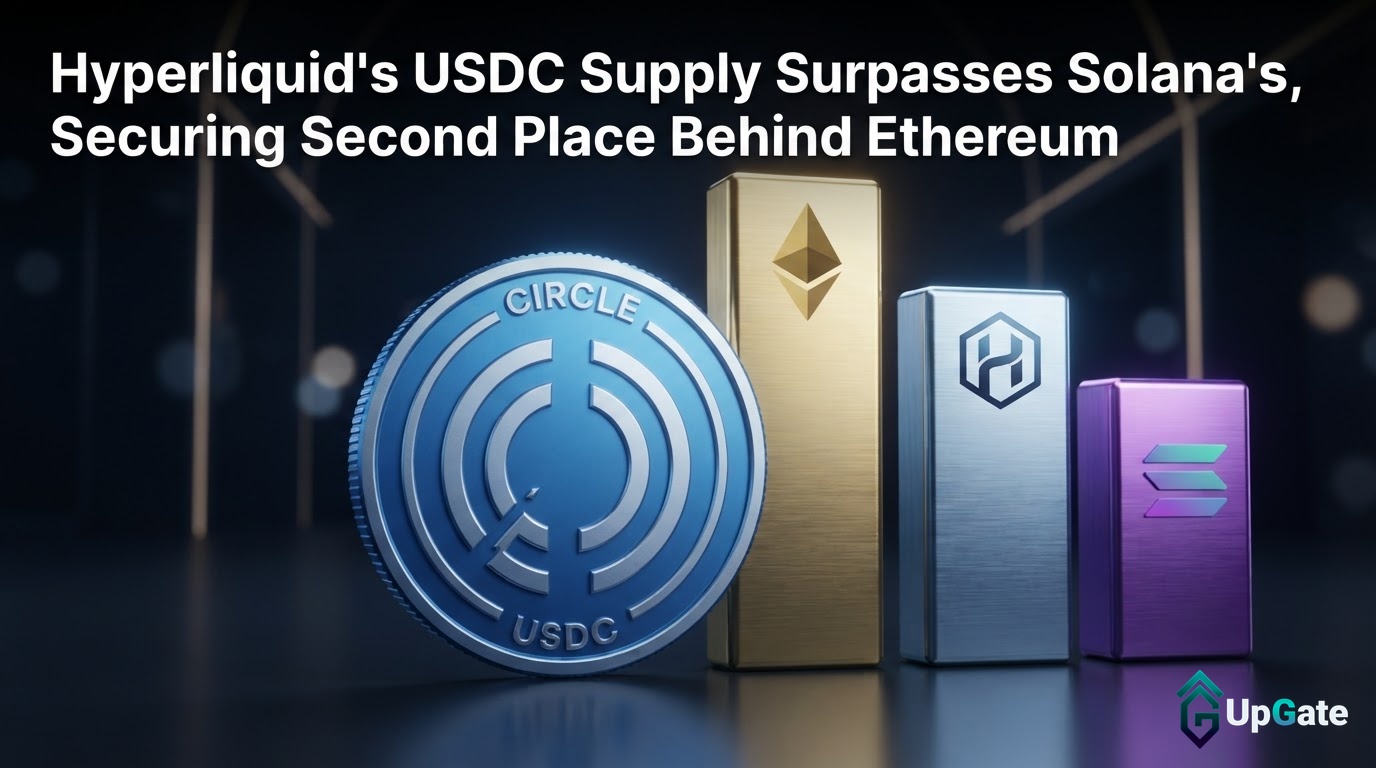
  • Hyperliquid’s USDC Supply Surpasses Solana’s, Securing Second Place Behind Ethereum

    Hyperliquid’s USDC Supply Surpasses Solana’s, Securing Second Place Behind Ethereum

    Hyperliquid has ascended to become the second-largest blockchain network by circulating USD Coin (USDC) supply, overtaking Solana. The network now holds approximately $6.73 billion in USDC, trailing only Ethereum in this significant metric. This substantial accumulation of stablecoin reserves is primarily attributed to Hyperliquid’s specialized function as a derivatives exchange and its native USDC issuance capabilities.

    According to data from the Hyperliquid ecosystem tracker hl.eco, Hyperliquid’s circulating USDC supply stands at roughly $6.73 billion, narrowly edging out Solana’s $6.72 billion. A significant portion of Hyperliquid’s USDC, approximately $6.28 billion, is natively issued on its HyperEVM layer. An additional $453.6 million is bridged from the Arbitrum network, highlighting a primary reliance on direct issuance for its stablecoin reserves.

    USDC as Collateral and Ecosystem Driver

    USDC plays a critical role within Hyperliquid’s ecosystem, serving as the primary collateral for its perpetual futures markets. This focus on derivatives trading means that a substantial amount of stablecoin activity on the platform is directly tied to its core functionality. In total, USDC constitutes approximately 98% of Hyperliquid’s total stablecoin supply, which amounts to $6.85 billion.

    Hyperliquid’s design as a blockchain specifically engineered for derivatives trading, rather than a general-purpose smart contract platform, is a key factor in its rapid accumulation of USDC. Traders are reportedly utilizing the platform by holding billions in USDC to engage with its futures markets. This specialized vertical approach distinguishes it from broader blockchain ecosystems.

    Historical Context and Issuer Strategy

    Historically, Solana’s USDC supply experienced a notable surge in late August 2026, reaching approximately $8 billion after Circle processed around $11 billion worth of USDC mints that month. This figure has since decreased to its current level of $6.72 billion.

    Partnerships established between May 2025 and 2026 with Circle, the issuer of USDC, and Coinbase, have been instrumental in supporting Hyperliquid’s minting and treasury infrastructure. These collaborations have provided Hyperliquid with direct access to USDC issuance pipelines, reducing its dependence on bridged supply from other networks.

    Internal Incentives and Market Impact

    Internally, Hyperliquid’s protocol design fosters a feedback loop involving its native HYPE token. A portion of the yield generated from its USDC reserves is directed towards HYPE token buybacks and burns. This mechanism creates an incentive for further USDC deposits, as increased reserves lead to higher yield, which in turn drives buying pressure on the HYPE token.

    For Circle, the distribution of significant USDC supply across various chains, including Hyperliquid, Ethereum, and Solana, helps to mitigate concentration risk. This diversification also expands the utility of USDC across different market segments, reinforcing its position as a leading stablecoin.

    Why This Matters

    The materials describe a narrow update: Hyperliquid’s network now holds approximately $6. The exact date of the current USDC supply figures for Hyperliquid and Solana.

    Broader Context

    Source materials place the factual news in this context: Hyperliquid’s partnerships with Circle and Coinbase, established around May 2025 to 2026, have supported the minting and treasury infrastructure that enabled this scale, giving Hyperliquid direct access to USDC issuance pipelines rather than relying solely on bridged supply from other networks.

  • Ethena Seeks Independence from Bitcoin Volatility, Founder States

    Ethena Seeks Independence from Bitcoin Volatility, Founder States

    Ethena Labs founder Guy Young is pursuing a path that many crypto projects consider heretical: building a business that isn’t tethered to Bitcoin’s volatile price movements.

    The protocol behind the synthetic dollar, USDe, is actively overhauling its revenue model to diminish its reliance on the cryptocurrency market’s most dominant influence. The shift involves embracing tokenized real-world assets and diversifying yield sources, aiming to generate returns irrespective of Bitcoin’s trading performance.

    Ethena’s flagship product, USDe, debuted in February 2024 with a sophisticated yet inherently crypto-dependent mechanism. The protocol combines spot crypto collateral, such as staked Ethereum or Bitcoin, with short positions in perpetual futures contracts. This strategy neutralizes market exposure—the “delta-neutral” aspect—while the protocol accrues yield from funding rates and staking rewards.

    During bullish market phases, when traders are eager to leverage and willing to pay premiums for long positions, these funding rates can be substantial. However, when market sentiment shifts, the financial dynamics become less favorable.

    This is precisely the dependency Young aims to dismantle. A revenue engine solely reliant on crypto derivatives markets inevitably mirrors the crypto market’s boom-and-bust cycles. For a protocol striving to offer a stable dollar product, this presents a fundamental structural challenge that requires resolution.

    The trajectory of USDe’s supply clearly illustrates this sensitivity. It reached a peak of over $14 billion in October 2025 before contracting to approximately $4 billion by late August 2026. This drawdown, representing roughly a 70% decrease from its high, underscores how susceptible the synthetic dollar’s appeal is to broader market conditions.

    Ethena’s most concrete step away from crypto-native revenue streams involves a $200 million reallocation into tokenized AAA-rated collateralized loan obligations (CLOs), specifically within the Janus Henderson Anemoy fund. CLOs are securities backed by pools of corporate loans, with AAA-rated tranches positioned at the top of the repayment hierarchy. These instruments are about as far removed from speculative crypto assets as possible.

    The rationale is straightforward: by allocating a significant portion of its reserves to traditional, yield-bearing assets that operate entirely outside crypto’s price fluctuations, Ethena can establish a baseline revenue stream even during extended bear markets. This can be viewed as a hedge against its existing hedge.

    Young’s professional background lends credence to this strategic pivot. Prior to establishing Ethena Labs in March 2023, he spent approximately six years at Cerberus Capital Management, a firm managing tens of billions across credit, real estate, and private equity. The traditional finance playbook of diversifying across uncorrelated yield sources is a standard practice. Applying this methodology to a crypto-native protocol represents the innovative aspect.

    The reallocation to real-world assets is not the sole initiative. On September 1, 2026, Ethena launched the beta version of Ethena Pay on the Avalanche network. This service enables USDe holders to spend their synthetic dollars via Visa cards, offering yields of up to 6% and rewards linked to the ENA governance token.

    Transforming a yield-bearing stablecoin into a spendable currency accessible at everyday points of sale is a significant stride toward broader adoption. From a user’s perspective, it rebrands USDe from a decentralized finance instrument into something akin to a high-yield checking account paired with a debit card.

    In terms of regulatory compliance, Ethena recently completed a SOC 2 Type II audit without any exceptions. This audit standard assesses a company’s data security and operational controls over time. A clean audit is a prerequisite for any fintech company seeking institutional investment and is increasingly becoming a distinguishing factor in the crypto space, where many protocols still operate without comparable oversight.

    Collectively, these developments signal a protocol striving to bridge the credibility gap between decentralized finance experimentation and institutional-grade financial infrastructure.

    The governance framework is also undergoing evolution. An approved fee-switch proposal mandates that 95% of net revenue be directed towards ENA token buybacks. However, this mechanism is contingent on USDe supply reaching $7.5 billion. With the current supply hovering around $4 billion, this target effectively doubles the outstanding amount. This incentive structure is designed to align token holders with the protocol’s growth, though achieving this threshold will necessitate reversing the supply contraction observed over the past year.

    Ethena’s strategic direction mirrors a broader trend emerging among major crypto protocols. Tether, the leading stablecoin issuer, has been diversifying its reserves into U.S. Treasuries and other traditional assets for years. Similarly, Hyperliquid and other DeFi platforms are exploring revenue models that do not solely depend on crypto trading volumes or token price appreciation.

    The common thread is the acknowledgment that purely crypto-native business models are inherently cyclical. When Bitcoin experiences a rally, all systems tend to perform well. Conversely, during downturns, protocols often face user attrition, revenue decline, and diminished relevance. Building sustainable financial infrastructure requires income streams that remain robust through market contractions.

    For Ethena specifically, the critical question is whether this pivot will be executed swiftly enough to be impactful. The 70% contraction in USDe supply suggests that the market has already expressed its sentiment during the current cycle. The combination of real-world asset yields, payment functionality, and enhanced compliance credentials positions the protocol to present a compelling case during the next market upswing.

    The success of this proposition will depend partly on execution and partly on the evolution of the competitive landscape. The synthetic dollar sector is becoming increasingly crowded, with every new entrant adopting similar strategies involving delta-neutral approaches and RWA diversification. Ethena’s early mover advantage and institutional credibility offer a distinct edge. However, maintaining this lead while USDe supply remains significantly below its peak will be the ultimate test of whether its new model can truly deliver on the promise of cycle-resistant revenue.

  • Ethena’s USDe and sUSDe Stablecoins Launch on TRON Network

    Ethena’s USDe and sUSDe Stablecoins Launch on TRON Network

    Ethena Labs’ USDe and sUSDe stablecoins are now available on the TRON network, expanding the availability of Ethena’s digital dollar products to a platform that has recorded over 403 million user accounts as of September 2026. This integration provides TRON users with access to dollar-denominated assets and rewards-bearing products, while Ethena gains access to TRON’s substantial user base.

    Users can bridge USDe and sUSDe to the TRON network via Stargate Finance. Support across TRON’s core decentralized finance (DeFi) applications, including JustLend DAO and SUN.io, is expected to roll out over the coming weeks. USDe on TRON will remain connected to liquidity across Ethena’s other supported networks.

    The TRON blockchain, founded in September 2017 and launched in May 2018, hosts the largest circulating supply of USD Tether (USDT), exceeding $94 billion. As of September 2026, the network has recorded over 15 billion total transactions and a total value locked (TVL) of $28 billion.

    Ethena Labs views this integration as a step toward making its digital dollar products accessible to a wider audience. The company is backed by investors including Fidelity, Franklin Templeton, Dragonfly, Binance Labs, Bybit, and OKX. TRON DAO, a community-governed decentralized autonomous organization, focuses on accelerating internet decentralization through blockchain technology and decentralized applications.

    While immediate access to USDe and sUSDe on TRON is now available, broader adoption across wallets, exchanges, and payment applications is anticipated to follow. The full integration with TRON’s core DeFi applications is also planned for the near future, though specific timelines for these rollouts are subject to development.

    Why This Matters

    The materials describe a narrow update: USDe and sUSDe stablecoins are now available on the TRON network, allowing users to bridge these assets and access them across TRON’s DeFi applications, wallets, exchanges, and payment platforms. Broader adoption across wallets, exchanges, and payment applications to follow.

    Broader Context

    Source materials place the factual news in this context: Ethena Labs is the development team behind USDe and USDtb and a contributor to the Ethena protocol.

  • Crypto Project Funds 1,000 Student Loans On-Chain

    Crypto Project Funds 1,000 Student Loans On-Chain

    Pencil Finance Completes $1 Million On-Chain Student Loan Cycle

    Pencil Finance, a project incubated by Animoca Brands, announced it has successfully completed a $1 million student loan cycle entirely on the blockchain. The process encompassed raising investor capital, tracking loan repayments, and ultimately returning funds to investors with accrued yield.

    The loans were originated by education financing firm ErudiFi. Pencil Finance, a decentralized lending protocol, then tokenized these loans into an on-chain private credit investment. This allowed funders to provide capital and monitor the repayment process through transparent blockchain records.

    Pencil Finance has described this as the first fully on-chain student lending cycle, a claim that could not be independently verified. The investment bundle was funded in July 2025 by Animoca Brands, Open Campus, and NewCampus.

    “The protocol deployed loans in the aggregate amount of US$1 million to borrowers, serviced through repayments, and returned the capital to the bundle’s funders with yield, with every step recorded transparently on blockchain,” Animoca Brands stated on the social media platform X.

    The protocol operates on EDU Chain, an Ethereum-based network designed for education and built using Arbitrum Orbit technology. Pencil Finance was co-incubated by Animoca Brands and the developer community HackQuest.

    ErudiFi utilized the majority of the capital for student loans and tuition financing across Southeast Asia, with a significant focus on Indonesia and the Philippines. According to ErudiFi, the funds supported loans for over 6,600 students across 118 educational institutions over a 12-month period. Approximately 1,050 of these students received funding directly facilitated by Pencil Finance.

    Investors in the initiative were structured into two tranches. A senior tranche offered fixed returns and priority for repayment, while a junior tranche provided variable returns and was designed to absorb initial losses in the event of defaults.

    ErudiFi reports that across its entire loan portfolio, half of the borrowers are women, 93% originate from lower-income households, and 52% are accessing formal credit for the first time.

    “Education lenders in emerging markets are creditworthy but invisible. Global capital can’t verify their performance, so it never reaches them,” said Frank Li, co-founder of Pencil Finance, in a statement. “Putting the lending cycle on-chain changes that: every repayment is recorded and auditable by anyone, in real time. This bundle built a public track record that makes the next bundle easier to fund.”

  • Robinhood Chain’s DEX Volume Shows Significant Increase, Metrics Indicate Growing Activity

    Robinhood Chain’s DEX Volume Shows Significant Increase, Metrics Indicate Growing Activity

    Robinhood Chain’s decentralized exchanges (DEXs) experienced a notable increase in daily trading volume, rising by 61% from August 28 to September 1. The volume grew from $989 million to $1.595 billion during this period, according to data from DeFiLlama.

    As of September 1, the network reported $738.11 million in DeFi deposits and approximately $797 million in stablecoins. Additional metrics for the same day included $353.96 million in daily perpetual futures volume and $2.524 billion in assets bridged to the network.

    Robinhood Chain, an Ethereum Layer 2 solution built on Arbitrum, launched its mainnet on July 1. In its initial weeks, the network processed over 17 million transactions, attracted nearly 350,000 addresses, and generated more than $1 billion in cumulative DEX volume. Later in July, DeFiLlama measured approximately $433 million in 24-hour DEX volume, placing the network fifth among blockchains at that time. Total value locked (TVL) stood at about $94 million, with stablecoin balances exceeding $260 million.

    In an August interview with Decrypt, Robinhood crypto chief Johann Kerbrat stated that the chain had processed over 200 million transactions. He described the chain’s strategy as balancing conventional financial products with speculative tokens that attract crypto traders. Early activity on the network was largely powered by meme coins, which appeared to overshadow the tokenized stocks that were central to Robinhood’s initial proposal.

    Comparisons between current metrics and those from July indicate that TVL is nearly eight times higher and stablecoin capitalization has roughly tripled. However, it is important to note that these figures may reflect different reporting times and methodologies used.

    DEX volume measures spot trades conducted through blockchain applications, distinct from centralized exchanges. Total value locked (TVL) tracks assets deposited into DeFi protocols. Bridged value encompasses assets moved onto Robinhood Chain, regardless of whether they have been deposited into applications. The network supports continuous trading of tokenized stocks, which eligible users can also lend or use as collateral. The network’s mainnet is scheduled to enter public testing in February 2026.

    Why This Matters

    The materials describe a narrow update: Daily trading volume on Robinhood Chain’s decentralized exchanges (DEXs) rose by 61% from August 28 to September 1, increasing from $989 million to $1. The figures for current TVL and stablecoin capitalization may reflect different reporting times and methodologies used compared to July readings.

    Broader Context

    Source materials place the factual news in this context: Daily trading volume on Robinhood Chain’s decentralized exchanges jumped 61% between Aug. 28 and Sept. 1, rising from $989 million to $1.595 billion, according toDeFiLlama.

  • Aster and World Liberty Financial Launch Rewards Campaign for RWA Perpetual Trading

    Aster and World Liberty Financial Launch Rewards Campaign for RWA Perpetual Trading

    Aster, a privacy-first onchain trading platform backed by YZi Labs, has partnered with World Liberty Financial (WLFI) to launch the USD1 RWA Boost: Phase 1 campaign. This initiative offers rewards in $WLFI and USD1 to incentivize trading on specific real-world asset (RWA) perpetual markets. The campaign, running from August 31 through December 31, 2026, aims to drive activity and establish USD1 as a key settlement asset for these onchain markets. Trading cryptocurrencies and leveraged products involves significant risk, and campaign terms are subject to change.

    Campaign Mechanics and Rewards
    The USD1 RWA Boost campaign is built upon Aster’s AOS-2 framework, an evolution of its Aster Open Standards (AOS). According to Aster, AOS-2 provides a standardized, onchain process for initiating perpetual market listings. This framework allows projects to propose new markets through a transparent and automated system. Applicants are required to stake 1 million $ASTER, which are locked for four years. If a proposal is approved, Aster’s risk team configures the market, and the perpetual can become operational as early as T+1.

    World Liberty Financial (WLFI) is a key partner in this campaign, contributing to the reward pools. The campaign offers a total of 125,000,000 $WLFI and 6,250,000 USD1 in rewards for Phase 1. Users can earn rewards through two primary mechanisms: Trading Points, earned via taker volume on eligible USD1 perpetual pairs, which contribute to their share of the USD1 reward pool, and Open Interest (OI) Points, earned by holding eligible positions, which determine their share of the $WLFI reward pool. According to Aster, traders utilizing Single Asset Mode with USD1 as collateral will receive a 2x boost on their OI Points. Rewards are calculated across weekly epochs and distributed the following week.

    The campaign specifically covers trading pairs such as SPCX/USD1, CL/USD1, XAU/USD1, SNDK/USD1, SKHYNIX/USD1, and MU/USD1.

    Aster’s Infrastructure and RWA Market Development
    Interpretations suggest that AOS-2 is transforming Aster into an infrastructure layer where third parties can launch their own perpetual markets. The initial USD1 RWA perpetual listings are seen as evidence that this model is already functioning. The campaign highlights the importance of the settlement asset, with USD1 serving as a unified instrument across various RWA markets like gold, energy, and equities. Aster aims to become a leading venue for bringing new asset markets onchain as more assets transition to the blockchain.

    Leonard, CEO at Aster, and Zach Witkoff, Co-Founder and CEO at World Liberty Financial, are associated with these entities. Aster Chain, the Layer 1 blockchain powering Aster, is designed to support decentralized finance applications. Aster also offers features like Hidden Orders to enhance user trading privacy.

    It is important to note that the exact list of eligible pairs, reward parameters, and campaign rules may be modified during its duration. This announcement is for informational purposes only and does not constitute investment or financial advice.

    Why This Matters

    The materials describe a narrow update: Aster, a privacy-first onchain trading platform, in partnership with World Liberty Financial (WLFI), has initiated a campaign offering rewards in $WLFI and USD1. The exact list of eligible pairs and campaign rules are subject to change during the campaign.

    Broader Context

    Source materials place the factual news in this context: Aster is a privacy-first onchain trading platform backed by YZi Labs.

  • YZi Labs Invests in TermMax to Bolster On-Chain Bond Market Infrastructure

    YZi Labs Invests in TermMax to Bolster On-Chain Bond Market Infrastructure

    YZi Labs has strategically invested in TermMax, a fixed-rate lending protocol focused on developing on-chain bond market infrastructure. This move aims to address a perceived gap in the financial application layer for tokenized assets, particularly concerning credit, collateral management, and risk transfer products like options, according to YZi Labs.

    TermMax, developed by Term Structure Labs, has already secured over $8 million in funding and has been operational on mainnet since April 2025. The protocol is deployed across 10 EVM-compatible chains, featuring 60 fixed-rate markets and 40 strategy vaults. It currently holds tens of millions of dollars in total value locked and serves over 1.5 million registered wallets. Key partners and Curators for TermMax include Keyrock, Hardcore Labs, Edge Capital, and Origami.

    The $TMX token completed its Token Generation Event (TGE) on August 25th. TermMax’s offerings include TermMax Alpha, which provides physical delivery options designed to avoid liquidation before expiry, settling by physical delivery of collateral. This mechanism is intended to better suit less liquid assets than traditional perpetual futures. TermPrime, another component of TermMax, completed its first live trade on Canton Network at the end of June and has established a counterparty network of nine institutions.

    YZi Labs highlighted that tokenized blue-chip equities, valued at $2.48 billion, represent the fastest-growing asset class on-chain. However, the firm noted that the financial application layer surrounding these assets remains underdeveloped, with a notable absence of options and other risk-transfer products. YZi Labs stated that its investment is strategically positioned to address this specific market gap.

    Jerry Li, Co-founder and CEO of TermMax, emphasized the need for on-chain interest rate curves, stating, “When I left banking, there were a few hundred billion dollars of assets sitting on-chain without a single directly observable interest rate curve between them. In traditional markets, that would be unheard of. That is what made me decide to build this infrastructure on-chain.” Li also articulated TermMax’s vision: “What TermMax wants to be is not another lending protocol, but the on-chain interest rate curve itself,” aiming to enable DeFi to “grow into something professional enough to genuinely serve finance.”

    YZi Labs, which manages over $10 billion in assets globally, invests in ventures across Web3, AI, and biotech, with a portfolio exceeding 300 projects. The firm has incubated over 65 companies through its EASY Residency program, and TermMax was selected for Season 3 of this initiative. TermMax previously saw Cumberland DRW lead its 2023 seed round and has integrated with Ondo Global Markets (January 2026) and Binance’s bStock, alongside its August 2026 deployment on Robinhood Chain. The protocol holds a DeFiSafety Process Quality Review score of 93%.

    The specific terms of YZi Labs’ investment in TermMax were not disclosed.

    Why This Matters

    The materials describe a narrow update: YZi Labs invested in TermMax, a protocol focused on fixed-rate lending and on-chain bond market infrastructure. Terms of the investment from YZi Labs were not disclosed.

    Broader Context

    Source materials place the factual news in this context: TermMax is a fixed-rate, fixed-term borrowing and lending marketplace built by Term Structure Labs, live on mainnet since April 2025 and deployed across 10 EVM-compatible chains, where it runs 60 fixed-rate markets and 40 strategy vaults. The protocol splits debt into three tradable tokens: FT (principal), XT (interest and option value) and GT (an ERC-721 receipt for leveraged positions). Professional Curators set target APR ranges across isolated markets and manage strategy vaults, and liquidations settle by physical delivery of collateral. Co-founder and CEO Jerry Li has 25 years in global financial markets and served as Managing Director at Deutsche Bank, running fixed income and FX for Greater China.

  • MEW Integrates Ondo Perps for 24/7 Onchain Leveraged Trading

    MEW Integrates Ondo Perps for 24/7 Onchain Leveraged Trading

    MyEtherWallet Integrates Ondo Perps, Unlocking 24/7 Leveraged Trading for Onchain Equities, ETFs, and Commodities

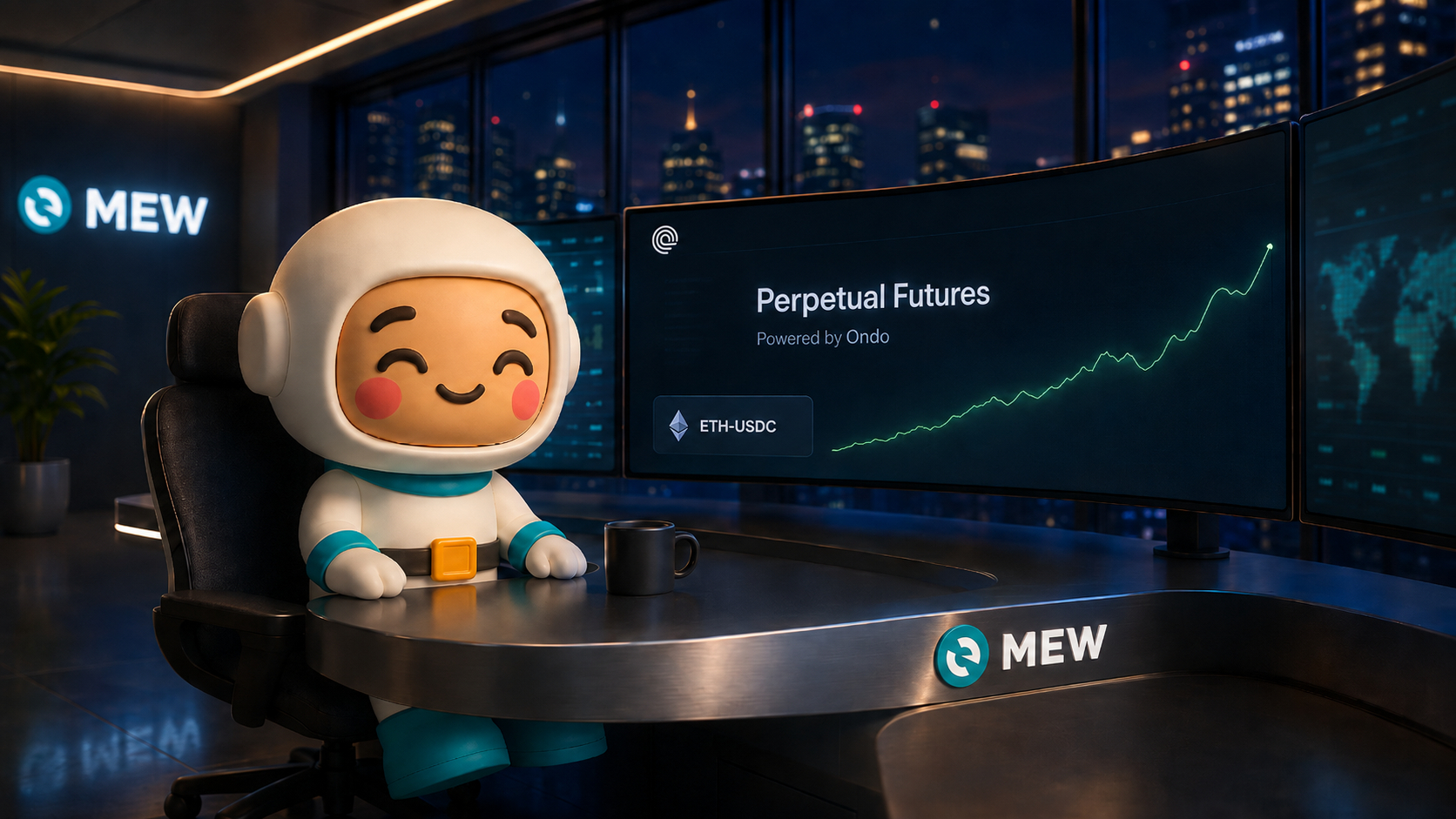
    LOS ANGELES – August 13, 2026 – MyEtherWallet (MEW), a prominent digital wallet provider, announced today its integration with Ondo Perps, a move that expands its decentralized finance offerings to include perpetual futures. This new feature allows users to trade derivative contracts with no expiration date, providing access to continuous perpetual contracts with up to 20x leverage on leading U.S. stocks, ETFs, and commodities, available 24 hours a day, seven days a week, directly on MyEtherWallet.com.

    The integration aims to bridge traditional financial markets with self-custodial Web3 technology. MEW users can now leverage Ondo Perps to establish long or short positions on major traditional market assets while retaining full control over their funds. In contrast to traditional brokerages, which often impose strict trading hours and geographical limitations, eligible users can now manage their exposure to global markets around the clock through any supported wallet connected to the MEW web interface.

    “Our mission has always been to make decentralized finance accessible, flexible, and fully self-custodial,” said Kosala Hemachandra, Founder and CEO of MEW. “Integrating Ondo Perps is a natural progression in our vision for the wallet as an all-in-one financial hub. Whether investors wish to buy and hold tokenized equities or manage risk with up to 20x leverage on stocks and commodities, they can now execute advanced trading strategies 24/7 without relinquishing control of their assets.”

    Key Features of MEW’s Ondo Perps Integration:

    • Access to perpetual futures trading with no expiration dates.
    • Leverage of up to 20x on U.S. stocks, ETFs, and commodities.
    • 24/7 trading availability.
    • Full self-custody of assets maintained by users.
    • Seamless integration with the MyEtherWallet interface.

    How to Access Ondo Perps on MEW:

    [Details on accessing Ondo Perps on MEW would typically be provided here, outlining steps for users.]

    For further information on MEW’s Ondo Perps integration and its latest portfolio features, visit www.myetherwallet.com.

    This product is not available nor intended for U.S. citizens. Restrictions apply. For more information, please refer to https://docs.ondoperps.xyz/.

    About MyEtherWallet (MEW)

    MyEtherWallet (MEW) is dedicated to providing simple, free, and secure access to the global financial system, empowering users to build wealth with digital assets. Since launching the first Ethereum user interface in 2015, MEW has continuously innovated, bringing self-custodial real-world assets and advanced trading tools to a wider audience, transforming blockchain technology into an accessible and user-friendly component of daily life.

  • Flare’s FXRP Now Enables On-Chain Options and Futures Trading for XRP Holders on Derive

    Flare’s FXRP Now Enables On-Chain Options and Futures Trading for XRP Holders on Derive

    Flare’s FXRP collateral has been integrated with the Derive platform, opening up on-chain options and perpetual futures trading for XRP holders directly from their wallets. This development provides XRP holders with new avenues for hedging positions and generating yield, migrating these financial instruments to decentralized infrastructure.

    FXRP, a representation of XRP on the Flare network, allows users to leverage their XRP holdings for derivative trading. Previously, XRP holders faced limited options for hedging or generating premium income without relying on centralized exchanges or custodians. The introduction of FXRP on Derive addresses this gap by offering a permissionless on-chain market.

    According to a press release shared with CryptoPotato, XRP holders can now trade on-chain options and perpetual futures using FXRP as collateral. This functionality enables hedging, premium generation, and directional trades directly from a user’s wallet. Derive’s XRP options are cash-settled in USDC, and the platform utilizes a Portfolio Margin V2 account system.

    FXRP reached the Flare mainnet in September 2025. Within its first week, the cap for FXRP was reached in just four hours, with 5 million tokens minted. In the seven months following its mainnet launch, over 155 million FXRP tokens had been minted. Before February, 82 million FXRP were deployed across DeFi applications, a figure that rose to 144 million since February.

    Derive is a significant participant in the on-chain options market, with its total value locked nearing $118 million. The platform’s integration with Flare’s FXRP is expected to increase on-chain activity for XRP derivatives and enhance hedging and yield generation opportunities for XRP holders.

    FXRP is created through Flare’s FAssets system, representing XRP on the Flare network via an overcollateralized system. The supply of FXRP backs lending, borrowing, and yield tokenization. In related news, Flare has also listed an FXRP/USDC spot pair on Hyperliquid.

    While these new capabilities offer expanded financial tools, the complexities and risks associated with options and perpetual futures trading remain. These instruments can be volatile, and users are advised to understand the potential risks before engaging in such trading activities. The integration aims to provide XRP holders with a credible path to participate in on-chain derivatives markets, offering more control and flexibility compared to traditional centralized platforms.

    Why This Matters

    The materials describe a narrow update: Flare’s FXRP, a representation of XRP on the Flare network, can now be used as collateral on the Derive platform. FXRP enables XRP holders to trade on-chain options and perpetual futures from their own wallets.

    Broader Context

    Source materials place the factual news in this context: Flare’s FAssets system.

  • XRP Holders Gain Access to Options and Perpetual Futures Trading on Derive via FXRP Collateral

    XRP Holders Gain Access to Options and Perpetual Futures Trading on Derive via FXRP Collateral

    XRP holders can now trade options and perpetual futures on the decentralized exchange Derive, utilizing Flare’s FXRP as collateral. This development, announced on Thursday, expands derivative trading capabilities for XRP holders within the decentralized finance (DeFi) ecosystem.

    FXRP, a token representing XRP on the Flare blockchain, is minted by users through Flare’s FAssets bridge. Once minted, FXRP can be deposited into a Derive Portfolio Margin V2 account, enabling users to trade derivatives directly from their wallets.

    Options contracts provide the right, but not the obligation, to buy or sell an asset at a predetermined price by a specific date. Perpetual futures allow speculation on an asset’s future price movements without an expiration date. According to Flare, these new trading options allow XRP holders to hedge against potential losses, earn premiums by selling options, or speculate on XRP’s price.

    “Options are often the last major market to develop around an asset, and XRP has been waiting for the infrastructure,” said Nick Forster, founder and CEO of Derive, in a statement. “FXRP gives one of crypto’s largest holder bases a credible path onchain, and adding Derive’s options markets means that capital can now be hedged, used to earn premium and traded with the same sophistication available around other major assets.”

    Derive’s XRP options will settle in USDC. If an option expires profitably for the buyer, Derive will pay out the difference in USDC while the FXRP collateral remains in the user’s account. Options sellers, however, must maintain sufficient USDC to cover settlement costs and meet margin requirements to avoid liquidation of their collateral.

    This integration broadens FXRP’s utility in decentralized finance. Earlier in the month, FXRP was approved as collateral for Sentora’s RLUSD vault on the Ethereum-based lending protocol Morpho, a service that allows XRP holders to bridge FXRP to Ethereum and borrow Ripple’s RLUSD stablecoin without selling their XRP.

    Why This Matters

    The materials describe a narrow update: Flare announced that XRP holders can now use FXRP, a token representing XRP on the Flare blockchain, as collateral to trade options and perpetual futures on the decentralized exchange Derive. XRP holders can use the products to hedge against losses, earn premiums by selling options, or speculate on the token’s price.

    Broader Context

    Source materials place the factual news in this context: Flare announced on Thursday that XRP holders can now use Flare’s FXRP as collateral to trade options and perpetual futures on decentralized exchange Derive.