Tag: Negative

  • Spain Halts Prediction Markets Over Gambling Concerns

    Spain Halts Prediction Markets Over Gambling Concerns

    Spain has blocked prediction market platforms Kalshi and Polymarket as it investigates potential breaches of its gambling regulations.

    Regulatory Action

    The Directorate General for Gambling Regulation (DGOJ) issued the disciplinary order after being unable to contact the firms at their foreign addresses, according to a press release.

    “The Ministry of Social Rights, Consumer Affairs, and Agenda 2030 has opened disciplinary proceedings against Polymarket and Kalshi, two prediction platforms where betting takes place, for a possible violation of gambling regulations, as they are allegedly operating in Spain without the required administrative authorization,” the translated release stated. The platforms are expected to remain blocked for three to four months during the proceedings.

    “The DGOJ (Spanish Directorate General for Gambling Regulation) reminds the public that in Spain, in line with other European jurisdictions, prediction markets are considered gambling when bets are placed on uncertain future outcomes,” the Ministry of Consumer Affairs wrote. “Therefore, operating them in Spain requires obtaining a specific administrative license.”

    Global Scrutiny

    Spain joins a growing number of countries that have blocked or banned the prediction market platforms. Last week, Indonesia banned Polymarket, citing its use as gambling. Other Asian countries, including Thailand and India, have also taken steps toward blocking the platforms.

    Due to the firms’ lack of proper regulations, Spain’s DGOJ noted their inability to provide guarantees for “identity verification systems, mechanisms to control access to minors and people who are self-excluded or prohibited from gambling, or the supervision standards necessary for the protection of users.”

    Market Performance and U.S. Concerns

    Polymarket and Kalshi have gained popularity this year, generating over $5 billion and $13.7 billion in monthly trading volumes respectively in May, according to data from Dune.

    The platforms’ valuations have also increased. Polymarket is reportedly seeking a $15 billion valuation, while Kalshi recently raised funds at a $22 billion valuation.

    Scrutiny has also increased in the United States, particularly due to concerns about insider trading allegations. This includes a group of wallets that profited around $2.4 million on markets related to the Iran War. In April, a U.S. soldier was charged with placing Polymarket bets using confidential information, allegedly earning over $400,000 from predictions about the removal of Venezuelan President Nicolás Maduro.

    Last week, House Republicans launched an investigation into both firms, with one congressman stating that “Congressional action may be necessary.”

  • Dogecoin’s Decline Fuels Correction Fears

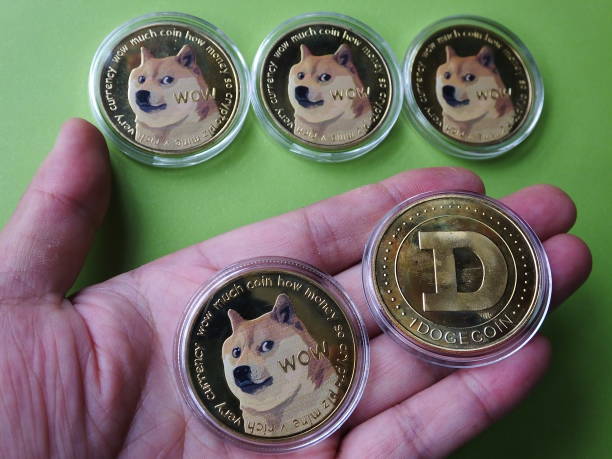
    Dogecoin’s Decline Fuels Correction Fears

    Dogecoin Faces Potential Correction After Channel Rejection

    Dogecoin’s failure to maintain its position at the upper boundary of its multi-week trading channel has sparked concerns of a more significant price correction. After losing momentum near resistance levels, DOGE is now testing the crucial $0.1020 support zone, where buyers must step in to prevent further downward pressure.

    DOGE Tests Key Mid-Channel Support

    Dogecoin has recently experienced a price decline following a test of its upper channel boundary. Crypto analyst Ali Charts notes that the asset has retreated to the $0.1020 level, a cooling-off period that provides a clearer view of the market’s current structural integrity after testing overhead resistance.

    This specific price point is technically significant, acting as a critical juncture for the asset. The $0.1020 level aligns with both the midpoint of DOGE’s multi-week trading channel and the 50-day Simple Moving Average (SMA), creating a strong area of technical confluence that market participants are closely watching. If buyers can successfully defend this support, the current setup favors a constructive recovery, with the price potentially aiming to reclaim lost ground and return to the upper channel resistance situated at $0.1156. Conversely, a failure to defend this support could signal a tactical dip, potentially serving as a mechanism to flush out overleveraged positions before further movement. In such a scenario, the market focus would immediately shift toward the lower boundary of the channel at $0.0883, which stands as the next significant area of interest for traders anticipating deeper volatility.

    Dogecoin Retraces After Upside Liquidity Sweep

    Trading Different highlights that Dogecoin is currently undergoing a retracement following a recent sweep of a liquidity zone to the upside. This downward move suggests that the market is attempting to stabilize, with price action currently engaged in a search for a reliable support foundation.

    To the upside, the most significant liquidity pool is firmly anchored at $0.10445. This area represents a solid cluster of accumulated orders; however, as the price continues to lose ground, this target is drifting further out of reach. Consequently, the barrier to a bullish reversal is increasing, making this level an increasingly challenging objective for the bulls to reach in the short term without a substantial shift in market sentiment.

    Looking toward the downside, substantial liquidity is concentrated at $0.10040. With bearish pressure currently dominating the market landscape and the distance to this zone remaining minimal, the technical setup suggests a high probability that this level will be swept in the immediate future. Traders are likely to closely monitor this specific pocket, as it serves as a critical magnet for the current price decline.

  • Crypto ETFs Lose $112M; Hyperliquid Funds Continue Winning Streak

    Crypto ETFs Lose $112M; Hyperliquid Funds Continue Winning Streak

    Bitcoin and Ethereum ETFs experienced a combined $112 million in outflows on Monday, while two Hyperliquid ETFs extended their streak of net buying to eight consecutive days.

    Diverging Trends

    This divergence underscores a growing split in institutional investment strategies. Traditional crypto funds are seeing capital flight amid macroeconomic uncertainty, while newer products linked to Hyperliquid’s high-growth infrastructure continue to attract demand.

    Bitcoin ETFs led the losses with $105.2 million in outflows, while Ethereum ETFs shed $6.7 million, according to SoSoValue data. These movements follow a week in which digital asset investment products recorded $1.47 billion in outflows, the third-largest weekly total of 2026, according to CoinShares.

    Bitcoin ETFs alone saw $1.315 billion in outflows, the largest weekly outflow of the year. Ethereum funds recorded $223 million in outflows. CoinShares attributed the risk-off sentiment to ongoing geopolitical tensions related to the Iran conflict, with outflows extending beyond the U.S. to Switzerland, Canada, and Hong Kong.

    Hyperliquid ETFs See Gains

    Meanwhile, the two Hyperliquid ETFs have posted net buying for eight consecutive days, adding $10.95 million on Monday. The streak began on May 13 with a $1.17 million net addition and has included daily flows ranging from $4.4 million to $25.5 million, with the largest single-day inflow of $25.5 million occurring on May 20.

    The increase in HYPE ETF flows coincides with the token reaching a new all-time high of $64.21 on Sunday. The token has surged nearly 50% over the past month and boasts year-to-date gains exceeding 140%.

    This rally follows the successful launch of HYPE ETFs and institutional support, particularly from Bitwise, which allocated 10% of the management fees from its newly launched Hyperliquid ETF (BHYP) to directly purchase and hold HYPE on its corporate balance sheet.

    Market Analysis

    Despite the contrasting flows, Tim Sun, senior researcher at HashKey Group, told Decrypt that the ETF outflows from Bitcoin and Ethereum are driven by a combination of price action and rising Treasury yields. “Bitcoin’s price has actually dropped below the average purchase price of the ETFs, triggering a certain degree of selling pressure,” he said. “Additionally, because the U.S. Treasury yield curve has shifted upward as a whole, it has suppressed the appetite for arbitrage capital.”

    Sun added that the market is in a wait-and-see period, with options data showing no clear directional preference from either institutional or retail investors. “The market is primarily buying downside protection and reducing risk exposure, rather than making large-scale bets on a one-way crash or a rapid rebound,” he said.

    Regarding Hyperliquid’s prospects, Sun cautioned that regulatory hurdles remain significant despite the platform’s growth. “The CME and ICE recently jointly pressured Congress to call for scrutiny over it. Regulatory risks not only exist but are continuously growing,” he said. “Conversely, though, this also proves that Hyperliquid’s own trading volume and business performance are remarkably prominent.”

    Bitcoin is currently trading at around $77,140, down 0.3% over the past 24 hours, according to CoinGecko data.

    On the prediction market Myriad, owned by Decrypt’s parent company Dastan, users now see a 74% chance that Bitcoin will retest $84,000 next, rather than dropping to $55,000. That number has decreased from 86% on May 14, mirroring Bitcoin’s decline from $81,700 to $74,500 last weekend.

  • XRP Price Falls, Traders Anticipate Further Decline

    XRP Price Falls, Traders Anticipate Further Decline

    XRP Price Consolidates Amidst Downward Correction

    The price of XRP has begun a downward correction from the $1.3740 zone. Currently consolidating, the cryptocurrency may attempt another increase if it remains above $1.320.

    Technical Analysis

    XRP’s price initiated a downward correction after failing to sustain levels above $1.3620. It is now trading below $1.3580 and the 100-hourly Simple Moving Average. A bearish trend line is forming, with resistance at $1.360 on the hourly chart of the XRP/USD pair, according to data from Kraken. The pair could initiate a fresh increase if it settles above $1.3620.

    Support Levels Tested

    XRP struggled to maintain levels above $1.3720, mirroring declines seen in Bitcoin and Ethereum. The price dipped below $1.3620 and $1.3600. It subsequently declined below $1.3550 and briefly fell below the 50% Fibonacci retracement level of the upward movement from the $1.30 swing low to the $1.3740 high. A bearish trend line is also forming, with resistance at $1.360 on the hourly chart of the XRP/USD pair. The price is currently trading below $1.3520 and the 100-hourly Simple Moving Average.

    Potential Resistance and Support Levels

    If an upward move occurs, the price may encounter resistance near $1.350. The first significant resistance level is near $1.3560, above which the price could rise to test $1.360. A decisive move above the $1.360 resistance could push the price towards the $1.3720 resistance. Further gains might lead to a test of the $1.3750 resistance, with the next major challenge for bulls potentially near $1.380.

    Downside Risks

    If XRP fails to surpass the $1.360 resistance zone, a fresh decline could ensue. Initial support on the downside is near $1.330. The next major support levels are near $1.3280 and the 61.8% Fibonacci retracement level of the upward move from the $1.30 swing low to the $1.3740 high. A break and close below $1.3280 could see the price continue to decline towards $1.3175. The subsequent major support is near $1.3120, below which the price could fall further towards $1.3050. Further losses might lead to a test of $1.30.

    Technical Indicators

    • Hourly MACD: The Moving Average Convergence Divergence (MACD) for XRP/USD is currently gaining momentum in the bearish zone.
    • Hourly RSI: The Relative Strength Index (RSI) for XRP/USD is below the 50 level.

    Key Levels

    • Major Support Levels: $1.3280 and $1.3120.
    • Major Resistance Levels: $1.3550 and $1.3750.
  • CZ Dismisses Dubai Surfing Accident Rumors

    CZ Dismisses Dubai Surfing Accident Rumors

    Changpeng Zhao (CZ), the founder of Binance, has refuted widespread rumors of his disappearance after an alleged surfing accident in Dubai.

    Social Media Frenzy

    The story, which quickly gained traction on social media, prompted traders to capitalize on the speculation by launching meme coins on the Solana and BNB Chain networks. The false reports, circulated on WeChat over the weekend, claimed Zhao was surfing near Dubai’s Jumeirah Beach when a strong rip current pulled him out to sea. The rumors also alleged that local Coast Guard and rescue teams deployed speedboats, drones, and helicopters in response to police reports.

    Zhao’s Response

    Zhao has since dismissed the reports as “fake news” on his X account, highlighting inconsistencies in the social media narrative. He clarified that while he participates in kitesurfing, traditional surfing is a different sport. The Binance founder added that he always has a dedicated safety boat when kitesurfing.

    “I don’t surf (kite surfing is a diff sport). Dubai is not even a surfing destination. There is Surf Abu Dhabi, world’s largest surf place, which I havent tried yet,” he wrote.

    Meme Coin Mania

    Traders quickly seized the opportunity, launching several meme coins shortly after the news broke. Tokens appeared on the Solana network, attracting speculators hoping to profit from the confusion.

    According to data from GeckoTerminal, most of the pools on pump.fun associated with the incident failed to attract significant liquidity, although one meme coin saw over $114,000 in activity within hours. However, the excitement was short-lived, as most of these coins lost over 40% of their value after Zhao denied the rumors and confirmed his safety.

    Previous Skepticism

    The 49-year-old is known for his skepticism towards meme coins, having previously accused traders of chasing hype by launching tokens tied to his name. Zhao has described the trend as “a little weird” and encouraged developers to focus on building practical blockchain applications.

    Zhao later emphasized that he has never invested in meme coins, referencing the TST token launch incident last year, which went viral after being promoted as linked to Binance despite having no official connection to the exchange.

  • XRP Liquidity on Exchanges Hits Lowest Point Since 2020

    XRP Liquidity on Exchanges Hits Lowest Point Since 2020

    XRP Price Outlook: Exchange Liquidity Lowest Since 2020

    XRP’s price is signaling potential volatility as the exchange liquidity index for XRP has fallen to its lowest level since 2020, indicating a significant structural shift.

    Market Dynamics

    The tightening supply of XRP is evident in declining exchange reserves and increased holdings by large investors, raising concerns about a potential liquidity crisis. This development coincides with a drop in XRP spot volume on Binance following recent market downturns. The price of XRP has fallen to $1.35, representing a 2% decrease this week.

    The combination of thin liquidity and the ongoing discussion surrounding a potential Exchange Traded Fund (ETF) creates conditions that could lead to significant price fluctuations.

    Technical Analysis

    XRP is currently consolidating below its recent high of $1.50, struggling to maintain its position within the upper range of its weekly trading band. Support levels are clustered around $1.31, which marks the lower boundary of the seven-day trading range.

    Momentum indicators are mixed. The 0.5% daily price drop is mirrored by stagnation in futures activity and at the exchange level. These factors have been highlighted as contributing to market instability in recent weeks, and data from Binance confirms that this pattern is intensifying.

    Potential Scenarios

    Three potential scenarios could unfold in the near term:

    • Bull Case: Increased speculation regarding ETF approval could drive XRP to retest $1.50. DeepSeek’s AI model projects a price target of $5 by late 2025 if institutional adoption accelerates.
    • Base Case: Consolidation continues within the $1.30-$1.40 range as the market awaits a catalyst, such as the Clarity Act.
    • Bear Case: Deteriorating liquidity could accelerate, widening spreads and potentially pushing the price towards the $1.31 support level.

    The ETF flow dynamic remains a key factor to monitor in the coming months.

    Infrastructure Solutions

    XRP’s low liquidity highlights a broader structural issue affecting multiple assets. Fragmented liquidity across different blockchain networks contributes to the price distortions currently observed in XRP. For traders, the underlying infrastructure becomes a crucial aspect of their investment strategy.

    LiquidChain ($LIQUID) is a Layer 3 infrastructure project designed to address this issue. Its Unified Liquidity Layer integrates liquidity from Bitcoin, Ethereum, and Solana into a single execution environment.

    With LiquidChain, developers can deploy applications once and access all three ecosystems simultaneously. Its Single-Step Execution and Verifiable Settlement features aim to eliminate the multi-step bridging processes that contribute to liquidity fragmentation.

    The LiquidChain presale has surpassed $800,000, with the current price of $0.01463 per $LIQUID. Capital is increasingly flowing into on-chain infrastructure projects as the $1 million milestone approaches.

  • Bitcoin ETFs See $1.25B Outflow Amid Surging Chip ETF Interest

    Bitcoin ETFs See $1.25B Outflow Amid Surging Chip ETF Interest

    Last week, crypto-related exchange-traded funds experienced significant outflows, while a memory chip ETF rapidly gained assets, becoming one of the fastest-growing funds in history.

    Crypto ETF Outflows

    Bitcoin’s price saw minimal gains during the period, increasing by only 0.6%. Many altcoins mirrored this performance, with a few exceptions, such as Hyperliquid’s HYPE, which surged approximately 40%.

    From May 18 to May 22, spot Bitcoin ETFs recorded net outflows of $1.257 billion, according to data from Farside Investors. This indicates a shift in investor sentiment. Ethereum-based ETFs also faced challenges, with net outflows of around $216 million during the same period. This pullback suggests investors may be taking profits, reducing risk, or reallocating capital to other sectors.

    However, not all crypto-related ETFs suffered. Spot SOL ETFs attracted slightly over $15 million in net inflows, while spot XRP ETFs brought in $22 million. HYPE funds saw even stronger demand, attracting $72.38 million in net inflows, which correlated with the token’s price increase.

    These fund flows suggest that while Bitcoin and Ethereum faced selling pressure, investors are still investing in the broader crypto market, focusing on select altcoins.

    Memory Chip ETF’s Rapid Growth

    The Memory ETF, trading under the ticker DRAM, has become the fastest-growing exchange-traded fund in history. Launched on April 2, it accumulated over $6.5 billion in assets within just 27 trading sessions. This surpassed the previous record held by the BlackRock IBIT Bitcoin ETF, which took 30 trading sessions to reach the same level.

    Since its launch, DRAM has surged by over 84% and surpassed $10 billion in assets within 30 trading sessions. This has also positioned it among the top 10 US ETFs by year-to-date inflows out of more than 5,000 listed funds.

    The DRAM ETF’s rapid growth demonstrates increasing investor interest in memory chips. It is now among the top 20 most traded ETFs by volume, indicating that the memory chip and AI infrastructure trade is gaining significant momentum on Wall Street.

  • XRP Price Plunges, Eyes $1.14: Analyst

    XRP Price Plunges, Eyes $1.14: Analyst

    Over the past week, the XRP market has experienced a predominantly bearish trend. The altcoin’s price has declined by more than 5% amid broader market struggles. XRP has largely remained range-bound between $1.29 and $1.55 since February. However, recent technical developments on the daily chart suggest an impending sell-off that could end the month-long consolidation and lead to a more significant decline in the current bear market.

    Break Below Symmetrical Triangle Signals Potential Short-Term Losses

    In trading analysis, a symmetrical triangle forms when the price creates a series of lower highs (descending resistance line) and higher lows (ascending support line). These trendlines converge, forming a triangle. This chart pattern typically indicates indecision and compression in the market, as buyers enter earlier each time (higher lows) and sellers enter sooner (lower highs).

    On May 23, Ali Martinez noted on X that XRP had broken out of a symmetrical triangle on its daily chart. The altcoin recently breached the rising trend line of this formation, which began in January. This indicates that XRP is now below a key support level and is vulnerable to further downside. According to Martinez, an acceleration in selling pressure could push XRP down to around $1.14, representing a 16.17% loss from current market prices.

    Whale Activity Declines

    The price decline and bearish signals for XRP coincide with another concerning development. Martinez reported in a separate post that XRP whale activity is significantly decreasing. Over the last nine days, the number of large transactions (transactions over $1 million) has fallen from 157 to 67, a 57.3% decrease.

    Martinez explained that such events often signal whales withdrawing as the market enters a compression phase, which is typically characterized by declining volatility. During this phase, the current price range becomes the accepted value as the market establishes support and resistance levels. Additionally, there would be an increase in limit order activity, with liquidity deepening on both sides to eventually form a mature order book. However, compressions always lead to expansion, the direction of which depends on liquidity and whether whales return as buyers or sellers.

    At the time of writing, XRP is trading at $1.35, reflecting a 1.1% gain in the last day. The asset’s daily trading volume is up 4.23%, valued at $1.96 billion.

  • Pi Network: May 24 News and Price Update

    Pi Network: May 24 News and Price Update

    It has been a busy period for Pi Network and its ecosystem, even though a key protocol update slated for completion nearly ten days ago remains incompletely implemented.

    Token Performance and Protocol Updates

    The native token recently experienced a downturn but has stabilized, currently trading around $0.15.

    Protocol version 22 was released on May 1, continuing a series of upgrades that began in February with version 19.6. At the time, the Core Team behind the project announced that version 23 was scheduled for deployment by May 15. When that date passed, the community began to inquire about the update’s progress, with some anticipating it would be a “game-changer.”

    The team’s first official communication regarding v23 came on May 20. They noted that “most major Nodes” had successfully upgraded, but the update was still in progress, proving to be “one of the most challenging” to date due to “multiple subsystem upgrades and optimizations that required internal data reprocessing.”

    Ecosystem Developments

    In the meantime, the Core Team outlined an ecosystem update aimed at “changing the equation for creators.” They stated that vibe coders and creators could leverage Pi Network’s 60 million user base by “easily bringing their external AI-created apps to Pi’s real distribution network and utility ecosystem through Pi App Studio.”

    This new development allows even non-technical users to build products using platforms like Codex and Replit. The team has emphasized its goal of bridging the gap between app creation and the development of usable tools.

    Additionally, Pi Network’s official X account issued a warning about a growing number of scammers impersonating the project’s co-founders, Nicolas Kokkalis and Dr. Chengdiao Fan. The post directed Pioneers to the verified accounts of the two co-founders, neither of which is highly active on X.

    Separately, the Core Team used Dr. Fan’s speech at the 2026 Consensus conference in Miami to highlight a major issue within the crypto industry. They believe that most tokens launched by different projects lack utility and substance, primarily serving to raise capital without fostering product innovation.

    Pi Network claims to have taken a different approach, treating its tokens as “tools that can support user acquisition, product engagement, and long-term utility.” Its latest product supporting this narrative is the Pi Launchpad, described as a tool for “ecosystem tokens and launch mechanisms that aim to help products acquire real users who engage, provide feedback, and use those tokens with actual product experiences.”

    Market Impact

    Amid these ongoing developments, and potentially influenced by the protocol update delay, the project’s native token experienced a significant decline in recent weeks. It fell from a local high of $0.175 (on May 13) to below $0.16 and then to a multi-month low of $0.145.

    The token dropped out of the top 50 altcoins by market capitalization and remains there, even after recovering slightly to its current price of $0.15. Even positive news from OKX about PI becoming available in the US market for the first time failed to trigger a more substantial rebound, and the token is still down 13% over the past two weeks.

    Some prominent members of Crypto X have commented on the asset’s recent performance, including Kien Trinh. They noted that PI has split 20 times (in terms of price movements), which could signal the “end of a beautiful love story.” Trinh added that Pi Network might have designed the perfect liquidity trap.

  • Treasury Sanctions Sinaloa Cartel Figures for Crypto Laundering

    Treasury Sanctions Sinaloa Cartel Figures for Crypto Laundering

    The U.S. Treasury Department’s Office of Foreign Assets Control (OFAC) has imposed sanctions on individuals and entities linked to a Mexican cartel involved in drug trafficking and the laundering of illicit proceeds through cryptocurrency networks.

    Cartel’s Financial Operations

    According to a Treasury press release, the sanctioned individuals and entities lead networks that launder profits from fentanyl and other narcotics trafficking for the Sinaloa Cartel. These laundering schemes utilize blockchain networks to transfer funds back to Mexico.

    A multi-year investigation by U.S. authorities revealed that Jesus Gonzalez Penuelas heads the drug trafficking network in the U.S., while Armando de Jesus Ojeda Aviles leads the profit laundering operations on behalf of the Sinaloa Cartel. The cartel, which has been designated a Foreign Terrorist Organization (FTO) by the U.S., is responsible for numerous violent deaths in Mexico and drug-related deaths in America.

    The Sinaloa Cartel is run by the sons of imprisoned drug trafficker Joaquin “El Chapo” Guzman Loera, with assistance from the recently sanctioned individuals. While directing drug trafficking operations from Mexico, Aviles relies on associates like Penuelas and Rodrigo Alarcon Palomares to collect cash and facilitate transfers through cryptocurrency addresses. The cartel traffics in drugs including cocaine and methamphetamine.

    Legal Action and Cartel Activity

    A U.S. District Court in Colorado indicted Palomares in April 2024 for laundering drug proceeds. He was subsequently found guilty on three counts of laundering drug proceeds via cryptocurrency. During his arrest in October 2023, Mexican authorities found weapons and ammunition in his possession. Despite Palomares’ arrest, the Sinaloa Cartel’s trafficking activities have continued to grow.

    Aviles’ network includes Mexico-based drug suppliers, money brokers, and coordinators of large wire transfers across the U.S. He is also affiliated with Los Chapitos, a violent faction of the Sinaloa Cartel, and has become the group’s primary money launderer following the murder of his predecessor, Mario Alberto Jimenez Castro.

    Additional Sanctions

    In addition to Aviles and Penuelas, the Treasury also announced sanctions against Jesus Alonso Aispuro Felix, businessman Alfredo Orozco Romero, Amalia Margarita Romero Moreno, and Liliana Orozco Romero, among others. Most of these associates serve as money brokers, security advisors, and trusted front persons.

    The sanctions are part of an effort to protect American communities and citizens. Treasury Secretary Scott Bessent stated, “As President Trump has made clear, this Administration will not allow narco-terrorists to flood our borders with poison.”