Tag: Neutral

  • Trump Impeachment Odds Shift with Congress Control

    Trump Impeachment Odds Shift with Congress Control

    Polymarket Traders Price Trump Impeachment Odds Based on Congressional Control

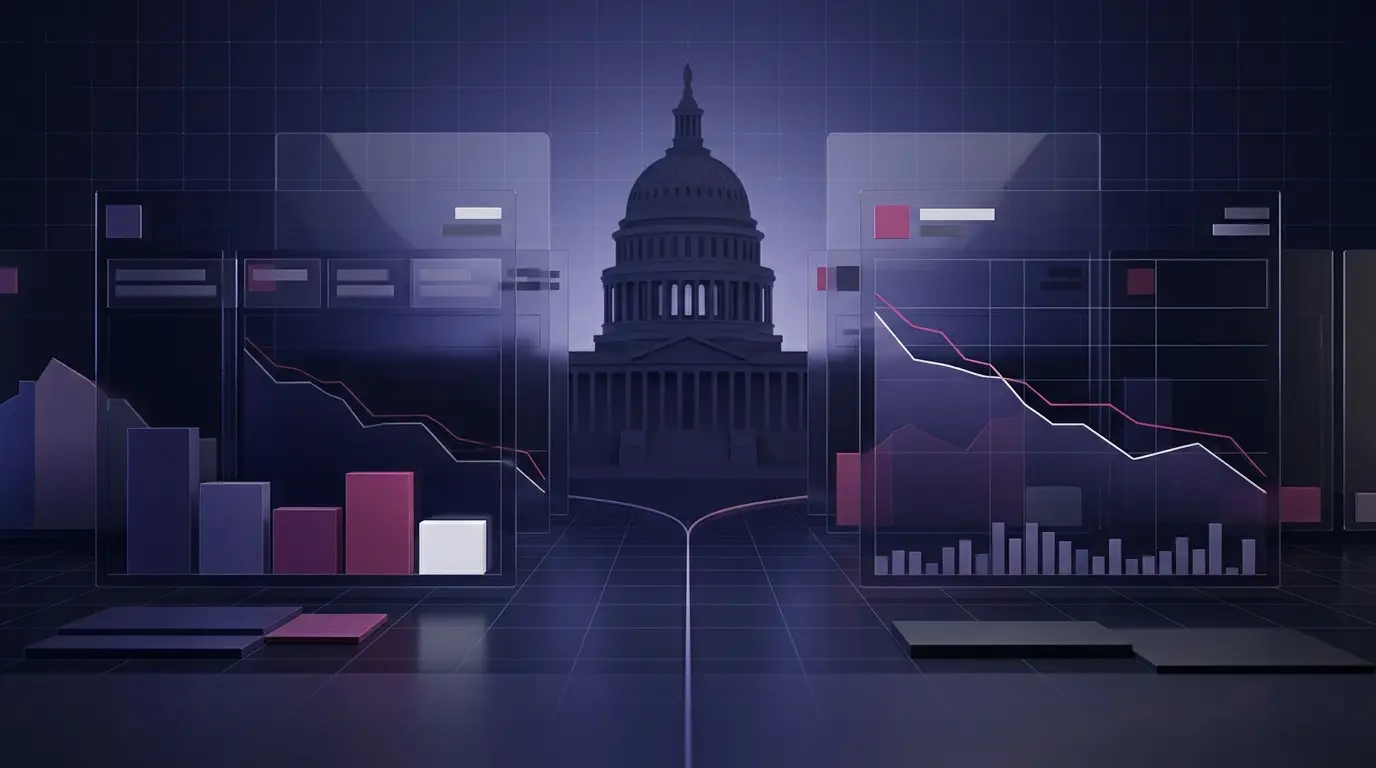
    Prediction market Polymarket traders are currently pricing a potential impeachment of former President Donald Trump by the House of Representatives before his term concludes at approximately 68%. This stands in stark contrast to the same outcome occurring before December 31, 2026, which is priced at a mere 2%.

    The significant 33-fold difference between these two contracts, which pose a nearly identical question, highlights a crucial distinction: the market is not necessarily predicting impeachment itself, but rather pricing the calendar and congressional dynamics separately from the political sentiment.

    Polymarket’s “Will Trump be impeached before his term ends?” market resolves as “Yes” if the House of Representatives passes at least one article of impeachment by a simple majority at any point before January 20, 2029. As of its last update on August 24, 2026, this contract was trading at around 68%, with approximately $94,463 in cumulative volume since the market opened on March 19, 2026.

    A separate, shorter-dated contract asks the same question but limits the timeframe to December 31, 2026, before the newly elected House has even settled into committee assignments. This contract has traded at a premium closer to 2%, according to Polymarket pricing referenced in Washington Examiner coverage.

    The divergence in implied probability for the same event and officeholder stems from the fact that the two contracts are effectively betting on different Congresses. Republicans currently hold slim majorities in both the House and Senate. A Republican-controlled House, absent a significant internal party schism, has little institutional incentive to advance impeachment articles against a Republican president. This explains the 2% price for the shorter-dated contract, representing a bet that the current Congress will act before its term expires, a scenario with a near-zero baseline probability.

    The 68% figure, conversely, factors in a more structurally different scenario: the 2026 midterm elections. Should Democrats regain control of the House, they would acquire subpoena power, control of the Judiciary Committee, and the ability to schedule floor votes on their own terms – powers not available under the current Republican majority.

    Forecasters tracking generic ballot trends have generally indicated that Democrats are favored or competitive to flip the chamber. Polymarket’s longer-dated contract effectively represents a compounded bet: the probability of a Democratic House multiplied by the likelihood that a Democratic majority would actually bring impeachment articles to a vote within the approximately two years of runway that would follow.

    Prediction markets have increasingly become a rapid gauge for this type of time-bound political risk. A similar dynamic was observed in Kalshi’s government shutdown odds market, where prices fluctuated in tandem with the legislative calendar rather than solely with shifts in sentiment.

    The mechanism here is identical: traders are not voting on whether Trump deserves impeachment, but rather pricing the sequence of procedural hurdles that would need to be cleared. Both Polymarket contracts resolve based solely on House passage. Neither requires a Senate trial, conviction, or removal from office to settle as “Yes.” This distinction is critical for interpreting the odds and is rooted in constitutional mechanics rather than market convention.

    According to a report by the Congressional Research Service on House impeachment procedure, impeachment by the House occurs through a simple majority vote adopting articles of impeachment, which constitutes a formal accusation akin to a criminal indictment. Removal from office is a separate Senate proceeding requiring a two-thirds vote of senators present to convict, and disqualification from future office is an additional step requiring only a majority vote.

    The Congressional Research Service report notes that the House has impeached three presidents: Andrew Johnson in 1868, Bill Clinton in 1998, and Trump himself in both 2019 and 2021. In all instances, the Senate declined to convict. Therefore, a 68% price on House impeachment carries no implication for the significantly higher bar of Senate removal, which represents an entirely separate market question.

    The Trump impeachment markets illustrate how political probabilities can shift dramatically without any change in underlying views of the politician involved. Instead, the path to such an outcome changes, influenced by elections, congressional control, committee power, deadlines, and the number of procedural steps remaining.

    Platforms like Kalshi allow traders to take direct positions on these types of political outcomes. Instead of translating a House flip, impeachment vote, or government funding dispute into traditional financial markets like stocks, Bitcoin, or bonds, users can focus directly on the event and the specific conditions required for a contract to settle. This distinction is crucial when two seemingly similar questions can yield vastly different probabilities simply due to differing timeframes for resolution. For traders already considering congressional arithmetic and timing, Kalshi transforms these theses into a dedicated market.
  • Zcash (ZEC) Price Surges to 8-Year High Amid Grayscale ETF Plans; Analyst Caution Advised

    Zcash (ZEC) Price Surges to 8-Year High Amid Grayscale ETF Plans; Analyst Caution Advised

    Zcash (ZEC) has experienced a significant price surge, reaching its highest point in eight years, driven by broader market resurgence and specific corporate developments, including Grayscale’s potential ETF plans. However, some market observers and analysts are expressing caution regarding the sustainability of this rally, with uncertainties surrounding the ultimate outcome of Grayscale’s discussions.

    Over the past week, ZEC’s price increased by nearly 65%, briefly touching approximately $880 on August 23. This marks the highest valuation for ZEC since January 2018. The cryptocurrency currently trades around $848, with a market capitalization exceeding $14 billion, according to CoinGecko.

    The recent upward momentum is partly attributed to discussions surrounding Grayscale potentially contributing around 200,000 ZEC to its Zcash Trust. Plans are in motion to convert this trust product into an Exchange Traded Fund (ETF), with a scheduled launch date of August 25. This development coincides with a general resurgence in the cryptocurrency market, influenced by factors such as monetary policy changes announced by the U.S. Treasury Department.

    While ZEC has outperformed many other major cryptocurrencies like BTC, ETH, and XRP during this period, some analysts are tempering the optimism. One analyst warned of a potential significant downturn, suggesting that the current price movement might be overextended. This caution is partly based on technical indicators, with ZEC’s price noted to be well above its daily averages and the upper Bollinger Band, indicating a potentially stretched valuation. Furthermore, on-chain data reveals that ZEC exchange inflows have significantly outpaced outflows in recent days. This trend suggests that many investors are moving their assets from self-custody to centralized platforms, which can increase immediate selling pressure and is considered a bearish signal by some market participants.

    Conflicting perspectives exist among market observers. Some, like X user jussy, believe ZEC is positioned for further gains, anticipating a rise to $930 if it breaks the $850 level. Crypto Tony has expressed a more bullish outlook, suggesting $1,000 as a minimum target for the cycle. Conversely, Crypto with Harris ₿ has argued that ZEC’s “real value” lies below $500 and reminded the market of a critical vulnerability Zcash experienced earlier this year. This vulnerability previously triggered a substantial price drop, prompting figures like Arthur Hayes to divest their holdings.

    It is important to note that ZEC is distinct from Bitcoin, and its performance should be evaluated on its own merits. The recent price action, while significant, is accompanied by signals that warrant careful consideration. The outcome of Grayscale’s ETF plans and the ongoing exchange net flow data are key factors to monitor, but their precise impact on future price direction remains uncertain.

    Significant uncertainty surrounds the future trajectory of ZEC’s price. While the Grayscale ETF plans and market resurgence provide potential positive catalysts, technical indicators and historical performance, including past vulnerabilities, suggest a need for caution. Investors are advised to consider these divergent signals and the inherent uncertainties within the cryptocurrency market.

    Why This Matters

    The materials describe a narrow update: Zcash (ZEC) price increased by nearly 65% over the past week, reaching approximately $880 on August 23, its highest point since January 2018. The ultimate outcome of Grayscale’s discussions with DCG regarding ZEC contribution.

    Broader Context

    Source materials place the factual news in this context: ZEC is one of the best-performing top 100 cryptocurrencies over the past week, with its price surging by nearly 65%.

  • Hyperliquid Surges to Record High Ahead of $1.2B Token Unlock

    Hyperliquid Surges to Record High Ahead of $1.2B Token Unlock

    Hyperliquid Token Surges Amidst Record Highs, Faces Major Supply Release

    Hyperliquid, the layer-1 blockchain and perpetual futures exchange, is experiencing a significant surge, with investors in its native token, HYPE, enjoying substantial gains.

    The HYPE token reached an all-time high of $83.27 on Sunday, according to data from CoinGecko, before settling around $77.50. The token’s market capitalization is currently close to $19.5 billion. However, this upward momentum is set to encounter a substantial token supply release, identified by the tracking site Tokenomics.com as the largest of Hyperliquid’s monthly unlocks.

    Since its launch in November 2024, Hyperliquid has systematically released a portion of its 1 billion-token supply on a fixed monthly schedule. The upcoming August 29 event marks the fourth consecutive release, distributing tokens to three distinct recipient groups: the community, the foundation, and insiders. Insiders, comprising early investors, will receive the largest single share of this release at 46.6%, followed by the community (allocated for grants, rewards, airdrops, etc.) at 46.3%, and the Hyper Foundation at 7%.

    Token unlocks do not inherently cause a price collapse. They increase the number of tokens available for sale, and this new supply can exert downward pressure on the market if recipients decide to liquidate their holdings. Tokenomics.com’s historical data on price impact from previous unlocks shows a mixed performance: following the three prior monthly releases, HYPE saw a 7% decline in July, a 1% increase in June, and a significant 14.1% drop in May.

    However, unlocks directed towards investors and early contributors are closely monitored by traders. These holders, having acquired tokens at a lower cost basis, have a greater incentive to realize profits compared to community token pools.

    Hyperliquid has garnered attention beyond its token’s price performance. This month, Coinbase integrated Hyperliquid’s infrastructure to offer 50x perpetual futures on its Base app, a move that further embeds the protocol within mainstream trading channels.

    Potentially the most significant development for HYPE investors emerged mid-last week when former President Donald Trump directly mentioned Hyperliquid during a media briefing preceding a closed-door meeting with cryptocurrency executives. While the decentralized exchange for perpetual futures is currently geo-fenced and unavailable to U.S. residents, Trump informed the media that the Commodity Futures Trading Commission (CFTC) is “working to bring Hyperliquid into the United States in a fully compliant and legal fashion.”

    This development coincides with a broader shift in Washington towards a more favorable stance on the cryptocurrency sector. Trump also urged Congress to pass a “fair version” of the Clarity Act during a White House crypto summit.

    With HYPE trading near its record highs, the August 29 release is set to introduce approximately $560 million worth of insider-allocated supply into a market that has already retreated from its peak. A subsequent unlock of a similar magnitude is scheduled for September 29.

  • Prediction Markets Show Divergent Odds on US Government Shutdown Amid Definition Discrepancies

    Prediction Markets Show Divergent Odds on US Government Shutdown Amid Definition Discrepancies

    Prediction markets are indicating a declining probability of a US federal government shutdown by October 1, 2026. However, differing definitions of what constitutes a shutdown across platforms like Kalshi and Polymarket are creating price discrepancies, suggesting a complex and nuanced market signal.

    On August 14, 2026, Kalshi’s contract for a federal government shutdown on October 1 was priced at 15-16 cents, implying odds of approximately 10-16%. This represents a significant drop from around 35% just three weeks prior. Polymarket’s parallel market, as of the same date, showed its shutdown contract priced at 16.5 cents. These figures, while close, highlight a divergence that stems from the specific rules governing each platform’s contracts.

    Kalshi’s contract resolves as ‘YES’ only if a part of the government is shut down at precisely 10:00 a.m. ET on October 1. In contrast, Polymarket offers two distinct contracts for the same deadline. One requires an actual shutdown, defined as agencies suspending non-excepted operations, by 11:59 p.m. ET. The second, broader contract pays out for an ‘any-duration lapse,’ which could include even a brief technical gap with no operational impact. On August 14, Polymarket priced its ‘shutdown’ version at 16.5 cents and its ‘lapse’ version at 13.5 cents.

    This gap in pricing and resolution rules suggests that the market’s assessment of shutdown risk is not uniform. While the overall trend indicates a repricing toward Congress avoiding the specific October 1 date, rather than a complete elimination of shutdown risk, the precise meaning of these market signals requires careful interpretation. Traders are separating the October 1 deadline from broader fiscal-year uncertainties, as evidenced by a separate Polymarket contract bundling a shutdown by January 31, 2027, with the 2026 House winner. The ‘no-shutdown’ legs for this longer-term market had already settled at zero cents by August 14, while the ‘shutdown-plus-Democratic-House’ leg traded at 87.3 cents.

    The trajectory of Kalshi’s odds, falling from 35% on July 31 to approximately 12-13% by mid-August, reflects a market sentiment shifting away from the immediate October 1 deadline. This movement occurred on roughly $193,000 in contract volume over two weeks prior to August 14. However, market participants are advised that current liquidity in these prediction markets is relatively thin compared to previous years. For instance, related shutdown contracts on Polymarket saw approximately $157 million in cumulative volume in 2025. The current lower liquidity means prices can be more exposed to spread and single-trade repricing.

    Understanding prediction market data involves more than glancing at headline probabilities. The precision of contract resolution rules, timing, and triggers is crucial. Kalshi’s appeal lies in its ability to allow traders to express views on defined real-world outcomes, separating specific events like an October 1 shutdown from potential subsequent funding crises. This allows for a cleaner way to trade on political events compared to guessing broader market reactions.

    While the odds for a shutdown on October 1, 2026, have decreased, uncertainty remains regarding future government funding. The market’s current pricing reflects a nuanced view, distinguishing between specific deadlines and broader fiscal risks. Traders and analysts must consider these differing definitions and liquidity levels when interpreting the signals from prediction markets.

    Why This Matters

    The materials describe a narrow update: Prediction markets, specifically Kalshi and Polymarket, are showing decreasing probabilities for a US federal government shutdown on October 1, 2026. The exact definition and trigger for a government shutdown, leading to different contract resolutions on prediction markets.

    Broader Context

    Source materials place the factual news in this context: Kalshi’s contract on a federal government shutdown on October 1, 2026 priced YES at 15-16 cents, an implied odds near 10% and down sharply from 35% just three weeks earlier.

  • Cardano Surges Past $0.20: AI Trio Debates $1 Rally Potential in 2026

    Cardano Surges Past $0.20: AI Trio Debates $1 Rally Potential in 2026

    Cardano’s ADA Token Shows Strong Weekly Gains, But Can It Reach $1 by 2026? AI Chatbots Weigh In

    In a market experiencing a notable revival, finding popular altcoins still trading in the red on a weekly basis has become a rarity. Cardano’s native token, ADA, has bucked this trend, delivering a robust 28% gain over the past week, much to the relief of its investors and supporters.

    To gauge the potential for a sustained rally and the possibility of ADA reaching the $1 mark by the end of 2026, we consulted three prominent AI-powered chatbots.

    ChatGPT’s Outlook

    Currently trading around $0.22, ADA has indeed surpassed the $1 milestone in the past, making a return to that level before the end of the year not entirely unprecedented, according to ChatGPT. However, the AI platform cautioned that such an ascent would necessitate an exceptional market-wide rally, coupled with sustained growth in Cardano’s user base, DeFi activity, and overall ecosystem development.

    “The immediate challenge is proving this move is more than a relief rally,” ChatGPT stated. “ADA would first need to recover and hold above progressively tougher areas around $0.30, $0.50, and its 52-week highs before $1 becomes a credible target.”

    Perplexity’s Analysis

    Perplexity echoed a similar sentiment, suggesting that a move to $1 is theoretically achievable but contingent upon “an exceptional confluence of catalysts and a very strong altcoin/bull market.”

    The AI placed particular emphasis on the $0.22-$0.24 price range, indicating that a decisive break and sustained close above this zone could pave the way for more significant upward momentum. Crucially, Perplexity highlighted Bitcoin’s performance as a key determinant of ADA’s potential success.

    “If BTC pushed to new highs and liquidity rotates aggressively into large-cap alts, ADA can outperform,” the chatbot advised.

    The primary cryptocurrency has experienced a remarkable surge recently, with its valuation approaching $80,000 following a 25% weekly increase. Whether this upward trend will persist and translate into benefits for altcoins like Cardano’s token remains to be seen.

    Perplexity also identified the potential launch of a spot ADA ETF as a significant catalyst that could positively influence the price. However, Grayscale’s recent withdrawal of its filing for such a product has cast uncertainty on whether this financial instrument will materialize this year.

    Gemini’s More Cautious Prediction

    Google’s Gemini offered a more conservative outlook, predicting that ADA’s ascent to $1 is more probable next year than within the remaining months of 2026. The AI noted that capital remains largely concentrated in top-tier cryptocurrencies like BTC and ETH, anticipating increased interest in other assets next year as an altseason becomes more plausible.

    “Crypto capital moves like a waterfall: money enters at the top in Bitcoin, and only after Bitcoin tops out and stabilizes do investors move profits down into riskier altcoins like Cardano,” Gemini explained. “Because this multi-step profit rotation takes significant time to build, 2027 provides a much more realistic timeline for that capital to cascade into coins like ADA.”

  • XRP Price Surge: Divergent Analyst Views Amid Market Uncertainty

    XRP Price Surge: Divergent Analyst Views Amid Market Uncertainty

    XRP has experienced a significant price increase over the past several days, surging by nearly 50% weekly and reaching approximately $1.50. This notable market movement has coincided with a divergence of opinions among analysts regarding its future trajectory, with some anticipating continued recent price movement and others forecasting a potential pullback.

    Verified data indicates that XRP’s weekly gain has been substantial, pushing its market capitalization above $93 billion. During this period, XRP briefly surpassed BNB to become the fourth-largest digital asset before settling back to fifth place. The performance of Spot XRP Exchange Traded Funds (ETFs) has also been strong, with the last reported red day being August 5th. Last week marked the best performance for these ETFs since May, suggesting growing institutional interest.

    Why This Matters

    The materials describe a narrow update: XRP has seen a substantial price increase, rising by nearly 50% weekly and reaching approximately $1. Whether XRP will experience a 15% upside or a 10% pullback.

    Broader Context

    Source materials place the market analysis in this context: The past several days have been quite beneficial for the cryptocurrency market, with Ripple’s XRP being among the top performers.

    Bullish Perspectives

    Amidst this price action, analyst predictions vary. According to X user CW, XRP has re-entered an ascending channel, and a golden cross has occurred between the EMA lines of the RSI indicator, suggesting that “a bullish rally has begun.” This perspective aligns with the view that the current price surge is the beginning of a more significant upward trend.

    Further adding to the spectrum of predictions, Celal Kucuker and Cup have argued that XRP’s current price action mirrors the macro structure that coincided with its significant gains in 2017. In their view, this historical parallel could indicate a potential for a substantial ascent, with Cup predicting a rise to $6 “soon,” and Kucuker forecasting a new all-time high of $15.

    Cautionary Outlooks

    Conversely, other analysts express caution. Analyst Diana noted that XRP’s Relative Strength Index (RSI) has cooled from extreme overbought territory. While this is seen as positive, indicating that momentum is easing without erasing the gains, it suggests the market may be resetting before another potential move. Diana believes that if XRP can maintain support within the $1.42-$1.30 range, a further surge to $1.70 is possible. However, she cautioned that a break below $1.42 could trigger a pullback below $1.30, signaling a weakening notable move structure.

    X user ChartNerd also suggested that a correction is plausible, viewing such a downturn as a potential “final opportunity” for investors. This perspective implies that while a short-term pullback might occur, it could precede a larger upward move.

    Navigating Uncertainty

    These divergent outlooks highlight the inherent uncertainty in predicting cryptocurrency prices. While the recent performance and institutional interest in Spot XRP ETFs provide a positive backdrop, the market remains at a critical juncture. The potential for a 15% upside exists, as does the possibility of a 10% pullback. It is not possible to definitively state whether XRP has entered a major bull run or may provide specific price targets.

    The current data suggests that while XRP’s price movement is notable, the future remains subject to various interpretations and market forces. Investors and observers are advised to consider the evidence, the range of analyst predictions, and the inherent uncertainties when evaluating XRP’s market position.

  • Bybit to Support TRON v4.8.2 Upgrade

    Bybit to Support TRON v4.8.2 Upgrade

    Bybit to Support TRON Network Upgrade

    Bybit has announced its support for the upcoming TRON (TRX) v4.8.2 network upgrade, scheduled for August 25, 2026, at 03:00 AM UTC.

    Service Suspensions

    To facilitate a seamless transition, Bybit will temporarily suspend TRON (TRX) deposits and withdrawals starting at 02:30 AM UTC on August 25, 2026. Trading activities will remain unaffected during this period.

    Resumption Notifications

    Bybit will not issue further announcements regarding the resumption of TRON (TRX) deposit and withdrawal services. Users wishing to be notified when services are back online can set an alert on the Deposit or Withdrawal page.

    Further details on the TRON network upgrade can be found in the official release notes.

  • Bybit to Support Codex USDC Network Upgrade

    Bybit to Support Codex USDC Network Upgrade

    Bybit to Support Codex (USDC) Network Upgrade

    Cryptocurrency exchange Bybit has announced its support for the upcoming Codex (USDC) v7.0.0 network upgrade. The upgrade is scheduled to occur on August 25, 2026, at 04:00 PM UTC.

    Service Suspensions

    To facilitate a seamless transition, Bybit will temporarily suspend deposits and withdrawals for Codex (USDC) beginning at 03:30 PM UTC on August 25, 2026.

    Trading Unaffected

    Trading activities on the Bybit platform will not be impacted by this network upgrade.

    Resumption Notifications

    Users will not receive further announcements regarding the resumption of Codex (USDC) deposit and withdrawal services. To be notified when services are back online, users can visit the Deposit or Withdrawal page and select the “Set Alert” option.

    Further details regarding the upgrade can be found in the official release notes.

  • Bybit to Support BNB Smart Chain Upgrade

    Bybit to Support BNB Smart Chain Upgrade

    Bybit to Support BNB Smart Chain Network Upgrade

    Cryptocurrency exchange Bybit has announced its support for the upcoming BNB Smart Chain (BSC) v1.7.7 network upgrade. The upgrade is scheduled to occur on August 25, 2026, at 02:30 AM UTC.

    Service Suspensions

    To facilitate a seamless transition, Bybit will temporarily suspend deposits and withdrawals on the BNB Smart Chain (BSC) network. This suspension will commence on August 25, 2026, at 02:15 AM UTC.

    Trading activities on the platform will remain unaffected during the upgrade period.

    Resumption of Services

    Bybit has stated that there will be no further announcements regarding the resumption of deposit and withdrawal services. Users wishing to be notified when these services are back online are advised to visit the Deposit or Withdrawal page and activate the “Set Alert” function.

    Further details regarding the network upgrade can be found in the official release notes.

  • XRP Rally: Navigating High Leverage and Regulatory Uncertainty

    XRP Rally: Navigating High Leverage and Regulatory Uncertainty

    XRP’s price has seen a significant surge, moving from under $1 to approximately $1.50 in less than two weeks. This rapid ascent has prompted discussions among investors about whether to secure profits or maintain exposure to the asset, amidst ongoing regulatory uncertainties. The rally occurs within a broader strong cryptocurrency market, with Bitcoin also experiencing substantial gains during the same period.

    Drivers of the Rally: Spot Demand vs. Leverage
    The surge in XRP’s price appears to be fueled by a combination of factors, including inflows into spot XRP Exchange Traded Funds (ETFs) and increased activity in derivatives trading. On August 21, spot XRP ETFs recorded net inflows of $18.38 million, with Bitwise accounting for a substantial portion. While weekly inflows have approached $40 million, reportedly the strongest week since May, the source states these figures remain relatively small compared to XRP’s market capitalization, which stood at $92.95 billion on August 23.

    However, the rally is also being significantly boosted by aggressive derivatives positioning. XRP futures open interest saw a notable increase of 34.49% over seven days, reaching approximately $3.66 billion. Data from Binance indicated that 72.1% of accounts were long on XRP futures, compared to 27.9% short. This heightened leverage has coincided with substantial liquidation volumes, with $70.74 million in liquidations occurring within a 24-hour period, the majority of which were long positions. Three-day liquidations reached $145.15 million, underscoring the significant risk associated with these leveraged positions.

    Technical Indicators Signal Overbought Conditions
    Technical indicators also suggest that XRP may be overbought. One widely cited reading placed the daily Relative Strength Index (RSI) near 85.4, deep into overbought territory, with other estimates ranging between 70 and 83. While these indicators do not guarantee a reversal, they highlight the rapid price movement and the potential for increased volatility.

    Regulatory Landscape and Persistent Uncertainties
    Adding complexity to XRP’s market dynamics is the ongoing regulatory landscape. Ripple CEO Brad Garlinghouse recently attended the CFTC’s Innovation Advisory Committee meeting. The source states that while this engagement is a positive step within a policy forum, it does not constitute a formal legal classification or resolve the separate case involving the SEC. Furthermore, proposed legislation such as the CLARITY Act could potentially classify XRP as a digital commodity under CFTC oversight, but its passage remains uncertain, leaving the rally exposed to potential disappointment if expectations outpace reality.

    The RLUSD stablecoin, also associated with Ripple, has seen its market cap grow to approximately $2.1 billion from $1.5 billion at the start of the year. However, the source notes that this growth does not necessarily suggest direct demand for XRP, as the two assets serve different functions.

    Investor Strategy Considerations
    Given the confluence of high leverage, overbought technical signals, and persistent regulatory uncertainty, investors face a critical decision. The source suggests that taking some profit may be a reasonable strategy, allowing investors to lock in gains while retaining some exposure to potential further upside. A partial trim of positions could mitigate the risk of losing already-realized gains, especially in a market characterized by significant liquidation potential. Ultimately, the current situation presents a scenario where balancing profit-taking with maintaining exposure to the upside, while acknowledging the inherent risks, is a key consideration for investors navigating XRP’s volatile market.

    Why This Matters

    The materials describe a narrow update: XRP’s price surged significantly, driven by a combination of spot ETF inflows, a strong overall crypto market, and increased leverage in derivatives trading. Whether to take profit or maintain full exposure to XRP remains an open question.

    Broader Context

    Source materials place the market analysis in this context: XRP has moved from under $1 to around $1.50 in less than two weeks, crowding news headlines with its rally.