Tag: Neutral

  • AI Authorship on the Rise Across Web Content, Pew Research Finds

    AI Authorship on the Rise Across Web Content, Pew Research Finds

    A significant portion of English-language webpages now show signs of AI authorship, with a notable increase observed since the launch of ChatGPT in November 2022, according to a study by the Pew Research Center. The research indicates that approximately 10% of all English-language webpages exhibit significant indicators of being written or assisted by artificial intelligence.

    This trend is particularly pronounced on commercial (.com) domains. Since ChatGPT’s release, the percentage of webpages published after November 2022 that display significant AI authorship signs has risen to 35%. In contrast, academic (.edu) and government (.gov) domains show AI authorship signs at a much lower rate, around 1% each. Organizational (.org) sites fall in between, with a 4.6% rate.

    The study analyzed approximately 490,000 pages from the Common Crawl web archive, spanning from January 2021 to July 2026. Researchers utilized Open Pangram, an AI detection model, to identify patterns indicative of AI authorship. The model weighs statistical patterns across large batches of text rather than flagging specific words or phrases.

    Linguistic shifts have also become more apparent since 2023, correlating with the rise of AI-generated text. These include a roughly twofold increase in the use of em dashes, a 63% rise in Oxford commas, and more than a doubling in the frequency of words often favored by AI, such as “delve,” “interplay,” and “testament.” Additionally, a grammatical structure known as “negative parallelism” has nearly tripled in frequency since 2023, though Pew notes it remains relatively uncommon overall.

    Researchers caution that current detection models are not infallible. “Detection models can misclassify individual pages in both directions,” the study notes. Furthermore, the presence of “significant signs of AI authorship” does not necessarily mean a page was written entirely by a machine; much of the text may have been AI-assisted rather than fully AI-generated.

    The disparity in AI content across different domain types is attributed to publishing cycles and editorial oversight. Commercial domains, which encompass a wide range of content from newsrooms to high-volume content farms, can produce pages at a pace that human editors may struggle to match. Academic and government sites, conversely, typically undergo more rigorous editorial review and institutional approval processes, leading to slower publishing cycles.

    Separate research using similar detection methods has found AI-generated text in approximately 9% of U.S. newspaper articles this year, including content on opinion pages of publications like The New York Times. Looking ahead, companies like Anthropic are developing model-level text fingerprinting, which could make AI text easier to identify with greater accuracy.

    The Pew Research Center’s findings highlight a significant and ongoing transformation in how web content is created, with AI playing an increasingly prominent role, particularly in the commercial online space.

    Why This Matters

    The materials describe a narrow update: A study by the Pew Research Center found that 10% of English-language webpages show significant signs of AI authorship, a figure that rises to 35% for pages published after November 2022. Detection models can misclassify individual pages in both directions.

    Broader Context

    Source materials place the factual news in this context: AI-written content is everywhere, literally.

  • OKX to Support NES Crypto Migration

    OKX to Support NES Crypto Migration

    NES Token Migration to New Ethereum Contract

    Nesa’s official plan outlines an upcoming migration of the NES token to a new Ethereum (ERC-20) contract address. Cryptocurrency exchange OKX has announced its support for this transition, detailing the following schedule:

    Service Suspension and Migration Period

    NES deposits and withdrawals will be suspended starting at 8:00 UTC on August 31, 2026, to facilitate the migration. The migration process is scheduled to occur between 8:00 UTC on August 31, 2026, and 12:00 UTC on September 1, 2026. OKX stated it will endeavor to complete the migration within this timeframe, but acknowledged that delays may occur due to necessary coordination with the project team and other involved parties.

    Trading of NES will not be affected during this period.

    Post-Migration Support

    Upon completion of the migration, OKX will reinstate NES deposits and withdrawals exclusively on the new contract address. Importantly, deposits of NES to the BSC Smart Chain address (0x3131f6b80c26936ab03f7d9d29eb4ddf36ac3fb) will no longer be supported. Only deposits of the new token to the Ethereum contract address (0x230f1e241c621d5af670dad83ebcdd18971e2995) will be accepted. Users are strongly advised to verify the token contract address before making any deposits to prevent potential losses.

    Risk Warning

    The information provided, some of which may originate from third parties and not OKX, is intended for informational and educational purposes only. OKX does not guarantee the accuracy or completeness of this information, nor does it constitute any representation, warranty, or financial, investment, or other form of advice. This information may not be suitable for all individuals and should not be relied upon for specific trading decisions. It is not intended as, nor should it be construed as, an offer, recommendation, or solicitation. Furthermore, this information is not intended for individuals residing in jurisdictions where its provision would violate local laws or regulations. Digital assets are highly speculative and subject to significant volatility. They may become illiquid at any time, and investors risk losing the entire value of their investment. Prospective traders should conduct their own thorough research and assess their risk tolerance before engaging with any digital asset. OKX disclaims responsibility for any losses incurred from trading digital assets. Further details can be found in the Terms of Service and Risk & Compliance Disclosure.

  • Justin Sun’s Claims Against World Liberty Financial to Stay in Open Court, Judge Rules

    Justin Sun’s Claims Against World Liberty Financial to Stay in Open Court, Judge Rules

    A California federal judge has ruled that Justin Sun’s individual claims against World Liberty Financial will proceed in open court, rejecting the company’s attempts to move the dispute to private arbitration and seal the case from public view. The decision keeps a significant legal battle in the public eye, raising ongoing questions about World Liberty Financial and its USD1 stablecoin.

    The judge also ordered the parties to confer on which company-related claims should be arbitrated versus remain in court, rather than accepting World Liberty Financial’s position that all such claims should be arbitrated. This ruling allows Sun’s individual claims to continue in the public court system.

    Background of the Dispute

    Justin Sun’s lawsuit against World Liberty Financial dates back to April. He alleges that the company froze his WLFI tokens, removed his governance rights, and threatened to burn the tokens. Sun is seeking hundreds of millions of dollars in damages.

    The dispute escalated after Sun questioned the project’s control over its token contracts. Reports from April indicated the existence of a blacklist function and a “batch reallocation” feature within a later version of the WLFI contract. According to Sun, World Liberty also built freeze-and-burn capabilities into its USD1 stablecoin, warning USD1 holders of the company’s willingness to use these functions.

    Financial Scrutiny and Stablecoin Concerns

    Further complicating the situation, Sun highlighted World Liberty’s practice of depositing approximately 5 billion WLFI tokens, representing about half of its treasury, as collateral on Dolomite, a lending platform co-founded by its chief technology officer. This collateral was used to borrow at least $75 million in stablecoins, including its own USD1. Analysts have drawn comparisons between this structure and the circular leverage that contributed to the collapse of FTX.

    Sun has expressed concerns about the financial backing of USD1, noting that its reported $4 billion market cap is derived from user collateral, not readily available funds to cover a court judgment. He stated that there is no indication World Liberty holds sufficient capital to satisfy a claim worth hundreds of millions of dollars.

    Governance Dispute and Counter-Lawsuit

    This legal fight originated from a governance dispute over more than 62 billion WLFI tokens. Sun had objected to a proposal that would alter vesting terms for locked tokens and questioned an alleged separate control structure involving an anonymous guardian address and a 3-of-5 multisignature group. He characterized the arrangement as “a dictatorship wearing the mask of a DAO.”

    World Liberty Financial has rejected Sun’s accusations, stating on X, “We have the contracts. We have the evidence. We have the truth. See you in court pal.” The firm subsequently filed its own defamation lawsuit in Florida, accusing Sun of spreading false claims. Sun dismissed this lawsuit as “nothing more than a meritless PR stunt.”

    Next Steps and Uncertainties

    The ruling means that the core of Sun’s individual claims will be heard in open court, allowing for public scrutiny of the allegations and the company’s financial practices. However, uncertainties remain regarding which company-related claims will be subject to arbitration and which will stay in court, as well as the ultimate financial capacity of World Liberty Financial to meet potential judgments.

    Why This Matters

    The materials describe a narrow update: A California federal judge ruled that Justin Sun’s individual claims against World Liberty Financial will proceed in open court, denying World Liberty Financial’s request for private arbitration and to seal the case. Which company-related claims will proceed through arbitration versus remain in court.

    Broader Context

    Source materials place the factual news in this context: Justin Sun said Thursday that a California federal judge ruled his individual claims against World Liberty Financial will stay in open court, rejecting the Trump-linked project’s push to force the dispute into private arbitration and seal the case from public view.

  • XRP Price Action: Overbought Signals and Derivative Risks Cloud Future Outlook

    XRP Price Action: Overbought Signals and Derivative Risks Cloud Future Outlook

    Ripple’s XRP cryptocurrency has experienced a significant price surge, climbing over 35% this week and reaching $1.42 on Friday after breaking through key resistance levels. This upward movement has reignited discussions about its potential to revisit previous all-time highs, but technical indicators and market data present a complex picture with notable uncertainties.

    The cryptocurrency saw a nearly 20% increase in the past 24 hours leading up to Friday’s peak. XRP successfully breached the resistance zone between $1.293 and $1.302. According to Diana’s findings, this notable move could signal a return to the previous all-time-high zone. However, the 4-hour Relative Strength Index (RSI) for XRP is currently around 83, indicating extremely overbought conditions. This suggests that the recent price rally may be due for a correction. A failure to hold the $1.30 level could lead to a cooling of momentum, with $1.20 potentially becoming a key support level to watch.

    Further analysis of the derivatives market on Binance reveals an elevated funding rate of 0.0101, which is significantly above its 30-day moving average. Data cited by analyst Ali Martinez indicates that large XRP holders, often referred to as whales, have accumulated over 300 million tokens since the start of the current business week. CryptoQuant revealed the funding rate reached its highest level since October 2025. This accumulation, coupled with the high funding rates, suggests strong demand for long positions in the derivatives market.

    While strong demand can fuel price increases, the elevated funding rates also introduce increased risk. As more traders establish long positions, the cost of maintaining them rises. This scenario leaves the market more vulnerable to sharp declines, which could trigger liquidations among leveraged traders and add further downward pressure on the price.

    Analyst Crypto Patel commented on XRP’s potential, suggesting that a move toward $10 should not be dismissed. He pointed to historical price action, noting that XRP traded around $0.006 in 2017 before reaching over $3 in 2018, and that it was described as ‘dead’ in 2023 before surging from $0.50 to $2.60 in November 2024. Considering factors like transaction speed, low fees, and adoption, the analyst stated that targets of $10-$20 are potentially achievable.

    Despite these perspectives, the current market signals present a mixed outlook. The overbought RSI and the risks associated with high funding rates introduce significant uncertainty. If funding rates remain elevated while XRP’s price stabilizes or continues to rise, it could indicate sustained demand. Conversely, a decline in funding could signal weakening speculative interest and recent price movement.

    The sustainability of XRP’s current momentum remains a key question. While the price has broken through significant resistance and whale accumulation is notable, the overbought technical indicators and the inherent risks in the derivatives market highlight the speculative nature of future price movements. Definitive predictions about reaching previous all-time highs or specific price targets like $10 or $20 remain uncertain.

    Why This Matters

    The materials describe a narrow update: XRP’s price increased by over 35% this week, with a nearly 20% rise in the last 24 hours, breaking through resistance at $1. Whether the previous all-time-high zone will be reached.

    Broader Context

    Source materials place the factual news in this context: XRP has emerged as one of the best-performing crypto assets this week after surging by over 35%.

  • Pi Network Price Uptrend Faces Uncertainty Amidst Declining Volume

    Pi Network Price Uptrend Faces Uncertainty Amidst Declining Volume

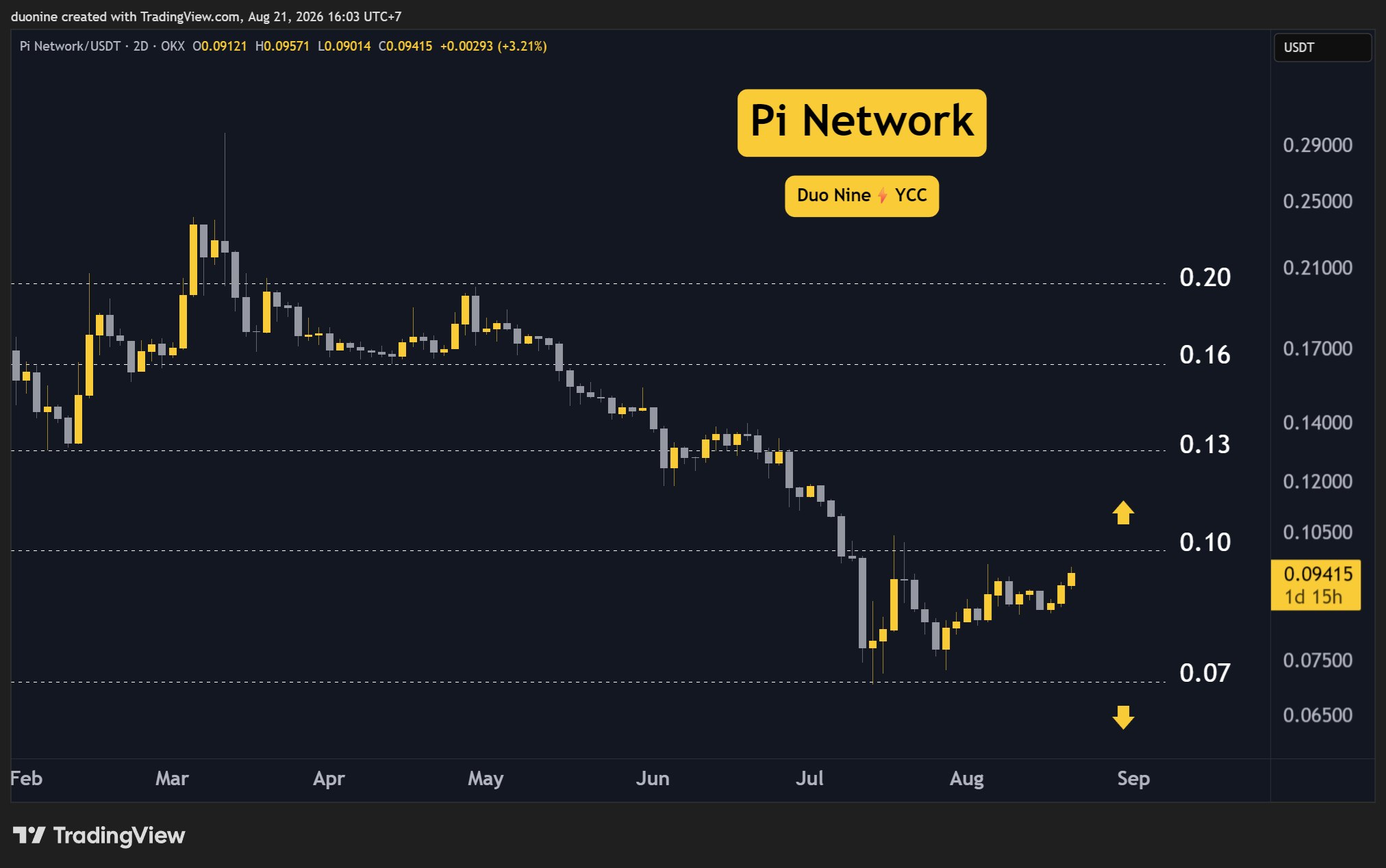
    Pi Network’s price has experienced a short-term uptrend this week, marking a 5% increase and consolidating around the $0.070 support level. However, this upward movement is occurring against a backdrop of steadily declining trading volume over several months, raising questions about the conviction behind the current momentum and the sustainability of these gains.

    The analysis suggests that while Pi Network has reported $0.070 as a key support level and has been on a steady uptrend since early August, the diminishing volume indicates a potential lack of strong buyer interest. Momentum indicators such as the MACD and RSI are showing bullish signals, yet the declining volume presents a significant challenge.

    According to CryptoPotato, the current resistance and a major psychological target for Pi Network is found at the $0.10 level. A test of this resistance is likely, but the declining volume suggests that sellers could regain control if the price fails to break through decisively. The article suggests that for the uptrend to continue with conviction, buyers would need to significantly increase volume and improve the ongoing momentum.

    Key resistance levels are identified at $0.10, $0.13, and $0.16. The immediate focus remains on the $0.10 mark. If Pi Network can successfully overcome this resistance and turn it into a key support level, it could pave the way for a more significant reversal and sustained gains. However, any failure at this level is likely to see bears return to the market.

    The current situation presents a mixed picture. While the price action has been positive since early August, the underlying volume trend suggests caution. The analysis highlights that the lower gains observed in Pi Network compared to other cryptocurrencies like XRP or ETH might be attributed to this lack of volume conviction. The outlook remains somewhat uncertain, with the potential for sellers to regain control at their discretion if the volume profile does not improve.

    Ultimately, the sustainability of Pi Network’s current price uptrend hinges on its ability to attract increased trading volume and overcome the significant resistance at $0.10. Without a substantial increase in volume, the current recent price movement may not be enough to sustain further gains, leaving the cryptocurrency vulnerable to a potential reversal.

    Why This Matters

    The materials describe a narrow update: Pi Network’s price has increased by 5% this week, consolidating around $0.070. Whether buyers will come to sustain the uptrend remains uncertain, as does Pi Network’s ability to overcome the $0.10 resistance. The volume profile’s ability to make a higher high is also uncertain.

    Broader Context

    Source materials place the market analysis in this context: Considering the bullish market context.

  • CFTC Exploring Potential Crypto Framework Amid Congressional Uncertainty

    CFTC Exploring Potential Crypto Framework Amid Congressional Uncertainty

    The Commodity Futures Trading Commission (CFTC) is exploring the development of its own regulatory framework for crypto asset markets, should congressional legislation stall. CFTC Chair Michael Selig announced on Thursday that agency staff have been directed to investigate and formally propose rules for digital assets, indicating a potential regulatory path independent of legislative action.

    Selig reiterated that while legislative action remains his preferred route, the CFTC is prepared to utilize its existing authorities to establish a regulatory regime if Congress does not enact new laws. This agency-driven approach could extend the commission’s oversight to include existing CFTC registrants and currently unregistered crypto exchanges. It is anticipated that leveraged and margined crypto trading might be permitted under such a framework, with staff also tasked to engage with developers of onchain finance protocols.

    The CFTC’s exploration comes as legislative efforts to create a comprehensive crypto regulatory framework face challenges. The Clarity Act, for example, has been stalled in the Senate since lawmakers departed for August recess, reportedly lacking sufficient Democratic support for passage. Selig has previously voiced a preference for legislation, citing concerns that agency rules can be overturned by future administrations, a point he raised in the context of preventing what he termed “lawfare against crypto.”

    This development occurs alongside other regulatory activities in the digital asset sector. On Tuesday, the Securities and Exchange Commission (SEC) proposed its initial formal crypto rules. Political engagement on crypto legislation has also been noted, with reports indicating that former President Trump urged the Senate regarding the Clarity Act on Wednesday.

    Significant uncertainties persist regarding the future regulatory landscape. It remains unclear whether the Clarity Act will ultimately pass the Senate. Furthermore, the specific details of any rules the CFTC might propose are yet to be determined, and the extent to which onchain finance protocol developers will engage with the CFTC’s efforts is also uncertain. Selig emphasized that agency rules, unlike legislation, carry the inherent risk of being superseded by subsequent administrations, underscoring the ongoing discussion about the most durable approach to crypto regulation in the U.S.

    Why This Matters

    The CFTC’s announcement signals a potential shift in regulatory approach for crypto assets, especially as legislative efforts stall, creating uncertainty and potential new pathways for market participants. The CFTC is preparing to create its own crypto regulatory framework if Congress does not pass legislation, which could lead to new rules for digital asset markets but also carries the risk of being overturned by future administrations.

    Broader Context

    Morning Minute is a daily newsletter written by Tyler Warner.

  • XRP Surges 22%, Analysts Say Ripple Remains Undervalued

    XRP Surges 22%, Analysts Say Ripple Remains Undervalued

    XRP is currently trading at $1.30, marking an 18% surge on the day. This extends a significant 22% rally that propelled the token to $1.26 within a single 24-hour period just days ago, defying bearish forecasts. The question on many minds is what is fueling this ascent, and more importantly, where is smart money likely to shift once these rapid gains are realized?

    The recent surge is not an isolated XRP phenomenon. It appears to be linked to two key announcements on August 19: the U.S. Treasury’s decision to double its longer-term bond buyback program to inject liquidity into the market, and President Trump’s renewed commitment to establishing the U.S. as a Bitcoin superpower, coupled with his urging of Congress to pass the CLARITY Act.

    Treasury Bond Buybacks Spark Market Movement

    Following these catalysts, the total cryptocurrency market capitalization saw an 8% increase, reaching $2.5 trillion in 24 hours. XRP, in particular, appears to have capitalized on this broader market momentum more aggressively than many other large-cap cryptocurrencies.

    While this macroeconomic tailwind provides a plausible explanation for the spike, it does not definitively answer whether XRP can sustain these levels or if they will be relinquished. A closer examination of the technical indicators beneath the headline figures reveals a more complex scenario.

    Technical Analysis and Divergent Outlooks

    XRP reached an intraday high of $1.32 during the recent 24-hour trading session, a move that effectively liquidated short leveraged positions. Current analysis indicates resistance clustering around the $1.30-$1.34 range, the very zone the price is currently testing. Support, meanwhile, has shifted upwards to the $1.10-$1.00 area, following repeated tests of the psychologically significant $1 level earlier this month.

    However, momentum data suggests a potential downside risk towards $0.62 if momentum falters. This contrasts sharply with Standard Chartered’s longer-term target of $2.80, highlighting the persistent uncertainty in market sentiment, even amidst the current rally.

    Wave-count analysis further suggests that the reclaimed $1 level must hold as a floor for any of the bullish price targets to remain credible.

    Beyond XRP: The Search for Outsized Returns

    A 22% increase certainly validates those who bought the dip below $1. However, XRP is now a multi-billion-dollar asset, and achieving similar percentage gains from this point forward would necessitate substantial capital inflows, extending beyond mere sentiment.

    This mathematical reality is precisely why traders seeking significant returns are increasingly turning their attention to earlier-stage infrastructure projects with lower market capitalization ceilings that have yet to be fully tested. Some of this capital rotation is directed towards Ripple’s broader valuation narrative, while a portion is being invested in presales focused on building the next generation of crypto infrastructure.

    One such project, Bitcoin Hyper ($HYPER), is positioning itself as the first Bitcoin Layer 2 solution with native SVM integration. It claims to offer smart contract execution speeds that surpass even Solana, while leveraging Bitcoin’s base layer for security. The presale is currently priced at $0.013685 and has already raised $33 million, with staking rewards available for early participants. The project aims to address Bitcoin’s inherent limitations in speed, cost, and programmability through a decentralized canonical bridge and a low-latency execution layer. Investors are encouraged to research Bitcoin Hyper thoroughly before the presale progresses further.

  • Binance Unveils AI Agents for Automated Crypto Trading

    Binance Unveils AI Agents for Automated Crypto Trading

    Binance Unveils AI Trading Platform, Connecting ChatGPT and Claude to Crypto Markets

    Binance, the world’s largest cryptocurrency exchange, has launched a new developer system that allows artificial intelligence agents to trade directly on its platform. The system, unveiled on Wednesday, connects popular AI tools such as ChatGPT and Claude to the exchange’s markets, wallets, and trading functionalities.

    The platform, named Binance Agent OS, consolidates the exchange’s APIs, a dedicated wallet hub for AI agents, its x402 payment layer, and a marketplace for AI skills into a single offering.

    At the core of Binance Agent OS is a new Binance MCP Server, built on the Model Context Protocol. This open standard provides a unified method for compatible AI applications to integrate with external tools, eliminating the need for users to manage API keys locally. The exchange has listed Claude, ChatGPT, Codex, and VS Code among the AI agents that can connect to the system.

    Once connected and authorized, an AI agent can access real-time market data, check account balances, and execute trades across spot, margin, convert, and futures products. Binance has implemented significant safeguards, isolating the riskiest functionalities. Agents operate exclusively through a dedicated “Agentic sub-account,” separate from a user’s primary holdings. Furthermore, the integration does not grant any withdrawal capabilities, meaning an agent cannot transfer funds to external wallets.

    Binance has also advised users to meticulously review each order and transfer before final confirmation, placing a substantial portion of the responsibility for monitoring agent activity on the user rather than the exchange.

    This launch places Binance in a rapidly intensifying competition to integrate AI agents into the cryptocurrency ecosystem. Coinbase has already introduced a tool enabling agents to trade and make payments, and is supporting agent-focused startups through its Base accelerator. Gemini has also launched its own agentic trading feature. Other companies are focusing on the custody and control aspects, including MetaMask’s self-custodial AI wallet, MoonPay’s agent products, and a joint effort between Ledger and MoonPay to allow users to set spending limits for agents connected to hardware wallets.

    The move reflects a broader industry trend and a significant bet on the future of autonomous software. The expectation is that AI agents, rather than human traders, will increasingly drive blockchain activity. However, the development also raises unresolved questions regarding accountability when AI agents manage financial transactions. Binance has emphasized this by including extensive disclaimers, stressing that the use of its AI services is at the user’s own risk and that AI-generated outputs should not be the sole basis for decision-making.

  • Bybit to Support Nibiru Network Upgrade

    Bybit to Support Nibiru Network Upgrade

    Bybit to Support Nibiru Network Upgrade

    Cryptocurrency exchange Bybit has announced its support for the upcoming Nibiru (NIBI) v2.18.1 network upgrade. The upgrade is scheduled to occur on August 21, 2026, at approximately 06:50 AM UTC, or at block height 44,788,180.

    To facilitate a seamless transition, Bybit will temporarily suspend all deposits and withdrawals for the Nibiru (NIBI) token. This suspension will commence on August 21, 2026, at 06:00 AM UTC.

    Trading activities on the platform will remain unaffected during the upgrade period.

    Bybit has stated that there will be no additional announcements regarding the resumption of deposit and withdrawal services. Users wishing to be notified when these services are back online are advised to visit the Deposit or Withdrawal page and select the “Set Alert” option.

    Further details regarding the network upgrade can be found in the official release notes.

  • Prediction Markets Navigate Regulatory Uncertainty Amid Industry Debate

    Prediction Markets Navigate Regulatory Uncertainty Amid Industry Debate

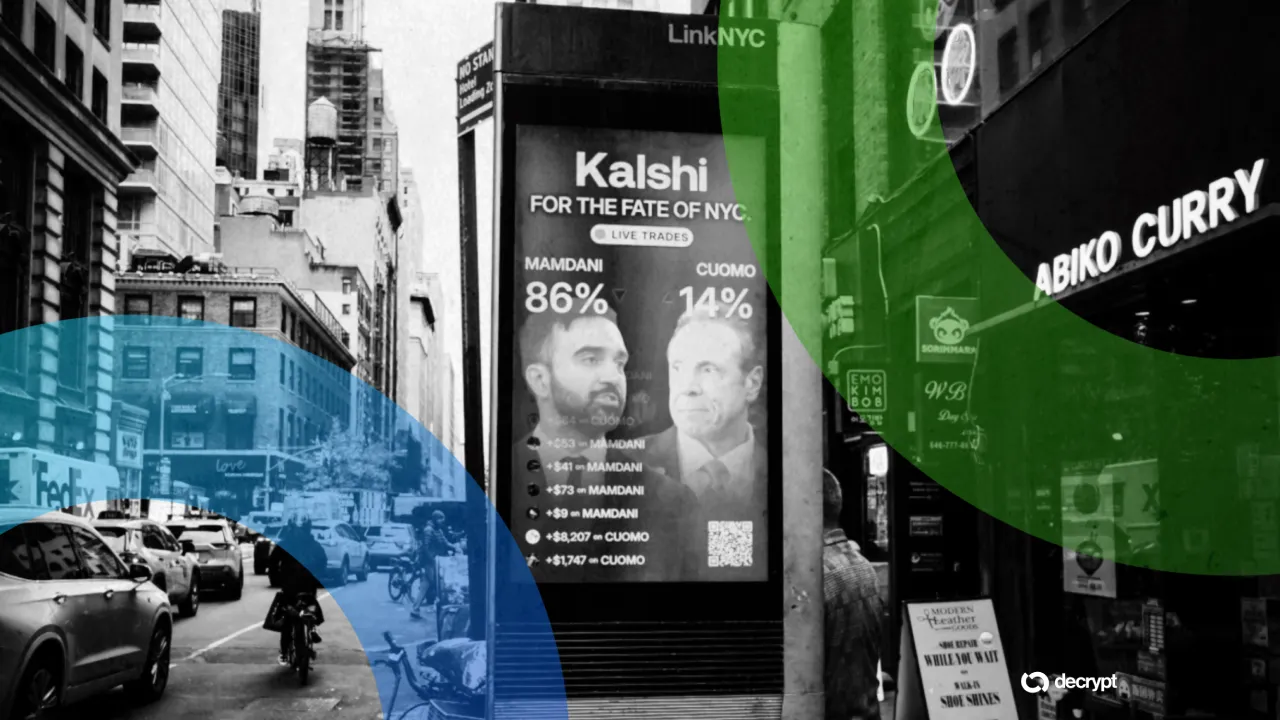
    The integrity and oversight of prediction markets are subjects of ongoing debate, with established players like CME Group expressing concerns about manipulation and newer platforms like Kalshi advocating for regulatory frameworks to address market risks. This tension was evident during a recent Commodity Futures Trading Commission (CFTC) roundtable in Washington, D.C., where executives from traditional finance, crypto, and prediction markets discussed the evolving regulatory landscape.

    During the roundtable, CME Group Chairman Terry Duffy voiced concerns regarding the potential for market manipulation and the types of contracts offered by platforms such as Kalshi. According to Duffy, “We are running the most envious markets in the United States of America,” and he questioned the nature of some prediction market contracts, referencing the “Nathan’s hot dog eating contest” as an example. He also commented on regulatory resources, stating, “I have more people in my regulatory department than you have in your whole company.”

    Kalshi co-founder Luana Lopes Lara responded by emphasizing that all markets carry risks and that regulation is the appropriate mechanism for addressing issues. Lara stated, “Every market has risk and every nascent market may have risks as well, and there have been issues in every single traditional market and every single exchange here, onshore and offshore.” She added, “And I think the point of having regulation is that you find these issues, you address these issues, and there’s a way to address them in a correct way.”

    DraftKings CEO Jason Robins urged participants to focus on the issues at hand and avoid personal attacks, underscoring a desire for more constructive discourse as the industry navigates regulatory questions.

    Prediction markets allow users to wager on the outcomes of future events through futures contracts, with a typical settlement value of $1. The CFTC has been actively scrutinizing these markets, contributing to significant regulatory uncertainty. The agency has taken legal action against states attempting to regulate event contracts under gambling laws, asserting its own jurisdiction.

    In June, the CFTC proposed restrictions on certain contracts, particularly those involving war, assassination, or specific sports proposition bets, which are considered more susceptible to manipulation. Earlier this month, nine Democratic senators also urged the CFTC to prohibit wildfire event contracts, citing concerns about potential incentives for arson, insider trading, and disaster profiteering.

    Adding to the complex regulatory environment, a Washington judge recently ordered Kalshi to cease offering certain contracts within the state, finding they likely violated state gambling and consumer protection laws. This ruling came shortly after the CFTC ordered Kalshi to continue trading amidst a separate dispute concerning New York’s attempt to block its contracts, illustrating the fragmented and contested nature of regulatory oversight.

    The core of the debate revolves around whether these contracts constitute federally regulated derivatives or gambling products subject to state law. This ongoing regulatory uncertainty impacts the future development and oversight of prediction markets, with the ultimate framework for their operation remaining unclear. The differing perspectives from established exchanges and newer platforms highlight the challenges in defining market integrity and appropriate regulatory measures in this evolving financial space.

    Why This Matters

    The materials describe a narrow update: During a CFTC roundtable discussion on prediction markets, CME Group Chairman Terry Duffy expressed concerns about market manipulation and the types of contracts offered by Kalshi. The ultimate regulatory framework for prediction markets.

    Broader Context

    Source materials place the factual news in this context: The confrontation unfolded during a Commodity Futures Trading Commission meeting in Washington, D.C., as executives from traditional finance, crypto, and prediction markets debated how event contracts should be regulated.