Tag: Neutral

  • Ripple News and XRP Price Update: August 19

    Ripple News and XRP Price Update: August 19

    Ripple Expands in South Korea, Secures $275 Million Amid XRP Price Slump

    Despite a challenging week for XRP token holders in terms of price performance, the company behind the digital asset has made several significant strategic moves. Concurrently, data indicates a notable increase in XRP whale activity. This report will delve into these developments and more.

    South Korean Expansion and Digital Finance Push

    Yesterday, Ripple announced a collaboration with Jeonbuk Bank, marking the first deployment of Ripple Payments in South Korea. This initiative is designed to facilitate faster cross-border remittances for businesses, aiming to streamline international transfers and reduce the delays inherent in traditional banking systems.

    Park Choon-won, President of Jeonbuk Bank, stated, “With this partnership with Ripple, JB Jeonbuk Bank is ready to move beyond its role as a regional bank and emerge as a digital finance leader that meets global standards. This partnership will become a new growth engine for the bank, and we will lead innovation that reshapes the financial paradigm, going beyond the adoption of new technology.”

    This move follows other recent engagements in South Korea, including partnerships with Kyobo Life Insurance and KBank, focused on enhancing digital finance and blockchain integration.

    $275 Million Private Placement for US Operations

    In another significant development, Ripple announced yesterday that it has secured a $275 million private placement of senior unsecured notes issued by Ripple Prime. This funding is intended to support the company’s ongoing and expanding business operations in the United States. According to Ripple, the fundraiser saw participation from a “diverse base of institutional investors in key financial markets.”

    Ripple Prime plans to allocate the proceeds to working capital and general corporate purposes within a regulated entity, responding to increasing client demand for a modern, multi-asset clearing, prime brokerage, and financial services platform.

    Institutional Interest in XRP ETFs Grows

    Recent filings with the U.S. Securities and Exchange Commission (SEC) reveal a growing exposure to XRP among major Wall Street firms through spot exchange-traded funds (ETFs). Jane Street Group leads this trend, holding over 1.2 million shares. Other prominent institutions disclosing XRP ETF holdings include Bank of America, Morgan Stanley, Wolverine Asset Management, Gallagher Capital Management, Main Street Group, and National Bank of Canada.

    XRP ETFs concluded the previous business week with modest gains, attracting just over $2 million in inflows. Notably, net inflows reached $5.81 million on August 19, the highest for the month.

    XRP Price Struggles Despite Positive Developments

    Despite Ripple’s expansion efforts, new partnerships, and the growing institutional interest, the underlying XRP asset has failed to see a price boost. Instead, XRP has experienced a consistent decline, falling below the $1.00 mark for the first time in nearly two years. As of this report, XRP has been unable to decisively reclaim this level, even as Bitcoin has surged past $64,000.

    Network Activity and Whale Accumulation

    On a more positive note, network activity on the XRP ledger has shown an uptick. Daily active addresses exceeded 35,500 in August. Furthermore, the number of whales holding at least one million XRP increased by 32 over the past three months. These large market participants engaged in significant accumulation last week, acquiring 72 million XRP tokens within a 24-hour period.

    Meanwhile, analysts remain divided on the future price trajectory of XRP. Some predict further declines below $1.00 before any potential rebound, while others are optimistic about a recovery from recent levels.


  • Pragmatic Play’s Crypto Genesys Slot Game Debuts on 1win Platform

    Pragmatic Play’s Crypto Genesys Slot Game Debuts on 1win Platform

    As of August 19th, 2026, Pragmatic Play’s new crypto-themed slot game, Crypto Genesys, is now available on the 1win crypto entertainment platform. This release signifies an expansion of 1win’s entertainment offerings, specifically targeting audiences interested in crypto-related gaming experiences.

    According to the press release, Crypto Genesys features a scatter-pays system across a 6-reel, 5-row grid, allowing winning symbols to land anywhere. The game incorporates mechanics such as tumbles, which clear winning symbols for consecutive wins, and multiplier symbols that can enhance payouts. Players can also engage with Free Spins, utilize an Ante Bet option to increase their chances of triggering bonus rounds, or opt for the Buy Free Spins feature for direct access to the bonus round.

    The article states that Crypto Genesys is characterized by high volatility, offering a maximum win potential of up to 15,000 times the player’s stake. This high-risk, high-reward profile is designed for players seeking significant potential returns within a crypto-inspired digital environment. The game’s visual identity includes a cyberpunk metropolis setting and crypto-inspired tokens, notably a Bitcoin symbol.

    1win, founded in 2016 and operating across Asia, Latin America, and Africa, is positioned as one of a limited number of platforms offering Crypto Genesys. This strategic selection of platforms suggests a targeted approach by Pragmatic Play and highlights 1win’s role in diversifying its entertainment portfolio beyond traditional cryptocurrency transactions to include specialized gaming content.

    The introduction of Crypto Genesys on 1win can be interpreted as a strategic move by the platform to cater to a specific demographic interested in the intersection of cryptocurrency and entertainment. This aligns with 1win’s broader strategy of adapting its entertainment products to regional audiences and engaging with a diverse range of public figures.

    Why This Matters

    The materials describe a narrow update: Crypto Genesys, a new slot game with a crypto theme, has been made available on the 1win platform. 1win is expanding its entertainment offerings beyond cryptocurrency transactions to include gaming experiences designed specifically for crypto-oriented audiences.

    Broader Context

    Source materials place the factual news in this context: Crypto Genesys takes players into a neon-lit cyberpunk metropolis where digital currencies meet futuristic gameplay.

  • XRP Hovers Near $1 Support Amidst Range-Bound Trading and Market Uncertainty

    XRP Hovers Near $1 Support Amidst Range-Bound Trading and Market Uncertainty

    XRP’s price has been confined to a trading range between $1.00 and $1.18 since late June, with recent activity testing the critical $1 support level. This consolidation phase, characterized by a tight intraday band, indicates market indecision and leaves the potential for a directional move undetermined.

    According to the article, XRP briefly dipped below $1 earlier this week, reaching a low of $0.9888. This test of the support level has drawn attention, as the article notes that the “more interesting question is what happens if this dollar floor cracks again.” However, the price has since hovered near $1, suggesting a temporary hold on the support.

    The intraday trading band on live trackers has shown a low of $0.9888 and a high near $1.007. This narrow fluctuation is often interpreted as a precursor to a more significant price movement, though the article suggests such tight squeezes can also lead to continued range-bound trading rather than a clean break.

    Broader macroeconomic factors are also contributing to the uncertainty. According to the article, sell-offs in chip stocks, resurfaced inflation concerns, and rising Treasury yields have negatively impacted risk assets. This environment has reportedly compressed crypto ranges, making decisive directional breaks less common.

    Analysis of XRP’s recent performance shows a 7-day change of -2%. CoinGecko data indicates a 24-hour volume of $756.5 million, which the article suggests implies conviction is currently thin on both sides of the market. Despite the slight weekly decline, the 24-hour volume reading indicates that trading activity is present, though not indicative of strong directional sentiment.

    Potential Scenarios and Limitations

    The article outlines several potential scenarios. In a bull case, a reclaim and hold above $1.007 could open the door to the $1.06–$1.08 zone, with $1.18–$1.20 seen as a level that would improve the technical structure. A base case scenario anticipates continued trading between $0.99 and $1.03 as the market awaits a fresh catalyst. The bear case suggests that a clean break below $0.9888 could expose the $0.97 level, with a potential drop into the $0.90–$0.95 pocket if selling accelerates.

    Recent technical coverage and institutional exposure reports, as reported by the source, suggest that XRP’s range may hold until a significant macro trigger influences the market. The article emphasizes that holding a large-cap asset through such multi-week ranges tests investor patience, especially with a -2% weekly print accompanying a failed defense of the $1 level.

    For traders seeking more dynamic opportunities, the article briefly mentions that the calculus may shift towards newer projects when established assets exhibit limited movement. Bitcoin Hyper ($HYPER) is cited as an example of a project aiming to enhance Bitcoin’s programmability, with its presale having raised $33 million at a token price as low as $0.0136849. However, the article advises researching such projects to determine if they fit a rotation strategy.

    Ultimately, XRP’s current price action near the $1 support level presents an uncertain outlook. The tight trading range, combined with broader market pressures, indicates a period of consolidation. Further catalysts or a clear break from its established range will be necessary to provide a more definitive direction for XRP’s price.

    Why This Matters

    The materials describe a narrow update: XRP has been trading within a range of $1. Whether the current price action is a shakeout or the start of something uglier for XRP.

    Broader Context

    Source materials place the market analysis in this context: XRP price is sitting right on top of the prediction level everyone’s been watching for weeks.

  • Bitcoin Halving Cycle Predictions Face Scrutiny Amidst Market Uncertainty

    Bitcoin Halving Cycle Predictions Face Scrutiny Amidst Market Uncertainty

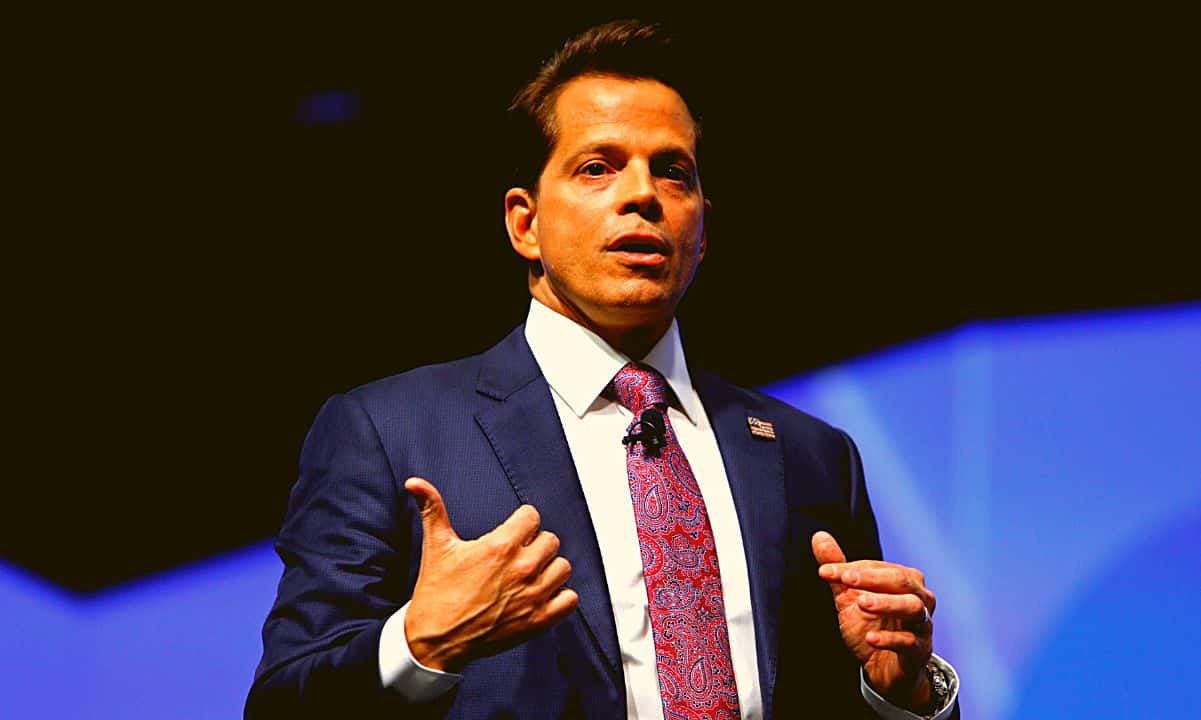
    The reliability of historical Bitcoin halving cycles as predictors of future price movements is increasingly being questioned by analysts, introducing significant uncertainty. While prominent figures like Anthony Scaramucci reiterate optimistic price targets, the market’s future trajectory remains speculative.

    Scaramucci recently stated on CNBC’s Squawk Box that Bitcoin is expected to surpass $100,000. This forecast is attributed to the anticipated tightening of prices associated with the next halving cycle, projected for around April 2028. This prediction echoes a similar forecast Scaramucci made in early 2024, when Bitcoin was trading near $43,000. However, the market landscape and analyst sentiment have evolved. Bitcoin last closed at or above $100,000 on November 13, 2025, reaching $100,035. The cycle following the previous halving on April 20, 2024, saw Bitcoin peak at over $126,000 on October 6, 2025. The upcoming halving, expected at block 1,050,000, will reduce the block subsidy from 3.125 BTC to 1.5625 BTC.

    Despite historical patterns and Scaramucci’s continued optimism, a growing number of analysts are expressing skepticism about the predictability of the traditional four-year Bitcoin cycle. Scott Melker, for instance, has noted that Bitcoin has already traded for 1,080 days since its last major low, exceeding the historical peak window of 1,060 to 1,070 days. Other analysts, such as Arthur Hayes, are also questioning whether the established cycle still holds true.

    Adding another layer of complexity to the market’s outlook is the legislative process surrounding the Digital Asset Market Clarity Act (H.R. 3633). This bill, intended to provide regulatory clarity for digital assets, is scheduled for a Senate cloture vote on September 15 at 2:15 PM ET. The motion for cloture requires 60 votes, and current indications suggest the bill faces an uncertain path to becoming law this year, with Democrats reportedly declining to back the procedural vote.

    The future trajectory of Bitcoin’s price remains subject to significant uncertainty. While the halving event is historically associated with price tightening, the questioning of established cycle patterns by market observers introduces a new variable. Furthermore, the outcome of regulatory developments, such as the Digital Asset Market Clarity Act, could also influence market sentiment and price action.

    Therefore, while predictions like Scaramucci’s offer a glimpse into potential future scenarios, they are made against a backdrop of evolving market dynamics and regulatory uncertainties. The precise impact of the next halving and the broader market’s response remain speculative, underscoring the inherent unpredictability of cryptocurrency markets.

    Why This Matters

    The materials describe a narrow update: Anthony Scaramucci stated on CNBC’s Squawk Box that Bitcoin is expected to rise above $100,000 due to the tightening of prices was associated with by the next halving cycle, which is anticipated around April 2028. Whether Bitcoin may indeed climb back over $100,000.

    Broader Context

    Source materials place the factual news in this context: Bitcoin last closed above $100,000 on November 13, 2025.

  • Bybit Converts UNITREEUSDT Pre-Market Perpetual to Standard

    Bybit Converts UNITREEUSDT Pre-Market Perpetual to Standard

    Bybit to Transition UNITREEUSDT Pre-Market Contract to Standard Perpetual Offering

    Bybit announced that it will convert the UNITREEUSDT Pre-Market Perpetual Contract to a standard Perpetual Contract on or around August 19, 2026, at 2:29 AM UTC. Following this transition, traders will have the ability to engage with the UNITREEUSDT pair with leverage of up to 25x.

    It is important for users to note that the contract parameters will undergo significant changes once it is converted to a standard Perpetual Contract.

  • Pennsylvania Governor Signs Executive Order Introducing New Requirements for Large AI Data Centers

    Pennsylvania Governor Signs Executive Order Introducing New Requirements for Large AI Data Centers

    Pennsylvania Governor Josh Shapiro signed an executive order on Tuesday that establishes new requirements for large AI data centers, aiming to ensure they address their impact on the state’s electrical grid and environmental resources. The order specifically targets data centers with a peak electricity demand exceeding 25 megawatts.

    Key provisions of the executive order include removing data centers from the state’s Permit Fast Track Program, which offers streamlined review processes. Additionally, state agencies will be prohibited from entering into non-disclosure agreements related to data center projects. Pennsylvania will also create a public map of proposed data center facilities.

    Operating data centers will be required to report their energy and water consumption annually, with these requirements set to begin in July 2027. The executive order also directs the state’s Special Counsel for Energy Affordability to pursue utility rules that would make data centers responsible for certain grid costs and prioritize them for curtailment during emergencies, unless they can secure sufficient power to meet their demand.

    According to Governor Shapiro, the order is intended to prevent developers from negatively impacting Pennsylvanians by disregarding the constitutional right to clean air and pure water and driving up utility bills. He indicated that the order aims to block projects deemed objectionable and unwarranted, establishing what he described as the nation’s strictest set of protections.

    Governor Shapiro noted that more than 100 data centers have reportedly been proposed in Pennsylvania, though only 20 have submitted permit applications to the state’s Department of Environmental Protection. Shapiro stated that he has heard concerns from communities across the state, including Archbald and Montgomery County, regarding the potential for AI data centers to raise utility costs and pollute resources.

    The executive order comes amid a broader trend of opposition to AI data centers across the U.S., driven by concerns over electricity consumption and environmental impacts. A Brookings analysis from January warned that local resistance could slow or block AI infrastructure projects and called for community benefit agreements. In March, major technology companies including Amazon, Google, Meta, Microsoft, OpenAI, Oracle, and xAI signed a White House pledge to cover the costs of new electricity generation and infrastructure needed for their data centers.

    Protests against AI data centers have also occurred nationwide, with at least 37 people arrested this year in connection with such demonstrations. The fight over data center development has increasingly shifted to local government levels.

    This executive order signifies a notable shift in Pennsylvania’s approach to regulating large AI data centers, reflecting growing national concerns about their energy consumption and infrastructure demands. The new requirements aim to ensure these facilities are developed and operated in a manner that addresses their impact on the state’s electrical grid and environment.

    Specific details regarding the utility rule changes sought by the state’s Special Counsel and the precise metrics for energy and water consumption reporting are still to be determined. The exact start date for the “this year” in relation to the arrests and the specific year of the Brookings analysis and White House pledge are also not detailed.

    Why This Matters

    The materials describe a narrow update: Pennsylvania’s Governor Josh Shapiro signed an executive order that establishes new requirements for data centers with peak electricity demand above 25 megawatts. The exact start date for the “this year” in relation to the arrests.

    Broader Context

    Source materials place the factual news in this context: Pennsylvania Governor Josh Shapiro signed an executive order Tuesday imposing new restrictions on large AI data centers, including rules aimed at making developers pay for their impact on the state’s electrical grid.

  • Mozilla Tests Opt-In AI ‘Smart Window’ for Firefox, Prioritizing User Control

    Mozilla Tests Opt-In AI ‘Smart Window’ for Firefox, Prioritizing User Control

    Mozilla is currently testing a new feature for its Firefox browser called ‘Smart Window.’ This optional, separate window allows users to interact with an AI assistant of their choice while browsing. Mozilla emphasizes user control and privacy, positioning the feature as an alternative to browsers that may integrate AI more intrusively.

    Users must explicitly opt-in to use the ‘Smart Window,’ and it can be disabled at any time, according to Mozilla’s announcements. The company is inviting interested users to join a waitlist to try the feature, with sign-ups available at firefox.com/ai.

    Mozilla states that in Firefox, users will “never be locked into one ecosystem or have AI forced into your browsing experience.” This approach aims to provide flexibility in how users engage with AI, drawing a line with browsers developed by AI companies, which Mozilla suggests may present users with a less flexible choice between constant AI use or none at all.

    This development occurs as AI integration in browsers becomes a significant area of competition and a potential privacy battleground. Mozilla’s strategy aligns with its privacy-first stance, offering AI capabilities while ensuring users remain in control. The company has indicated that the open-source nature of AI tools is important for transparency and verification of claims.

    Firefox already includes AI-powered features such as a chatbot in the desktop sidebar and a ‘Shake to Summarize’ function on iOS. The ‘Smart Window’ feature is presented as an extension of these efforts, building on Mozilla’s commitment to user choice. This initiative also echoes aspects of Mozilla’s Project Nova redesign, which included a unified control to disable all AI features.

    In the broader browser market, other companies are also exploring AI integration. Brave offers its LEO assistant, built with Anthropics, as a privacy-focused alternative. Perplexity Comet, Microsoft Edge, and Opera Neon are described as browsers with a strong AI focus. Google has also experimented with locally running AI models within its browser.

    Mozilla’s approach with the ‘Smart Window’ appears to be an effort to appeal to a wider user base while reinforcing its core values of privacy and user control. The company has stated its belief that AI should be “open, accessible, and driven by choice.”

    Uncertainties remain regarding the exact timeline for the wider release of the ‘Smart Window’ feature, the specific AI assistants that may be supported, and the full extent of data collection and privacy implications beyond the stated opt-in and user-controlled nature of the feature.

    Why This Matters

    The materials describe a narrow update: Mozilla is developing and testing a new feature called ‘Smart Window’ for its Firefox browser. The exact timeline for the wider release of the ‘Smart Window’ feature.

    Broader Context

    Source materials place the factual news in this context: Mozilla is testing a new “Smart Window” in Firefox—a separate, optional window where you can chat with an AI assistant of your choice while you browse.

  • Google Pays $10M for Spirit Airlines Data to Train AI

    Google Pays $10M for Spirit Airlines Data to Train AI

    Google Acquires Spirit Airlines Data for AI Development

    Google has agreed to pay $10 million for a significant portion of Spirit Airlines’ business data, including internal communications and company records, which the tech giant intends to leverage for the enhancement of its artificial intelligence models.

    The transaction encompasses a wide array of information, such as emails, spreadsheets, booking records, frequent-flyer data, and employee human resources information, according to a report by CNN. Crucially, the data will be anonymized, with all personally identifiable details removed before it is transferred to Google.

    “We acquired part of an enterprise dataset from Spirit Airlines, which can be helpful in improving our products and AI models,” a Google spokesperson told CNN. The company emphasized that no personal information will be obtained through this purchase.

    A separate report from Reuters indicated that the acquired data also includes Microsoft Teams messages and calendar entries, alongside marketing, productivity, and operational records.

    Spirit Airlines halted operations in May and has been in the process of liquidating its remaining assets through bankruptcy proceedings. Typically, airline bankruptcies conclude with another carrier acquiring the company, which often includes its valuable data assets.

    Google reportedly faced competition for the data, with AI data firm Mercor submitting a bid of $7.5 million.

    The sale is contingent upon court approval. U.S. Bankruptcy Judge Sean Lane is scheduled to review the proposed deal during a hearing on Wednesday.

    This acquisition occurs at a time when artificial intelligence companies are increasingly seeking access to vast datasets for training and refining their models. In February 2024, Reddit granted Google access to nearly two decades of its user-generated content in a deal reportedly valued at $60 million annually. Subsequently, in May 2024, OpenAI finalized its own agreement to integrate Reddit content into its ChatGPT platform. More recently, in January, the Wikimedia Foundation announced agreements with Microsoft, Google, Amazon, Meta, and other AI firms for extensive access to Wikipedia content.

  • BitBox Addresses Critical Firmware Flaws with AI-Assisted Security Update

    BitBox Addresses Critical Firmware Flaws with AI-Assisted Security Update

    BitBox has released a security update this week to address three vulnerabilities in its BitBox02 hardware wallet firmware, two of which were described as severe. These flaws could have potentially allowed attackers to load malicious firmware or lock funds to incorrect addresses. BitBox states there are no reports of stolen user funds and no reason for users to be concerned, emphasizing the importance of updating the firmware.

    The security update, version 9.26.5, is available for download on BitBox’s official website. A previous fix for one of the bootloader issues was already included in the July release, version 9.26.2.

    According to BitBox, AI models were utilized during its internal review process to help identify these vulnerabilities. This marks an increasing trend of artificial intelligence being employed in cybersecurity audits for hardware and software.

    The BitBox02 Nova edition was not affected by all vulnerabilities, and the Bitcoin-only edition does not carry the affected code for one of the severe bugs. The first severe flaw was addressed in the July release, while the second severe bug, which could allow arbitrary code execution when paired with a hostile computer before the Multi edition is set up, is fixed in the latest update. The less dangerous third issue, related to the wallet’s silent-payment feature, could have locked funds to a wrong address, but not directly steal them.

    BitBox has stated that there is no evidence the vulnerabilities were ever exploited in the wild before their discovery. The company stressed that users should update their firmware to the latest version to ensure their devices are protected.

    This incident serves as a reminder that hardware wallets, while considered a secure method for storing cryptocurrency, are not immune to vulnerabilities. Recent events, such as the Coldcard exploit that reportedly coincided with the theft of approximately 1,596 Bitcoin (BTC) in 2026, and a data breach at hardware wallet maker SafePal, underscore the ongoing security challenges in the cryptocurrency hardware space. These events highlight the need for continuous vigilance and prompt updates from users to protect their digital assets.

    Broader Context

    The company disclosed the issues itself, with no evidence they were ever exploited.

    Why This Matters

    The discovery and patching of severe vulnerabilities in a prominent hardware wallet like BitBox, with the assistance of AI in identifying the flaws, underscores the ongoing need for vigilance and timely updates in crypto security. This event, alongside recent exploits in the hardware wallet sector, highlights that these devices, while robust, are not infallible and require continuous user attention to safeguard digital assets.

  • XRP Price Outlook: AI Forecasts $1.20 by Year-End 2026 Amidst Market Uncertainty

    XRP Price Outlook: AI Forecasts $1.20 by Year-End 2026 Amidst Market Uncertainty

    Claude AI has projected that XRP will conclude 2026 trading around the $1.20 mark. This AI-driven forecast, however, is tempered by current market data, which suggests a more cautious outlook and a lower probability of XRP reaching significantly higher price targets.

    As of mid-August 2026, XRP is priced at approximately $1.00. This current valuation represents a decline of about 72% from its all-time high of roughly $3.65, achieved in July 2025. The daily trading volume for Ripple, the company associated with XRP, is reported at $728 million, a slight increase from the previous day’s $680 million.

    Claude AI’s prediction of XRP ending 2026 near $1.20 is reportedly based on technical analysis and data from prediction platforms like Kalshi and Polymarket. The AI is said to prioritize data-backed insights over narrative-driven forecasts, indicating a higher probability that XRP will remain below $1.50 by year-end.

    Market Signals vs. AI Forecast

    Prediction market data offers a different perspective. Kalshi data indicates a 23% probability of XRP reaching $1.50 or higher by the end of 2026. Polymarket data reveals a significant decrease in the odds of XRP achieving a new all-time high, falling from 41% over the past year to the current 14%. Adding to the caution, a separate Kalshi market suggests a 59% probability that XRP will trade below $1 before the year concludes.

    In the shorter term, Kalshi contracts show approximately a 66% probability of XRP closing above $1.35 and a 43% probability of closing above $1.37. These near-term figures highlight a potential for short-term price movement, yet they stand in contrast to the longer-term sentiment reflected in the declining odds for new all-time highs.

    Current XRP Landscape and Future Factors

    The current technical setup for XRP appears neutral to bearish. The cryptocurrency is struggling to maintain the $1 level and is trading below its 50-day and 100-day exponential moving averages (EMAs), with the Relative Strength Index (RSI) also indicating neutral to bearish sentiment.

    Analysts suggest that past catalysts, such as the SEC resolution and the launch of cryptocurrency ETFs, may have already been factored into the market price, as they have not resulted in sustained price increases. For XRP’s price outlook to improve significantly, factors such as sustained weekly ETF inflows exceeding approximately $2 million, XRP reclaiming and holding the 100-day EMA, or a broader positive shift in the cryptocurrency market may be necessary.

    While the possibility exists for XRP to fall below the $0.99 support level, potentially reaching between $0.85 and $0.95, a substantial decline towards the $0.50 zone is considered unlikely due to existing liquidity and structural demand from ETFs acting as a floor.

    Conclusion: Navigating Uncertainty

    The divergence between Claude AI’s year-end prediction and the sentiment reflected in prediction markets underscores the inherent uncertainty in forecasting cryptocurrency prices. While the AI’s projection offers a specific target, data from platforms where real capital is wagered suggests that a cautious approach is warranted when considering XRP’s performance for the remainder of 2026.

    Why This Matters

    This analysis is relevant as XRP enters the second half of 2026 legally cleared and institutionally adopted, yet remains near the $1 level it has hovered around for months. Understanding the implications of AI price predictions against real-world market data is crucial for investors navigating the cryptocurrency landscape.

    Broader Context

    XRP’s current market position highlights the ongoing uncertainty surrounding its future price movements. Factors such as the potential impact of pending catalysts like the CLARITY Act and broader crypto risk-on rotations, alongside the need for sustained ETF inflows and technical level reclamation, contribute to this uncertainty. Prediction markets, where real capital is wagered, offer a more direct signal of market sentiment than narrative-driven AI forecasts.