Tag: Neutral

  • DOSUSDT Perpetual Contract Launches in Innovation Zone with 20x Leverage

    DOSUSDT Perpetual Contract Launches in Innovation Zone with 20x Leverage

    Bybit Lists DOSUSDT Perpetual Contract in Innovation Zone

    Cryptocurrency exchange Bybit has announced the listing of the DOSUSDT Perpetual Contract within its Innovation Zone. Trading for the new contract is now live, offering users leverage of up to 20x.

    The DOSUSDT Perpetual Contract is based on the DAPPOS (DOS) underlying asset and settles in USDT. Key trading parameters include a tick size of 0.0001, maximum leverage of 20, and a capped funding rate of 2.5%. Funding fees will be settled every four hours, and trading will be available 24/7.

    For further information on DAPPOS, users can visit the official website at dappos.com or follow their official X account at x.com/dappOS_com.

    Bybit has cautioned that contracts listed in the Innovation Zone, including DOSUSDT, will incur higher trading fees compared to other available contracts. Additional details regarding the Innovation Zone can be found on Bybit’s help center.

  • Solana Consolidates Near Key Support Amid Market Headwinds and Upgrade Uncertainty

    Solana Consolidates Near Key Support Amid Market Headwinds and Upgrade Uncertainty

    Solana’s price is currently consolidating around its 50-day moving average, a critical technical level, as the broader cryptocurrency market faces a downturn. This period of price stability is occurring while the network prepares for significant upgrades, including the Alpenglow consensus upgrade and a proposed tokenomics adjustment, creating a landscape of both potential catalysts and prevailing uncertainty.

    Broader Market Headwinds
    The cryptocurrency market, including major assets like Bitcoin and Ethereum, has experienced a notable pullback. Bitcoin is trading below $65,000, and Ethereum has retreated to the $1,825–$1,850 range, capping potential upside for altcoins like Solana (SOL). As reported by the analysis, a weak tape across the largest cryptocurrencies limits the extent of any altcoin bounce. Solana itself is trading at $75.06, down 1.22% on the day, with a market capitalization of $43 billion.

    Potential Catalysts: Upgrades on the Horizon
    Upcoming developments offer potential tailwinds for Solana. The Alpenglow consensus upgrade, targeted for mainnet activation in August, aims to reduce transaction finality to between 100 and 150 milliseconds. Additionally, a tokenomics proposal, SGP-0003, seeks to significantly increase daily SOL burns from approximately 650 SOL to between 7,500 and 9,000 SOL. This proposal also aims to accelerate the annual disinflation rate to 30%, bringing forward the 1.5% inflation floor from 2032 to 2029. However, the analysis notes that while traders are positioning for these events, the activation date for Alpenglow remains a target, not a locked-in occurrence.

    Technical Indicators: A Mixed Signal Landscape
    Technical indicators present a mixed picture, suggesting a period of consolidation rather than a clear directional trend. Solana’s price is currently holding just above its 50-day moving average, which is often seen as a key support level. However, the price has failed to sustain a move above the 200-day Exponential Moving Average (EMA), which is situated near $85. The presence of a ‘death cross’—where a shorter-term moving average crosses below a longer-term one—further indicates that the path of least resistance may still be downwards, according to the analysis.

    The Relative Strength Index (RSI) stands at 50.5, indicating neutral momentum. Squeeze Momentum, currently at +0.28, suggests that volatility has contracted and a move may be loading, carrying a faintly positive bias, though the reading is close to zero. The Average Directional Index (ADX) is at 11.9, which, according to the source, signifies a directionless and choppy market where signals can be less reliable.

    Risk Assessment: Bull vs. Bear Scenarios
    Third-party market pricing from Myriad suggests a higher probability of a price decrease to $40 (69% likelihood) compared to a pump to $160 (31% likelihood). The analysis indicates that a move to $160 would require a daily close back above the 200-day EMA near $85, a level that has acted as resistance. The current technical setup, including the death cross, frames the current price action as a potential bounce within a broader downtrend rather than a definitive trend reversal.

    The bull case, as outlined in the analysis, involves Solana holding the 50-day EMA and the 74.73–75.71 Fib green zone, then reclaiming $77.50 and pushing towards the 200-day EMA near $85. A daily close above $77.50 would suggest the support held and reopen the possibility of reaching August highs. Conversely, the bear case is triggered by a daily close below $72, which could lead to further downside targets at $70.58 and the early-July floor near $65.

    Conclusion: Navigating Uncertainty
    Overall, Solana is navigating a period of consolidation. While upcoming upgrades present potential catalysts, the broader market weakness and inconclusive technical indicators contribute to a significant degree of uncertainty regarding its near-term recent price action. Investors are advised to monitor key support and resistance levels, as well as the progression of network upgrades and market sentiment.

    Why This Matters

    The materials describe a narrow update: Solana’s price has pulled back to its 50-day moving average after a recent spike, while broader market conditions for Bitcoin and Ethereum are also weak. The exact activation date for the Alpenglow consensus upgrade.

    Broader Context

    Source materials place the market analysis in this context: Solana has risen up the ranks of the crypto market charts over the last few years, but the bear market has taken a toll—and the broader macro environment isn’t give SOL much of a tailwind.

  • SEC Proposes New Crypto Rules, Charting Independent Path Amid Legislative Delays

    SEC Proposes New Crypto Rules, Charting Independent Path Amid Legislative Delays

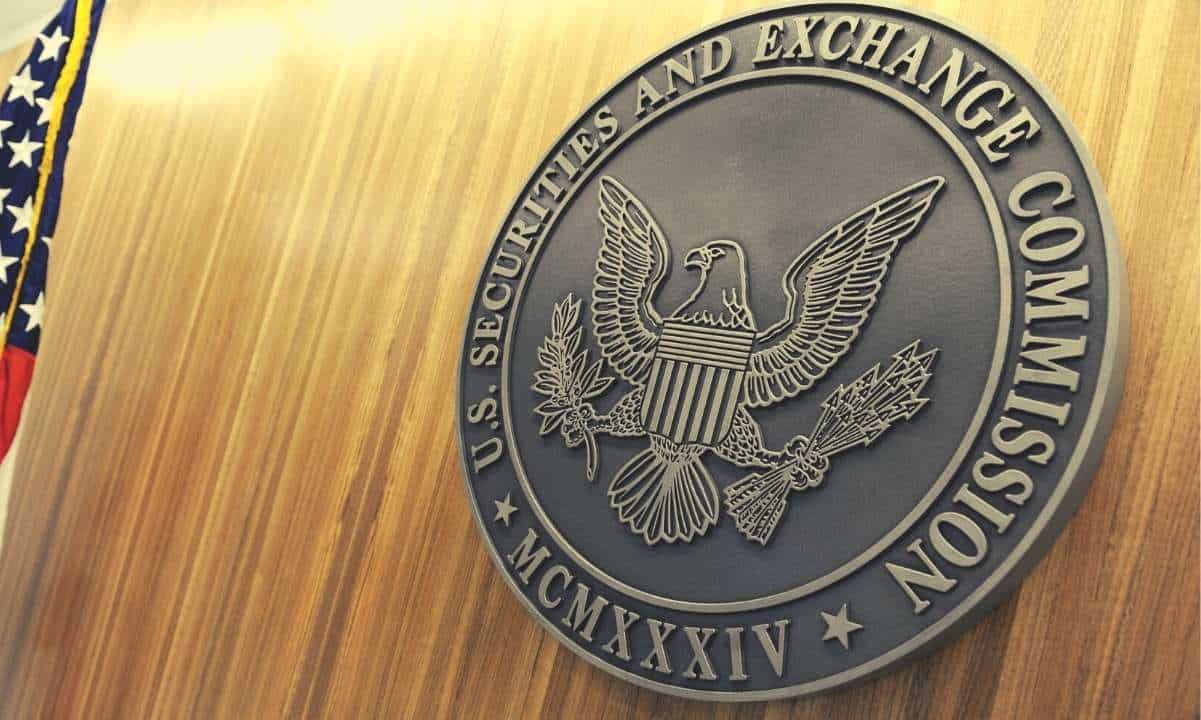
    The U.S. Securities and Exchange Commission (SEC) is set to consider proposing new rules for crypto investment contracts during an open meeting on August 14. This initiative marks an independent regulatory effort by the agency, proceeding while legislative efforts like the CLARITY Act face significant delays in Congress. The SEC’s process for finalizing new rules is typically extensive, requiring an estimated 12 to 18 months from the initial proposal through public comment periods, economic analysis, potential revisions, and a final vote.

    The SEC’s decision to advance rule proposals independently underscores its commitment to addressing the evolving digital asset landscape. This action occurs as the CLARITY Act, intended to provide regulatory clarity for digital assets, encounters procedural obstacles. Senate Majority Leader John Thune has filed cloture on the motion to proceed to the CLARITY Act, scheduling a procedural vote for September 15. This vote requires 60 votes to advance, and negotiators are still working to resolve disagreements concerning the bill’s stablecoin provisions and a bipartisan ethics agreement.

    In March, the SEC and the Commodity Futures Trading Commission (CFTC) jointly issued an interpretation establishing a five-category token taxonomy and defining the parameters for crypto investment contracts. While the upcoming SEC meeting notice did not specifically reference this interpretation, crypto investor Mark Chadwick suggests it could pave the way for rules allowing projects to issue tokens without the full burden of IPO-style registration. According to Coinbase’s chief policy officer, Faryar Shirzad, this effort demonstrates that “the work of bringing clear rules to digital assets isn’t waiting on Congress.”

    Further regulatory activity includes the CFTC’s new Innovation Advisory Committee, comprising representatives from firms such as Coinbase, Ripple, Robinhood, Kraken, Gemini, Polymarket, Kalshi, CME, and Nasdaq, which will hold its inaugural meeting on August 20.

    Despite these developments, considerable uncertainty persists. The SEC’s proposed rules are in their preliminary stages and will undergo a lengthy approval process. Likewise, the outcome of the CLARITY Act’s procedural vote on September 15 remains uncertain. Senator Cynthia Lummis, a sponsor of the bill, has voiced frustration over the legislative delays. Figures like Michael Saylor maintain that Bitcoin’s clarity is independent of the CLARITY Act, while Grayscale has proposed that regulators can address critical areas like custody, tokenized securities, and trading rules independently if Congress is unable to pass legislation this year.

    It is important to note that the SEC’s upcoming meeting is focused on considering rule proposals, not on finalizing or enacting rules. The entire regulatory process is anticipated to span well over a year, separate from the legislative timeline of the CLARITY Act, which faces an uncertain future.

    Why This Matters

    The materials describe a narrow update: The SEC will hold a meeting on August 14 to consider proposing new rules for crypto investment contracts, offering a tailored path for certain offerings. Whether the SEC’s proposed rules will be formally adopted.

    Broader Context

    Source materials place the factual news in this context: The announcement lands just days after the Senate pushed its next procedural vote on the CLARITY Act to mid-September, leaving federal regulators to press ahead on their own while lawmakers work out what’s left of the bill’s disputes.

  • XRP Price Below $1: Analysts Offer Divergent Views Amidst Mixed Market Signals

    XRP Price Below $1: Analysts Offer Divergent Views Amidst Mixed Market Signals

    XRP’s price has recently fallen below the psychologically significant $1 mark, a development that has coincided with a divergence of opinions among market analysts. The current situation underscores the ambiguity surrounding XRP’s market trajectory, with uncertainty remaining about its near-term future.

    Over the last week, XRP experienced a price drop of more than 7%, breaching the $1.00 level. This pullback has amplified concerns within the community, with some analysts expressing more bearish outlooks. According to Crypto Bitlord, the asset is “basically dead” and has no future. However, other community members argue that XRP still holds potential for future growth.

    Conflicting Analyst Outlooks

    Analysts are offering conflicting predictions regarding XRP’s immediate future. X user Diana projected a potential drop to $0.86 should the price decisively break below $1.00. Conversely, Diana also suggested that a strong reaction around that zone, followed by a reclaim of $1.036, could interrupt the bearish perspective and trigger a relief bounce. Another commentator, ChartNerd, opined that XRP must reclaim the $1.02-$1.06 range, or it is likely to head further south.

    On-Chain Data Presents a Complex Picture

    Amidst these price concerns, on-chain data presents a more complex picture. Ali Martinez revealed that large investors accumulated over 380 million XRP, valued at nearly $400 million at the time, within a seven-day period. This accumulation reduces the available supply on the open market, which could potentially support a price increase if demand remains constant or grows. Such activity might also encourage smaller investors to follow suit, injecting fresh capital into the ecosystem.

    Further adding to the mixed signals, Ali Martinez noted that XRP’s TD Sequential indicator on a monthly scale has flashed a buy signal. Historically, such signals have preceded price surges. However, Martinez had previously outlined $1.06 as a critical level, warning of a potential collapse to $0.62 if the price slipped under it, a scenario that has now occurred.

    The divergence in expert opinions and the conflicting nature of the available data make it difficult to ascertain a clear direction for XRP in the near term. While whale accumulation and a technical buy signal offer potential indicators, the breach of the $1 psychological level and bearish analyst commentary present risks. Investors are advised to approach the market with caution, recognizing the limitations of current signals and the prevailing uncertainty.

    Why This Matters

    The materials describe a narrow update: XRP’s price dropped below the $1 mark, a level considered psychologically significant. Whether the current price dip represents a buying opportunity or a sign of the asset’s decline.

    Broader Context

    Source materials place the market analysis in this context: Ripple’s cross-border token has performed quite poorly over the last week, dropping by more than 7%.

  • XRP Tests 18-Month Support: Can $1 Hold?

    XRP Tests 18-Month Support: Can $1 Hold?

    XRP Price Prediction: Ripple’s Token Hovers Near Key Support as Peers Rally

    XRP is currently trading at $1.006, a 3.2% decrease on the day, teetering just above the crucial $1 psychological level. This price action stands in contrast to its market peers, which have seen rallies while XRP struggles to gain momentum. The current situation suggests a potential breakout is imminent, with the direction of this move determining whether XRP is poised for a significant upward trend or a further decline.

    Analyst Roadmaps and Key Levels

    Analyst EGRAG CRYPTO has outlined a roadmap for XRP, indicating that a sustained move towards $3.00-$3.60 would require the token to first overcome resistance at $1.30-$1.60 and then $1.96, validating a “Wave 3” scenario. On the downside, immediate support is identified at $1.00-$0.95, followed by $0.75, and then a more significant zone between $0.60-$0.52 if bearish pressures intensify.

    Meanwhile, analyst That Martini Guy has highlighted an unusual divergence: Bitcoin, Ethereum, and Solana experienced bounces last week, while XRP declined by approximately 5%, despite ongoing inflows into related exchange-traded funds (ETFs).

    Technical Indicators and Market Indecision

    XRP recently recorded its lowest weekly close in nearly two years at $1.029. The asset is currently trading within a narrow range, between $1.0038 and $1.0218, a tight band that signals market indecision rather than strong directional conviction. TradingView data points to the next resistance level at $1.06, with potential upside targets at $1.35 and $1.64 should momentum shift favorably. CoinGecko data corroborates this, showing XRP’s 24-hour low and high prices closely aligned with its current trading price, indicating a market that is coiled rather than trending.

    Bull, Base, and Bear Scenarios

    The bullish outlook for XRP hinges on its ability to reclaim $1.06 and then break through the $1.30-$1.60 resistance zone, which EGRAG CRYPTO suggests would confirm the breaking of Wave 1’s high and validate a potential Wave 3 move towards $3.00-$3.60.

    The base case scenario anticipates XRP trading sideways between $0.95 and $1.06 as the market awaits a significant catalyst. The bearish scenario, however, posits that the $1.00 support level will fail, leading to a price decline towards $0.75 and potentially the $0.60-$0.52 zone.

    Fundamental Strength vs.

    Price Action

    Despite a strong fundamental case, driven by Ripple’s ETF demand and increasing Real World Asset (RWA) activity on the XRP Ledger—which has seen tokenized assets surge to $4.06 billion across 373 assets from just $73 million in January 2025—price confirmation remains elusive. For XRP holders, the prolonged period of price stagnation around the $1 mark has been a source of frustration.

    The anticipation of a Wave 3 breakout is now viewed as a multi-week bet rather than a short-term trade. This has led some investors to reallocate capital towards earlier-stage infrastructure projects with potentially higher upside, where market capitalization is not yet a limiting factor.

    This article is for informational purposes only and does not constitute financial advice. Cryptocurrency markets are highly volatile and unpredictable. Always conduct independent research before making any investment decisions.

  • ADA Rally Stalls: Analyst Predicts 25% Decline

    ADA Rally Stalls: Analyst Predicts 25% Decline

    Cardano’s native token, ADA, has experienced a significant rally in recent weeks, but analysts are now warning of a potential sharp downturn. The cryptocurrency saw its price surge by 15% over the past month, reaching a high of nearly $0.21 in early August, a level not seen since June. This upward momentum was initially fueled by a substantial influx of large investors, who acquired over 240 million ADA coins in less than a week.

    Potential for a Significant Decline

    Despite the recent gains, popular crypto analyst Ali Martinez has identified several factors that could signal a substantial short-term price correction for ADA. Martinez pointed to a decrease in the number of “whales” – addresses holding between 1 million and 10 million ADA. This metric has fallen from 2,370 to 2,340, suggesting that some large holders may be cashing out or reallocating their assets following the price surge.

    Furthermore, Martinez highlighted the formation of a “death cross” between Cardano’s Moving Average Convergence Divergence (MACD) ratio and its 7-day simple moving average. This technical indicator is often interpreted as a sign of weakening momentum and an increased risk of a deeper correction. Adding to these concerns, the TD Sequential indicator on ADA’s daily chart has flashed a sell signal.

    Martinez predicts that if these warning signs materialize, ADA could fall to the mid-range support level of $0.17. A further breakdown below this point could expose the lower boundary of the channel, potentially pushing the price down to around $0.144.

    ETF Setback and Investor Sentiment

    Adding to the bearish outlook, Grayscale, a prominent digital asset manager, recently withdrew its exchange-traded fund (ETF) filings for three altcoins, including Cardano. The launch of such a product had been eagerly anticipated by bulls, who believed it could significantly boost demand and drive up ADA’s price. The withdrawal means investors will have to wait longer for this potential catalyst.

    Mixed Signals and Potential Buying Opportunities

    However, not all indicators are pointing downwards. In recent days, ADA has seen higher exchange outflows than inflows, suggesting that investors are moving their holdings from centralized exchanges to self-custody. This trend can reduce immediate selling pressure on the market.

    Additionally, Cardano’s Relative Strength Index (RSI) has dropped to 25, indicating that the asset is in oversold territory. Historically, such low RSI levels are often viewed as potential buying opportunities, as they suggest that the price may have fallen too far, too fast and could be due for a rebound.

  • CLARITY Act Vote Stalls on Procedure, Not Final Decision

    CLARITY Act Vote Stalls on Procedure, Not Final Decision

    Senate Banking Committee Advances CLARITY Act Amidst Uncertain Future

    The CLARITY Act has cleared a significant hurdle, passing the Senate Banking Committee with a comfortable 15-9 bipartisan vote. However, its journey to becoming law is far from assured, with analysts now estimating a 75% chance of the bill failing to reach a final vote.

    This assessment comes from Jaret Seiberg, an analyst at TD Cowen Washington Research Group, who noted in a policy brief on August 10 that the CLARITY Act has shifted from a likely legislative victory to a highly uncertain prospect heading into September.

    The bill’s prospects have become a focal point for market participants, with traders on Kalshi placing bets on its passage by July 1, 2027. This market saw a 2% increase overnight, currently standing at 35%.

    The Digital Asset Market Clarity Act’s Objectives

    The Digital Asset Market Clarity Act (H.R. 3633) aims to establish a clear division of federal oversight for digital assets between the Securities and Exchange Commission (SEC) and the Commodity Futures Trading Commission (CFTC). Under the proposed legislation, digital commodities would fall under the CFTC’s purview, while assets deemed investment contracts would be regulated by the SEC.

    Senator Cynthia Lummis (R-WY) released updated text for the bill on July 22, underscoring the urgency of its passage. She described it as “the last real chance…to get this right.” Senate Agriculture Committee Chairman John Boozman (R-AR) highlighted the bill’s role in providing a clear regulatory framework for digital commodities. Meanwhile, Banking Committee Chairman Tim Scott (R-SC) emphasized its importance in protecting retail investors and combating illicit finance. Despite initial momentum, including the committee vote, progress in the Senate has stalled.

    SEC Initiates Crypto Rulemaking as Senate Recesses

    In a significant development, the SEC is poised to commence its first major cryptocurrency rulemaking process this week, following the Senate’s failure to pass the CLARITY Act before the August recess. The SEC is scheduled to meet on August 14 to propose “Regulation Crypto.” This proposal could potentially establish a legal pathway for certain digital assets.

    Procedural Hurdles and Potential Failure Scenarios

    Seiberg’s projection of a 75% failure rate, as reported by Bitcoin.com News, emerged after Senate Majority Leader John Thune filed for cloture on August 8. While an initial cloture vote is scheduled for September 15 at 2:15 p.m. ET, this procedural step does not guarantee the bill’s ultimate passage. Several potential scenarios could lead to its demise:

    With Republicans holding 53 seats, at least seven Democrats or independents would need to support the cloture motion for it to pass. Unresolved disputes concerning stablecoin yields, anti-money-laundering provisions, and regulatory authority continue to be points of contention.

    TD Cowen maintains that the bill is not definitively dead, but its path forward has become considerably more challenging. The most plausible route to passage would involve the initial cloture motion securing more than 60 votes. This would be followed by Democrats bringing their preferred ethics compromise to a floor vote. Should that amendment fail by a simple majority, crypto-friendly Democrats might then support final passage, having formally registered their objection.

    A less probable scenario involves the White House negotiating its own ethics agreement with Democrats to garner sufficient votes. A “lame-duck” scenario is also a possibility, but it would only materialize if Republicans retain control of both chambers of Congress beyond the midterm elections, pushing any resolution well past the current fall trading season.

    Market Implications of Delayed Clarity

    For traders anticipating a near-term regulatory catalyst, the extended timeline is a critical factor. Even the most optimistic outlook does not foresee regulatory clarity for cryptocurrencies arriving in September.

    Assets most sensitive to the SEC/CFTC market structure outcome appear to have already factored in this delay. XRP, which stands to benefit directly from a codified digital commodity classification under CFTC oversight, has experienced a softening of ETF inflows, mirroring the postponed regulatory timeline. This pattern has been observed previously, with price reactions documented after each procedural setback, including earlier postponements of Senate votes.

    The market’s reaction function on September 15 will be instructive. A clean cloture passage, accompanied by visible follow-through, amendment votes, and a clear path to final passage, would likely be interpreted as a significant de-risking event for tokens sensitive to market structure. Conversely, a cloture vote that is either postponed or yields no subsequent action would reinforce the bill’s drift toward TD Cowen’s base case, potentially leading to a reversal of gains for assets that had priced in regulatory tailwinds.

  • Kuaishou USDT Perpetual Contract Launches with 25x Leverage

    Kuaishou USDT Perpetual Contract Launches with 25x Leverage

    Bybit Launches KUAISHOUUSDT Perpetual Contract

    Cryptocurrency exchange Bybit has announced the listing of the KUAISHOUUSDT Perpetual Contract, with trading now live and offering up to 25x leverage.

    The new contract is also accessible through Bybit’s Futures bots, including Futures Grid, Futures Martingale, and Futures Combo.

    The KUAISHOUUSDT Perpetual Contract is based on Kuaishou Technology (HKEX: 1024) as the underlying asset and settles in USDT. The contract features a tick size of 0.01 and a maximum leverage of 25x. The capped funding rate is set at 2%, with funding fees settled every 8 hours. Trading for the contract is available 24/7.

    Kuaishou Technology’s official website is https://www.kuaishou.com/.

  • CSOPSAMSUNG2LUSDT Perpetual Contract Launches with 20x Leverage

    CSOPSAMSUNG2LUSDT Perpetual Contract Launches with 20x Leverage

    Bybit Lists New Perpetual Contract for CSOP Samsung Daily Max 2x ETF

    Cryptocurrency exchange Bybit has announced the listing of a new perpetual contract, CSOPSAMSUNG2LUSDT, allowing traders to speculate on the price movements of the CSOP Samsung Daily Max 2x ETF. Trading for the contract is now live, offering leverage of up to 20x.

    The CSOPSAMSUNG2LUSDT perpetual contract is also accessible through Bybit’s suite of Futures bots, including Futures Grid, Futures Martingale, and Futures Combo.

    Contract Details:

    • Contract Type: USDT Perpetual Contract
    • Underlying Asset: CSOP Samsung Daily Max 2x HKEX:7747 (CSOPSAMSUNG2L)
    • Settlement Asset: USDT
    • Tick Size: 0.01
    • Maximum Leverage: 20x
    • Capped Funding Rate: 2.5%
    • Funding Fee Settlement Interval: Every 8 hours
    • Trading Hours: 24/7
  • Brazil’s Crypto Market Faces October Licensing Deadline

    Brazil’s Crypto Market Faces October Licensing Deadline

    Brazil, a global powerhouse in cryptocurrency adoption, is poised for a significant regulatory overhaul as its authorities set a firm deadline for bringing the sector under formal supervision. A new report from blockchain security firm CertiK details the impending rules and their implications for businesses and users within this burgeoning market.

    Brazil ranks fifth worldwide in cryptocurrency adoption, according to Chainalysis data cited in the report. Between July 2024 and June 2025, the country saw $318.8 billion in on-chain value. Notably, nearly one-third of all cryptocurrency activity in Latin America flowed through Brazilian platforms and wallets, a volume roughly double that of Argentina and Mexico combined.

    A New Regulatory Era Dawns

    With the October 30, 2026, authorization deadline looming, Virtual Asset Service Providers (VASPs) in Brazil face a fundamental shift. Compliance is no longer a matter of stated intentions but a requirement to demonstrate robust security, governance, and operational readiness.

    The new regulatory framework is anchored in Law 14,478/2022, the Legal Framework for Virtual Assets. The Central Bank of Brazil (BCB) solidified this by publishing three key resolutions on November 10, 2025. These resolutions delineate licensing requirements, establish minimum capital thresholds, and integrate crypto activities with the nation’s foreign exchange regulations.

    Proving Compliance: The New Standard

    Any entity facilitating cryptocurrency trading, custody, or transfers—classified as a Virtual Asset Service Provider (VASP)—must apply for authorization by October 30, 2026. A critical component of this application is a “reasonable assurance report” from an audit firm registered with the securities regulator. This report must attest to the effectiveness of the firm’s anti-money laundering and sanctions compliance measures. Simply claiming adherence to regulations will no longer suffice; independent verification is now mandatory.

    Significant Entry Barriers

    The financial commitment to operate legally is substantial. Minimum capital requirements range from approximately R$10.8 million to R$37.2 million (roughly $2 million to $6.7 million), varying by license category. Furthermore, the BCB prohibits VASPs from using co-working spaces as their registered office. The CertiK report estimates that approximately 120 providers currently serve the Brazilian market, many of which operate without formal licensing.

    Onshoring Operations for Foreign Firms

    International companies that have served the Brazilian market from offshore entities are required to establish local operations within 270 days. The regulatory perimeter is clearly defined, aiming to end the model of operating with a Portuguese-language website, global liquidity, and no physical presence in Brazil.

    The “Stablecoin Nation” and Monetary Policy

    Brazil is characterized in the report as a “Stablecoin Nation.” Approximately 80% of declared crypto volume is transacted through dollar-pegged tokens, with USDT alone accounting for 88.7% of this flow. Total stablecoin activity reached R$1.13 trillion between 2019 and 2025. As previously reported, Tether’s USDT is already accessible at 24,000 ATMs nationwide, even as regulatory scrutiny has intensified over years, marked by exchange closures and ATM expansions.

    This significant reliance on foreign currency, whether direct or indirect, explains the Central Bank’s deep involvement in cryptocurrency regulation. CertiK argues that when a substantial portion of crypto transactions involves instruments pegged to foreign currencies, the issue transcends consumer protection and becomes a matter of monetary policy. This fundamental point, the report suggests, underlies the Central Bank’s leading role, the emphasis on foreign exchange and cross-border flows, and the anticipation of further stablecoin-focused regulations.

    Industry Vulnerabilities and Operational Risks

    According to CertiK’s Hack3d tracking, which has been covered previously, the industry lost $1.32 billion to hacks and exploits across 344 incidents in the first half of 2026. Wallet compromises accounted for $444.5 million of these losses, while phishing attacks resulted in $366.3 million. The two largest incidents, Kelp DAO ($291 million) and Drift Protocol ($285 million), stemmed from operational and infrastructure failures rather than vulnerabilities in smart contracts.

    Underestimating the Regulatory Hurdle

    Marcos Rocha of Veirano Advogados, a law firm that has advised on licensing applications, noted that the market has underestimated the complexity of the new requirements. “The most common issue we have observed is the underestimation of the complexity and timing involved in preparing an authorization application,” he stated, adding that the review process will be “thorough, detailed, and highly technical.”

    Antônio Neto, Head of Growth LATAM at the Solana Foundation, observed a growing trend of projects opting to operate under an already licensed VASP rather than pursuing their own licenses. He believes the Brazilian market is “structurally moving onto the regulated rail.”

    Consolidation and Acquisition as a Strategy

    The capital floor and the assurance bottleneck are expected to reshape the competitive landscape. The report posits that a license will become a valuable asset, and the acquisition of an already authorized local operator will emerge as the quickest entry route for foreign firms. This pattern has been observed in other jurisdictions following the implementation of regulatory frameworks like Europe’s MiCA and Dubai’s VARA, where unlicensed activity has migrated to compliant entities.

    Navigating the Gray Areas

    The report also highlights areas of regulatory ambiguity. Non-custodial wallets, DeFi front-ends, and tokenized securities are flagged as potential gray zones. The securities regulator (CVM) maintains that these remain within its purview, irrespective of the underlying blockchain technology. The CVM has explicitly stated that a tokenized share is still considered a share.

    The CertiK report concludes that Brazil’s crypto market is entering an era where “the ability to prove replaces the ability to promise.” For the approximately 120 providers currently serving Brazilian users, the deadline to submit applications to the Central Bank, complete with an independent assurance report, is October 30, 2026.