Tag: Neutral

  • FLEOA Endorses Digital Asset Market Clarity Act with Conditions on DeFi Accountability

    FLEOA Endorses Digital Asset Market Clarity Act with Conditions on DeFi Accountability

    The Federal Law Enforcement Officers Association (FLEOA) has announced its endorsement of the Digital Asset Market Clarity Act (H.R. 3633), a legislative proposal concerning digital assets and decentralized finance (DeFi). However, the endorsement comes with specific demands aimed at strengthening accountability within DeFi systems and preserving federal investigative powers, as the bill faces a legislative deadline with the Senate’s August 8 recess approaching.

    The FLEOA outlined its conditions in a letter to the U.S. Senate Committee on Banking, Housing, and Urban Affairs. The association urged lawmakers to narrow DeFi protections, clarify accountability in DeFi, prevent firms from avoiding regulation by claiming decentralization, revise “specific intent” language for liability, and explicitly affirm that the bill does not curtail existing federal investigative powers. These demands represent key points of negotiation as the legislative session nears its recess.

    The approaching August 8 recess acts as a de facto deadline for advancing the bill this legislative session. Senator Cynthia Lummis framed the urgency on July 8, stating that passing the Clarity Act is likely the last chance to enact significant digital asset legislation before 2030. She warned that failure to pass the bill could result in other countries setting the rules for digital assets, leaving the U.S. to catch up for a decade.

    In June, concerns about Section 604 of the bill were raised by four law enforcement organizations, including the National District Attorneys Association and the National Association of Assistant United States Attorneys, prompting an invitation from the White House for a meeting in late June. During this period, the Major County Sheriffs of America shifted from opposition to a neutral stance, and the FLEOA moved towards active support with conditions.

    Further signaling support, the National Organization of Black Law Enforcement Executives (NOBLE) backed the bill nine days before the FLEOA’s statement. These sequential endorsements by law enforcement groups are being used to counter arguments that the Clarity Act would weaken the government’s ability to police crypto crime.

    Despite the FLEOA’s conditional endorsement, significant uncertainties remain regarding the bill’s final form and passage. The Banking and Agriculture Committee versions of the bill still require reconciliation before a floor vote can proceed. The outcome of negotiations concerning the FLEOA’s specific demands, particularly the DeFi liability language, will be crucial in determining the bill’s path forward.

    While proponents view the Clarity Act as progress toward balancing technological innovation with public safety, critics argue it could weaken the government’s ability to police crypto crime. For traders, the bill aims to strengthen the regulatory framework for digital assets, enhance DeFi accountability, and preserve investigators’ existing powers. The handling of DeFi liability language remains a central focus of scrutiny as legislative efforts continue.

    Why This Matters

    The materials describe a narrow update: The FLEOA announced its endorsement of the Digital Asset Market Clarity Act, a bill concerning digital assets and decentralized finance (DeFi). Whether the specific demands of the FLEOA will be incorporated into the final version of the Digital Asset Market Clarity Act.

    Broader Context

    Source materials place the factual news in this context: The FLEOA’s endorsement is conditional in practice.

  • Grok AI’s XRP Price Prediction: Analyzing Potential Amidst Significant Uncertainty

    Grok AI’s XRP Price Prediction: Analyzing Potential Amidst Significant Uncertainty

    Interpreting AI-generated price targets for digital assets like XRP involves navigating significant uncertainty, as predictions often outpace verifiable market indicators and technological adoption. Grok AI has issued a forecast suggesting XRP could reach three-digit prices by the end of 2026, a projection that warrants a closer look at its underlying assumptions and the broader market context.

    Currently trading around $1.06, XRP has experienced substantial corrections from previous highs, which reached approximately $3.65. According to Grok AI, its prediction is based on several factors, including XRP’s utility in facilitating fast and low-cost global payments, the growth of tokenized real-world assets on the XRP Ledger (XRPL) surpassing $4 billion, increasing institutional interest in cross-border settlements, and the potential for favorable regulatory developments. These elements, Grok AI suggests, could collectively drive XRP’s value significantly higher.

    The AI’s forecast posits that in a robust bull market, coupled with widespread adoption for remittances and tokenized assets, XRP could realistically achieve three-digit prices by the close of 2026. Some analysts, such as Pumpius, have even posited a future XRP valuation of $1,000 by 2027, contingent on optimal conditions including bank integration, regulatory support, and a rotation into altcoins. However, these projections are subject to considerable uncertainty.

    XRP’s foundational strengths lie in its role as a bridge asset for cross-border transactions, notably within Ripple’s On-Demand Liquidity network. The XRPL has demonstrated its capability in handling tokenized assets, with a current valuation exceeding $4 billion. The potential for improved regulatory clarity and the passage of pro-crypto legislation are also cited as factors that could encourage greater institutional adoption of XRP.

    Beyond the XRP prediction, the source material also mentions Bitcoin Hyper, a Bitcoin Layer 2 chain. It is described as a solution for real-time Bitcoin activity and ecosystem growth, with a presale price of approximately $0.0137 for its HYPER token. Over $32.9 million has reportedly been raised for the Bitcoin Hyper presale, which is noted to be in its final stages, offering potential staking rewards of 36%.

    However, the path to achieving ambitious price targets for XRP is fraught with challenges. The exact timing and magnitude of any potential price surge remain speculative. Future regulatory landscapes and the extent of institutional embrace are not guaranteed. Furthermore, the ambitious price points of $15,000 or $1,000 for XRP, linked to scenarios like replacing the SWIFT system, are highly speculative and lack concrete evidence for their realization.

    Similarly, the projected growth of Bitcoin Hyper in 2026 and beyond is an outlook rather than a certainty. The cryptocurrency market is inherently volatile, and predictions, whether from AI or human analysts, should be approached with a critical perspective. The resolution of past legal matters concerning XRP has removed some obstacles, but the broader market dynamics and adoption rates will ultimately shape its trajectory.

    In conclusion, while Grok AI’s prediction highlights potential upside for XRP based on its technological utility and evolving market conditions, significant uncertainties persist. Investors and market observers are advised to consider the inherent risks and speculative nature of such forecasts, focusing on fundamental factors and verifiable developments rather than solely on AI-generated price targets.

    This analysis is particularly relevant given the current crypto market’s volatility. XRP’s utility in global payments and the growth in tokenized assets on the XRPL, which has surpassed $4 billion, are key factual underpinnings. However, the speculative nature of price predictions, even from AI, underscores the need for caution.

    Why This Matters

    The materials describe a narrow update: Grok AI has issued a price prediction for XRP, forecasting it could reach three-digit figures by the end of 2026, citing factors like its utility in global payments, growth in tokenized assets, institutional interest, and potential regulatory tailwinds. The exact timing and magnitude of XRP’s potential price increase.

  • Crystal Intelligence Enhances Blockchain Analysis with ‘Ask Crystal’ AI Feature

    Crystal Intelligence Enhances Blockchain Analysis with ‘Ask Crystal’ AI Feature

    Crystal Intelligence has launched ‘Ask Crystal,’ an AI-powered analyst integrated into its Crystal Expert platform, designed to transform blockchain transfer analysis into structured, evidence-backed narratives. This new capability aims to accelerate decision-making for compliance, investigation, and risk teams.

    The ‘Ask Crystal’ feature analyzes blockchain transfers to deliver a clear narrative summary, with all conclusions supported by verifiable blockchain evidence. This addresses the significant time and cognitive load challenges faced by analysts who often must manually correlate scattered data across multiple screens, especially with increasing case volumes. Crystal Intelligence states that ‘Ask Crystal’ can replace minutes of manual correlation with a single, AI-generated read.

    “We are not automating the decision. We are giving every decision the full picture it deserves,” said Navin Gupta, Chief Executive Officer of Crystal Intelligence. The AI reads the complete on-chain activity behind any transfer, consolidating this information into a structured narrative.

    ‘Ask Crystal’ provides a comprehensive analysis across four key sections: a transfer overview, a detailed connections analysis of fund sources and destinations, an explanation of alert details by type and detection rule, and a trusted list check for prior interactions. This approach is intended to equip analysts with a complete view, streamlining their workflows.

    The Crystal Expert platform, now enhanced with ‘Ask Crystal,’ serves compliance teams, investigators, financial institutions, and regulators. It supports over 330 blockchains and tracks 110,000 attributed entities. Crystal Intelligence, based in Amsterdam, Netherlands, operates with ISO 27001 and GDPR compliance.

    The introduction of ‘Ask Crystal’ signifies an advancement in AI-driven solutions for the digital asset sector, aiming to boost efficiency and effectiveness in critical areas such as blockchain analysis, compliance, and risk management.

    Why This Matters

    The materials describe a narrow update: Ask Crystal is an on-demand AI analyst integrated into Crystal Expert that analyzes blockchain transfers to provide a structured, evidence-backed narrative, aiming to assist compliance, investigation, and risk teams in making faster decisions. The AI capability is designed to address the challenges faced by teams reviewing blockchain activity, such as climbing case volumes, scattered information across separate screens, leading to slow reviews, inconsistent decisions, and heavy cognitive load.

    Broader Context

    Source materials place the announcement in this context: The article is a press release from Crystal Intelligence announcing a new product feature.

  • INTWUSDT Perpetual Contract Launches with 20x Leverage

    INTWUSDT Perpetual Contract Launches with 20x Leverage

    Bybit Launches INTWUSDT Perpetual Contract with Up to 20x Leverage

    Cryptocurrency exchange Bybit has announced the listing of the INTWUSDT Perpetual Contract, with trading now live and offering users leverage of up to 20x.

    The new contract is also accessible through Bybit’s suite of Futures bots, including Futures Grid, Futures Martingale, and Futures Combo.

    Contract Specifications:

    • Contract Type: USDT Perpetual Contract
    • Contract Name: INTWUSDT
    • Underlying Asset: GraniteShares 2x Long INTC ETF (INTW)
    • Settlement Asset: USDT
    • Tick Size: 0.01
    • Maximum Leverage: 20x
    • Capped Funding Rate: 2.5%
    • Funding Fee Settlement Interval: Every 8 hours
    • Trading Hours: 24/7
  • KSTRUSDT Perpetual Contract Launches with 20x Leverage

    KSTRUSDT Perpetual Contract Launches with 20x Leverage

    Bybit Launches KSTRUSDT Perpetual Contract with Up to 20x Leverage

    Cryptocurrency exchange Bybit has announced the listing of the KSTRUSDT Perpetual Contract, enabling trading with leverage of up to 20x.

    The new contract is accessible through Bybit’s Futures bots, including Futures Grid, Futures Martingale, and Futures Combo.

    KSTRUSDT Perpetual Contract Specifications:

    • Underlying Asset: KraneShares STAR Market 50 ETF (KSTR)
    • Settlement Asset: USDT
    • Tick Size: 0.01
    • Maximum Leverage: 20x
    • Capped Funding Rate: 2.5%
    • Funding Fee Settlement Interval: Every 8 hours
    • Trading Hours: 24/7
  • Bybit to Support Flare Network Upgrade

    Bybit to Support Flare Network Upgrade

    Bybit to Support Flare Network Upgrade

    Cryptocurrency exchange Bybit has announced its support for the upcoming Flare (FLR) network upgrade, version v1.14.0. The upgrade is scheduled to occur on July 14, 2026, at 12:00 PM UTC.

    In preparation for the network enhancement, Bybit will temporarily suspend deposits and withdrawals for Flare (FLR) starting at 11:30 AM UTC on July 14, 2026. The exchange has assured users that other trading activities will remain unaffected during this period.

    Bybit also stated that no further announcements will be made regarding the resumption of deposit and withdrawal services. Users seeking to be notified when these services are back online are advised to visit the Deposit or Withdrawal page and activate the “Set Alert” feature.

    Further details about the Flare network upgrade can be found in the official release notes.

  • San Francisco Protesters Demand Pause in Advanced AI Development Amid Growing Concerns

    San Francisco Protesters Demand Pause in Advanced AI Development Amid Growing Concerns

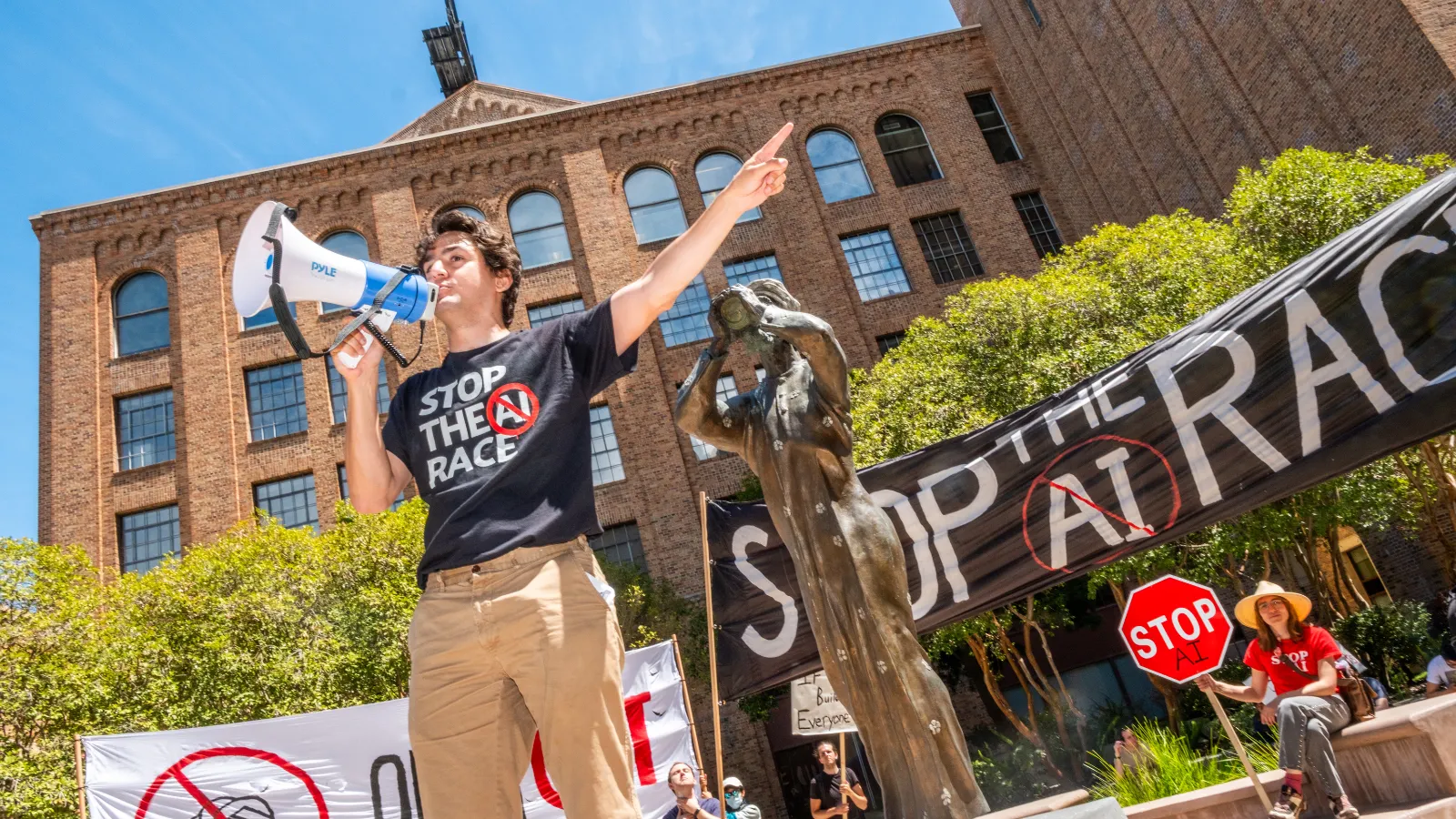
    Protesters marched through San Francisco on Saturday, targeting the offices of major artificial intelligence companies OpenAI, Anthropic, and Google DeepMind. Organized by Stop the AI Race, the demonstration called for a halt in the development of more powerful AI models and urged a greater focus on AI safety and alignment until stronger safeguards are established.

    The march extended beyond AI safety concerns, encompassing broader issues such as potential job losses, the environmental impact of AI, rising housing costs in San Francisco, and the increasing influence of large technology corporations. According to organizers, their goals have evolved from directly convincing CEOs to raising broader political awareness.

    Michaël Trazzi, a former AI researcher and organizer of the protest, told Decrypt that the group’s objectives have changed since their initial demonstration in March. “I think earlier this year I wasn’t thinking about raising political salience as much as I was thinking about convincing CEOs,” Trazzi said. “I think I’ve updated toward CEOs actually listening, given the multiple blog posts and some exchanges I had with one of them. I also think having protests is useful to show that people care.”

    This protest follows a similar event in March, which drew approximately 200 participants. Since then, the Stop the AI Race movement has continued its advocacy. Trazzi expressed encouragement regarding the growing support for the movement, noting endorsements from the NUHW (National Union of Healthcare Workers) and assistance with organizing from groups like AI Action and QuitGPT.

    Recent developments in the AI landscape have also drawn attention. In May, OpenAI introduced new safety features for ChatGPT aimed at detecting self-harm and violence in conversations. In June, the Donald Trump administration ordered Anthropic to suspend access to certain AI models due to potential cybersecurity risks. Earlier this month, the United Nations’ first independent scientific panel on AI concluded that “catastrophic harm” cannot be ruled out as AI technology advances rapidly, outpacing scientific understanding and government oversight.

    Organizers indicated plans to continue advocating for an international pause on frontier AI development and to encourage lawmakers to implement stronger oversight of advanced AI systems. OpenAI, Anthropic, and Google DeepMind did not immediately respond to requests for comment.

    Broader Context

    Source materials place the factual news in this context: Protesters again took to the streets of San Francisco, marching between the offices of OpenAI, Anthropic, and Google DeepMind, calling for a pause in the development of more powerful AI.

    Why This Matters

    Saturday’s protest highlights a growing public demand for a pause in advanced AI development and increased regulation. The demonstration, which targeted major AI companies, underscored concerns that extend beyond AI safety to include job security, environmental impact, and corporate influence. This advocacy reflects a broader societal debate about the trajectory of AI, with organizers aiming to raise political salience and encourage stronger oversight from lawmakers, as echoed by the UN’s recent warning about potential catastrophic harm from rapidly advancing AI technology.

  • Christopher Nolan Questions Young Audiences’ AI Embrace, Highlights Tactile Storytelling

    Christopher Nolan Questions Young Audiences’ AI Embrace, Highlights Tactile Storytelling

    Filmmaker Christopher Nolan has expressed skepticism about young audiences’ acceptance of generative artificial intelligence, suggesting they are quickly identifying and rejecting content that he described as problematic. According to Nolan, this immediate and harsh judgment is a consequence of their upbringing in an online world. He also observed a “renewed interest in more tactile, more real forms of storytelling,” which he believes has emerged at an inopportune time for generative AI.

    Nolan, known for not using a smartphone and whose children are in their late teens and early twenties, shared these views during the press tour for his latest film. While he conceded that not all aspects of generative AI are “useless or meaningless” and that he employs visual effects (VFX) in films such as “Tenet,” “Dunkirk,” and “Interstellar,” his primary concern appears to be the audience’s reception of AI-generated content.

    The article notes that Nolan’s blockbusters often feature significant in-camera effects or practical elements, though he has also utilized CGI, such as for Two-Face’s scarred visage in “The Dark Knight.” His perspective highlights a potential disconnect between technological advancement and audience preference for authenticity.

    Nolan’s observations reflect a broader division within the film industry regarding the integration and implications of AI. Directors like Guillermo del Toro and Steven Spielberg have publicly expressed opposition or dismissed generative AI. Conversely, other prominent filmmakers are engaging with the technology. Martin Scorsese has joined AI firm Black Forest Labs as an adviser, and James Cameron sits on the board of Stability AI. Ben Affleck, who previously sold his AI startup InterPositive to Netflix, had expressed doubts about AI’s ability to create meaningful content.

    Meanwhile, companies like Utopia are actively developing AI video creation tools, such as PAI, which aims to maintain consistency across different scenes and cuts. This ongoing development suggests that AI’s presence in filmmaking is likely to continue evolving, regardless of audience or industry skepticism.

    The uncertainties surrounding generative AI in filmmaking remain significant. The exact nature of the content that young audiences are purportedly rejecting, the specific manifestations of the “renewed interest in more tactile” storytelling, and the ultimate extent of the “rift” within the industry are still unfolding. The future adoption and impact of AI video creation tools also remain subjects of speculation.

    Why This Matters

    Filmmaker Christopher Nolan’s critical perspective on generative AI highlights a tension between technological advancement and audience preference for authentic storytelling, a debate that is actively shaping the future of film.

    Broader Context

    Christopher Nolan is the director of ‘The Odyssey’.

  • Thailand’s Central Bank Uses Data Analytics to Screen Stablecoin Transactions for Illicit Activity

    Thailand’s Central Bank Uses Data Analytics to Screen Stablecoin Transactions for Illicit Activity

    The Bank of Thailand is employing data analytics to scrutinize stablecoin transactions, particularly those involving Tether’s USDT, as part of a broader initiative to combat the ‘grey economy’ and illicit financial flows. This move signals a proactive approach by the central bank to enhance financial surveillance in the digital asset space.

    Why This Matters

    The materials describe a narrow update: The Bank of Thailand is employing data analytics to monitor stablecoin transactions, specifically USDT, for signs of money laundering or attempts to bypass disclosure rules. The exact nature and volume of flagged stablecoin transactions.

    Broader Context

    Source materials place the factual news in this context: The Bank of Thailand Governor Vitai Ratanakorn said the central bank has begun screening abnormally large stablecoin transactions, particularly in Tether’s USDT, and has already flagged some that appear designed to sidestep disclosure requirements or move funds outside normal banking channels, according to Thai outlet Thansettakij.

    Stablecoin Screening Initiative

    The central bank is actively screening stablecoin transactions for signs of money laundering or attempts to circumvent disclosure requirements and move funds outside conventional banking channels. According to Thai outlet Thansettakij, the Bank of Thailand has already identified some transactions exhibiting such characteristics. As the Securities and Exchange Commission (SEC) in Thailand holds regulatory authority over digital assets, the Bank of Thailand is coordinating its findings with the SEC, which is empowered to take regulatory action.

    USDT, the largest stablecoin by market capitalization and a widely used trading pair on cryptocurrency exchanges, according to CoinGecko data, is a key focus of this screening. This initiative is part of a wider campaign against what Thai officials term the ‘grey economy,’ a long-term effort requiring multiple parallel measures rather than a quick fix, as stated by the Bank of Thailand Governor.

    Broader ‘Grey Economy’ Crackdown

    These efforts to curb illicit financial activity extend beyond stablecoins. Since April, Thai banks have been required to verify the purpose of cash withdrawals exceeding 5 million baht (approximately $150,000). This measure has reportedly coincided with a reduction of about 35% in large cash withdrawals. Furthermore, from the fourth quarter, individuals depositing 5 million baht or more in cash may be required to declare the origin of these funds.

    Regulators are also intensifying controls on high-value banknote exchanges and gold trading. Officials observed buyers ordering gold through an app and collecting it from shops shortly after, prompting increased scrutiny. Suspicious activities in gold trading are now reported to Thailand’s Anti-Money Laundering Office. Consequently, monthly gold withdrawals have seen a significant decrease, falling from approximately 4,000 kilograms to around 700 kilograms.

    In parallel, banks have closed thousands of ‘mule’ accounts associated with online gambling operations. Thailand has become a notable hub for crypto-enabled crime, with law enforcement agencies actively pursuing investigations. Recent operations include Thai police tracing a romance-scam laundering network where a single wallet moved over $122.5 million in 10 months through cross-chain swaps, as part of Interpol’s Operation First Light. Investigators have also expanded a probe into a $300 million Chinese laundering network and seized $8.6 million worth of illegal mining rigs used to power scam compounds.

    Balancing Regulation and Innovation

    Despite the focus on combating illicit finance, Thailand is also pursuing the development of legitimate digital asset activities. The SEC has outlined a three-year plan to promote tokenization and crypto exchange-traded funds (ETFs). Concurrently, the central bank is working on developing a baht-backed stablecoin as part of a broader financial infrastructure overhaul.

    While these measures represent a significant step in regulating digital assets and combating financial crime, uncertainties remain regarding the exact nature and volume of flagged stablecoin transactions, the specific outcomes of the coordination between the Bank of Thailand and the SEC, and the total amount of laundered funds successfully intercepted. The Bank of Thailand’s approach highlights a dual strategy: tightening controls on illicit financial flows while fostering innovation within the digital asset ecosystem.

  • Cardano Faces Geopolitical Headwinds Amidst Strong Developer Activity and Institutional Staking

    Cardano Faces Geopolitical Headwinds Amidst Strong Developer Activity and Institutional Staking

    Cardano’s price experienced volatility on July 13, dipping to an intraday low of $0.1572, influenced by broader market conditions and geopolitical events, including coordinated strikes by Iran across five regional countries. Despite this short-term price pressure, the Cardano network continues to demonstrate robust underlying strength through consistent developer activity and significant institutional commitment, exemplified by Kraken’s substantial investment in Cardano stake pools.

    On July 13, Cardano (ADA) was trading near $0.1616. The cryptocurrency saw a 3.60% decrease over the preceding 24 hours and a 13.10% decline over the past seven days. The intraday low of $0.1572 reflected the market’s reaction to geopolitical tensions. The 7-day trading range for ADA has been between approximately $0.1623 and $0.1922, placing the current price near the lower end of this band.

    Network Health and Institutional Commitment

    Simultaneously, Kraken registered 12 Cardano stake pools in June, with approximately $1 billion in ADA delegated to these pools. This infrastructure commitment suggests a deliberate operational strategy by Kraken. In parallel, Cardano’s developer activity remains strong, with 233 GitHub commits recorded over the past seven days. This places Cardano fifth among all Layer-1 networks in development activity, accounting for roughly 6.2% of the total development activity across approximately 3,700 commits in the same period.

    This combination of institutional staking posture and developer momentum is a quiet accumulation signal that tends to be ignored amid geopolitical noise, according to the source. However, broader altcoin flows remain tilted toward Bitcoin and Ethereum, keeping ADA rangebound despite the underlying activity.

    Technical Analysis and Market Scenarios

    Technically, the 20-day Exponential Moving Average (EMA) near $0.1667 is identified as a critical level. The Relative Strength Index (RSI) stands at 43.04, with a bullish divergence structure technically active from June lows, although momentum has decreased from a peak of 60. Higher moving averages, including the 50-day EMA at $0.1811 and the 100-day EMA at $0.2111, represent significant upside resistance. The former resistance band between $0.20 and $0.22 is now considered supply rather than support.

    Market analysis suggests three potential near-term scenarios for ADA’s price. The bull case posits that ADA holds the 20-day EMA zone, geopolitical fears subside, and the price moves towards $0.19 over three to five sessions. The base case anticipates consolidation between $0.16 and $0.1811, with macro uncertainty suppressing risk appetite, leading to neither a breakdown nor a breakout. The bear case suggests that a daily close below $0.155 could lead to a retest of the $0.14 region, potentially invalidating the existing bullish divergence structure.

    Broader market conditions are noted as the dominant variable influencing ADA’s trajectory, with the asset not cleanly diverging from the macro direction at this stage of the cycle. While Kraken’s staking news is constructive, institutional staking yield generation is not considered a direct price catalyst. The probability distribution of ADA’s price movement is seen as skewing toward the base case of consolidation.

    Broader Market Dynamics and Alternatives

    Cardano’s range compression highlights a common challenge for established Layer-1 networks: their large market capitalization requires substantial capital inflows to drive price movement, while narrative momentum may stall below key moving averages without immediate catalysts for institutional re-rating. This dynamic is reportedly pushing some traders toward earlier-stage infrastructure projects.

    In related developments, LiquidChain (LIQUID), a Layer-3 infrastructure project, is positioning itself as a cross-chain liquidity layer. Its core thesis addresses the perceived siloed nature of liquidity pools across Bitcoin, Ethereum, and Solana, aiming for unified execution. The project’s Unified Liquidity Layer and Deploy-Once Architecture are highlighted as key differentiators. LiquidChain’s presale is currently priced at $0.01479, with $903,121.14 raised to date. However, it is important to note that early-stage presales carry inherent risks of project non-delivery and illiquidity, and potential investors are advised to research the presale terms thoroughly.

    Uncertainty remains regarding the immediate direction of ADA’s price, with geopolitical events and broader market sentiment playing significant roles. The long-term health of the network, however, appears supported by consistent developer contributions and institutional backing.

    Why This Matters

    The materials describe a narrow update: Cardano’s price fell to $0. Whether the current price move for ADA is a controlled pullback or the start of another leg lower.

    Broader Context

    Source materials place the factual news in this context: Cardano (ADA) is trading near $0.1616 on July 13, retesting the 20-day EMA as an overnight geopolitical shock, Iran launching coordinated strikes across five regional countries, rattled crypto markets broadly, and pushed ADA to an intraday low of $0.1572 before a partial recovery.