Tag: Neutral

  • Bybit Launches SHAZUSDT Perpetual Contract with Up to 20x Leverage

    Bybit Launches SHAZUSDT Perpetual Contract with Up to 20x Leverage

    Bybit has introduced the SHAZUSDT Perpetual Contract, allowing traders to engage with the Sharonai Holdings (SHAZ) token against Tether (USDT) with leverage up to 20x. Trading for this new derivative instrument is now live on the platform.

    The contract is designed to offer flexibility and accessibility, integrating with Bybit’s suite of Futures bots, including Futures Grid, Futures Martingale, and Futures Combo. This integration aims to provide users with automated trading strategies.

    Key specifications for the SHAZUSDT Perpetual Contract include a maximum leverage of 20x, a tick size of 0.01, and a capped funding rate of 2.5%. Funding fees are settled every 8 hours, with trading available 24/7.

    While the listing provides a new avenue for trading SHAZ, users should be aware of the inherent risks associated with leveraged trading. Notably, the official X account for Sharonai Holdings was listed as N/A in the provided information.

    Why This Matters

    The materials describe a narrow update: Bybit has launched a new perpetual contract for SHAZUSDT, allowing users to trade with a maximum leverage of 20x. Official X account for Sharonai Holdings is N/A.

    Broader Context

    Source materials place the announcement in this context: Bybit has listed the SHAZUSDT Perpetual Contract.

  • Trump’s Iran MoU Declaration: Market Reactions Remain Ambiguous Amidst Geopolitical Uncertainty

    Trump’s Iran MoU Declaration: Market Reactions Remain Ambiguous Amidst Geopolitical Uncertainty

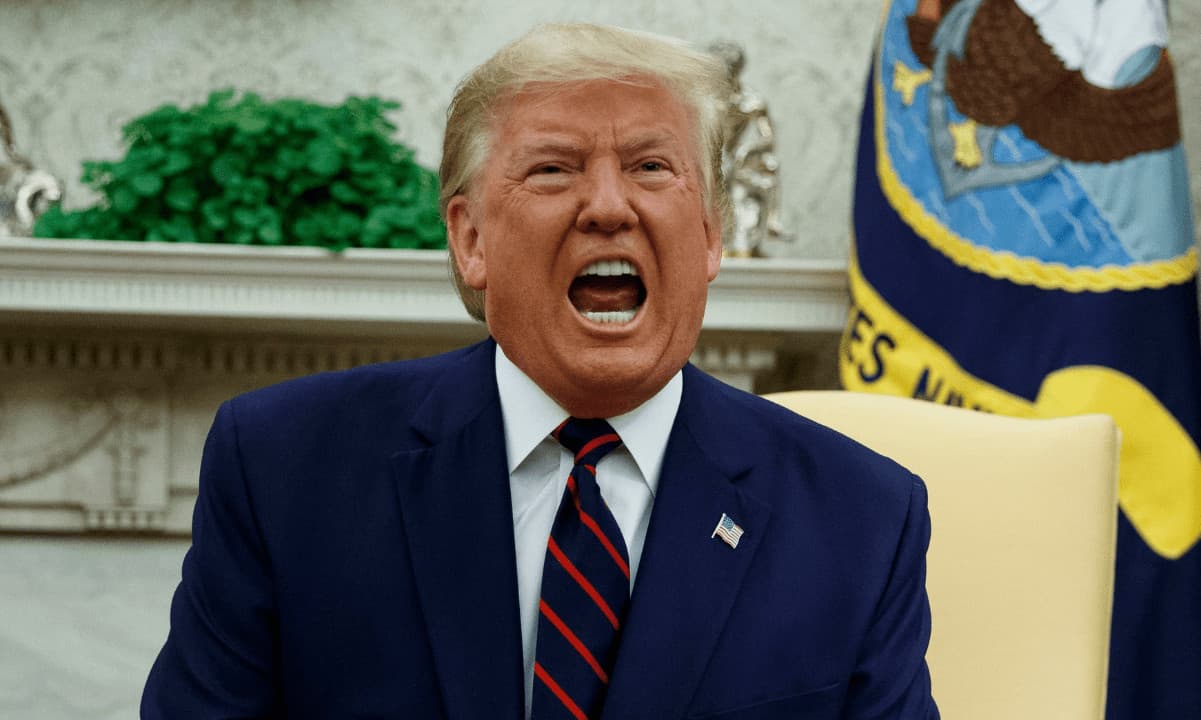
    US President Donald Trump’s declaration that a memorandum of understanding (MoU) with Iran is “over” has coincided with notable volatility in global markets, particularly in oil and Bitcoin prices. The announcement, made during the NATO summit in Ankara, Turkey, introduces a layer of geopolitical uncertainty that analysts are closely watching, though the precise implications remain subject to interpretation.

    Following Trump’s declaration, oil prices, tracked as USOIL, saw a significant increase, reaching $75 per barrel for the first time since June 22. This surge contrasts with the price trend observed just days prior, when USOIL had fallen below $67.50 as markets had begun to price in a de-escalation of tensions. The United States had previously reimposed sanctions on Iranian oil sales, described as a response to attacks on ships near the Strait of Hormuz. The current price movement in USOIL does not suggest a specific market direction or momentum.

    Conversely, Bitcoin experienced a decline, dipping below $62,000 after having previously peaked above $64,000. This downward movement in cryptocurrency prices indicates a notable activity in investor sentiment away from riskier assets amidst heightened geopolitical concerns. The current price movement in Bitcoin does not suggest a specific market direction or momentum.

    The context for Trump’s statement includes reports from CNN citing the President’s belief that the MoU is concluded due to the failure to reach a permanent deal and renewed airstrikes between the parties. The Islamic Revolutionary Guard Corps has claimed to have responded to US attacks by targeting US military targets in Bahrain and Kuwait, according to reports.

    While these events have occurred in close temporal proximity, the exact causal links between Trump’s declaration and the specific market movements are complex and not definitively established. The observed correlation between the announcement and the price shifts in oil and Bitcoin highlights the sensitivity of financial markets to geopolitical developments, but it does not necessarily imply a direct cause-and-effect relationship.

    Several uncertainties surround the situation. The exact timing and specific details of the “airstrikes against each other across the region” remain unclear. Furthermore, the precise terms and prior status of the MoU that has now been declared “over” are not fully detailed in the available information. These ambiguities underscore the challenges in interpreting the immediate impact of geopolitical statements on financial assets.

    Market participants and analysts are left to navigate these developments with caution. The divergence in asset reactions—oil soaring while Bitcoin dipped—further complicates a straightforward interpretation. While historical patterns often show commodity prices rising and cryptocurrencies falling during periods of Middle Eastern tension, the current situation is subject to numerous variables. The need for a balanced assessment, acknowledging both the observed market movements and the inherent uncertainties, is paramount for understanding the evolving geopolitical and economic landscape.

    Broader Context

    Source materials place the factual news in this context: The report from CNN cited Trump, who said he believes the MoU with Iran is over after both parties failed to reach a permanent deal and resumed the airstrikes against each other across the region.

    Why This Matters

    This event matters because geopolitical pronouncements from major powers can introduce significant volatility into financial markets, affecting assets like oil and Bitcoin. The observed market movements, while correlated with President Trump’s statement regarding the Iran MoU, are subject to interpretation due to inherent uncertainties in geopolitical situations and market dynamics. Understanding these complex interplays is crucial for market participants and analysts assessing risk.

  • Bybit to Support Berachain v1.4.1 Upgrade

    Bybit to Support Berachain v1.4.1 Upgrade

    Bybit to Support Berachain Network Upgrade

    Cryptocurrency exchange Bybit has announced its support for the upcoming Berachain (BERA) v1.4.1 network upgrade. The upgrade is scheduled to occur on July 8, 2026, at 4:00 PM UTC.

    In preparation for the upgrade, Bybit will temporarily suspend Berachain (BERA) deposits and withdrawals starting at 3:30 PM UTC on July 8, 2026. Trading activities on the platform will remain unaffected during this period.

    Bybit has stated that there will be no separate announcements regarding the resumption of deposit and withdrawal services. Users wishing to be notified when these services are back online are advised to visit the Deposit or Withdrawal page and activate the “Set Alert” function.

    Further details regarding the network upgrade can be found in the official release notes.

  • Bybit to Support Cosmos ATOM v27.5.0 Upgrade

    Bybit to Support Cosmos ATOM v27.5.0 Upgrade

    Bybit to Support Cosmos Network Upgrade, ATOM Deposits and Withdrawals to be Temporarily Halted

    Cryptocurrency exchange Bybit has announced its support for the upcoming Cosmos (ATOM) v27.5.0 network upgrade. The upgrade is scheduled to occur on July 8, 2026, at approximately 02:40 PM UTC, or at block height 31,938,700.

    To facilitate a seamless transition, Bybit will temporarily suspend Cosmos (ATOM) deposits and withdrawals starting from July 8, 2026, at 02:00 PM UTC.

    Trading activities for ATOM will remain unaffected during this period.

    Bybit has stated that there will be no further announcements regarding the resumption of deposit and withdrawal services. Users wishing to be notified when these services are back online are advised to visit the Deposit or Withdrawal page and activate the “Set Alert” function.

    Further details concerning the network upgrade can be found in the official release notes.

  • Anthropic Ditches Hidden Claude Code Tracker Amid Privacy Fears

    Anthropic Ditches Hidden Claude Code Tracker Amid Privacy Fears

    Anthropic has removed a hidden tracking mechanism from its AI coding assistant, Claude Code, after a security researcher discovered it was embedding undisclosed markers to identify user location, proxy usage, and potential connections to Chinese AI laboratories.

    Hidden Tracking System Uncovered

    The feature, identified in June by developer “Thereallo,” inserted signals within Claude Code’s system prompts. These signals were designed to flag users Anthropic suspected of circumventing restrictions or attempting to extract the AI model’s capabilities.

    “Anthropic probably wants to detect API resellers, unauthorized Claude Code gateways, and model ‘distillation attack’ pipelines,” Thereallo explained. “A custom ANTHROPICBASEURL pointing at a known reseller domain is a useful signal. A hostname containing deepseek or zhipu is also a useful signal.”

    While acknowledging the rationale behind Anthropic’s efforts to detect resellers, unauthorized gateways, and potential distillation attacks, Thereallo criticized the method. The developer pointed out that Claude Code concealed these tracking signals within system prompts using Unicode markers and encoded domain lists, rather than disclosing the system through official documentation or release notes.

    “This is not a malicious feature, but it is a weird choice for a developer tool that asks for trust,” Thereallo stated.

    Company Response and Broader Concerns

    Following the online revelation of the tracker, Anthropic engineer Thariq Shihipar confirmed on X that the system was introduced in March as an “experiment” to combat account abuse by unauthorized resellers and to safeguard Claude from distillation attacks.

    “The team has landed stronger mitigations since then and we’ve actually been meaning to take this down for a while,” Shihipar wrote last week. “We merged the [pull request] and this should be fully rolled back in tomorrow’s release.”

    The incident occurs as Anthropic has intensified its warnings regarding AI model distillation, a process where the outputs of one AI system are used to train another. While common in AI research, distillation raises national security concerns in a geopolitical context. Earlier this month, Alibaba banned employees from using Claude Code, citing security concerns and labeling the tool as “high-risk” software.

    In February, Anthropic accused Chinese AI developers DeepSeek, Moonshot AI, and MiniMax of employing fraudulent accounts to extract millions of Claude responses for training competing models. These accusations faced pushback from critics who questioned the distinction between these methods and practices prevalent across the AI industry.

    In April, Elon Musk testified that xAI had “partly” utilized OpenAI models during the training of Grok, characterizing distillation as a widespread industry practice. In June, Anthropic CEO Dario Amodei urged Congress to enhance protections against foreign AI extraction, alleging that Alibaba-linked operators had generated 28.8 million Claude exchanges using nearly 25,000 fraudulent accounts.

  • China Quietly Restricts AI Exports, Mimicking US Policy

    China Quietly Restricts AI Exports, Mimicking US Policy

    U.S. Deploys AI “Kill Switch” in June, China Explores Similar Measures for July

    Beijing has engaged in quiet discussions with its leading artificial intelligence companies over the past month regarding restrictions on access to their advanced models, according to Reuters. Chinese authorities reportedly met with representatives from Alibaba, ByteDance, and the startup Z.ai to explore limiting overseas access to the nation’s most sophisticated AI systems, including those not yet released.

    The meetings, convened by China’s Ministry of Commerce, involved discussions on imposing limits on both closed-source and open-weight models, the latter being accessible for local modification by developers. Officials also reportedly raised the possibility of classifying unauthorized disclosure or theft of proprietary AI technology as an offense under China’s national security law. Separately, proposals were floated to restrict the types of investors eligible to fund domestic AI startups.

    The precise scope of any potential restrictions remains under debate, with some sources suggesting measures might only apply to future models rather than existing ones. No definitive timeline has been established, and the implementation of any new regulations is uncertain.

    While the practicalities of such restrictions are unclear, a summary published in a Supreme People’s Court journal from a May roundtable on open-source AI regulation offered potential insights. Chinese legal experts proposed a three-tier system: basic open-source tools would require a simple government filing, more advanced technologies would undergo security reviews before release, and the most sensitive frontier models would be barred from public release or restricted to domestic use.

    This proposed structure would represent a significant shift for Chinese AI companies, whose global growth has largely stemmed from open access. Alibaba’s Qwen series, for instance, has gained considerable traction on Hugging Face, a major repository for open-source AI models. ByteDance’s Doubao is a prominent AI product within China, and Z.ai’s GLM-5.2 has garnered attention from U.S. researchers for its performance comparable to top American models, offered at a significantly lower API access cost.

    Any decision to restrict overseas access could increase costs for businesses that have come to rely on Chinese models as more affordable and less restricted alternatives to U.S. frontier systems. Concerns have also been amplified by the possibility that advanced cybersecurity models, such as Anthropic’s Mythos—which the U.S. administration restricted in June—could be reverse-engineered and used against Chinese systems, adding a defensive urgency to the discussions.

    On June 12, Anthropic received a directive from the U.S. Commerce Department’s Bureau of Industry and Security to suspend all access to its Claude Fable 5 and Mythos 5 models for foreign nationals, including its non-citizen employees. Due to the technical challenges of selectively restricting API access, Anthropic temporarily withdrew both models globally. This marked the first instance of the U.S. applying export controls to a deployed AI model rather than the underlying hardware. The models were reinstated on June 30 after Anthropic updated its safety classifiers and the Commerce Department lifted the restrictions.

    A similar pattern unfolded four days prior with OpenAI, Anthropic’s chief competitor. The company released its GPT-5.6 Sol, Terra, and Luna models, disclosing that it had previewed them with the U.S. government and, at Washington’s request, initially provided access to approximately 20 vetted partners. OpenAI has stated that government-gated access “shouldn’t become the long-term default.” President Trump’s executive order on AI issued in June had already encouraged developers to voluntarily submit frontier models for federal cybersecurity review prior to public release. A framework defining “covered frontier models” and the conditions for government pre-release access is expected by August 1.

    Beijing has reportedly been closely monitoring these developments. Officials expressed alarm that Anthropic’s Mythos cybersecurity model could be weaponized against Chinese infrastructure to exploit software vulnerabilities. Additionally, concerns have been raised in China regarding allegations that Anthropic may be employing spyware-like tactics to track Chinese users.

    Qihoo 360 founder Zhou Hongyi publicly voiced these concerns at ISC.AI 2026 in Beijing, advocating for China to develop domestic equivalents and unveiling Tulong Feng, a homegrown AI vulnerability agent.

    The tiered structure proposed in China’s Ministry of Commerce discussions mirrors the U.S. approach to chip export controls over the past three years, a policy that has arguably narrowed rather than widened the technological gap with China.

    Beijing has been progressively tightening its regulatory perimeter. In April, its state planning agency ordered Meta to divest its $2 billion acquisition of AI startup Manus, citing national security concerns under China’s foreign investment review mechanism. Moonshot AI and StepFun were required to obtain government approval before accepting U.S. capital in funding rounds. Furthermore, a broader regulatory package introduced in early June extended scrutiny to cross-border transactions involving Chinese technology and data.

    The prevailing logic since the viral success of DeepSeek R1 in early 2025 has been that U.S. restrictions on frontier AI create a natural market for Chinese open-weight models. Chinese open-weight models saw a dramatic surge in usage on OpenRouter, a key global AI distribution hub, rising from less than 2% in late 2024 to approximately 61% by mid-2026. The U.S. defensive posture, therefore, inadvertently provided Beijing with a global distribution advantage that was not solely based on technical superiority.

    This dynamic, however, hinges on the continued openness of Chinese models. If Beijing restricts overseas access to its frontier systems, whether closed-source or open-weight, this advantage could diminish. Z.ai’s GLM-5.2, for example, built its value proposition on borderless access under an MIT license; any restriction on this distribution would undermine its core appeal.

    An analysis of the June U.S. controls highlighted a structural challenge that also applies to Beijing: national AI restrictions often struggle to remain purely national. The U.S. order on Anthropic, for instance, encompassed foreign nationals within the United States, including Anthropic’s own non-citizen employees. Data from MacroPolo indicates that over two-thirds of top-tier AI researchers in the U.S. received their training abroad, with foreign-born individuals comprising up to 70% in leading labs. Nationality-based access controls aimed at adversaries can inadvertently exclude the very engineers needed to address the vulnerabilities that prompted the restrictions. China faces a similar challenge in reverse. ByteDance and Alibaba are reportedly accelerating the rollout of humanlike agent features ahead of Chinese AI regulations scheduled to take effect on July 15, demonstrating Beijing’s capacity to implement restrictions on a defined schedule, independent of market feedback.

    This potential shift could pose challenges for smaller labs and developers worldwide who rely on open-source technologies, an area where China has been a leading contributor.

    French President Macron warned at the G7 summit that European governments would cease purchasing U.S. AI products if access could be abruptly curtailed. Canadian Prime Minister Carney described concentrated AI dependence as a “strategic mistake.” Both reactions implicitly assumed that Chinese AI would serve as an unconstrained alternative.

  • Kenya Regulator Eyes Blockchain for Crypto Crime Tracking

    Kenya Regulator Eyes Blockchain for Crypto Crime Tracking

    Regulator Seeks Blockchain Surveillance System for Crypto Market Oversight

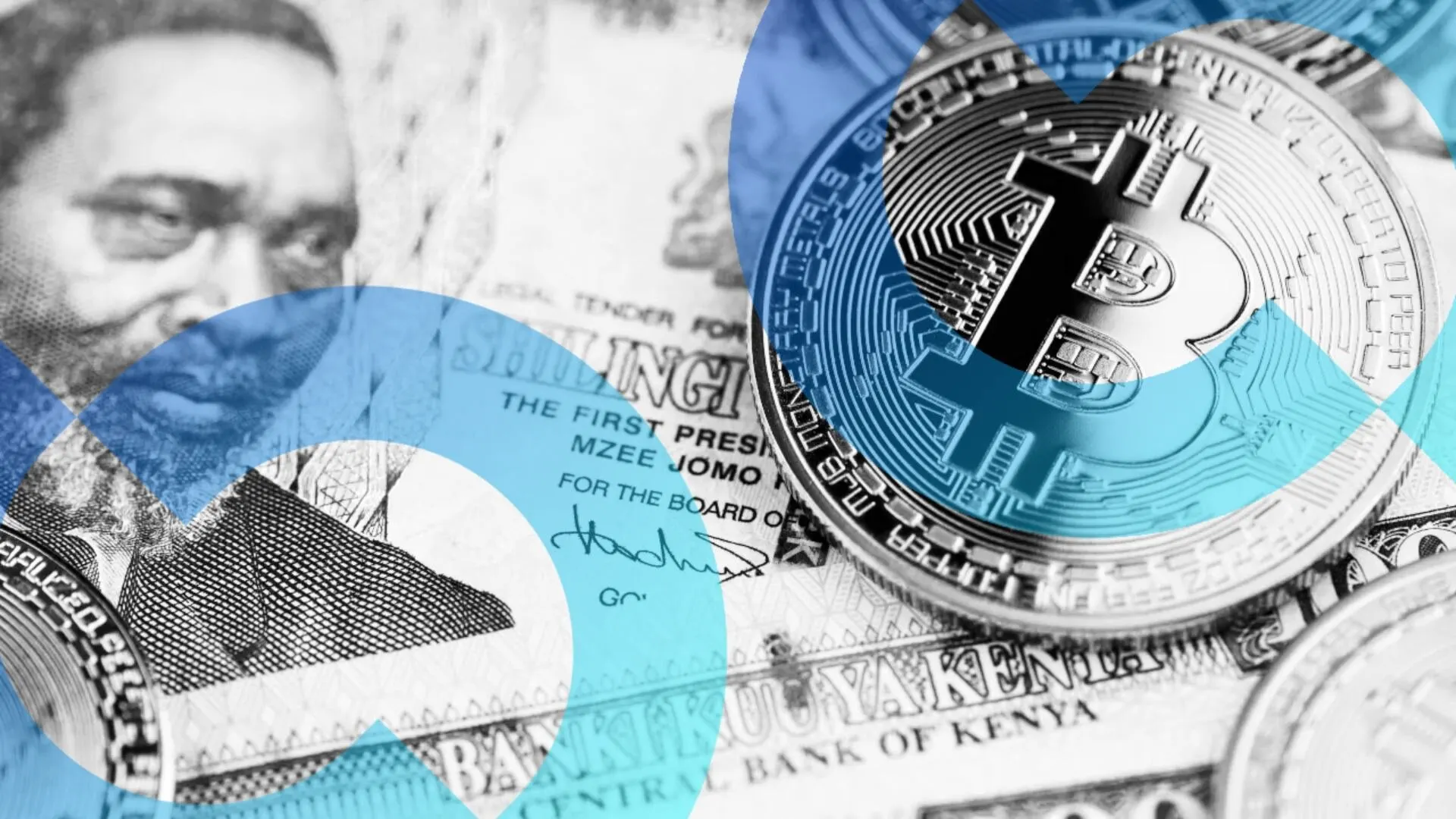
    Kenya’s securities regulator is looking to acquire a blockchain surveillance system to oversee the nation’s rapidly expanding cryptocurrency market, as it prepares to license and supervise virtual asset firms under new legislation.

    The Capital Markets Authority (CMA) is seeking an advanced blockchain analytics platform to monitor digital asset transactions, investigate suspicious activities, and ensure compliance, according to tender documents obtained by Capital FM Africa. The proposed system would track Bitcoin, Ethereum, and at least 20 other blockchains, offering both real-time and retrospective analysis.

    The platform is expected to generate automated alerts for high-risk wallets, significant transfers, coin mixers, darknet-linked addresses, and sanctioned entities. It will also screen transactions against sanctions lists from the United Nations and the U.S. Office of Foreign Assets Control. Furthermore, the system would map relationships between wallets, reconstruct transaction timelines, trace funds across different blockchains, and assign risk scores related to money laundering, ransomware, fraud, and terrorism financing. The regulator aims to identify the exchanges most frequented by Kenyans and detect unlicensed offshore platforms operating within the local market.

    The capabilities described are consistent with tools offered by blockchain intelligence firms such as Chainalysis, TRM Labs, and Elliptic, which provide similar software to governments and regulatory bodies globally.

    This acquisition will support Kenya’s Virtual Assets Service Providers Act, signed into law by President William Ruto in October and effective since November. This legislation establishes the country’s first comprehensive framework for cryptocurrencies. The oversight responsibilities are divided between the Central Bank of Kenya, which will regulate payments, stablecoins, and custodial wallets, and the CMA, which will oversee exchanges, brokers, investment advisers, and tokenization platforms. This move is part of a broader effort to align with anti-money-laundering standards set by the Financial Action Task Force.

    No firms have been licensed yet. The National Treasury released draft regulations in March, and existing operators have until November 2026 to comply.

    Kenya is recognized as one of Africa’s largest cryptocurrency markets. Between July 2024 and June 2025, residents received approximately $19 billion in crypto, placing the country fourth on the continent, according to Chainalysis. It is estimated that over six million Kenyans use digital assets, with a significant portion of this activity occurring through informal, peer-to-peer channels.

    Kenya is not alone in its pursuit of such technological tools. In the United States, Immigration and Customs Enforcement last year moved to purchase forensic software from both TRM Labs and Chainalysis, companies that already hold contracts with the FBI, the DEA, and the IRS. Similarly, Britain’s tax authority, HMRC, has engaged TRM Labs to trace suspect transactions.

  • Wintermute Warns of Relief Rally as Bitcoin Hits Multi-Week High

    Wintermute Warns of Relief Rally as Bitcoin Hits Multi-Week High

    Bitcoin Surges Amidst Cautious Optimism, Analysts Eye ETF Inflows

    Bitcoin has experienced a notable surge in the past week, climbing nearly 10% and recently trading around $64,023. The cryptocurrency briefly touched a two-week high above $64,500 on Monday.

    Relief Rally or Structural Shift?

    Despite the upward momentum, market-making firm Wintermute remains “somewhat cautious,” suggesting the recent price jump is more indicative of a relief rally than a fundamental shift in the market. The firm interprets the current trend as a temporary or short-term recovery rather than a significant, lasting change.

    “This looks like a textbook relief rally, and it makes sense given the input,” Wintermute stated in its latest market update.

    Factors Driving the Bounce

    Wintermute attributes the recent price action to a confluence of factors, including easing macroeconomic conditions, a more dovish stance from the Federal Reserve, and positive developments regarding Ethereum and institutional adoption.

    “That combination is enough to explain the bounce without needing a bigger story behind it,” the firm commented.

    ETF Inflows Offer Glimmer of Hope

    Nevertheless, Wintermute acknowledges the potential for further gains, citing a recent reversal in Bitcoin ETF inflows as a reason for optimism. Last week, Bitcoin ETFs ended a 10-day outflow streak, attracting over $222 million on July 2. This trend continued on Monday, with more than $265 million flowing in, according to data from Farside Investors.

    Sustained Inflows Key to Trend Confirmation

    However, Wintermute cautioned that a single data point does not establish a trend. The firm emphasized that a sustained period of inflows would be necessary to confirm a more structural market change.

    “We’d want to see that inflow sustained over consecutive sessions before reading it as the start of a real reversal rather than a one-off, squeeze-adjacent print,” the market update read.

    “Until that broader capital flow picture actually turns, this reads as relief rather than something structural,” Wintermute concluded.

    Even with the recent ascent, Bitcoin remains approximately 50% below its all-time high of $126,080, which was set in October.

  • XRP Chart Signals Volatility: Analysts Divided on Ripple’s Future

    XRP Chart Signals Volatility: Analysts Divided on Ripple’s Future

    Ripple’s cross-border token, XRP, remains a focal point of intense debate within the cryptocurrency community, frequently drawing significant price predictions, both optimistic and pessimistic.

    Recently, EGRAG CRYPTO, a prominent XRP commentator on X (formerly Twitter), shared a highly bullish chart for the asset. This stands in stark contrast to other voices, such as user “shah,” who questioned the underlying reasons for XRP’s perceived hype.

    While EGRAG CRYPTO has a history of ambitious XRP price forecasts, some of which now appear ambitious given XRP’s recent struggles to maintain levels above $1.10, the analyst typically emphasizes long-term performance, aiming to discern underlying structure from market noise and sentiment.

    In their latest analysis, EGRAG CRYPTO presented a chart illustrating XRP’s potential future trajectory. The projection initially anticipates a dip to $0.95, a sentiment echoed by other analysts who foresee XRP testing new lows below $1.00, before a significant upward movement.

    The chart suggests a strong bullish reversal, potentially propelling XRP towards a new all-time high and beyond. EGRAG CRYPTO has previously projected targets as high as $27 for XRP during anticipated peak periods of the next bull cycle.

    XRP – Chart Analysis

    The accompanying post by EGRAG CRYPTO, titled “XRP – CHART, No Comment,” included the assertion: “Men Lie, Women Lie But Charts and Numbers do not Lie. Structure > Noise > Emotion. ONLY FEW.” The post was accompanied by a chart image and dated July 7, 2026.

    Skepticism Mounts Over XRP’s Potential

    In contrast to EGRAG CRYPTO’s optimistic outlook, “shah” posed a question to their more than 400,000 followers on X: “Why on Earth would this coin ever go to hundreds per coin?”

    The responses to “shah’s” query were largely unsupportive of XRP reaching triple-digit figures. One user, Kendall Tart, pointed out that a market capitalization required for such a price would necessitate XRP surpassing $6 trillion, a valuation that would dwarf current tech giants like Apple and appears highly improbable.

    Other commentators drew parallels between XRP holders and supporters of political movements, suggesting that Ripple CEO Brad Garlinghouse and his team function as paid influencers disseminating buzzwords across social media.

    Another user definitively stated that XRP would not reach $100, labeling the token as “dead” due to its tokenomics, persistent selling pressure, and what they described as “horrible internal organization.”

  • Risk Limit Adjustment for BLURUSDT, FARTCOINUSDT Perpetual Contracts (Jul 8, 2026)

    Risk Limit Adjustment for BLURUSDT, FARTCOINUSDT Perpetual Contracts (Jul 8, 2026)

    Bybit to Adjust Risk Limits and Leverage for Select Perpetual Contracts

    Cryptocurrency exchange Bybit announced it will be adjusting the risk limits and applicable leverage for a number of its Perpetual Contracts. The changes are intended to enhance the trading experience for users.

    Implementation Timeline

    These adjustments are scheduled to take effect and be automatically applied to user accounts by approximately 7:30 AM UTC on July 8, 2026.

    Affected Contracts

    The following Perpetual Contracts will see their risk limits modified:

    BLURUSDT, FARTCOINUSDT, SIGNUSDT, WCTUSDT, AUSDT, AGLDUSDT, PLUMEUSDT, COMPUSDT, THETAUSDT, RENDERUSDT, CAKEUSDT, STRKUSDT, VIRTUALUSDT, IMXUSDT, DASHUSDT, XMRUSDT, CRVUSDT, ZROUSDT, JASMYUSDT, NEOUSDT, EGLDUSDT, JTOUSDT, 0GUSDT, WUSDT, KAIAUSDT, RESOLVUSDT, FFUSDT, DEXEUSDT, VANRYUSDT, TLMUSDT, MUBARAKUSDT, RAREUSDT.

    Updated risk limit information can be found on Bybit’s website.

    Position Management Requirements

    If, by the July 8, 2026, 7:30 AM UTC deadline, a user’s existing position does not meet the new margin requirements and the adjustment cannot be applied to their account, they will only be permitted to reduce their affected Perpetual Contract position. Any orders aimed at increasing the position size will be restricted until the user selects a supported risk limit or leverage.

    Bybit strongly recommends that users manage their positions and account risk by transferring additional funds or adjusting their settings by July 25, 2026, 7:30 AM UTC to prevent potential liquidations.

    Impact on Copy Trading and Trading Bots

    These changes will also extend to positions held within Bybit’s Copy Trading and Trading Bot services. Existing positions managed by a Trading Bot will not be automatically closed, and the bot will not place new orders during a specified buffer period. Users are advised to manually terminate their bots or increase their investment within the bot before the buffer period concludes to accommodate the new risk limits.

    Further details regarding Bybit’s risk limit rules are available in their help center.