Tag: Positive

  • AVAX One Regains Nasdaq Compliance Post-Reverse Stock Split

    AVAX One Regains Nasdaq Compliance Post-Reverse Stock Split

    AVAX One Regains Nasdaq Compliance After Reverse Stock Split

    AVAX One Technology, a cryptocurrency treasury firm holding Avalanche (AVAX) tokens, announced Thursday that it has successfully regained compliance with Nasdaq’s minimum bid price requirement, resolving a listing issue that had placed the company under scrutiny ahead of a recent reverse stock split.

    The West Palm Beach, Florida-based company confirmed that Nasdaq has acknowledged its adherence to Listing Rule 5550(a)(2), which mandates that a stock’s closing bid price must remain at or above $1.00 per share. Nasdaq’s review indicated that AVAX One’s shares closed above this threshold for ten consecutive trading days, from June 15 to June 29, thereby satisfying the requirement and closing the matter.

    To meet this compliance standard, AVAX One executed a 1-for-12 reverse stock split on June 15. This action reduced the company’s outstanding share count from over 92.3 million to just under 7.7 million.

    “We are pleased to have regained compliance with Nasdaq’s minimum bid price requirement and appreciate the trust our shareholders have placed in us throughout this process,” stated AVAX One Interim CEO Pete Wylie in a press release. “With this matter now closed, we are intently focused on executing on our growth and profitability initiatives. We are moving ahead across all fronts.”

    Wylie assumed the role of interim CEO last week, transitioning from his previous position as chief operating officer, following the departure of former CEO Jolie Kahn. The company’s board is currently engaged in a search for a permanent chief executive.

    AVAX One’s business operations are structured around three core divisions: an Avalanche digital asset treasury, Bitcoin mining, and artificial intelligence infrastructure. The company holds approximately 14 million AVAX tokens, valued at close to $95 million, which are staked to generate an approximate net yield of 6%. Additionally, AVAX One operates Bitcoin mining facilities in Alberta, Canada, and Ohio, contributing to its cash flow.

    The company also revealed its exploration of AI infrastructure projects targeting a market segment it terms the “missing middle.” This segment comprises sites ranging from 5 to 50 megawatts designed to support enterprise inference, edge computing, and regulated industries, which are not typically served by larger hyperscale data centers.

    AVAX One emerged amidst a surge of cryptocurrency treasury firms established in 2025, following the precedent set by early Bitcoin treasury firm, MicroStrategy. However, the decline in cryptocurrency prices since last fall has left many of these companies with substantial unrealized losses on their investments and/or market capitalizations that fall below the value of their crypto holdings.

    The Avalanche-focused firm’s current market capitalization stands at approximately $40.5 million, significantly lower than the valuation of its crypto assets. AVAX One (AVX) shares concluded trading on Thursday up about 3.6% at $5.43, though they remain down 70% year-to-date.

    The native AVAX token of the Avalanche network was recently trading at $6.71, marking an increase of over 4% for the day. However, the token is down 50% since the beginning of 2026 and has fallen 95% from its peak price of nearly $145 in 2021.


  • Perplexity Leverages Open-Source GLM 5.2 for Cost-Effective AI Performance

    Perplexity Leverages Open-Source GLM 5.2 for Cost-Effective AI Performance

    Perplexity has developed a strategy to significantly reduce AI inference costs by fine-tuning an open-source Chinese model, GLM 5.2, to handle tasks efficiently and escalate complex queries. This approach aims to achieve near-frontier performance at a fraction of the price of leading proprietary models like Claude Opus 4.8.

    The Mechanism: Escalation and the Advisor Tool
    The core innovation lies in Perplexity’s “Computer agent harness,” which integrates the fine-tuned GLM 5.2. This model is designed with an “advisor tool”—a native capability to recognize when a query exceeds its own competence. When this occurs, the model escalates the task to a more powerful, and typically more expensive, third-party frontier model. Perplexity claims that by handling the majority of tasks internally and only escalating when necessary, its system achieves the same quality of performance as Opus 4.8 but at roughly one-third the cost.

    Model Origins and Licensing
    GLM 5.2 is a large, approximately 744-billion-parameter model developed by Z.AI, a Chinese entity that has been on the U.S. Entity Lists since January 2025. Despite this, GLM 5.2 was released in June under an MIT license. This permissive license allows for commercial use, modification, and fine-tuning without restrictions, enabling Perplexity to adapt the model for its specific needs.

    Performance and Economic Gains
    Perplexity claims that when paired with an advisor, the fine-tuned GLM 5.2 functions at Opus 4.8 grade performance. While the fine-tuned model with an advisor is reportedly about twice as expensive to run as the basic GLM 5.2, it is significantly more cost-effective than using a top-tier model like Opus 4.8 for all tasks, which Perplexity estimates is around 600% pricier. The company’s system, by combining these tools, aims to deliver comparable quality at a substantially lower price point.

    Strategic Context: Open Source and Geopolitics
    This development follows a similar strategy Perplexity employed previously when it fine-tuned DeepSeek R1s into R1-1776. In that instance, Perplexity adapted the model to mitigate censorship and bias issues present in the original Chinese version, creating a Western-hosted alternative. The current move with GLM 5.2, however, is primarily driven by economic considerations rather than political ones.

    Perplexity’s Computer product already orchestrates over 19 AI models. The fine-tuned GLM 5.2 is intended to serve as a cost-effective default, absorbing the bulk of user queries before they reach more expensive frontier models. CEO Aravind Srinivas stated that the long-term strategy involves post-training open-source models for escalation capabilities within their existing agent harness, which serves millions of users.

    The model runs on Nvidia B200 GPUs in the United States. Perplexity plans to release full benchmarks and a research paper in the coming weeks. The company also indicated that a post-train of Nemotron 3 Ultra, an American open-source model, is next in line, replicating the same architecture.

    While Perplexity claims near-frontier performance and significant cost savings, the exact performance metrics against specific benchmarks are not yet fully detailed. Additionally, the specific third-party frontier model to which the fine-tuned GLM 5.2 escalates tasks has not been explicitly named.

    Why This Matters

    The materials describe a narrow update: Perplexity has post-trained GLM 5. The exact performance metrics of the fine-tuned GLM 5.2 against specific benchmarks are not fully detailed in the article, beyond claims of near-frontier performance.

    Broader Context

    Source materials place the factual news in this context: Perplexity has turned a Chinese open-source model into a near-frontier workhorse at roughly a third of what Claude Opus 4.8 costs.

  • Ethereum Foundation Leverages AI Agents for Network Security Testing

    Ethereum Foundation Leverages AI Agents for Network Security Testing

    The Ethereum Foundation is employing artificial intelligence agents to conduct security testing on its network’s software and code, a proactive “red teaming” strategy aimed at uncovering vulnerabilities before malicious actors can exploit them.

    According to the Ethereum Foundation, these AI agents are structured into roles such as reconnaissance, hunting, gap-filling, and validation. Their purpose is to scan codebases, test potential exploits, and generate findings that require human judgment for confirmation. This approach is intended to cover more ground than traditional manual code review.

    AI-Driven Discoveries and Human Oversight

    A significant outcome of this AI-driven testing was the identification of a bug in libp2p’s gossipsub, a component integral to the Ethereum network. This vulnerability, which could have resulted in a remotely triggered panic, has since been fixed and disclosed as CVE-2026-34219. The researchers noted that while the AI agents successfully found real bugs, the primary challenge lay in distinguishing genuine vulnerabilities from those that merely appeared convincing.

    AI agents possess the capability to scan entire codebases and test potential exploits, offering a more efficient method for identifying weaknesses compared to manual review. However, the findings generated by these agents necessitate careful human judgment. The team highlighted that AI-generated findings can be persuasive even when inaccurate, requiring human researchers to filter out duplicates, false positives, and vulnerabilities that cannot be exploited. They added that this process shifts the workload, demanding more meticulous judgment across a larger volume of claims.

    Broader Applications of AI in Security

    This AI-assisted approach is not isolated to Ethereum. In April, a preview version of Anthropic’s Claude Mythos reportedly identified 271 vulnerabilities within Mozilla’s Firefox browser. More recently, in May, security researcher Taylor Hornby utilized Anthropic’s Claude Opus 4.8 to uncover a critical vulnerability in Zcash’s Orchard privacy pool, which could have enabled an attacker to create counterfeit ZEC. This Zcash vulnerability had persisted for approximately four years before its discovery.

    The Ethereum Foundation’s researchers emphasized that AI serves to augment, rather than replace, human security experts. The essential product of this AI-assisted security testing, they stated, is the careful judgment exercised by human professionals. This trade-off, where AI expands the scope of testing in exchange for increased human verification, is deemed valuable as long as human judgment remains the central focus.

    Uncertainties and Future Outlook

    While the AI agents have proven effective in bug detection, uncertainties persist regarding the full extent of vulnerabilities identified beyond the disclosed libp2p issue. The long-term impact and adoption rate of AI-driven security testing within the broader blockchain ecosystem also remain to be fully determined. This practice signifies a new frontier in cybersecurity, with AI tools increasingly integrated into the process of securing critical digital infrastructure.

    Why This Matters

    The materials describe a narrow update: The Ethereum Foundation’s Protocol Security team has deployed AI agents to identify vulnerabilities in cryptographic systems, protocol code, and smart contracts. The exact number of bugs found by the AI agents beyond the one disclosed.

    Broader Context

    Source materials place the factual news in this context: The practice is known as red teaming, where security researchers attack their own systems to uncover weaknesses.

  • Solana FUD Surges to 2026 High: A Bullish Signal?

    Solana FUD Surges to 2026 High: A Bullish Signal?

    Solana’s recovery appears to be losing steam, having dropped more than 6% in the past week. Trading near $77, the cryptocurrency is currently experiencing its most negative market sentiment of 2026.

    According to data analytics firm Santiment, SOL’s trading volume has fallen to its lowest point this year, while negative commentary surrounding the asset has surged to its highest daily level.

    Much of the current disappointment stems from unmet expectations that strong narratives around tokenized stocks and real-world asset (RWA) activity would translate into more robust price performance. Traders have yet to witness this anticipated surge.

    Santiment noted that this combination of elevated fear, uncertainty, and doubt (FUD) alongside weak trading volume has historically created conditions conducive to a rebound. With retail participation low and sentiment deeply negative, there may be less resistance if large stakeholders decide to drive Solana’s prices higher. This scenario could potentially set the stage for a sharp move that catches traders off guard.

    The Solana network has seen significant user growth, adding 1.60 million new addresses over the past two weeks. Furthermore, the SuperTrend indicator on SOL’s three-day chart has flashed a new buy signal for the first time since October 10, 2025, when the Average True Range (ATR) trailing stop moved below the price. Analyst Ali Martinez pointed out that the previous SuperTrend sell signal was followed by a 74% price correction. He suggested that the latest signal indicates a bullish trend and could propel SOL towards the $100 mark.

    Michaël van de Poppe also observed that the crypto asset has re-entered its trading range and may experience a brief pullback before continuing its upward trajectory. He added that holding the $75-$77 range as support could pave the way for gains toward $100 and potentially $120 in the coming weeks or months.

    Another crypto analyst, Dami-Defi, highlighted a potential breakout scenario as SOL is currently testing the upper boundary of a descending channel that has been in place since September 2025. According to the analyst, a three-day close above $78 would confirm the breakout, opening the door to an initial move towards $105, followed by $125 and $155 if momentum persists.

    However, this bullish setup would be invalidated by a three-day close below $72, and stronger trading volume would be necessary to confirm any breakout.

  • Swift Pilots Blockchain Ledger for Tokenized Deposit Exchanges with 17 Global Banks

    Swift Pilots Blockchain Ledger for Tokenized Deposit Exchanges with 17 Global Banks

    Swift has launched a pilot program for its blockchain-based ledger, enabling 17 banks across six continents to exchange tokens representing deposits. Announced on Thursday, the initiative aims to enhance cross-border payment efficiency by facilitating round-the-clock movement of these digital assets.

    The pilot involves a consortium of major global financial institutions, including several designated as Global Systemically Important Banks (GSIBs) by the Financial Stability Board. Participants include BNP Paribas, BNY, Citi, HSBC, Standard Chartered, UBS, and Wells Fargo. This collaboration marks a significant step in the adoption of blockchain technology by traditional financial intermediaries.

    While final fiat settlement will continue to rely on legacy systems during business hours, Swift’s blockchain-based ledger allows for the movement of tokenized deposits overnight and on weekends. Swift added that the product was developed in nine months, underscoring the rapid pace of innovation.

    The ledger’s architecture is compatible with the Ethereum Virtual Machine (EVM). However, Swift’s network is largely centralized, operating a shared environment where banks retain authority over their own assets. Swift noted that this approach allows banks to benefit from improved client experience and global liquidity efficiency without compromising existing compliance, credit, risk, and control standards.

    This development aligns with a broader trend of traditional financial institutions integrating blockchain technology. While other networks like XRPLedger and Canton Network offer alternative approaches, Swift’s initiative leverages its established global network. JPMorgan has also explored blockchain, rebranding its tokenization unit to Kinexys from Onyx in 2024.

    Mahesh Kini, global head of cash management at Standard Chartered, stated, “We are redefining cross-border payments with Swift’s new blockchain-based ledger—combining tokenized deposits with our global network to deliver instant, always-on money movement.” The pilot program is expected to offer insights into the practical application and benefits of tokenized deposits within the existing financial infrastructure.

    Why This Matters

    The materials describe a narrow update: Swift announced a pilot program for its blockchain-based ledger, enabling 17 banks across six continents to exchange tokens representing deposits. The exact nature and extent of ‘true settlement’ using legacy systems.

    Broader Context

    Source materials place the factual news in this context: Swift, the financial gatekeeper connecting thousands of banks across the globe, said on Thursday that a dozen-plus institutions are preparing to use its “blockchain-based ledger.”.

  • PayPal’s PYUSD Stablecoin Integrates with Polygon for Compliant Cross-Border Business Payments

    PayPal’s PYUSD Stablecoin Integrates with Polygon for Compliant Cross-Border Business Payments

    PayPal’s US dollar-backed stablecoin, PYUSD, has officially launched on the Polygon blockchain, introducing a new avenue for businesses to conduct cross-border payments with built-in compliance and fiat access. This integration aims to streamline international transactions by leveraging stablecoin technology within a regulated framework.

    According to the press release, businesses can now accept funds via cards, bank accounts, or exchange balances, convert them into PYUSD, and transfer these assets internationally. The system also facilitates cashing out into local currencies through a single, integrated process. Polygon Labs highlighted that this integration simplifies the deployment of stablecoin payments, reducing engineering efforts, operational costs, and the complexity of managing multiple vendors.

    The PYUSD stablecoin is issued by Paxos under a national Trust charter, operating under the supervision of the Office of the Comptroller of the Currency (OCC). This regulatory backing is presented as a key feature for businesses seeking compliant solutions for international financial activities.

    Polygon’s network has already established a significant presence in stablecoin transactions, having settled over $2.6 trillion in such transactions. Major financial players like Revolut and Stripe are already utilizing the Polygon network, underscoring its capacity and adoption in the payment ecosystem.

    Polygon Labs is strategically positioning itself within the growing stablecoin payment sector. The company is undergoing a restructuring and a pivot towards stablecoin-based payment solutions. This strategic direction is further evidenced by its agreements to acquire Coinme and Sequence for over $250 million. The acquisition of Coinme, in particular, has expanded Polygon’s operational footprint across 48 US states, bolstering its infrastructure for money transmission and compliance.

    Polygon Labs CEO Marc Boiron emphasized the objective to complete the core infrastructure for regulated stablecoin payments and money movement. The integration of PYUSD into Polygon’s Open Money Stack is anticipated to benefit a wide array of businesses, including payroll providers, online marketplaces, and remittance applications. These businesses may experience faster payouts, reduced transaction failures, and quicker access to local currencies compared to traditional banking methods.

    Why This Matters

    The materials describe a narrow update: PayPal’s US dollar-backed stablecoin, PYUSD, is now available on the Polygon blockchain. Bringing PYUSD natively into the Open Money Stack means a business can take money in, move it across borders, and cash it out in one integration, with compliance built in.

    Broader Context

    Source materials place the factual news in this context: PayPal’s US dollar-backed stablecoin, PYUSD, has launched on the Polygon blockchain through a native issuance by Paxos.

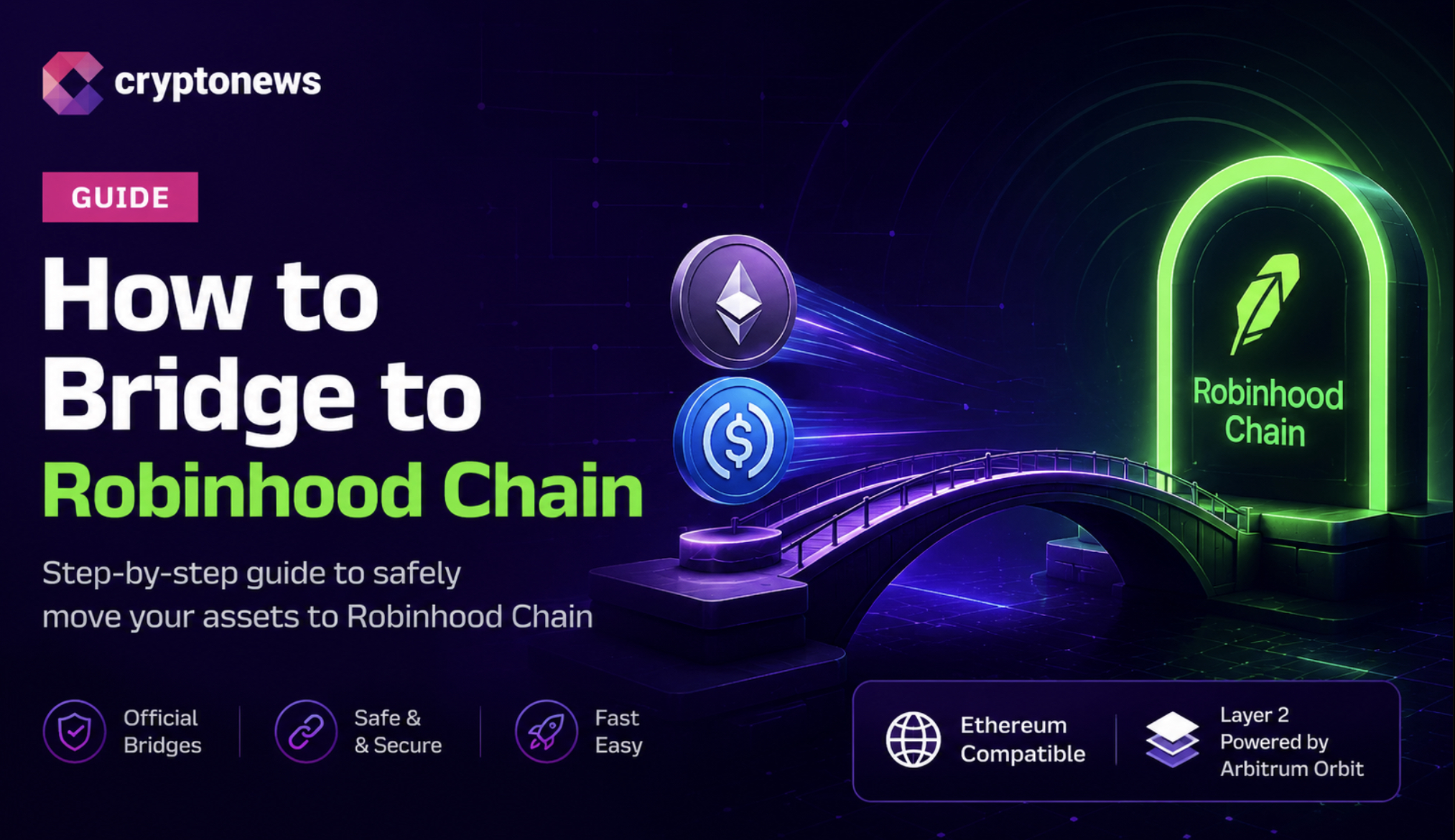
  • Robinhood Chain: Wall Street to Memecoins – Bridging Safely

    Robinhood Chain: Wall Street to Memecoins – Bridging Safely

    Robinhood, a company that once revolutionized stock trading by eliminating commissions for everyday investors, has ventured into the cryptocurrency space with the launch of Robinhood Chain. Founded in 2013 by Vlad Tenev and Baiju Bhatt, the firm initially gained prominence with its mobile-first brokerage app, conceived in the wake of the 2008 financial crisis with the mission to “make investing accessible to everyone.”

    The platform experienced a surge in popularity during the 2021 meme stock phenomenon, as retail traders flocked to stocks like GameStop. Now, five years later, Robinhood has expanded beyond traditional finance with the introduction of Robinhood Chain. Launched on mainnet in July, it is a permissionless, Ethereum-compatible Layer 2 network built using Arbitrum Orbit technology. The chain utilizes ETH for gas fees and is designed to facilitate the tokenization of real-world assets on the blockchain.

    Robinhood Chain’s Features and Early Adoption

    A key offering on Robinhood Chain is its Stock Tokens, which provide users with economic exposure to major companies such as NVIDIA, Apple, and Google. The network also supports AI-driven trading applications, 24/7 markets, and integration with decentralized finance (DeFi) protocols. Uniswap serves as its primary decentralized exchange, while Chainlink provides oracle services, and LayerZero enables cross-chain interoperability.

    While Robinhood Chain was initially conceived with tokenized stocks in mind, early trading activity revealed a different user preference. Within days of its launch, memecoins emerged as the network’s most popular sector, leading to a significant spike in Uniswap trading volume. Daily volume briefly surpassed $500 million as speculators rushed into newly launched tokens.

    Memecoin Frenzy Drives Record Activity

    Robinhood Chain’s decentralized exchange (DEX) trading volume reached a new high of over $560 million on July 8. Daily active addresses approached 200,000, with more than 140,000 being new users making their first transaction on the network.

    One of the notable beneficiaries was the memecoin CASHCAT, which rapidly achieved a market capitalization exceeding $100 million and attracted tens of millions of dollars in daily trading volume. Some early investors reported turning $86 into $2 million, a life-altering gain that drew comparisons to the explosive memecoin cycles seen on Solana.

    CEO Acknowledges Memecoin Popularity

    Robinhood CEO Vlad Tenev acknowledged the trend, posting on X that while Robinhood Chain was developed to be the premier network for real-world assets, it has also proven to be highly effective for memecoins. This statement marked a shift in tone from earlier in 2025, when Tenev had expressed a focus on moving beyond memecoins towards tokenized securities. Instead of resisting the speculative activity, Robinhood appears willing to embrace it as a means to attract users and liquidity.

    This strategy is not unprecedented. Memecoins often serve as an accessible entry point into the cryptocurrency ecosystem due to their low technical barriers and relatively small capital requirements. Their viral nature can draw new users into the blockchain space, many of whom may later explore DeFi, tokenized assets, or other blockchain applications.

    Solana, for instance, experienced a resurgence in network activity and a return of retail traders following the FTX collapse, largely driven by the BONK memecoin. Robinhood Chain appears to be following a similar trajectory, with speculative trading generating liquidity that could potentially benefit its Stock Tokens and the broader DeFi ecosystem.

    How to Access and Trade on Robinhood Chain

    For those interested in trading memecoins on Robinhood Chain, the process involves a few key steps. Users will need an EVM-compatible wallet, some ETH for gas fees, and access to an official bridge to transfer funds onto the network.

    Best Wallet is presented as a user-friendly option, a non-custodial crypto wallet that allows users to manage assets across multiple blockchains from a single application. After downloading the app, users can create a new wallet or import an existing one using their recovery phrase, emphasizing the importance of securely backing up this seed phrase.

    If Robinhood Chain is supported in the user’s version of Best Wallet, they can simply select it from the available networks. Otherwise, it can be added manually using the official network details provided by Robinhood. Other compatible wallets include Robinhood Wallet, MetaMask, and Rabby.

    Once the wallet is set up, users can transfer ETH from the Ethereum mainnet to Robinhood Chain using an official bridge or a bridging platform like Rocket. The Arbitrum Bridge is recommended as a secure option, while partners such as Across, LayerZero, Stargate, Relay, and LiFi offer faster transfers for supported assets. It is advised to always access these services through their official websites to avoid phishing attempts.

    After ETH arrives on Robinhood Chain, users can visit Uniswap, switch their wallet to the Robinhood Chain network, and swap ETH for supported memecoins like CASHCAT or other tokens. Before confirming any trade, it is crucial to verify the token’s contract address using the project’s official website or a verified social media account, as newly launched chains can attract fake tokens.

    Users are also advised to send small test transactions before moving larger amounts, double-check wallet addresses, review all transactions before signing, and avoid granting unlimited token approvals unless necessary. For significant crypto holdings, using a hardware wallet is recommended for enhanced security.

    Robinhood Chain is still in its early stages, and the memecoin market is highly volatile. While early traders may experience substantial gains, most new tokens do not achieve long-term success. The advice emphasizes sticking to official wallets, bridges, and decentralized exchanges, investing only what one can afford to lose, and prioritizing security alongside the search for the next viral token.

  • New Assets Added for Margin Trading, Crypto Loans, Savings, and Institutional Services

    New Assets Added for Margin Trading, Crypto Loans, Savings, and Institutional Services

    New Asset Support for Spot Margin, Loans, and Savings

    Bybit has announced the expansion of its platform offerings with the addition of DATA, effective July 13, 2026, at 4:00 AM UTC. The asset will be integrated across Spot Margin Trading, Crypto Loans, Savings, and Institutional Loans.

    The specific service availability is as follows:

    • Spot Margin Trading: DATA/USDT
    • Crypto Loans: DATA
    • Savings: DATA
    • Institutional Loans: DATA

    DATA will be supported as both a collateral asset and a borrowing asset for Crypto Loans and Unified Trading Account (UTA) borrowing. Additionally, it will serve as collateral for Institutional Loans.

    Utility and Trading Features

    Users can leverage the new asset in the following ways:

    • Margin Trading: Execute trades with up to 10x leverage on supported pairs via the Unified Trading Account.
    • Collateralized Borrowing: Utilize DATA as collateral to secure funds for trading or withdrawals.
    • Institutional Services: Deploy the asset as collateral within the Institutional Loans framework.

    Collateral Value Ratios and specific parameters for UTA, Crypto Loans, and Institutional Loans will be published on the platform’s official website once the asset is officially listed.

  • Paradigm Launches $1.2 Billion Fund, Broadening Investments to AI and Robotics

    Paradigm Launches $1.2 Billion Fund, Broadening Investments to AI and Robotics

    Venture capital firm Paradigm has announced the launch of its fourth fund, a $1.2 billion vehicle that may expand its investment scope beyond cryptocurrency to include artificial intelligence, robotics, and other emerging technologies. This strategic expansion signals a shift in the firm’s approach to investing in rapidly evolving technological frontiers.

    Paradigm, founded in 2018 by Matt Huang and Coinbase co-founder Fred Ehrsam, has historically been a significant investor in the digital asset space. The firm previously raised a $2.5 billion crypto fund in 2021 and an $850 million early-stage blockchain fund in 2024. The latest $1.2 billion fund represents a diversification of its investment strategy, aiming to capture opportunities across a wider spectrum of cutting-edge fields.

    According to the firm, the expansion into AI and robotics reflects a belief in the convergence of these technologies with the crypto ecosystem. Paradigm stated that “sufficiently steep exponentials are indistinguishable from magic, and we see more global-scale exponentials at work than ever before.” The firm added that “this era favors those open-minded enough to throw out existing playbooks and recompute new views of reality frequently,” a mindset it shares with the founders it backs.

    The firm highlighted several investments that illustrate its evolving focus. In the realm of AI and autonomous hardware, Paradigm has invested in companies such as Zipline, an autonomous drone developer, and True Anomaly, a space defense startup. It also noted investments in Nous Research, the AI company behind Hermes Agent.

    On the crypto side, Paradigm pointed to its continued support for the digital asset ecosystem through investments in the decentralized exchange Hyperliquid, the prediction market platform Kalshi, and Tempo, a stablecoin-focused blockchain co-founded with Stripe. The firm also mentioned internal projects like Foundry and Reth, which are Ethereum development tools, the AI agent project Centaur, and EVMbench, a blockchain security benchmark developed in collaboration with OpenAI.

    The announcement comes as crypto companies are increasingly building infrastructure to support AI agents capable of executing financial transactions. Companies like Coinbase and Stripe have developed payment tools designed to enable AI agents to utilize wallets and stablecoins for completing tasks with minimal human intervention.

    Paradigm’s broadened investment mandate reflects a growing trend within venture capital, where firms are increasingly looking at the intersections of various advanced technologies. The firm’s approach emphasizes staying close to the technology, conducting research, and building alongside founders, a strategy it aims to continue with its new fund.

    Why This Matters

    The materials describe a narrow update: Paradigm, a crypto venture firm, has launched its fourth fund totaling $1. Paradigm is broadening its investment focus beyond digital assets to include AI, robotics, and other emerging technologies.

    Broader Context

    Source materials place the factual news in this context: Paradigm’s fourth fund will expand investments into AI, autonomous hardware, and other emerging technologies while continuing its research-driven approach.

  • SEC’s 2026 Agenda Proposes Crypto and IPO Rule Changes, Awaiting Public Input

    SEC’s 2026 Agenda Proposes Crypto and IPO Rule Changes, Awaiting Public Input

    The U.S. Securities and Exchange Commission (SEC) has unveiled its 2026 Regulatory Agenda, detailing 38 proposed rules designed to ease compliance for cryptocurrency firms and reduce costs for initial public offerings (IPOs). These proposals are now subject to a public comment period and further review before any final rules are enacted.

    Key Crypto Initiatives Under Consideration

    The agenda outlines several key initiatives for the crypto sector. These include the development of tokenization standards, modernization of custody rules for on-chain assets, and the potential introduction of a safe-harbor framework to ease compliance burdens for early-stage crypto projects. The SEC is also reviewing the definition of ‘qualified custodian’ to better accommodate tokenized assets and is examining broker-dealer requirements for digital assets to align them with their unique characteristics. Furthermore, proposed amendments to Crypto Market Structure aim to update the rules governing cryptocurrency trading on alternative trading systems.

    Proposed IPO Cost Reductions

    For companies pursuing public offerings, the SEC suggests lowering costs through revised disclosure forms and modified eligibility criteria for simplified registration. SEC Chairman Paul Atkins indicated that these proposed changes are intended to encourage more domestic IPOs and bolster business confidence in innovating within the U.S. market.

    Stated Goals and Investor Protection

    SEC Chairman Paul Atkins stated that the regulator aims to support President Trump’s objective of making America the crypto capital of the world. He also emphasized that investor protection measures will remain functional, even as the agency continues to pursue securities law violations. “We are embracing innovation to bring more products onshore, creating clear rules of the road for capital raising with crypto assets, and providing clarity as to how market participants can custody and facilitate trading of tokenized securities on-chain,” Atkins wrote. He added that the primary goal is to instill confidence in businesses to innovate in the U.S. market.

    The Regulatory Path Forward

    The proposed rules are now entering a public comment phase, with final rules expected to be considered later this year. The ultimate outcome of these proposals remains uncertain, as they must undergo review and potential modification based on public feedback.

    Related Legislative Developments

    In parallel, legislative efforts continue. The CLARITY Act, which addresses rules for cryptocurrency trading on alternative trading systems, missed its July 4 signing target. Having passed the House in 2025 and cleared the Senate in May, the bill is currently awaiting a full Senate floor vote. Lawmakers have a limited window before the August recess to finalize work on this crypto market structure bill.

    The SEC’s 2026 Regulatory Agenda signifies a notable activity in the agency’s approach to digital assets and capital markets. However, the proposed nature of these rules means their final form and impact are contingent upon the regulatory process, including public input and further deliberation.

    Why This Matters

    The materials describe a narrow update: The SEC’s 2026 Regulatory Agenda includes 38 proposed rules aimed at easing compliance for crypto companies and providing regulatory safeguards for blockchain transactions. The exact year the CLARITY Act passed the House and cleared the Senate.

    Broader Context

    Source materials place the factual news in this context: The US Securities and Exchange Commission (SEC) has launched its 2026 Regulatory Agenda.