Tag: Positive

  • TeraWulf Leases $19B Anthropic Capacity, Becomes AI Landlord

    TeraWulf Leases $19B Anthropic Capacity, Becomes AI Landlord

    TeraWulf Secures $19 Billion AI Data Center Deal, Shifting Focus from Bitcoin Mining

    Hawesville, Kentucky – Bitcoin miner TeraWulf has inked a significant 20-year lease agreement with AI firm Anthropic for a 401-megawatt (MW) data center campus at its Justified Data site in Hawesville, Kentucky. The deal is projected to generate approximately $19 billion in contracted revenue, a figure that notably surpasses TeraWulf’s current market capitalization of around $12 billion.

    This strategic move prompts a fundamental question for investors: at what point will TeraWulf’s stock valuation reflect its emerging role as an infrastructure real estate investment trust (REIT) rather than a proxy for Bitcoin prices?

    Shares of TeraWulf experienced a surge of up to 19% intraday on July 6, ultimately closing with a gain of approximately 4%. The compression from the intraday high to the closing price suggests that while the market acknowledges the substantial headline value of the deal, it is also factoring in the execution risks associated with the multi-year buildout required.

    Strategic Transactions Advance AI Infrastructure Ambitions

    TeraWulf announced two key transactions designed to accelerate its AI infrastructure strategy. The first is the 20-year lease with Anthropic at its Justified Data Campus. The second involves the sale of TeraWulf’s 50.1% ownership stake in the Abernathy Joint Venture to an investor group.

    TeraWulf CEO Paul Prager emphasized the significance of the Anthropic lease, stating, “The Anthropic lease validates our strategy and establishes a long-duration revenue stream with one of the world’s leading AI companies.” According to The Wall Street Journal, the agreement is supported by Anthropic’s strong investment-grade credit rating. This structural underpinning, with long-duration revenue anchored to investment-grade credit, represents a fundamentally different asset class compared to revenue derived from hashrate-dependent block rewards.

    Kentucky Campus to Power Anthropic’s Claude AI

    The Kentucky data center campus is slated to provide approximately 401 MW of critical IT load for Anthropic’s Claude AI infrastructure. The deployment will occur in phases, with initial capacity expected to be operational in the second half of 2027 and the full build-out targeted for early 2028.

    The Justified Data site, formerly a Century Aluminum facility, offers TeraWulf a substantial existing power footprint with roughly 480 MW of available capacity and potential for further expansion. This readily available power infrastructure is a critical asset that AI companies often find challenging to replicate on their own timelines.

    Industry estimates for High-Performance Computing (HPC)-grade infrastructure place capital expenditure at approximately $8 million to $10 million per MW. Consequently, the 401 MW buildout implies a capital requirement in the range of $3.2 billion to $4 billion. While this capital expenditure is not the headline figure, it will be a crucial determinant of whether the deal ultimately creates or destroys equity value over the next 24 months. TeraWulf has yet to detail the complete financing structure for the Kentucky campus.

    Broader Industry Shift Towards AI Infrastructure

    Anthropic is not alone in its aggressive pursuit of power for AI compute. Reports indicate that the company has secured approximately 3.5 GW of AI compute capacity through various agreements. Benzinga also noted that IREN has entered into an agreement with Anthropic, positioning TeraWulf as part of a growing trend of former Bitcoin miners transitioning into dedicated AI infrastructure providers. The current AI infrastructure buildout cycle shows no signs of abating.

    TeraWulf Divests Abernathy Stake to Fund Growth

    In parallel with the Anthropic announcement, TeraWulf confirmed its decision to sell its 50.1% ownership interest in the Abernathy Joint Venture. This 168 MW AI data center project in Texas was established in 2025. The buyer is an investor group led by Fluidstack.

    Reuters reported that this transaction monetizes TeraWulf’s approximately $450 million investment at a premium to its invested capital. This indicates that TeraWulf is already realizing gains from its pivot towards AI infrastructure, even before the Kentucky facility becomes operational.

    Strategic Capital Recycling and Valuation Shift

    The rationale behind exiting the Abernathy Joint Venture is clear. By divesting its minority stake in a venture it does not fully control, TeraWulf is recycling capital into wholly owned infrastructure assets, thereby capturing the full margin profile.

    CoinShares has projected that up to 70% of listed miners’ revenue could eventually originate from AI hosting services for those securing long-term agreements. This potential shift fundamentally alters the valuation framework for companies like TeraWulf.

    The 20-year lease structure itself represents a significant element beyond the dollar value of the deal. For investors who previously viewed TeraWulf as a leveraged play on Bitcoin price cycles, this long-term commitment signifies a genuine transformation of the underlying business.

    Long-duration, fixed-revenue infrastructure generates a distinct earnings profile compared to Bitcoin mining. It is characterized by greater predictability and reduced volatility, aligning more closely with the operational model of a data center operator than a commodity producer. This strategic shift allows companies like TeraWulf to move away from direct exposure to Bitcoin price fluctuations and the hashprice compression that often follows halving events.


  • Analyst Forecasts 2-3 Years of Crypto Growth Amid Risk-On Shift

    Analyst Forecasts 2-3 Years of Crypto Growth Amid Risk-On Shift

    Crypto Poised for Years of Gains as Macro Environment Shifts, Analyst Says

    A prominent crypto analyst believes the challenging macroeconomic conditions that have suppressed digital currencies for the past four years are finally reversing, signaling a potential period of significant opportunity. Matthew Hyland, in a series of posts on X, argues that the market is entering a two- to three-year window of “max opportunity,” with investor appetite for risk returning to the crypto space for the first time since 2016 and 2020.

    Hyland’s analysis draws parallels between three distinct periods he identifies as “macro risk bear markets”: 2014-2016, 2018-2020, and the current cycle from 2022 through 2026. He notes that in each of these prior instances, cryptocurrencies experienced a downturn amidst a hostile broader economic climate, only for conditions to dramatically improve, igniting the sector’s most substantial bull runs. Hyland suggests the current cycle is mirroring this historical pattern.

    “Macro-Risk is now exiting the Bear Market for the first time since Mid-2016 & Mid-2020,” Hyland stated, emphasizing that such conditions previously created “max opportunity for the long term” on both occasions.

    He further pointed to two technical indicators as confirmation of this shift. Bitcoin dominance has recently experienced a “death cross” – a bearish technical signal – for the first time since 2016 and 2020, which he interprets as an early indicator of the impending change. Additionally, Hyland anticipates altcoin dominance will follow suit with a “golden cross” this fall, a pattern that has historically preceded significant rallies in earlier cycles.

    According to Hyland, his proprietary macro risk ratios also turned at similar junctures in 2016 and 2020, and are now showing a similar reversal. This confluence of factors leads him to label the next two to three years as “the most optimal time” for cryptocurrency investments. However, he cautions that his forecast should be viewed as a market thesis rather than a definitive prediction, acknowledging that crypto cycles are also influenced by liquidity, investor sentiment, and broader economic conditions.

    Hyland’s outlook comes as Bitcoin (BTC) trades near $63,000, having recently reached a two-week high above $64,000. This occurred even after a significant sell-off of 3,588 BTC by the firm Strategy on Monday to fund dividends.

    Analytics firm Swissblock observed the recent price action, describing it as showing “signs of stabilization.” However, they cautioned that a sustained recovery would require continued buyer engagement.

    In parallel, analyst Credible Crypto suggests that altcoins, currently trading 80% to 90% below their all-time highs, could potentially outperform Bitcoin if market sentiment shifts. This is further supported by the observation that long-term holders now control nearly 80% of Bitcoin’s supply. On Ethereum, trader Michaël van de Poppe indicated over the weekend that “the worst period for ETH is over,” citing the possibility of a higher low against Bitcoin following three consecutive quarterly losses exceeding 20% each.

    Another market observer, Merlijn The Trader, independently highlighted Ethereum’s (ETH) recent dip to 0.026 against Bitcoin. This level, he noted, preceded a remarkable 230% surge for ETH against Bitcoin in a previous cycle. While these individual calls are not directly linked to Hyland’s specific thesis, their convergence within the same week adds weight to the prevailing sentiment of an emerging bullish environment for digital assets.

  • County Sheriffs Back NOBLE’s CLARITY Act, Dropping Opposition

    County Sheriffs Back NOBLE’s CLARITY Act, Dropping Opposition

    NOBLE Endorses CLARITY Act, Major County Sheriffs Shift to Neutral

    The CLARITY Act has secured its first significant endorsement from a public law enforcement body, with the National Organization of Black Law Enforcement Executives (NOBLE) formally backing the bill on July 1. This was followed two days later by Major County Sheriffs of America (MCSA) withdrawing its opposition, moving to a neutral stance.

    The convergence of two prominent law enforcement organizations on the same digital asset legislation within a 72-hour span is not a mere coincidence. It signals deliberate engagement and indicates that the debate on the Senate floor has evolved from a procedural formality into active negotiation.

    NOBLE’s July 1 letter, addressed to Senate Majority Leader John Thune and Minority Leader Chuck Schumer, targeted the officials who control the Senate’s legislative schedule. This was a clear indication that the endorsement was intended to accelerate the bill’s progress, not just influence public perception.

    Representing over 3,000 members across nearly 60 chapters globally, including chief executives and command-level officers, NOBLE cited four key provisions as the drivers for its support: expanded regulatory obligations for digital asset businesses, enhanced forfeiture authorities, new transparency requirements, and oversight rules for digital asset kiosks.

    Crucially, NOBLE directly addressed concerns about an “enforcement gap.” The organization explicitly stated that the legislation does not alter the federal criminal authorities that investigators and prosecutors rely on daily. Statutes related to money laundering, unlicensed money transmitting, conspiracy, aiding and abetting, and sanctions enforcement remain intact under the bill’s current text.

    This framing directly counters criticisms leveled against earlier drafts of the CLARITY Act, where anti-corruption groups argued the bill could create exploitable loopholes in illicit finance enforcement.

    Stand With Crypto, a cryptocurrency advocacy group representing over 2.6 million U.S. supporters, recognized NOBLE as the first major law enforcement organization to publicly endorse the CLARITY Act. This distinction is significant for Senate Democrats who have voiced strong concerns about preserving enforcement capabilities. An endorsement from a respected law enforcement body with NOBLE’s institutional standing provides political cover that industry lobbying groups cannot offer.

    “Law enforcement voices are engaging constructively on digital asset legislation, and the first major endorsement is on the books,” Stand With Crypto stated following the public release of the NOBLE letter.

    Major County Sheriffs of America, whose members collectively serve over 130 million citizens and oversee offices with at least 700 personnel each, sent its own letter on July 3. This correspondence was directed to Senate Banking Committee Chairman Tim Scott and ranking member Elizabeth Warren.

    MCSA’s shift from opposition to a neutral position was primarily influenced by Section 604, which incorporates the Blockchain Regulatory Certainty Act. This provision establishes liability protections for blockchain developers and service providers who do not custody or control digital assets.

    MCSA indicated that ongoing review and discussions surrounding Section 604 clarified the administration’s interpretation and planned implementation of the provision. While the organization stopped short of a full endorsement, it explicitly noted that there is room to further strengthen the legislation to support both responsible innovation and the needs of state and local law enforcement. However, it did withdraw its formal opposition.

    Removing an active opponent from consideration is not equivalent to gaining a supporter. Nevertheless, in a Senate where 60 votes are required for floor passage, eliminating organized resistance from an association representing major population centers carries significant procedural weight.

  • Coinbase Secures UK License for Stocks and Derivatives

    Coinbase Secures UK License for Stocks and Derivatives

    Coinbase Secures UK Approval for Stocks and Derivatives Trading

    Cryptocurrency exchange Coinbase has received regulatory approval to offer stocks and derivatives to its UK customers, marking a significant expansion of its product offerings in a key international market and furthering its ambition to become an “everything exchange.”

    The company announced Tuesday that it has been granted an investment services authorization, also known as a MiFID license, by the Financial Conduct Authority (FCA). This license permits Coinbase to provide traditional financial instruments alongside its existing cryptocurrency services.

    “Today marks our biggest ever expansion of Coinbase UK’s product suite,” the company stated in a social media post. “We’ve now secured an investment services authorisation in the UK, enabling us to soon offer both equities and derivatives. Another step to bringing the everything exchange worldwide.”

    For the first time, retail users will be able to trade equities directly on the Coinbase platform. Institutional and advanced traders will gain access to derivatives, including perpetual futures across crypto, equity, and commodity markets.

    This UK approval aligns with Coinbase’s strategic goal of establishing an “everything exchange”—a single application that integrates cryptocurrency, stocks, derivatives, prediction markets, payments, and savings. This move positions the company to compete with traditional brokerages, banks, and other fintech applications.

    In the United States, Coinbase has already become the first centralized exchange authorized to offer crypto perpetual futures. It has also begun rolling out stock trading, prediction markets powered by Kalshi, and has plans for tokenized equities. Recently, the exchange introduced savings and borrowing products for its UK users.

    The new authorization complements Coinbase’s existing UK e-money license and crypto registration. The company asserts that this combination makes it the “most comprehensively regulated crypto player” in the UK market. The approval comes as the UK finalizes its comprehensive cryptocurrency regulatory framework. The FCA published its proposed framework in late June, with a full regime expected to be implemented in October 2027. Coinbase highlighted FCA research indicating that approximately 7 million UK adults currently hold cryptocurrency.

    Initially, derivatives trading will be limited to institutional and advanced traders. The FCA continues to prohibit the sale of crypto derivatives to UK retail investors, meaning equities will be the primary new offering for everyday users on the platform.

  • SEC Drops MetaMask Case Against ConsenSys

    SEC Drops MetaMask Case Against ConsenSys

    SEC Closes MetaMask Probe Against ConsenSys Without Fine or Admission of Guilt

    The U.S. Securities and Exchange Commission (SEC) has concluded its enforcement investigation into ConsenSys concerning MetaMask Swaps and MetaMask Staking. The resolution comes with no financial penalty and no admission of wrongdoing by ConsenSys, a development that directly challenges the regulatory body’s assertion that non-custodial wallet interfaces function as unregistered brokerage operations.

    This dismissal removes the most immediate regulatory threat to the primary retail gateway for the Ethereum ecosystem. It also provides wallet developers with a significant legal precedent as the landscape for decentralized finance (DeFi) regulation remains uncertain.

    The SEC had initially filed its complaint in June 2024, alleging that ConsenSys had been brokering transactions in crypto asset securities since at least October 2020. The agency claimed ConsenSys collected transaction-based compensation through MetaMask’s integrated services.

    ConsenSys founder Joe Lubin announced the resolution, stating that the company and the SEC had reached an agreement in principle to dismiss the securities enforcement case related to MetaMask. Lubin described the outcome as “a good step for blockchain software developers,” emphasizing ConsenSys’s commitment to defending itself “until the bitter end.”

    “I’m pleased to announce that Consensys and the SEC have agreed in principle that the securities enforcement case concerning MetaMask should be dismissed,” Lubin stated. “Subject to the approval of the Commission, the SEC will file a stipulation with the court that effectively closes the case.”

    A ConsenSys official confirmed to Bloomberg that the SEC would not impose a fine. This clean resolution is significant, as ConsenSys’s core legal argument—that wallet software should not be regulated as a traditional broker simply for routing users to protocols—has now effectively prevailed without a court ruling that could have gone either way.

    Staking Theory Challenged

    The SEC’s staking theory extended further, targeting MetaMask’s routing integrations with Lido and Rocket Pool as unregistered securities offerings. Had this framing been upheld, it would have compelled wallet developers across the ecosystem to remove core functionalities from non-custodial interfaces.

    ConsenSys had preemptively filed its own lawsuit against the SEC in April 2024, questioning the agency’s authority over Ethereum-related software and its attempt to classify Ethereum as a security.

    The SEC separately closed its Ethereum 2.0 probe in June 2024, and a federal court dismissed ConsenSys’s lawsuit in Texas in September 2024, ruling that the SEC’s parallel enforcement action had already diminished any credible prosecution threat. This sequence of events effectively narrowed the live dispute to the MetaMask case, which has now been resolved.

    Broader Regulatory Implications

    MetaMask is a critical component of the Ethereum ecosystem, serving as the dominant retail interface for users accessing DeFi protocols, NFT markets, liquid staking, and on-chain transactions. The SEC’s original broker theory posed a structural threat to Ethereum’s entire user-access layer.

    A ruling that swap routing or staking integrations within a non-custodial wallet triggered broker-dealer registration requirements would have had cascading implications for every wallet developer offering similar functionalities. That scenario has now been averted, at least for this enforcement cycle.

    The closure also aligns with a broader trend of SEC crypto enforcement pullbacks under current leadership, which has included dropped or paused actions against Gemini, Uniswap Labs, Robinhood Crypto, and OpenSea. This month alone, the SEC has dropped cases against Coinbase, Robinhood, and now ConsenSys, the company behind MetaMask.

    A legislative push for formal crypto regulatory clarity is ongoing, and the SEC’s retreat on the ConsenSys case reinforces this direction. Wallet developers and DeFi front-ends now operate in a clearer environment than they did six months ago. However, the absence of a court ruling means the underlying legal questions regarding broker classification remain open and could be revisited by a future administration or enforcement wave.

    For Ethereum, regulatory clarity at the wallet layer directly supports the ecosystem’s mainstreaming trajectory. Institutional staking inflows into Ethereum have been growing throughout 2025, and a loss for MetaMask in this enforcement action would have introduced friction precisely at the point where retail and institutional demand converge. That particular risk has now been resolved.

  • Binance to Accept 10 Tokenized Stocks as Collateral

    Binance to Accept 10 Tokenized Stocks as Collateral

    Binance Enhances Margin Trading with New bStocks Collateral Options

    Binance announced today that its Cross Margin, Portfolio Margin, and Portfolio Margin Pro trading services will incorporate ten new bStocks tokens as eligible collateral assets. The update, effective July 7, 2026, at 13:30 UTC, will allow users to leverage these tokenized securities for margin trading.

    New bStocks Added as Collateral

    The ten bStocks tokens being added are: Alphabet (GOOGLB), Qualcomm (QCOMB), Coinbase (COINB), State Street SPDR S&P 500 ETF Trust (SPYB), Western Digital (WDCB), Corning (GLWB), Nebius (NBISB), Semicon Bull 3X ETF (SOXLB), Roundhill Memory ETF (DRAMB), and Cerebras (CBRSB). Alongside their inclusion as collateral, corresponding bStocks trading pairs will also become available for margin trading. This expansion aims to provide eligible users with a broader range of collateral options for their margin trading activities.

    Eligibility and Risk Management

    This new feature is exclusively available to VIP 3 and above users in permitted jurisdictions. Users in restricted regions will not have access. Binance advises all users to implement robust risk management strategies and to consistently monitor their margin levels when utilizing bStocks tokens as collateral.

    Further details on marginable assets and related information can be found in the Margin Data section. For a comprehensive understanding of the index price methodology for bStocks as collateral, users are directed to the “bStocks Tokenized Securities Collateral Index Price Methodology.”

    Binance reserves the right to amend or cancel this announcement at any time and for any reason without prior notice.

    It is important to note that no information provided in connection with Tokenized Securities is intended as an offer, solicitation, promotion, recommendation, or invitation to buy or sell securities in any jurisdiction. Tokenized Securities are not offered, sold, distributed, made available, or accessible in the United States or to, or for the account or benefit of, U.S. persons. These securities have not been registered under the U.S. Securities Act of 1933 or any U.S. state securities laws, and a public offering will not be conducted in the United States or any other jurisdiction, with the exception of the ADGM. By accessing this product, users represent and warrant that they are not a U.S. person, are not located in the United States, are not acting for the account or benefit of any U.S. person, and will not access, purchase, sell, transfer, redeem, or otherwise transact in Tokenized Securities from within the United States.

  • Trust Wallet CEO: Self-Custody Proved Its Worth, Now It Must Deliver

    Trust Wallet CEO: Self-Custody Proved Its Worth, Now It Must Deliver

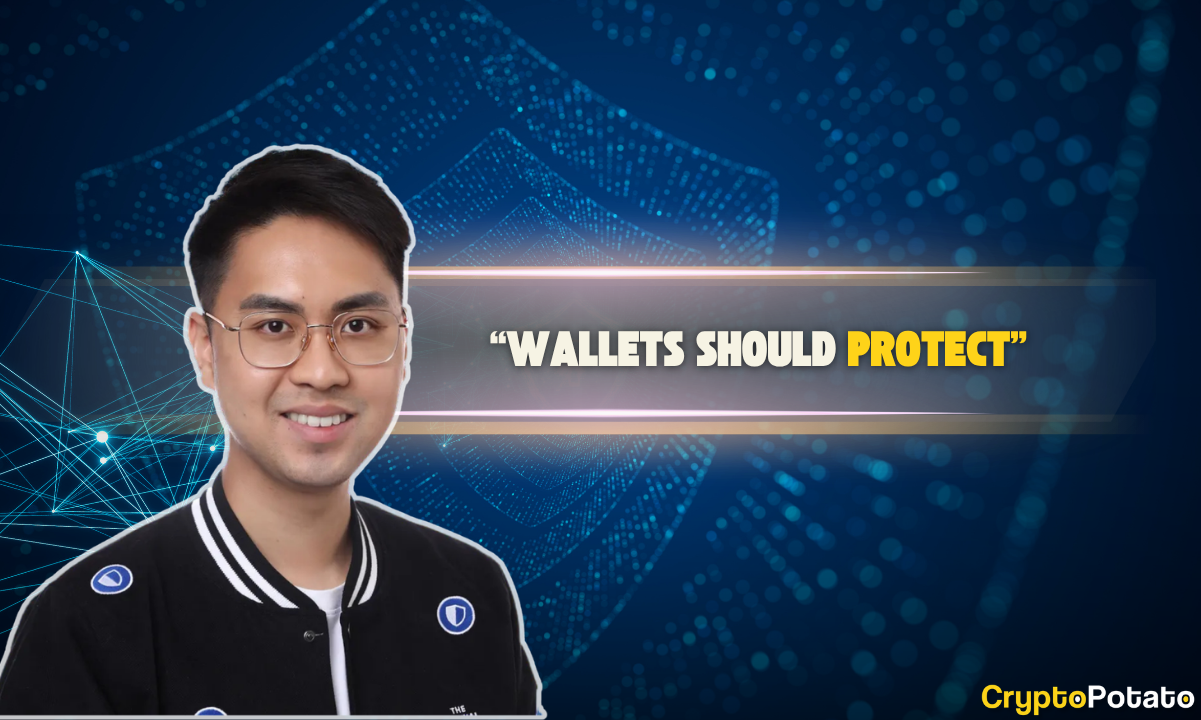
    Self-Custody Has Won the Argument, Now It Has to Work: Trust Wallet CEO

    For years, the cryptocurrency space has asked users to accept complexity in exchange for ownership. But as self-custody moves closer to the mainstream, Trust Wallet’s new CEO, Felix Fan, argues that the real challenge is no longer proving why people should control their assets – it’s making that control feel effortless.

    In an interview, Fan discusses the product lessons shaping his leadership, why wallets must take more responsibility for user protection, and how payments, trading, stablecoins, AI agents, and clearer regulation are pushing crypto into a more mature phase.

    His message is clear: self-custody may have won the philosophical argument, but the user experience has some catching up to do.

    Navigating a Mainstream, Complex Landscape

    Fan stepped into his new role at Trust Wallet at a moment when self-custody is becoming both more mainstream and more complex. He believes his own journey, marked by expertise in product development and experience as a serial entrepreneur, has prepared him for leading a product used by hundreds of millions.

    “My expertise lies in product, complemented by my experience as a serial entrepreneur,” Fan stated. “Before Trust Wallet, I spent years thinking about how to make complex financial tools feel simple to people who don’t have time or patience to become experts.”

    Leading at this scale is different. Trust Wallet already has millions of users. “The job isn’t only to convince people that self-custody is the future,” Fan explained. “It’s to make that future feel obvious in the product experience every day. That means listening, moving fast, and being ruthlessly honest about where we fall short so we can fix it quickly.”

    He emphasized that the best products don’t need extensive explanation. “If a user has to read a guide to understand what just happened, we haven’t finished building yet,” he said.

    Product-Centric Leadership in Crypto

    Fan’s background as a product leader shapes his approach, especially in a sector where user trust, security, and speed of execution are paramount.

    “Product thinking means you start with the user problem, not the solution,” Fan noted. “That sounds obvious, but it’s genuinely rare in crypto, where the default is to lead with technology and hope users catch up.”

    He views security, trust, and execution speed not as competing priorities but as a “product sequencing problem.” He elaborated, “Security can’t be a tax on speed — if it slows users down in a way that’s perceptible, we lose them to worse choices. So the answer is to engineer security that protects users before they know they need protection.”

    Fan highlighted Trust Wallet’s Security Scanner, which has prevented $458 million in losses from malicious contracts. “Users didn’t have to become security experts for that to happen. The product did the work. That’s what good product leadership looks like in this sector.”

    The Infrastructure’s Coming of Age

    Crypto has undergone numerous identity shifts, from speculation and DeFi to NFTs, institutional adoption, stablecoins, AI agents, and tokenized real-world assets (RWAs). Fan defines the current phase as “the infrastructure coming of age.”

    “For years, crypto had the vision, but the experience was too rough for most people to stay,” he said. “The phases you describe, ‘speculation, DeFi, NFTs,’ each added something real, but also came with so much friction that only the committed stayed.”

    What’s different now, according to Fan, is that “the rails are catching up with the ideas.” He pointed to deep onchain liquidity, the real-world utility of stablecoins, increased accessibility of tokenized RWAs, and the emerging interaction between AI and onchain systems.

    “We’re at the point where the question isn’t ‘Can crypto do this?’, it’s ‘Can we make it simple enough that the next hundred million people don’t need to already believe in it to try it?’”

    Making Self-Custody Intuitive

    While the principle of self-custody is gaining traction, it can still feel intimidating to mainstream users. Fan outlined three key areas that need to change for it to become as intuitive as mobile banking, without compromising ownership.

    First, the language needs to evolve. Terms like “private keys,” “seed phrases,” and “non-custodial” are insider jargon. “We have to build products that protect users deeply without requiring them to understand the underlying mechanics,” Fan stated, drawing a parallel to mobile banking where users feel safe without understanding the authentication stack.

    Second, recovery mechanisms must feel secure. “The thing that stops most people from trying self-custody isn’t the setup — it’s the fear of losing access permanently,” he explained. Developing recovery options designed for everyday users, not just cryptographers, is a critical industry challenge.

    Third, the surrounding user experience must align with existing digital tools. “If trading onchain is harder than using an app they already have, we lose,” Fan said, acknowledging that while the gap is closing, work remains.

    “The principle of self-custody is already winning the argument,” he concluded. “The product experience is what has to catch up.”

    Near-Term Use Cases: Payments and Trading

    Trust Wallet operates at the intersection of wallets, DeFi, payments, stablecoins, and AI. For the near term, Fan sees payments and trading as the biggest use cases for crypto.

    “Trading because onchain liquidity has matured,” he explained. Integrations with platforms like Hyperliquid for perpetuals, prediction markets, and tokenized stocks through bStocks allow users to perform complex financial activities within a self-custodial wallet that previously required traditional brokerage accounts or centralized exchanges.

    While AI agents are a significant focus for the medium term, Fan believes “we’re at the early-infrastructure stage there.” The ability to automate strategies within user-defined rules while maintaining control of private keys on a device could revolutionize the financial landscape. However, in the immediate future, “payments and trading are where the real use is happening.”

    Wallets’ Responsibility in User Protection

    Security remains a major hurdle for crypto adoption. Fan believes wallets should take significant responsibility for user protection, pushing back against the notion that this conflicts with user sovereignty.

    “The false version of user sovereignty is: ‘we give you total freedom and total exposure.’ That’s not empowering; that’s abandonment,” Fan asserted. “Real sovereignty means users have full control over their assets and real protection against threats they can’t always see.”

    He reiterated the impact of Trust Wallet’s Security Scanner, which has flagged over $458 million directed at malicious contracts and alerted users to more than $191 million in suspicious transactions in 2025 alone. The recent addition of Address Poisoning Protection, which detects and alerts users to lookalike scam addresses in real-time, further exemplifies this commitment.

    “Users don’t have to understand address poisoning or malicious smart contracts to be protected from them. That’s what we should expect from a wallet,” Fan stated.

    He defined the line between user sovereignty and platform safeguards: “we warn, we protect, we give users the information to make a decision — but we don’t make decisions for them.” If a user chooses to interact with a flagged risky element, Trust Wallet will clearly inform them and respect their decision. “Sovereignty with information is the goal. Sovereignty without information isn’t freedom, it’s exposure.”

    Navigating Regulation and Decentralization

    As regulatory landscapes become clearer in some markets and remain fragmented in others, wallet companies like Trust Wallet must balance decentralization, compliance, and user access across jurisdictions.

    “Regulatory clarity is genuinely good for this industry,” Fan said. “Uncertainty can create more problems than it solves; for users, for builders, and for the long-term credibility of crypto.”

    He clarified Trust Wallet’s position: “We’re a self-custodial software interface. We don’t hold customer funds, we don’t operate markets, we don’t match orders, and we’re not anyone’s counterparty. That’s a different regulatory conversation than the one centralized exchanges are having.”

    Trust Wallet’s approach involves constructive engagement, transparency about its product, and ensuring users have access to the best available services. “When regulation creates real clarity, it helps us by setting clear expectations for the industry,” Fan noted.

    He cautioned against regulation becoming a barrier to access. “The populations who benefit most from self-custody — people without access to traditional banking, people in economies with currency instability — are often the least served by fragmented regulatory environments. Good regulation should protect users, not exclude them.”

  • Coinbase Secures UK License for Stocks and Derivatives Trading

    Coinbase Secures UK License for Stocks and Derivatives Trading

    Coinbase Secures UK License, Enabling Stocks and Derivatives Trading

    Coinbase, the largest US-based cryptocurrency exchange, has significantly broadened its regulatory reach globally by obtaining the necessary approval to offer investment services in the United Kingdom. This marks one of the company’s most substantial market expansions in the UK since its launch several years ago.

    The approval will empower Coinbase to provide traditional financial products alongside cryptocurrencies through a unified platform, according to a company statement. This new authorization permits the exchange to move beyond digital assets and introduce a suite of new products, including derivatives and equities, to its UK user base.

    Coinbase has indicated that institutional and sophisticated traders will soon have access to crypto, equity, and commodity perpetual futures. Simultaneously, retail investors will be able to trade stocks directly on the platform for the first time.

    This investment services authorization will complement the exchange’s existing UK e-money license and crypto registration. The company anticipates this will solidify its standing as the most comprehensively regulated cryptocurrency entity in the market.

    Coinbase has characterized this development as a “significant step” toward its overarching goal of creating an “everything exchange,” where users can access a diverse range of financial products from a single account.

  • Bybit Lists GROVE (GROVE) on Spot

    Bybit Lists GROVE (GROVE) on Spot

    Bybit to List GROVE on Spot Trading Platform

    Cryptocurrency exchange Bybit has announced the upcoming listing of GROVE on its Spot trading platform, signaling a new opportunity for users to engage with the digital asset.

    Listing Schedule

    Deposits for GROVE are slated to open on July 7, 2026, at 4:00 AM UTC. The token will officially be listed for trading on July 7, 2026, at 3:00 PM UTC. Withdrawals for GROVE will become available on July 8, 2026, at 10:00 AM UTC. Both deposit and withdrawal services will be facilitated through the ETH Network.

    About GROVE

    Grove aims to leverage the stablecoin economy by bringing real-world assets and use cases onto the blockchain. The project intends to build the next generation of global financial markets through institutional-grade allocation, financing, and liquidity solutions.

    Risk Advisory

    Trading cryptocurrencies carries substantial risk and may lead to the loss of invested capital. Prospective traders are advised to ensure they fully comprehend the associated risks, assess their experience level, consider their investment objectives, and seek independent financial counsel if required. Bybit disclaims any liability for losses incurred through trading on its platform.

  • Solana Rally Puts $100 and $120 Levels in Focus

    Solana Rally Puts $100 and $120 Levels in Focus

    Solana (SOL) has staged a significant recovery, with its price surging over 13% in the past week and monthly gains now exceeding 30%. At the time of this report, the cryptocurrency was trading around $80, even as the broader market experienced a downturn following a sale by Strategy.

    Network Growth Accelerates

    The price momentum has been accompanied by a notable increase in on-chain activity. Crypto analyst Ali Martinez reported that the Solana network added 1.60 million new addresses in the last two weeks, signaling an acceleration in network growth.

    Bullish Technical Signals Emerge

    Martinez also highlighted a new buy signal generated by the SuperTrend indicator on Solana’s three-day chart. This marks the first such signal since October 10, 2025, when the Average True Range (ATR) trailing stop moved below the price. He noted that the previous SuperTrend sell signal preceded a 74% price correction. According to Martinez, the current signal indicates a shift from a bearish to a bullish trend, potentially propelling SOL towards the $100 mark.

    Expert Outlook Remains Optimistic

    Michaël van de Poppe, founder of MN Fund, echoed this bullish sentiment. He observed that Solana is re-entering its trading range and anticipates a brief pullback before further upward movement. Van de Poppe emphasized the importance of the $75-$77 range holding as support, suggesting that if it does, SOL could not only advance towards $100 but potentially reach $120 in the coming weeks or months.

    Solana-Focused Companies See Gains

    Several digital asset treasury (DAT) companies focused on Solana have also experienced positive performance. Sol Strategies (STKE) shares have risen 13.64% over the past month, while Solana Company (HSDT) gained approximately 12%. Forward Industries (FWDI) also saw an increase of over 7% during the same period.

    Robust Transaction Volume and User Activity

    Broader usage trends also underscore Solana’s strength. Grayscale Research data indicates that the Solana network has processed an average of over 100 million transactions daily this year, equating to more than 1,200 transactions per second. During the same timeframe, the network recorded an average of 4.3 million unique daily users and generated roughly $100 million in transaction fees, driven by applications in DeFi, social trading, and decentralized infrastructure.

    Furthermore, Solana-based decentralized exchanges have handled over $360 billion in trading volume year-to-date, significantly outpacing other blockchain ecosystems.