Tag: Positive

  • Institutional Coalition on Hashi Welcomes Cumberland, Fluid, SwissBorg Ahead of July Testnet

    Institutional Coalition on Hashi Welcomes Cumberland, Fluid, SwissBorg Ahead of July Testnet

    Sui Ecosystem Welcomes Major Players as Bitcoin Finance Primitive Nears Launch

    Grand Cayman, Cayman Islands – June 23rd, 2026 – Sui, a blockchain platform designed for seamless financial transactions, announced today that Cumberland, Fluid, and SwissBorg have joined the Hashi ecosystem. Hashi, Sui’s native Bitcoin finance primitive, aims to unlock the productive potential of Bitcoin’s substantial market capitalization, estimated at $1.2 trillion, by transforming it into verifiable on-chain financial products. This expansion of institutional support comes just weeks before the scheduled launch of Hashi’s global testnet in July.

    The growing coalition addresses a significant challenge in the cryptocurrency space: capital inefficiency. By enabling the safe integration of over a trillion dollars of Bitcoin into decentralized finance (DeFi), Hashi seeks to overcome this persistent issue. Previous market cycles highlighted the risks associated with relying on opaque, centralized credit intermediaries like Celsius, Voyager, and Genesis for generating utility from dormant assets. Hashi offers an alternative by replacing centralized balance-sheet trust with verifiable smart contract logic.

    Crucially, Bitcoin will remain securely on its native blockchain, with Sui smart contracts managing the cryptographic and programmatic rights necessary for its use as financial collateral.

    “Hashi was built to unlock the productive use of Bitcoin at a scale the industry hasn’t seen before,” said Adeniyi Abiodun, Co-Founder and Chief Product Officer of Mysten Labs, the original contributor to Sui. “We believe Bitcoin will become one of the largest sources of collateral in finance as the world moves onchain, and Hashi provides the foundation to make that possible on Sui.”

    Built for Institutional Bitcoin Finance

    Hashi is designed to set a new standard for creating bespoke, Bitcoin-backed financial products. Builders will be able to define risk parameters and loan terms that are fully verifiable on-chain. In the coming weeks, institutions, custodians, wallet providers, and developers will have the opportunity to test the infrastructure that will support Bitcoin-backed lending, borrowing, and credit origination on Sui.

    Expanded Institutional Support

    The addition of Cumberland, Fluid, and SwissBorg significantly broadens support for institutional liquidity providers, market makers, and digital asset platforms within the Hashi ecosystem. These new participants join a robust group of infrastructure providers, custodians, and DeFi protocols already collaborating to build a native Bitcoin financial ecosystem on Sui.

    “Bitcoin is the world’s most liquid digital asset, but without native utility, it remains an off-chain asset,” stated Paul Kremsky, Global Head of Business Development at Cumberland. “Hashi is exciting because it introduces a transparent, institutional-grade framework for BTC-backed credit that will replace synthetic workarounds with a product we are excited to use ourselves.”

    Cyrus Fazel, Founder & CEO at SwissBorg, commented, “Our community has consistently sought native ways to lend and borrow against their Bitcoin. We’re thrilled to see Hashi delivering innovative solutions that make this a reality.”

    Samyak Jain, Co-Founder & CEO at Fluid, added, “The next phase of the industry’s growth will come from bringing larger pools of capital onchain through infrastructure institutions can actually trust. Hashi gets this right: Bitcoin stays on its native chain while verifiable contracts make it productive as collateral. Fluid’s lending infrastructure is built to turn that into deep, capital-efficient Bitcoin-backed credit markets on Sui.”

    These new partnerships reinforce the growing consensus that Sui, through Hashi, is poised to become a central hub for Bitcoin finance. The ecosystem already includes partners focused on custody and wallet access, lending, trading, liquidity provision, DeFi applications, vaults, asset management, and oracle and security auditing services.

    The upcoming global testnet in July will serve as a comprehensive rehearsal for the transformation of Bitcoin finance. This sandbox environment is intended for institutional engineers, Sui protocols, developers, and custody partners to refine integration parameters, stress-test the code under simulated market volatility, and verify cryptographic integrity before the mainnet release.

    Technical documentation and testnet access configurations will be available at https://www.sui.io/hashi.

    About Sui

    Sui is a next-generation Layer 1 blockchain engineered for scalable finance and global payments. Developed by the core team behind Meta’s stablecoin initiative, Sui utilizes an object-centric model to make assets, permissions, and user data programmable and ownable. The platform provides builders with essential primitives for creating high-performance payment and financial applications, including instant agentic payments. Further information can be found at sui.io.

  • OpenAI’s Cyber AI Outpaces Banned Anthropic Model

    OpenAI’s Cyber AI Outpaces Banned Anthropic Model

    OpenAI’s Cybersecurity AI Outperforms Government-Pulled Anthropic Model

    OpenAI’s latest cybersecurity artificial intelligence model has surpassed Anthropic’s Mythos AI, which was recently taken offline by the U.S. government, and remains operational.

    On June 22, OpenAI officially launched GPT-5.5-Cyber as part of its Daybreak cyber defense initiative. The updated model achieved an 85.6% score on CyberGym, a benchmark developed at UC Berkeley. This test evaluates AI agents on their ability to identify and reproduce 1,507 known software vulnerabilities across 188 open-source projects within a controlled environment.

    Anthropic’s Mythos 5 model scored 83.8% on the same leaderboard, while its more widely accessible model, Claude Opus 4.7, registered a score of 73.1%.

    While a difference of less than two percentage points might typically be considered minor, the context surrounding these results is significant. Anthropic’s Mythos 5 and Fable 5 models were pulled offline on June 12 following an emergency export control directive issued by the Trump administration, citing national security concerns.

    The government’s action was prompted by the discovery of a “jailbreak”—a method to circumvent an AI model’s inherent safety protocols, akin to finding a master key for a secure system. Anthropic’s inability to reliably verify user nationality at scale led to the decision to disable both models globally.

    Part of the challenge for Anthropic was self-imposed. The company had spent months promoting Mythos as one of the most powerful and potentially dangerous AI models ever created. Its own launch documentation warned that its cybersecurity capabilities could pose significant risks without adequate restrictions. Anthropic CEO Dario Amodei had also published an essay on June 10, comparing advanced AI models to aircraft that safety regulators should be able to ground if they fail inspections.

    Just days after this comparison, the government effectively grounded Anthropic’s AI models.

    This was not the only controversy for Anthropic that week. The company had already faced criticism for a hidden filter within Fable 5 that silently degraded the model’s performance for users suspected of developing competing AI technologies, a practice conducted without user notification. Anthropic subsequently issued an apology and reversed the policy.

    As Anthropic engages in discussions with the Commerce Department and pursues its lawsuit against the Trump administration, OpenAI is expanding its influence. The Daybreak program has secured cybersecurity partnerships with Australia, Canada, France, Germany, Japan, South Korea, and European Union institutions, including the European Union Agency for Cybersecurity.

    Twenty-eight security firms, including CrowdStrike, Cisco, and Cloudflare, have joined OpenAI’s Cyber Partner Program, integrating GPT-5.5 into their products for vetted clients. According to OpenAI’s blog, its Codex Security tool has analyzed over 30 million code commits across 30,000 codebases since its March launch, identifying and logging more than 500,000 fixed vulnerabilities.

    The company is also broadening a partner program to enable security firms to incorporate these capabilities into their own tools and has launched “Patch the Planet,” an initiative aimed at addressing vulnerabilities in widely used open-source projects.

    It is important to note that GPT-5.5-Cyber is not intended for general public use. Access is restricted to verified security professionals. OpenAI conducted pre-deployment testing with federal agencies, including the Center for AI Standards and Innovation and the Office of the National Cyber Director, prior to its launch. This restricted-access model mirrors Anthropic’s approach with Mythos, but OpenAI obtained government clearance for its strategy beforehand.

    As of June 23, Fable 5 and Mythos 5 remain offline, eleven days into their suspension, with no official timeline for restoration provided by Anthropic or the Commerce Department.

  • Morning Minute: Fomo Secures $75M, VCs Double Down on Consumer Crypto

    Morning Minute: Fomo Secures $75M, VCs Double Down on Consumer Crypto

    Fomo Raises $75 Million at $550 Million Valuation as Major VCs Bet on Consumer Crypto

    A consumer-focused cryptocurrency trading application has secured $75 million in funding from investors who typically avoid the crypto space.

    Fomo, a social-first crypto trading app, announced a $75 million Series B funding round led by Index Ventures, valuing the company at $550 million. Union Square Ventures also participated, alongside existing investor Benchmark and angel investors including Mark Pincus, founder of Zynga; Humam Sakhnini, CEO of Discord; and Kevin Hartz, co-founder of Eventbrite.

    Founded in 2025 by three former dYdX employees—Paul Erlanger, Se Yong Park, and Prashan Dharmasena—Fomo aims to make on-chain trading as seamless as a conventional consumer application. Key features include non-custodial accounts, a rapid onboarding process of approximately 30 seconds, social functionalities like leaderboards and copy trading, and access to a wider array of assets than Coinbase across multiple blockchains, all without the need for users to manage wallets, bridges, or gas fees.

    Since its launch in May 2025, Fomo has attracted over 625,000 users and facilitated $4 billion in trading volume. The platform is currently onboarding around 3,500 new users daily with a lean team of 17 employees. This latest funding round brings Fomo’s total capital raised to approximately $94 million.

    Julia Andre, a partner at Index Ventures, noted a significant market shift towards consumer blockchain trading and expressed confidence in Fomo’s ability to capitalize on it. “We’re not investing in Fomo because it’s a crypto business,” Andre stated. Co-founder Paul Erlanger was direct about the challenge they are addressing: “On-chain trading is simply impossible.” His vision is for Fomo to be perceived not as a crypto app at all, mirroring the trajectory of Coinbase and Robinhood.

    The involvement of established, non-crypto venture capital firms in a nine-figure raise for a crypto startup, particularly during a challenging market downturn, signals a strong conviction that the next wave of users will engage through user-friendly consumer applications rather than complex exchanges. This timing also aligns with a recent uptick in retail search interest and trading volume, as Bitcoin stabilizes near the $64,000 mark.

    Fomo’s ambitions extend beyond digital tokens. The company introduced derivatives trading in June and plans to integrate equities, derivatives, and prediction markets as they move on-chain, positioning it as a direct competitor to Coinbase’s “everything app” and Robinhood. Co-founder Se Yong Park indicated that the new funds will be used for acquisitions and to expand the engineering team, providing them with the necessary resources to pursue these goals.

    Strategy Buys Just 520 BTC After Raising $300 Million in Cash

    MicroStrategy sold $335.5 million worth of its stock last week but allocated only a fraction of those proceeds to Bitcoin, purchasing just 520 BTC, valued at approximately $35 million, at an average price of $67,068. This acquisition brings MicroStrategy’s total Bitcoin holdings to 847,363 coins. The remainder of the funds raised was retained as cash.

    The company significantly increased its U.S. dollar reserves, adding roughly $300 million to reach a total of $1.4 billion. This cash is earmarked for supporting the credit quality of its preferred shares and covering dividend payments and debt obligations.

    Some analysts interpret this move as damage control for MicroStrategy (MSTR). Saylor’s preferred stock, which pays dividends and has been instrumental in funding Bitcoin acquisitions, recently hit a record low of $83 before a partial recovery. The selloff in preferred shares also coincided with a dip in Bitcoin’s price and broader market sentiment. By raising equity and accumulating cash instead of aggressively buying more Bitcoin, MicroStrategy appears to be prioritizing the strengthening of its balance sheet over expanding its digital asset holdings.

    Michael Saylor, MicroStrategy’s CEO, personally purchased $1 million worth of MSTR stock, vowing to hold it until it returns to par value, a public display of confidence amidst growing scrutiny of the company’s model in a prolonged bear market.

    This strategy suggests that Saylor and MicroStrategy are focused on protecting both the company’s stock and its Bitcoin reserves. This may involve prioritizing MSTR’s financial stability, even if it means a slower pace of Bitcoin accumulation. While concerns about MicroStrategy’s financial stability may be overstated, MSTR shareholders could face further short-term volatility.

    BitMine, SharpLink, and Joe Lubin Fund New Ethereum Research Lab

    Two of the largest corporate holders of Ethereum have now invested in the research and development of the Ethereum network itself.

    BitMine, SharpLink, and Joe Lubin are the primary financial backers of ETHLabs, a new independent nonprofit research and development laboratory. The lab is staffed by five researchers who previously worked at the Ethereum Foundation.

    ETHLabs has set an ambitious goal: to establish Ethereum as the settlement layer for the global economy. Its initial research efforts are specifically targeting institutional adoption, focusing on areas such as faster settlement times, native asset issuance, cross-chain interoperability, increased mainnet capacity, and research into Ethereum’s monetary properties. In addition to the three anchor funders, community supporters include Hayden Adams of Uniswap, Jesse Pollak of Base, and prominent researchers Justin Drake, Danny Ryan, and Tim Beiko.

    BitMine and SharpLink are the two largest corporate holders of ETH. By funding research aimed at enhancing ETH’s value, these entities with significant ETH holdings are directly investing in the network’s future growth. Analyst Tom Lee has highlighted the role of institutions and AI agents in driving adoption, emphasizing the ecosystem’s need for increased talent and research to support this expansion. ETHLabs is also explicitly focused on value accrual and the practical application of decentralized finance (DeFi), areas that ETH holders have long argued have been underemphasized by the Ethereum Foundation in its pursuit of credible neutrality.

    To ensure that funding does not translate into undue influence, ETHLabs routes all contributions through an independent grants administrator, creating a clear separation between the researchers and the entities providing financial support.

    This development occurs amid a period of talent attrition from the Ethereum Foundation and heightened debate over the direction of Ethereum’s development and how the ETH asset captures value. ETHLabs is being positioned as a complementary entity to the Foundation, rather than a breakaway faction, representing a fusion of idealism and pragmatism. The core strategy is to align the largest ETH holders with the researchers capable of fostering network growth, with an independent administrator ensuring transparency and accountability.

  • MyTonWallet Rebrands to My Wallet Following 11-Blockchain Expansion

    MyTonWallet Rebrands to My Wallet Following 11-Blockchain Expansion

    MyTonWallet Rebrands to My Wallet, Expands to 11 Blockchains with Enhanced Features

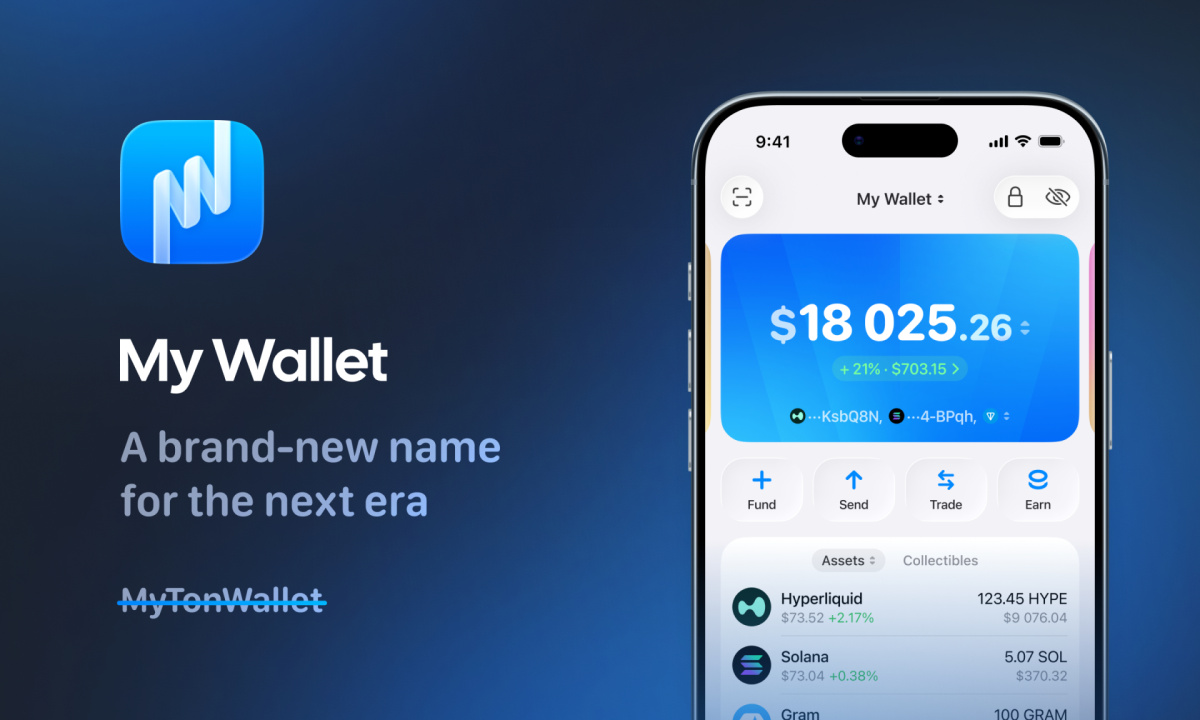
    Dubai, United Arab Emirates – June 23rd, 2026 – MyTonWallet, a prominent wallet built for The Open Network (TON), has officially rebranded to My Wallet and announced a significant expansion, now supporting 11 blockchain networks. The open-source, self-custodial wallet, launched in 2022, has evolved from a single-chain solution to a comprehensive platform aiming to simplify the user experience across the decentralized ecosystem.

    With over 9 million users, My Wallet has broadened its reach beyond TON to include TRON, Solana, Ethereum, Base, BNB Chain, Polygon, Arbitrum, Monad, Avalanche, and Hyperliquid. Bitcoin is slated as the next addition to its roadmap. The company assures existing users that their current wallets and seed phrases remain unaffected, requiring no migration process.

    Integrated Portfolio Tracking Across Multiple Chains

    A key enhancement in My Wallet is its built-in portfolio tracking functionality, which aggregates net worth and performance data across all 11 supported networks within the non-custodial wallet interface. Users can visualize their balances and returns over time through detailed charts for total value, profit and loss (P&L), daily P&L, and portfolio share. The platform offers flexible date ranges, token-level filters, and breakdowns by chain, asset mix, and staked assets, providing a clear overview of portfolio composition. Users can also track their holdings in their preferred fiat currency.

    This integrated approach distinguishes My Wallet from competitors. While some wallets, like MetaMask, relegate portfolio analytics to separate web applications, and others, like Phantom, offer P&L tracking for a single chain, My Wallet consolidates comprehensive net worth and P&L tracking for all supported networks directly within the wallet itself, eliminating the need for third-party tools or browser dapps.

    Seamless User Experience and Gasless Transfers

    My Wallet aims to provide a native-like experience across all supported blockchains, including EVM-compatible networks. By maintaining persistent, high-frequency connections to each blockchain and employing optimistic UI techniques, the wallet enables near-instantaneous transfer confirmations, mimicking the responsiveness of a messaging application.

    Further reducing friction, My Wallet introduces gasless transfers on TON and Solana. This feature allows users to send assets, such as USDC, without needing to hold the native cryptocurrency of the network (e.g., SOL) for transaction fees. The fee is instead covered by the token being transferred. A similar mechanism is reportedly under development for EVM chains.

    “Stablecoins already move more money than Visa — $33 trillion in 2025,” stated Alex Zinchuk, Founder of My Wallet. “For that to reach people outside crypto, the wallet has to stop being the hardest part, and the blockchain fees should be simplified.”

    Transaction Simulation and Unified Activity History

    The wallet also incorporates transaction simulation, allowing users to preview smart contract interactions before confirmation. This includes a clear display of assets leaving and arriving from the wallet, as well as the specific contract being called. A unified activity history consolidates transaction records from all 11 supported chains into a single view, eliminating the need for users to navigate separate interfaces for each network.

    AI-Powered Assistance and Robust Security

    My Wallet features a native AI Crypto Agent designed to assist users with natural language commands for tasks such as sending assets, swapping tokens, and staking cryptocurrencies. The agent can also provide information on token prices, portfolio performance, and market indicators like the Fear & Greed Index.

    Security remains a core focus, with My Wallet holding the No. 7 ranking on CertiK’s Wallet Security Leaderboard at the time of publication, alongside established names like MetaMask and Coinbase Wallet. The wallet has undergone CertiK audits, features an open-source codebase, and supports reproducible builds since its inception. A $100,000 bug bounty program on CertiK SkyShield has been active since March 2024, with no critical vulnerabilities reported to date.

    Designed as a self-custodial solution, My Wallet emphasizes user control, with the team unable to access user funds, seed phrases, private keys, or passwords.

    “We started My Wallet because we could not find a wallet we wanted to use ourselves — one where security and usability were both taken seriously, at the same time,” Zinchuk commented. “The name was the last thing to catch up.”

    Future Developments

    Active development is underway for several new features, including Bitcoin support, Ledger hardware wallet integration across all chains, staking and lending capabilities on every supported network, and a headless wallet mode for AI agents.

    My Wallet aims to be a user-friendly, self-custodial wallet that offers advanced multichain capabilities with a focus on clear design, speed, and familiarity, even for users new to cryptocurrency. It combines CertiK-audited security, open-source code, and full user control.

    My Wallet is available on iOS, Android, macOS, Windows, Linux, and as a browser extension via mywallet.io.

    About My Wallet
    My Wallet, formerly MyTonWallet, is an open-source, self-custodial multichain wallet supporting TON, TRON, Solana, Ethereum, Base, BNB Chain, Polygon, Arbitrum, Avalanche, Hyperliquid, and Monad. Founded in 2022, it has been audited by CertiK and holds a top-7 ranking for wallet security. The platform serves over 9 million users across mobile, desktop, web, and Telegram Mini App. Staking within My Wallet is powered by its proprietary protocol, Stakee, which is recognized among the top TON DeFi protocols by Total Value Locked (TVL) on DefiLlama.

  • BlackRock, Institutions Eye Blockchain: Aptos CBO Interview

    BlackRock, Institutions Eye Blockchain: Aptos CBO Interview

    The narrative surrounding tokenization is not just expanding; it’s undergoing a significant transformation. While initial discussions centered on the feasibility of bringing real-world assets onto the blockchain, financial institutions are now posing a fundamentally different question: can existing blockchain infrastructure truly support financial markets at scale?

    This evolving perspective is increasingly evident across various networks, including Aptos. Reports indicate that Securitize-related assets on the platform saw a remarkable surge of 632% in June, reaching $276 million. With major products like BlackRock’s BUIDL fund expanding their presence on the network, Aptos is strategically positioning itself as a robust infrastructure designed for continuous settlement, institutional-grade financial activities, enhanced liquidity, and more.

    In an interview, Solomon Tesfaye, Chief Business Officer at Aptos Labs, delves into the rapid growth of tokenized assets on the platform, the critical infrastructure that institutions prioritize, and the potential for the next wave of blockchain adoption to be driven by the convergence of both markets and machines.

    Institutional Focus Shifts to Operational Functionality

    Securitize-related assets on Aptos have reportedly grown by 632% this month, reaching $276 million. What does this level of growth reveal about the current institutional approach to on-chain markets?

    While the percentage growth is noteworthy, the more crucial aspect is where activity concentrates once assets are live on-chain. Securitize, which issues and manages tokenized real-world assets for institutional sponsors like BlackRock and Apollo, utilizes networks such as Aptos. Once these assets are deployed, the primary focus shifts from mere issuance to how these assets function within actual financial systems.

    This is where the move towards “markets” becomes apparent. Settlement, collateral movement, and integration with trading and payment workflows gain greater importance than the act of tokenization itself. On Aptos, these transactional flows are supported by infrastructure engineered for continuous, high-frequency activity, rather than static record-keeping.

    Across the industry, we’re witnessing a transition from proving that assets can be tokenized to determining whether blockchain infrastructure can genuinely support real financial activity at scale. The networks that are poised to benefit are increasingly those capable of facilitating continuous market operations, not just initial issuance.

    Operational Demands Drive Asset Concentration

    What do you believe is fueling the recent uptick in Securitize-related activity specifically on Aptos?

    As tokenized assets become actively traded, operational requirements become paramount. Tokenized funds are not static holdings; they are integral to settlement processes, collateral workflows, liquidity venues, and treasury operations. This necessitates a different infrastructure than simply recording ownership on-chain.

    Aptos has processed over 5 billion transactions, maintains approximately 30-millisecond block times, and has achieved 99.99% uptime since its mainnet launch. These are the operational characteristics that institutions scrutinize because they mitigate execution uncertainty.

    The industry trend indicates a growing concentration of activity on infrastructure that has already demonstrated its reliability under real-world conditions, rather than relying solely on theoretical performance metrics.

    Aptos Positions for Institutional RWA Market

    BlackRock’s BUIDL fund, tokenized by Securitize, has expanded to Aptos alongside several other chains, introducing one of the largest tokenized fund products into the Aptos ecosystem. What does this signify for Aptos’ standing in the institutional real-world asset (RWA) market?

    This development signals that infrastructure choices are increasingly being made at a highly technical and operational level. BlackRock’s selection of chains is not driven by visibility but by a rigorous evaluation of whether the infrastructure can support regulated financial products operating at scale with predictable settlement and performance.

    The expansion of BUIDL through Securitize onto Aptos reflects this thorough evaluation process. It underscores confidence that Aptos meets the stringent requirements for institutional-grade financial products, particularly concerning consistent performance, reliability, and the capacity to support continuous market activity.

    More broadly, this reinforces Aptos’ positioning in the RWA market as an infrastructure built for high-frequency, always-on financial systems where tokenized funds, settlement flows, and collateral movement can operate frictionlessly and at scale. The key takeaway is that institutional adoption is increasingly converging on infrastructure capable of supporting actual financial market operations on-chain, moving beyond mere tokenization experiments.

    Current Use Cases for Tokenized Real-World Assets

    Much of the discussion around tokenization still emphasizes future potential, including tokenized stocks and other multi-trillion-dollar markets. What are tokenized real-world assets actually being used for on-chain today?

    Currently, adoption is concentrated within relatively familiar financial instruments. Money market funds, Treasury products, private credit, and short-duration fixed-income assets constitute a significant portion of the activity. Notable examples include products like BlackRock’s BUIDL and Franklin Templeton’s BENJI.

    What is particularly significant is that institutions are not necessarily venturing into entirely new asset classes. Instead, they are focusing on assets where operational improvements can be realized immediately through faster settlement, reduced reconciliation efforts, enhanced collateral mobility, and greater programmability. In essence, the initial wave of tokenization is less about fundamentally altering the nature of assets and more about transforming the operational infrastructure that supports them.

    Essential Infrastructure for Institutional Scale

    For tokenized assets to transition from early adoption to institutional scale, what infrastructure elements are most critical: speed, settlement finality, compliance tooling, identity, liquidity, custody, interoperability, or something else?

    Every component is vital: compliance, custody, identity, liquidity, interoperability, and settlement. However, reliability serves as the fundamental prerequisite. Institutions can address many operational challenges, but they cannot overcome infrastructure that exhibits inconsistent behavior under load. Financial systems operate continuously, making sustained performance far more critical than peak performance.

    Once reliability is established, the remaining aspects become integration challenges across custody, compliance, trading, and liquidity. Increasingly, institutions are evaluating blockchain infrastructure with the same rigor they apply to traditional financial infrastructure: assessing resilience, predictability, and uptime.

    Technical Priorities Translate to Institutional Advantages

    Aptos has consistently emphasized performance, scalability, and reliability. How do these technical priorities translate into tangible advantages for institutions issuing or managing tokenized assets on-chain?

    The most effective infrastructure is that which operates seamlessly in the background. Institutions are not aiming to optimize for blockchain activity itself; their goal is to operate financial products efficiently and predictably. Performance is only valuable if it translates into operational certainty.

    Features such as parallel execution, fast finality, and the security offered by the Move programming language help ensure that institutions can concentrate on the asset and its associated workflows, rather than being preoccupied with the underlying infrastructure. As tokenized assets, stablecoins, and automated financial systems scale, this is where markets and machines begin to converge. In such an environment, consistent execution holds far greater significance than peak throughput, transforming technical architecture into a tangible business outcome.

    Balancing Transparency and Privacy in Financial Markets

    As more financial assets move on-chain, how should the industry approach the relationship between public blockchain transparency and the privacy or compliance requirements of traditional financial institutions?

    Transparency and privacy are not mutually exclusive goals. Institutions require auditability, regulatory oversight, and verifiable settlement, while simultaneously needing confidentiality for sensitive financial activities. The long-term solution lies not in choosing one over the other, but in developing systems where outcomes can be verified without unnecessarily exposing underlying information. This becomes increasingly crucial as markets become more automated and trust shifts from manual processes to cryptographic verification.

    Aptos’ Vision for the Next Phase of Institutional Adoption

    Looking ahead, what role does Aptos Labs envision for itself in the next phase of institutional blockchain adoption: infrastructure provider, ecosystem builder, capital markets partner, or a broader capacity?

    Markets are already migrating on-chain through tokenized assets, stablecoins, and settlement infrastructure. Concurrently, machine-driven systems are emerging that can transact, allocate capital, and interact directly with these markets. Aptos is being developed to support both of these trends, providing the infrastructure for financial markets to operate at scale while enabling increasingly autonomous systems to participate in the economy.

    Performance, reliability, and continuous operation are not optional features in either domain; they are foundational requirements. We believe that the convergence of markets and machines will be the primary driver of future infrastructure demand.

  • Ripple Gains MiCA License: A Key Milestone

    Ripple Gains MiCA License: A Key Milestone

    Ripple Secures Preliminary MiCA License in Luxembourg

    Ripple has announced it has received preliminary approval for a Crypto Asset Service Provider (CASP) license from Luxembourg’s Commission de Surveillance du Secteur Financier. The approval, granted under the European Union’s Markets in Crypto-Assets regulation (MiCA), was issued via a Green Light Letter and is contingent on meeting final conditions.

    If fully approved, the license would enable Ripple to offer regulated cryptoasset services across the European Economic Area (EEA). This development builds on Ripple’s existing presence in Luxembourg, where the company had previously secured preliminary approval for an Electronic Institution (EMI) license, paving the way for digital payment services. The CASP approval further bolsters Ripple’s strategy, particularly as it expands its RLUSD stablecoin, which has recently gained prominence through Mastercard’s broader stablecoin settlement initiatives.

    Ripple stated that the combination of the CASP license and its existing EMI license will provide European banks, fintech firms, and corporations with a unified integration point to access its cryptoasset and stablecoin payment infrastructure. This will facilitate services such as fund collection, exchange, and disbursement across supported networks.

    The significance of this approval lies in MiCA’s role as the EU’s primary regulatory framework for crypto companies, stablecoin issuers, and service providers. For companies targeting institutional clients, obtaining regulatory licenses is increasingly becoming a necessity rather than a competitive advantage.

    The company indicated that this approval could allow it to scale its services to all 30 EEA countries. Cassie Craddock, Managing Director for UK & Europe at Ripple, commented on the development: “Financial market infrastructure is moving onchain – from cross-border payments and settlement to collateral management and tokenised assets – and banks and fintechs are actively building the digital asset capabilities they need to remain competitive. With our growing European presence, regulatory track record and institutional-grade infrastructure, we’re ready to meet the moment and support that transition at scale.”

    Ripple views this license approval as part of a broader regulatory expansion. The firm highlighted that it holds over 75 regulatory licenses globally, including its EMI license and cryptoasset registration from the UK’s Financial Conduct Authority, effective January 2026.

    The timing of this announcement is also noteworthy. RLUSD is being positioned as a key component of Ripple’s institutional infrastructure stack, alongside XRP and Ripple Payments. This comes at a time when major payment companies are actively exploring the use of stablecoins for settlement and liquidity management.

  • Gemini AI Forecasts Massive Solana Surge by 2026

    Gemini AI Forecasts Massive Solana Surge by 2026

    Gemini AI Forecasts Significant Solana Surge by Late 2026

    Google’s Gemini AI has generated a price target for Solana that warrants serious attention, projecting a breakout range of $250 to $320 by late 2026. Such an ascent would represent more than a threefold increase from Solana’s current trading price.

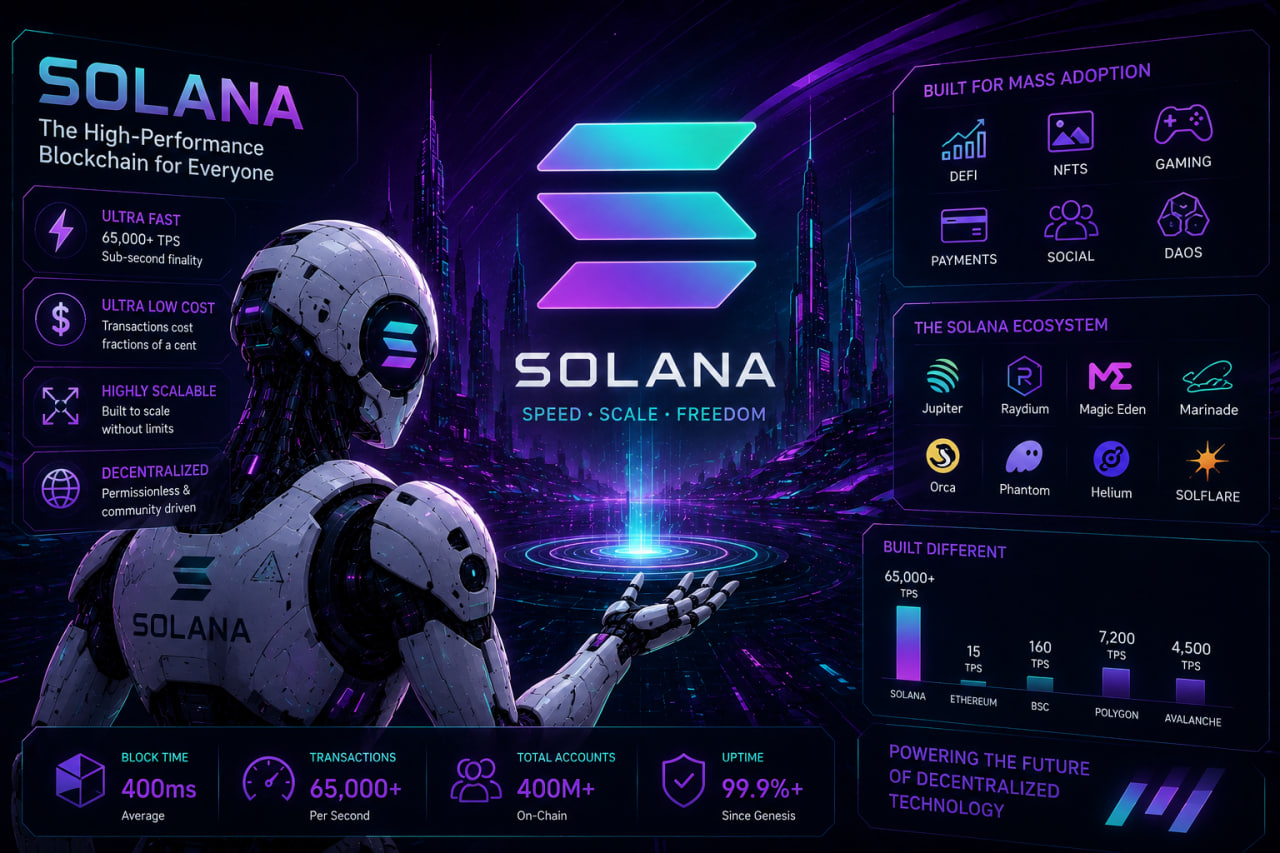
    The optimistic outlook hinges primarily on Solana’s underlying architecture. Currently trading around $74, the AI’s bullish thesis centers on the network’s monolithic design and its capacity to handle substantial high-frequency trading volumes from both retail and institutional investors.

    Solana’s renowned speed has always been its key differentiator, and Gemini AI views this as the bedrock of its potential. A crucial catalyst identified by the model is the approval of a spot ETF, which could unlock significant institutional capital inflows.

    Combined with Solana’s established presence in decentralized physical infrastructure networks, this scenario suggests a path where the network leverages and amplifies its existing strengths rather than relying on entirely new developments. If these factors align, Gemini AI sees a realistic trajectory toward the projected $250 to $320 price zone.

    The Bearish Outlook and Technical Indicators

    Conversely, the bearish case for Solana is rooted in challenges the network has previously encountered. A tightening of global liquidity could disproportionately impact higher-beta assets like Solana.

    Persistent network congestion remains another significant risk, as past slowdowns have prompted developers and users to migrate to Layer 2 competitors. If both these pressures materialize simultaneously, Gemini AI anticipates Solana could become trapped in a structural accumulation range between $45 and $60, hindering any breakout potential.

    On the technical front, Solana is currently trading around $73.99, having experienced a considerable decline from its summer highs above $250. This extended downtrend has seen limited significant rebounds.

    Recently, the price formed a double bottom near $60 before recovering above $70, signaling a potential resurgence of buyer interest. Immediate resistance is observed near $90, followed by a more substantial barrier around $100, where previous rallies faltered earlier this year. Support remains firm at $60, with the recent low serving as a critical level. The Relative Strength Index (RSI) stands at 51.53, with its signal line at 41.70, indicating that momentum has surpassed its average for the first time in a while. This divergence suggests building buying pressure that may precede a genuine breakout attempt.

    Overall, Solana’s momentum appears to have shifted from negative to cautiously positive. A sustained break above $90 could position Solana for a genuine multi-month ascent toward the $250 target, transforming it from a mere numerical projection into a tangible possibility.

    The Shifting Landscape of Crypto Investment

    The current market dynamics suggest that established large-cap cryptocurrencies are not facing fundamental trouble but rather a temporary plateau. Bitcoin, Ethereum, and XRP have been testing similar resistance levels for weeks without significant breakthroughs.

    The reliance on future macro catalysts and institutional decisions for the next phase of growth for these assets can be viewed as a passive waiting game rather than an active investment strategy. The capital that drives market cycles often moves preemptively, before the ultimate destination becomes widely apparent.

    Smaller market cap infrastructure projects, operating on different principles, possess the ability to achieve significant revaluations from capital flows that would be negligible for larger assets. The opportunity lies in the discrepancy between a project’s intrinsic value and its current market valuation, a gap that closes rapidly upon market discovery.

    Addressing DeFi’s Interoperability Challenge

    The fragmentation across multiple blockchain networks presents a persistent and costly problem in decentralized finance (DeFi). Bitcoin, Ethereum, and Solana currently operate as isolated ecosystems, lacking native interoperability. Every transfer of value between these networks incurs costs through fees, slippage, and failed transactions.

    LiquidChain aims to resolve this issue by enabling free cross-chain transfers, as predicted by Perplexity AI. It proposes a unified execution environment for these three networks, allowing for single deployments and complete ecosystem access without transaction taxes.

    The LiquidChain presale is currently priced at $0.01454, having raised over $840,000, positioning it as an early-stage, undiscovered opportunity. While its execution and adoption remain unproven, established assets offer predictability within known market ceilings. LiquidChain represents an entry point that may cease to exist once it gains broader market recognition.

  • Grok AI Forecasts Major XRP Surge by 2026

    Grok AI Forecasts Major XRP Surge by 2026

    Grok AI Forecasts Significant XRP Price Surge by 2026

    Grok AI, Elon Musk’s artificial intelligence model, has issued a prediction for XRP’s price that initially appears audacious but gains credibility upon closer examination. The model forecasts XRP reaching between $5 and $8 by the end of 2026, a substantial increase from its current trading levels.

    The bullish outlook for XRP is supported by a confluence of factors, exceeding the typical catalysts seen in a full market cycle for most cryptocurrencies. XRP is currently trading around $1.14, amidst the presence of multiple spot ETFs already active in the market.

    Furthermore, the U.S. Securities and Exchange Commission (SEC) has dropped its appeal, effectively ending a significant legal challenge. The proposed CLARITY Act is also navigating key Senate hurdles, promising to alleviate considerable regulatory uncertainty that has long hampered XRP’s progress.

    Ripple, the company behind XRP, is actively pursuing a national trust bank charter. This initiative, if successful, would position the company with a stronger institutional foundation than nearly any other crypto issuer.

    On the operational front, On-Demand Liquidity (ODL) volumes are experiencing robust growth as cross-border payment systems increasingly rely on XRP. The adoption of RLUSD is also accelerating, with the XRP Ledger recording over $1.9 billion in net real-world asset inflows.

    When these elements are considered collectively, XRP emerges as a digital asset with tangible utility, now bolstered by a clearer regulatory landscape. Standard Chartered has even developed an $8 billion valuation case for XRP, predicated on an assumption of $4 to $8 billion in ETF inflows. While this is a significant assumption, it is not entirely implausible given the rapid expansion of the ETF market this year.

    Bearish Outlook and Technical Analysis

    The bearish perspective offers a more conservative outlook. Potential delays in legislative progress or a broader market downturn could limit XRP’s ascent to a range between $2.50 and $3.50.

    There is also a possibility that XRP’s price could briefly retrace to test support levels between $0.90 and $1.00 before a substantial breakout occurs. Even with this potential downside, the risk-reward profile from current levels still heavily favors bullish sentiment.

    Technical analysis of the daily chart reveals XRP consolidating near $1.1468. This follows a prolonged decline from highs exceeding $3.60, which were established in mid-2025. The downward trend appears to have formed a textbook descending channel, characterized by a series of lower highs and lower lows over nearly a year.

    XRP recently touched the lower boundary of this channel near $1.00 and is now encountering resistance just above $1.20. A decisive break above this level could pave the way for a move towards $1.40, followed by the $1.60 zone, an area that has seen multiple rejections earlier this year.

    Immediate support is located at $1.00, with a deeper support level at $0.90 should sellers regain control. The Relative Strength Index (RSI) stands at 42.53, with a signal line at 39.95, indicating a slight positive shift in momentum after months below the midline. This narrow gap above the signal line suggests nascent buying pressure, though it does not yet confirm a sustained reversal.

    Overall momentum appears to be stabilizing rather than accelerating. If XRP can maintain its current base and reclaim the channel resistance, the dramatic price appreciation predicted by Grok AI becomes more plausible.

    The Rotation to Undiscovered Opportunities

    There comes a point in every market cycle when investor focus shifts away from established assets. Large-cap cryptocurrencies do not typically decline all at once; their growth gradually decelerates, returns compress, and they face persistent resistance at key levels. While the underlying narratives may remain intact, price action ceases to respond. Bitcoin, Ethereum, and XRP are currently in this phase, with XRP having been poised for its next significant move for an extended period.

    When this occurs, capital does not remain idle; it seeks out the next promising opportunity. These emerging opportunities rarely appear fully formed when the rotation begins. They often manifest as early-stage presales, modest fundraising rounds, or projects with unproven teams addressing acknowledged industry problems that have yet to be solved. This combination is frequently overlooked until its significance becomes undeniable.

    Cross-chain liquidity represents such a problem. Bitcoin, Ethereum, and Solana are dominant ecosystems with entirely separate liquidity systems. The absence of native interoperability forces users and developers operating across these networks to incur costs in the form of fees, slippage, failed transactions, and wasted time. This fragmentation is a fundamental limitation inherent in the original design of these networks.

    LiquidChain is developing a foundational layer designed to render this problem obsolete. It aims to create a single execution environment that connects all three major ecosystems simultaneously. This would enable developers to deploy applications once and reach users across all networks without incurring cross-chain taxes on every interaction.

    The LiquidChain presale is currently priced at $0.01454, with over $800,000 raised to date. The market has yet to fully recognize this opportunity, but that is expected to change.

    The risk profile at this stage is typical for early-stage projects. Adoption, liquidity, and execution remain unproven. This is not a disclaimer but rather the inherent nature of investing in nascent technologies. The projects that deliver 10x or 100x returns are not those that appear safe at the outset, but rather those that solve a critical problem before the broader market fully comprehends it. LiquidChain is currently within that window of opportunity.

  • ICE and OKX Partner for Tokenized Securities on Wall Street

    ICE and OKX Partner for Tokenized Securities on Wall Street

    ICE and OKX Forge Joint Venture for Digital Asset Products

    Intercontinental Exchange (ICE), the parent company of the New York Stock Exchange, and OKX, a prominent cryptocurrency exchange, have announced a strategic joint venture to develop tokenization and digital asset products. The collaboration, revealed on Monday, is contingent upon regulatory approval.

    Upon completion, the venture aims to provide OKX’s global customer base with access to tokenized equities listed on the NYSE, as well as exposure to futures contracts offered by ICE.

    “The ICE-OKX joint venture is a step towards building the infrastructure that will define how global markets operate in the decades ahead,” stated Trabue Bland, senior vice president for futures exchanges at ICE. Bland further indicated that the initiative seeks to expand ICE’s offerings to the approximately 120 million retail traders who utilize OKX.

    The joint venture will be co-chaired by ICE and Andrew Cuomo, former New York Attorney General and Governor, who has been associated with OKX since 2023.

    “The next chapter of financial markets will be defined by how well innovation and government regulation can move forward together,” Cuomo remarked in a statement. He also expressed enthusiasm for the potential societal impact of blockchain technology, citing its capacity for “the democratization of finance, bringing basic financial services to underserved populations.”

    Specifics regarding the types of tokenization or blockchain initiatives the joint venture will undertake were not immediately available. While representatives from both firms did not respond to requests for comment from Decrypt, an OKX spokesperson informed Fortune that the venture will concentrate on tokenizing NYSE-listed equities.

    This announcement follows a prior collaboration earlier this year, where the two entities introduced crypto-native perpetual futures for oil to non-U.S. residents. The latest development also builds upon ICE’s earlier investment in OKX, where the NYSE parent acquired a minority stake in the international crypto exchange at a valuation of $25 billion.

  • AI Picks Top 5 Crypto Surges for Next Bull Run

    AI Picks Top 5 Crypto Surges for Next Bull Run

    The prolonged bear market has left numerous crypto investors underwater, as prices of countless digital assets have crashed by double digits over the past several months.
    Despite the grim reality, the current environment might be an ideal time to invest in tokens that could deliver substantial gains in the next bull run. The real challenge is identifying which ones fit that profile, so three of the most popular AI-powered chatbots were consulted for their perspectives.

    ChatGPT’s Picks

    ChatGPT started with Solana (SOL), describing it as its “easiest” pick. It claimed the token boasts the best combination of liquidity, institutional interest, retail attention, and ecosystem activity. The AI predicted that if the next bull cycle is driven by meme coins, Solana will be “one of the clearest winners.”

    Hyperliquid (HYPE) ranked second. ChatGPT praised its role in the DeFi sector, its rising popularity, and its strong fundamentals, but warned that an exploit on the exchange could undermine its chances of becoming a top performer during the eventual bull run.

    Third place goes to Chainlink (LINK), which was labeled “not flashy” but deserving of attention. “If banks, funds, stablecoin issuers, and asset managers keep moving assets on-chain, they need data, proof of reserves, cross-chain messaging, and settlement infrastructure. That is exactly where Chainlink wants to sit. Chainlink’s CCIP and institutional tokenization push make it a strong ‘picks and shovels’ play for the next cycle. LINK could benefit even if the winning chains are different, because Chainlink is infrastructure across ecosystems,” its analysis reads.

    Ondo (ONDO) and Sui (SUI) completed ChatGPT’s top 5 list. The former was classified as a “direct RWA pick,” while the latter was described as having “strong technology, fast execution, a growing ecosystem, and enough retail appeal to move hard in a bull market.”

    Gemini’s Selections

    Google’s Gemini also placed SOL in the top spot in its rankings. It claimed that the asset has cemented itself as the primary alternative to Ethereum, highlighting its “blistering speed” and low transaction fees.

    Chainlink comes second, while NEAR Protocol (NEAR), with its close ties to emerging Artificial Intelligence (AI) technology, ranks third. Arbitrum (ARB) is fourth, and SUI completed the top 5 group.

    Perplexity’s Analysis

    While ChatGPT and Gemini both left Bitcoin (BTC) off their lists, Perplexity placed it at the very top of its own. It praised the asset as the undisputed leader in the crypto market, adding that it typically draws significant attention when risk appetite returns.

    The chatbot picked Ethereum (ETH) as the second-best option, noting that it remains the core smart contract platform, with DeFi, NFTs, and ETF-driven institutional interest as key catalysts. Its top 5 club also includes Solana (SOL), Chainlink (LINK), and Bittensor (TAO).

    “These coins are not just ‘hype picks’; they map to major cycle narratives like institutional adoption, scalable blockchains, tokenization, and AI infrastructure. That usually matters more in bull runs than trying to guess the single most viral meme coin,” it stated.