Tag: Positive

  • HIVE Stock Surges on $220M AI Infrastructure Deal

    HIVE Stock Surges on $220M AI Infrastructure Deal

    HIVE Digital Technologies stock surged more than 7% on Thursday following the announcement of a $220 million GPU cloud contract with Bell Canada and the Toronto-based AI firm Cohere. This marks the company’s largest deal to date and signals a definitive shift for the Bitcoin miner into the AI infrastructure sector.

    A Landmark Deal for AI Infrastructure

    The three-year contract, to be executed through HIVE’s subsidiary BUZZ High Performance Computing, involves the deployment of 2,304 NVIDIA Grace Blackwell GPUs. These advanced chips, designed for cutting-edge AI model training and inference, will be installed at Bell’s purpose-built data center in Merritt, British Columbia.

    Cohere, a prominent large language model company that develops AI systems for enterprises and governments, will leverage this compute power to operate its platform for Canadian clients.

    The Rise of Sovereign AI

    The concept of “sovereign AI”—AI operating on domestic infrastructure with locally controlled data—is gaining significant traction, particularly for government clients. Canada has been a strong proponent of this strategy, with Ottawa committing over $2 billion to domestic AI compute as part of its Sovereign AI Compute Strategy, including a direct $240 million investment in Cohere. This new contract represents the tangible realization of that national investment.

    Cohere is a fitting partner for this initiative. The Toronto-based company is among a select group globally developing foundation models, the underlying AI technology powering enterprise chatbots, government document processing, and a wide array of other applications. Cohere recently announced a merger with Germany’s Aleph Alpha, valuing the combined entity at approximately $20 billion. The current contract builds upon an existing partnership between Bell and Cohere, which dates back to July 2025, by providing the essential compute infrastructure.

    “Canada helped pioneer modern artificial intelligence. What we have lacked is not talent, it is industrial infrastructure to commercialize that talent at scale before others do it for us,” stated Frank Holmes, executive chairman at HIVE Digital Technologies. “This partnership with Bell and Cohere is a defining moment. BUZZ HPC is the GPU factory layer that transforms Canada’s AI ambitions from political promises into productive national assets.”

    HIVE’s Strategic Pivot

    For HIVE, which reported $278.3 million in Bitcoin mining revenue last quarter, this deal is a significant milestone in its strategic pivot that began in 2022. The company initiated its transition into AI by reallocating GPU capacity from crypto mining. This move was further bolstered by a deal with Dell for new GPUs last November and a $115 million convertible note offering in April to finance hardware acquisitions. HIVE is not alone in this transition; Keel Infrastructure, formerly Bitfarms, sold its last Paraguay mining facility in April and is pursuing a similar strategy.

    The volatile nature of cryptocurrency mining returns, exacerbated by increasing competition and market downturns, contrasts sharply with the burgeoning demand for AI compute. Clients, especially government agencies, are increasingly opting for multi-year contracts with fixed rates. This shift represents a move from one potentially volatile market to another, but one that is underpinned by a clear government mandate.

    Future Growth and Expansion

    Upon deployment, expected between late 2026 and early 2027, HIVE anticipates generating approximately $70 million in new annual recurring revenue, in addition to the $35 million already secured from existing GPU operations. The company’s contracted HPC revenue target now surpasses $100 million.

    Furthermore, HIVE is developing a larger project: a 320-megawatt AI data center in the Greater Toronto Area. This facility is designed to accommodate over 100,000 Nvidia GPUs at its full build-out. HIVE projects this facility will generate roughly $360 million in annualized recurring revenue once fully operational, with a broader target of $660 million in annualized HPC revenue by the end of 2028.

  • Grok AI Forecasts Bitcoin Surge by End of 2026

    Grok AI Forecasts Bitcoin Surge by End of 2026

    Elon Musk’s Grok AI has offered a nuanced perspective on Bitcoin’s current market position, framing the recent price action not as a sign of weakness or trend failure, but as a predictable phase within a larger cycle. This “classic post-halving correction phase,” as Grok describes it, has historically preceded the most significant upward movements in a bull market. At Bitcoin’s current price of $64,000, this framing shifts the investor’s mindset from fear to patience.

    Bitcoin’s Projected Trajectory

    Grok’s base case scenario forecasts Bitcoin reaching between $150,000 and $200,000 by December 2026. A more optimistic outlook, contingent on accelerated ETF inflows and a decisive shift towards risk-on macro conditions, could see prices surge past $250,000. These projections represent a potential 2.3x to over 3.9x increase from current levels, driven by factors consistent across most major market predictions.

    These drivers include robust institutional adoption via spot ETFs, increasing accumulation by sovereign and corporate treasuries, improved global liquidity from anticipated interest rate cuts, and the fundamental scarcity of Bitcoin’s fixed 21 million coin supply, which diminishes daily.

    Grok’s analysis distinguishes itself by anchoring its predictions in historical patterns. Cycle analysis suggests the parabolic peak of the current bull run will occur 12 to 18 months after the April 2024 halving, placing the ignition point for this surge in the third or fourth quarter of 2026, aligning with Grok’s target window.

    Potential Bearish Scenarios

    The bear case, as outlined by Grok, is viewed as a temporary detour rather than a complete derailment. Prolonged macroeconomic headwinds or delayed liquidity could push Bitcoin prices down to support levels between $45,000 and $55,000 before a rebound. In such a scenario, the cycle top might be capped at $100,000 to $120,000, falling short of the six-figure projections.

    Even in its most pessimistic scenario, Grok anticipates Bitcoin trading significantly higher than its current price, highlighting the perceived asymmetry of the current market setup.

    Current Market Dynamics

    Bitcoin is currently trading around $64,042, a level reminiscent of its position in February following an initial post-all-time-high selloff. This repetition is noteworthy. The cryptocurrency is undergoing its third distinct test of the $60,000 to $64,000 zone since reaching its previous all-time high near $128,000 last October. Each prior test resulted in a recovery, not a breakdown. Markets that consistently find buyers at the same price level over extended periods indicate underlying demand, a credibility earned through repeated validation rather than a single bounce.

    The primary challenge lies in overcoming overhead resistance. Every recovery attempt since the October peak has stalled within the $80,000 to $96,000 range, a broad resistance band formed by investors who were “trapped” during previous failed breakouts. For Grok’s six-figure thesis to gain significant traction, Bitcoin must decisively break through this entire zone, not merely touch it temporarily as it did briefly in October before a sharp reversal.

    The Relative Strength Index (RSI) currently stands at 37.63, with its signal line at 31.33, a modest gap of just over six points. While less pronounced than divergences seen in other analyses, this reading remains meaningfully positive. Bitcoin’s momentum dipped into the high 20s during the June low and has since recovered above its average without reaching neutral territory. This suggests the market is still absorbing the correction phase, as described by Grok, rather than accelerating into a new upward leg.

    This observation provides a more realistic signal: the market is not yet signaling a full-blown bull run. Instead, it indicates that the downward pressure from the correction is easing, a stage that typically precedes the anticipated launch later in the year.

    The Rotation to Early-Stage Infrastructure

    While large-cap cryptocurrencies like Bitcoin, Ethereum, and XRP have faced resistance and seen macro tailwinds repeatedly postponed, a rotation into early-stage infrastructure projects is underway. These assets, whose upside is not dependent on external catalysts, offer a different investment strategy. Capital that has navigated multiple market cycles tends to move into these nascent projects before their potential becomes widely apparent.

    Early-stage infrastructure projects operate on different financial principles. Their smaller market capitalization allows modest capital inflows to translate into significant price movements. This asymmetry arises because the market has not yet fully priced in the value of what is being built, creating a gap between current valuation and intrinsic worth that drives returns.

    The current fragmented state of decentralized finance (DeFi), characterized by isolated liquidity systems across chains like Bitcoin, Ethereum, and Solana, leads to inefficiencies. Users incur fees, slippage, and failed transactions when moving assets between these ecosystems.

    LiquidChain aims to address this by consolidating these three networks into a single execution layer, enabling a unified deployment across the entire ecosystem without inter-chain transaction costs.

    LiquidChain Presale Opportunity

    The market has yet to fully recognize this innovation, presenting an opportunity. LiquidChain’s presale is currently priced at $0.01454, having raised just over $840,000. This “ground floor” position is not marketing hyperbole but a literal description of the project’s early lifecycle stage.

    The inherent risks, including unproven execution and unknown adoption rates, are significant and should be acknowledged. Established assets offer a more predictable path to a ceiling that the market can already perceive. LiquidChain, conversely, represents an opportunity to participate in the foundational stages of a project whose future ecosystem is yet to be built.

  • Uniswap Whale Activity Surges to 7-Month High on $100 Price Forecast

    Uniswap Whale Activity Surges to 7-Month High on $100 Price Forecast

    Uniswap Network Activity Surges on $100 Price Forecast

    Uniswap experienced a significant increase in network activity this week, fueled by new institutional price expectations for its UNI token that circulated across markets and social media.

    According to a report by Santiment, transactions involving “whale” accounts on the network reached a seven-month high, while the number of active whale addresses climbed to a four-month peak.

    This uptick coincided with traders reacting to a long-term forecast from Standard Chartered’s research team, led by Geoff Kendrick. The team projected UNI could reach $100 by 2030, linking this outlook to an anticipated surge in tokenized assets moving on-chain in the coming years. They estimate the value of these assets could grow to approximately $4 trillion by the end of 2028, a substantial increase from the current $340 billion.

    The researchers further noted that tokenized assets active within decentralized finance (DeFi) are expected to multiply at least 37 times over the next four years. This growth trajectory implies a similar expansion could be mirrored in Uniswap’s liquidity pools.

    Standard Chartered believes Uniswap is strategically positioned to capitalize on this growth, citing its role as a general-purpose trading infrastructure, its established brand recognition, and its current dominance as the largest decentralized exchange (DEX) in the market, particularly in trading highly correlated asset pairs.

    In line with this, Uniswap confirmed last weekend that tokenized equities from companies like Apple, Tesla, and NVIDIA are now accessible via its app and API. Earlier this year, the protocol also facilitated trading access for BlackRock’s BUIDL tokenized fund through UniswapX, an development that contributed to a 40% rise in its token’s value.

    The bank’s price prediction for UNI is detailed: $6.50 by the end of this year, $20 by 2027, and $40 by the end of 2028. Looking further ahead, Kendrick and his team foresee the cryptocurrency reaching $65 by 2029 and $100 before the close of 2030.

    This projected trajectory represents a 40-fold increase from UNI’s trading level at the time the note was published. The bank also anticipates that the token, currently ranked #45 by market capitalization, could outperform both Bitcoin and Ethereum over the same period.

    “Uniswap shocked traders with a +24% surge and massive whale activity and volume,” Santiment reported on X.

    This surge occurred on June 17. The following day, the on-chain analytics platform provided further details, confirming that active addresses had reached a four-month high and whale transactions had increased to levels not seen in seven months.

    As of this report, UNI was trading near $3.10, according to CoinGecko data. It had touched $3.65 in the preceding 24 hours, its highest point since mid-May.

    The token has seen a gain of nearly 24% over the past week and over 16% in the last 14 days. However, it remains down by nearly 12% over the past month and is down 58% year-on-year.

  • FinHarbor Unveils Payment Orchestration Module

    FinHarbor Unveils Payment Orchestration Module

    FinHarbor Unveils Payment Orchestration Module to Streamline Financial Operations

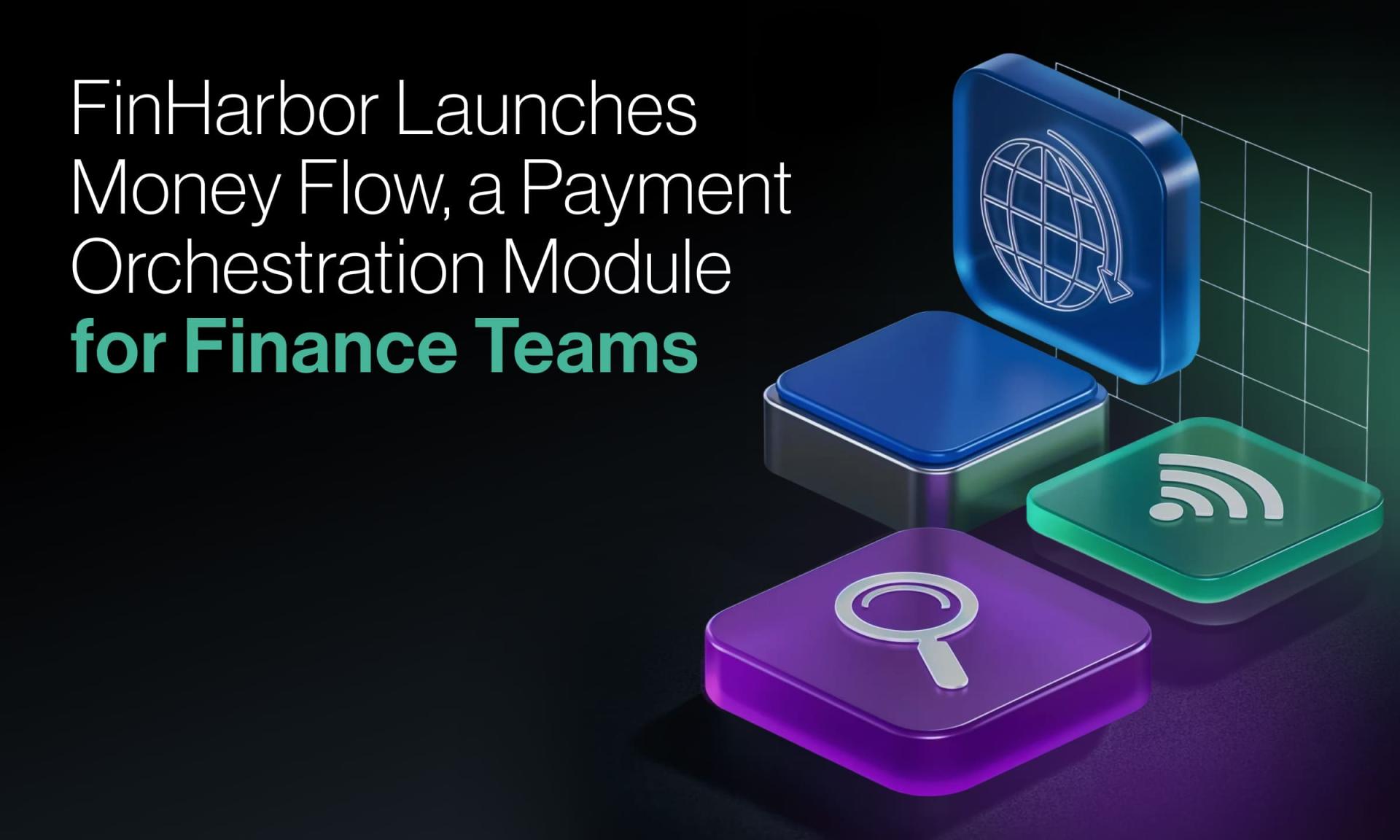
    Nicosia, Cyprus – June 18, 2026 – FinHarbor, a provider of modular banking and crypto-acquiring infrastructure, has announced the launch of Money Flow, a new payment orchestration module designed to manage the entire lifecycle of transactions. The module aims to significantly reduce the time it takes for businesses to configure and modify payment processes involving fiat and cryptocurrency, moving from weeks to mere days, while incorporating built-in compliance reporting for every transaction.

    Money Flow oversees deposits, withdrawals, transfers, and exchanges across both fiat and crypto networks. At its core, the module utilizes Temporal, a workflow engine engineered for long-running distributed processes. Each payment operation is treated as a stateful process that navigates through Anti-Money Laundering (AML) screening, ledger accounting, and final execution, whether within a traditional bank or on a blockchain. This stateful design ensures that operations can resume precisely where they left off, even if a service restarts mid-process or an external party experiences delays in responding. The system is also equipped to handle situations where a response is not received within a set timeframe, triggering compensating actions or escalating the issue to support, thereby preventing funds from being held in limbo.

    The module promises to revolutionize the speed at which payment logic can be adjusted. Modifications that previously required approximately a week can now be implemented in about a day. Furthermore, new payment processes built upon existing integrations can be deployed within days. All flow logic is consolidated within a single service and adheres to a self-documenting code approach, eliminating the need for developers to scrutinize multiple subsystems to understand a specific operation.

    This design also bridges the gap between finance leadership and engineering teams. Chief Financial Officers can articulate payment processes in business terms, which developers can then translate into code using a domain-specific language that remains accessible to non-technical stakeholders. This provides finance teams with direct insight into how money moves through the platform, rather than relying on indirect explanations of the underlying logic.

    “Payment infrastructure has traditionally been a black box for the people who are ultimately accountable for the money inside it,” said Ilya Podoynitsyn, CEO of FinHarbor. “With Money Flow, a finance director can read the logic of a withdrawal or an exchange almost like a business document, request a change, and see it in production within a day. That changes the conversation between the finance function and engineering.”

    Compliance is integrated as a dedicated layer within each workflow. AML rules can be configured by compliance officers or support staff through a visual constructor, depending on the team’s structure. For every payment, the system generates a report that can be shared with regulators or the company’s anti-money-laundering officer, providing licensed businesses with a documented audit trail for crypto-to-fiat operations.

    Currently, Money Flow supports bank transfers, crypto withdrawals, payouts, pay-ins, exchanges, crypto and wire deposits, internal transfers, and administrative operations. The range of supported flows is expected to expand as new integrations are added.

    “Most of the cost in payment systems comes from change, not from the original build,” Podoynitsyn added. “We designed Money Flow so that change becomes routine – retries, timeouts, and compensations are built into the engine, and teams spend their time on the logic of the business rather than on failure handling.”

    The Money Flow module is available to FinHarbor clients as an integral part of the platform’s core infrastructure.

    About FinHarbor

    FinHarbor is a technical platform provider that enables the launch of compliant, modular financial products, ranging from digital wallets and neobanks to crypto ramps and over-the-counter (OTC) trading desks. Leveraging years of practical fintech experience, the platform encompasses onboarding, compliance, wallet management, transactions, card services, and reporting. It is delivered through a microservice-based architecture (ISO/PCI DSS-certified), a robust API layer, and offers deployment options that are either on-premise or cloud-ready. FinHarbor supports fiat-only, crypto-native, and hybrid business models across markets in Europe, the Middle East and North Africa (MENA), and beyond.

  • Ripple Swell 2026: Key Updates for XRP Holders

    Ripple Swell 2026: Key Updates for XRP Holders

    Ripple Swell 2026 to Integrate Developer Summit, Aiming for Unified Infrastructure

    Ripple Swell 2026, slated for October 27–29 at The Shed in New York City’s Hudson Yards, will for the first time incorporate XRPL Apex, Ripple’s developer summit, into a single, three-day event. This consolidation marks the largest Swell conference to date, expecting over 1,500 attendees, more than 75 speakers, and over 50 sessions across three simultaneous stages tailored for institutions, ecosystem builders, and emerging technologies.

    Strategic Merger Signals Shift in Focus

    The merger of Swell and Apex extends beyond attendee numbers. Historically, Swell attracted banking and fintech leaders, while Apex focused on XRPL developers. This combined event signals Ripple’s strategic intent to bridge the gap between institutional adoption and on-chain development, positioning the XRP Ledger as a unified infrastructure rather than solely a payments corridor with a supplementary developer layer.

    David Schwartz, Ripple CTO Emeritus, emphasized the event’s focus on utility over spectacle in a June 17 post on X. His highlighted themes of payments, tokenization, DeFi, interoperability, and AI, coupled with an explicit invitation to builders, indicate Ripple’s desired narrative for the fourth quarter.

    New Structure, Expanded Scope

    Ripple has previously hosted Swell and XRPL Apex as separate events, catering to institutional audiences and XRP Ledger developers, respectively. The decision to merge them for the 2026 New York event represents the most significant structural evolution since the conference’s inception in 2017.

    The conference will now feature three parallel tracks:

    • Institution: Focusing on banking and fintech integration.
    • Ecosystem: Dedicated to XRPL developer tooling and infrastructure.
    • Innovation: Exploring emerging applications, including AI and quantum-resistant security.

    The event’s content scope reflects this ambition, with session topics including real-world asset tokenization, global regulatory frameworks, institutional custody, stablecoins, capital markets and settlement, crypto ETFs, DeFi, financial inclusion, and treasury cash management. This approach aims to cover the entire institutional-to-developer spectrum within a single venue, moving beyond a purely payments-focused agenda with tokenization as a secondary theme.

    Ripple’s call for speakers specifically requests case studies demonstrating measurable outcomes, such as reduced settlement times, lower FX costs, and the establishment of new tokenization business lines. This emphasis is expected to attract practitioners and foster content focused on practical applications across all three stages. Further speaker and agenda details are anticipated in mid-2026 as partner applications conclude.

    Leadership and External Perspectives

    Ripple CEO Brad Garlinghouse and President Monica Long will anchor the institutional track. Garlinghouse is expected to reiterate XRP’s core payment proposition, highlighting its three-to-five-second settlement times, minimal transaction costs, and extensive transaction history, updated with current partnership contexts. Schwartz’s role as CTO Emeritus will maintain the focus on developer and protocol credibility.

    Notable external speakers include Tom Farley, chairman and CEO of Bullish, who will offer a regulated exchange perspective amid ongoing scrutiny of institutional-grade crypto infrastructure. Billy Hult, CEO of Tradeweb, will connect the XRP narrative to fixed-income and capital markets, signaling that the tokenized asset conversation has progressed beyond proof-of-concept for institutional audiences. Matt Damon, co-founder of Water.org, will reinforce Ripple’s commitment to financial inclusion and cross-border remittances, distinguishing XRP’s use case from Bitcoin’s store-of-value positioning.

    Swell 2025 in New York was already considered a pivotal event for Ripple, featuring significant institutional engagement in stablecoins and tokenized assets. Swell 2026 expands upon this format by integrating the full developer summit.

    Market Implications and Future Outlook

    Historically, Swell events have acted as catalysts for XRP price volatility. The “largest ever” framing is expected to concentrate media attention and liquidity within the three-day window. Ripple’s current institutional standing, bolstered by an OCC conditional approval for a crypto trust bank charter, the multichain expansion of RLUSD, and Mastercard’s AI payments initiative naming Ripple as a partner, suggests the potential for multiple substantive announcements.

    However, the market may preemptively price in strong announcements, potentially leading to a “sell the news” scenario regardless of the event’s content. Analyst price targets for XRP already reflect considerable optimism, which could limit reactive upside if Swell announcements meet rather than exceed expectations.

    The more enduring indicator to monitor will be verifiable institutional commitments, including named banks integrating XRPL infrastructure, tokenization pilots with disclosed volumes, and new regulated entity partnerships, rather than statements of intent. Schwartz’s emphasis on builders and community participation suggests Ripple is positioning Swell 2026 as a deployment-focused event rather than a roadmap presentation, a distinction that could influence XRP’s price action in the subsequent weeks.

  • FTX’s SpaceX Stake: Billions at Play, Creditors’ Fate Uncertain

    FTX’s SpaceX Stake: Billions at Play, Creditors’ Fate Uncertain

    FTX Creditors Eye SpaceX’s Soaring Valuation for Potential Recovery

    Customers who suffered losses from the collapse of cryptocurrency exchange FTX are closely monitoring the performance of SpaceX following its initial public offering. Elon Musk’s rocket company has significantly surpassed its initial market valuation of $1.77 trillion, and its strong debut on Wall Street has bolstered hopes among those tracking FTX’s bankruptcy proceedings that creditors might recover more than initially anticipated.

    Sunil Kavuri, a British investor who lost approximately $2 million in the FTX implosion and has become a prominent advocate for other victims, told Decrypt, “It’s always great news to see good investments that could aid in the recovery and payment to FTX creditors.”

    FTX’s bankruptcy estate did not immediately respond to requests for comment.

    Months ago, Barbara Fried, mother of FTX co-founder Sam Bankman-Fried, noted in a blog post detailing her son’s story—he recently lost an appeal to overturn his 25-year prison sentence and fraud conviction—that the defunct exchange had already distributed $10.3 billion to customers.

    She referenced projections from Kyle Schmidt, a creditor advocate known as “Mr. Purple.” Schmidt estimated that final distributions could reach 171% of claims for customers with claims exceeding $50,000. This figure reflects a surplus generated from the liquidation of the estate’s assets and accrued interest.

    “Schmidt suggests that one notable investment […] is likely to yield significant proceeds this year,” Fried highlighted, referring to FTX’s investment in SpaceX through the venture firm K5 Global.

    Settlement with K5 Global Aims to Maximize Recoveries

    In January of last year, John J. Ray III, CEO of FTX’s recovery trust, announced a settlement with K5 Global. This agreement resolved a lawsuit initiated by FTX in June 2023, with both parties agreeing to collaborate on maximizing recoveries for FTX stakeholders.

    The lawsuit sought to reclaim $700 million in transfers that the defunct crypto venture allegedly made using misappropriated funds. K5 Global continues to list SpaceX in its investment portfolio.

    “It is clear that K5 is a bright spot in the FTX portfolio,” Ray stated. “The expected strong performance of their investments will be a key driver in the recovery efforts.”

    Decrypt did not receive an immediate response from K5 Global regarding comment.

    While the defunct exchange has not yet commented on SpaceX’s Wall Street debut or the potential benefits for creditors, Kavuri pointed out that the bankruptcy estate would be required to disclose any sale of stakes in K5 through court filings.

    FTX’s Exposure to SpaceX Traced to Venture Capital Investments

    Prior to his conviction, Bankman-Fried was accused of misappropriating over $8 billion in customer funds. These funds were allegedly used for political donations, real estate purchases, and venture capital investments.

    During his criminal trial, Bankman-Fried attempted to argue for leniency based on the success of his investments, which included stakes in Robinhood and Anthropic. However, the presiding judge rejected this defense, comparing the former crypto mogul to “a thief who takes his loot to Las Vegas.”

    FTX’s exposure to SpaceX originated from a relationship cultivated between Bankman-Fried and Michael Kives, described as a “super-networker” and co-owner of K5 Global alongside Bryan Baum, according to bankruptcy filings.

    The filings indicate that Alameda Research, FTX’s sister trading firm, transferred substantial sums to a K5-affiliated entity. Before FTX’s collapse in November 2022, one of K5’s funds had invested $190 million in Elon Musk’s rocket company.

    In 2022, SpaceX raised $1.73 billion at a post-money valuation of $125 billion, months before Bankman-Fried was accused of orchestrating a multibillion-dollar fraud, according to Forge.

    Although this estimate does not account for shareholder dilution, Kavuri suggested that FTX’s stake in SpaceX is likely worth several billion dollars, based on the company’s current market capitalization. On Wednesday, SpaceX’s market value surpassed $2.52 trillion, according to Yahoo Finance.

  • Nvidia AI Agents Build Self-Training Robots

    Nvidia AI Agents Build Self-Training Robots

    AI Agents Learn to Operate Physical Robots Autonomously

    A fleet of eight robotic arms at Nvidia’s GEAR lab has spent the past few weeks independently mastering tasks such as inserting pins, seating graphics cards, and cutting zip ties. The only human involvement was in the subsequent documentation of the process.

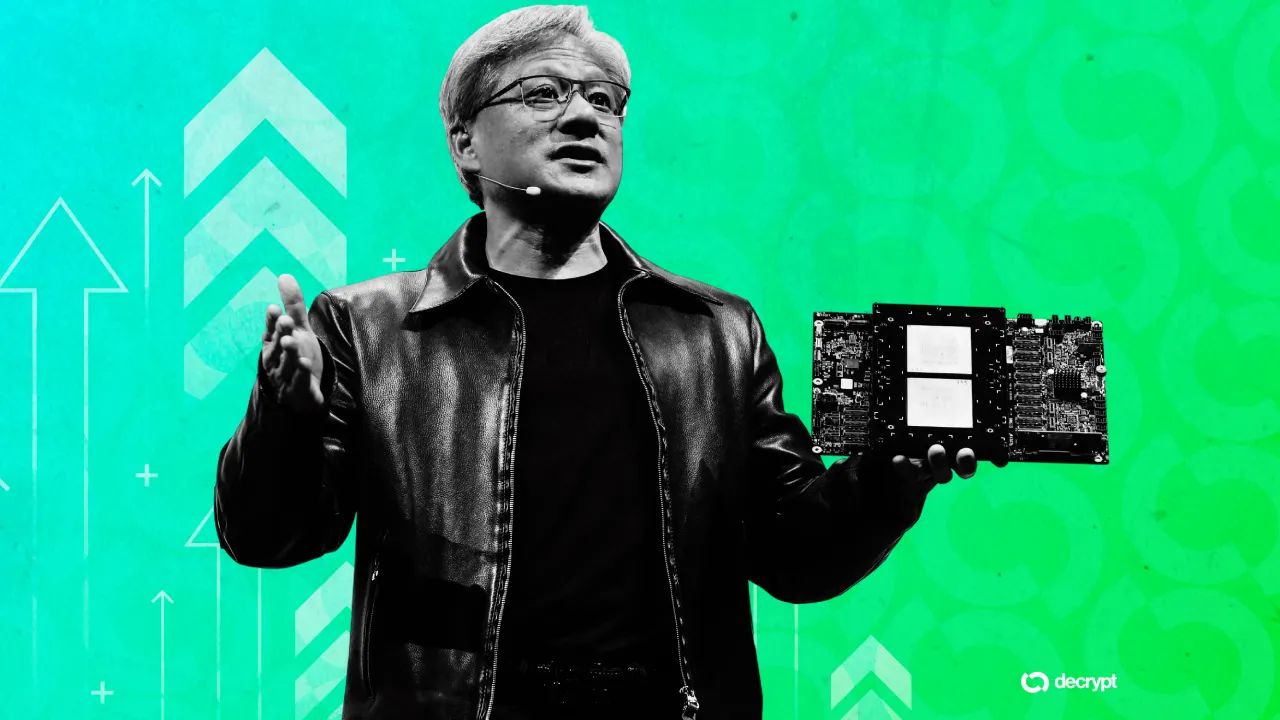
    This capability stems from ENPIRE, a framework detailed in a paper published Tuesday by researchers from Nvidia, Carnegie Mellon University, and UC Berkeley. ENPIRE delegates the entire robot training process to AI coding agents—the same software that already writes and tests its own code—allowing them to execute this training directly on physical hardware.

    For the past year, coding agents like OpenAI’s Codex, Anthropic’s Claude Code, and Moonshot’s Kimi Code have been engaged in what researchers term “autoresearch,” a cycle of writing, testing, and rewriting code without human intervention. This loop has largely remained confined to digital environments, where resetting a failed experiment incurs no cost. ENPIRE, however, extends this process into the physical realm, where resetting an experiment necessitates the manipulation of actual robotic arms.

    The system operates in two distinct stages. Initially, a human guides the agent in developing two essential tools: a reset routine to return the workspace to its initial state, and a reward function that analyzes camera footage to evaluate success. This setup, akin to a tireless, ever-vigilant referee, is established once and then reused for all subsequent attempts.

    Once these foundational tools are in place, the AI agent assumes complete control. It scours published research for relevant ideas, selects training methodologies such as imitation learning, reinforcement learning, or predefined rules, and then modifies its own code before testing the outcome on the robot. This entire loop requires no human oversight, a development that could be seen as either liberating or slightly disquieting, depending on one’s comfort level with unsupervised robots wielding tools.

    Nvidia conducted its experiment using eight bimanual robot stations, each equipped with its own hardware, computer, and coding agent. Progress across these stations is shared via Git, a collaborative coding tool, enabling successful strategies to be disseminated across the entire fleet within minutes.

    The effectiveness of the system was measured using two tasks: “Push-T,” where a robot uses only pushes to slide a T-shaped block into a designated zone, and pin insertion, which involves threading pins into 4-millimeter holes. Scaling the operation from one robot to eight reduced the time required to master Push-T from approximately five hours to two, and pin insertion from over 90 minutes to about 40 minutes.

    Across the four real-world tasks evaluated, the AI agents achieved a 99% success rate with their learned policies, according to the paper. For pin insertion, the agents reached near-perfect reliability faster than a comparable human-in-the-loop method, which typically requires daily human supervision.

    Jim Fan, co-lead of the GEAR Lab and director of Nvidia’s AI research, described the project as the first effort to enable autoresearch in the physical world. Fan stated that the team provided the agents with a fleet of robots, GPU resources, and a token budget, then allowed the robots to autonomously complete the tasks.

    Bridging the Simulation-Reality Gap

    The disparity between simulated environments and the physical world became apparent almost immediately. While all three coding agents successfully completed the Push-T task within a simulator, two of them failed when the same task was transferred to a physical robot, the paper noted. This highlights the challenges posed by real-world factors such as friction, which are not accurately replicated in simulations.

    Nvidia also tested ENPIRE within RoboCasa, a simulated kitchen environment designed to assess robots on chores like opening cabinets and turning off stoves. In this benchmark, ENPIRE surpassed both Nvidia’s own end-to-end model, GR00T, and CaP-X, a tool-using agent that bypasses the autoresearch loop entirely.

    ENPIRE builds upon an idea Nvidia first introduced with Eureka in 2023, a system that utilized a language model to generate reward functions for robots within a simulator, eliminating the need for manual engineering. ENPIRE takes this self-improvement loop a step further by moving it from simulation to actual hardware, with the AI agent not only designing its own rewards but also its own testing procedures.

    This development coincides with Alibaba’s recent unveiling of its own embodied AI initiative, the Qwen-Robot Suite, a collection of foundation models for robot navigation, manipulation, and physics simulation. While Alibaba is developing software for robots it does not manufacture, Nvidia is exploring the potential for AI agents to manage the entire research and development loop on its own hardware. Both approaches signal a growing trend: physical robots are emerging as the next frontier for AI coding agents to compete and innovate.

  • CoinFund, Coinbase Back Trace in $32M Stablecoin Funding

    CoinFund, Coinbase Back Trace in $32M Stablecoin Funding

    Trace Finance Secures $32 Million Series A to Bridge Digital and Traditional Finance

    Trace Finance, a financial infrastructure company facilitating stablecoin settlements between banks in Brazil and the United States, announced Wednesday it has raised $32 million in a Series A funding round. The round was led by CoinFund and included investments from Coinbase Ventures, Haun Ventures, Jump Capital, and other crypto-focused investors.

    This funding comes at a pivotal moment as Brazilian regulators begin to classify cross-border cryptocurrency transfers as foreign-exchange operations. This regulatory shift is prompting institutional capital to move away from unregulated crypto platforms and toward licensed, bank-grade intermediaries—precisely the market niche Trace Finance has cultivated.

    The New York-based company reports having processed over $10 billion in cross-border transaction volume. It has established itself as a key settlement partner for several major global payment firms operating in Latin America, including the Uruguay-based payments company dLocal.

    Bernardo Brites, co-founder and CEO of Trace, emphasized the company’s strategy of integrating stablecoins with traditional banking compliance, rather than positioning digital currency as a replacement for existing regulated financial systems.

    “Stablecoins alone do not solve cross-border payments. Stablecoins plus regulated local bank infrastructure does,” Brites stated. “This round allows us to enhance the banking, payments, and compliance infrastructure that global fintechs, exchanges, international banks, and enterprises depend on to connect digital settlement with trusted local financial systems.”

    The new capital will support Trace Finance’s expansion beyond its initial U.S.-Brazil corridor into other Latin American markets, as well as the United States and the Asia-Pacific region.

    The funding round also saw participation from strategic investors such as Chainlink Labs and prominent individual backers with significant ties to the crypto industry, including Circle co-founder Sean Neville and Solana Labs co-founder Anatoly Yakovenko. Ricardo Villela Marino, vice chairman of Itaú Unibanco, Latin America’s largest bank, also participated.

    “The next era of global money movement will be dominated by companies that can bridge on-chain settlement with trusted local banking systems,” said Einar Braathen, Partner at CoinFund. “Brazil represents one of the world’s largest and most operationally complex payment environments, and Trace has successfully built the regulated infrastructure that global blue-chip businesses are leveraging for scale, while simultaneously reducing time and costs compared to legacy alternatives.”

    Trace Finance’s previous funding, a seed round in 2022, was led by HOF Capital. The company indicated it is currently developing additional settlement products aimed at strengthening its banking relationships across Brazil and the wider region.

  • Allbirds Soars on AI Pivot and Smartbird Rebrand

    Allbirds Soars on AI Pivot and Smartbird Rebrand

    Allbirds, the footwear company once synonymous with its wool runners and a strong emphasis on sustainability, is pivoting entirely away from its original business. It is reinventing itself as an artificial intelligence infrastructure firm under a new banner: Smartbird.

    The San Francisco-based company, which is publicly traded on Nasdaq under the ticker BIRD, announced Wednesday that it has finalized the sale of its Allbirds shoe and apparel operations. This move, initially disclosed in April, also saw the appointment of Nadia Carlsten, a seasoned executive from the AI and advanced computing sector, as its new president, CEO, and a member of its board.

    Investors responded favorably to the latest developments. BIRD shares surged 52% on the day, reaching a recent price of $5.99. This follows a volatile period in April, when the stock saw a significant jump from $2.49 to a high of $24.31 before retracing most of those gains. Despite the fluctuations, BIRD shares remain up 46% year-to-date.

    Carlsten joins Smartbird from DCAI, a company specializing in GPU compute infrastructure, where she previously served as CEO. In that role, she was instrumental in the launch of a sovereign AI supercomputer in collaboration with Nvidia. Her professional background also includes positions at Google spinoff SandboxAQ and Amazon Web Services, where she contributed to the introduction of Amazon’s quantum computing service. Carlsten holds degrees in chemistry and physics from the University of Virginia and an engineering doctorate from the University of California at Berkeley.

    She succeeds Joe Vernachio, who is departing the company and its board. Lily Yan Hughes, an independent director, has been appointed board chair, while Annie Mitchell will continue in her role as chief financial officer. The company had previously considered rebranding as NewBird AI before ultimately selecting Smartbird.

    “Smartbird is entering the market at a pivotal moment in the evolution of AI infrastructure,” Carlsten stated. “AI is rapidly becoming mission-critical for organizations across every industry, yet many organizations lack a practical path to deploy and operate the dedicated infrastructure these workloads require.”

    She further elaborated, “There is a clear opportunity to meet the growing need for enterprise-grade AI infrastructure that delivers control and performance without the capital and operational burden of hardware ownership. With a differentiated strategy, significant capital, and the opportunity to build an exceptional team, we are uniquely positioned to capitalize on one of the most significant infrastructure opportunities of the next decade.”

    As part of this strategic shift, the company has increased its convertible financing facility from $50 million to $100 million. This infusion of capital will enable Smartbird to develop what it describes as managed, dedicated AI computing clusters for its enterprise clients. The company indicated that it is actively engaged in discussions with potential customers and is currently designing its initial cluster deployments.

  • Ethereum Price Surge Possible After FOMC, Glamsterdam Tests Conclude

    Ethereum Price Surge Possible After FOMC, Glamsterdam Tests Conclude

    Ethereum Price Holds Steady as Investors Await FOMC Decision and Key Upgrade

    Ethereum’s price is currently trading below the $1,800 mark, consolidating within a narrow range as the market anticipates the Federal Open Market Committee’s (FOMC) interest rate decision. Two significant factors, one macroeconomic and the other protocol-level, are poised to influence the trajectory of Ether (ETH).

    Glamsterdam Upgrade Nears Final Testing Phase

    On the development front, the Ethereum Foundation has confirmed that testnets are actively running with all planned Ethereum Improvement Proposals (EIPs) for the upcoming Glamsterdam upgrade. This significant network enhancement combines the Amsterdam execution layer and the Gloas consensus layer hard fork, marking the final stage of pre-public testnet development.

    If these tests proceed without major disruptions, the mainnet activation is slated for the latter half of 2026. The Glamsterdam upgrade is primarily focused on Layer 1 scalability. Features like proposer-builder separation (ePBS) and block aggregation (BALs) are designed to accelerate block processing and enable future parallel execution. Additionally, a proposed adjustment to gas fees could reduce the cost of simple ETH transfers by up to 71%, potentially helping Ethereum reclaim market share from rivals like Solana and other major Layer 1 blockchains.

    Market Dynamics and Technical Outlook

    Recent market activity saw significant accumulation, with “whales” acquiring approximately 400,000 ETH between Sunday and Monday, briefly pushing the price up by 6%. However, this momentum has since subsided, with the price returning to its established range.

    Technically, Ethereum’s price action presents a discernible, albeit not definitive, structure. Intraday trading has been capped below $1,800, with the consolidation zone identified between $1,760 and $1,800. The $1,800 level represents the first significant resistance. A decisive move above this threshold, particularly breaking through the $2,000 zone which aligns with the lower boundary of the Ichimoku cloud, could signal a breakout. Such a move might lead to a measured advance towards $2,200, with a broader target of $3,000–$3,050 if sustained momentum is achieved.

    FOMC Decision and Protocol Developments as Catalysts

    A dovish stance from the FOMC, potentially including a surprise rate cut or easing language, could trigger a relief rally for ETH, with some analyses suggesting a potential move towards the $2,600–$2,700 range. Concurrently, progress on the Glamsterdam testnet provides a protocol-level catalyst.

    Conversely, if the Federal Reserve maintains an ambiguous stance, ETH is likely to remain range-bound for another week as traders await clearer market signals. Given that the FOMC is widely expected to hold rates steady within the 350-375 basis point range, the current price action may already reflect this anticipation.

    Institutional Interest and Emerging Infrastructure Plays

    Analysts at Standard Chartered have highlighted the ongoing momentum of Ethereum Exchange-Traded Fund (ETF) inflows, bolstered by institutional interest in products like BlackRock’s staked ETHB. While this represents a structural demand, it may not immediately override short-term macroeconomic influences.

    Ethereum’s current price at $1,800 signifies a recovery from multi-month lows. However, the percentage upside from this level is structurally less than it was six months ago. The combination of whale accumulation and ETF inflows suggests conviction at current levels. Yet, the persistent range-bound trading indicates that the market is pricing in uncertainty rather than immediate opportunity. This environment often favors early-stage infrastructure projects that attract capital rotating away from more established, crowded large-cap assets.

    LiquidChain Aims to Unify Fragmented Liquidity

    In this landscape, projects addressing core infrastructure challenges are gaining attention. LiquidChain ($LIQUID) is an L3 infrastructure project designed to tackle the issue of fragmented liquidity across major blockchains like Bitcoin, Ethereum, and Solana. Its Unified Liquidity Layer aims to integrate BTC, ETH, and SOL execution environments into a streamlined, single-step architecture.

    LiquidChain’s proposition allows developers to deploy applications once and access all three ecosystems. The project’s presale is currently priced at $0.0147, having raised $850,000 to date. Key features include Verifiable Settlement and a Deploy-Once Architecture, intended to mitigate cross-chain friction, which currently results in measurable slippage and latency for DeFi protocols. The LiquidChain presale warrants consideration before its next price adjustment.