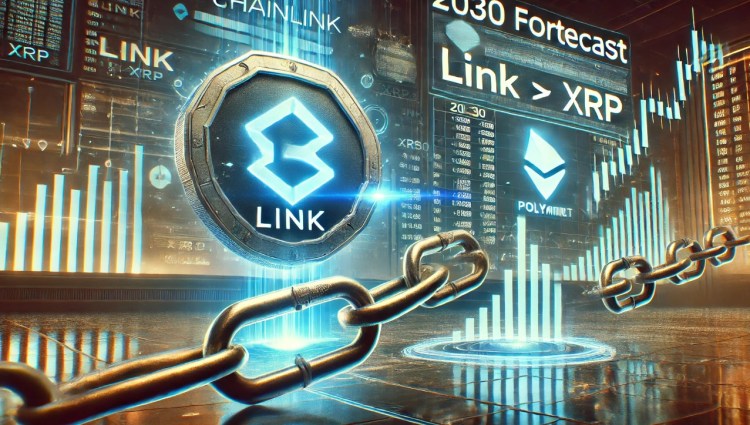
Chainlink (LINK) has largely stagnated over the past year, remaining around the 18th-largest cryptocurrency by market capitalization and experiencing a year-to-date decline of approximately 43%. However, looking at the longer-term performance of LINK, the oracle network’s native token remains significantly below its peak. Trading at roughly $9.509 at the time of writing, LINK is approximately 82% below its all-time high of $52. Despite the weak price action, Leo Sun of The Motley Fool has published a report suggesting that LINK could see substantial gains over the next five years.
How LINK’s Circulation Could Drive Big Gains
Sun’s outlook centers on the potential for the token’s trajectory to benefit from changes in supply dynamics and real-world adoption, particularly as the Chainlink ecosystem continues to expand. He highlights token circulation as a key factor in the long-term picture. When LINK reached its record high in 2021, its circulating supply was about 410 million tokens. Since then, the circulating supply has increased to approximately 727 million, as of the report’s publication.
Sun argues that this growth in circulation could bring LINK closer to its supply limit within the next five years. If demand continues to rise while the supply of newly available tokens tightens, the token price could experience significant upward movement, especially if new demand outpaces supply expansion.
Another major element of Sun’s thesis is Chainlink’s growing role in regulated finance and payments infrastructure. Over the past year, Chainlink has partnered with approximately two dozen major financial institutions, including organizations such as UBS, Euroclear, and the SWIFT network. According to Sun, these partnerships aim to accelerate money transfers, automate transaction workflows, and support the tokenization of real-world assets. The report suggests that if Chainlink becomes a core infrastructure component for tokenized finance, LINK’s value could rise further as the ecosystem’s usage expands.
What Needs To Change For Chainlink?
At the core of the argument is how LINK is positioned within the crypto market. Sun notes that LINK cannot be valued using a “scarcity model” in the same way Bitcoin (BTC) is often approached, due to differing token distribution and market structure mechanics. Instead, Chainlink is described more as a developer-driven asset, similar to how investors view Ethereum (ETH) rather than a pure scarcity narrative.
In this framework, LINK’s long-term prospects depend less on fixed scarcity alone and more on continued relevance to developers, integration into real financial systems, and the degree to which market interest returns.
Finally, the report connects the potential for a $20 billion market cap to broader macro conditions. If the overall cryptocurrency market improves over the next five years, as Sun suggests could happen when the macro environment becomes more favorable, Chainlink’s market cap could increase significantly.