Tag: Positive

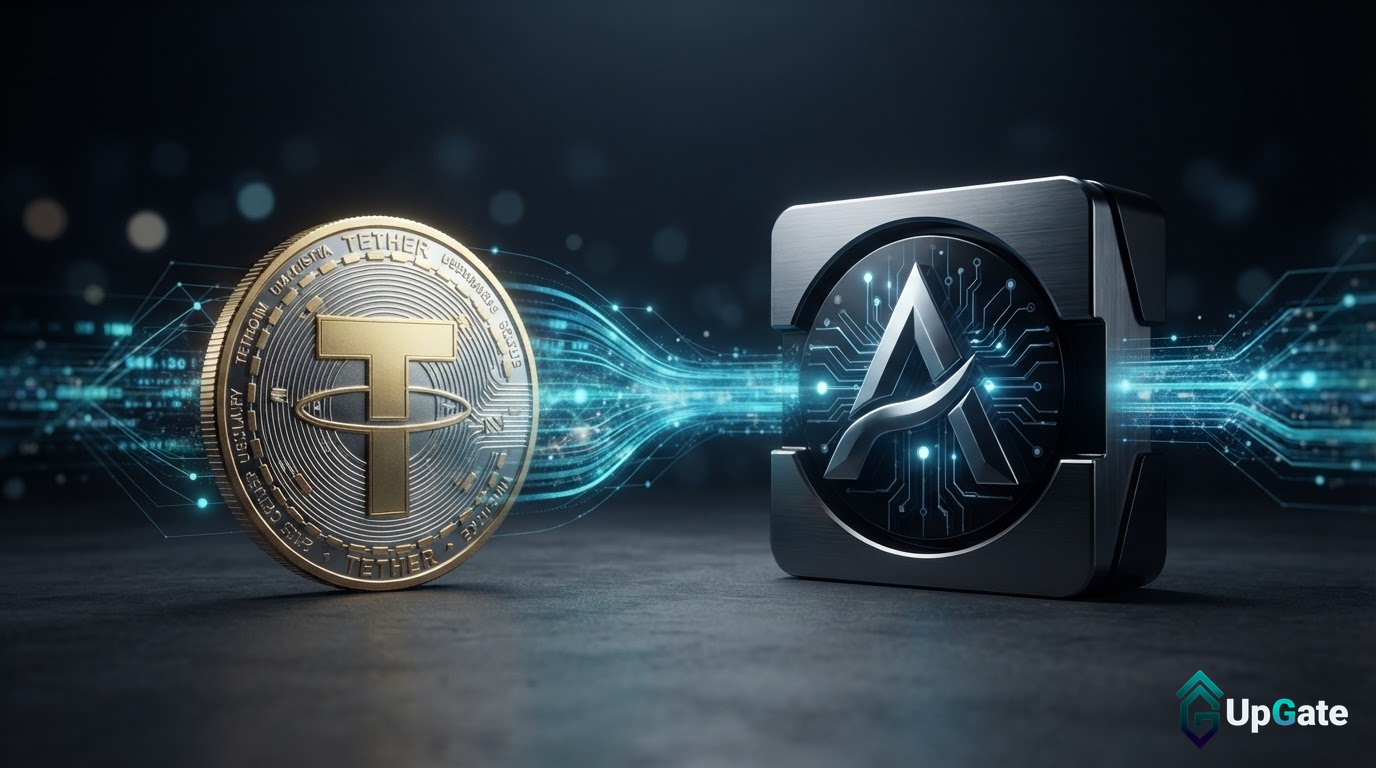
  • Tether Capital Invests in AIsa, Platform for AI Agent Autonomous Payments

    Tether Capital Invests in AIsa, Platform for AI Agent Autonomous Payments

    Tether Capital has invested in AIsa, a platform enabling AI agents to autonomously pay for data resources using stablecoins and fiat currency. This investment aligns with Tether’s strategic focus on programmable money and AI-powered payment solutions, offering a practical environment for its agentic payment development.

    AIsa, launched in 2025, has demonstrated rapid growth. Between February and June 2026, the platform saw a 150x increase in agent users and a 200x rise in API calls and transactions. It currently hosts over 250,000 agents that have collectively processed more than 100 million transactions. AIsa’s catalog comprises over 5,000 APIs, skills, and models. The platform operates on a per-API-call pricing model, distinct from subscriptions, and allows users to set spending limits.

    To date, AIsa has raised $6.5 million in total funding. Its seed round in July 2026 was co-led by Alibaba and Tribe Capital. Tether, best known as the issuer of the USDT stablecoin, has been diversifying its investment portfolio beyond its core token business.

    The investment in AIsa is viewed as a strategic move into a business with significant user traffic. It is expected to enhance the utility of Tether’s Wallet Development Kit and QVAC, components of its developer toolkit. AIsa’s core functionality addresses the challenge of facilitating small, frequent payments, which are often ill-suited for traditional payment rails like card networks and bank transfers. Stablecoins are positioned to fill this niche by enabling micro-transactions that can occur rapidly.

    Tether is actively developing programmable money solutions, where funds can be automatically managed based on predefined rules, such as completing a task or adhering to a budget. Agentic payments, transactions initiated and completed by AI agents, are a key area of focus. AIsa’s existing stablecoin billing infrastructure provides a live testing ground with substantial transaction volume for this development.

    However, uncertainties remain regarding the future proportion of transactions on AIsa that may settle in stablecoins. It is not yet clear whether stablecoins will become the preferred payment option or simply one choice among several available on the platform.

    Tether has previously invested in the robotics sector, notably in NEURA Robotics. The investment in AIsa further underscores its commitment to exploring AI-driven financial solutions and the potential of autonomous systems in managing digital transactions.

    Why This Matters

    The materials describe a narrow update: Tether Capital made an investment in AIsa, a platform that facilitates autonomous payments by AI agents for data resources. The future share of billing that settles in stablecoins on AIsa.

    Broader Context

    Source materials place the factual news in this context: Tether is best known as the issuer of USDT, a stablecoin designed to track the US dollar.

  • Ripple Prime Opens RWA Perpetual Contracts to Institutions, Tapping $9 Billion Market via Hyperliquid

    Ripple Prime Opens RWA Perpetual Contracts to Institutions, Tapping $9 Billion Market via Hyperliquid

    Ripple Prime Launches Real-World Asset Futures for Institutional Clients

    Ripple Prime, the institutional brokerage arm of Ripple, has officially introduced real-world asset (RWA) perpetual futures contracts to its institutional clients. These new offerings cover over 100 reference markets, including equities, indices, ETFs, and commodities, with liquidity provided through Trade.xyz on the Hyperliquid exchange. This move comes as open interest in crypto perpetual futures has declined, while RWA perpetual futures have surged from near zero to $9 billion in the past year, signaling Ripple’s ambition to bring this trend to Wall Street.

    Expanding Prime Brokerage Services

    Ripple’s prime brokerage business, Ripple Prime, is making significant strides. According to a Bloomberg report on October 15, Ripple Prime is now offering perpetual futures contracts linked to real-world assets to its institutional clients. These contracts, which have no expiration date, reference more than 100 markets, including stocks, indices, ETFs, and commodities. Trading will be facilitated through Trade.xyz, a decentralized derivatives exchange operating on Hyperliquid. This initiative builds upon Ripple Prime’s prior strategy of offering crypto perpetual futures to clients, effectively packaging the burgeoning trend of on-chain derivatives into prime brokerage services familiar to Wall Street institutions.

    The arrangement supports cross-margining, allowing for shared collateral across positions. Michael Higgins, Ripple Prime’s CEO of International Business, stated that this feature will help institutions enhance capital efficiency and portfolio management. Clients can engage in basis trading, profiting from the spread between spot and futures prices, or use the contracts for directional trading, gaining exposure to traditional assets even when traditional markets are closed, such as on weekends. Higgins also noted that traditional hedge funds are nearing direct participation in tokenized RWA markets, with the key being the establishment of infrastructure that meets their counterparty and anti-money laundering requirements.

    Strategic Integration and Market Expansion

    Ripple Prime has been laying the groundwork for this expansion. In February, the firm integrated Hyperliquid into its platform, marking its first direct integration with a DeFi venue, according to The Block. This integration ensures that clients accessing Hyperliquid’s liquidity still have Ripple Prime as their sole counterparty. In late March, Higgins announced on X the expansion of integration to Hyperliquid’s HIP-3 market, a mechanism allowing third parties to deploy their own perpetual markets. This move opened up perpetual futures contracts for commodities like gold, silver, and crude oil. The latest expansion broadens this offering to over 100 RWA markets.

    Ripple’s timing for this launch is strategic, reflecting a clear shift in capital flows. Bloomberg, citing data from crypto trading technology provider Talos, reported that over the past year, total open interest in perpetual futures across the top five trading platforms has fallen from approximately $81 billion to $67 billion. In contrast, open interest in RWA-linked contracts has surged from near zero to $9 billion, representing about 14% of the total. This indicates that the fervor for crypto-native leverage has not yet fully recovered, and trading infrastructure is extending to traditional assets like stocks and commodities.

    Trade.xyz is at the forefront of this wave. According to The Block, Trade.xyz accounts for nearly 90% of open interest in Hyperliquid’s HIP-3 market. The platform has also secured authorization from S&P Dow Jones Indices to offer officially licensed S&P 500 perpetual futures, available only to eligible non-U.S. investors.

    Ripple’s Acquisition and Growth

    Ripple Prime was formerly known as prime broker Hidden Road. Ripple announced its acquisition of Hidden Road in April 2025 for $1.25 billion, making it the first crypto company to own and operate a global multi-asset prime broker. The acquisition encompassed clearing, prime brokerage, and financing services across foreign exchange, digital assets, derivatives, swaps, and fixed income. The transaction was completed in October of the same year, and the entity was rebranded as Ripple Prime. Ripple has stated that its business has grown threefold since the acquisition announcement. According to CoinDesk, Ripple Prime serves over 300 institutional clients and has cleared more than $3 trillion in transactions.

    Ripple’s stablecoin, RLUSD, is also a crucial component of this strategy. Ripple has officially stated that RLUSD is being used as collateral for several prime brokerage products, with some derivatives clients choosing to hold their balances in RLUSD. At the time of the acquisition announcement, Ripple also indicated that RLUSD would be the first stablecoin capable of efficient cross-margining between digital assets and traditional markets.

    For the crypto industry, this development signifies a critical shift: on-chain RWA perpetual futures are transitioning from a niche product for retail and crypto-native traders to a sophisticated institutional tool within the regulated prime brokerage framework. By aggregating liquidity from Hyperliquid under a single counterparty and unified margin system, Ripple Prime is addressing the compliance challenges that hedge funds face when dealing directly with DeFi protocols. With RWA perpetual futures open interest already reaching $9 billion, the extent to which traditional institutional capital will follow suit will be a key focus for Hyperliquid and Ripple in the next phase.

  • TSMC CEO: No Chip Slowdown as Foundry Posts Record Profit

    TSMC CEO: No Chip Slowdown as Foundry Posts Record Profit

    Taiwan Semiconductor Manufacturing Co. (TSMC) continues to grapple with a persistent challenge: demand for its chips consistently outstrips its production capacity. On October 15, 2026, the company announced its sixth consecutive quarter of record net profit.

    Robust Demand Fuels Record Profits

    CEO C.C. Wei characterized demand as “extremely robust” and indicated no signs of a slowdown in the artificial intelligence (AI) trend. TSMC’s net profit for the third quarter reached NT$763.1 billion, equivalent to approximately $23.6 billion. This represents a substantial 68.7% increase compared to the same period in the previous year.

    The financial results surpassed analyst expectations by a significant margin, extending a remarkable streak of 11 consecutive quarters of year-over-year profit growth. Revenue for the quarter climbed to NT$1.494 trillion, or about $46.7 billion, marking a 50.9% year-over-year increase and a 17.6% gain from the preceding quarter. Advanced process technologies were a key driver, accounting for 79% of total wafer revenue during the period.

    Upgraded Outlook and Aggressive Guidance

    In light of these strong results, TSMC’s management has revised its full-year 2026 revenue growth outlook upward to approximately 44% in U.S. dollar terms, an increase from the previous forecast of “slightly above 40%.”

    The company’s guidance for the fourth quarter is even more ambitious. TSMC anticipates revenue to fall between $52.3 billion and $54.3 billion, suggesting a year-over-year growth rate of roughly 55% to 61%. Capital expenditure guidance for 2026 remains unchanged, set between $60 billion and $64 billion.

    Expanding U.S. Footprint

    TSMC is also intensifying its investment in U.S. manufacturing capabilities. The company’s total commitment to its U.S. facilities now stands at $265 billion, which includes an additional $100 billion earmarked for its operations in Arizona.

    As a leading contract chip manufacturer, TSMC does not design its own chips but produces them for a wide array of companies, positioning it as the foundry behind a significant portion of the world’s most advanced processors.

    Investor Confidence and Market Position

    This dominant position has not gone unnoticed by investors. TSMC’s market capitalization is approaching $2 trillion, roughly double that of its competitor, Samsung Electronics. The company’s stock has seen a notable surge, climbing nearly 60% in 2026 alone.

    Navigating Economic Uncertainties

    Despite the strong performance, TSMC has flagged ongoing macroeconomic uncertainties that are influencing its planning for 2027. The company specifically highlighted consumer-sensitive segments, noting that business areas tied to smartphones and other everyday electronics could face increased vulnerability should household spending decline.

    Key indicators to monitor moving forward include whether fourth-quarter revenue falls within the projected $52.3 billion to $54.3 billion range, the shape of capital expenditure plans for 2027, and the resilience of consumer-facing demand in parallel with the robust AI sector.

  • Australia’s ASIC Proposes Crypto Exchange Draft: $14M Capital Hurdle, April 2027 Launch

    Australia’s ASIC Proposes Crypto Exchange Draft: $14M Capital Hurdle, April 2027 Launch

    ASIC Unveils Draft Regulations for Crypto Trading Platforms

    The Australian Securities and Investments Commission (ASIC) on Thursday released draft regulations for cryptocurrency trading platforms, proposing capital, custody, and trading standards. The consultation period for these proposals will run until November 27. Under the proposed rules, platforms without third-party custody arrangements will be required to hold AUD 14 million in net tangible assets. Non-compliant entities operating without a license after the legislation takes effect in April 2027 will face significant penalties.

    New Framework for Digital Assets

    The draft regulations, known as Consultation Paper 392, are a significant step in Australia’s formalization of digital asset legislation. They lay out the specific rules for implementing the Corporations Amendment (Digital Assets Framework) Act, which was passed by Parliament in April. The consultation period concludes on November 27, with ASIC aiming to publish the final standards by March 2027. The legislation is set to become effective on April 8, 2027, providing licensed entities with a transition period until October 7 to apply for their licenses.

    ASIC Commissioner Alan Kirkland stated, “Our guidance and standards acknowledge the growing role of digital assets and tokenisation within traditional financial systems.” The framework aims to clarify how crypto platforms will obtain licenses, protect customer assets, and meet financial requirements.

    Capital Requirements and Custody Options

    A key feature of the draft is the introduction of three alternative capital models. The most stringent option mandates that platforms without qualified third-party custody arrangements must maintain net tangible assets of at least AUD 14 million (approximately USD 9.7 million) or 10% of average revenue, whichever is greater.

    Amy-Rose Goodey, CEO of the Digital Economy Council of Australia, indicated that the council would review the capital models thoroughly with its members, paying close attention to their proportionality across different business sizes and the preferential conditions available for third-party custody. “From our perspective, this level of resource commitment and diligence is entirely uncontroversial when clients entrust their assets to you,” she added.

    Shange Chandra, CEO of OKX Australia, described the standards as “appropriately onerous,” noting that they would reward compliant firms while challenging those that have been slow to act.

    Global Custody and Emergency Access

    The draft also allows for offshore custody arrangements, reflecting the global nature of the digital asset market, rather than mandating domestic custody. Goodey highlighted the significance of this approach, acknowledging the global reach of digital asset markets.

    However, ASIC is seeking industry input on whether Australian platforms should have the right to emergency access to private keys if an overseas parent or affiliated company collapses, to safeguard local customer assets. This addresses a critical risk in cross-border crypto operations, where Australian users’ assets could be frozen or caught in liquidation processes if overseas custodians or parent companies face liquidity crises or bankruptcy.

    This issue remains unresolved globally. Singapore’s Monetary Authority (MAS), in its 2023 Digital Payment Token framework, introduced similar requirements for offshore custody, obliging platforms to demonstrate they can ensure customer asset safety in emergencies. If Australia moves towards mandatory “emergency key access,” it could increase compliance burdens for offshore custodians, potentially influencing market choices for offshore solutions.

    Trading Restrictions and Conflict of Interest

    ASIC has also proposed restrictions to address potential conflicts of interest on exchanges. These include prohibiting platforms from trading on their own behalf, limiting arrangements that could lead to preferential treatment of specific tokens, and introducing best execution requirements.

    These rules target long-standing concerns in the crypto exchange space, such as the grey areas surrounding proprietary trading desks, arrangements between users’ hedging or liquidity providers and exchanges, and “preferential terms” for token listings. Goodey believes these restrictions warrant careful consideration, as they will impact how Australian exchanges operate and access liquidity.

    Australia’s Regulatory Position in Asia

    Australia’s digital asset framework is positioned as moderately strict among Asian economies. Hong Kong implemented a licensing regime for crypto exchanges at the end of 2023, requiring licensed operators to be based locally and meet capital and compliance standards, while allowing offshore platforms to continue operating if they do not actively market to Hong Kong users. Singapore, through the MAS’s Digital Payment Token (DPT) licensing system, imposes stringent AML/KYC and capital requirements on exchanges.

    Taiwan’s current regulation of crypto exchanges primarily relies on the Financial Supervisory Commission’s anti-money laundering guidelines for virtual assets, requiring risk assessments and compliance procedures but without a comprehensive licensing system. In contrast, Australia’s framework is more defined, with legislation passed in April and ASIC now developing the detailed rules, set for full implementation in 2027.

    This means that after April 2027, crypto platforms operating in Australia will either need an ASIC-issued license or face compliance risks. ASIC has previously warned that unlicensed operators could face penalties of up to 10% of annual revenue, a figure that could be crippling for mid-sized platforms.

    Key Considerations for the Final Rules

    The consultation period for the draft regulations ends on November 27, after which ASIC will incorporate industry feedback into the final details. Three key areas to watch are:

    Firstly, the specific details of the three capital models are not yet fully disclosed. ASIC may adopt a compromise, maintaining higher capital requirements for large platforms while offering more lenient options for small and medium-sized businesses.

    Secondly, the requirement for emergency key access to offshore custody. If made mandatory, it could deter some offshore custodians, requiring ASIC to balance user protection with the viability of offshore solutions.

    Thirdly, the stringency of restrictions on proprietary trading. This will affect the depth of liquidity on Australian exchanges. Overly strict limitations could push operators towards offshore platforms, potentially exposing users to weaker regulatory oversight.

    Australia’s 18-month roadmap from legislation to implementation places it among the more advanced economies in Asia. If the final standards successfully balance user protection with market vitality, they could serve as a reference for other nations.

  • Australia’s ASIC Seeks Feedback on Proposed Crypto Platform Rules

    Australia’s ASIC Seeks Feedback on Proposed Crypto Platform Rules

    Australia’s securities regulator, the Australian Securities and Investments Commission (ASIC), has opened a public consultation on proposed capital, custody, and trading rules for cryptocurrency platforms. This initiative follows the passage of digital asset legislation in April and aims to establish clear requirements for the sector.

    The consultation, launched on Thursday, seeks industry feedback on key proposals concerning capital requirements, custody arrangements, and trading restrictions. The deadline for submissions is November 27. ASIC anticipates publishing its final standards and guidance in March 2027, with the new law scheduled to take effect on April 8, 2027. Licensed operators will then have until October 7, 2027, to apply for their licenses.

    Key proposals include three alternative capital models. Under one model, operators without qualifying third-party custody must maintain at least AUD 14 million (approximately USD 9.7 million) in net tangible assets, or 10% of average revenue, whichever is greater. ASIC also proposes restrictions on platforms trading for their own account and accepting benefits that favor specific tokens, aiming to mitigate potential conflicts of interest.

    Custody arrangements are another focus, with ASIC proposing to allow offshore custody. However, this is conditional on robust safeguards being in place to address potential failures of an overseas parent or related company. The consultation specifically requests input on these safeguards and whether Australian operators should retain emergency access to private keys in such scenarios.

    Interpretations suggest these proposed standards will reward operators who have already invested in compliance, capital, and custody, while challenging those who have delayed such investments. The potential allowance for offshore custody is viewed as significant, acknowledging the global nature of digital asset markets.

    Despite the detailed proposals, several uncertainties remain. Specific safeguards for offshore custody in the event of a parent company’s failure require further definition. The proportionality of the proposed capital models for businesses of varying sizes and the concessions available for third-party custody within these models are also areas needing clarification.

    These proposed rules and standards are designed to provide crypto operators with greater clarity on licensing, customer asset safeguarding, and financial obligations under the new regulatory framework. The upcoming implementation is expected to reshape the operational landscape, potentially leading to industry consolidation.

    The proposed restrictions on principal trading, affiliated liquidity arrangements, and best execution requirements are also highlighted as areas requiring careful consideration due to their potential impact on how Australian exchanges operate and access liquidity. This consultation period is a critical step in shaping Australia’s final regulatory framework for digital assets.

    Why This Matters

    The materials describe a narrow update: ASIC has opened a consultation on proposed rules for crypto platforms, including capital requirements, custody arrangements, and trading restrictions. Specific safeguards for offshore custody if an overseas parent or related company fails.

    Broader Context

    Source materials place the factual news in this context: The consultation follows Parliament’s passage of digital asset legislation in April.

  • BingX EU Obtains Austrian MiCA License for 29 EEA Nations

    BingX EU Obtains Austrian MiCA License for 29 EEA Nations

    Crypto Exchange BingX Secures European License Amid Regulatory Shift

    Vienna, Austria – Global crypto trading platform BingX has obtained authorization from Austria’s Financial Market Authority (FMA) for its European operations, marking a significant step under the European Union’s new Markets in Crypto-Assets Regulation (MiCA). The Vienna-based entity, BingX EU, announced on October 14, 2026, that the approval grants it the ability to offer crypto-asset services across all 29 member states of the European Economic Area (EEA).

    Navigating the MiCA Framework

    The authorization comes into effect following the conclusion of MiCA’s transitional period on July 1, after which only officially licensed providers are permitted to serve clients within the EEA. BingX EU has now secured this crucial license, positioning it as a registered crypto-asset service provider (CASP) under MiCA’s terminology. The license specifically permits BingX EU to provide custody, exchange, and brokerage services for crypto assets. The operational entity in Vienna is registered as MEGE zweite GmbH.

    Launch Date Remains Unspecified

    Despite securing the regulatory green light, BingX EU has not yet announced a specific launch date for its services to European customers. As of mid-October 2026, the platform had not yet appeared on the CASP register maintained by the European Securities and Markets Authority (ESMA), the EU’s securities watchdog. This registry serves as a public record of authorized entities.

    BingX EU’s application process with the FMA had progressed significantly by June 16, 2026. However, the final approval arrived several months after the July 1 deadline for the MiCA transitional period. Founded in 2018, BingX reports a global user base exceeding 40 million.

    Austria Emerges as a Key Licensing Hub

    Under MiCA’s harmonized regulatory framework, a license granted by a single member state’s regulator provides access to the entire EU bloc. BingX EU’s choice of Austria’s FMA as its licensing authority aligns with a growing trend, as other platforms like Bybit and Bitpanda have also secured authorizations in the country. This positions Austria as an increasingly important hub for crypto-related licensing within the EU.

    For BingX, this license transforms Europe from a complex regulatory landscape into a unified market opportunity. The company can now target both retail and institutional clients across the EEA under a single set of rules, eliminating the need for fragmented, country-specific approvals.

    Key Considerations Moving Forward

    Several aspects warrant attention as BingX EU progresses. Firstly, the absence of a launch date means the authorization is currently a potential capability rather than an active service offering for European consumers.

    Secondly, its eventual appearance on the ESMA register will provide official, bloc-wide confirmation of its authorized status. Until then, potential users may wish to verify BingX EU’s standing directly with the FMA.

    Thirdly, the specific suite of services BingX EU will offer, within the scope of custody, exchange, and brokerage, will be crucial in determining its competitive positioning against existing players operating under the same MiCA regime.

    Finally, Austria’s growing prominence as a licensing jurisdiction could lead to the FMA’s supervisory approach having a substantial influence on the future landscape of crypto services across the entire EEA, should more global exchanges follow suit and seek authorization through Vienna.

  • Polygon Labs Secures Extensive US Regulatory Licenses for Digital Asset Exchange Through Coinme Acquisition

    Polygon Labs Secures Extensive US Regulatory Licenses for Digital Asset Exchange Through Coinme Acquisition

    Polygon Labs announced on Wednesday the completion of its acquisition of Coinme, a significant move that bolsters its regulatory standing in the United States for the bidirectional exchange of U.S. dollars and digital assets. The integrated U.S. payment business has secured 37 money transmitter licenses and 11 state exemptions, alongside FinCEN Money Services Business (MSB) registration, enabling these operations across 48 states.

    This acquisition represents the final component of a $250 million dual acquisition deal announced in January, which also included the wallet infrastructure provider Sequence. The completion of the Coinme integration is a key step in Polygon Labs’ strategic pivot towards becoming a payment-oriented blockchain company, a transformation CEO Marc Boiron stated was necessary.

    Leveraging Coinme’s existing licenses and its offline retail network, which reportedly spanned 50,000 locations and served over one million users at the time of the initial acquisition announcement, Polygon aims to establish a compliant channel for fiat on-ramps and off-ramps. According to Polygon’s official blog, this network is positioned as a critical asset for Polygon’s entry into stablecoin payments.

    The integrated payment platform is branded as ‘Open Money Stack’. This platform aims to offer businesses a more direct exchange route between stablecoins and local fiat currencies. Rahul Shinghal, co-founder and CEO of Tazapay, a client of the platform, noted its attractiveness for businesses requiring cross-border settlements.

    Acquiring Coinme’s licenses provides Polygon with a strategic advantage, allowing it to bypass the lengthy and costly process of obtaining these regulatory approvals individually. The combination of 37 money transmitter licenses, 11 state exemptions, and FinCEN’s MSB registration creates a comprehensive compliance matrix in the U.S. market, noted as being more extensive than what many crypto payment startups typically possess.

    This development is viewed as a critical execution phase in Polygon’s transformation narrative, shifting its focus from an L2 developer to a payment infrastructure provider. For the broader crypto payment industry, the acquisition underscores the importance of compliant connections to fiat currency for stablecoins to achieve mainstream commerce adoption.

    However, uncertainties remain regarding the future success of this strategy. Key factors to observe include whether Coinme’s offline locations can be effectively converted into stablecoin exchange volume and if the ‘Open Money Stack’ platform can attract a significant number of cross-border operators. The performance of this licensed model in the U.S. could potentially serve as a reference for regulators and operators in other regions, including Taiwan and Asia.

    Why This Matters

    The materials describe a narrow update: Polygon Labs finalized its acquisition of Coinme. Whether Coinme’s 50,000 offline locations can be effectively converted into stablecoin exchange volume.

    Broader Context

    Source materials place the factual news in this context: Polygon Labs is officially completing the acquisition of crypto exchange Coinme.

  • Solana Establishes Shanghai ‘Builder Station’ Focused on Developer Infrastructure Amidst China’s Crypto Regulations

    Solana Establishes Shanghai ‘Builder Station’ Focused on Developer Infrastructure Amidst China’s Crypto Regulations

    Solana has established a physical presence in Shanghai with the opening of its first “Builder Station,” a strategic initiative aimed at fostering developer collaboration on Layer 1 infrastructure and applications. The initiative, which commenced on March 20, 2026, at the Hongqiao Alibaba Center, operates within China’s stringent regulatory environment for virtual currencies.

    The “Builder Station” is positioned as a hub for developers rather than traders, deliberately avoiding direct promotion of digital assets. This approach aligns with China’s restrictive rules on virtual currencies, focusing instead on technology infrastructure, AI development, and robotics. Solana’s Chief Product Officer Vibhu drew attention to the Shanghai location on October 14, 2026, with Solana Foundation President Lily Liu backing up his statement. A subsequent “Solana Accelerate China” tour is scheduled from October 16-22, 2026, with planned stops in Shanghai, Hangzhou, Shenzhen, and Beijing.

    The establishment of the “Builder Station” has support from the local government of Shanghai’s Minhang District. This backing suggests that local officials may see value in hosting developer activity tied to technology, even as virtual currency regulations remain strict. By focusing on infrastructure, AI, and robotics, Solana aims to engage engineers and companies in sectors that already garner significant attention in China, potentially making its blockchain proposition more accessible.

    In contrast to Solana’s reported physical presence, no comparable recent initiatives from BNB Chain in China have been documented. The strategic decision to avoid token promotion means that any benefits derived from this initiative are more likely to manifest in developer activity and partnerships rather than direct retail demand from mainland users.

    Uncertainties remain regarding the long-term success and impact of Solana’s developer-first strategy in China, the specific nature of collaborations on Layer 1 infrastructure and applications, and the verifiability of claims about the office space. The effectiveness of this approach will likely become clearer following the “Solana Accelerate China” tour and subsequent developer engagement.

    Why This Matters

    The materials describe a narrow update: Solana opened its first “Builder Station” in Shanghai on March 20, 2026, at the Hongqiao Alibaba Center, with support from the local Minhang District government. The long-term success and impact of Solana’s developer-first approach in China.

    Broader Context

    Source materials place the factual news in this context: Solana now has a physical address in Shanghai.

  • Samsung Wallet to Support USDC Transfers on Solana for Eligible US Users

    Samsung Wallet to Support USDC Transfers on Solana for Eligible US Users

    Samsung Wallet and Pay applications are set to support USD Coin (USDC) stablecoin transfers on the Solana blockchain for eligible users in the United States. The feature is scheduled for rollout in the last week of October 2026, as announced on October 7, 2026.

    This integration will allow eligible users to send USDC to external wallets, convert it to their local currency, and deposit it into bank accounts in over 60 countries. The service will be available on 82 million compatible Galaxy devices. To be eligible, users must be 18 years or older, pass identity verification, and use biometric authentication for transactions. A compatible device running Android 13 or later is also required.

    Samsung states it may not charge a fee for sending USDC to external wallets. However, network fees or fees on the recipient’s side may still apply. The company is integrating this capability directly into its existing Wallet and Pay apps, aiming to leverage its user base without requiring new app downloads or account creations.

    Solana provides the blockchain infrastructure for these transfers. Bastion supplies a licensed stablecoin framework for the payment service, and Coinbase acts as the sub-custodian for the USDC. Sui is also listed as a supporting blockchain partner.

    The integration occurs as Solana’s stablecoin ecosystem shows growth. Stablecoin supply on the Solana network increased by nearly 20% year over year. In 2026, Solana processed more than $5.25 trillion in stablecoin transaction volume, and its stablecoin supply reached a record $17.51 billion in September 2026.

    Samsung had previously teased upcoming stablecoin features in July 2026. The October announcement clarified the use of USDC on Solana.

    Cross-border transfers are a potential use case, with the ability to cash out into local bank accounts in numerous countries. Some commentary suggests this integration could positively influence the market for Solana.

    However, the service has limitations. Expansion beyond the United States is dependent on local regulations. Not all 82 million device owners will meet eligibility criteria due to factors such as age and operating system version. Users should also be aware that network or recipient-side fees may still be incurred.

    Why This Matters

    The materials describe a narrow update: Samsung Electronics has integrated USDC stablecoin transfers on the Solana blockchain into its Wallet and Pay apps for eligible US users. Expansion to markets outside the US depends on local regulations.

    Broader Context

    Source materials place the factual news in this context: Samsung is putting a stablecoin in the same app where people keep their boarding passes.

  • Coinbase’s Historical Cold Storage Key Generation: A Deep Dive into Security Measures

    Coinbase’s Historical Cold Storage Key Generation: A Deep Dive into Security Measures

    Coinbase historically implemented exceptionally rigorous security protocols for generating its cold storage keys, a critical process designed to safeguard customer assets against sophisticated threats. These measures included the use of Faraday-caged tents at secret San Francisco locations and air-gapped laptops, all aimed at preventing potential electromagnetic side-channel attacks and insider compromises during the nascent stages of key creation.

    Elaborate Physical and Digital Safeguards

    The cornerstone of Coinbase’s security was the generation of keys within Faraday cages. These specialized enclosures block electromagnetic signals, thereby thwarting potential attackers who might attempt to capture faint emissions from electronic devices to reconstruct sensitive data. To further complicate surveillance, these tents were frequently relocated to unpredictable sites across San Francisco.

    For the actual key generation and printing, Coinbase employed two factory-sealed laptops—one running Linux and the other a MacBook. Crucially, both machines were air-gapped, meaning they were never connected to any network. To mitigate the risk of pre-ceremony tampering, the specific laptops to be used were selected via a coin toss, ensuring that no single machine could be targeted for compromise beforehand.

    Procedural Security and Evolution

    Upon completion of the key generation, all hardware, including the laptops and printers, underwent physical destruction. This step was particularly important for printers, which can retain data from print jobs, thus closing a potential vulnerability that might otherwise be overlooked.

    The generated keys were then secured using Shamir’s secret sharing, a cryptographic technique that divides a key into multiple parts. This method necessitates the cooperation of several individuals to reconstruct the complete key, significantly reducing the risk of a single insider gaining access to customer funds.

    Over time, Coinbase refined these procedures. Later iterations of the key generation process included an independent auditor to verify the integrity of the ceremony, adding an extra layer of assurance and transparency.

    Historical Context and Key Takeaways

    These sophisticated measures were not Coinbase’s initial approach. Early on, the company relied on simpler methods, such as USB drives and paper backups stored in bank safe-deposit boxes. Despite these less complex systems, Coinbase reported that approximately 87% of customer funds were held offline by late 2012, underscoring an early commitment to asset security.

    The fundamental lesson from Coinbase’s historical practices is that the security of cold storage is intrinsically linked to the moment its keys are born. If keys are compromised during their creation, any subsequent storage safeguards become moot. This highlights the importance for cryptocurrency users to inquire not only about where their assets are stored but also about the methods their custodians employ for generating and protecting the critical keys that control those assets.

    Why This Matters

    The materials describe a narrow update: Coinbase generated cold storage keys within Faraday-caged tents at secret, moving locations in San Francisco. Cold storage is only as strong as the moment the keys are born.

    Broader Context

    Source materials place the factual news in this context: Coinbase once generated the keys to its cold storage inside Faraday-caged tents, set up at secret locations around San Francisco.