Tag: Positive

  • XRP Price Analysis: Analyst Predictions Confront Resistance and Market Cap Realities

    XRP Price Analysis: Analyst Predictions Confront Resistance and Market Cap Realities

    XRP recently experienced price fluctuations, reaching a multi-month high of approximately $1.70 before retreating to $1.42. During this period, spot XRP Exchange Traded Products (ETFs) saw their most successful week since May, marking eight consecutive days of gains—a performance not seen since the beginning of the year.

    Despite this positive ETF activity, analysts on X (formerly Twitter) are presenting a range of future price predictions for XRP, some of which are highly optimistic.

    Analyst Forecasts and Underlying Claims

    One analyst, JAVON MARKS, who has previously made accurate XRP price calls, has put forth a new forecast. According to the market observer, the current structure of XRP suggests a potential notable move from a smaller bullish wedge or flag formation. This notable move, if it occurs, could lead to a continuation above the all-time high and potentially drive the price towards $15. JAVON MARKS described this as a “measured-move target,” drawing a parallel to a similar pattern observed nine years ago when XRP experienced a significant rally after breaking out of a larger structure in 2017. The analyst believes that if the current structure holds and the smaller formation suggests its notable move, XRP’s valuation could see a substantial increase, potentially approaching a 1,000% rise from current levels.

    Another analyst, identified as Amonyx, has expressed an even more ambitious outlook, envisioning XRP reaching $20. However, the feasibility of such a target is immediately called into question. Achieving a price of $20 for XRP would necessitate its market capitalization to surpass $1 trillion. As of the current reporting period, only Bitcoin (BTC), the leading cryptocurrency, holds a market capitalization exceeding this threshold, suggesting that such a forecast for XRP may be considered highly speculative.

    Resistance and Immediate Outlook

    While these ambitious price targets are being discussed, immediate upward movement for XRP faces notable resistance. According to X user CW, a significant sell wall is present near the $1.49 level, which is described as remaining “solid.” Furthermore, XRP has reportedly failed to break through the “point of control” on multiple occasions, indicating that substantial resistance is impeding its rise. Specifically, the levels of $1.4692 and $1.53 are identified as the primary resistance points that must be overcome for any significant upward price continuation.

    Why This Matters

    The recent price action of XRP, including its surge to $1.70 and subsequent retreat to $1.42, alongside the positive performance of its ETFs, sets the stage for evaluating analyst predictions. However, these optimistic forecasts face significant hurdles, including strong resistance levels and the substantial market capitalization required to reach targets like $15 or $20. The divergence between speculative analyst outlooks and these grounded realities highlights the inherent uncertainties in XRP’s future recent price action.

    Broader Context

    The current market analysis is framed by the observation that while XRP experienced a recent price surge, the predominant tone among analysts on X remains optimistic, with some anticipating significant future price movements. This context underscores the ongoing discussion around XRP’s potential, balanced against verifiable market data and technical limitations.
  • Crypto Weekly: BTC Surges to 15-Week Peak, Ripple Courts Wall Street, SOL Tops $100

    Crypto Weekly: BTC Surges to 15-Week Peak, Ripple Courts Wall Street, SOL Tops $100

    Bitcoin experienced a surge in recent days, reaching a level not seen in over three months. This significant bullish movement follows a period of market stagnation.

    Market Dynamics and Bitcoin’s Ascent

    For weeks, Bitcoin (BTC) and the broader cryptocurrency market had been trading sideways. However, last Wednesday saw a dramatic shift following a key announcement that propelled prices upward. Bitcoin surged from below $65,000 to nearly $80,000 by Friday, marking a $15,000 gain in just 48 hours. A subsequent correction over the weekend saw the asset dip to $75,500.

    Despite the weekend pullback, bullish sentiment returned at the start of the new business week. Buyers re-entered the market, helping Bitcoin recover its losses and push above the $80,000 mark on Tuesday morning, a threshold not crossed since mid-May. Another brief downturn followed, bringing the cryptocurrency just below $78,000, before the market sentiment shifted once again.

    Bitcoin swiftly reclaimed the $80,000 level and continued its upward trajectory, surpassing $81,000 and touching $81,500 on most exchanges. This marked a new 15-month peak. However, sellers emerged at this point, causing the asset to slip to $78,500 following a hawkish speech by the new Fed Chair Kevin Warsh at Jackson Hole.

    The cryptocurrency has since managed to rebound and is currently trading above $79,000, reflecting a notable 2.5% increase for the week.

    Altcoin Performance and Key Market Indicators

    While Bitcoin saw significant gains, many altcoins also posted substantial increases. Solana (SOL) surged past $100 for the first time since late January, and other tokens such as Zcash (ZEC), Rain (RAIN), Monero (XMR), Pump (PUMP), and Aave (AAVE) recorded massive double-digit gains. In contrast, Cardano (ADA), Stellar Lumens (XLM), and Bitcoin Cash (BCH) experienced weekly declines of up to 5%.

    Cryptocurrency Market Overview Weekly, August 28:

    • Market Cap: $2.870 trillion
    • 24H Vol: $93 billion
    • BTC Dominance: 57.5%
    • BTC: $79,380 (+2.5%)
    • ETH: $2,510 (+4.7%)
    • XRP: $1.42 (+0.01%)

    Macro Factors Driving the Rally

    Bitcoin’s surge past $81,000 on multiple occasions last week, despite temporary resistance, can be attributed to several external macro-economic factors. These include an announcement from the U.S. Treasury Department, rising U.S. debt levels, and a weakening dollar.

    Industry Developments

    Ripple Expands Wall Street Presence: Ripple, the company behind XRP, has launched a new institutional trading business, Ripple Prime. This platform will enable hedge funds, asset managers, and other institutional clients to execute Total Return Swaps across U.S.-listed equities, indices, and cryptocurrencies, signaling a significant push into traditional finance.

    Revolut Introduces Euro Stablecoin: Digital banking app Revolut has launched its first euro-denominated stablecoin, EURR, to select customers in Denmark, Poland, and Portugal, with plans for a broader European Economic Area rollout. Issued by Bridge and operating under the EU’s MiCA framework, EURR is redeemable at €1.00 per token.

    Circle Partners with Chelsea FC: Circle, the issuer of the USD Coin (USDC) stablecoin, has entered into a principal partnership with Chelsea Football Club. Starting from the 2026/2027 season, USDC branding will be featured on the club’s men’s, women’s, and Academy kits, with reports suggesting the deal is valued at over $60 million annually.

    MicroStrategy’s Strategy: MicroStrategy, a significant corporate holder of Bitcoin, continues to bolster its U.S. dollar reserves, adding another $1.9 billion in the past week. Notably, the company has not purchased any Bitcoin for approximately two months, even as its existing Bitcoin holdings have turned profitable following the recent market rally.

    Arthur Hayes Bullish Outlook: BitMEX co-founder Arthur Hayes has expressed a bullish outlook on Bitcoin, suggesting the cryptocurrency has entered a new bull market. He anticipates that liquidity injections from U.S. Treasury Secretary Scott Bessent will support risk assets. Concurrently, another market observer has predicted that Bitcoin’s next rally could propel Ethereum (ETH) to $20,000.

  • Circle’s USDC to Feature on Chelsea FC Kits from 2026/27 Season

    Circle’s USDC to Feature on Chelsea FC Kits from 2026/27 Season

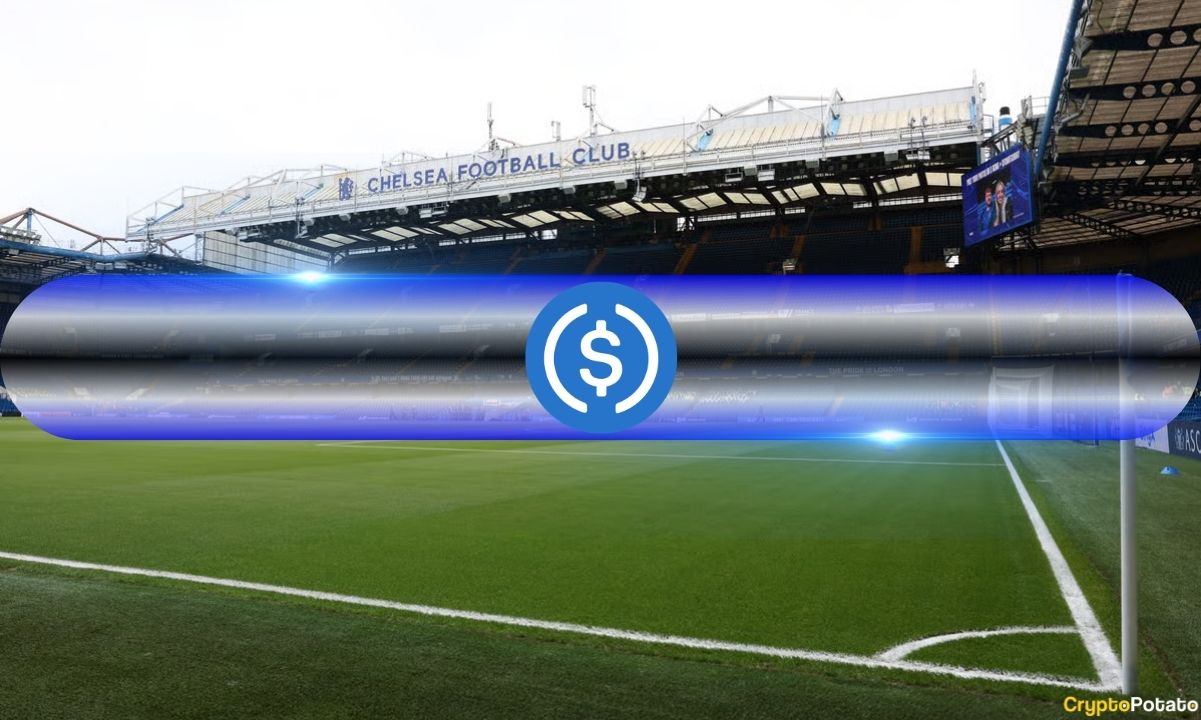
    Circle’s Internet Group has entered into a principal partnership with Chelsea Football Club, which will feature USDC branding on the front of the club’s kits beginning with the 2026/27 season. The agreement covers the Men’s, Women’s, and Academy kits, with the on-pitch debut scheduled for Sunday, August 30.

    This partnership marks a significant move for Circle, a company focused on bringing the world closer to a future where money works like the internet. The integration of USDC, Circle’s flagship stablecoin, onto Chelsea’s kits aims to increase brand visibility within the global sports community. Jeremy Allaire, Co-Founder and CEO of Circle, leads the company which reported $73.3 billion of USDC in circulation at the end of Q2 2025, a 19% increase year-over-year. During the same period, Circle reported $14.8 trillion in on-chain transaction volume. The company also completed its IPO in the second quarter of 2025 and is preparing a September 16 public mainnet launch for its Arc blockchain, with notable validators including BlackRock, Visa, and Mastercard.

    For Chelsea Football Club, this deal represents a new chapter in its front-of-shirt sponsorship landscape. The club has seen a variety of partners in recent seasons, including telecoms firm Three, sports data company Infinite Athlete, Dubai property developer DAMAC, and industrial AI firm IFS. Chelsea opened the current campaign with a blank shirt front, having last had a consistent front-of-shirt partner in the 2022/23 season. Reports and rumors regarding the club’s asking price for the sponsorship slot have varied, with initial figures around £60 million to £65 million annually, later reportedly reduced to around £45 million. The Infinite Athlete deal was reportedly valued at £40 million.

    The partnership between Circle and Chelsea FC aligns with a broader trend of cryptocurrency-related entities increasing their engagement with major sports franchises. This trend is observed as companies seek to leverage the global reach and passionate fan bases inherent in sports. In a related development, Tether, the issuer of the rival USDT stablecoin, recently took a minority stake in Juventus and made an unsuccessful bid for Exor’s controlling stake in the Italian club.

    The exact financial terms and duration of the Circle and Chelsea FC partnership have not been disclosed. The specific year for the August 30 on-pitch debut is also not explicitly stated, though it is implied to be within the 2026/27 season timeframe. Circle’s interpretation of the partnership suggests it is more than just a logo on a shirt, positioning it as a collaboration with a partner who is actively building. The move of the women’s team into Stamford Bridge is also seen as an opportunity to introduce Circle and USDC to the Chelsea Women family.

    Why This Matters

    The materials describe a narrow update: Circle’s Internet Group will have its name and USDC branding displayed on the front of Chelsea FC’s Men’s, Women’s, and Academy kits starting in the 2026/27 season. The exact value and length of the Circle and Chelsea FC partnership deal.

    Broader Context

    Source materials place the factual news in this context: Chelsea last began a season with a front-of-shirt partner in 2022/23, the final year of telecoms firm Three’s contract.

  • Judge: Trump Admin Illegally Punished Anthropic Over AI Rules

    Judge: Trump Admin Illegally Punished Anthropic Over AI Rules

    Judge Rules Trump Administration Illegally Punished AI Firm Anthropic

    A federal judge has ruled that the Trump administration unlawfully penalized the artificial intelligence company Anthropic for refusing to allow the military to use its Claude large language model for purposes such as mass surveillance of Americans and lethal autonomous warfare.

    The dispute originated when the Pentagon demanded Anthropic remove all usage restrictions and agree to a clause permitting “all lawful uses.” Anthropic acceded to most demands but maintained two core limitations. On February 27, then-President Trump ordered all federal agencies to cease using Anthropic’s technology, labeling the company a “RADICAL LEFT, WOKE COMPANY” on his social media platform, Truth Social. Former Pentagon official Anthony Hegseth subsequently accused Anthropic in a tweet of exhibiting “a master class in arrogance and betrayal” and barred any military contractor from engaging with the company.

    The government has since withdrawn its primary argument. Its initial risk assessment was predicated on the belief that Anthropic possessed backdoor access to deployed models. However, the government now concedes that Anthropic has no such access and that Claude poses no greater risk than any other “black box” system. This left only one remaining factor: trust, which a Pentagon memo stated was eroded by Anthropic’s “increasingly hostile manner through the press.”

    U.S. District Judge Jessica May Lin found the timeline of events undermined the government’s position. Days before Anthropic was blacklisted, Hegseth had suggested invoking the Defense Production Act, a move that would have positioned Anthropic as essential to national security. The day after the designation, an under secretary emailed Anthropic indicating a contract was “very close.” Lin also noted that the government is still in discussions with Anthropic regarding collaboration on Mythos, the company’s latest model, for use in sensitive contexts.

    “The empty invocation of national security is not a blank check to punish and retaliate against government critics,” Lin wrote, concluding that the administration’s actions were retaliatory under the First Amendment, imposed without the due process required by the Fifth Amendment, outside the scope of the relevant supply chain statute, and were arbitrary and capricious.

    Anthropic did not achieve a complete victory. Lin rejected its argument that Trump’s directive exceeded presidential authority and entered judgment for agencies that took no action.

    She vacated the designation and Hegseth’s boycott order, issued a permanent injunction, and denied the government’s request for a seven-day administrative stay. Lin pointed out that the government had been operating under a preliminary injunction since March without demonstrating any harm.

    Anthropic had informed the court that if these measures remained in place, its defense-related revenue would decrease by 50% to 100%, and its overall revenue for 2026 would be reduced by billions of dollars.

  • Evernorth Advances Toward Nasdaq Listing as SEC Declares Registration Statement Effective

    Evernorth Advances Toward Nasdaq Listing as SEC Declares Registration Statement Effective

    Evernorth has achieved a significant regulatory milestone, with the U.S. Securities and Exchange Commission (SEC) declaring its registration statement effective on August 27. This development is a crucial step in Evernorth’s proposed merger with Armada Acquisition Corp. II, moving the company closer to a potential listing on the Nasdaq under the ticker symbol XRPN.

    The effectiveness of the registration statement indicates that the SEC has completed its review of the necessary documentation for the transaction. However, the merger remains subject to several conditions. Armada Acquisition Corp. II shareholders are scheduled to vote on the business combination on September 30, 2026, and the closing of the deal also depends on the satisfaction of other customary conditions.

    Evernorth aims to become a publicly traded XRP treasury company, offering investors exposure to XRP through corporate equity rather than direct token ownership. This structure, Evernorth stated, is designed to accelerate XRP’s role in institutional on-chain finance. In March, Evernorth filed its Form S-4, outlining its plan to provide public market investors with exposure to XRP via an actively managed treasury. The company previously announced raising over $1 billion in gross proceeds from institutional and strategic investors, including Ripple, SBI Holdings, Pantera Capital, Kraken, and Arrington Capital.

    While the SEC’s declaration of effectiveness removes a procedural hurdle, the upcoming shareholder vote is a key event. The success of the merger and subsequent Nasdaq listing are not guaranteed. Uncertainties persist regarding whether Armada Acquisition Corp. II shareholders will approve the deal, if all closing conditions will be met, and if the combined entity will receive approval for listing on the Nasdaq.

    Furthermore, the long-term impact of Evernorth’s strategy on XRP demand and activity on the XRP Ledger remains to be seen. At the time of reporting, XRP was trading just above $1.40, having seen a nearly 10% increase over the past week and close to 32% in the last 30 days. It is uncertain whether this corporate structure will translate into sustained XRP demand or meaningful on-chain activity.

    Evernorth’s progression toward becoming a publicly traded entity involves navigating regulatory processes and securing shareholder approval. The company’s unique approach to offering XRP exposure through a corporate structure presents an innovative model, the ultimate success and market impact of which are still subject to future developments.

    Why This Matters

    The materials describe a narrow update: The SEC declared Evernorth’s registration statement effective, which is a required step for its planned merger with Armada Acquisition Corp. Whether Armada Acquisition Corp. II shareholders will approve the deal.

    Broader Context

    Source materials place the factual news in this context: Evernorth is an XRP treasury company.

  • Bithumb Secures Court Victory in Bitcoin Miscredit Case, Proceeds Deemed Unjust Enrichment

    Bithumb Secures Court Victory in Bitcoin Miscredit Case, Proceeds Deemed Unjust Enrichment

    The Seoul Central District Court has ruled that proceeds from the sale of mistakenly credited Bitcoin constitute unjust enrichment, a decision that supports cryptocurrency exchange Bithumb’s efforts to recover funds lost due to a February system error. This ruling highlights the legal and regulatory responses to operational failures within the digital asset space.

    The incident occurred when a staff member mistakenly credited customer accounts with approximately 620,000 BTC instead of Korean won during a promotional event. At the time, Bithumb’s actual holdings were around 40,000 BTC. Trading continued for about 40 minutes, during which roughly 1,788 BTC reached the order book before trading was halted. This error was associated with the BTC/KRW trading pair to drop by approximately 17%.

    Bithumb has pursued legal action to reclaim funds related to the error. The recent court order mandates one customer to return about $140,400 (194 million won) from selling the erroneously credited Bitcoin. This follows a previous court award of $3,620 (5 million won) to Bithumb. Two additional claims are pending, seeking to recover $10,700 (14.8 million won) and $362,000 (500 million won), bringing the total sought in these four claims to approximately $517,000 (714 million won).

    By March 10, Bithumb reported recovering 99.7% of the Bitcoin involved in the broader miscredit. Some affected traders received compensation exceeding their credited amounts.

    The error prompted regulatory scrutiny in South Korea, with authorities classifying it as a control failure. The Financial Supervisory Service affirmed that mistaken balances could be considered unjust enrichment, bolstering Bithumb’s legal stance. Consequently, regulators now require licensed exchanges to reconcile customer ledgers with actual holdings every five minutes. The Bank of Korea also considered implementing a market circuit breaker.

    While Bithumb has achieved legal success in recovering funds, the outcomes of the two pending claims remain uncertain. This event underscores the critical need for robust operational controls within cryptocurrency exchanges and highlights the evolving regulatory landscape for digital asset platforms. The court’s classification of the proceeds as unjust enrichment provides a legal precedent for exchanges seeking to recover assets lost due to similar errors, while the regulatory response signifies a move towards stricter oversight and operational standards in the industry.

    Why This Matters

    The materials describe a narrow update: Bithumb mistakenly credited customers with approximately 620,000 BTC during a promotion due to a staff error. The outcome of the two remaining pending claims against customers.

    Broader Context

    Source materials place the factual news in this context: A bizarre error that mistakenly credited Bithumb customers with roughly 620,000 BTC is now producing victories for the South Korean exchange in court.

  • Sparrow Wallet Releases Security Update Driven by AI-Assisted Code Review

    Sparrow Wallet Releases Security Update Driven by AI-Assisted Code Review

    Sparrow Wallet has released version 2.5.4, a significant update incorporating numerous security fixes primarily identified through an AI-assisted code review. This proactive measure enhances transaction verification, strengthens hardware wallet security, and addresses various other security aspects.

    The AI-assisted code review was prompted by the increasing availability of unrestricted AI models and the ability to search large codebases for exploits. This proactive measure follows a recent vulnerability in Coldcard’s seed-generation code, which may have been discovered with AI assistance.

    According to developer Craig Raw, the majority of the fixes in version 2.5.4 were identified through this AI-driven process. He stated that no immediate threat to user funds was found, and there is no evidence of exploitation or affected users. Nevertheless, Raw recommended installing the update.

    Key security enhancements in version 2.5.4 include:

    • Transaction Verification: The wallet now suggests that transactions returned by Electrum servers are indeed the ones requested. It also checks cryptographic proofs for transaction confirmation and verifies the latest block in the chain before marking transactions as reported.
    • Hardware Wallet Security: Security for BitBox02 hardware wallets has been strengthened, requiring firmware version 9.4.0 or later and implementing anti-klepto protection. Anti-klepto protection helps prevent a compromised device from leaking private-key information while signing a transaction.
    • Log Redaction and Access Control: Debug logs now redact sensitive information, including Bitcoin Core credentials and other secrets. Access to wallet and backup directories has also been restricted.
    • DNS Leak Prevention: The update closes local DNS leaks when using Tor, enhancing user privacy.

    Sparrow Wallet, launched in 2020, is known for its privacy and security features, including coin control, Tor support, and hardware wallet integration. The update also includes changes affecting Ledger, Trezor, and Keycard devices, as well as multisignature wallets, Payjoin, wallet imports, and partially signed Bitcoin transactions.

    This AI-assisted review and subsequent update reflect a broader trend within the Bitcoin ecosystem, where developers are increasingly leveraging AI technology to scan wallets, payment protocols, and code libraries for flaws before potential attackers can find them. While the specific AI models used for Sparrow’s review were not identified, the incident highlights the evolving landscape of cybersecurity in the cryptocurrency space.

    Raw acknowledged that users with air-gapped setups might be hesitant to install updates, but emphasized the importance of staying current with security measures. He personally verified each issue and found no evidence that the problems were exploited or that Sparrow users were affected, considering such exploitation unlikely.

    Why This Matters

    The release of Sparrow Wallet’s version 2.5.4, enhanced by AI-assisted code review, underscores the growing integration of artificial intelligence in cybersecurity practices within the Bitcoin ecosystem. This proactive approach to identifying and fixing vulnerabilities before they can be exploited demonstrates a commitment to user safety in an evolving digital security environment. While the developer stated no immediate threat to user funds was found, the update highlights the importance of staying current with security measures in the face of increasingly sophisticated potential threats.

    Broader Context

    Source materials place the factual news in this context: Privacy-focused Bitcoin wallet developer Sparrow Wallet released version 2.5.4 on Thursday.

  • Mastercard Invests in Ripple, XRP ETF Undergoes Key Reforms

    Mastercard Invests in Ripple, XRP ETF Undergoes Key Reforms

    Mastercard Deepens Ties to Ripple Ecosystem Amid Renewed XRP ETF Interest

    Mastercard has strengthened its connection with the Ripple ecosystem, coinciding with a resurgence in XRP Exchange Traded Fund (ETF) flows. While XRP remains significantly below its previous peaks, the confluence of institutional engagement and renewed capital rotation has placed the token back on the radar of trading desks this week.

    XRP Ledger Foundation Welcomes Mastercard Sponsorship

    The XRP Ledger Foundation announced Mastercard as a sponsor for the upcoming XRP Ledger Hackathon, a 36-hour event scheduled for October 24-25, preceding Ripple’s Swell conference in 2026 (October 27-29). The Foundation expressed enthusiasm for the payments giant’s participation, highlighting the decade-old XRP network’s suitability for payment use cases.

    Mastercard’s involvement in the XRP Ledger Hackathon signals a significant development. When a major payments company engages with a builder event, it suggests that the innovations emerging from such collaborations are likely to have a tangible impact. The hackathon is set to take place in New York from October 24-25.

    This sponsorship follows Mastercard’s earlier move in March to include Ripple, alongside other prominent entities like Binance, PayPal, and Circle, in a broader blockchain-payments partnership program.

    XRP ETF Adjustments Coincide with Inflow Momentum

    Meanwhile, 21Shares has made technical adjustments to how its XRP ETF prices the underlying asset. This shift comes at a time when XRP ETF inflows are demonstrating renewed momentum after a period of sluggish performance.

    XRP’s intraday trading range has been observed between $1.38 and $1.46, with current trading hovering around the $1.45 mark, near the upper end of this band. Trading volume has increased in tandem with this price movement, mirroring activity seen in August 2026 when its ETF recorded net inflows of $56.86 million.

    Beyond ETFs, XRP’s trading volume has reached its strongest point since January. The $1.40 level is now acting as immediate support, with resistance anticipated in the mid-$1.40s, close to recent highs.

    Potential Upside and Downside for XRP

    A decisive break above $1.46 could pave the way for XRP to reach $1.60 and beyond, particularly if the CLARITY Act successfully passes its September 15 cloture vote, formalizing XRP’s status as a commodity regulated by the CFTC. However, consolidation between $1.30 and $1.46 is also a possibility as the market assesses whale activity and ETF flow data.

    On the bearish side, a decline below $1.34 could lead to a retest of the $1.00 psychological support level, which held firm in mid-August. Approximately 60% of XRP’s supply is reportedly trading below its realized price of $1.48, an overhang that warrants caution before aggressively pursuing further gains.

    XRP holders who have benefited from the recent upward movement have earned their gains, with a rise from $1.00 to $1.45 representing a notable increase. However, with a market capitalization of roughly $90 billion, doubling from its current position would require an additional $90 billion in fresh capital, a more substantial challenge compared to assets in their presale stages.

    Institutional Expectations and Emerging Opportunities

    The recalibration of institutional expectations is evident, as exemplified by Standard Chartered’s reduction of its 2026 target for XRP from $8 to $2.80. The significant discrepancy between JPMorgan’s initial projection of $8 billion in inflows and the approximately $1.5 billion actually delivered highlights an asymmetry that often drives capital towards earlier-stage investment opportunities.

    In this context, Bitcoin Hyper ($HYPER), a Bitcoin Layer 2 solution integrating with the Solana Virtual Machine, is emerging. It is positioned as offering faster transaction speeds than Solana while leveraging Bitcoin’s base-layer security. The presale has raised $33 million to date, with a token price of $0.01368 and a 35% APY staking reward. Its Decentralized Canonical Bridge aims to address Bitcoin’s long-standing programmability limitations without compromising trust assumptions.

  • YZi Labs Invests in TermMax to Bolster On-Chain Bond Market Infrastructure

    YZi Labs Invests in TermMax to Bolster On-Chain Bond Market Infrastructure

    YZi Labs has strategically invested in TermMax, a fixed-rate lending protocol focused on developing on-chain bond market infrastructure. This move aims to address a perceived gap in the financial application layer for tokenized assets, particularly concerning credit, collateral management, and risk transfer products like options, according to YZi Labs.

    TermMax, developed by Term Structure Labs, has already secured over $8 million in funding and has been operational on mainnet since April 2025. The protocol is deployed across 10 EVM-compatible chains, featuring 60 fixed-rate markets and 40 strategy vaults. It currently holds tens of millions of dollars in total value locked and serves over 1.5 million registered wallets. Key partners and Curators for TermMax include Keyrock, Hardcore Labs, Edge Capital, and Origami.

    The $TMX token completed its Token Generation Event (TGE) on August 25th. TermMax’s offerings include TermMax Alpha, which provides physical delivery options designed to avoid liquidation before expiry, settling by physical delivery of collateral. This mechanism is intended to better suit less liquid assets than traditional perpetual futures. TermPrime, another component of TermMax, completed its first live trade on Canton Network at the end of June and has established a counterparty network of nine institutions.

    YZi Labs highlighted that tokenized blue-chip equities, valued at $2.48 billion, represent the fastest-growing asset class on-chain. However, the firm noted that the financial application layer surrounding these assets remains underdeveloped, with a notable absence of options and other risk-transfer products. YZi Labs stated that its investment is strategically positioned to address this specific market gap.

    Jerry Li, Co-founder and CEO of TermMax, emphasized the need for on-chain interest rate curves, stating, “When I left banking, there were a few hundred billion dollars of assets sitting on-chain without a single directly observable interest rate curve between them. In traditional markets, that would be unheard of. That is what made me decide to build this infrastructure on-chain.” Li also articulated TermMax’s vision: “What TermMax wants to be is not another lending protocol, but the on-chain interest rate curve itself,” aiming to enable DeFi to “grow into something professional enough to genuinely serve finance.”

    YZi Labs, which manages over $10 billion in assets globally, invests in ventures across Web3, AI, and biotech, with a portfolio exceeding 300 projects. The firm has incubated over 65 companies through its EASY Residency program, and TermMax was selected for Season 3 of this initiative. TermMax previously saw Cumberland DRW lead its 2023 seed round and has integrated with Ondo Global Markets (January 2026) and Binance’s bStock, alongside its August 2026 deployment on Robinhood Chain. The protocol holds a DeFiSafety Process Quality Review score of 93%.

    The specific terms of YZi Labs’ investment in TermMax were not disclosed.

    Why This Matters

    The materials describe a narrow update: YZi Labs invested in TermMax, a protocol focused on fixed-rate lending and on-chain bond market infrastructure. Terms of the investment from YZi Labs were not disclosed.

    Broader Context

    Source materials place the factual news in this context: TermMax is a fixed-rate, fixed-term borrowing and lending marketplace built by Term Structure Labs, live on mainnet since April 2025 and deployed across 10 EVM-compatible chains, where it runs 60 fixed-rate markets and 40 strategy vaults. The protocol splits debt into three tradable tokens: FT (principal), XT (interest and option value) and GT (an ERC-721 receipt for leveraged positions). Professional Curators set target APR ranges across isolated markets and manage strategy vaults, and liquidations settle by physical delivery of collateral. Co-founder and CEO Jerry Li has 25 years in global financial markets and served as Managing Director at Deutsche Bank, running fixed income and FX for Greater China.

  • Sui Basecamp 2026 in Singapore to Focus on Agentic Economy, Include TPS Record Attempt

    Sui Basecamp 2026 in Singapore to Focus on Agentic Economy, Include TPS Record Attempt

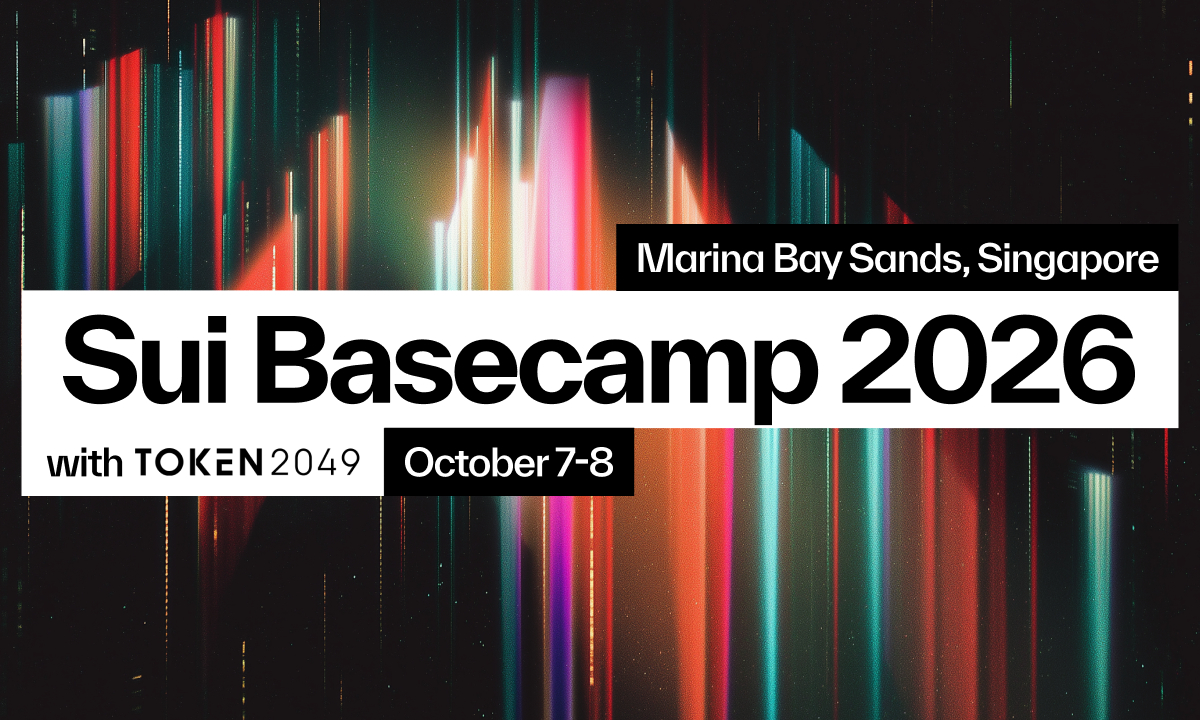
    Sui Basecamp 2026, a conference focused on the ‘agentic economy,’ is scheduled to take place in Singapore on October 7-8, 2026, alongside TOKEN2049 at Marina Bay Sands, according to an announcement.

    The event aims to convene the Sui community, including builders, developers, investors, and industry leaders, to discuss the future of financial transactions driven by artificial intelligence and automated agents. The agenda includes product reveals, technical deep dives, and hands-on demonstrations, with a focus on the technological requirements for an economy where software agents transact at machine speed.

    A key highlight of Sui Basecamp 2026 will be a live attempt to set a new transactions per second (TPS) record for the Sui network. Mysten Labs Co-Founder and Chief Cryptographer Kostas Chalkias is slated to lead this effort on the Main Stage on October 7th. The goal is to surpass Sui’s current record of 6,086,766 TPS, which was established on July 4th, 2026. CertiK will serve as the independent auditor for this record attempt.

    The focus on high throughput is directly linked to the event’s central theme. The ‘agentic economy’ is conceptualized as a future where economic activity shifts from human-initiated transactions to automated processes executed by AI agents. This paradigm shift is expected to demand significant network capacity and speed, making the TPS record attempt a demonstration of Sui’s potential to meet these demands.

    Sui Basecamp is designed to foster collaboration and development within the Sui ecosystem. The conference will feature an AI Builder Lab, offering participants hands-on experience with AI tools and sessions on building AI-powered applications and agents. Additionally, a Trading Arena will showcase live trading competitions on Hudi.

    Several companies are sponsoring Sui Basecamp 2026 at various levels, including Hudi, AlphaFi, EVE Frontier, Walrus, ONE Championship, Slush, RedotPay, Scallop, Anyflo, Merkle Science, Sentio, and Meta. The event also includes a competition for predicting the TPS achieved during the record attempt, with prizes of 10,000 SUI for first place, 5,000 SUI for second, and 1,000 SUI for third. Details regarding this competition will be announced on X by @SuiNetwork.

    Registration for Sui Basecamp 2026 is available at luma.com/SuiBasecamp2026. The event is expected to provide insights into the development of the agentic financial stack and Sui’s role in enabling high-volume, automated transactions.

    Uncertainties remain regarding the exact number of additional speakers to be added in the coming weeks.

    Why This Matters

    The materials describe a narrow update: Sui Basecamp 2026 is scheduled to take place in Singapore on October 7-8, 2026, coinciding with TOKEN2049. The exact number of additional speakers to be added in the coming weeks.

    Broader Context

    Source materials place the announcement in this context: Sui Basecamp is the Sui ecosystem’s flagship annual gathering.