Tag: Positive

  • OKX Lists BASED/USD and BASED/EUR for Spot Trading

    OKX Lists BASED/USD and BASED/EUR for Spot Trading

    OKX Expands Unified Trading Pairs to Include USD and EUR

    Cryptocurrency exchange OKX is enhancing its spot trading offerings by introducing unified USD and EUR trading pairs. The move aims to support the growth of its USD and EUR ecosystem and cater to a wider range of user trading requirements.

    New Trading Pairs

    The following unified trading pairs will be available:

    • USD Pairs:

    * BASED/USD

    • EUR Pairs:

    * BASED/EUR

    The new listings are scheduled to go live on August 26, 2026, at 9:00 UTC.

  • XRP Network Activity Surges: Key Level to Watch

    XRP Network Activity Surges: Key Level to Watch

    XRP Surges on Network Activity Boost, Analysts Eye Key Levels

    XRP has staged a remarkable comeback this week, distinguishing itself as one of the market’s top performers after a period of subdued activity. The cryptocurrency briefly touched $1.76 before settling around the $1.50 mark.

    This resurgence has been bolstered by a significant increase in network participation. Analyst Ali Martinez reported a dramatic surge in active addresses, which climbed from 47,180 to 356,070 – an increase of 654.71% within days. Such a substantial spike typically signals heightened engagement and can coincide with increased price volatility.

    If this marks the beginning of a new trend for XRP, analyst Casi Trades suggests that the $1.20 level may soon become a distant memory. She anticipates XRP first targeting $1.78, followed by a retracement to approximately $1.30, before embarking on another push towards $2.57.

    According to this analysis, a complete five-wave structure could eventually propel XRP to around $2.90, completing Wave 1 of a larger macro Wave 3. A subsequent correction might bring the asset back towards $1.65, potentially transforming current resistance into future support. In this scenario, the critical factor will not only be the extent of XRP’s ascent but also whether the token experiences another opportunity to trade below $1.20.

    Meanwhile, Crypto Patel noted that XRP has broken through seven months of resistance with a weekly gain of approximately 70% from its accumulation zone, shifting the market’s focus to the $1.55 level. Sustaining prices above this point could pave the way for further bullish momentum, while a breach below might trigger a retracement or re-accumulation phase. The long-term outlook remains optimistic, with a target range of $5 to $10.

    On the institutional front, the launch of US-based spot XRP ETFs last week began quietly, with zero inflows recorded on Monday. However, this trend rapidly shifted. Tuesday saw inflows of $5.81 million, followed by $2.35 million on Wednesday.

    Activity accelerated following an announcement from the US Treasury Department regarding its intention to double the maximum size of liquidity-support buybacks for longer-dated government debt. Thursday registered $13.24 million in inflows, and Friday reached $18.38 million, marking the strongest performance since mid-May.

    This buying momentum has carried into the current week. On August 25th, inflows totaled $13.82 million. Bitwise’s fund led the pack with $8.25 million, with Franklin and Canary’s ETFs following with $4 million and $1.57 million, respectively.

  • ChatGPT AI Forecasts XRP Price Potential by 2026 Amid XRPL Upgrades and Institutional Interest

    ChatGPT AI Forecasts XRP Price Potential by 2026 Amid XRPL Upgrades and Institutional Interest

    A ChatGPT AI model has projected a potential price increase for XRP, forecasting a range between $2.20 and $3.00 by the end of 2026, with a base case of $2.50. This outlook is primarily attributed to anticipated enhancements within the XRP Ledger (XRPL) designed to facilitate institutional asset management, alongside Ripple’s strategic investments in related infrastructure.

    XRPL Enhancements and Ripple’s Investments

    The XRPL is set to introduce upgrades, including support for atomic transactions and permission delegation, as detailed in version 3.3.0. These developments, along with features like sponsored fees and confidential token transfers, aim to bolster the ledger’s utility for institutional-grade assets. Ripple’s commitment to this ecosystem is further evidenced by its investments in entities such as ZILO and Licuido, which focus on tokenized issuance and collateral mobility on the XRPL. Additionally, FXRP has been approved as collateral for a substantial $280 million RLUSD lending market on Morpho, indicating growing real-world utility and demand for XRP as collateral.

    Market Signals and Current Price Action

    Recent market activity for XRP shows a dynamic price landscape. After trading above $3.60 last August and experiencing a subsequent period of decline, XRP saw a notable spike to $1.68 last week, following a period of consolidation around the $1.00 mark through July and most of August. The price closed the current session at $1.47614, down 2.92% from its session high of $1.53000 and above its session low of $1.45326. This recent surge of approximately 68% followed by a modest pullback is interpreted by some analysts as healthy consolidation rather than a rejection. Key technical levels to watch include resistance at $1.53000, $1.68, and $1.80, while support is identified at $1.45326 and $1.30, with a structural base at $1.00. Maintaining the price above $1.40 is considered crucial for sustaining the current breakout structure and keeping the path towards the $2.50 target open.

    Broader Ecosystem: Interoperability and LiquidChain

    Beyond XRP’s direct ecosystem, the broader context of crypto infrastructure is evolving. LiquidChain is developing an interoperability solution intended to connect major blockchains like Bitcoin, Ethereum, and Solana, allowing a single deployment to function across multiple ecosystems. This addresses a significant challenge in the current fragmented landscape, where cross-chain communication often requires duplicated efforts and increased fees. As tokenized assets, institutional DeFi, and lending markets continue to expand, interoperability is becoming increasingly essential.

    Uncertainties and Caveats

    However, the prediction from ChatGPT AI is subject to several uncertainties. The actual impact and adoption rate of the XRPL upgrades for institutional use remain to be seen. Furthermore, the long-term demand for XRP is contingent on broader market adoption and the successful integration of its technological advancements. The ability of XRP to consistently hold key support levels, particularly above $1.40, will be a critical indicator of its future trajectory. The success of projects like LiquidChain in achieving seamless interoperability also represents an evolving factor in the digital asset space.

    In summary, while the ChatGPT AI’s prediction offers an optimistic outlook for XRP by the end of 2026, grounded in tangible technological developments and growing collateral demand, its realization hinges on sustained adoption, market dynamics, and the resolution of inherent uncertainties within the rapidly evolving cryptocurrency landscape.

    Why This Matters

    The materials describe a narrow update: A ChatGPT AI model has predicted that XRP could reach between $2. Whether the XRPL upgrades will be fully adopted and impactful for institutional assets.

  • Crypto Market Shifts from Fear to Extreme Greed

    Crypto Market Shifts from Fear to Extreme Greed

    Crypto Market Surges into “Extreme Greed” for First Time Since Late 2024

    The cryptocurrency market has entered “extreme greed” territory for the first time since late 2024, according to the Crypto Fear and Greed Index.

    The index, measured by Coinmarketcap, reached 81 late Sunday evening and has maintained that level, surpassing the 80-point threshold that signifies panicked buying and strong conviction. This marks a significant turnaround for a market that has largely languished in “fear” over the past year, with only brief excursions into “neutral” territory.

    The rapidity of this shift is particularly striking. Just one month ago, the index stood at 36, firmly within the “fear” zone. A week prior, it was at 41, barely in neutral territory. The surge to 81 on Sunday and its sustained presence today represents a 45-point climb in 30 days, effectively erasing much of the caution that characterized the first half of 2026.

    This is also the fastest sentiment reversal between two extremes ever recorded, and the only instance of a move from extreme fear to extreme greed since Coinmarketcap began tracking the index. While Alternative.me, which has been monitoring sentiment for a longer period, places its index in “greed” (though not yet “extreme” by 6%), the momentum shift is consistent: traders are rapidly becoming extremely bullish, mirroring a similar movement observed in 2021.

    The index had previously bottomed out at 5 on February 5, deep within “extreme fear” and marking its lowest point of the year. The journey from that nadir to this week’s 81 represents a complete cycle from total capitulation to unbridled greed within six months – an arc typically associated with significant price volatility in spot markets.

    This sentiment reversal coincides with a surge in Bitcoin’s performance, which has outpaced the broader crypto market. Bitcoin saw gains of approximately 24% in a single week, while the overall crypto market experienced more modest growth, a disparity evident in Bitcoin’s increasing share of the total crypto market capitalization.

    The recent breakout appears to be linked to an announcement last Wednesday by the U.S. Treasury. The department stated it would double its long-bond buybacks – purchases of its own debt aimed at bolstering demand – from $2 billion to $4 billion per operation, effective September 9. This move is expected to weaken the dollar and encourage investors to turn to Bitcoin as a hedge against inflation.

    The same market conditions also compelled bearish traders to cover their positions at a loss. As Bitcoin surpassed the $70,000 mark, a short squeeze liquidated over $4 billion in crypto shorts within two to three days. Bitcoin ETFs recorded their largest single day of inflows since May, with both Ethereum and Bitcoin ETFs collectively attracting approximately $2.3 billion in assets.

  • XRP Soars on ETF Hopes

    XRP Soars on ETF Hopes

    XRP Price Surges as Spot ETF Inflows Skyrocket

    XRP is currently trading around the $1.50 mark, a seemingly stable figure that belies a dramatic three-week surge from $1.00 to nearly $1.70, defying bearish forecasts. Beneath the surface of this price action lies a significant shift in the ETF landscape, transforming a niche category into a crucial driver of demand.

    ETF Category Sees Explosive Growth

    Spot XRP Exchange-Traded Funds (ETFs) recorded net inflows of $39.78 million last week, marking the strongest weekly performance since mid-May. This influx has propelled cumulative net inflows to approximately $1.55 billion, a stark contrast to the week ending August 8th, when inflows plummeted to a mere $1.01 million. This dramatic turnaround has been described as a “zero to hero” narrative.

    Institutional Appetite Reaffirmed

    The timing of this surge in ETF inflows closely aligns with XRP’s breakout above the $1.20 level. This correlation suggests that institutional interest in XRP exposure, far from waning, has simply become more assertive and impatient.

    XRP is currently consolidating around the $1.50 area, with intraday trading between $1.46 and $1.54. This reflects a market still processing last week’s substantial 50% price increase. While trading volume has subsided from its peak during the breakout, it remains elevated compared to early August levels.

    Key Technical Levels to Watch

    The immediate technical hurdle for XRP lies at the $1.51 resistance level. Further upside targets are positioned at $1.60 and the recent high of $1.70. On the downside, bulls must defend the $1.45 level; a breach below this could lead to a retest of $1.36 and, in a worst-case scenario, a return to the $1.00 floor.

    The daily chart indicates that the Relative Strength Index (RSI) is in overbought territory. The price is currently positioned between the 20-day Exponential Moving Average (EMA20) and the 50-day Exponential Moving Average (EMA50), a configuration that often precedes a period of consolidation rather than continued upward momentum.

    Future Outlook for XRP

    Sustained ETF inflows could propel XRP past the $1.51 and $1.60 resistance levels, potentially leading to new price highs. Alternatively, consolidation may occur between $1.36 and $1.51 as momentum recalibrates. However, a stall in ETF inflows coupled with a sharp decline in the RSI could bring the $1.00 level back into play.

    Emerging Infrastructure Plays

    While XRP holders who entered at $1.00 have already realized significant gains, a cryptocurrency with a market capitalization exceeding $85 billion typically requires a substantial catalyst to double its value. The current overbought RSI and stacked resistance near $1.60 suggest that the easiest gains on this upward leg may have already been captured. This dynamic is prompting capital to shift towards earlier-stage infrastructure projects with greater growth potential.

    One such project, Bitcoin Hyper ($HYPER), is developing the first Bitcoin Layer 2 solution with full Solana Virtual Machine (SVM) integration. It claims to offer smart contract execution faster than Solana itself, while leveraging Bitcoin’s inherent security. The presale has reportedly raised $33 million at a current token price of $0.0136852, with a 35% Annual Percentage Yield (APY) staking option available for early investors. The project’s value proposition includes low-latency L2 processing, a decentralized bridge for Bitcoin transfers, and enhanced programmability for Bitcoin.

  • Hayes: More Dollar Liquidity to Fuel Bitcoin Rally

    Hayes: More Dollar Liquidity to Fuel Bitcoin Rally

    Bitcoin Enters Bull Market as Treasury Operations Poised to Inject Liquidity, Says Arthur Hayes

    Arthur Hayes, co-founder of BitMEX, believes Bitcoin has entered a new bull market, driven by anticipated actions from U.S. Treasury Secretary Scott Bessent to increase dollar liquidity through Treasury market operations.

    Hayes’s long-standing thesis posits that when policymakers inject liquidity to manage Treasury yields, risk assets like Bitcoin tend to perform well. In a recent essay, he drew parallels between Bessent and his predecessor, Janet Yellen, both of whom have faced pressure to control borrowing costs amidst ongoing government spending. Hayes highlighted the 10-year Treasury yield as a critical indicator in U.S. financial markets.

    According to Hayes, regulators become concerned when the 10-year Treasury yield approaches 5%, as higher yields can increase mortgage and corporate borrowing costs, potentially impacting the broader economy.

    He recalled an instance in December 2023 when Yellen shifted the issuance mix towards Treasury bills from longer-duration bonds. This maneuver facilitated the movement of funds from the Federal Reserve’s Reverse Repo program into T-bills. Hayes estimates that the RRP balance decreased from approximately $2.5 trillion to $100 billion by the time Bessent assumed office in January 2025. He characterized this $2.4 trillion flow as a liquidity injection that benefited financial markets, leading to rallies in Bitcoin and the Nasdaq 100, while the 10-year yield moved away from the 5% mark, despite the Federal Reserve maintaining interest rates near 5.3% and continuing to shrink its balance sheet.

    Hayes suggests Bessent is now employing similar tactics through the Treasury’s debt management tools. On August 19, the Treasury announced an increase in buybacks from $2 billion to at least $4 billion per operation. Initially, 10-year yields declined, and Bitcoin saw a rally in the subsequent days. However, this effect proved temporary, with the 10-year yield climbing back above its pre-announcement level in the following trading session.

    This is why Hayes argues that the Treasury’s planned buybacks are insufficient relative to the approximately $40 trillion U.S. debt stock. “Bitcoin ripped off its lows after Yellen announced her money printing scheme, and I argue it will do the same after Bessent reestablished his conviction to follow in his predecessors’ footsteps and materially increase the pace of dollar liquidity creation,” he wrote.

    Hayes outlined three potential paths for Bessent: reducing spending, which he deems unlikely given upcoming elections; adopting an aggressive, Bank of Japan-style commitment to buy unlimited bonds if yields exceed 5%; or, most plausibly in his view, implementing smaller, more frequent increases in buybacks unless volatility escalates rapidly.

    He also pointed to the Treasury General Account (TGA), currently holding around $1 trillion, as another potential source of liquidity. A CNBC report indicated that the Treasury Secretary could draw down the TGA to finance additional buybacks.

    These developments coincide with Bitcoin’s significant price appreciation, having recently surpassed $80,000 for the first time since May. At the time of writing, Bitcoin had retreated slightly from its peak but still reflected a substantial gain of over 23% in seven days and a similar increase over the past month. However, it remains approximately 37% below its all-time high of over $126,000, recorded in October 2025.

  • Coinbase Launches Tokenized Stocks on Base

    Coinbase Launches Tokenized Stocks on Base

    Coinbase Launches Tokenized Stocks on Base

    Coinbase’s tokenized stocks officially went live on the Base blockchain on Monday, beginning with fractional shares of Apple and Nvidia. Eligible users outside the United States can now hold a claim on real equity within a self-custody wallet, trade it on Aerodrome, or use it as collateral on Aave. The native token of Aerodrome, AERO, saw a surge of over 13% on the day.

    Each token represents a share held by Alpaca, a regulated broker and custodian. This structure grants holders a direct claim on the underlying share, rather than mere exposure to a derivative that tracks its price, signifying a significant development in the tokenization of real-world assets. Coinbase has implemented a token standard known as B20, designed to manage dividends and stock splits without altering token balances. This ensures that open lending positions or liquidity pools remain unaffected by corporate actions like dividend payouts.

    This marks the second instance within a week where a U.S. company has introduced a product that is inaccessible to American users. Last Wednesday, Coinbase integrated perpetual futures into its Base App via Hyperliquid, a feature also unavailable to users in the U.S., U.K., and Canada. Similarly, Robinhood launched its own layer-2 chain last month, featuring tokenized stocks as one of its initial offerings, accessible in over 120 countries but notably not domestically.

    Vlad Tenev, CEO of Robinhood, spent the past week publicly urging U.S. policymakers to revise existing regulations. He expressed concern that the world might build the future of ownership around American assets while Americans are excluded. The Securities and Exchange Commission (SEC) currently has a delayed exemption for tokenized stocks, and its recent Regulation Crypto Assets proposal focuses on token fundraising rather than equity tokenization.

    Despite the regulatory landscape, Coinbase is proceeding with its expansion plans. Base has indicated that additional Coinbase-issued stocks and other real-world assets will be introduced in the coming weeks. The underlying infrastructure is reportedly complete and operational, though regulatory clarity remains pending. The situation raises questions about whether Washington will address the regulatory gap before offshore alternatives become the established norm.

  • Grayscale Launches Zcash ETF Amid Privacy Concerns

    Grayscale Launches Zcash ETF Amid Privacy Concerns

    Grayscale Launches World’s First Zcash ETF Amidst Privacy Coin Scrutiny

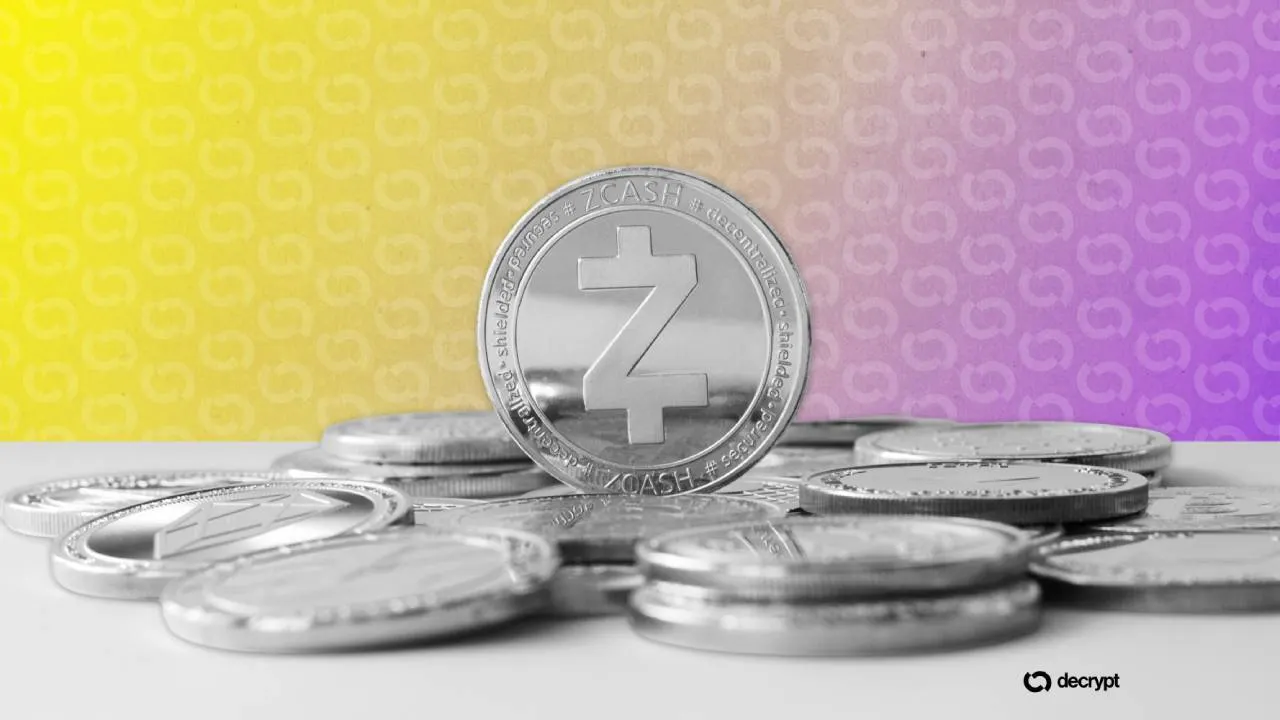
    Grayscale’s Zcash Exchange Traded Fund (ETF) commenced trading Tuesday on NYSE Arca, introducing a nine-year-old investment product to the public markets months after developers disclosed and subsequently patched a critical vulnerability within the privacy coin’s shielded transaction system.

    Trading under the ticker ZCSH, the fund represents the world’s first exchange-traded product offering direct exposure to Zcash. This allows investors to track the price of ZEC through their existing brokerage accounts without the need to directly purchase or hold the cryptocurrency themselves.

    “Grayscale has a long history of identifying emerging technologies and investment themes early, and our nine-year history operating this fund is the clearest signal of demand,” Steve Vanourny, Grayscale’s Head of Index, told Decrypt.

    The ZCSH fund originated as the Grayscale Zcash Trust in October 2017. Grayscale filed with the Securities and Exchange Commission in November to convert the trust into an exchange-traded fund. As an ETF, shareholders do not directly own ZEC; instead, they own shares designed to mirror the value of the fund’s Zcash holdings.

    Vanourny cited Zcash’s maturity, its inherent privacy features, and growing investor interest in digital assets beyond Bitcoin and Ethereum as key factors making this the opportune moment to list the established fund.

    “Investors increasingly want exposure to digital assets beyond Bitcoin and Ether through the brokerage accounts they already use, and Zcash occupies a distinctive place in that landscape,” Vanourny explained. “With its nearly decade-long network history, monetary design derived from Bitcoin—including proof of work and a 21 million coin limit—in addition to optional privacy technology that Bitcoin does not possess.”

    Grayscale anticipates that ZCSH will primarily attract self-directed and advised investors seeking Zcash exposure via a brokerage account, according to Vanourny.

    “We view ZCSH as a focused, higher-risk satellite position within a broader digital-asset allocation that is complementary to, but not a replacement for, Bitcoin,” he stated. “It offers a distinct thesis: Bitcoin-like scarcity and proof-of-work economics, plus optional privacy, for investors who see privacy as the next major theme for the industry to address as it scales.”

    While Vanourny highlighted Zcash’s fixed supply and proof-of-work model as parallels to Bitcoin, its optional privacy features presented complexities in addressing a recent critical security flaw.

    In May, security researcher Taylor Hornby identified a four-year-old vulnerability in Zcash’s Orchard shielded pool that could have potentially enabled an attacker to generate counterfeit ZEC. Developers implemented an emergency patch on June 1. However, the network’s privacy features made it impossible to cryptographically verify whether the flaw had been exploited.

    In July, Zcash activated the Ironwood upgrade, which replaced the Orchard shielded pool with a new one. This upgrade incorporated accounting rules designed to prevent more ZEC from exiting the retired pool than entered it, thereby trapping any potential counterfeit coins.

    Looking forward, Grayscale intends to measure Zcash’s progress based on its adoption, utility, and network security, rather than solely on the token’s price.

    “On the security and infrastructure side, we will be watching the continued rollout and adoption of the Ironwood upgrade, which closed the vulnerable shielded pool from the June 2026 incident and added independently audited, formally verified supply guarantees,” Vanourny said. “Grayscale will also be monitoring exchange support and regulatory treatment of Zcash and privacy assets more broadly.”

  • Ripple News and XRP Price Update: August 25

    Ripple News and XRP Price Update: August 25

    Ripple Ecosystem Sees Major Developments, XRP Price Surges

    The cryptocurrency landscape surrounding Ripple and its native token, XRP, has undergone a dramatic transformation in less than a week. Previously, XRP hovered around the $1.00 mark, with analysts questioning the sustainability of this support level. Now, a series of significant developments have injected new momentum into the ecosystem and propelled XRP’s price.

    FedNow Integration and Gemini’s XRP Support

    Recent reports indicate that FedNow Payments has begun facilitating payments using Ripple’s tokens, following the company’s integration with Volante. FedNow operates as an instant payment system for fiat USD, settling on central bank reserves. Volante, in turn, provides platform connectivity for domestic U.S. payments to FedNow and for cross-border services to Ripple.

    In parallel, Tyler Winklevoss, co-founder of the cryptocurrency exchange Gemini, announced “big news for the Ripple Army in Asia.” He revealed via a tweet that users of Gemini’s Singapore-based exchange can now deposit and withdraw XRP directly through the XRP Ledger network.

    Surge in XRP Ledger Activity

    The XRP Ledger (XRPL) itself has witnessed a substantial uptick in activity. Analyst Ali Martinez, citing data from Santiment, highlighted a staggering 650% increase in active addresses over the past few days. The number of active addresses surged from 47,180 to over 356,000, a spike that Martinez suggests typically signals heightened network participation and often correlates with increased price volatility.

    Institutional Interest Rekindles

    The renewed enthusiasm is also evident in institutional investment. Spot XRP Exchange-Traded Funds (ETFs), which had experienced sluggish inflows for weeks, saw a significant acceleration in demand, particularly after Wednesday. These ETFs collectively attracted nearly $40 million in net inflows last week, marking their strongest weekly performance since May. Furthermore, total cumulative inflows have reached a new all-time high of over $1.55 billion, with Bitwise’s XRP fund maintaining its position as the largest among its peers.

    Regulatory Clarity and CEO’s Outlook

    Ripple CEO Brad Garlinghouse commented on Saturday following his participation in two prominent Washington D.C. meetings: the Crypto Summit at the White House, hosted by the President, and the CFTC’s Innovation Advisory Committee. Garlinghouse stated that a consensus emerged from both gatherings, indicating that all stakeholders, including traditional finance (TradFi) institutions, are seeking clear regulatory frameworks for the crypto industry. He anticipates that such clarity may soon materialize through the anticipated CLARITY Act.

    XRP Price Rebounds Sharply

    The native token’s recent price action has been a focal point. Less than seven days ago, XRP struggled to maintain its footing above the crucial $1.00 support level, dipping below it on several occasions amid a deteriorating market sentiment.

    However, a market-wide resurgence, initially led by Bitcoin, began on Wednesday afternoon. While XRP experienced a slight delay, it eventually joined the rally with considerable force. The token surged from $1.00 to $1.70 by Saturday morning, achieving a remarkable 70% increase in under 72 hours.

    On-chain data suggests that large holders, or “whales,” played a significant role in this ascent, accumulating approximately 400 million tokens over several days. XRP’s upward trajectory was, however, capped at $1.70, and the token has since retreated to trade around $1.50. Many analysts now believe that XRP must successfully reclaim the $1.65-$1.70 resistance zone to signal a definitive return to a bull phase.

    Popular trader CasiTrades emphasized the importance of this resistance level, noting that XRP’s rally to test the “macro .618 resistance” was met with “heavy resistance and instant rejection.” CasiTrades added, “So now XRP needs to prove it can actually sustain this rally. We need [the] price to break above the macro 0.618 and then come back to successfully test that level as support. THAT is the structural shift that would signal beginning a new trend.”

  • Franklin Templeton’s Tokenized Government Fund grBENJI Accessible on HashKey Exchange for Professional Investors

    Franklin Templeton’s Tokenized Government Fund grBENJI Accessible on HashKey Exchange for Professional Investors

    Franklin Templeton has expanded the accessibility of its tokenized U.S. government liquidity fund, grBENJI, by listing it on HashKey Exchange’s Earn channel. This strategic move targets professional investors and underscores the asset management firm’s ongoing commitment to tokenized real-world assets (RWAs).

    The Franklin OnChain U.S. Government Liquidity Fund, operating under the ticker grBENJI, invests primarily in U.S. government money market instruments and dollar cash assets. It is crucial to note that the product is exclusively available to professional investors and is not offered to the public in Hong Kong, as per source claims.

    Franklin Templeton, an entity managing approximately $1.8 trillion in assets, has been active in the tokenized fund space since 2021. In that year, it pioneered by becoming the first U.S.-registered mutual fund to leverage a public blockchain for share ownership records. The firm has since bolstered its digital asset infrastructure, notably through the launch of Franklin Crypto via the acquisition of CoinFund spinoff 250 Digital, a transaction finalized in June. The grBENJI token was utilized as a component of the payment for this acquisition.

    This listing on HashKey Exchange is part of a broader strategy by Franklin Templeton to broaden its digital asset distribution. The firm has previously extended the reach of the grBENJI token to the BNB Chain in collaboration with Binance. Additional partnerships include those with DigiFT and MoonPay Trade. Furthermore, Franklin Templeton has established a strategic alliance with Payward, the parent company of Kraken, which is anticipated to integrate grBENJI tokens as collateral and a cash management solution for institutional clients.

    According to RWA.xyz, the BENJI token is currently yielding approximately 3.6% over seven and 30-day periods, with a net asset value of $1.00 and just over 1,100 holders. Yields for such products are structured to mirror the performance of the short end of the Treasury curve.

    The increasing institutional demand for compliant RWAs that offer yield is addressed by this development. The availability of grBENJI on HashKey Exchange, a regulated platform, reflects the growing trend of traditional finance firms entering the digital asset sector to provide regulated avenues for yield generation. Franklin Templeton has expressed intentions to broaden its offerings beyond tokenized money market funds to include other tokenized products over time, indicating a sustained focus on this evolving market.

    Why This Matters

    The materials describe a narrow update: Franklin Templeton has made its tokenized U. Published figures for the fund’s size vary considerably depending on whether a single token or the whole suite is counted.

    Broader Context

    Source materials place the factual news in this context: Franklin Templeton manages $1.8 trillion in assets.