Tag: Technology & Innovation

  • Ethereum Foundation Launches zkAPI for Private AI Service Payments

    Ethereum Foundation Launches zkAPI for Private AI Service Payments

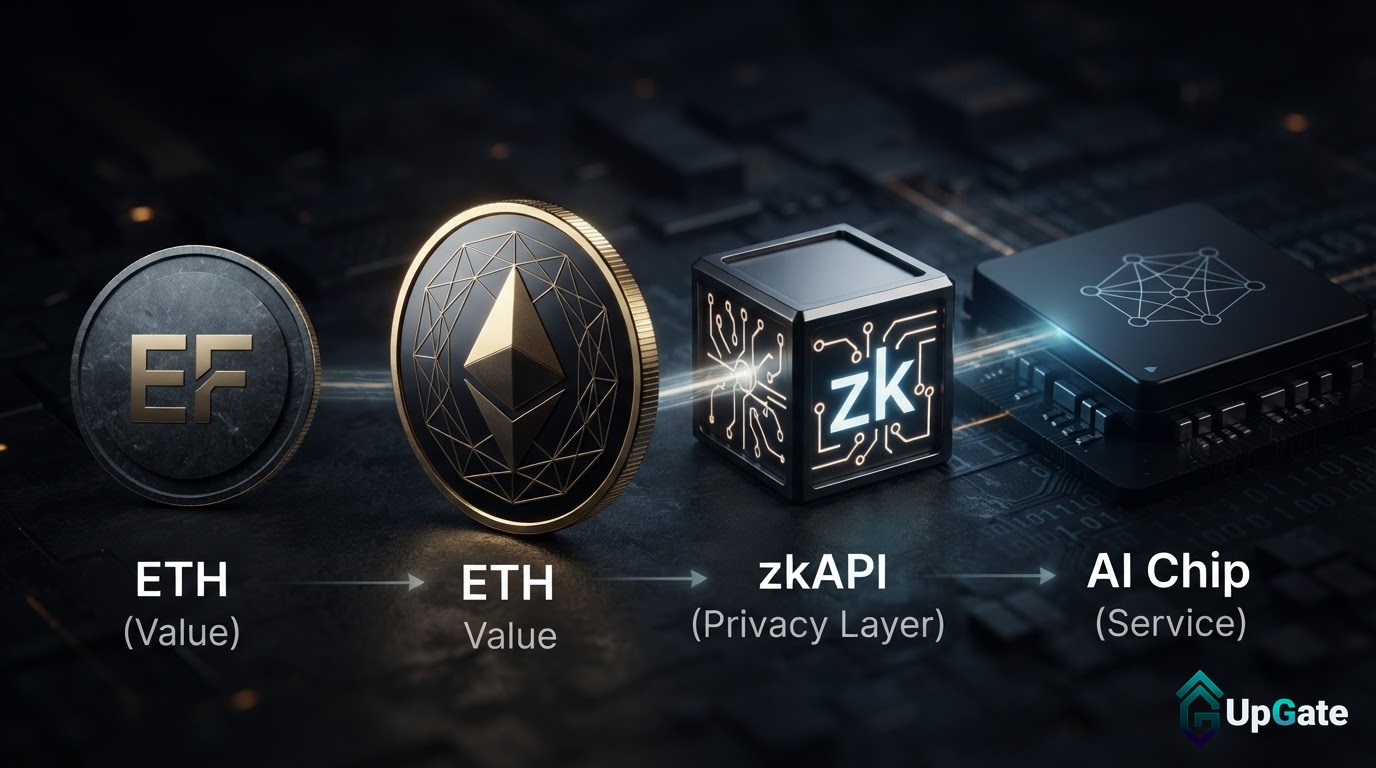
    The Ethereum Foundation has launched zkAPI on Ethereum’s mainnet, a new system designed to enable private payments for artificial intelligence (AI) services. This development aims to address growing privacy concerns by decoupling users’ identities from their AI queries, according to the Ethereum Foundation’s announcement.

    zkAPI, developed in collaboration with the Open Anonymity Project, allows users to pay for AI services using cryptocurrencies like ETH and USDC without linking their personal identity to their AI interactions. Users deposit funds into a vault contract on the Ethereum network, which then functions as private digital cash. A zero-knowledge proof is employed to verify that sufficient funds are available without revealing specific transaction details. Subsequently, a temporary API key is issued to the user’s device, granting access to AI services. Usage is charged based on actual consumption after the key expires, with AI providers and payment processors having separate visibility into the query and the spending, respectively, preventing them from linking the two.

    Addressing AI Privacy Concerns

    The Ethereum Foundation argued that current AI usage models compromise user privacy by linking queries to billing relationships. “Prompts are personal. People ask AI models about their health, their finances, their doubts. Under the current model, using AI means handing a running transcript of your thinking to whoever holds the billing relationship,” the Ethereum Foundation stated. zkAPI aims to resolve this by making “your balance exist as a private note: digital cash that only you can spend and that nobody can trace back to the deposit.”

    The system works with OpenRouter, a service that provides access to numerous AI models through a single connection. The project’s documentation indicates that any application compatible with the OpenAI format can integrate with zkAPI by pointing to a local address. The temporary API keys are capped at a specific dollar amount and exist only in the device’s memory, expiring after use.

    Origins and Broader Context

    The concept behind zkAPI originated from a proposal by Davide Crapis and Vitalik Buterin on Ethereum Research in February. Crapis, who leads the Ethereum Foundation’s dAI team, which focuses on making Ethereum a preferred settlement and coordination layer for AI, had previously suggested Ethereum’s potential as infrastructure for software agents. In August 2025, Crapis and Marco De Rossi proposed the ERC-8004 standard, a framework for AI agents to find each other, verify identity, and transact. Crapis has predicted that machine-generated Ethereum traffic could constitute the majority within three to five years.

    Vitalik Buterin has also been active in outlining Ethereum’s role in AI. On February 10, he presented an Ethereum-AI roadmap that included zero-knowledge payments for private API use. In April, he discussed the alternative of running open-source AI models locally on personal hardware, such as an Nvidia 5090 graphics card, to keep data private. zkAPI addresses scenarios where prompts still need to be sent to external servers.

    The concern over AI privacy is underscored by recent events, such as a federal court order in May 2025 for OpenAI to preserve its output logs, including deleted chats, in response to a lawsuit by The New York Times and other publishers. The potential applications for zkAPI extend beyond AI services, with the possibility of covering other metered services like blockchain data queries, image and video generation, and VPNs.

    Experimental Status

    It is important to note that the zkAPI protocol is labeled as experimental in its repository, and a formal audit has not been listed. Providers integrating with zkAPI would need to accept a proof instead of a traditional API key and settle signed usage receipts.

    Why This Matters

    The materials describe a narrow update: zkAPI, developed with the Open Anonymity Project, allows users to pay for AI services using cryptocurrency (ETH, USDC) without linking their identity to their AI queries. The formal audit status of the zkAPI protocol.

  • Tether enables USDT on Bitcoin via private transfers and swaps

    Tether enables USDT on Bitcoin via private transfers and swaps

    Tether’s Flagship Stablecoin Returns to Bitcoin Roots

    Tether is bringing its flagship stablecoin, USDT, back to its origins on the Bitcoin network. The relaunch, slated for October 2026, will introduce private transfers, direct BTC-USDT swaps, and loans collateralized by Bitcoin, all facilitated through an infrastructure project named Utexo. This move marks a significant homecoming for the world’s most prominent stablecoin, which has spent the past decade primarily operating on Ethereum and Tron.

    Tether CEO Paolo Ardoino announced the impending return on X in September 2026 with a concise message: “It’s coming home.”

    Utexo: The Infrastructure for Bitcoin-Native USDT

    Founded in 2025, Utexo secured a commercial license from Tether to issue USDT on the Bitcoin network. The project successfully raised $7.5 million in early 2026 to develop the necessary infrastructure. The technical backbone of Utexo is a combination of the RGB protocol and Bitcoin’s UTXO (unspent transaction output) model. The UTXO model functions akin to tracking individual bills in a wallet rather than a single running balance, offering a granular approach to managing Bitcoin.

    The RGB protocol enables assets to operate on top of Bitcoin through client-side validation. This method allows parties involved in a transaction to verify data themselves, meaning that most transaction details are not broadcast to the public ledger, thereby enhancing privacy.

    Key Features of the Relaunch

    This innovative design underpins the three core features of the Utexo platform:

    • Private USDT Transfers: Users will be able to send USDT with enhanced privacy.
    • Direct BTC-USDT Swaps: The platform will facilitate direct exchanges between Bitcoin and USDT without the need for intermediaries.
    • Bitcoin-Backed Loans: Users can obtain loans using their native Bitcoin as collateral.

    The initial launch is planned for Bitcoin’s mainnet, with support for the Lightning Network, Bitcoin’s scaling solution for faster payments, expected to be integrated at a later stage.

    Addressing Illicit Activity

    The introduction of privacy features in a stablecoin naturally raises concerns about potential misuse by bad actors. Utexo’s approach to this challenge involves maintaining a blacklist of UTXOs associated with illicit activities. This method differs from the account-based freezes common on other blockchains, where an entire address is locked. Instead, it functions more like flagging specific transactions or “bills” rather than freezing an entire account.

    Early Demand and Institutional Interest

    Early indicators suggest significant demand for Utexo’s offerings. Over 450 businesses, including cryptocurrency exchanges and wallet providers, have already expressed interest. Furthermore, there are ongoing discussions with major financial institutions, with Morgan Stanley reportedly among those involved. While these talks are not confirmed deals, they highlight the potential for broad adoption.

    A Return to USDT’s Origins

    The initial launch of USDT in 2014 occurred on the Omni Layer, a protocol built on top of Bitcoin. Over time, Tether migrated its primary issuance to Ethereum and Tron, seeking the faster transaction speeds and lower fees better suited for stablecoin traffic. Omni issuance was fully discontinued in August 2023. In 2025, Tether announced its integration plans with RGB, paving the way for the current Utexo initiative.

    The ability to conduct BTC-USDT swaps and Bitcoin-backed loans natively on Bitcoin could reduce reliance on wrapped tokens like WBTC, which introduce custodial and smart contract risks.

    The phased rollout, beginning with the mainnet launch in October 2026 and followed by Lightning Network support, aims to fully realize this vision. For the more than 450 businesses that have shown early interest, the coming months will be crucial in determining whether this enthusiasm translates into concrete integrations.

  • Ethereum’s zkAPI Launches on Mainnet, Offering Privacy-Preserving API Payments

    Ethereum’s zkAPI Launches on Mainnet, Offering Privacy-Preserving API Payments

    Ethereum’s zkAPI has officially launched on the mainnet, introducing a system for private, prepaid API payments that leverages zero-knowledge proofs. Announced on Thursday, this development aims to enhance user privacy when accessing services, particularly AI, by obscuring billing identities during transactions.

    How zkAPI Works
    The zkAPI system operates by allowing users to deposit funds into an Ethereum vault. When an API request is made, zero-knowledge proofs are employed to verify sufficient credit without revealing the specifics of the user’s deposits. This mechanism issues short-lived API keys with predefined spending limits, with usage settled separately through the payment layer. Vittorio Rivabella, AI coordinator at the Ethereum Foundation’s dAI team, noted in a post that a key use case is paying for AI services without directly linking the payment to a specific user.

    Development and Context
    To support the zkAPI, the project has released a local client, a software development kit (SDK), and a browser-based AI chat implementation. This mainnet launch follows a February proposal by Ethereum Foundation researcher Davide Crapis and Ethereum co-founder Vitalik Buterin, which detailed a system for ZK-based API usage credits. The current release transforms that design into a functional mainnet implementation.

    Privacy Limitations
    While zkAPI significantly improves privacy by concealing billing identities, it’s crucial to understand its limitations. The system does not obscure prompt contents or network metadata from API providers. Consequently, users could potentially still be identified across different sessions through factors such as IP addresses, request timing, or other information within their requests.

    Significance for API Usage
    The launch of zkAPI on Ethereum mainnet marks a notable advancement in private API payment solutions, especially relevant in the expanding landscape of AI services. However, users should be aware that while payment privacy is enhanced, the system does not guarantee full anonymity of their interactions with service providers.

    Broader Context

    Source materials place the factual news in this context: Ethereum’s zkAPI brings privacy-preserving API payments to mainnet.

  • Google Launches Gemini 4 Argon AI Model with Advanced Cybersecurity Focus

    Google Launches Gemini 4 Argon AI Model with Advanced Cybersecurity Focus

    Google has unveiled Gemini 4 Argon, its latest flagship AI model, emphasizing significant advancements in cybersecurity capabilities. The model is initially being made available to vetted security teams through the Fairwind Program, with a phased public rollout to follow.

    Gemini 4 Argon has demonstrated strong performance across key benchmarks. On the DeepSWE v1.1 test, which assesses AI performance in software engineering tasks, Gemini 4 Argon achieved a score of 77.9%. This score surpasses previous models, as Gemini 3.6 Flash recorded 49% on the same test in July. For comparison, Claude Opus 5.5 scored 74.2% and GPT-6 Astra scored 74.1% on the DeepSWE v1.1 test.

    The model’s cybersecurity features are a primary focus. On Gray Swan’s Indirect Prompt Injection benchmark, designed to test an AI’s susceptibility to malicious instructions embedded within content, Gemini 4 Argon achieved a low score of 0.7%. This indicates improved resilience compared to competitors such as Claude Opus 5.5 and Claude Fable 5.1, which scored 1.0%, and GPT-6 Astra at 8.5%. Google also reports that Gemini 4 Argon attained a 70.9% score on the Wiz Penetration Test Benchmark, outperforming Gemini 3.8 Flash Cyber’s 58.2% score.

    Google states that Gemini 4 Argon can process up to 1 million tokens in a single reply, a substantial increase from the 64,000 tokens of previous models. The company also noted that Argon assisted the security firm Wiz in identifying a critical flaw within healthcare software.

    A notable aspect of Gemini 4 Argon’s release is its operation “without cyber guardrails.” Google’s stated rationale is that defenders require AI models capable of emulating attacker tactics to identify and patch vulnerabilities before they can be exploited. Acknowledging the dual-use potential of these capabilities, Google indicated that a phased rollout is considered the safest approach. The company is also participating in the U.S. government’s voluntary process for pre-release model access.

    The Fairwind Program, Google’s initiative for controlled access to cyber defense tools, launched on September 2 with over 650 partners, including government entities and critical infrastructure operators. This program serves as the initial access channel for Gemini 4 Argon.

    Broader access to Gemini 4 Argon will commence with paid API customers and subscribers of Google AI Ultra. Introductory pricing is set at $2 per million input tokens and $10 per million output tokens. Standard rates will be $4 per million input tokens and $20 per million output tokens, with Google yet to specify the end date for the introductory period.

    This release occurs within a competitive AI development landscape, marked by recent introductions of new models from competitors like Anthropic and OpenAI. Google’s leadership has also signed a voluntary AI accord previously unveiled by President Trump.

    Why This Matters

    The materials describe a narrow update: Google has launched Gemini 4 Argon, its most capable AI model, which demonstrates advanced performance in coding, office tasks, and particularly in cybersecurity. The exact end date for introductory pricing of Gemini 4 Argon.

    Broader Context

    Source materials place the factual news in this context: Gemini 4 is finally here, one week after the release of Claude Opus 5.5 and one day after GPT 6.1 Sol, proving American labs are very much committed to slowing down AI development. Please excuse our sarcasm.

  • Ethereum Foundation Grants $100K for Vyper Compiler Verification

    Ethereum Foundation Grants $100K for Vyper Compiler Verification

    Ethereum Foundation Funds Formal Verification for Vyper Compiler

    The Ethereum Foundation has allocated $100,000 to support the development of a formally verified compiler for Vyper, a Python-like smart contract language that currently secures over $2 billion in total value locked across decentralized finance (DeFi) protocols such as Curve and Yearn.

    Enhancing Security Through Formal Verification

    This grant is part of the ETHSecurity Initiatives Round Two, a broader $600,000 funding pool dedicated to Vyper-specific security enhancements. The initiative addresses a critical, often underestimated, challenge in smart contract development: the potential discrepancy between source code and the Ethereum Virtual Machine (EVM) bytecode produced by compilers. Formal verification of a compiler mathematically guarantees that the translation process accurately preserves the original program’s intent, ensuring that every input yields the precise output specified by the source code without subtle errors.

    Towards a Verified Compilation Mode

    The Ethereum Foundation’s funding aims to integrate a publicly accessible “verified compilation” mode directly into the official Vyper compiler. This feature would empower developers and auditors to confirm that the on-chain bytecode is a faithful representation of the source code they have reviewed. The project involves a collaborative effort with the Foundation for Verified Software, an organization associated with the Verifereum project. This work builds upon prior research in formal semantics conducted using HOL4, a proof assistant employed for rigorous mathematical verification of software systems. The Vyper development team is also actively participating to ensure the verification efforts align with the compiler’s architecture and ongoing development. The Ethereum Foundation has also encouraged additional contributions from the wider ecosystem to broaden the initiative’s scope beyond the initial funding.

    Vyper’s Significant Role in DeFi

    While Solidity is the dominant language in Ethereum smart contract development by volume, Vyper has established a significant presence in protocols that prioritize simplicity and auditability. Curve Finance, a leading decentralized exchange by trading volume and total value locked (TVL), is a prime example of a protocol utilizing Vyper.

    The more than $2 billion in TVL secured by Vyper contracts underscores that a compiler-level bug could have far-reaching consequences, potentially jeopardizing funds across multiple major protocols simultaneously, irrespective of the thoroughness of source code audits.

    Lessons from Past Vulnerabilities

    In 2023, a reentrancy vulnerability linked to specific Vyper compiler versions led to exploits affecting several Curve pools. The issue stemmed not from flawed source code, but from a compiler bug that undermined a correctly implemented security mechanism. This incident resulted in the loss of approximately $70 million and sent ripples of concern throughout the DeFi ecosystem.

    A formally verified compiler would render such exploits structurally impossible. The mathematical assurance would guarantee that if a security mechanism is correctly implemented in the source code, it will be accurately reflected in the generated bytecode.

    The $100,000 grant, while modest in comparison to the value it aims to protect, represents a crucial step. The ultimate success and speed of this project’s transition from a research milestone to a production-ready tool will likely depend on the Ethereum Foundation’s ability to attract further ecosystem funding.

  • Aztec Labs Relaunches zk.money for Private Stablecoin Transactions on Ethereum

    Aztec Labs Relaunches zk.money for Private Stablecoin Transactions on Ethereum

    Aztec Labs has relaunched zk.money, its privacy-focused Ethereum wallet, enabling users to conduct private stablecoin transactions. The self-custodial wallet operates on the Aztec Network, a layer-2 solution designed for privacy.

    The relaunched zk.money allows users to send and receive stablecoins such as USDC, USDT, and DAI without revealing transaction details like balances, amounts, or recipients to the public. While transactions within zk.money remain private, deposits originating from the Ethereum network are publicly visible. According to Aztec’s posts on X, users can claim a tag, for example, bob.zk.money, which resolves to a deposit address through the Ethereum Name Service (ENS), enhancing usability.

    Privacy functions within zk.money are processed on the user’s device, generating zero-knowledge proofs. These proofs serve as cryptographic receipts that validate transactions without disclosing their specifics. The company’s developer documentation describes the Aztec Network as a privacy-first Ethereum layer-2.

    However, the service includes limitations: transactions are capped at $2,500 each, and all users share a collective daily deposit ceiling of $50,000. Aztec Labs emphasizes that as a self-custodial wallet, it cannot control or freeze user funds, and no administrator holds such privileges.

    The original zk.money debuted in 2021, attracting over 75,000 wallets and processing approximately $100 million in volume before the team focused on building its own network. In 2021, Aztec Labs secured $17 million in a funding round led by Paradigm. The company also expanded its offerings with Aztec Connect, a toolkit designed to integrate its privacy technology into decentralized finance (DeFi) protocols.

    The relaunch of zk.money occurs amid a broader focus on privacy enhancements within the Ethereum ecosystem. Proposals for the upcoming Hegecta upgrade are being considered, which could potentially allow privacy pools to manage their own transaction fees without intermediaries. Ethereum co-founder Vitalik Buterin has also discussed the potential for special-purpose applications to achieve significant privacy through zero-knowledge proofs as part of his vision for a “cryptographic world computer.”

    Why This Matters

    The relaunch of zk.money by Aztec Labs offers enhanced privacy for stablecoin transactions on Ethereum, operating as a self-custodial layer-2 solution. This development is significant as it aligns with growing interest in privacy solutions on Ethereum and Vitalik Buterin’s vision for cryptographic privacy.

    Broader Context

    Three years after initially shelving the project, Aztec Labs has relaunched zk.money. The original iteration of the wallet debuted in 2021, attracting substantial user interest and volume before the team shifted focus to developing their underlying network infrastructure.

  • VSMC Opens Singapore Fab with Initial Capacity Booked, Considers Second Facility

    VSMC Opens Singapore Fab with Initial Capacity Booked, Considers Second Facility

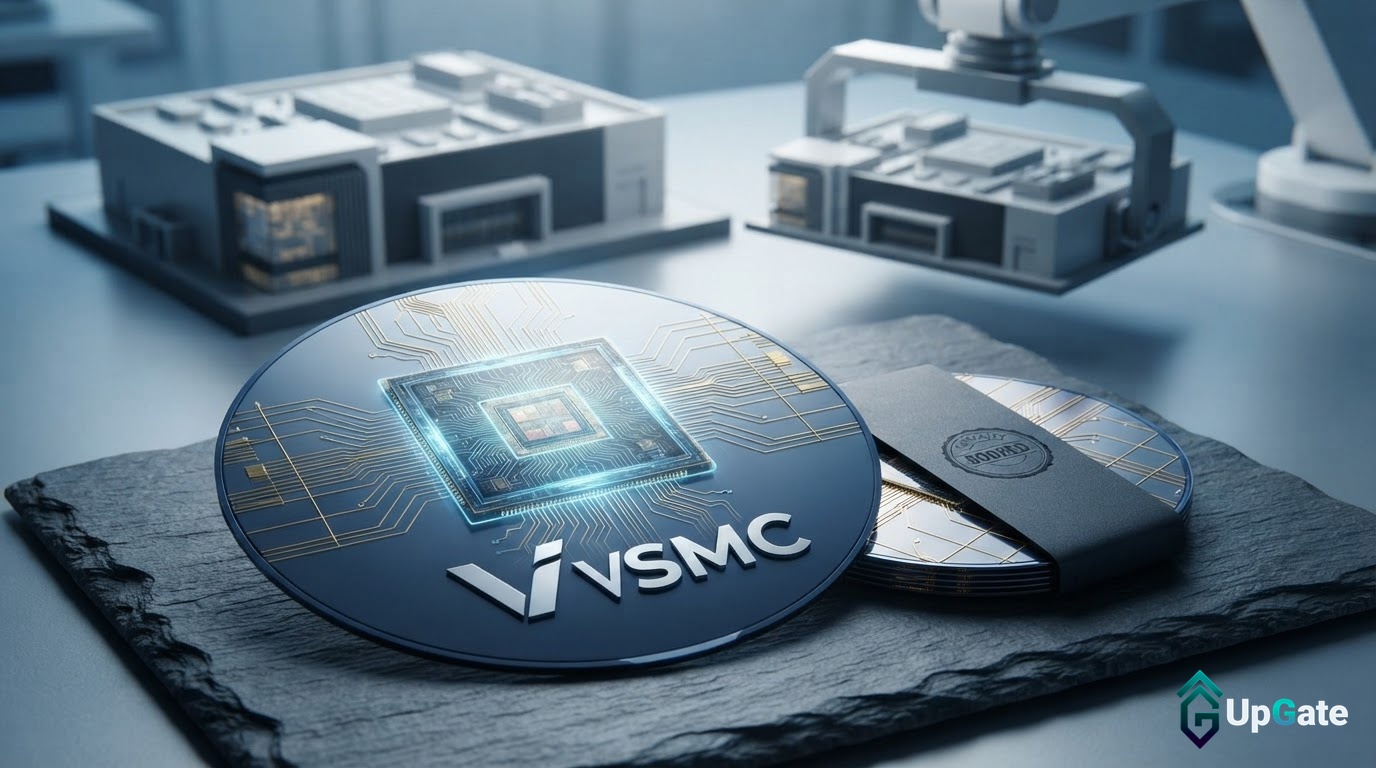
    VSMC, the joint venture between World Advanced (VIS) and NXP Semiconductors, has inaugurated its first 12-inch wafer fabrication plant in Tampines, Singapore. The facility’s initial production capacity is fully subscribed by customers, and the company is considering the construction of a second fab.

    The new fab, which commenced operations on September 28, is designed to produce mixed-signal, power management, and analog chips, as well as silicon interposers. The process technology employed ranges from 130nm to 40nm. According to World Advanced chairman Fang Ruey, the initial sample wafer yield for the fab exceeded 99%.

    This first VSMC fab represents an investment of $7.8 billion and is projected to create approximately 1,600 jobs. By the first quarter of 2027, the facility is expected to reach a monthly capacity of around 44,000 12-inch wafers. World Advanced holds a 60% stake in the joint venture, with NXP Semiconductors holding the remaining 40%.

    NXP CEO Rafael Sotomayor stated that the joint venture enhances NXP’s geographic resilience, supply control, and cost competitiveness, positioning VSMC as a manufacturing base supporting “physical AI.” This move aligns with a broader industry trend of diversifying semiconductor manufacturing locations beyond traditional hubs.

    Discussions are underway regarding a potential second fab. World Advanced chairman Fang Ruey indicated that the company is considering building another facility, which might utilize more advanced process technologies than the first. The exact cost and specific technologies for a potential second fab remain under consideration.

    The decision to include silicon interposers in the first fab’s production mix, which requires more complex manufacturing steps, coincided with a reduction in planned wafer output from an initial estimate of 55,000 to 44,000 wafers per month. This strategic choice allows VSMC to dedicate cleanroom space to components essential for advanced packaging, balancing wafer volume with product diversity.

    The opening of the VSMC fab and its immediate full capacity booking underscore the sustained demand for specialty chips, which are critical components for various applications, including automotive, industrial, and AI infrastructure. The industry continues to navigate supply constraints driven by robust demand across multiple sectors.

    VSMC was established as a joint venture between World Advanced and NXP Semiconductors approximately two years ago. NXP acquired Freescale in 2015. The current expansion in Singapore reflects a strategic effort to bolster manufacturing capabilities and ensure supply chain resilience in a dynamic global market.

    Why This Matters

    The materials describe a narrow update: VSMC, a joint venture between World Advanced (VIS) and NXP, inaugurated its first 12-inch wafer fabrication plant in Tampines, Singapore on September 28. The exact cost of the second VSMC fab.

    Broader Context

    Source materials place the factual news in this context: TSMC’s investment in World Advanced.

  • Researchers Demonstrate RSA Cryptography Attack by Impersonating Hardware Security Module

    Researchers Demonstrate RSA Cryptography Attack by Impersonating Hardware Security Module

    Researchers have demonstrated an attack that can impersonate a hardware security module (HSM) to forge signatures using RSA cryptography. This attack, however, does not affect cryptocurrencies like Bitcoin or Ethereum, which utilize different cryptographic algorithms. The findings highlight potential vulnerabilities in key protection mechanisms and underscore the ongoing transition to post-quantum cryptography.

    The attack, detailed in a preprint paper submitted to the IACR Cryptology ePrint Archive on September 20, was carried out by researchers from UC San Diego and France’s Institute for Research in Computer Science. According to the authors, the demonstration involved impersonating an HSM without needing to extract the private key. This was achieved by disabling the HSM’s FIPS mode, a certified security setting, which allowed it to sign unformatted numbers. The researchers then performed mathematical operations on the resulting signatures after requesting approximately 4 billion signatures using a 1024-bit RSA key.

    Understanding the Attack and its Context

    Hardware security modules are tamper-resistant devices designed to store private keys securely and perform cryptographic operations on request. They are commonly used by institutional custody providers, such as BitGo, to protect sensitive digital assets. The core principle of RSA cryptography, developed in 1977, relies on the computational difficulty of factoring large prime numbers. Standard RSA signing processes typically employ padding schemes, like PKCS#1 v1.5 or PSS, which are designed to prevent this type of oracle attack where a signing device is tricked into revealing information about the private key.

    The researchers claim that their demonstration likely poses no immediate operational threat to most modern RSA deployments. However, they suggest that this finding serves as classical evidence for moving away from RSA during the post-quantum transition. This recommendation aligns with broader industry trends as quantum computers are expected to pose a significant threat to current cryptographic standards.

    Broader Implications for Cryptography

    While this specific attack targets RSA, other cryptographic algorithms like the Elliptic Curve Digital Signature Algorithm (ECDSA), used by Bitcoin and Ethereum, are also known to be vulnerable to quantum computing. Estimates suggest that quantum computers with 10,000 to 20,000 qubits could potentially run Shor’s algorithm to break ECDSA signatures. In response to these future threats, companies like Google have set deadlines, such as 2029, to migrate their systems to post-quantum cryptography.

    This is not the first time RSA cryptography has been the subject of security concerns. In January 2023, Chinese researchers claimed a quantum method that threatened RSA, but experts dismissed that claim. The current demonstration, while using a test key and specific conditions like disabling FIPS mode, serves as a stress test for how keys are guarded and reinforces the importance of cryptographic agility.

    The authors’ findings are presented in a preprint, meaning it has not yet undergone formal peer review. However, the demonstration highlights the ongoing need for vigilance and adaptation in the field of cryptography, particularly as the world prepares for the advent of quantum computing.

    Broader Context

    Source materials place the factual news in this context: Hardware security modules (HSMs) are tamper-resistant devices that store private keys and sign on request, used by institutional custody providers like BitGo.

  • Chainlink Empowers Institutions with Custom Bridge Security Post-Kelp Hack

    Chainlink Empowers Institutions with Custom Bridge Security Post-Kelp Hack

    Chainlink Unveils CCIP 2.0, Enhancing Cross-Chain Interoperability with New Security Features

    Chainlink has launched CCIP 2.0, the latest iteration of its cross-chain communication protocol. This software layer is increasingly adopted by financial institutions and cryptocurrency projects to facilitate the transfer of tokenized assets, such as stablecoins, wrapped Bitcoin, and tokenized funds, across different blockchains without the need for custom-built bridges.

    Blockchains, by nature, operate in isolation, meaning one network has no inherent knowledge of activity on another. When a token moves between chains, a mechanism is required to confirm its departure from the origin and its arrival at the destination. This is the role of a bridge, which relies on a verifier to validate the transfer.

    However, this reliance on verifiers has proven costly. Bridges have been the target of numerous hacks, resulting in billions of dollars in losses, often due to a single point of failure—a lone verifier that can be compromised.

    CCIP 2.0 addresses this vulnerability with a new feature called the Cross-Chain Verifier (CCV). This allows institutions to deploy their own verifiers, acting as a secondary check on transactions before they are finalized, or to engage third-party firms like Infosys or Nethermind to provide this service. Starter kits for implementation are available on Amazon Web Services and Google Cloud.

    Underpinning these new options, Chainlink’s default security mechanism remains in place: a committee of 16 independent node operators, representing separate companies, must reach a consensus on the legitimacy of every transfer. This core consensus layer has not been altered.

    More subtle changes have been made to the protocol’s architecture. The Risk Management Network, a separate set of nodes that previously served as a secondary validation layer for the main committee’s work, has been de-emphasized. According to the project’s documentation, “The Risk Management Network’s automated offchain role is no longer active in current CCIP deployments, but is expected to be offered as an optional validation layer in future releases.”

    The on-chain contract now functions primarily as an emergency backup. Chainlink asserts that the independent verification previously provided by the Risk Management Network can now be replicated by the optional CCVs. In practice, this means institutions that do not opt for additional verification layers will rely on a single verification network, a reduction from the previous two.

    The implications of these advancements extend beyond the decentralized finance (DeFi) community. Chainlink reports that $15 billion in tokenized assets have been moved across its network in the past four months, including significant portions of BitGo’s wrapped Bitcoin and Coinbase’s cbBTC. These are assets increasingly integrated into traditional financial products like ETFs and bank offerings, held by everyday investors who may not directly interact with cryptocurrency wallets.

    The timing of this upgrade appears to be influenced by recent security incidents. In April, hackers attributed to North Korea’s Lazarus Group reportedly stole approximately $292 million from Kelp DAO, a protocol that enabled users to stake Ethereum and transfer the resulting tokens across blockchains. Kelp’s bridge was configured with a single verifier on the LayerZero protocol, a setup that LayerZero later acknowledged as a mistake and ceased supporting for new deployments.

    Kelp stated that LayerZero’s team had approved the configuration and did not flag it as risky. LayerZero contested this, asserting that the setup deviated from its own recommendations. Regardless of the specifics, the incident prompted a significant migration of institutions. Kelp itself transitioned to Chainlink, as did Kraken, which moved its wrapped Bitcoin token, and Lombard Finance, which transferred over $1 billion in Bitcoin-linked assets.

    Chainlink’s value proposition centers on its track record as a secure cross-chain solution. CCIP 2.0 offers institutions the flexibility that contributed to LayerZero’s challenges, but with the added assurance that Chainlink’s 16-operator committee still validates every transfer by default.

    “Historically, legacy bridges have lost billions due to insecure infrastructure, while in-house builds are slow and expensive and institutions’ proprietary networks can’t earn the trust of their peers,” said Johann Eid, Chief Business Officer at Chainlink Labs, in the launch announcement.

    Chainlink claims that CCIP currently secures over $84 billion in cross-chain token value, a figure it self-reports. While eighteen companies are listed as launch partners, their statements suggest varying levels of commitment. Fidelity noted the upgrade “has the potential to support” broader distribution, while Further Asset Management indicated it “intends to partner.” As of launch day, confirmed, live deployments utilizing the new verifiers remain limited.

  • Ethereum’s Hegotá Upgrade May Mark Shift Beyond Traditional Forks to Advanced Cryptographic Technologies

    Ethereum’s Hegotá Upgrade May Mark Shift Beyond Traditional Forks to Advanced Cryptographic Technologies

    Ethereum’s upcoming Hegotá upgrade, planned for 2027, could represent the last ‘normal’ fork before the network embarks on a path focused on more advanced technologies, according to Vitalik Buterin. This potential shift signals a broader evolution of Ethereum from a conventional blockchain to what Buterin describes as a ‘cryptographic world computer.’

    Buterin stated that Hegotá is likely to be the final upgrade whose features and technology would still be recognizable to someone familiar with Ethereum in 2015. Following Hegotá, development is expected to pivot towards complex areas such as recursive STARKs, automated formal verification, optimized consensus, and quantum-safe cryptography. The introduction of PeerDAS, which allows nodes to verify data availability by sampling rather than downloading entire datasets, is seen by Buterin as the beginning of this transition.

    This evolution involves moving beyond a model where nodes simply download and re-execute transactions. Instead, the architecture will combine blockchains with cryptographic verification, privacy features, and decentralized offchain components. This shift could fundamentally alter how Ethereum applications are built, by enabling more computation to occur offchain while the base layer is used for verification, transaction settlement, and preserving access to shared onchain state. Such a model could significantly reduce the workload on the network and facilitate lighter nodes.

    The potential for expanded decentralized finance (DeFi) applications is a key implication of this architectural change. Cryptographic, a pseudonymous commentator, suggested that allowing more complex computation outside of smart contracts, with Ethereum verifying the resulting transactions, could broaden DeFi capabilities. For instance, in DeFi lending, collateral analysis, liquidation routing, or borrower-lender matching could be handled offchain before Ethereum verifies and settles the outcomes.

    However, this proposed evolution is not without its debates. Ethereum researcher Barnabé Monnot argued that a ‘world computer’ should still maintain critical records directly onchain to ensure users can observe and interact with applications without relying on external servers or intermediaries. This perspective highlights an ongoing discussion about the optimal balance between onchain data and offchain processing.

    Further questioning the direction, crypto lawyer Gabriel Shapiro raised concerns about the demand for proof-based systems compared to traditional trust-based models. Shapiro pointed out that many existing financial services rely on reputation, regulation, and legal enforcement rather than continuous cryptographic verification, suggesting a potential gap between the proposed technological advancements and current market needs.

    The timeline indicates that while Hegotá is planned for 2027, the underlying concepts of Ethereum’s evolution are already in motion. The transition envisions a future where Ethereum acts as a robust platform for complex computations and verifiable transactions, pushing the boundaries of what decentralized systems can achieve.

    Why This Matters

    The materials describe a narrow update: Vitalik Buterin stated that the upcoming Hegotá upgrade for Ethereum, planned for 2027, might be the last ‘normal’ fork. How much computation and state should ultimately move offchain.

    Broader Context

    Source materials place the factual news in this context: Vitalik Buterin says Hegotá could be Ethereum’s last ‘normal’ fork.