Tag: Technology & Innovation

  • Jupiter Ultra Users Report Fewer Sandwich Attacks

    Jupiter Ultra Users Report Fewer Sandwich Attacks

    Sandwich Attacks Plague Solana, But One Platform Shows Promise

    Sandwich attacks have become a pervasive issue on the Solana blockchain, with an estimated 28 million such incidents recorded over the past three years. However, a new academic study suggests that traders utilizing Jupiter Ultra may be experiencing significantly fewer of these exploits. This finding emerges from the first multi-year academic analysis of protected order flow attacks across major blockchain networks.

    Study Highlights Application-Level Design Impact

    The research, titled “No Place to Hide: An Analysis on Protected Order Flow Sandwich Attacks,” was published on arXiv on September 23, 2026. Conducted by researchers from Category Labs, ETH Zurich, Flashbots, and the University of Lisbon, the study examined sandwich attack activity on Ethereum, Solana, Tron, Base, Arbitrum, and Monad. The results underscore the critical role that application-level design choices play in determining the frequency of user exploitation.

    A sandwich attack occurs when a bot detects a pending user swap, places a buy order immediately before it to inflate the price, and then sells after the user’s trade executes at the higher price. This results in the user receiving a worse execution price, with the bot profiting from the difference.

    Solana’s technical architecture is considered particularly conducive to such attacks. Its low transaction fees enable bots to conduct sandwich attempts cheaply and at a large scale, while the visibility of its mempool provides bots with the necessary information to front-run trades.

    Jupiter Ultra Demonstrates Superior Protection

    To quantify the impact of these attacks, the study employed an “excess ratio” to measure how often users of each application fell victim to sandwich attacks relative to a statistical baseline. Jupiter Ultra recorded an overall excess ratio of 0.7, indicating that its users were sandwiched less frequently than statistically expected. In scenarios involving single victims, this ratio rose to 2.0, still considerably lower than its competitors.

    The contrast with other Solana trading platforms is striking. Axiom registered an excess ratio of 18.9, Photon 11.1, and both BullX and GMGN exceeded ratios of 10.

    Jupiter attributes its superior performance to Ultra V3, launched on October 17, 2025, which introduced several protective features. Private routing conceals transaction details until execution, thereby removing the information advantage that sandwich bots exploit. Dynamic slippage estimation adjusts tolerance levels in real-time, moving away from static user-defined parameters. The platform also integrated “Iris meta-aggregation” and “Ultra Signaling” to further enhance transaction privacy and execution quality.

    Jupiter claims aggressive results, including 34 times better sandwich protection compared to competitors, an average positive slippage of +0.6 basis points, and execution fees that are 8 to 10 times lower than rival platforms.

    Blockchain Architecture Not the Sole Factor

    A significant conclusion from the study is that the blockchain itself is not the only determinant of vulnerability. Application-level design choices—such as how a trading platform routes orders, what information it exposes to the public mempool, and how it manages slippage—play a crucial role in dictating which users are targeted and how often.

    Despite these advancements, the researchers emphasized that sandwich attacks have not been eradicated on Solana. Validators still present a potential vector for exposure, and while Jupiter Ultra mitigates the problem, it does not entirely eliminate it.


  • Vitalik Buterin Envisions Ethereum’s 2030 Architecture: A Hybrid of Cryptographic Proofs and Off-Chain Computation

    Vitalik Buterin Envisions Ethereum’s 2030 Architecture: A Hybrid of Cryptographic Proofs and Off-Chain Computation

    Vitalik Buterin has outlined a vision for Ethereum’s architecture in 2030, proposing a significant shift from its current model to a hybrid system integrating cryptographic proofs with off-chain computation. This evolution aims to enhance scalability and privacy on the network.

    Buterin described this future state as a move away from the current paradigm where every node verifies the same transactions. Instead, the proposed architecture will leverage cryptographic proofs to verify computations performed off-chain. This approach is expected to allow different machines to perform distinct tasks and mutually verify each other’s results, thereby increasing the network’s capacity as the number of participating nodes grows. The current method, where every machine repeats the same computation, is identified as a bottleneck limiting scalability.

    The Hegotá upgrade, anticipated next year, is characterized by Buterin as the final ‘traditional’ hard fork for Ethereum. Following Hegotá, the network’s development narrative will increasingly focus on this transformation towards a system reliant on mathematical proofs and formal verification.

    Key to this future vision is the maturation of cryptographic technologies, particularly zero-knowledge proofs. These advancements are enabling the proposed system, which combines a base blockchain with cryptographic verification and off-chain computation networks. Buterin expects this new architecture to result in cheaper, more scalable, and more private secure computation compared to previous generations. He also anticipates a reduction in transaction finality times, potentially to between 8 and 32 seconds.

    Buterin’s plan also includes measures to enhance privacy, such as encrypting balance queries, which would protect transaction content and wallet signing rules. This focus on privacy is a core component of the proposed 2030 vision.

    However, the realization of this vision faces certain challenges. Buterin acknowledges that the cost of generating cryptographic proofs needs further reduction for widespread adoption. Additionally, coordinating updates to the same balance or contract state among nodes performing distributed computation without overwriting each other presents an engineering hurdle. The exact implementation details and timeline for achieving this 2030 vision are subject to ongoing engineering efforts.

    Despite these challenges, the proposed architectural changes could have a notable impact, potentially leading to continuously decreasing on-chain transaction fees and enhanced privacy protection for businesses and individuals. The shift signifies a long-term technical direction for Ethereum, moving towards a more efficient and private network.

    Why This Matters

    The materials describe a narrow update: Vitalik Buterin described a future Ethereum architecture for 2030 that moves away from every node verifying the same transactions. The cost of generating cryptographic proofs needs to be further reduced for widespread application.

    Broader Context

    Source materials place the factual news in this context: Vitalik Buterin’s latest article outlines his vision for Ethereum in 2030.

  • Google Responds After 10 Months: Gemini Launches by Year-End

    Google Responds After 10 Months: Gemini Launches by Year-End

    DeepMind’s New Leader Signals Gemini 4’s Imminent Arrival, Aiming to End Google’s AI Flagship Drought

    Google DeepMind’s newly appointed head, Koray Kavukcuoglu, has broken his silence in his first public interview, revealing that Gemini 4 has entered its post-training phase and is slated for an early release, potentially before the end of 2026. This move aims to fill a significant gap in Google’s flagship AI model offerings, which has persisted for nearly ten months.

    A Ten-Month Flagship Hiatus

    For the past ten months, Google has not introduced a new flagship AI model. During this period, competitors have surged ahead: OpenAI has unveiled GPT-6, and Anthropic has launched its Mythos series. Both companies’ new models reportedly surpass the performance of Google’s Gemini 3, released in November 2025.

    Now, Koray Kavukcuoglu, who has taken the helm at Google DeepMind, has addressed the situation. Speaking at The Information’s AI Agenda Live summit, he confirmed that Gemini 4 is in its post-training phase, a crucial stage involving fine-tuning and human feedback correction after the primary training is complete.

    Kavukcuoglu disclosed that the new model is undergoing internal testing on Google’s proprietary development platform, Antigravity. The ambitious target is to launch Gemini 4 “significantly ahead” of its initially projected end-of-2026 release.

    Leadership Shuffle and Strategic Pivot

    This period of flagship model absence coincided with a significant reshuffling of Google’s AI leadership. On August 5, 2026, Sundar Pichai and Demis Hassabis announced in a joint Google blog post that Hassabis would step down from day-to-day operations at DeepMind. He transitioned to the role of Chairman of Google DeepMind and Chief Scientist at Alphabet, focusing on Artificial General Intelligence (AGI) and Alphabet’s AI drug discovery company, Isomorphic Labs. Koray Kavukcuoglu, a 13-year veteran of DeepMind, was promoted to Senior Vice President, reporting directly to Pichai and overseeing Gemini model development, cutting-edge AI research, and the Gemini App team.

    In his blog post at the time, Hassabis expressed confidence: “I have always been incredibly confident in handing over the Gemini models to Koray and the team, and I am excited about the progress we are making on new models like Gemini 4.”

    Google’s previous flagship, Gemini 3.5 Pro, has faced multiple delays. At the I/O conference in May 2026, Pichai publicly pledged that an enhanced version of Gemini 3.5 Pro would be released in June to close the gap with competitors. However, the June, July, and August targets were missed, and the model has yet to be released.

    Kavukcuoglu explained this delay by stating the team “took a small step back” to reallocate resources to the faster, smaller-scale Flash models. At the time, the team determined that prioritizing rapid learning speed was more advantageous than pushing a flagship model that was proving difficult to perfect.

    This strategic choice, Kavukcuoglu emphasized in his recent interview, underpins Gemini 4’s strategy: to expedite the release of early post-training results. “We’re seeing the results, and we’re excited,” he stated, adding that the team plans to continue with “rapid iteration.”

    Redefining Success Beyond AGI

    When questioned about Google’s perceived lag and whether it would follow Hassabis’s pursuit of AGI, Kavukcuoglu deliberately sidestepped the framing. “Whether we achieve AGI is not the point of the discussion; the real question is whether we can build trustworthy intelligent agents,” he remarked. Addressing concerns about falling behind rivals, he expressed “100 percent confidence,” asserting, “In my view, we are always at the forefront; that’s a certainty.”

    Despite the delays in its flagship model, Google’s current business metrics are robust. The Antigravity platform boasts over 2.4 million weekly active users, and its model APIs process approximately 22 billion tokens per minute. While the user base remains strong, the critical missing piece is a flagship model capable of directly competing with GPT-6 and Mythos.

    However, as with any technological promise, until the model is officially launched, it remains an unfulfilled commitment.

  • Solana Activates Alpenglow Consensus Upgrade on Testnet and Devnet

    Solana Activates Alpenglow Consensus Upgrade on Testnet and Devnet

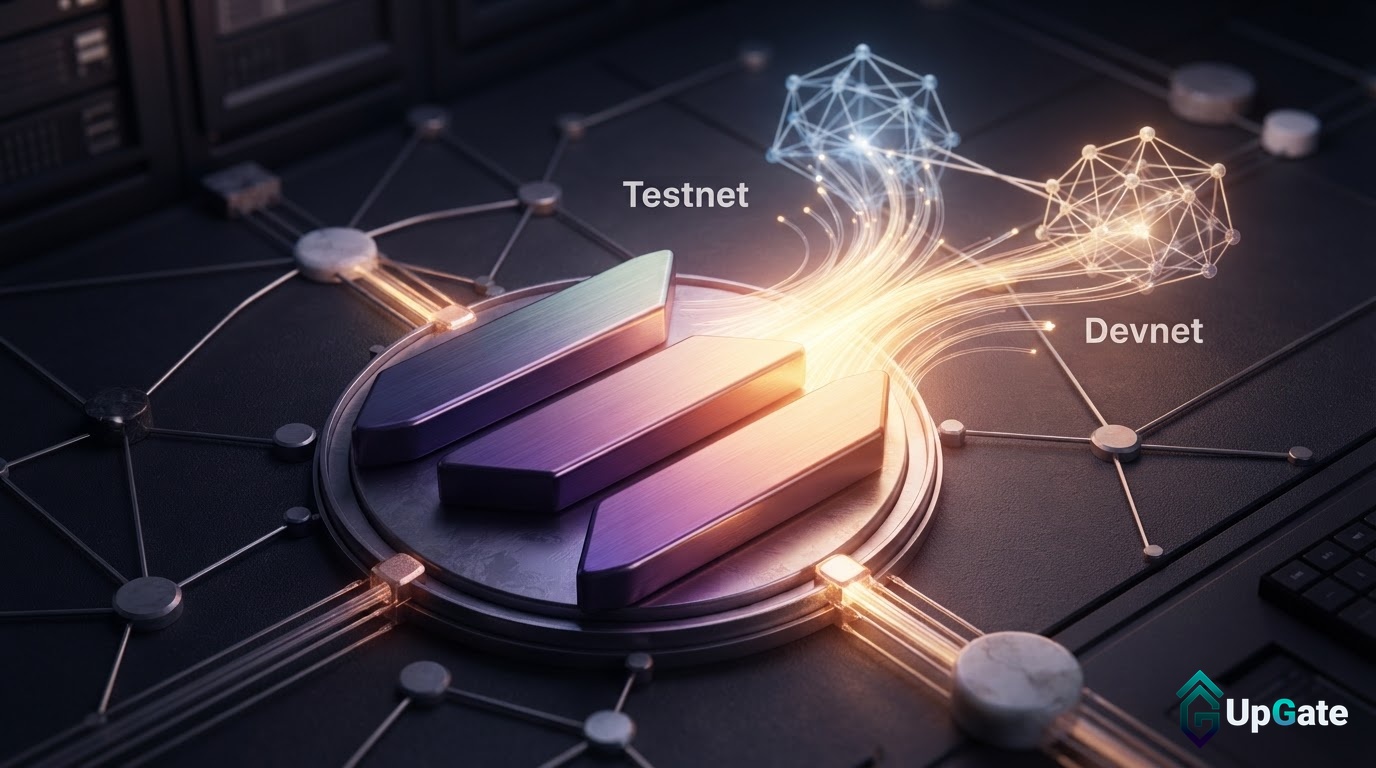
    Solana has activated its Alpenglow consensus mechanism upgrade on its testnet and devnet, a significant technical milestone aimed at enhancing transaction finality. This overhaul replaces the existing TowerBFT consensus with a new protocol called Votor, targeting transaction finality within a range of 100 to 150 milliseconds.

    The Alpenglow upgrade was deployed on the Solana testnet on September 24th and on the devnet the following day, September 25th. These activations are crucial steps in the testing phase for the new consensus mechanism before any potential mainnet deployment.

    At its core, Alpenglow’s introduction of Votor is designed to improve the efficiency and speed of Solana’s network. The shift from TowerBFT, a foundational element of the network, to Votor is positioned as a major advancement. If the targeted transaction finality of 100 to 150 milliseconds is achieved on the mainnet, it could substantially boost the network’s performance.

    Described as Solana’s biggest consensus overhaul since its launch, the development has drawn attention. Solana co-founder Anatoly Yakovenko remarked on the significance, stating, “You are not ready for this.”

    While the activation on test and development networks represents concrete progress, the targeted transaction finality speeds have yet to be proven under full mainnet conditions. The performance and stability of Alpenglow will require further validation through ongoing testing and eventual mainnet deployment.

    The activation on testnet and devnet signals forward movement toward achieving faster transaction finality, a key objective for the Solana network. Future stages will focus on assessing the real-world implications and performance of Alpenglow as development progresses.

    Broader Context

    Source materials place the factual news in this context: Alpenglow is described as Solana’s biggest consensus overhaul since launch.

  • TypeSafe AI Eyes $1B Funding Amidst Jev Model Growth

    TypeSafe AI Eyes $1B Funding Amidst Jev Model Growth

    Startup in Talks for Over $1 Billion Funding Round at $10 Billion Valuation

    TypeSafe AI, a San Francisco-based startup that recently emerged from stealth, is reportedly in discussions to secure over $1 billion in new funding. The round would value the company at more than $10 billion, a remarkable leap from its initial $200 million valuation just weeks prior to its public debut.

    Rapid Ascent Following Product Launch

    The company officially exited stealth on September 15, announcing a $40 million seed round led by DCVC, a venture firm known for its investments in deep-tech companies. This initial funding round valued TypeSafe AI at approximately $200 million post-money.

    On the same day, TypeSafe AI launched its product, Jev. The market’s reaction was swift and significant. Vercel, a prominent developer platform, reported more than double its usual paid account sign-ups within 24 hours of Jev’s release, surpassing the performance of all previous model launches on the platform. A promotional video for Jev posted on X garnered 40 million views in less than a week.

    Usage of OpenRouter also saw a notable increase in the days following the launch, indicating that developers were not merely exploring demos but actively integrating Jev into their existing workflows.

    Jev’s Focus on Structured Outputs and Confidence Scores

    While the AI market is saturated with large language models adept at generating human-like text, Jev distinguishes itself by focusing on structured, probabilistic outputs designed for software decision-making rather than conversational purposes. A key feature of Jev is its provision of calibrated confidence scores alongside its outputs, offering developers a clearer indication of the reliability of each result.

    In terms of performance, Jev delivers latency ranging from 70 to 500 milliseconds. The ability to achieve sub-100ms latency is particularly significant for real-time applications, where even minor delays can negatively impact user experience.

    Competitive Pricing and Profitability

    Jev’s pricing is set at $0.042 per million input tokens, a rate that significantly undercuts the pricing of other leading large language models. James Hardiman, a general partner at DCVC, has commented that TypeSafe AI is already achieving profitability due to its low inference costs.

    TypeSafe AI was co-founded by Diogo Almeida, Erik Gafni, and Sasha Sheng. Almeida’s previous experience includes a tenure at OpenAI. The founders aimed to address a critical gap: the unreliability of large language models in production software environments and their prohibitive cost at scale.

    Almeida has confirmed substantial inbound investor interest since the launch but has refrained from disclosing specific terms or participants for the anticipated billion-dollar funding round.

    A Meteoric Rise in Startup Valuation

    If TypeSafe AI successfully closes a funding round at or above $10 billion, it would mark one of the most rapid valuation increases in recent startup history. Such a dramatic ascent, from $200 million to $10 billion in a matter of weeks, suggests that investors perceive a significant opportunity for the company to capture a substantial portion of enterprise AI spending, rather than being driven solely by hype.

    TypeSafe AI’s pricing strategy, at $0.042 per million input tokens, could also lead to downward pressure on inference costs across the industry. At a $10 billion valuation, the company is already becoming a significant target for potential acquisition by larger industry players.

  • Elon Musk’s AI Cluster Expansion Faces Energy and Regulatory Hurdles

    Elon Musk’s AI Cluster Expansion Faces Energy and Regulatory Hurdles

    Elon Musk has announced significant expansion plans for the Colossus 2 AI computing cluster in the Memphis, Tennessee and Southaven, Mississippi corridor, aiming to more than double its Nvidia chip count to over 1.1 million H100-equivalent accelerators by the end of 2026. This aggressive buildout, however, is encountering substantial energy infrastructure challenges and regulatory scrutiny.

    The Memphis-area cluster had already reached approximately 1 GW of AI compute capacity by mid-2026, with the full Colossus 2 buildout modeled for an IT load of around 946 MW. To power this immense demand, the facility currently relies on a combination of temporary gas turbines and Tesla Megapacks, a setup described as a patchwork solution treating battery storage as a bridge to more permanent infrastructure.

    Adding to the complexity, regulators have ordered the phase-out of 69 temporary turbines by mid-2027. This decision stems from local concerns regarding emissions, noise, and the overall sustainability of operating portable generators in an area adjacent to residential zones.

    In response to these energy demands and the impending phase-out of temporary solutions, a permanent 1.2 GW gas-fired power plant is under construction in Southaven. This facility is intended to replace the temporary generation equipment and provide a stable, long-term energy foundation for the cluster’s operations.

    The scale of the AI computing cluster has already attracted major technology players. Google signed a contract in June 2026 for approximately 110,000 GPUs, with a rate of $920 million per month agreed upon from October 2026 through June 2029. Anthropic has also secured capacity at the facility, underscoring the high demand for advanced AI processing power.

    The cluster itself integrates multiple sites, including the original Colossus 1 facility, Colossus 2, and newer additions referred to as Minihard and Macrohardrr. The announcement, made on September 25, highlights the rapid pace of AI infrastructure development and the critical need to align energy supply and regulatory compliance with technological ambition.

    Why This Matters

    The expansion of Elon Musk’s Colossus 2 AI computing cluster underscores the immense energy demands of advanced AI infrastructure. The project’s reliance on temporary power solutions and subsequent regulatory orders to phase them out highlight the critical need for sustainable energy development to keep pace with technological growth. This situation presents a challenge in balancing rapid AI advancement with environmental concerns and regulatory compliance, as evidenced by the ongoing construction of a permanent power plant to meet future needs.

    Broader Context

    Elon Musk laid out a concrete timeline for scaling up the Colossus 2 AI computing cluster in the Memphis, Tennessee and Southaven, Mississippi corridor, committing to more than doubling the facility’s Nvidia chip count before the end of 2026. The expansion would push the cluster toward more than 1.1 million H100-equivalent accelerators. This development is part of a broader trend of aggressive AI infrastructure buildouts across the industry, necessitating significant investments in energy and facing increasing regulatory oversight.

  • Solana’s Alpenglow Upgrade Enters Public Testnet, Aims to Reduce Transaction Finality

    Solana’s Alpenglow Upgrade Enters Public Testnet, Aims to Reduce Transaction Finality

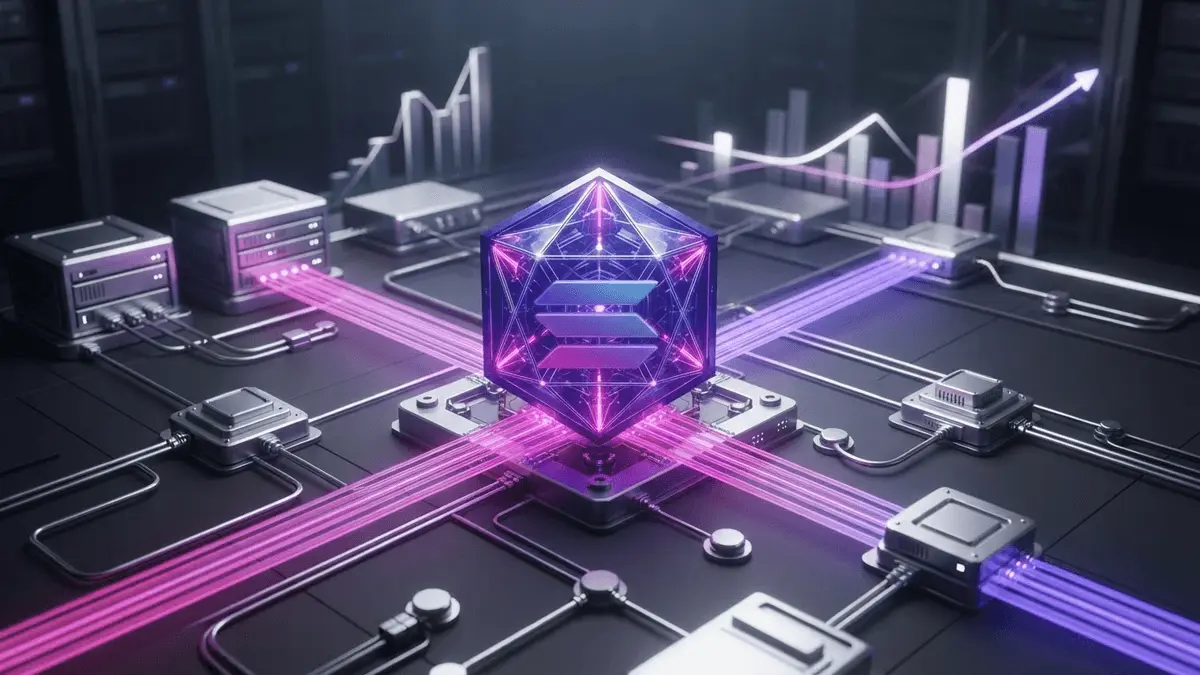
    Solana’s Alpenglow upgrade has advanced to its public testnet phase, a development focused on significantly reducing transaction finality time. The upgrade aims to decrease the time it takes for a transaction to be considered final from approximately 13 seconds to a mere 0.15 seconds.

    This substantial reduction in finality time is achieved by replacing Solana’s current TowerBFT consensus mechanism with the Votor protocol. According to reporting, Votor allows validators to exchange votes directly, enabling consensus to be reached in one or two rounds, thereby streamlining the process compared to the previous method that required votes to be recorded on the blockchain over multiple slots.

    Anza, a key entity in Solana’s development, has indicated that the mainnet upgrade is tentatively scheduled for September 28th. However, the current testnet phase requires validators to utilize Agave 4.3, the primary validator software maintained by Anza. This dependency means that alternative validator clients, such as Firedancer and Frankendancer developed by Jump Crypto, do not yet support the Alpenglow test.

    This reliance on a single software client for the initial rollout has been identified as a potential weakness within the Solana ecosystem. The existence of multiple validator programs like Firedancer and Frankendancer is intended to prevent over-reliance on a single software. Should Agave encounter issues, it could lead to a simultaneous halt for all validators.

    Despite this, the strategy of first implementing core functions and then awaiting support from alternative clients is considered a stable approach. This phased deployment, which involves validators holding 10% and then 25% of SOL’s total stake being upgraded sequentially, is designed to mitigate the risks associated with a full network-wide upgrade.

    The Alpenglow upgrade has been in development on a smaller, dedicated network for over four months. Its move to a public testnet allows for broader testing and verification of stability in real-world environments using test tokens, without impacting live user funds.

    While the technical improvements are significant, the actual user experience enhancement will also depend on optimizations within the application layer. Many wallets and exchanges currently wait for multiple confirmations before displaying a transaction as successful, even if the underlying network has achieved finality much faster.

    This development positions Solana to potentially compete more effectively with traditional financial systems in payment scenarios due to its enhanced speed. However, uncertainties remain regarding the exact timeline for the mainnet launch and the integration of alternative validator clients. The upgrade’s success in practice will also hinge on the broader ecosystem’s ability to leverage the reduced finality times.

    Why This Matters

    The materials describe a narrow update: Solana’s Alpenglow upgrade has moved to a public testnet. The exact date of the mainnet upgrade.

    Broader Context

    Source materials place the factual news in this context: Solana’s Alpenglow upgrade has entered public testnet, developers are shortening transaction confirmation time from 13 seconds to 0.15 seconds. The upgrade replaces the TowerBFT consensus mechanism with the Votor protocol, but Firedancer and Frankendancer are not yet supported.

  • USDT0 Aims for $20M in Transfers Amid Ethereum-Tron Liquidity Surge

    USDT0 Aims for $20M in Transfers Amid Ethereum-Tron Liquidity Surge

    USDT0 Focuses on Ethereum-Tron Corridor for Stablecoin Transfers

    USDT0 is significantly deepening its focus on cross-chain stablecoin infrastructure, with over 80% of its USDT route volume now flowing between the Ethereum and Tron networks. The project announced it is increasing liquidity on this pathway, aiming to support maximum single transactions of $20 million.

    This strategic move is designed to expedite larger transfers and minimize downtime on the routes most frequently utilized by users. According to USDT0, the Ethereum-Tron pathway already accounts for the majority of its overall route volume, underscoring the concentration of activity.

    USDT0’s overarching objective is to facilitate the movement of Tether’s stablecoin and gold assets across all networks. The project’s core proposition centers on interoperability that operates seamlessly in the background, reducing friction and consolidating liquidity across different blockchains.

    The Ethereum-Tron corridor has emerged as the primary area of concentration. The project’s latest update indicates that more than 80% of USDT0’s USDT route volume is exchanged between these two networks. This high concentration provides a clear target for the ongoing liquidity expansion efforts.

    USDT0 has boosted liquidity between Ethereum and Tron with the goal of enabling single transactions of up to $20 million. The stated aim is to facilitate transfers of this magnitude across the route while simultaneously reducing operational downtime. Users can access this transfer service via USDT0’s platform, bypassing the complexities of the underlying liquidity infrastructure.

    The project characterizes this update as delivering larger, improved, and faster transfers on the routes that users rely on most.

    Paolo Ardoino, CEO of Tether, has previously highlighted USDT0 as an example of how stablecoins can leverage efficient technology for global scaling, with practical interoperability engineered to be largely imperceptible to users. The underlying principle is to reduce friction and unify liquidity, thereby expanding USDT’s function as a settlement layer across diverse ecosystems.

    The latest USDT0 update directly applies this approach to the Ethereum-Tron corridor, where the bulk of its USDT route volume is already concentrated. By increasing liquidity to accommodate $20 million transactions, USDT0 is positioning itself to simplify larger cross-chain transfers.

  • Solana Tests Major Speed Upgrade, Eyes $150 SOL

    Solana Tests Major Speed Upgrade, Eyes $150 SOL

    Solana’s Price Hovers Near $117 as Major Network Upgrade Passes Key Test

    Solana (SOL) is trading around $117, a slight dip of 0.78% on the day, as the network prepares for its most significant structural overhaul in years, which has quietly achieved a critical testing milestone. This development holds crucial implications for traders anticipating further price appreciation.

    Developers have successfully deployed the Alpenglow upgrade to Solana’s public testnet. The upgrade aims to drastically reduce transaction finality from approximately 13 seconds to a mere 0.15 seconds by replacing the current TowerBFT consensus mechanism with a new voting protocol named Votor.

    Validators operating Agave 4.3 can now conduct tests on a live replica of the network without risking actual funds, following over four months of rigorous trials in a dedicated testing environment. Anza, the firm responsible for maintaining Agave, confirmed the deployment via its feature-gate tracker. Mainnet activation is currently slated for around September 28.

    ETF Demand Remains Strong Amidst Upgrade Hopes

    Demand for Solana Exchange Traded Funds (ETFs) remains robust. On September 21, net inflows reached $26.1 million, bringing the cumulative tracked flows to $1.44 billion. This follows a 12-week streak of consistent weekly inflows, underscoring sustained investor interest despite recent market fluctuations.

    The timing of these inflows is significant. Spot Solana ETFs saw $26.1 million in net inflows on September 21. Concurrently, network usage metrics, including 23.2 million x402 AI-agent transactions in the past four weeks, suggest that both institutional and application-layer demand are building in anticipation of the upgrade.

    Technical Outlook for SOL

    The SOL/USD price is currently testing the lower boundary of a resistance band between $116 and $117.65. A decisive break above this level is necessary to pave the way for potential advances toward $137.65 and ultimately $144.76.

    The four-hour Relative Strength Index (RSI) is hovering near 71, indicating strong momentum but also signaling a potentially overextended market where a pullback would not be unexpected. Immediate support is found around $114.67, with a more significant floor near $106.95 should sentiment turn bearish.

    Buying walls are noted at $123 and $132. If both these levels are overcome, $150 emerges as a consensus upside target.

    The base case scenario anticipates SOL consolidating against resistance leading up to the September 28 Alpenglow activation, with the upgrade serving as a catalyst for a breakout attempt.

    Conversely, the bear case suggests a rejection at the $120-$123 range could send the price back to retest $114.67, postponing discussions of a $150 target. Traders are advised to monitor trading volume during any resistance tests; a low-volume push through $123 would be less convincing than one supported by substantial trading activity.

    For a more in-depth understanding of how the upgrade integrates with capacity and adoption trends, a recent Solana infrastructure update provides further context.

    Shifting Investor Focus to Early-Stage Projects

    While investors holding SOL from sub-$100 levels are in a comfortable position, buying in now, with the token already up 22.57% over seven days and approaching resistance, presents a different risk-reward calculation. The “easy money” on this recent upward leg appears to have largely been made.

    This dynamic is prompting some traders to explore earlier-stage projects with greater growth potential. Cross-chain infrastructure is currently a particularly active area in this search.

    LiquidChain (LIQUID) is developing a Layer 3 execution environment designed to unify liquidity from Bitcoin, Ethereum, and Solana into a single, cohesive layer. This “deploy-once, access-all” model aims to address the fragmentation of liquidity across different blockchains, a common frustration for developers.

    The LiquidChain presale is priced at $0.014958 per token, having raised $971,680.17 to date. Key features include single-step execution and verifiable settlement, intended to streamline the process of moving assets between ecosystems. As with any presale, there is no secondary market yet, and the successful delivery of the mainnet according to the roadmap is not guaranteed, necessitating thorough due diligence.

    Those interested in the potential connection between Solana and LiquidChain are encouraged to conduct further research on LiquidChain before making any investment decisions.

  • Derive Proposes V3 Upgrade to Zero-Knowledge Exchange on Ethereum Layer 1

    Derive Proposes V3 Upgrade to Zero-Knowledge Exchange on Ethereum Layer 1

    Derive, a leading platform for onchain options and perpetual contracts, has submitted a proposal for a significant V3 upgrade. This upgrade aims to transition the platform to a zero-knowledge exchange model, with verification conducted directly on Ethereum’s Layer 1. The proposed architecture will utilize a zkVM for its matching engine and sequencer, a move intended to enhance transaction volume and the capacity for cross-margined positions.

    This V3 upgrade signifies a shift away from Derive’s current Layer 2 chain, which will be phased out. According to the proposal, existing V2 positions and balances will migrate to the new V3 system. A new token, stDRV, is planned to launch on the Ethereum mainnet as part of this transition. The protocol has also indicated that its roadmap includes the integration of Real World Assets (RWAs), though specific details and the exact timeline for the V3 upgrade’s full implementation remain uncertain.

    Technical Foundation: zkVM and L1 Verification

    The V3 architecture replaces Derive’s existing L2 chain with a high-performance matching engine and sequencer operating within a zkVM. This setup is designed to theoretically handle substantial daily transaction volumes, potentially reaching hundreds of billions of dollars, and support thousands of cross-margined positions per portfolio. The approach separates computation, performed within the zkVM, from verification, which occurs on Ethereum. This allows trades to be processed quickly, with proofs confirming their correctness, and Ethereum serving as the ultimate arbiter of truth.

    Enhanced Functionality: New Features

    In addition to the core architectural changes, Derive V3 introduces several new features. ‘Risk universes’ are designed to offer a more granular approach to risk management, allowing the protocol to compartmentalize exposure across different asset types and market conditions. The platform will also feature two-sided lending across all collateral types, providing increased flexibility for both lenders and borrowers. Native vault support is also being integrated, aiming to provide structured product builders with enhanced tools.

    Market Position and Security

    Derive currently holds a dominant position in the onchain options market, reportedly accounting for approximately 95% of premium volume. The platform has historically processed over $28 billion in notional volume and generated more than $8 million in revenue, with no reported security incidents or insolvency events. The protocol currently has around $2 billion in open interest. As part of recent developments, Derive added FXRP as collateral in August 2026, and new perpetual contracts for its native DRV token and F were listed shortly after the V3 announcement.

    Security is also being addressed with the introduction of granulated session keys. These keys allow users to grant limited, time-bound permissions for interacting with the protocol, which is intended to reduce the risks associated with persistent wallet approvals.

    The migration process from V2 to V3 is expected to encompass all positions and balances, with bridge funds transferring to Ethereum L1.

    Why This Matters

    The materials describe a narrow update: Derive has submitted a proposal (DIP) for a V3 upgrade that may replace its current Layer 2 chain with a zero-knowledge exchange model verified on Ethereum’s Layer 1. The exact timeline for the V3 upgrade’s full implementation.

    Broader Context

    Source materials place the factual news in this context: Derive is the protocol formerly known as Lyra Finance.