Tag: Technology & Innovation

  • Bitwise Initiates First Validator Consolidation on Lido Core Under Curated Module v2

    Bitwise Initiates First Validator Consolidation on Lido Core Under Curated Module v2

    Bitwise has executed the first validator consolidation on Lido Core, marking a significant structural upgrade to Ethereum’s staking layer. Operating as a node operator under Lido’s new Curated Module v2 (CMv2), Bitwise’s action leverages EIP-7251, a protocol enhancement introduced with Ethereum’s Pectra hard fork.

    This consolidation is a key part of a broader migration strategy designed to restructure approximately 8.4 million staked ETH, valued at roughly $16.5 billion at the time of announcement. The initiative aims to transition staked assets from legacy validators into a more efficient architecture. Previously, each Ethereum validator was limited to an effective balance of 32 ETH, requiring thousands of individual validators for large staking operations and generating a high volume of attestation messages. The Pectra hard fork, which went live in May 2025, introduced EIP-7251, enabling a new validator type (0x02) capable of handling up to 2,048 ETH—a 64-fold increase in capacity per validator.

    Lido’s CMv2 migration capitalizes on this increased capacity by consolidating older 0x01 validators into the new 0x02 format. The projected outcomes include a reduction in Lido’s total validator count by approximately one-third and a decrease in attestation messages per epoch by about 29%. The EIP-7251 mechanism facilitates this by allowing balance transfers between validators without the need for full exits and redeposits, thereby streamlining the consolidation process.

    Bitwise’s involvement in this upgrade was bolstered by its acquisition of Chorus One earlier in 2026. Chorus One, already a Lido node operator, provided Bitwise with the necessary technical expertise and an established relationship within Lido’s ecosystem. As a CMv2 operator, Bitwise facilitated this initial consolidation. The CMv2 framework now includes 34 curated operators, all of whom are subject to new ETH bonding requirements for the first time.

    The Lido DAO formally approved the CMv2 migration framework in July 2026. The initial phase of CMv2 was deployed on the Ethereum mainnet in the same month, with the first actual validator consolidations occurring in September 2026. The complete migration is anticipated to conclude by the first quarter of 2027.

    These changes are expected to alleviate the computational burden on Ethereum’s consensus layer. A projected 29% reduction in attestation traffic per epoch signifies lower bandwidth consumption and potentially faster finality processing. Concurrently, the introduction of bonding requirements for all 34 curated operators elevates the standards for participation in Lido’s staking infrastructure, necessitating operators to commit capital alongside their technical capabilities.

    Bitwise has not yet disclosed specific details regarding the number of validators consolidated or the volume of stake managed during this initial consolidation phase.

    Why This Matters

    The materials describe a narrow update: Bitwise, now a node operator under Lido’s Curated Module v2, has performed the initial validator consolidation. Bitwise hasn’t disclosed specifics about how many validators it consolidated or the volume of stake it handled during the initial phase.

    Broader Context

    Source materials place the factual news in this context: Bitwise has carried out the first validator consolidation on Lido Core and is now operating as a node operator under Lido’s new Curated Module v2.

  • Ethereum’s EIP-8198 Proposal to Reduce Block Times: Technical Path and Implementation Uncertainties

    Ethereum’s EIP-8198 Proposal to Reduce Block Times: Technical Path and Implementation Uncertainties

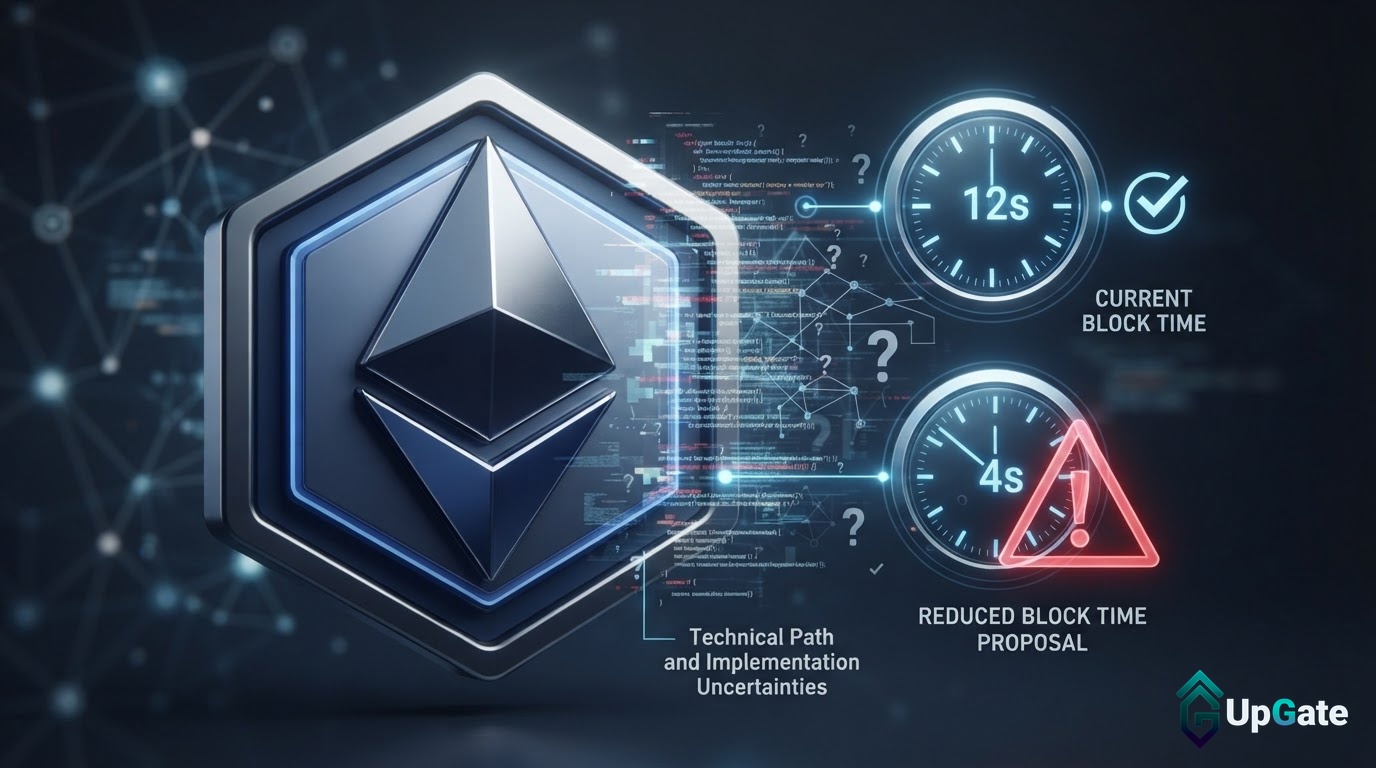
    Ethereum Institutional has announced its support for EIP-8198, a proposal by Ethlabs aimed at reducing the Ethereum network’s block time from 12 seconds to 10 seconds. This technical adjustment is slated for implementation as part of the Hegotá upgrade, currently scheduled for 2027. The proposal’s core innovation lies in parameterizing slot timing, which would allow for future block time adjustments through governance proposals rather than requiring full protocol upgrades.

    Feedback gathered from approximately 20 ecosystem participants reportedly indicates broad support for EIP-8198, with no significant concerns raised regarding decentralization or validator participation. However, the successful technical execution of this proposal during the Hegotá upgrade remains a key uncertainty.

    Technical Mechanism: Parameterizing Slot Timing

    EIP-8198 requires a one-time client refactor to move away from hardcoded block intervals. By building in a parameter that can be adjusted via governance, the proposal establishes a framework for incremental block time reductions in the future. This approach is seen by supporters as a step towards greater network efficiency and adaptability.

    Potential Benefits and Ecosystem Feedback

    Matthew Dawson, framing the proposal in financial terms, suggested that improvements in block speed could enhance Ethereum’s appeal to institutional investors, bolstering confidence in its usability as core financial infrastructure. The reduction to 10-second blocks is estimated to narrow the risk window for traders by roughly 17%, potentially leading to tighter spreads and improved execution. Supporters also point to potential censorship resistance benefits, particularly when combined with mechanisms like Forced Inclusion Lists (FOCIL).

    Ethlabs, the research lab behind EIP-8198, launched on June 22, 2026. It is backed by Ethereum co-founder Joe Lubin and staffed by former Ethereum Foundation researchers, including Carl Beekhuizen and Barnabé Monnot. Ethereum Institutional, a non-profit co-founded by former Ethereum Foundation members, has publicly backed the proposal.

    While the current block time is 12 seconds and finality takes approximately 15 minutes, the proposed change to 10-second blocks is intended as an initial step. Faster block production could tighten the overall transaction pipeline, though it does not directly overhaul finality times. The reported feedback from major protocols like Lido and Ondo suggests a general acceptance of the proposal’s direction.

    Implementation Uncertainty

    Despite the reported support and potential benefits, the technical execution during the Hegotá upgrade in 2027 is highlighted as the critical phase. The parameterization aspect of EIP-8198 is designed to facilitate future adjustments, but the initial implementation and its subsequent governance-driven modifications will be the true test of its effectiveness and the network’s ability to adapt.

    Why This Matters

    The materials describe a narrow update: Ethereum Institutional has announced its support for EIP-8198, a proposal by Ethlabs to reduce Ethereum’s block time from 12 seconds to 10 seconds. The technical execution during the Hegotá upgrade will be the real test.

    Broader Context

    Source materials place the factual news in this context: Ethereum Institutional, a non-profit co-founded by former Ethereum Foundation members, has thrown its weight behind a proposal to make the network meaningfully faster.

  • Ethereum Price Outlook: Glamsterdam Upgrade Impact

    Ethereum Price Outlook: Glamsterdam Upgrade Impact

    Ethereum’s price is hovering just below the $2,500 resistance level, as attention and predictions increasingly focus on the network’s upcoming major overhaul. The more significant narrative isn’t the daily price action, but rather what’s on the horizon for October and whether the market has already factored it into current valuations.

    Developers this week successfully completed a crucial rehearsal for the Glamsterdam upgrade. Test blocks are continuing to finalize under new block-building rules, with a proposed deployment date of October 6 on the Sepolia public testnet.

    Glamsterdam Upgrade Progress

    Nethermind’s client processed 570.7 billion gas across 2,302 tests in three minutes and 15 seconds, averaging 2.9 billion gas per second. This process involved validating block-level access lists, which enable nodes to pre-fetch data rather than processing it sequentially. Following the testnet’s activation, its gas limit was increased from 60 million to 200 million, representing a nearly 3.3-fold enhancement in per-block capacity.

    This is more than a superficial adjustment. Higher gas ceilings are expected to mitigate fee spikes during periods of high demand, such as token launches or cascading DeFi liquidations, provided that node operators can manage the increased block sizes. The market’s response thus far has been characterized by cautious optimism rather than outright euphoria, creating an intriguing technical landscape worth examining.

    Technical Analysis and Market Sentiment

    Ether’s current trading price of $2,495 places it within a consolidation range that has persisted since early September. Recent daily closing prices have fluctuated between $2,446 and $2,488. Trading volume has been unremarkable, showing no signs of capitulation or excessive buying, but rather a steady accumulation.

    Daily moving averages remain bullishly aligned (20-day above 50-day, both above 200-day), technically favoring a continuation of the upward trend. However, the price has struggled to decisively break above the $2,493–$2,508 resistance zone on a closing basis.

    Holders are looking for a clear break above $2,508, which could pave the way for a move to $2,550, and subsequently to the $2,723–$2,822 supply zone, potentially validating the broader $2,800 target that analysts have suggested. Persistent sideways trading between $2,440 and $2,508 is possible while the market awaits concrete mainnet dates for Glamsterdam.

    Conversely, a decline below the $2,378–$2,403 support band would undermine the near-term technical structure and could lead to a drop towards $2,300.

    Outlook and Investment Considerations

    Maintaining an ETH position through this consolidation period is not unreasonable. The fundamental case for Glamsterdam is robust, and a 3.3x increase in the gas limit represents a significant capacity enhancement that is likely to have a material impact over quarters, rather than days. However, it’s important to acknowledge the realities of Ethereum’s current scale: even a successful upgrade cycle is likely to result in percentage gains in the double digits, rather than the exponential returns that can dramatically reshape portfolios.

    This ceiling on potential gains is precisely why traders with a higher risk tolerance often explore earlier-stage infrastructure projects.

    Emerging Infrastructure Plays

    LiquidChain ($LIQUID) is a Layer 3 infrastructure project designed to integrate liquidity from Bitcoin, Ethereum, and Solana into a single execution environment. Its “deploy-once” architecture allows developers to build on a single layer and access all three ecosystems without the complexities of bridging.

    The project’s presale is priced at $0.014956, with approximately $960,000 raised to date. Its Unified Liquidity Layer and Single-Step Execution model aim to address the fragmentation issues that have hindered cross-chain DeFi adoption for years.

  • Canada-EU Trade Deal Odds: Prediction Markets Weigh In

    Canada-EU Trade Deal Odds: Prediction Markets Weigh In

    Canada-EU Ties: From Internet Curiosity to Geopolitical Discussion

    Speculation that Canada might one day join the European Union has evolved from an online novelty into a serious geopolitical conversation in recent months. This shift is reflected in the growing traction of Canada-EU odds on prediction market platforms like Kalshi and Polymarket.

    The idea gained momentum as Canada sought to lessen its reliance on the United States amid escalating trade tensions. A Canadian poll conducted in April revealed that 58% of respondents believed EU membership was worth exploring, with an additional 25% deeming it a good idea.

    “Associate Member” Proposal Sparks Closer Cooperation

    Speculation intensified this week following an invitation from European Commission President Ursula von der Leyen for Canada to become the EU’s first “associate member.” The proposal aims to foster closer cooperation in critical areas such as defense, critical minerals, energy, and artificial intelligence. Canadian Prime Minister Mark Carney welcomed the concept but emphasized that Canada is pursuing a “unique alliance” rather than full EU membership.

    This distinction is significant, as current EU treaties do not accommodate associate membership and are structured for accession by European states only. Some EU diplomats have already voiced skepticism regarding the proposal’s feasibility and the potential for member state support.

    Prediction Markets Weigh In on EU Membership Prospects

    On Polymarket, a market assessing the likelihood of Canada being admitted as a full EU member by the end of 2026 or 2027 currently places the probability at approximately 2% for 2026 and 9% for 2027. This market, which opened on September 17, has generated only about $1,250 in volume, suggesting the figures should be viewed with caution rather than as a definitive consensus.

    A separate Polymarket market focuses on whether Canada will formally apply for full EU membership. Traders are assigning an 8% probability to an application by December 31, 2027, compared to 2% for an application by the end of 2026.

    Meanwhile, Kalshi offers a broader market inquiring whether the EU will gain a new member before 2030. Currently, 75.8% of bettors favor a “yes” outcome, though with only $8,000 in trading volume. Crucially, this market does not specifically identify Canada as the potential new member, thus limiting its ability to provide a Canada-specific probability.

    The overall picture from prediction markets indicates a stronger leaning towards closer Canada-EU integration rather than full membership. The proposed “associate member” status could pave the way for significantly deeper economic, security, and political ties, but transforming this into full EU membership would necessitate overcoming substantial legal and political hurdles.

    For the time being, the clearest market signal suggests that Canada’s full accession to the EU remains a low-probability scenario, while a new form of privileged association between Canada and the EU is garnering considerably more attention.

    Bitcoin Hyper Aims to Enhance Network Visibility and Performance

    Bitcoin Hyper is working to improve network visibility, enabling better performance tracking, understanding of transaction flows, earlier issue identification, and ecosystem refinement as it expands.

    A modest 1.37% increase from a $1.54 trillion base is characteristic of the current market dynamics. At this scale, Bitcoin is not expected to experience dramatic surges from interest rate relief rallies, as the underlying mathematics no longer support such rapid growth.

    This reality is prompting some traders to explore early-stage infrastructure projects built directly on Bitcoin, rather than solely anticipating diminishing percentage gains from Bitcoin itself.

    Bitcoin Hyper ($HYPER) is positioning itself as the first Bitcoin Layer 2 solution to integrate a Solana Virtual Machine (SVM). Its objective is to surpass Solana’s transaction throughput while reinforcing security by anchoring to Bitcoin’s base layer.

    The presale token is currently trading at $0.0136864, with $33,144,078.90 raised to date. This figure has grown in tandem with capital rotations driven by interest rate hikes into Bitcoin-adjacent investment opportunities.

    Bitcoin Hyper proposes to address Bitcoin’s slow settlement times and limited programmability through low-latency Layer 2 processing. It also offers a decentralized canonical bridge for BTC transfers and provides staking rewards with a high annual percentage yield (APY).

  • Solana Mainnet Reduces Slot Time to 250ms, Increasing Block Production Speed by 17%

    Solana Mainnet Reduces Slot Time to 250ms, Increasing Block Production Speed by 17%

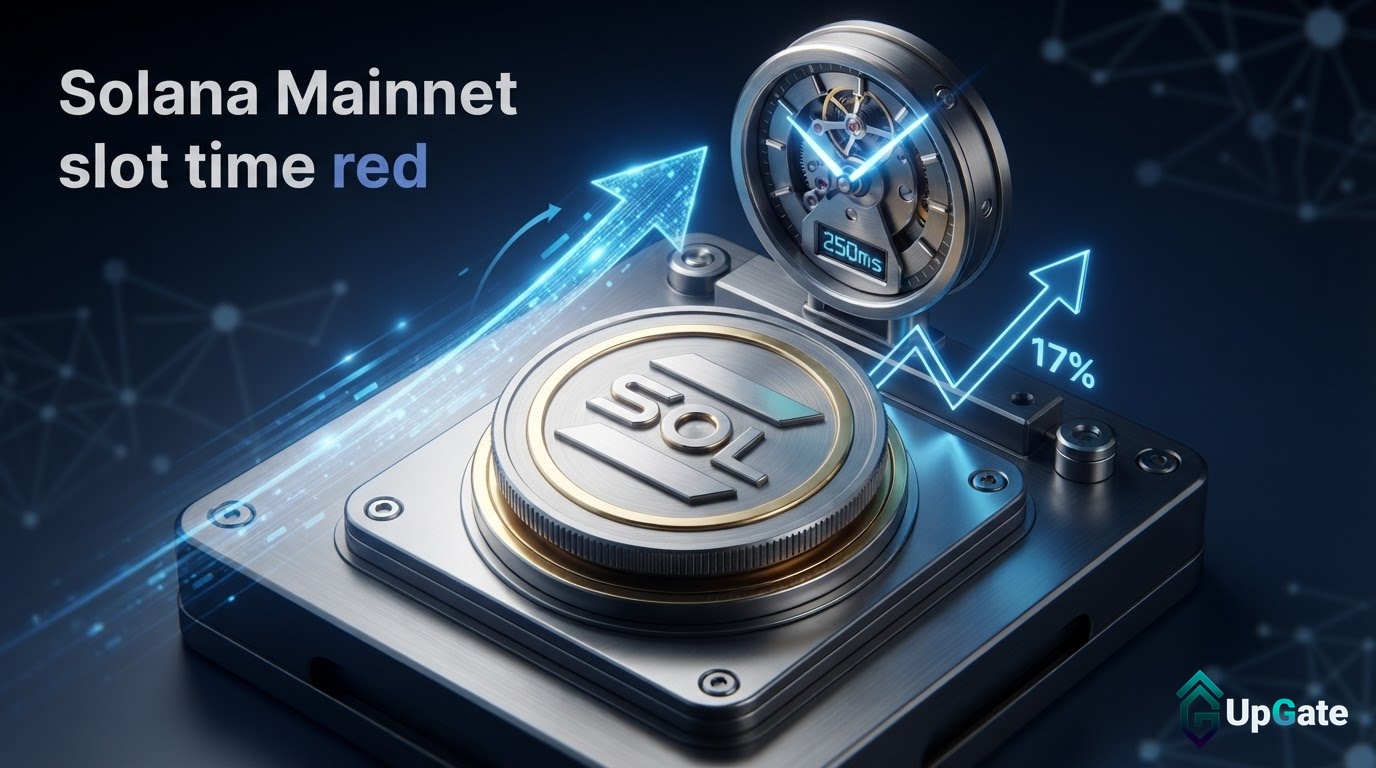
    Solana’s mainnet has officially reduced its slot time from 300 milliseconds to 250 milliseconds, a technical adjustment implemented on September 18th that increases block production speed by approximately 17%. This change boosts the network’s block production rate to around 4 blocks per second, up from the previous ~3.3 blocks per second. Importantly, the amount of computation and data allowed per slot has been proportionally reduced, ensuring that the overall transaction throughput capacity of the network remains unchanged.

    This marks the third phase of Solana’s ongoing efforts to shorten slot times. The previous 300ms slot time has been a consistent feature, and this reduction to 250ms is a direct technical evolution. Each leader’s consecutive leadership period has been adjusted to 1 second (comprising four slots), down from 1.2 seconds. Consequently, an epoch, which consists of a fixed number of slots (432,000), now takes approximately 30 hours to complete, compared to the previous duration of 36 hours.

    The primary impact of this faster block production is a reduction in the time it takes for transactions to be reported and for price information to be updated across the network. This can directly benefit decentralized exchange (DEX) and oracle applications, which rely on timely data. For users of wallets, exchanges, and trading applications, obtaining the latest on-chain data more rapidly can narrow the price slippage window during swap transactions, potentially reducing losses from failed trades and slippage.

    Furthermore, the faster handover of transaction ordering rights among validators may have positive implications for decentralization and censorship resistance by reducing the control time of any single validator over transaction order. However, the reduced slot time also introduces considerations for certain users. Enterprises or individuals with high-security requirements that involve manually intervened transactions, such as offline signing or delayed approvals, may need to adjust their processes due to shorter operational windows. The effective validity period of blockhashes in the current real-time clock has shortened, which could necessitate redesigns for systems with strict timing dependencies.

    The Solana development team has previously indicated plans to further reduce slot time to 200 milliseconds, though a specific mainnet launch date for this next phase has not yet been announced. The success of the current 250ms implementation hinges on real-world performance, particularly the block-skip rate. If the network operates stably with an acceptable skip rate, it may represent a significant achievement in the public chain performance competition. Conversely, if the skip rate becomes unmanageable, the timeline for future reductions may be extended or existing parameters may require re-evaluation. While the network’s overall transaction capacity has been maintained, the increased block production speed is a notable technical upgrade, with its long-term implications for network stability, decentralization, and user experience for decentralized applications becoming clearer as the 250ms slot time operates under various network conditions.

    Broader Context

    Source materials place the factual news in this context: Solana is transitioning from a ‘Memecoin haven’ to a ‘Wall Street favorite’.

  • AI Cooling Shifts to ‘Forever Chemicals’ Over Water

    AI Cooling Shifts to ‘Forever Chemicals’ Over Water

    The burgeoning artificial intelligence sector is grappling with a significant heat problem. The sophisticated chips that power large language models and generative AI systems operate at such high temperatures that conventional air and water-based cooling methods are proving insufficient. In response, data center operators are increasingly turning to an unconventional solution: submerging servers in synthetic fluorocarbon liquids, substances known for their environmental persistence.

    Immersion Cooling’s Promise

    This advanced cooling technique is known as two-phase immersion cooling. Server components are immersed in a specially formulated dielectric fluid, a liquid that does not conduct electricity. As the chips generate heat, the fluid boils at a low temperature, absorbing the thermal energy. It then rises as vapor, condenses back into a liquid, and drips down to resume the cooling cycle.

    Chemours, a prominent manufacturer in this field, markets its Opteon 2P50 fluid with compelling claims. The company asserts that its system can reduce cooling energy consumption by over 90% and slash water usage to virtually zero. Furthermore, data center footprints could potentially shrink by up to 60%, as the need for large cooling towers and air handling units, which occupy significant space, is eliminated.

    Nvidia has reported efficiency gains of up to 300 times with advanced cooling solutions. For an industry that has faced considerable scrutiny over its water consumption, particularly in drought-stricken regions, the appeal of such technologies is undeniable.

    Environmental Concerns Emerge

    Per- and polyfluoroalkyl substances (PFAS), often dubbed “forever chemicals,” derive their name from the exceptionally strong carbon-fluorine bonds that resist degradation in the environment. While this chemical stability makes them ideal for cooling fluids, capable of withstanding extreme temperatures, it also raises significant concerns among environmental advocates.

    Environmental assessments indicate an annual evaporative loss rate of 0.7% from these cooling systems. Communities in North Carolina and Virginia have already voiced alarm regarding potential PFAS contamination risks near existing chemical manufacturing plants and data center facilities. Earthjustice has formally challenged the Environmental Protection Agency’s expedited review process for these cooling chemicals, arguing that fast-tracking approval for persistent, potentially toxic substances violates fundamental precautionary principles.

    Microsoft has publicly pledged to reduce water consumption at its data centers by 31-52%, with some facilities aiming for near-zero on-site water usage. Nvidia highlights its advancements in cooling efficiency, while Amazon is actively exploring low- or zero-water cooling alternatives.

    Traditional air cooling systems are no longer adequate for the escalating power densities within server racks, which have surged from 10-15 kilowatts a few years ago to 100 kilowatts or more per rack today.

    A September 2026 report from ChemSec, an organization that monitors chemical industry sustainability, revealed that nearly all major PFAS producers, including Arkema and Daikin, are planning capacity expansions directly linked to the demand from AI data centers. 3M, a historical leader in PFAS dielectric fluids, has completely exited the market, redirecting its business to companies like Chemours.

    As of mid-2026, no major commercial deployments of the latest generation of PFAS cooling fluids have been officially confirmed. This apparent gap between announced capabilities and actual implementation suggests that regulatory uncertainty, community opposition, or a combination of both factors may be contributing to delays in the rollout.

    The regulatory landscape presents a dual-edged risk. Should environmental challenges succeed in imposing stricter oversight on PFAS, or if a contamination incident at a data center sparks public outcry, the entire product category could face significant restrictions. This potential outcome is already prompting some operators to diversify their strategies by investing in alternative cooling approaches that entirely bypass PFAS.

  • Vitalik Buterin: AI Can Bolster Cybersecurity Through Mathematical Proofs, Not Just Threats

    Vitalik Buterin: AI Can Bolster Cybersecurity Through Mathematical Proofs, Not Just Threats

    Vitalik Buterin, co-founder of Ethereum, has offered a perspective that counters the growing concern that artificial intelligence will inevitably lead to a cybersecurity crisis. Instead, Buterin suggests that AI could serve as a powerful tool to significantly enhance security by enabling the mathematical proof of program security.

    Buterin stated that the notion of AI-powered hacking spelling the doom of cybersecurity is not necessarily warranted. He believes that as systems and verification tools become more sophisticated, security can naturally improve. A key aspect of his argument is the potential for AI to suggest the security of a program as a mathematical theorem, akin to how AI might tackle complex mathematical statements like the Navier-Stokes equations or Fermat’s Last Theorem. This approach, he noted, could be applied even to highly complicated programs.

    Defining ‘secure’ is a significant challenge in cybersecurity, according to Buterin. These definitions can become intricate, encompassing various factors such as potential attacker interference, information leakage, and the failure modes of different software or hardware components. Buterin emphasized the importance of making these security definitions human-readable, describing them as the most critical high-level language currently available.

    He further elaborated that for components where security is paramount, the definition itself can present a smaller attack surface than the actual implementation. Verifying the adequacy of a definition, he argued, can be more manageable than directly scanning code for vulnerabilities. Buterin also highlighted an advantage in working with additive security definitions, which allow developers to suggest that a program satisfies multiple, distinct security properties. If conflicts arise between definitions, they become isolated issues for the project to address.

    This contrasts with code, where a bug in any single part of a multi-component program can compromise the entire system, Buterin noted. He acknowledged that this definition-centric approach may not be universally applicable, citing user-interface components as an example where definitions might be as complex as the implementation. However, for many critical components, such as message-passing protocols, sandboxes, and cryptographic systems like SNARKs and fully homomorphic encryption, the distinction between definition and implementation is substantial.

    Buterin pointed out that while code verification was historically difficult and scarce, modern AI is changing this landscape. His preferred strategy for improving security is not solely to rely on the hope that vulnerabilities are discovered before they are exploited, but rather to make code inherently more resilient. He believes this focus on resilience and verifiable security is essential for the future of blockchains, particularly those prioritizing scalability and privacy.

    Despite the potential, uncertainties remain regarding the precise definition of ‘secure’ for any given system, the practical implementation of AI-driven mathematical proofs for complex software, and the extent to which this definition-centric approach can be applied across all software types. The timeline for developing and adopting AI-powered verification tools also remains unclear.

    Why This Matters

    The materials describe a narrow update: Vitalik Buterin stated that AI-powered hacking does not necessarily mean cybersecurity is doomed. The exact definition of ‘secure’ for any given system.

    Broader Context

    Source materials place the factual news in this context: The article discusses Vitalik Buterin’s views on AI and cybersecurity.

  • Ethereum Mainnet Sees Launch of Multi-Party Block Construction (MPBC)

    Ethereum Mainnet Sees Launch of Multi-Party Block Construction (MPBC)

    Multi-Party Block Construction (MPBC) has officially launched on the Ethereum mainnet, a development coordinated by the Blockspace Forum. This new system allows multiple builders to contribute transactions to a single block, aiming to enhance network efficiency and reduce centralization in block production.

    In the first 24 hours following its activation on September 16, approximately 3% of Ethereum blocks were constructed using the MPBC approach. Since testing commenced in late August, over 20,000 transactions have been included at an accelerated rate. Early data indicates that some multi-party blocks have incorporated up to 810 additional transactions compared to blocks built by a single entity. In certain instances, gas usage has seen a significant increase, jumping nearly 14-fold.

    Context: The Evolution of Block Construction

    Prior to MPBC, Ethereum’s block construction largely operated on a single-builder model. Following the adoption of Proposer-Builder Separation (PBS) after the Merge in 2022, validators propose blocks while specialized builders assemble them. Builders compete in an auction, and the winner’s block is included in the chain. This model, however, allowed a single builder to control transaction ordering within a block, potentially leading to prioritization of certain transactions over others.

    MPBC: A Shift in Dynamics

    MPBC introduces a fundamental shift by enabling multiple builders to contribute to the creation of a single block. This creates multiple inclusion paths, rather than funneling all transactions through one entity. The design of MPBC is strictly additive, meaning it does not require protocol changes, hard forks, or consensus-level modifications. The system operates at the builder and operator layer and does not depend on relays for its core functionality.

    The Blockspace Forum has been instrumental in coordinating this initiative, holding workshops throughout 2026, including a meeting in Cannes attended by 32 teams. These teams represent over 95% of out-of-protocol block contributions on Ethereum. Foundational research outlining MPBC design principles was published in May 2026.

    The implementation of MPBC aims to dilute the control that single entities have over transaction ordering and inclusion. While it does not eliminate these dynamics entirely, it distributes the influence across multiple builders. This approach can lead to fuller blocks, greater transaction diversity, and faster confirmation times for pending transactions, as service transactions gain additional pathways into blocks without competing solely within a single builder’s priority queue.

    Public documentation and a live dashboard for MPBC metrics have been released, providing transparency into the system’s operation. The current PBS model, where a single builder wins each auction, has structural issues that can compound over time. MPBC addresses this by introducing a parallel path that reduces chokepoint risks associated with a single point of control.

    Why This Matters

    The materials describe a narrow update: Multi-party block construction (MPBC) is now live on the Ethereum mainnet, allowing multiple builders to contribute transactions to a single block without protocol changes. MPBC changes the model so that multiple builders can each contribute transactions to a single block, creating multiple inclusion paths rather than funneling everything through one entity.

    Broader Context

    Source materials place the factual news in this context: Ethereum blocks have traditionally been a one-builder affair.

  • MetaMask Enhances Wallet Security Against Crypto Scams

    MetaMask Enhances Wallet Security Against Crypto Scams

    MetaMask Enhances Security with New Scam Detection Features

    MetaMask, the widely used cryptocurrency wallet, is introducing new features designed to warn users about potential scams across its mobile app and browser extension. The updates, announced Monday, aim to bolster wallet security by flagging suspicious activity, including lookalike addresses, investment and romance scams, and transfers to first-time recipients. The company is also implementing clearer transaction screens for both platforms.

    Added Protection for Transactions

    A new feature called “Added Protection” will automatically reverse transactions that do not align with their previews, according to MetaMask. This functionality will initially be available on the browser extension, with mobile support to follow.

    Addressing User Behavior and AI Integration

    Martin Peko, Staff Product Manager at MetaMask, noted that users have historically tended to bypass scam warnings, often due to trust in the recipient or explicit instructions to proceed. “This told us something specific: they either trusted the recipient far more than usual, or they were being actively coached past it,” Peko explained. “That’s what made us think a different kind of control was needed.” He added that the new system will also provide a direct route to priority support for users who are uncertain, allowing them to connect with a person rather than just receiving a general warning.

    The enhanced safeguards will identify potential investment and romance scams, detect wallet addresses that mimic legitimate ones, and flag transfers to new recipients. MetaMask is also leveraging artificial intelligence to detect threats, as scammers increasingly use the technology to scale personalized attacks and conceal malicious transactions.

    “Our security partner Blockaid uses LLMs and classification models, within custom agent harnesses, to analyze unstructured content across websites and social feeds at scale, alongside static and dynamic analysis of onchain bytecode and transaction flows to identify phishing, scam, and malicious behavior in real time,” Peko stated. These insights are then used to alert users to potential scams before they send funds.

    Peko described the initiative as part of a broader shift from static warnings to more responsive and contextual alerts. Many of these improvements, including alerts for address poisoning and first-time sends, along with more detailed security data on tokens and transactions, are already live, empowering users to make informed decisions with greater confidence.

    Broader Context of Fraud Crackdowns

    The rollout of these new features coincides with ongoing efforts by authorities to combat investment and romance fraud. In July, U.S. authorities seized over $25 million in cryptocurrency linked to such schemes, which prosecutors alleged had defrauded thousands of victims in the U.S. and Canada. Earlier this month, the Secret Service froze $52.8 million in cryptocurrency associated with Xinbi Guarantee, a Telegram marketplace providing services to scammers.

    MetaMask is also preparing for Consensys’ planned separation of its consumer and institutional businesses by the end of 2026. (Consensys is an investor in Dastan, Decrypt’s parent company.)

  • Blockchain Analysis Reveals Significant Uncertainty in Identifying AI Agent Transactions

    Blockchain Analysis Reveals Significant Uncertainty in Identifying AI Agent Transactions

    The precise volume of AI agent transactions on blockchain protocols remains difficult to ascertain, with current analysis methods potentially understating their activity due to challenges in distinguishing automated scripts from genuine AI agents. Research by TRM Labs examining payment volume on Coinbase’s x402 protocol suggests that AI agents account for a small percentage of transactions, but the methodology itself highlights significant limitations in accurately identifying and attributing such activity.

    TRM Labs analyzed $52.7 million in transactions across 198.9 million settlements processed by known x402 facilitators on the Base, Solana, and Polygon blockchains since May 2025. After excluding self-payments, bulk flows from a limited number of payers, and sellers with fewer than 10 buyers, the firm was left with $25.62 million in likely commerce. Within this refined dataset, TRM Labs estimated that only 0.6% to 7.5% of the commerce value originated from AI agents. USDC accounted for 99.6% of the settled value, totaling $52.47 million.

    Technical Hurdles in Distinguishing Agents
    The report, published Wednesday, detailed the technical hurdles in differentiating AI agents from other automated processes. According to TRM Labs, a true AI agent is expected to explore multiple services and products, whereas an address repeatedly interacting with the same price point could behave more like a script. This distinction is a deliberate modeling choice, but TRM cautioned that it may understate the space, as many agents today could be single-purpose and repeatedly pay for the same service, which this test would interpret as a script.

    Furthermore, the analysis noted that scheduled jobs, load tests, and self-dealing can produce similar blockchain records, making protocol totals insufficient for accurately measuring agent commerce. The report also pointed out that on-chain agent registries, where individuals can declare ownership of an agent address, are voluntary and currently not utilized by the majority of participants, further complicating attribution.

    The x402 Protocol and Evolving Infrastructure
    The x402 protocol, launched by Coinbase in 2025, integrates payments into web requests, where a buyer receives a price, authorizes payment, and a facilitator verifies and submits the transaction, paying the network fee. While the underlying infrastructure for agent payments is functional, TRM Labs emphasized the need for improvements. The report called for more accurate registration, counterparty reputation information that agents can check independently, and monitoring systems built for high volumes of small payments rather than just high-value transactions.

    Despite these analytical challenges, the development of agent payments continues. Binance launched Agent OS with an x402 payment layer in August, and Coinbase’s Base has targeted agent and payments startups through its accelerator program. In May, Amazon announced AgentCore Payments in collaboration with Coinbase and Stripe.

    The TRM Labs analysis underscores that while agent-based commerce is developing, the current methods for tracking and verifying AI agent activity are nascent and require significant enhancement. The report implies that accurate registration, robust reputation systems, and tailored monitoring are essential for the future of agentic commerce and its compliance.

    Why This Matters

    The materials describe a narrow update: TRM Labs analyzed $52. The exact percentage of payment volume attributable to AI agents.

    Broader Context

    Source materials place the factual news in this context: Most payment volume on Coinbase’s x402 protocol isn’t coming from AI agents, according to blockchain intelligence company TRM Labs.