Category: Uncategorized

  • XRP Surges Past $1.30 on Major Adoption News

    XRP Surges Past $1.30 on Major Adoption News

    Ripple’s cross-border token, XRP, has seen a significant price surge, reaching nearly $1.30 in recent hours. This bullish momentum follows a series of positive developments, including a major cryptocurrency exchange listing Ripple’s stablecoin, RLUSD, and introducing a trading pair with XRP.

    Exchange Listing Boosts XRP

    Gate.io, a prominent cryptocurrency exchange, has added RLUSD to its platform, alongside a spot trading pair for XRP/RLUSD. This move is expected to enhance interoperability and capital efficiency within digital asset markets globally. Ripple announced the listing on its official Twitter account, stating, “$RLUSD is now live on @Gate_io. $XRP / $RLUSD spot trading pairs are available today, unlocking real interoperability and capital efficiency for digital asset markets worldwide.”

    Market Factors Driving XRP’s Rise

    CryptoPotato identified several factors contributing to XRP’s recent market performance. These include a broader market-wide revival, a new deal between the U.S. and Iran announced by President Donald Trump, and significant shifts in exchange deposits, with South Korea emerging as a key player. Continuous net inflows into spot XRP Exchange-Traded Funds (ETFs) have also played a role.

    Analyst Sentiment and Holder Accumulation

    Analytics firm Santiment noted that XRP’s surge occurred after its sentiment had dipped to multi-month lows, a pattern often indicative of strong trend reversal opportunities. The firm also highlighted the continued support from XRP’s largest holders. On-chain data reveals that wallets holding at least 1 million XRP now control 74.1% of the total supply and have acquired an additional 1.53 billion coins in the past six months.

    Santiment’s analysis further points to Ripple’s expanding institutional payment network and growing tokenization initiatives on the XRP Ledger as key drivers of long-term confidence, even amidst previous price weakness. The firm concluded that when these factors converge, price recoveries tend to be swift and substantial.

  • Ripple Surges 10% as Crypto Market Cap Nears $2.4T

    Ripple Surges 10% as Crypto Market Cap Nears $2.4T

    XRP Price Surges 10% Amidst Growing Market Optimism

    XRP is experiencing a significant price movement, bolstered by predictive indicators and increased trading volume. The cryptocurrency has climbed 10% in the last 24 hours, breaking through several resistance levels that had previously capped its ascent for weeks. This surge coincides with a broader cryptocurrency market rally, pushing the total market capitalization towards $2.4 trillion in what appears to be a risk-on environment.

    The formation of a bullish pattern on XRP’s chart suggests that previously ambitious upside targets may now be within reach.

    Breakout Driven by Concentrated Demand

    The recent breakout was notably strong, with XRP advancing from $1.14 to $1.24. Trading volume spiked to 107.6 million XRP at 21:00 UTC, marking the highest volume since a significant sell-off in early June. Data indicates that South Korea’s Upbit exchange played a crucial role in this initial thrust, accounting for 31% of XRP’s wallet flow dominance by June 14, a sharp increase from 13% the week prior, highlighting concentrated Asian demand.

    ETF Inflows and Sustained Volume

    Concurrently, cumulative net inflows into XRP Exchange Traded Products (ETPs) have reached approximately $1.4 billion since their inception. The key question remains whether XRP can sustain this trading volume and if price predictions are shifting towards a more bullish outlook.

    XRP is currently trading around $1.24, reflecting its 10% daily gain. Intraday highs during the latest surge reached the $1.25 range. This upward movement above previous resistance levels is characteristic of a market that was previously underpositioned on the long side. Traders attempting to short the rally appear to have been caught in a squeeze, which further accelerated the price increase.

    Technical Analysis and Future Targets

    From a technical standpoint, a significant structural shift occurred when XRP decisively cleared the $1.2 mark on substantial volume. This confirmed a bull-flag breakout, effectively converting previous overhead supply into near-term support.

    Immediate support is now established at $1.2, with deeper structural support at $1.18 on higher timeframes. Key resistance bands to watch are the $1.3–$1.32 range, followed by the more significant $1.5 zone. Breaking through this latter level would signal a larger trend reversal, moving beyond a mere relief rally.

    While XRP’s 10% gain is substantial, its current market capitalization of $77 billion means that a tenfold increase would require a fundamental shift in institutional sentiment that is not yet widely apparent. Investors seeking asymmetric upside are increasingly exploring earlier-stage infrastructure projects where valuations have not yet fully priced in success.

    One such project attracting attention is Bitcoin Hyper ($HYPER). It aims to be the first Bitcoin Layer 2 solution to integrate with the Solana Virtual Machine (SVM), addressing key limitations of the Bitcoin network, including slow transaction speeds, high fees, and the absence of programmable smart contracts. The architecture promises sub-second transaction finality and low-cost execution while maintaining Bitcoin’s security through a Decentralized Canonical Bridge for BTC transfers. The presale has raised $32 million, with the current token price at $0.0136, and staking options are available for early participants.

  • Standard Chartered: Wall Street Could Drive Uniswap Token Up 40x by 2030

    Standard Chartered: Wall Street Could Drive Uniswap Token Up 40x by 2030

    Standard Chartered Predicts Uniswap Token to Soar Fortyfold as Wall Street Embraces On-Chain Finance

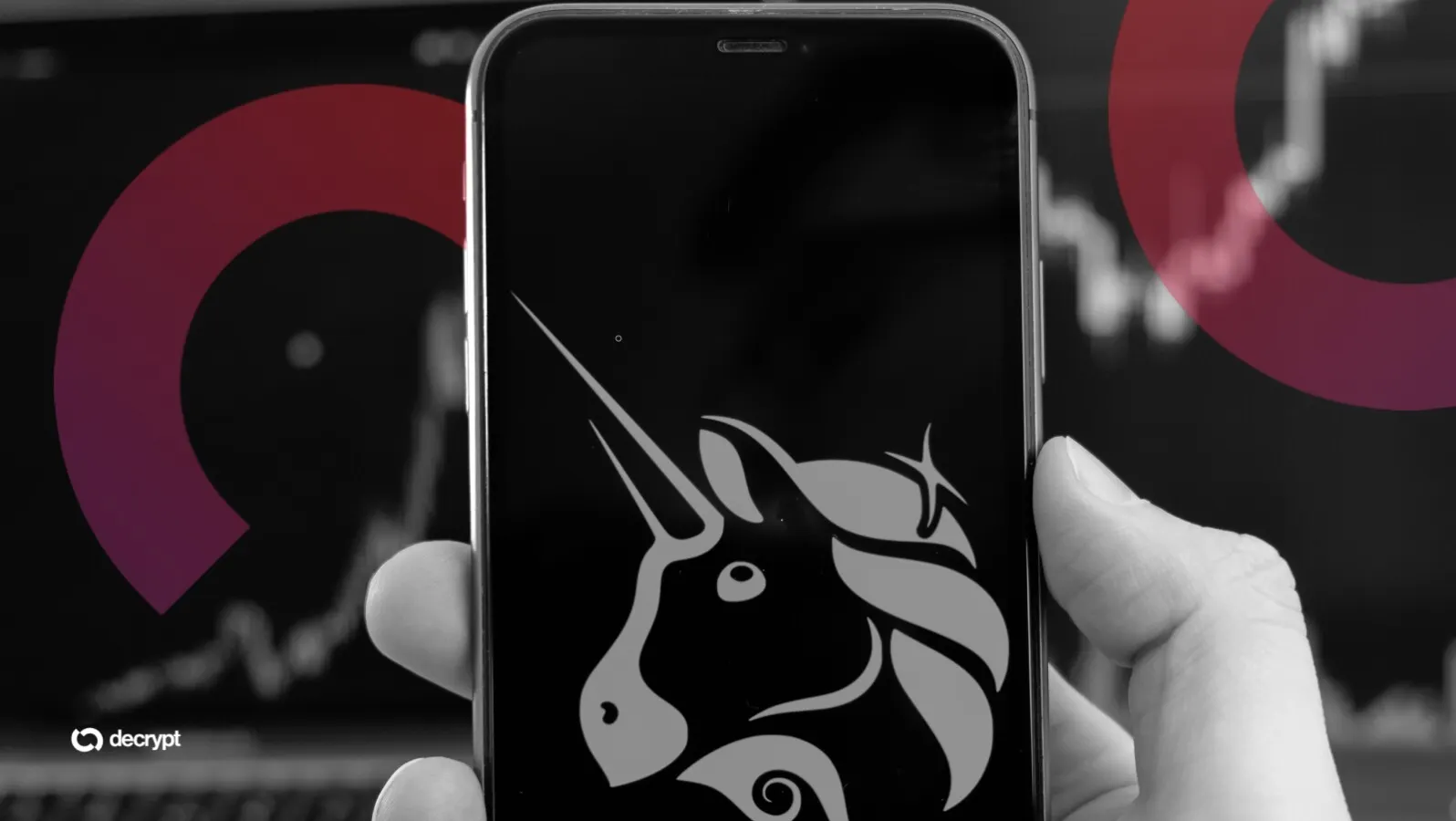
    London, UK – Uniswap’s native token, UNI, is projected to experience a nearly fortyfold increase in value over the coming years, potentially outperforming both Bitcoin and Ethereum as Wall Street firms increasingly migrate to on-chain operations, according to Geoff Kendrick, global head of digital assets at Standard Chartered.

    Kendrick, in a note released Monday, posited that Uniswap, a leading decentralized exchange (DEX) and a cornerstone of decentralized finance (DeFi), is strategically positioned to capitalize on an anticipated surge of digital assets representing traditional investments. He has set a price target of $100 for UNI by 2030.

    This optimistic outlook is underpinned by Uniswap’s inherent structural neutrality, which allows financial institutions to build on its platform with assurance that the underlying rules will remain consistent as tokenized assets gain traction. Kendrick drew a parallel, likening Uniswap’s role to that of YouTube and Coinbase to Netflix in their respective industries.

    “For TradFi institutions, Uniswap should be viewed less as a retail DEX app and more as market infrastructure that TradFi can integrate with once tokenized assets scale and TradFi operators want to plug them into DeFi,” Kendrick elaborated.

    On Monday, UNI was trading around $2.72, marking a 9.8% gain over the preceding 24 hours, according to data from CoinGecko. While Uniswap’s platform has long been a dominant force in the DEX landscape, its associated token’s price reached a high of approximately $45 five years ago.

    Since its inception in 2018, Uniswap has facilitated over $3.7 trillion in trading volume and generated $5.6 billion in fees, as reported by DeFiLlama.

    Standard Chartered forecasts that by the end of the decade, the total value of digital assets deposited or staked in DeFi protocols will reach $2.7 trillion. Consequently, Kendrick anticipates that liquidity pools on Uniswap could hold 37 times more assets for on-chain trading.

    He further noted a direct correlation between Uniswap’s protocol fees and trading volumes. As tokenized assets become more prevalent on-chain, the platform’s “UNIfication” upgrade, slated for late 2025, is expected to trigger programmatic token burns, thereby reducing supply.

    Kendrick pointed out that UNI’s total supply has already decreased from 1 trillion to approximately 895 million since the activation of protocol fees in December. This supply reduction has been further amplified by a significant retroactive token burn and an ongoing annualized burn rate of roughly 1%.

    Despite its established position in the DeFi ecosystem, Kendrick acknowledged that Uniswap faces potential risks from smaller competitors capable of developing more specialized and competitive solutions. Additionally, he highlighted the possibility of regulatory headwinds stemming from the establishment of compliance frameworks for tokenization.

    Nevertheless, Kendrick observed that a viable pathway for tokenized assets to utilize decentralized settlement mechanisms is beginning to materialize. In February, BlackRock announced that its tokenized money market fund, BUIDL, would be accessible through UniswapX, an auction-based swapping protocol, with the assets being issued via the tokenization platform Securitize.

    At the time of that announcement, the world’s largest asset manager intended to acquire UNI tokens, according to a person familiar with the matter who spoke to Decrypt. Kendrick’s immediate price projection for UNI is $6.50 by the end of the current year.

  • Binance Futures Implements Last Price Protection on HUSDT Perpetual Contract

    Binance Futures Implements Last Price Protection on HUSDT Perpetual Contract

    Binance Futures to Implement Last Price Protected Mechanism for HUSDT Perpetual Contract Amidst Security Incident

    Binance Futures announced it will implement a Last Price Protected (LPP) mechanism on its USDⓈ-Margined HUSDT Perpetual Contract starting June 15, 2026, at 18:45 UTC. This measure is a response to observed spot price divergence and deposit/withdrawal limitations across various exchanges, following a security incident involving Humanity Protocol. Binance has assured users that their funds on the platform remain secure.

    LPP Mechanism Implementation

    The LPP mechanism will be rolled out gradually, employing a mark price smoothing process. This approach aims to mitigate sudden price fluctuations and enhance price stability during the transition period.

    The duration of the LPP period for the USDⓈ-Margined HUSDT Perpetual Contract will conclude when the spot price of Humanity Protocol (H) converges across multiple exchanges, allowing for the derivation of a stable index price from spot markets, as determined by Binance.

    A separate announcement will be issued to signal the end of the LPP period and the contract’s return to standard Mark Price calculation, which is determined by the median of three prices: Price 1, Price 2, and the Contract Price. The transition timeline is contingent upon price volatility and the availability of a stable index price.

    Understanding the Last Price Protected Mechanism

    Under the LPP mechanism, the mark price is calculated based on the average of recent transaction prices for the perpetual contract within a defined window. Specifically, it is the average of trade prices from the last 10 seconds, recalculated every second. If fewer than 21 transaction prices are recorded within the 10-second interval, the system will extend its lookback to the past 100 seconds. If more than 21 prices are available in that longer period, the average will be based on those 100 seconds of transaction data; otherwise, it will use the last 100 transaction prices recorded for the contract.

    Furthermore, a price cap of ±1% will be applied to the mark price, limiting its movement within this range every second.

    Transition to Standard Mark Price Calculation

    Upon the conclusion of the LPP period, the Mark Price will revert to the formula: Mark Price = Median (Price 1, Price 2, Contract Price). Users can find the formulas for Price 1 and Price 2 within the USDⓈ-Margined Futures Mark Price and Price Index documentation.

    Funding Rate Adjustments

    Effective from June 15, 2026, at 18:45 UTC, the funding interval for the HUSDT Perpetual Contract will be extended from one hour to four hours. Concurrently, the capped funding rate will be adjusted from ±2.00% to ±0.005%.

    The detailed schedule for these adjustments is as follows:

    • June 15, 2026, 18:00 (UTC): Max Funding Rate +2.000% / -2.000%
    • June 15, 2026, 20:00 (UTC): Max Funding Rate +0.005% / -0.005%
    • June 16, 2026, 00:00 (UTC): Max Funding Rate +0.005% / -0.005%
    • June 16, 2026, 04:00 (UTC): Max Funding Rate +0.005% / -0.005%

    The aforementioned contract is exempt from the standard Rule 8.1 regarding the Adjustment of Funding Interval. The funding interval will not revert to hourly when the previous funding rate settlement reaches the capped rate.

    Once the LPP period concludes, the funding rate will adhere to the standard perpetual futures contract rules, with maximum and minimum rates potentially reaching ±2.00%. The funding interval will then revert to hourly when the previous funding rate settlement hits ±2.00%.

    Additional Information and Disclaimers

    Users are encouraged to refer to the following resources for further details:

    • Trading Rules to Trading Parameter
    • Funding Rate History
    • Mark Price and Price Index
    • Binance Futures Contract Specification

    This notice is issued under Binance Exchange Rule 17. During the LPP period, Binance Futures will be the sole component of the price index. A stricter maximum price will be enforced, which Binance may adjust based on market risk conditions. API users can access this information via GET /fapi/v1/exchangeInfo, while UI users can find it on the designated webpage.

    Binance reserves the right to modify the specifications of the affected futures contract, including funding fees, tick size, maximum leverage, and margin requirements, in response to market risk conditions. Users should consult the Trading Rules for the most up-to-date information.

    In the event of any discrepancies between this English version and any translated versions, the original English content shall prevail.

  • Analyst: US-Iran Peace Deal Could Spark Massive Bull Rally

    Analyst: US-Iran Peace Deal Could Spark Massive Bull Rally

    Analyst Predicts ‘Massive Bull Rally’ if US-Iran Peace Deal Is Signed

    Simon Dedic, founder of Moonrock Capital, has suggested that a potential peace deal between the United States and Iran, reportedly slated for June 19, could trigger a significant rally across risk assets. This outlook is based on historical market behavior following the resolution of past conflicts.

    Dedic’s thesis posits that cryptocurrency, as the most volatile major asset class, would be the primary beneficiary once geopolitical tensions in the Middle East subside.

    In a June 15 post on X, Dedic began with a caveat, labeling any attempt to predict outcomes based on U.S. President Donald Trump’s statements or actions as “a fool’s game.” He drew a parallel between the president’s unpredictability and the performance of the Official Trump meme coin, which saw a surge of over 20% in the preceding week. However, he maintained that if the Iran deal proceeds as planned this Friday, the market setup would mirror previous instances where conflict-related uncertainty dissipated rapidly.

    To illustrate, Dedic cited historical data showing the S&P 500 gaining 44% in the year following the end of the Korean War. Similarly, the S&P 500 rose 25% in the year after the Iraq War concluded. The analyst also highlighted that in 19 out of 20 post-World War II conflicts, markets typically recovered fully within an average of just 28 days after hostilities ceased.

    Dedic assesses that the Iran situation has been the principal drag on recent risk appetite. He noted that Bitcoin (BTC) was trading near $65,000, a substantial 48% decline from its all-time high, with many altcoins experiencing even steeper drops. He anticipates that the removal of this “overhang” would lead to a swift repricing of cryptocurrencies, given their sensitivity to shifts in risk sentiment.

    “Everyone who’s been looking like an idiot for the last few months will soon look like a genius,” Dedic wrote.

    President Trump confirmed the “Great Deal” on Truth Social. Market commentary account The Kobeissi Letter reported that the proposed agreement would extend the current ceasefire, reopen the Strait of Hormuz, and initiate negotiations concerning Iran’s nuclear program. The deal is also expected to pave the way for discussions on lifting sanctions against Iran and unfreezing its assets, including approximately $1 billion in cryptocurrency seized under Operation Economic Fury.

    The market showed an immediate reaction to Trump’s announcement. S&P 500 futures climbed 0.8%, while Nasdaq futures gained 1.3%. Bitcoin (BTC) also advanced to its highest level in nearly two weeks.

    Ethereum (ETH) reclaimed the $1,800 mark, having traded below this level since June 5. Data from CoinGecko indicates it briefly touched $1,700 on June 9 before retreating.

    Other cryptocurrencies such as XRP, Solana, and Cardano also registered gains following the news of the peace deal. Among the major altcoins, Hyperliquid saw the most significant uptick, with its price just above $68 at the time of writing, marking a 10% increase within a single day.

  • Altman Predicts XRP Surge by 2030

    Altman Predicts XRP Surge by 2030

    Sam Altman’s ChatGPT Offers a Measured Outlook on XRP’s Future

    A key insight within a recent prediction cuts through the usual market noise more effectively than any specific price target. The most common pitfall for investors is the binary thinking that XRP must either soar to over $100 or fail entirely. In essence, Sam Altman’s ChatGPT is urging the XRP community to mature, to move beyond oscillating between fervent devotion and pronouncements of demise, and to instead view the asset as a long-term infrastructure play.

    The baseline projection for XRP by the end of 2030 anticipates a price between $10 and $18, a significant increase from its current $1.24. This represents an approximately 8x to 14x return over four years, a figure that may seem modest until properly contextualized.

    This scenario assumes Ripple continues its current trajectory: expanding institutional payment networks, attracting consistent capital into XRP-centric financial products, and benefiting from the gradual emergence of regulatory clarity. It requires no speculative “moonshot” assumptions, relying solely on sustained execution and adoption at the existing pace.

    The Bull Case: XRP as Global Infrastructure

    The bull case, projecting XRP between $25 and $40, presents a more compelling narrative. This range suggests XRP will have transitioned from a promising network to a critical piece of global infrastructure, deeply integrated into cross-border settlement, tokenization processes, and liquidity management at a scale that commands a substantial premium.

    This outlook also presumes a broader cryptocurrency market that is several times larger than its current size. Such growth is plausible within a four-year timeframe, especially if institutional adoption continues to compound.

    The Bear Case: Competition and Market Capture

    Conversely, the bear case, with XRP ranging from $2 to $5, envisions a scenario where stablecoins, central bank digital currencies (CBDCs), or competing payment networks outmaneuver XRP. Despite its brand recognition, these alternatives could capture the target market before XRP can fully establish its dominance.

    Chart Analysis: A Foundation for Future Growth

    Examining XRP’s weekly chart reveals a dramatic surge in late 2024, when it climbed from under $0.70 to $3.84 in a matter of weeks – one of the most significant altcoin rallies in recent memory. This was followed by a persistent decline, with the price now sitting at $1.24, just above the consolidation zone that held from most of 2023 and early 2024.

    This historical context is crucial for the 2030 thesis. XRP has already demonstrated its capacity for dramatic repricing when market conditions align. The core question ChatGPT poses is whether the next significant price movement will be driven by speculative fervor or by more fundamental, durable factors.

    The $1.00 to $1.30 region is now a critical juncture. This zone acted as resistance for years before the 2024 breakout and now serves as long-term support. A weekly close below this level would complicate the technical setup, while holding it would establish a solid foundation for infrastructure-like growth.

    The weekly Relative Strength Index (RSI) stands at 36.02, with the signal line just below at 35.11. The narrow gap between them, barely exceeding one point, indicates that while downward momentum has stalled, upward acceleration has not yet begun. This RSI convergence after a prolonged decline suggests a period of compressed energy, awaiting a catalyst.

    Given that ChatGPT’s analysis emphasizes measurable adoption and institutional flows over hype, this subdued momentum is logical. The current chart is not pricing in a $10 XRP; rather, it reflects a stabilization after a period of decline, with anticipation for what comes next.

    Institutional Stasis and the Infrastructure Play

    Large-cap traders are currently in a holding pattern, not actively positioning themselves. Bitcoin, Ethereum, and XRP have all been testing similar resistance levels for weeks. The catalyst for a breakout often hinges on external data releases or the next quarterly report on institutional inflows. Ultimately, each significant upward move depends on decisions made by external entities.

    Early-stage infrastructure plays operate under different dynamics. Capital that might be dismissed as noise at Bitcoin’s scale can significantly impact an undiscovered project. The potential for returns lies in the discrepancy between a project’s intrinsic value and its current market valuation, a gap that closes once the project gains wider recognition.

    LiquidChain: A New Approach to Interoperability

    Cross-chain fragmentation has plagued Decentralized Finance (DeFi) since the inception of the first bridges. Bitcoin, Ethereum, and Solana were developed as independent systems with no inherent interoperability. Transactions across these networks incur costs through fees, slippage, and failed executions. Bridges, intended as a solution, have often become costly intermediaries.

    LiquidChain aims to eliminate these intermediaries by consolidating three networks within a single execution layer. This allows for a single deployment without cross-chain transaction costs.

    Copilot AI has identified LiquidChain as a project worth monitoring. Its presale is priced at $0.01454, having raised just over $835,000.

    However, LiquidChain’s execution remains unproven, and its adoption is currently unknown. Established assets offer a predictable path toward a visible ceiling. LiquidChain, in contrast, represents an entry point that could disappear once the market fully discovers its potential.

  • USDT Perpetual Contracts: Max Order Size Update June 9, 2026

    USDT Perpetual Contracts: Max Order Size Update June 9, 2026

    Bybit Adjusts Maximum Order Sizes for Perpetual Contracts to Enhance User Protection

    Singapore, [Date] – Cryptocurrency exchange Bybit announced it will implement adjustments to the maximum order sizes for a range of perpetual contracts, a move aimed at bolstering user protection. The changes are scheduled to take effect on June 9, 2026, at 6:30 AM UTC.

    The adjustments will impact both market and limit order sizes for specific contracts, with the goal of mitigating potential risks for traders. Bybit has provided a detailed breakdown of the revised limits, which will see reductions in the maximum order sizes for several popular trading pairs.

    For instance, the 1000000BABYDOGEUSDT contract will see its maximum market order size decrease from 12,000,000 coins to 4,500,000 coins, and its maximum limit order size will be reduced from 60,000,000 coins to 22,000,000 coins. Similarly, the 1000000MOGUSDT contract’s maximum market order size will be lowered from 34,000 coins to 25,000 coins, and its maximum limit order size from 170,000 coins to 150,000 coins.

    Other contracts affected by these changes include 1000BTTUSDT, AEROUSDT, APEXUSDT, BNTUSDT, BOBBOBUSDT, BRETTUSDT, BTRUSDT, CHIPUSDT, COREUSDT, CROUSDT, CTCUSDT, DEEPUSDT, EDENUSDT, EIGENUSDT, ENSOUSDT, ERAUSDT, ESPORTSUSDT, ETHBTCUSDT, ETHFIUSDT, HOMEUSDT, HYPERUSDT, IMXUSDT, JTOUSDT, KAITOUSDT, LABUSDT, MANTAUSDT, MEGAUSDT, METUSDT, OKBUSDT, PENDLEUSDT, PIEVERSEUSDT, PNUTUSDT, POWRUSDT, PUNDIXUSDT, RESOLVUSDT, ROAMUSDT, RSRUSDT, SKYAI1USDT, SPXUSDT, SUSHIUSDT, SXTUSDT, WHITEWHALEUSDT, XDCUSDT, and ZBTUSDT.

    Bybit encourages its users to trade responsibly and consider employing lower leverage levels to safeguard their accounts against potential risks. Traders are advised to review and adjust their trading strategies in accordance with the new maximum order size limits.

    The exchange has expressed its understanding for any inconvenience these adjustments may cause.

  • OKX to Support Polygon, Kaia, Flare Upgrades

    OKX to Support Polygon, Kaia, Flare Upgrades

    Major cryptocurrency exchanges are preparing to support network upgrades for Polygon, Kaia, and Flare, with planned service suspensions to ensure a seamless transition.

    Polygon (MATIC/POL) Network Upgrade

    Deposits and withdrawals for all tokens on the Polygon network are scheduled to be suspended starting at 1:30 PM UTC on April 8, 2026. Services are expected to resume once the upgraded network has been confirmed as stable, and no separate announcement will be made for the resumption. Holders of Polygon-related tokens are advised that no action is required on their part, as their assets will remain secure throughout the upgrade process.

    Official resources for the Polygon network upgrade can be found at: https://github.com/0xPolygon/bor/releases/tag/v2.7.0

    Kaia (KLAY) Network Upgrade

    Similarly, deposits and withdrawals for all tokens on the Kaia network will be suspended from 12:30 AM UTC on April 7, 2026. The resumption of services will occur once the upgraded network is stable, without a separate announcement. Users holding Kaia-related tokens do not need to take any action, as their assets will be kept secure during the upgrade.

    Official resources for the Kaia network upgrade are available at: https://github.com/kaiachain/kaia/releases/tag/v2.2.2

    Flare (FLR) Network Upgrade

    The Flare network will also undergo an upgrade, leading to the suspension of deposits and withdrawals for all associated tokens starting at 11:30 AM UTC on April 14, 2026. Services will be reinstated once the network stability is confirmed, and no additional announcement will be issued. Token holders on the Flare network are assured that their assets will remain secure and require no user intervention.

    Official resources for the Flare network upgrade can be accessed at: https://github.com/flare-foundation/go-flare/releases/tag/v1.13.0

    Important Considerations

    While trading of the affected tokens will not be impacted, users are cautioned about potential risks associated with spot, margin, and derivatives trading of crypto assets. It is advisable to increase margin levels in advance to mitigate these risks.

    For the security of user assets, it is strongly recommended to refrain from depositing or withdrawing these tokens during the network upgrade periods to prevent any potential loss of funds.

  • Bybit Debuts Industry-First Tokenized Gold Options

    Bybit Debuts Industry-First Tokenized Gold Options

    Bybit Pioneers Tokenized Gold Options, First Crypto Exchange to Offer RWA Derivatives

    Bybit has announced the launch of XAUT options, marking a significant first for the cryptocurrency exchange industry by becoming the initial platform to offer options on a tokenized real-world asset (RWA).

    This development represents a new chapter in the burgeoning market for tokenized assets, extending one of the most actively traded derivative instruments to tokenized gold. XAUT, which is backed by physical gold, provides traders with digital access to a historically stable store of value. The introduction of XAUT options allows traders to manage risk, articulate market perspectives, and capitalize on volatility opportunities within a crypto-native trading environment.

    To facilitate this launch, Bybit has joined forces with Orbit Markets, a prominent provider of options liquidity and a long-standing partner on the platform. Orbit Markets brings extensive experience from both the digital asset and traditional finance derivatives sectors, ensuring robust liquidity and efficient execution for XAUT options trading.

    In addition to the exchange-listed options, Bybit and Orbit Markets are also introducing Request for Quote (RFQ) functionality for XAUT options. This feature is designed to provide institutional and professional clients with access to customized over-the-counter (OTC) options trading. The RFQ system allows traders to solicit firm quotes for non-standard strike prices, bespoke expiry dates, and multi-leg strategies, offering enhanced flexibility for larger or more intricate trading requirements.

    The integration of RFQ capabilities complements the existing exchange-listed XAUT options and further enhances Bybit’s capacity to meet both on-screen and institutional liquidity demands as the market for tokenized asset products continues its expansion.

    “Bybit is proud to be the first crypto exchange to launch options on real-world assets,” stated Yoyee Wang, Head of Institutional and Enterprise Business at Bybit. “As tokenization accelerates, we believe the distinction between crypto and TradFi will continue to narrow.”

    Caroline Mauron, CEO at Orbit Markets, commented, “We are pleased to deepen our partnership with Bybit through the launch of XAUT options. Gold options are a cornerstone of traditional derivatives markets, and we are excited to see growing interest in TradFi products within crypto.”

    This launch underscores Bybit’s dedication to broadening access to tokenized real-world assets and fostering a more interconnected financial ecosystem. By bridging exposure to traditional assets with crypto-native infrastructure, Bybit continues to expand the array of trading tools available to participants across both digital and traditional markets.

  • Europe Crypto Firms Face MiCA Deadline Crunch

    Europe Crypto Firms Face MiCA Deadline Crunch

    Europe’s Crypto Landscape Faces Reckoning as MiCA Deadline Looms

    Brussels, Belgium – A significant portion of the cryptocurrency industry operating in Europe faces a stark choice: comply with the European Union’s new Markets in Crypto-Assets (MiCA) regulation or cease operations within the bloc. With the transitional period set to expire on July 1, 2026, a mere 17% of crypto firms previously registered under national frameworks have successfully obtained full licensing under MiCA.

    Of the more than 1,200 crypto firms that held national Virtual Asset Service Provider (VASP) registrations across the EU, only approximately 210 have converted to the new Crypto-Asset Service Provider (CASP) licenses. This leaves a substantial 83% of these entities in a precarious position, having either missed the application window, are currently navigating a process without legal standing to continue operations, or have quietly exited the market.

    The European Securities and Markets Authority (ESMA) has been unequivocal: there will be no intermediate status after July 1. Companies will either be authorized under MiCA or will be in breach of EU law. The concept of “pending authorization” does not grant the right to continue serving EU clients; this is the operative legal reality as the deadline approaches.

    MiCA establishes a unified licensing regime for crypto exchanges, custodians, brokers, portfolio managers, and lending platforms that serve EU clients. Prior to MiCA, these firms had to contend with a fragmented landscape of national registration standards, where rules varied significantly from one member state to another. MiCA consolidates this into a single framework, with one authorization granting EU-wide passporting rights.

    The application deadline in December 2024 initiated an 18-month grandfathering period under Article 143 of the regulation, which concludes on July 1. Firms that have secured CASP licenses from national competent authorities in countries such as France, Germany, Luxembourg, Ireland, or the Netherlands can now offer their services across all 27 EU member states. Those that have not completed this process are legally obligated to halt their operations.

    The comprehensive MiCA framework mandates adherence to stringent rules covering governance, custody standards, conflicts of interest, prudential safeguards, client asset protection, disclosure obligations, market abuse, and complaint handling.

    For stablecoin issuers, MiCA’s earlier phase in June 2024 already significantly altered the European market. Reserve requirements and redemption rules were first applied to asset-referenced tokens and e-money tokens. The ongoing pressure on the distribution of Tether’s USDT within the EU is a direct consequence of this earlier regulatory phase.

    The 17% conversion rate is a critical indicator, highlighting the narrowness of the currently licensed market. Industry snapshots suggest an even more concentrated landscape, with reports indicating around 14 exchanges holding trading approval and 183 entities with full authorization across 20 EEA states. This licensed market is geographically concentrated in jurisdictions that were early movers in crypto regulation, such as Luxembourg, France, and Ireland, which had established licensing pipelines and processed a higher volume of applications.

    While the passporting advantage offers a strong economic incentive to secure authorization in any single member state, the application process itself demands significant legal, compliance, governance, and capital resources, which many smaller firms lack. Smaller exchanges and non-EU platforms catering to EU retail clients are identified as the most vulnerable categories. Global exchanges based outside the EU that have not established authorized EU subsidiaries will face the same operational halt as unlicensed domestic operators, as MiCA’s scope is determined by client location, not the firm’s headquarters.

    Major licensed players include Kraken, Coinbase, Bitstamp, OKX, Crypto.com, and Bitpanda. The regulation’s impact is also evident in the market for stablecoins like USDC and EURC.