Category: Uncategorized

  • Google Engineer Allegedly Profited $1.2M from Secret Search Data

    Google Engineer Allegedly Profited $1.2M from Secret Search Data

    US prosecutors have charged Google software engineer Michele Spagnuolo, also known online as ‘AlphaRaccoon,’ with allegedly using confidential internal Google search data to generate approximately $1.2 million in profits through bets placed on the prediction market platform Polymarket.

    Charges Filed

    According to a criminal complaint unsealed in the Southern District of New York, Spagnuolo allegedly accessed nonpublic “Year in Search 2025” data from Google’s internal systems. He then used this information to trade on Google-related markets on Polymarket before the results were publicly released.

    Prosecutors have charged him with commodities fraud, wire fraud, and money laundering. The Commodity Futures Trading Commission (CFTC) has filed a parallel civil complaint, accusing him of insider trading violations under the Commodity Exchange Act. The filing states that Google maintains strict confidentiality over its “Year in Search” rankings because the annual campaign is commercially valuable and designed around a coordinated public reveal intended to generate media attention, user engagement, and advertising demand.

    Alleged Scheme

    Investigators stated that Spagnuolo had access to a Google internal software tool containing confidential trend data, which displayed a “Google Confidential” warning banner. Authorities allege that between October and December 2025, Spagnuolo used the AlphaRaccoon Polymarket account to place bets on at least 23 Google-related prediction markets. These included contracts tied to the “#1 Searched Person on Google this year” and “Top 5 Most Searched People on Google 2025.”

    The complaint states that after reviewing Google’s internal data on October 15, 2025, Spagnuolo placed trades the following day, backing Kendrick Lamar to become the top searched person of the year while simultaneously betting against Pope Leo XIV achieving the same result. Prosecutors said he continued placing trades over the following weeks using knowledge unavailable to the public.

    On November 27, 2025, investigators allege that Spagnuolo again accessed confidential Google search rankings and learned that musician d4vd had overtaken Kendrick Lamar as the top trending person for the year. Roughly three hours later, the AlphaRaccoon account allegedly placed bets favoring d4vd, despite the market assigning almost no probability to that outcome at the time.

    The filing states that the account risked roughly $2.75 million across Google Year in Search-related markets between October 15 and December 4, 2025. After Google publicly released its Year in Search results on December 4, prosecutors said the AlphaRaccoon account generated approximately $1.2 million in profits.

    Concealment Efforts

    Investigators further allege that Spagnuolo attempted to conceal the origin of the proceeds by moving crypto through multiple wallets, decentralized swapping services, and a privacy-focused transfer service.

    Broader Context

    The allegations against Spagnuolo come as prediction markets face increasing scrutiny over insider-style trading activity. In April, the rival platform Kalshi banned three US political candidates after discovering they had placed bets tied to their own election races. Those included Minnesota State Senator Matt Klein, Texas congressional candidate Ezekiel Enriquez, and Virginia Senate candidate Mark Moran.

    Kalshi said the trades violated exchange rules that prohibit people with direct influence over an event from trading related contracts. The platform issued fines and five-year bans.


  • Grayscale: Hyperliquid a Breakout Success, Report Says

    Grayscale: Hyperliquid a Breakout Success, Report Says

    Grayscale Report Highlights Hyperliquid’s Rise

    A new research report from Grayscale Investments is spotlighting Hyperliquid, characterizing it as a significant success story in the evolving cryptocurrency market. The report analyzes how the platform has rapidly gained momentum by combining high-performance trading infrastructure with a fully on-chain model, establishing itself as a major player in the derivatives space.

    Hyperliquid’s Integrated Ecosystem Gains Industry Recognition

    Grayscale Investments has significantly elevated Hyperliquid’s institutional profile with the release of its detailed research report, titled “Hyperliquid Breaks the Mold.” An analyst known as Crypto Banter on X revealed that Grayscale describes Hyperliquid as one of the breakout success stories in the modern digital asset industry.

    The report attributes Hyperliquid’s growth to several factors, including its projected $800 million in annualized revenue for 2025, which would position it among the largest crypto assets by market capitalization and a dominant force in the perpetuals trading market. Grayscale highlighted Hyperliquid’s open architecture, which supports spot trading, commodities, and outcome-based markets. This versatility is combined with self-custody principles and centralized exchange-level performance.

    In a notable development, Grayscale has filed and recently amended an S-1 registration for a proposed Hyperliquid ETF, although approval from the US Securities and Exchange Commission (SEC) is still pending. Crypto Banter noted that this represents meaningful institutional recognition for a project that has generated real revenue, demonstrated strong product-market fit, and delivered technical innovation.

    Despite its rapid growth, the report emphasizes that Hyperliquid’s revenue is small compared to the massive traditional global derivatives industry, suggesting significant potential for further growth if it continues to gain market share.

    Hyperliquid’s Unique Position

    Hyperliquid distinguishes itself from both traditional finance and existing crypto projects, offering a distinct and forward-looking model for blockchain-based financial systems. The platform is described as breaking the mold rather than fitting into established categories. An investor known as Gustavo Am on X explained that Hyperliquid is offering a compelling vision for the future of blockchain-based finance.

    At its core, Hyperliquid operates on an open architecture platform that encourages permissionless innovation, allowing it to adhere to foundational DeFi principles such as transparency and self-custody. Simultaneously, it is structured around a highly optimized core application that has already proven its ability to attract and retain users. This dual approach positions Hyperliquid as more than just another protocol. If it continues to execute effectively, retain and grow its dedicated community, and benefits from favorable regulatory developments, it could potentially achieve broader adoption and become a financial services leader.

  • Institutional Investors Increase Bets, Accumulating $170 Million.

    Institutional Investors Increase Bets, Accumulating $170 Million.

    HYPE has retreated below $60 as the broader market faces selling pressure, impacting even the strongest performers of recent weeks. While the price drop from all-time highs is evident, data from Arkham Intelligence reveals a transaction that provides context for the current price weakness.

    A16z Buys the Dip

    A wallet linked to Andreessen Horowitz, the Silicon Valley venture capital firm known as a16z, has purchased an additional 253,947 HYPE tokens, worth approximately $15.03 million, over the past several hours. a16z’s dedicated crypto fund has been a significant institutional force in digital assets since its launch, backing foundational projects including Coinbase, Uniswap, and Solana.

    The timing of the purchase is crucial. A16z is not buying HYPE at its all-time high during a period of market exuberance. Instead, it is buying HYPE as the price falls below $60 amid market-wide selling pressure, deploying $15 million precisely when most participants are reducing risk. This behavior is not reactive but rather an expression of a consistent investment thesis. For HYPE trading below $60, the a16z purchase signifies that the current price level is not a reason to pause, but rather a reason to increase holdings.

    A History of Strategic Accumulation

    The latest purchase completes the overall a16z HYPE strategy. Since April 14, the linked wallet has accumulated 3.55 million HYPE tokens at a total cost of approximately $170.7 million, with an average entry price of $48 per token. HYPE trading below $60 today means the position currently holds significant unrealized gains. However, the average entry price highlights the accumulation strategy, which began and continued through periods when the current price levels were not yet visible. This persistence through bearish price action is a key indicator. A16z did not build this position during a single euphoric session or chase HYPE after the all-time high breakout attracted mainstream attention. The accumulation occurred over multiple weeks, amidst market uncertainty, broader crypto selling pressure, and specific pullbacks that deterred less conviction-driven participants.

    This sustained buying through weakness, with $170 million deployed at an average of $48 while the broader market struggled, demonstrates an institutional thesis that has been tested repeatedly by adverse conditions and has remained consistent. Each purchase below the average strengthened the position, and each purchase above it confirmed the direction. For HYPE pulling back below $60 under current selling pressure, the a16z behavior provides a clear signal of how the most informed institutional participant views the current price level. The latest $15 million purchase is not a new thesis but a reiteration of the same, at a price the market is offering as a discount.

    Technical Outlook

    HYPE is experiencing its first significant pullback after a strong rally that pushed the asset above $60 to new all-time highs. Despite the recent decline, the daily chart still reflects a strong bullish structure among major altcoins, with the price trading well above all key moving averages.

    The rejection near the $63–$65 region appears driven more by short-term profit-taking than a structural trend reversal. After accelerating throughout May, HYPE became extended from its short-term moving averages, creating conditions for a cooling-off phase. The current retracement toward the $56–$57 area is now testing the first important support zone following the breakout.

    Technically, the broader trend remains bullish. The 50-day moving average continues to rise aggressively, while the 100-day and 200-day moving averages are also trending upward after the major recovery that began earlier this year. Volume expanded sharply during the breakout phase, confirming strong market participation. The current pullback is shallow relative to the rally’s magnitude. HYPE has corrected modestly despite broader market weakness affecting Bitcoin and Ethereum, suggesting buyers continue absorbing supply during dips. As long as HYPE holds above the $52–$54 region, the broader breakout structure remains intact, with bulls maintaining control of momentum despite the recent volatility.

  • Sui Network Suffers Hours-Long Outage, Again.

    Sui Network Suffers Hours-Long Outage, Again.

    Built to rival other high-speed layer-1 blockchains, the Sui network has again experienced downtime, echoing issues previously faced by Solana.

    Network Stall

    The “network stall,” first identified and investigated on Thursday morning, resulted in a major outage lasting over five hours as the Sui team worked to resolve the issue.

    Around 10:30 a.m. ET, the blockchain posted on X, stating, “Sui Mainnet is currently experiencing a network stall. Be aware that transactions may be paused at this time. Updates will be shared as soon as they are available.”

    An update on the Sui network status page at 3:40 p.m. ET indicated that a “fix is rolling out to validators.”

    Previous Outages

    This latest “stall” follows a similar event that plagued the layer-1’s mainnet in January, resulting in over six hours of downtime. Prior to that, the network faced a significant validator issue in 2024 that prevented transaction processing.

    While the network’s engineers identified the issue shortly after beginning their investigation, a fix had not yet been implemented as of the time of this writing, according to the blockchain’s status page.

    Token Impact

    Amid the downtime, the network’s native token, SUI, may have been affected, falling 5.4% in the last 24 hours to trade at $0.92. This decline outpaced losses from Bitcoin, Ethereum, and other leading cryptocurrencies.

    ETF Developments and Historical Performance

    Earlier this year, the first SUI ETFs were launched, with products from Canary and Grayscale providing exposure to the SUI token and staking reward access to traditional investors through equity markets.

    The network’s native token reached an all-time high of $5.35 in January 2025 but has since fallen by over 82% from that peak.

    Background

    Launched in 2023, the network was developed by Mysten Labs, a spin-off of Meta’s Diem project. The network previously raised $300 million in a Series B round in 2022, valuing it at $2 billion.

  • Aave Gains FCA Approval for UK Crypto Services

    Aave Gains FCA Approval for UK Crypto Services

    Aave Labs announced on May 28 that its UK-based subsidiaries, Push Labs Ltd. and Push Virtual Assets Ltd., have been granted registration by the Financial Conduct Authority (FCA) to operate as crypto asset exchange providers in the United Kingdom.

    Regulatory Approvals and Services

    The approval also grants the firms permission to issue electronic money under the UK’s Electronic Money Regulations 2011. Aave stated on X that the approvals would enable “regulated cryptoasset activities and payments infrastructure” in the UK, including stablecoin on- and off-ramping services. The companies were assigned firm reference numbers 1031720 and 1031721, while Push’s electronic money authorization carries reference number 900984.

    According to Aave founder Stani Kulechov, this setup will allow users to move fiat currency directly into the Aave ecosystem through what he described as a “vertically integrated zero-fee on-ramp.” He also linked the FCA registration to Aave’s broader regulatory plans in Europe, referencing the company’s MiCA license through the Central Bank of Ireland for operations across the European Economic Area.

    Recent Developments and Community Response

    The announcement comes at a busy time for the protocol. Earlier this week, Aave published a governance “Temp Check” proposal to deploy Aave V4 on Avalanche, including a dedicated liquidity hub for tokenized real-world assets. Former Ava Labs executive Luigi D’Onorio DeMeo wrote on X that Avalanche had a “huge opportunity” to build on-chain capital markets around the new version of the protocol.

    The DeFi sector is facing renewed scrutiny following several major exploits this year. OpenZeppelin co-founder Manuel Aráoz warned users on X that he now considers “all DeFi unsafe,” arguing that AI-powered coding tools have tilted the balance in favor of attackers. He named Aave as one of the platforms he no longer considers safe.

    Aave was affected by an exploit in April on KelpDAO. However, recent community discussion has focused on its response, with analyst Jose Fabrega praising Aave DAO for using roughly $58 million from its treasury to help cover losses tied to rsETH depositors after the incident. An April 25 report on the recovery effort showed Kulechov personally pledged 5,000 ETH toward the “DeFi United” initiative formed to stabilize markets after the exploit created a deficit of more than 100,000 ETH across connected protocols.

    Market Performance

    Despite the UK approval, data from CoinGecko showed that at the time of writing, Aave’s native AAVE token had dipped about 5% in 24 hours to trade at around $81. This figure also represented a nearly 10% drop during the last seven days, as well as a 17% fall over the past month. Still, Aave remains one of the largest DeFi lending protocols, with more than $13.6 billion in total value locked (TVL).

  • Treasury Secretary Backs Clarity Act, Wants US to Lead in Crypto.

    Treasury Secretary Backs Clarity Act, Wants US to Lead in Crypto.

    Treasury Secretary Scott Bessent Urges Passage of CLARITY Act

    On Thursday, Treasury Secretary Scott Bessent urged Congress to pass the CLARITY Act, a bill designed to provide the cryptocurrency industry with a regulatory framework and clarity regarding the classification of digital assets.

    Bringing Digital Assets Onshore

    Speaking at the White House, Bessent emphasized that the CLARITY Act’s primary goal should be to encourage digital asset activity within the United States, rather than allowing it to remain largely offshore. “The most important thing we can do is to make digital assets come into the United States. Make the US the home. I would encourage the House and the Senate to get Clarity done,” he stated.

    Bessent also criticized the unregulated environment for digital assets outside the U.S., describing it as the “wild, wild west.” He argued that much of the confusion and controversy surrounding crypto stems from a lack of clear rules when activity occurs offshore. “When you look at digital assets, all the nonsense that happens, all the things you read about, that’s because it’s the wild, wild west offshore. So we got to bring it onshore,” he said, reiterating his call for lawmakers to pass the CLARITY Act.

    Progress in the Senate

    The push for the CLARITY Act follows its advancement in the Senate earlier this month. The Senate Banking Committee approved its portion of the legislation, building on progress from January when the Agriculture Committee successfully voted on its version.

    With committee steps completed, the CLARITY Act now requires a full Senate vote, completion of legislative reconciliation steps, and a final agreement between the House and the Senate before it can be sent to the President.

    CBDCs Off the Table

    Bessent also addressed the administration’s broader crypto policy, including central bank digital currencies (CBDCs). He confirmed that the U.S. would not adopt a Central Bank Digital Currency, stating, “There will be no Central Bank Digital Currency. That would be the first step toward tracking. We took that off the table.”

  • South Korea Pursues Criminal Case in First DeFi Rug Pull.

    South Korea Pursues Criminal Case in First DeFi Rug Pull.

    South Korea Prosecutes First DEX Rug Pull

    The Seoul Southern District Prosecutors’ Office has arrested and indicted five individuals in South Korea’s first criminal case targeting a rug pull executed on a decentralized exchange (DEX). The charges, brought under the Virtual Asset User Protection Act, which took effect in July 2024, cover market manipulation and fraud. The scheme resulted in 256 investors losing a combined 900 million won ($600,000) after liquidity was drained from the CATFI token pool.

    This case marks the first time South Korean authorities have applied the Act’s unfair-trading provisions to a DEX-based scheme, explicitly framing it as “the first legal prosecution of a crypto crime executed through a DEX.”

    The suspects were arrested on May 11, 2026, and formally indicted on May 27, 2026.

    Details of the CATFI Scheme

    The main suspect, identified by the surname Park, operated online as the influencer “Eth Father,” a fabricated persona used to generate artificial community interest in CATFI. Park and his associates launched the meme coin on a Solana-based DEX, pre-loading wallets with a significant token position before the public promotion campaign began.

    Using circular trading and coordinated wash trades across multiple wallets, the group inflated CATFI’s price 1,001-fold within 26 hours, attracting retail buyers before completely withdrawing liquidity. The organizers profited approximately 400 million won ($260,000), leaving 256 investors with worthless holdings.

    Two suspects were arrested and indicted for market manipulation. One was indicted without detention, while two others were charged with assisting the main suspect in evading authorities. One of these individuals allegedly spent three months in disguise to avoid arrest.

    Regulatory Implications

    DEXs have historically operated with limited regulatory oversight in most jurisdictions. The CATFI case represents a shift, as South Korean authorities are now applying the Virtual Asset User Protection Act’s unfair-trading clauses to on-chain DEX conduct.

    Prosecutors did not pursue charges under unregistered exchange or token-listing statutes. Instead, they relied on traditional fraud and market-manipulation provisions within the User Protection Act, arguing that circular trading, fake influencer promotion, and deliberate misrepresentation of insider token control constitute “fraudulent means, plans, or techniques” in digital asset trading. This legal approach means prosecutors do not require a registered entity or a centralized platform to bring charges; on-chain conduct is sufficient.

    The Seoul Southern District prosecutors emphasized their commitment to addressing actions that disrupt the digital asset market and undermine public trust.

    Broader Context

    The CATFI case is part of a broader trend in South Korea. The country introduced new regulations in 2026, including five-minute reconciliation requirements and automated kill switches for crypto platforms, alongside a new Digital Asset Act mandating a 100% reserve requirement for stablecoins. Authorities also signaled a reconsideration of the country’s long-standing ban on spot Bitcoin ETFs.

    Against the backdrop of $110 billion in crypto outflows through 2025, regulators have been systematically closing the gap between DeFi activity and formal oversight. South Korea’s enforcement posture is increasingly setting the pace for DeFi-specific cybercrime prosecution as global crypto regulatory frameworks evolve.

    Investigative Techniques

    Investigators built the CATFI case using wallet clustering to map insider token concentration, circular trading pattern analysis to identify wash-trade coordination across linked addresses, and off-ramp KYC intersection, the point at which pseudonymous wallets convert to fiat at a centralized exchange with identity verification requirements.

    The off-ramp exposure point is the structural vulnerability in every DEX-based rug pull. While operators can obscure their identity on-chain, converting proceeds to fiat requires passing through a regulated gateway.

    Online investigators initially identified the suspect wallets and filed complaints, but authorities temporarily closed the case after the group claimed they had been hacked. The Financial Services Commission later re-referred the matter, prompting a renewed forensic investigation that brought in both financial and tax authorities to complete the chain of evidence. The FSC’s re-referral was the turning point that unlocked the full forensic reconstruction.

    Analysts view the case as signaling the end of DEXs as an enforcement blind spot, noting that authorities are now integrating on-chain behavior, social promotion, and market manipulation into conventional prosecutorial theories. Modern blockchain forensics and KYC off-ramp tracing render pseudonymous branding and multi-wallet setups ineffective.

    DeFi regulation in South Korea has shifted from exchange oversight to on-chain conduct, sending a clear message to Solana meme coin operators who believed decentralization offered immunity.

  • Ripple Banking License Fuels XRP Price Speculation

    Ripple Banking License Fuels XRP Price Speculation

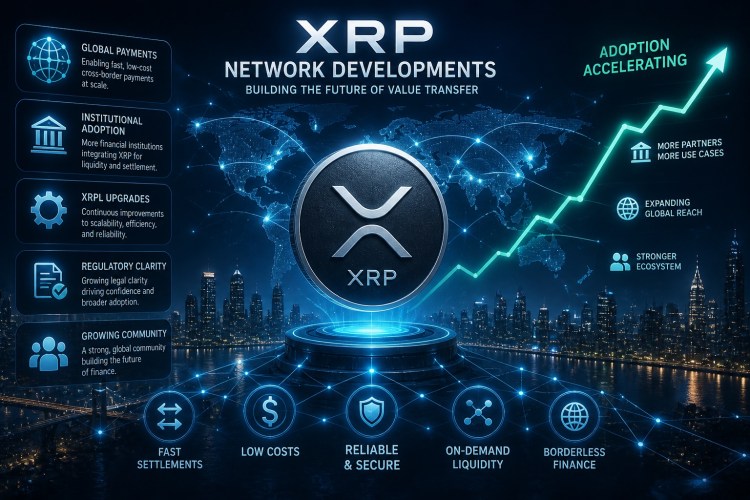
    Ripple’s pursuit of full banking status is a major topic of discussion within the XRP community, with some analysts and enthusiasts speculating whether this regulatory milestone could propel XRP to unprecedented price levels. The company’s financial standing, its expanding institutional presence, and developments within the XRP Ledger (XRPL) infrastructure are fueling ambitious forecasts, including a target of $25 per coin.

    Ripple’s Banking Approval: A Key Factor

    In December 2025, Ripple received conditional approval from the Office of the Comptroller of the Currency (OCC) for a national bank charter, a first for a crypto-native company. This charter paves the way for the establishment of Ripple National Trust Bank, which will handle custody and manage reserves for Ripple’s RLUSD stablecoin.

    A viral post on X from the XRP enthusiast account KingXRP claimed that Ripple had “officially obtained a banking license,” with its valuation exceeding $120 billion. While this statement reflects the excitement surrounding the development, it lacks crucial context. The OCC conditionally approved Ripple’s application to establish Ripple National Trust Bank. However, Ripple has also applied for a Federal Reserve master account, which would allow the trust bank to directly access FedWire and FedNow systems and hold dollar reserves at the central bank. Gaining this access would integrate Ripple into the core infrastructure of the U.S. payments system.

    What XRP Needs to Reach $25

    Ripple’s most recent publicly reported private valuation was approximately $40 billion following a $500 million strategic investment round. However, Ripple holds an estimated 42 billion XRP on its balance sheet. Approximately 4.5 billion to 6.4 billion XRP are held directly in company wallets, while roughly 33 billion XRP are locked in cryptographic escrow accounts. If Ripple holds 40 billion XRP and the price returns to $3, those holdings alone would be worth about $120 billion on paper.

    A move to $25 would require XRP to become more than just an asset reacting to news headlines, and its banking approval would need to contribute to a wider adoption cycle. With a current circulating supply of about 61.9 billion XRP, a $25 price would place its market value above $1.5 trillion. According to KingXRP, if XRP surpasses $25, Ripple’s balance sheet alone could exceed $240 billion, potentially positioning the company among the top 10 banks globally.

    Supporting the idea of banking approval driving broader adoption, infrastructure is being built on the XRP Ledger. One notable development involves RealFi Payment Solutions, which recently announced a partnership with Shopify to develop the first XRP Ledger-powered payment rewards application for global e-commerce.

  • Clarity Act’s Global Implications

    Clarity Act’s Global Implications

    The Clarity Act, a cryptocurrency bill in the United States, faces a crucial final vote on the Senate floor after a year of setbacks and internal disputes. The outcome carries significant weight, not only for the U.S. but also for the global landscape of cryptocurrency regulation.

    Global Implications of the Clarity Act

    If passed, the legislation would formally legalize most crypto activities in the United States. Given America’s influence on the global financial system, the bill’s provisions are expected to influence crypto regulations worldwide, according to stakeholders.

    Kristin Smith, president of the Solana Policy Institute, told Decrypt that the rest of the world is closely watching Washington. She noted that when the GENIUS Act, focused on stablecoins, was signed into law last summer, other countries quickly began developing similar frameworks. The United Kingdom, South Korea, and Canada subsequently introduced comparable stablecoin policies, while Hong Kong and Japan adjusted their existing regimes.

    Stablecoins, cryptocurrencies pegged to fiat currencies like the U.S. dollar, enable traders to enter and exit positions and send remittances without directly accessing traditional currencies. The GENIUS Act provided a regulatory framework for stablecoins, which had previously operated in a legal gray area. The Clarity Act, however, has a broader scope, establishing regulations for various cryptocurrencies, including decentralized finance (DeFi) ecosystems, and outlining measures to prevent money laundering and sanctions evasion.

    The bill would revise existing securities laws to include exemptions for newly defined crypto assets. Under this framework, the Commodity Futures Trading Commission (CFTC) would regulate most crypto tokens and trading platforms, with certain decentralized projects potentially exempt from regulatory oversight.

    Potential Impact and Concerns

    The Clarity Act’s passage could have a significant impact on the global economy, potentially leading to increased institutional crypto adoption and demand for crypto assets. Cody Carbone, CEO of the Digital Chamber, expressed concern that failure to pass the bill could cause the U.S. to fall behind other jurisdictions with existing regulatory frameworks.

    However, opponents of the bill, such as Senator Elizabeth Warren (D-MA), have raised concerns about its potential to facilitate money laundering and sanctions evasion. Warren argues that the bill could weaken global illicit finance standards, potentially leading to increased cross-border sanctions evasion, money laundering, and terrorist financing.

    During a recent committee vote, Senate Banking chair Tim Scott (R-SC) prevented Warren from introducing an amendment to the bill that would have tightened its DeFi-related provisions.

    Some critics remain skeptical that changes to the Clarity Act would effectively address illicit finance on a global scale. Bartlett Naylor, a financial policy analyst at Public Citizen, noted that countries like El Salvador have attracted crypto companies due to their lax regulations, which are unlikely to change regardless of the Clarity Act’s outcome.

  • Prediction Market Launches $100,000 World Cup Contest

    Prediction Market Launches $100,000 World Cup Contest

    Myriad Launches World Cup Prediction Market with $100,000 Prize Pool

    As the FIFA World Cup approaches next month, prediction market Myriad is launching a trading competition in partnership with the Layer-1 blockchain D.Energy, with a prize pool of $100,000.

    “We’re thrilled to be running this contest during the World Cup,” said Farokh Sarmad, Myriad Co-Founder and President. “With billions of viewers tuning in to the tournament from around the world, this is a great opportunity to showcase how prediction markets work around sports tournaments on a global stage.”

    Competition Details

    The FIFA World Cup 2026 Prediction Contest allows Myriad users to make predictions on every match in the competition, with over 75 multi-binary markets available at launch. The top traders and market makers will compete for a $100,000 prize pool.

    The top three traders will receive $20,000, $10,000, and $5,000 respectively, with the remaining $10,000 distributed among the rest of the leaderboard, which will run until the end of the contest.

    Top market makers will draw on a weekly pool of $5,000 in maker volume rewards throughout the contest. The leaderboard will reset each week.

    Partnerships and Recent Developments

    The competition builds on Myriad’s recent collaborations with Chainlink, whose oracles provide market resolution, and 55 Tech, its new tech partner for real-time sports data.

    Earlier this year, Myriad closed a seed investment round, which CEO Loxley Fernandes said would allow the prediction market to “invest aggressively in product development, liquidity, and market expansion.”

    Tournament Preview

    The World Cup is considered the world’s largest sporting event, with approximately 1.5 billion global viewers tuning in to the last final in Qatar, according to FIFA. This year’s event begins on June 11 with South Africa facing hosts Mexico. Myriad users currently give South Africa a 13% chance of winning.