Category: Uncategorized

  • Trump’s Crypto Pledge Fails to Lift Market

    Trump’s Crypto Pledge Fails to Lift Market

    Bitcoin’s price experienced a sharp $2,000 decline immediately following Donald Trump’s most explicit pro-crypto statement to date, where he vowed he would “never let crypto down.” The subsequent drop in Bitcoin’s price revealed the current market sentiment.

    Market Reaction

    Instead of initiating a sustained rally, the statement triggered a distribution event, liquidating leveraged long positions clustered near the $70,000 resistance level and pushing Bitcoin significantly lower within hours.

    Traders on Crypto Twitter are referring to this as the “Reverse Midas Touch,” a pattern where Trump’s most bullish pronouncements consistently lead to sell-offs rather than sustained buying. This dynamic is increasingly understood as a “sell-the-news” event, where political headlines provide exit liquidity for large holders rather than stimulating new structural demand.

    Trump’s Pro-Crypto Stance

    Trump’s statement, delivered in late May 2026 as part of an intensified effort to secure the crypto vote ahead of the next election cycle, positioned his administration as the definitive protector of digital assets in America.

    This rhetoric was directly linked to the White House’s concurrent legislative push, urging Congress to pass a comprehensive crypto market-structure bill that would reshape U.S. oversight of trading, stablecoins, and custody arrangements.

    This framing represented the most aggressive pro-crypto positioning Trump has adopted since reversing his 2021 stance, when he called Bitcoin a “scam.”

    His team has also accepted crypto campaign donations and launched NFT collections under the Trump brand, but the “never let crypto down” line was qualitatively different – a direct, unconditional promise. The market’s immediate response was therefore particularly telling.

    Price Action and Liquidation

    Bitcoin was trading near the $70,000 resistance zone when the statement was released. The rejection was immediate, with Bitcoin dropping approximately $2,000, leaving the asset well below that level within the same trading session.

    The decline was triggered by Iran’s retaliatory strike and the market’s anticipation of further escalation rather than a peace deal.

    Liquidation heatmaps indicated a dense cluster of long positions being cleared out at the $70,000 level, consistent with institutional or whale-scale selling into the retail enthusiasm generated by the headline.

    ETF Data and Market Sentiment

    ETF flow data further supported this picture. A $1.289 billion IBIT movement executed via a dark pool, the largest off-exchange trade of its kind on record, had already signaled that large holders were repositioning rather than accumulating. This behavior is indicative of distribution, not accumulation.

    This pattern has precedent. On May 18, 2026, Bitcoin fell approximately 2.4% to $76,500 after Trump issued a sharp geopolitical warning to Iran, with Ether falling 3.5% to $2,116 in the same move. Trump-related headlines have now triggered downside in crypto on multiple occasions, making the directional bias increasingly difficult to ignore.
  • Grok AI Predicts XRP Price for 2026

    Grok AI Predicts XRP Price for 2026

    Grok AI Predicts XRP Price Surge

    Grok AI, Elon Musk’s artificial intelligence platform, forecasts that XRP could reach a price between $5 and $8 by the end of 2026. This prediction is based on factors that appear more credible now than they did a year ago.

    Institutional Access and Market Dynamics

    The resolution of the Securities and Exchange Commission (SEC) lawsuit has significantly altered the landscape for institutional investment in XRP. The legal uncertainty previously deterred significant investment, regardless of the utility of XRP. With the lawsuit resolved, spot XRP exchange-traded funds (ETFs) have been approved and are attracting inflows. This opens doors for bank partnerships and the expansion of RippleNet.

    Grok’s analysis suggests that XRP will benefit from capital rotation as cross-border payment infrastructure matures and the XRP Ledger (XRPL) expands into tokenized assets and decentralized finance (DeFi). In a market that favors low-cost utility tokens, XRP’s positioning is advantageous as institutional money enters the market.

    Potential Risks and Price Consolidation

    While the outlook is bullish, potential risks remain. Macroeconomic downturns, slower-than-expected adoption, or profit-taking by long-term holders could limit XRP’s price gains, potentially leading to consolidation between $2 and $3.50. Even this scenario would represent a gain from current levels, but it would delay the achievement of higher price targets.

    Technical Analysis of Current Trading

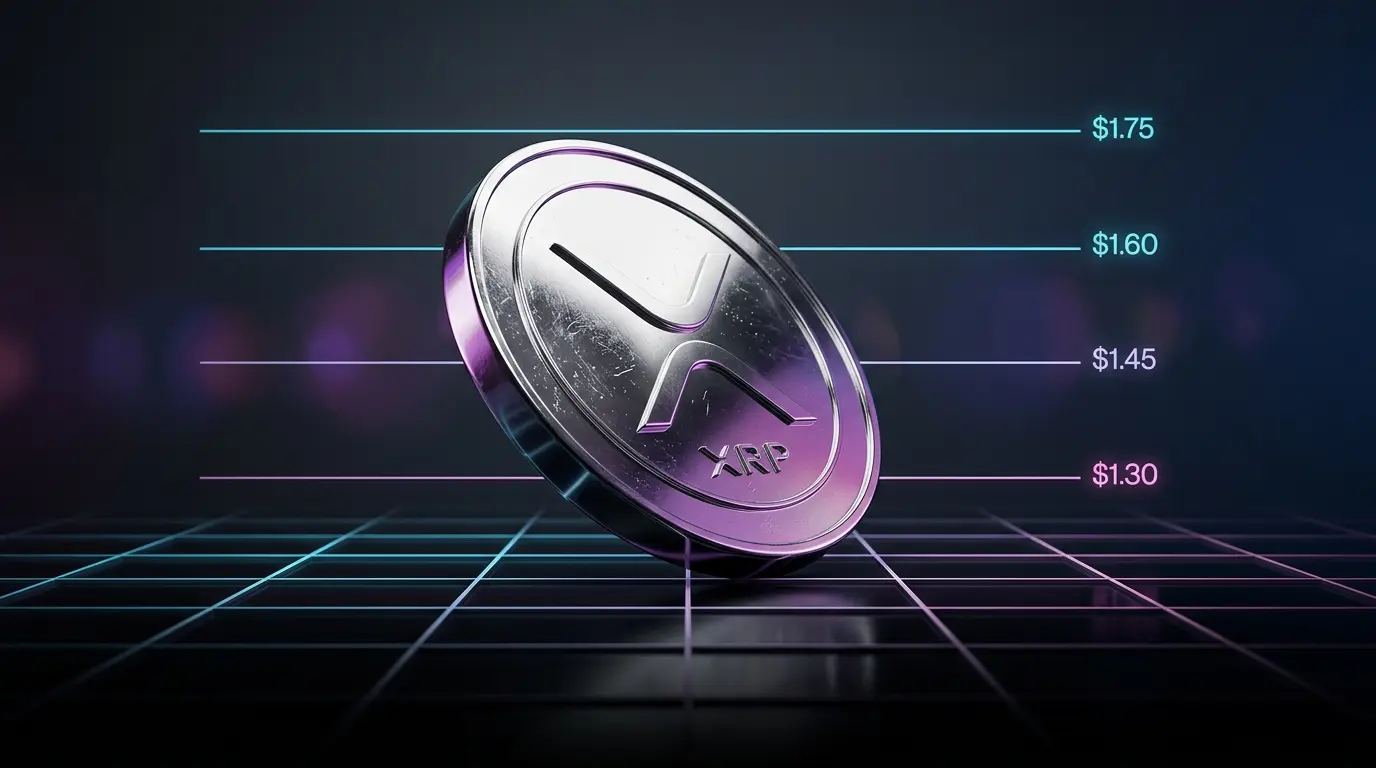
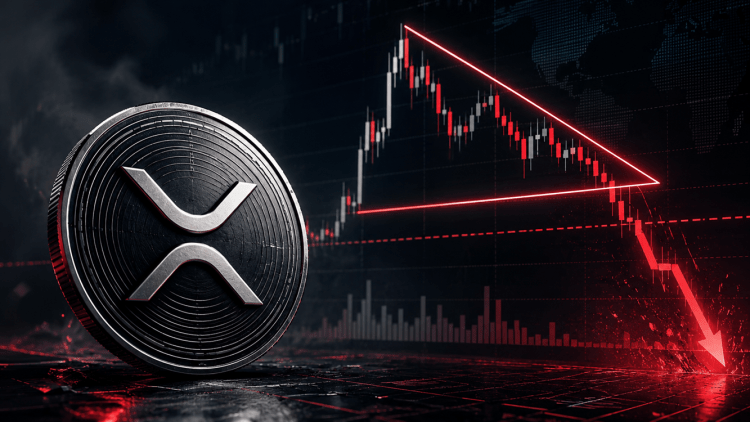
    XRP is currently trading at $1.29 on the 4-hour chart. The price has been fluctuating between $1.33 and $1.55 for the past two months. Recently, a sharp decline dropped the price from $1.52 to $1.26, breaking through the range floor.

    This type of price movement can indicate either a breakdown or a liquidity grab followed by a reversal. The speed of the decline suggests the latter is more likely, but the next 48 to 72 hours will confirm this.

    The $1.29 to $1.30 zone is a critical support level. Holding this level and reclaiming $1.33 would be a bullish signal. Conversely, breaking below $1.26 could lead to a drop towards $1.20, a major daily support level.

    The Relative Strength Index (RSI) is at 32.88, indicating an oversold condition on the 4-hour chart. This setup often precedes a price rebound. For Grok’s end-of-2026 targets to remain viable, the $1.26 to $1.30 zone must hold. A recovery towards $1.50, followed by a break above $1.60, would signal a continuation of the larger price movement.

    Bitcoin Hyper: A Potential Investment Opportunity

    Some traders are shifting their focus away from large-cap cryptocurrencies. Bitcoin Hyper is positioning itself for this rotation, developing the first Bitcoin Layer 2 with Solana Virtual Machine integration. The project aims to provide fast, low-cost smart contracts on Bitcoin while maintaining its security.

    The presale has raised $32 million at $0.013679 per token, with high APY staking available for early participants. This investment carries a higher risk profile than investments on major exchanges, but it also offers greater potential upside.

  • XRP Faces Potential Drop to $0.75, Analyst Warns

    XRP Faces Potential Drop to $0.75, Analyst Warns

    XRP Faces Potential Downturn, According to Technical Analyst

    XRP’s weekly chart suggests a bearish continuation pattern, according to Aksel Kibar, a Chartered Market Technician (CMT) and experienced chart analyst. Kibar’s analysis indicates a possible price decline towards $0.75 if the current consolidation phase breaks down.

    Kibar, who posts under the TechCharts account on X, has over 15 years of experience in global equity market analysis. He previously worked as a senior technical analyst and fund manager at Yapi Kredi Bank in Turkey and the National Bank of Abu Dhabi. His expertise has been recognized by veteran commodity trader Peter Brandt, who has described Kibar as “the most accomplished pure classical chart analyst alive today.”

    Resistance at $1.60 Stalls XRP

    Kibar’s recent analysis of XRP is concise: “$XRPUSD 1.6 resistance. Latest consolidation below the resistance and can act as a bearish continuation.” The chart, sourced from Bitstamp’s weekly timeframe, shows XRP trading around $1.28 after failing to surpass the $1.60 resistance level. This level is significant as it previously served as a support zone during the 2025 range, which peaked around $3.45. After XRP lost this support, the same zone has become a resistance level.

    The current price action reveals a triangular consolidation pattern. The upper boundary of this triangle slopes downward from the failed recovery attempt, while the lower boundary rises from the post-breakdown lows. In classical charting, such a structure can resolve in either direction, but its location is crucial. A triangle forming after a major breakdown and below former support often signals a potential continuation pattern unless buyers can push the price back above the resistance.

    Kibar’s $0.75 target is derived from the pattern’s measured move. The widest part of the triangle spans from approximately $1.67 to $1.12, a range of about $0.55. If XRP breaks below the triangle near $1.30, subtracting the $0.55 range yields a downside objective near $0.75. This target is a projected extension of the current compression if the market confirms a breakdown. However, the setup requires confirmation through a decisive break below the triangle before it can be considered a completed bearish signal.

    Long-Term Trend Filter Adds to Bearish Outlook

    Kibar also incorporates a long-term trend filter in his analysis. In the cryptocurrency market, he often uses the 365-day exponential moving average as a primary directional filter. When the price is above this average, it generally supports a more constructive bias; when the price is below it, caution is advised, especially when rallies stall below resistance.

    In XRP’s case, the price is trading below the red long-term moving average at $1.74, while the average itself is above the current consolidation. This further reinforces the bearish interpretation. Buyers need to invalidate the triangle breakdown risk and also repair the broader trend structure by reclaiming lost resistance and moving back above the long-term average.

    At the time of reporting, XRP was trading at $1.29.

  • Crypto Market Dips Amid Iran Tensions, ETF Withdrawals

    Crypto Market Dips Amid Iran Tensions, ETF Withdrawals

    Crypto Market Plummets Amid Outflows and Geopolitical Concerns

    Bitcoin experienced a significant downturn on Thursday morning, falling below $73,000 and trading at $73,260, a 3.4% decrease in the last 24 hours. This marks a six-week low for the cryptocurrency.

    The price drop appears to be driven by two primary factors: escalating tensions in the Iran conflict and the largest single-day outflow from Bitcoin ETFs in 2024.

    Renewed strikes and the breakdown of ceasefire negotiations in Iran led to a 2.5% increase in oil prices and a general decline in risk assets. The optimism from the previous weekend’s peace deal quickly dissipated.

    The Bitcoin ETF landscape is particularly concerning. Tuesday saw outflows of -$733.40 million, the worst single day since January 29. Combined with Monday’s -$333.60 million, the two-day total outflow exceeds $1 billion. Eight consecutive trading days of outflows have now erased over $2.6 billion from Bitcoin ETFs since May 15.

    Other major cryptocurrencies also suffered losses. Ethereum fell below $2,000 for the first time since April, trading at $1,983 and down 33% year-to-date. Even HYPE, which has been a standout performer this year with a 123% YTD increase, is down 10% today, trading at $56.44. The $6.25 billion options expiry today, with max pain at $75,000, indicates the market is currently $1,700 below max pain heading into settlement.

    Broader markets also reflect the downturn, with gold down 1.4% at $4,386 and stock futures in the red, including a 0.5% drop in the Nasdaq. While the market is experiencing a widespread decline, the crypto market is feeling the effects most acutely.

    Crypto IPO Wave Could Create a $1 Trillion Public Market

    Jefferies anticipates a surge in crypto and blockchain-related public listings over the next two years, projecting the sector could become a $1 trillion public market within five years.

    The bank released this report following its first Digital Assets Investor Conference in New York, where 35 digital asset company executives met with approximately 150 institutional investors. The discussions marked a shift from previous years, with institutional investors now focusing on integrating blockchain infrastructure into core financial systems, including tokenized money market funds, private credit, and settlement networks, rather than solely speculating on Bitcoin price.

    Specifically, Jefferies is monitoring the IPO pipeline, which includes Kraken parent Payward (confidential S-1 filed, $20 billion valuation raise underway), Securitize (SEC-registered tokenization platform), Blockchain.com (S-1 filed last week), and Gemini.

    Beyond crypto-native companies, the bank identifies traditional financial firms, including settlement networks and payment processors, as potential candidates for public listings tied to blockchain infrastructure build-outs. This projection comes as Ledger, ConsenSys, and other firms have delayed IPO plans due to a 75% year-to-date decrease in crypto trading volumes. Fundstrat estimates that these processes are “70-80% along the way” and ready to accelerate once markets recover.

    Crypto’s Political Spending Is Shifting Republican

    While Fairshake and its affiliates remain a dominant force in crypto-driven elections, several new crypto PACs have emerged with a Republican focus, potentially shifting the bipartisan energy carefully cultivated over multiple campaign cycles. The Texas primary runoffs on Tuesday highlighted this shift.

    Crypto-focused political committees spent over $9 million in Texas, contributing to a series of primary victories for industry-aligned candidates across both parties. Notably, they helped oust Rep. Al Green, a vocal crypto critic, in a rare incumbent-on-incumbent primary runoff.

    The new Republican focus is coming from a second layer of PACs operating alongside FairShake. Fellowship PAC, associated with Tether and Cantor Fitzgerald, spent $500,000 supporting Texas Attorney General Ken Paxton’s successful challenge to incumbent Republican Sen. John Cornyn, a race FairShake’s bipartisan structure couldn’t enter. Paxton is more inclined towards crypto deregulation than Cornyn. The Winklevoss twins have also launched their own GOP-only groups.

    While FairShake continues its bipartisan efforts, newer PACs are exclusively Republican, creating a redundant political layer that covers both party tracks simultaneously. They have achieved some success so far.

    Google Engineer Busted for Inside Trading on Polymarket

    Michele Spagnuolo, a Google security engineer, has been arrested and charged with insider trading for allegedly placing bets on Polymarket based on Google search data, according to US officials on Wednesday.

    A complaint unsealed by the US Attorney’s Office for the Southern District of New York alleges that Spagnuolo used “material nonpublic information” to place bets on who would appear on Google’s list of most-searched-for individuals for 2025, after Polymarket began offering these markets last fall.

    Spagnuolo, 36, used the pseudonym AlphaRaccoon. He allegedly used confidential Google data to predict that singer D4vd would be named the most-searched person – a result announced publicly on December 4, 2025. He transferred $3.8 million in USDC to his Polymarket address to make the bets, and profited $1.2 million. He then moved those funds out using a swapping service and privacy tool, ultimately transferring the funds to a processor in Italy. He faces charges of commodities fraud, wire fraud, and money laundering.

    This is the second Polymarket insider trading case the SDNY has brought this year, the first involving Army Special Forces soldier Gannon Ken Van Dyke, who bet on the Maduro raid he participated in.

  • Exchange-Backed OP Chains Generate Almost $500M in Revenue, Says OP Labs

    Exchange-Backed OP Chains Generate Almost $500M in Revenue, Says OP Labs

    OP Labs announced that exchange-owned chains built on the OP Stack generated over $495 million in application revenue during the second half of 2025. This figure encompasses sequencer fees from transactions, revenue from applications integrated directly into exchange platforms, and onchain assets.

    Shifting Value Dynamics

    According to an official press release shared with CryptoPotato, OP Labs noted that exchanges historically depended on third-party networks, which captured a significant portion of the value generated from settlement activity, application fees, and broader onchain monetization linked to user activity.

    However, in the past year, applications running on exchange-owned chains built on the OP Stack have seen rapid expansion. OP Labs highlighted that Morpho’s total value locked (TVL) on Coinbase-backed Base increased from $48 million at the beginning of 2025 to over $960 million by the end of the year, representing nearly 20x growth. The company attributed this growth primarily to lending products integrated directly into the Coinbase app, rather than through wallet-based user acquisition.

    Base has now become Morpho’s second-largest chain globally and accounted for 32% of Morpho’s application fees in H2 2025, which OP Labs stated was 13 times that of Arbitrum and 60 times that of OP Mainnet.

    Expanding Onchain Market

    Meanwhile, Kraken’s Ink chain added over one million unique addresses since December 2024. OP Labs reported that less than 0.6% of those addresses had any prior onchain history with Kraken, while the remaining 99.4% represented net-new onchain wallets. This was presented as evidence that exchange-owned chains are expanding the overall onchain market rather than simply shifting existing users between networks.

    OP Labs further noted that Tydro, the Aave V3 white-label lending protocol launched on Ink in October 2025, reached $100 million in TVL within its first 24 hours and surpassed $500 million within 90 days. The company stated that comparable Aave deployments on neutral Layer 2 networks previously took between 142 and 721 days to reach similar milestones.

    Ecosystem Growth

    Optimism Foundation’s Chief Business Officer Kyle Jenke stated that the H2 figures demonstrated a shift from the previous system, where exchanges profited from trading while external networks captured subsequent value. He added, “Exchanges now own the settlement, distribution, and application layers their users transact on. They’re doing it on a shared standard precisely so they don’t fragment from each other in the process.”

    Across the broader ecosystem, OP Stack chains secured $16.33 billion in total value, held $6.8 billion in DeFi TVL, and processed 3.6 billion transactions during H2 2025. This represented an all-time high across more than 50 live chains, encompassing exchanges, consumer applications, financial infrastructure, and developer platforms.

    Additionally, regulated companies are also adopting the OP Stack for institutional blockchain projects. Bitpanda’s Vision Chain utilizes the OP Stack for institutional finance aligned with Europe’s MiCA and MiFID II regulations, while Japan’s Mitsui & Co. Digital Commodities launched the regulated precious-metals-backed Zipangcoin on OP Mainnet.

  • Samsung Invests $408 Million in South Korean Crypto Exchange

    Samsung Invests $408 Million in South Korean Crypto Exchange

    Samsung Affiliates Invest $408 Million in Crypto Exchange Upbit

    Three Samsung affiliates have collectively acquired a 4% stake in Dunamu, the operator of South Korea’s leading cryptocurrency exchange Upbit, for approximately 612.8 billion won ($408 million). The move, announced on May 28, reflects the growing trend of South Korean financial institutions seeking strategic positions within the country’s most valuable digital asset company.

    Transaction Details

    The shares will be purchased from a group of Kakao-affiliated funds, including Kakao Investment and Kakao Ventures, at a per-share price of roughly 439,250 won. This valuation implies Dunamu’s total corporate worth is approximately 15.3 trillion won, or roughly $11.1 billion, according to Wu Blockchain and the Korea Times. Samsung Securities will acquire a 2% stake, while Samsung SDS and Samsung Card will each take 1%. The transaction is scheduled to close on June 19, according to the Korea Times.

    Strategic Objectives of Each Affiliate

    Each Samsung entity has a distinct operational agenda for the investment, according to the Korea Times. Samsung Securities plans to strengthen cooperation on token securities issuance, distribution, and virtual asset services. Samsung SDS, the group’s IT and cloud arm, intends to combine its artificial intelligence, cybersecurity, and data management capabilities with Dunamu’s blockchain operational infrastructure. Samsung Card, the group’s payments unit, aims to build a digital asset payment ecosystem with Dunamu, potentially integrating with Monimo, Samsung Financial Networks’ unified financial platform, pending the introduction of won-based stablecoins in Korea. These objectives align with the pillars of South Korea’s Digital Asset Basic Act, expected to be finalized in 2026, according to the Korea Times.

    Broader Industry Context

    Samsung’s $408 million investment comes as South Korea’s institutional financial sector increasingly focuses on Dunamu. Earlier this month, Hana Bank agreed to purchase a 6.55% stake for approximately 1 trillion won ($670 million), according to the Korea Times. Hanwha Investment and Securities has also increased its Dunamu holdings to 9.84%, committing an additional 597.8 billion won, making it one of Dunamu’s largest non-founding shareholders, according to Wu Blockchain. Dunamu reported a net profit of 708.8 billion won on revenues of 1.56 trillion won in fiscal 2025 and handles over 80% of South Korean virtual asset trading volume, according to the Korea Times.

    A Samsung official told the Korea Times that the investment aims to strengthen each affiliate’s competitiveness in digital asset-related businesses. The official added that closer cooperation with Dunamu could help the companies secure leadership positions in Korea’s emerging digital asset market.

    This development signifies a critical moment for the integration of the nascent sector with Korean corporate conglomerates. Samsung’s investment in a crypto exchange, even at 4%, carries significant symbolic weight, indicating that South Korea’s most powerful industrial dynasty now views digital asset infrastructure as a core component of its financial services strategy for the coming decade.

  • Lummis: CLARITY Act Delay Risks Regulatory Setback

    Lummis: CLARITY Act Delay Risks Regulatory Setback

    Senator Cynthia Lummis issued a strong warning this week on X: if the CLARITY Act fails to pass Congress during this session, American software developers could face prosecution simply for publishing code.

    She described this scenario as a descent into “regulatory dark ages,” directly criticizing the Securities and Exchange Commission’s (SEC) enforcement-based approach, which has characterized U.S. crypto policy for the past three years.

    Lummis emphasized the urgency of the situation, stating that this is the last viable legislative opportunity until at least 2030.

    The Stakes

    According to Lummis, if the CLARITY Act does not pass this Congress, American software developers will likely face prosecution in the near future simply for publishing code.

    The Senate Banking Committee approved the CLARITY Act last week, but securing its passage on the Senate floor presents a different challenge.

    Crypto advocacy groups have launched an extensive lobbying campaign to maintain momentum, arguing that the bill offers the industry’s only near-term path to a defined market structure framework. Without it, the SEC’s case-by-case application of the Howey Test to digital assets will continue unchallenged.

    Key Provisions of the CLARITY Act

    The CLARITY Act primarily aims to clarify jurisdictional issues. It would formally define ancillary assets, a category encompassing most altcoins, and specify which digital tokens linked to investment contracts are not securities. This would resolve the ambiguity the SEC has used to pursue enforcement actions without formal rulemaking.

    The bill would require the SEC to establish Regulation DA, exempting certain ancillary-asset offerings from full registration if they raise $75 million or less over four years.

    In addition to registration thresholds, the legislation would direct the SEC to modernize its investment contract definitions and set examination standards targeting illicit finance. This would replace informal supervisory pressure and guidance letters with binding rulemaking.

    This shift is significant because the current framework allows the SEC discretion to threaten enforcement without triggering the procedural protections that formal rules would require.

    The Act also addresses stablecoins through 1:1 reserve mandates, a provision Lummis views as crucial for maintaining the digital dollar’s international credibility.

    The CLARITY Act’s market structure provisions would divide oversight between the SEC and the Commodity Futures Trading Commission (CFTC) based on asset classification, mirroring the existing structure in traditional finance.

    Lummis has argued that the absence of this framework is accelerating capital flight to offshore hubs in the United Arab Emirates and Hong Kong, where institutional players can operate under defined rules.

    The SEC’s continued reliance on enforcement as a primary policy tool is not a neutral stance. It is actively influencing where crypto infrastructure is being developed.

  • XRP Price Dips Below $1.30 Amid SEC Action

    XRP Price Dips Below $1.30 Amid SEC Action

    XRP Price Dips Below $1.30

    The price of XRP has fallen, dropping over 3% in a day to trade at $1.29. The $1.30 support level, previously considered the floor of this corrective cycle, has been breached due to sustained selling pressure. However, at least one analyst believes the primary driver of this movement is not reflected on the XRP chart, but rather in Washington.

    Finance expert Levi Rietveld gained significant attention this week after posting on X: “I TOLD YOU XRP FAM!!!! ITS HAPPENING!!!! THE SEC IS DOING IT!!!” He included a video in which he argued that the Federal Reserve is preparing to inject an initial $7 billion into the economy next week, marking the beginning of a quantitative easing cycle.

    Rietveld suggests that coordinated liquidity expansion across the U.S., China, and Europe would significantly increase the global M2 money supply, driving capital into risk assets, including cryptocurrencies. He posits that an increase in the dollar supply would lead investors to seek higher yields on the risk curve.

    Regardless of the Federal Reserve’s actions, XRP’s price structure has weakened considerably over the past 48 hours.

    The 89% bearish sentiment reading, combined with an Extreme Fear score of 25 on the Fear & Greed Index, accurately reflects market sentiment. XRP has lost 10% of its value in the last two weeks and is significantly below its peak of $3.65.

    Trading volume has surged to over $2 billion, primarily driven by sellers liquidating their holdings.

    Technical Analysis

    From a technical perspective, XRP has broken down from a triangle/pennant formation, lost the $1.35 pivot, and is now declining from the $1.30–$1.32 demand zone that previously triggered a strong upward movement. The 50-day moving average is trending downward, and the price is establishing lower lows, indicative of a bearish market structure.

    The $1.30 level represents the neckline of a head-and-shoulders pattern. A close below this level could trigger an 18% decline towards the $1.12–$1.20 area, which is now occurring.

    If the price closes below $1.30 today, it would likely confirm a prolonged breakdown, with potential downside targets at $1.20 and possibly $1.10 if selling accelerates.

    Market Dynamics and Alternative Investments

    For traders reevaluating their positions at current XRP levels, where potential gains to significant resistance at $1.60 are approximately 20% and the downside risk to $1.10 is equally significant, the risk-reward ratio appears unfavorable.

    As XRP struggles to recover, capital is visibly shifting towards higher-beta opportunities.

    Bitcoin Hyper ($HY PER) is one presale attracting attention. It is positioned as the first Bitcoin Layer 2 with Solana Virtual Machine (SVM) integration, offering sub-second finality and low-cost smart contract execution on top of Bitcoin’s security layer, with performance metrics exceeding Solana.

    The presale has raised $32 million at a current token price of $0.0136, with a 36% APY staking rewards program for early participants. The Decentralized Canonical Bridge allows for native BTC transfers into the ecosystem without the counterparty risk associated with wrapped tokens.

  • Cardano Whales Hold Majority of ADA Supply

    Cardano Whales Hold Majority of ADA Supply

    Cardano (ADA) has experienced a significant downturn, losing over 70% of its value in the past year. In 2024 alone, the cryptocurrency has shed 30% of its value, with multiple attempts to surpass the $0.25 level failing.

    Whale Accumulation

    Despite the price decline, millionaire ADA wallets have been steadily accumulating the asset, suggesting that some large holders remain active. Wallets holding at least 1 million tokens have collectively increased their holdings to 25.11 billion ADA. According to Santiment, this is the highest level recorded since December 2017. These wallets now control 67.5% of the total ADA supply, the highest concentration since July 2020.

    Santiment noted that this accumulation by large holders is generally seen as a sign of confidence from key stakeholders. As a long-term indicator, the trend could be viewed as bullish for patient investors.

    Ecosystem Concerns

    The renewed accumulation comes as Cardano continues to face concerns regarding its ecosystem growth. Critics argue that the network has struggled to achieve the same level of traction as its competitors. Crypto analyst Ali Martinez recently questioned Cardano’s long-term strength, citing the network’s relatively low activity compared to its multibillion-dollar valuation.

    Martinez pointed out that Cardano’s DeFi ecosystem has never surpassed $1 billion in total value locked and lags behind rivals like Ethereum, while newer chains such as SUI have already seen stronger usage. He also noted that Cardano has yet to establish a clear niche that consistently attracts developers, users, and capital. Martinez added that the blockchain’s research-focused approach has slowed feature rollouts. Other market experts have also expressed skepticism about whether Cardano is overvalued.

    According to DeFiLlama, Cardano’s TVL has fallen below $125 million, down 82% from nearly $721 million in November 2024.

    Technical Analysis

    Trader ‘Val Me’ described Cardano’s chart as “very sad looking,” noting that ADA remains weak on the higher time frame despite trading near a crucial support zone around $0.22. She suggested the asset could either bounce from current levels or briefly break the equal lows before recovering. The analyst identified a possible move toward $0.50, though she suggested that the rally could simply form a lower high before a retest of the support zone.

    She added that only if ADA later holds a higher low would she consider a more bullish scenario, which projects a potential move toward $1.35. However, she stressed that such a scenario is still unlikely at this stage.

  • CFTC and Gemini Seek to Overturn $5 Million Settlement

    CFTC and Gemini Seek to Overturn $5 Million Settlement

    The U.S. Commodity Futures Trading Commission (CFTC) and the crypto exchange Gemini jointly filed a motion on Thursday seeking to overturn a January 2025 consent order, which the regulator now claims “should not have been filed.”

    Background of the Case

    This unusual about-face stems from a case initiated in June 2022, when the CFTC sued Gemini, alleging the exchange made false or misleading statements regarding Bitcoin futures contract manipulation risks. The exchange, founded by Cameron and Tyler Winklevoss, settled the charges in January 2025, agreeing to a $5 million civil penalty and a permanent injunction.

    CFTC Acknowledges Weaknesses in Original Complaint

    In Thursday’s filing, the CFTC acknowledged that the original complaint was largely based on a whistleblower’s account “known to be lacking in credibility,” and characterized the exchange as a “fraud victim.” The regulator stated there were “serious questions” about the strength of the evidence against Gemini, adding that personnel “improperly influenced the CFTC’s regulatory authority to create settlement leverage.”

    Leadership Changes Precede Reversal

    The reversal follows changes in the regulator’s leadership. Michael Selig was appointed as CFTC Chair in December 2025, after the White House withdrew Brian Quintenz’s nomination in September. Quintenz, a former CFTC commissioner and the Trump administration’s original nominee for Chair, had suggested the Winklevoss twins opposed his nomination because he would not commit to a public position on the agency’s enforcement action against their exchange.

    Gemini’s Defense and Business Pivot

    Gemini had vigorously contested the CFTC’s enforcement approach, filing a letter of complaint with the CFTC Inspector General in June 2025, alleging it was the victim of an abusive investigation and “lawfare.” The exchange maintained throughout the case that it was being unfairly pursued despite being a victim of the manipulation it had reported to regulators.

    The regulatory reversal coincides with Gemini’s business pivot toward the emerging prediction market space, following sweeping layoffs and its exit from the UK, European, and Australian markets. The company’s Gemini Titan subsidiary was approved as a Designated Contract Market and launched its predictions marketplace in December 2025. In May 2026, Gemini Olympus received a DCO license from the CFTC to act as a clearinghouse for regulated derivatives trading, including prediction markets.

    At the time of the layoffs, Gemini founders Cameron and Tyler Winklevoss outlined a thesis that “prediction markets will be as big or bigger than today’s capital markets,” a sector that the CFTC has aggressively pursued its right to regulate over that of state gaming authorities.