Tag: Adoption & Partnerships

  • Mastercard Taps Ripple’s RLUSD for Stablecoin Push

    Mastercard Taps Ripple’s RLUSD for Stablecoin Push

    Mastercard Broadens Stablecoin Integration for Global Settlements

    Global payments powerhouse Mastercard is significantly advancing its integration of blockchain technology into traditional finance, announcing expanded settlement capabilities that now encompass a range of stablecoins. The move includes Ripple’s RLUSD, Circle’s USDC, Paxos-issued PYUSD, USDG, USDP, and SoFi’s SoFiUSD.

    These U.S. dollar-pegged crypto assets will be supported across multiple networks, including XRPL, Solana, Ethereum, Arbitrum, and Base. This strategic expansion allows merchants and partners to settle transactions using these digital assets, marking a transition from pilot programs to practical, real-world applications.

    Mastercard has been developing its cryptocurrency strategy through its Multi-Token Network (MTN), an initiative designed to bridge traditional finance and digital assets. The company recently highlighted a new collaboration involving prominent industry players such as Binance, Ripple, and PayPal.

    The company’s focus on stablecoins intensified in March with the $1.8 billion acquisition of payments firm BVNK.

    Ripple’s RLUSD is particularly noteworthy due to the company’s established presence in cross-border payments. However, Mastercard’s announcement extends to other established stablecoins like USDC and PYUSD, which are already gaining traction in institutional and payment use cases. By supporting a diverse set of stablecoins, Mastercard appears to be positioning itself as a neutral infrastructure provider rather than endorsing a single issuer.

    This latest development in the stablecoin arena comes amid a surge in demand for faster and more cost-effective cross-border transactions. Stablecoins are increasingly recognized as a viable alternative to traditional correspondent banking systems, offering near-instant settlement and reduced fees.

    Mastercard’s decision to broaden its stablecoin support underscores growing confidence in their long-term role within the global financial system. The company has also emphasized its commitment to regulatory compliance, security, and interoperability, crucial elements for widespread institutional adoption.

    “The next phase of stablecoin adoption is about real-world utility, especially in settlement, where timing and liquidity matter most,” said Raj Dhamodharan, executive vice president, Blockchain & Digital Assets at Mastercard. “By introducing intraday and weekend on settlement options across our global network, we’re expanding how partners manage liquidity and operate in an always-on digital economy while maintaining the trust, resilience and safeguards they expect from Mastercard.”

  • Cardano Secures Major Brazil Deal Amidst Breakdown Fears

    Cardano Secures Major Brazil Deal Amidst Breakdown Fears

    Cardano Foundation Partners with Brazilian Olympic Committee to Drive Sports Innovation

    The Cardano Foundation has announced a significant partnership with the Brazilian Olympic Committee (COB) aimed at fostering innovation within local sports through the integration of emerging technologies. The collaboration seeks to leverage advancements in Artificial Intelligence (AI), blockchain, and the Internet of Things (IoT) to modernize sports management, enhance institutional transparency, and cultivate deeper engagement with athletes, coaches, and fans.

    A Vision for the Future of Brazilian Sports

    Emanuel Rego, Director General of the COB, emphasized that the initiative represents a forward-looking step for sports in Brazil. “Our goal with this partnership goes beyond technical modernization,” Rego stated. “We want to present, guide, and educate our community about the potential of blockchain technology, adopting the best global market practices. One of the COB’s commitments is to lead by example, using innovation to safeguard institutional integrity and build an even stronger relationship of trust with our athletes, federations, and society as a whole.”

    The collaboration outlines a three-year roadmap with a focus on four key areas: identity and certification, fan engagement, equipment tracking, and governance and transparency. Initial pilot projects are slated for rollout in the coming months. Rafael Fraga, manager of the Cardano Foundation in Latin America, expressed enthusiasm for the venture, saying, “We couldn’t be more pleased to build this journey alongside the COB, Brazilian sport, and Brazil, and we are eager to share the next steps in this transformation.”

    This agreement with the COB is considered a major milestone, particularly given Brazil’s strong performance in the Olympic Games and its significant adoption of cryptocurrency.

    ADA’s Price Struggles Amidst Market Downturn

    Despite the positive news surrounding the partnership, Cardano’s native token, ADA, has seen its value decline, mirroring a broader downturn in the cryptocurrency market. ADA recently fell to approximately $0.20, its lowest point since early 2021, before a slight rebound to the current $0.21, marking a 9% decrease over the past week.

    Prominent analyst Ali Martinez had previously identified $0.247 as a critical level of historical support, warning that a breach of this level could lead to a significant price drop, potentially reaching $0.113 or even $0.051.

    However, a potential bullish indicator for ADA lies in its exchange netflow. In recent weeks, investors have been observed moving their holdings from centralized exchanges to self-custody solutions, which could reduce immediate selling pressure on the token.

  • Gate Partners Alpaca for Global Stock Trading

    Gate Partners Alpaca for Global Stock Trading

    Gate Partners with Alpaca to Expand Real Stock Trading Access

    Cayman Islands, British Overseas Territories, June 3rd, 2026 – Gate has announced a strategic partnership with Alpaca, a move designed to broaden access to real stock trading for eligible users. This collaboration represents a significant step in Gate’s ongoing initiative to integrate digital assets with traditional financial markets, offering a unified multi-asset trading experience.

    The upcoming launch will grant Gate users access to over 10,000 stocks and exchange-traded funds (ETFs) across major U.S. securities markets, including the New York Stock Exchange (NYSE) and Nasdaq. The service will support fractional share trading, with a minimum purchase requirement of just $1. By leveraging Gate’s unified account system, users will be able to trade stocks and ETFs using USDT, thereby fostering a more seamless connection between digital assets and conventional financial markets.

    Expanding Access to Traditional Financial Markets

    Established in 2013, Gate has evolved into a prominent global platform for cryptocurrency and integrated financial services, serving more than 54 million users worldwide. The forthcoming introduction of stock trading is a key component of Gate’s long-term strategy to develop a comprehensive, multi-asset platform that bridges digital assets and traditional financial markets.

    Historically, accessing global equity markets has often necessitated opening separate brokerage accounts, navigating complex onboarding processes, and managing capital across disparate platforms.

    To address these challenges, Gate has expanded its offerings beyond its core digital asset services, aiming to build a more holistic financial ecosystem. The introduction of its stock trading services marks a crucial advancement toward creating a unified environment where users can access multiple asset classes through a single platform and account structure. Gate’s stock offering will provide access to real stock and ETF trading via regulated market infrastructure, allowing users to engage with traditional financial markets within a familiar, crypto-native experience.

    Powered by Alpaca’s Brokerage Infrastructure

    Gate selected Alpaca as its infrastructure partner due to its regulated, self-clearing brokerage framework, its API-first architecture, and its extensive experience supporting financial platforms globally. As the clearing broker partner, Alpaca will be responsible for the execution, clearing, settlement, and custody of orders, as well as managing dividend payments and corporate actions.

    This integration enables Gate to efficiently scale its stock trading capabilities while maintaining a fluid user experience. By utilizing Alpaca’s brokerage infrastructure, Gate can offer eligible users access to a wide array of U.S.-listed stocks and ETFs, further solidifying its position as a leading multi-asset trading platform.

    A Shared Vision for Financial Accessibility

    Dr. Han, Founder and CEO of Gate, stated, “The future of finance is becoming increasingly interconnected. As the boundaries between digital assets and traditional financial markets continue to evolve, users are looking for more efficient ways to access a broader range of investment opportunities. Our partnership with Alpaca will help advance that vision by providing seamless access to real stock market investing while maintaining the simplicity and efficiency that users expect from a modern digital asset platform. We believe multi-asset access will play an increasingly important role in the next generation of global financial services.”

    Yoshi Yokokawa, Co-Founder and CEO of Alpaca, commented, “At Alpaca, our mission is to open financial services to everyone on the planet through modern infrastructure. We are pleased to partner with Gate as it expands access to the U.S. stock market and continues building a more comprehensive financial ecosystem for users around the world. Together, we are helping create a more connected and efficient global investment experience.”

    Advancing Gate’s Multi-Asset Strategy

    The partnership with Alpaca aligns with Gate’s overarching strategy to construct a unified platform that connects digital assets with traditional financial markets. In addition to its forthcoming support for trading across more than 10,000 stock assets, Gate is actively expanding its traditional finance (TradFi) offerings to include equities, indices, commodities, metals, and foreign exchange markets, providing users with enhanced opportunities for cross-market participation and portfolio diversification.

    As the convergence between cryptocurrency and traditional finance accelerates, Gate remains committed to broadening market access, improving capital efficiency, and delivering a more streamlined multi-asset investing experience for users globally.

    About Gate
    Founded in 2013 by Dr. Han, Gate is a leading global cryptocurrency and integrated financial services platform. Serving over 54 million users worldwide, it supports trading across more than 4,700 digital assets and 10,000 stock assets, while also offering comprehensive TradFi trading services spanning metals, stocks, indices, forex, and commodities, providing users with a one-stop, multi-asset trading experience. Gate was among the first platforms to implement 100% Proof of Reserves. Its ecosystem includes Gate Wallet, Gate Ventures, Gate for AI Agent, and a wide array of products and services.

    About Alpaca
    Alpaca is a U.S.-headquartered, self-clearing broker-dealer and a global leader in brokerage infrastructure APIs, facilitating access to traditional and on-chain asset classes. Alpaca currently supports over 10 million brokerage accounts across hundreds of fintechs and institutions in more than 40 countries, backed by over $320 million in funding.
  • Schwab Aims for Mid-2027 Crypto Trading Launch for Advisors

    Schwab Aims for Mid-2027 Crypto Trading Launch for Advisors

    Schwab Eyes 2027 for Advisor Crypto Trading Launch

    Charles Schwab is reportedly gearing up to expand its cryptocurrency offerings, with plans to introduce spot trading, transfer, and custody services for financial advisors on its platform by 2027. This strategic move would significantly broaden direct digital asset access within one of the largest advisor networks in U.S. wealth management, extending Schwab’s crypto ambitions beyond its recently launched retail services.

    Jalina Kerr, Managing Director of Schwab Advisor Services, indicated during a virtual media roundtable that the firm is targeting a launch next year. While the timeline is not definitive, Kerr emphasized that the project remains active and on schedule, suggesting a rollout around the middle of 2027.

    A Significant Development for the Crypto Market

    The proposed product would equip advisors with direct access to spot crypto trading, transfer, and custody tools integrated into Schwab’s existing custody infrastructure. This represents a key distinction from Schwab’s current retail offering, which began earlier this year. An advisor-focused rollout would embed cryptocurrency trading directly within the operational workflows of registered investment advisors managing client portfolios. This contrasts with current practices, where clients might manage exchange accounts independently or rely solely on exchange-traded crypto products.

    Charles Schwab stands as a major player in custody and brokerage, reporting $12.61 trillion in total client assets and 39.3 million active brokerage accounts as of April 30, 2026. The Schwab Advisor Services division alone manages approximately $5.31 trillion in client assets, highlighting the substantial scale of the advisor channel that could benefit from direct crypto tools.

    This advisor initiative follows Schwab’s April announcement of Schwab Crypto, a phased retail platform that initially offered spot trading for Bitcoin and Ethereum. The retail service allows eligible U.S. clients to trade BTC and ETH across Schwab’s digital platforms, with a fee of 75 basis points on the dollar value of each trade. Schwab has also stated its intention to incorporate additional cryptocurrencies and introduce deposit and withdrawal capabilities in the future.

    Currently, the retail crypto accounts are facilitated by Charles Schwab Premier Bank, SSB, with Paxos providing sub-custody and trade execution services. Schwab’s disclosures also clearly delineate the differences between crypto products and traditional brokerage protections, noting that crypto products are “not FDIC insured, not SIPC protected, not deposits, and may lose value.” These distinctions are expected to be carefully considered for the advisor product.

    While Schwab has confirmed the fee structure, custody setup, and asset list for its retail launch, details regarding the 2027 advisor rollout remain unconfirmed. It is yet to be determined if the service will initially focus solely on Bitcoin and Ethereum, whether the pricing will mirror the retail 75 basis point fee, or if Paxos will also support the advisor-side infrastructure.

    Schwab already provides investors with access to a range of crypto-linked products, including exchange-traded products tied to Bitcoin and Ethereum, crypto-related equities, futures, mutual funds, trusts, and listed options on spot Bitcoin ETPs. However, the introduction of direct spot trading and custody would position Schwab to offer a more comprehensive crypto infrastructure for advisors, moving beyond mere market access through securities wrappers.

    At press time, the total cryptocurrency market capitalization stood at $2.32 trillion.

  • Robinhood Launches in Canada Following WonderFi Deal

    Robinhood Launches in Canada Following WonderFi Deal

    Robinhood Markets has officially entered the Canadian market, finalizing its $180 million acquisition of WonderFi, a Toronto-based digital asset firm. The deal positions Robinhood to leverage WonderFi’s established, regulated cryptocurrency exchanges.

    Canadian Market Entry

    With this acquisition, Robinhood gains control of WonderFi’s two regulated crypto trading platforms, Bitbuy and Coinsquare. Canadian users will soon have access to the Robinhood app, which features a flat 0.5% fee on CAD trades, alongside the company’s familiar interface, user experience, and global infrastructure.

    Robinhood stated in a press release that it intends to continue supporting WonderFi’s existing institutional relationships in Canada. This move complements the institutional business already developed through Bitstamp and aligns with Robinhood’s broader strategy to create an integrated global financial ecosystem.

    Growth and Expansion

    The acquisition significantly boosts Robinhood’s international customer base, bringing its total to over 1 million funded international customers. Approximately 300,000 of these new customers were acquired through WonderFi. WonderFi employees will be integrated into Robinhood’s existing Canadian workforce, which already comprises over 240 individuals. Robinhood established its Canadian headquarters in Toronto in 2024, designating it as an engineering hub, citing the country’s robust technology talent pool.

    Johann Kerbrat, SVP and General Manager of Robinhood Crypto & International, commented on the acquisition: “WonderFi has extensive experience operating regulated crypto platforms that serve beginner and advanced crypto users alike, making it an ideal partner to accelerate Robinhood’s mission in Canada. We’re pleased to have closed our acquisition and look forward to delivering innovative, user-centric investing products to Canadian customers.”

    Market Context

    The acquisition follows a period of declining crypto trading activity for Robinhood in the first quarter. Crypto transaction revenue saw a 47% year-over-year decrease, falling to $134 million, while crypto trading volume dropped 48% to $24 billion. Despite this, the company reported a 3% increase in net income to $346 million, though it missed analyst expectations for earnings and revenue.

    In February, Robinhood launched the public testnet for Robinhood Chain, an Ethereum Layer 2 network developed using Arbitrum technology. This testnet provides developers with early access to the network, allowing them to build and test applications using standard Ethereum tools ahead of a planned mainnet launch later this year. Several infrastructure providers, including Alchemy, Chainlink, LayerZero, and TRM, have reportedly begun integrating with the network.

  • Yang’s Noble Launches Crypto-Powered Helium Mobile

    Yang’s Noble Launches Crypto-Powered Helium Mobile

    Helium Mobile Acquired by Andrew Yang’s Noble Mobile

    Helium Mobile, the mobile service provider operating on the decentralized, crypto-powered Helium network, has been acquired by Noble Mobile, a telecommunications company founded by former presidential candidate Andrew Yang with a focus on affordability.

    The acquisition brings together two companies that share a commitment to providing customers with low-cost service plans, aiming to challenge the dominance of major mobile industry players. Helium Mobile, which previously offered a free mobile plan before discontinuing it, stated that the combined entity will continue this mission.

    “We were drawn to Noble Mobile because of a deep alignment in values, vision, and the people leading the organization,” said Frank Mong, COO of Helium Mobile, in a statement to Decrypt. “Our subscribers deserve a home that shares our conviction that connectivity should be affordable and accessible to everyone. Noble Mobile embodies that, and it gave us confidence that our subscribers would be in the right hands long-term.”

    Subscribers to Helium Mobile’s current plans can anticipate a seamless transition, according to Mong. Users will retain their phone numbers and continue to access the same 5G network, which is powered by T-Mobile. Helium Mobile’s service is also supported by the Helium network, a Solana-based decentralized network comprising a global deployment of hotspots. Noble Mobile has agreed to utilize this network as part of the acquisition.

    The Helium network, described as “crowd-built,” consists of nearly 139,000 mobile hotspots that function as miniature cell towers, according to data from the Helium website. This infrastructure has been leveraged by providers such as AT&T and Telefónica to expand or supplement their existing coverage networks.

    This network infrastructure represents a significant opportunity for Nova Labs, the company that founded the Helium network and launched Helium Mobile. “Our network business is the largest opportunity in front of us,” Mong explained. “We’ve recently onboarded major U.S. carriers to offload traffic at scale, and the Helium network now serves millions of users daily. To capture this momentum, we needed to find Helium Mobile the right steward while our team focuses on accelerating network expansion.”

    The acquisition does not alter the fundamental model of the Helium network. This model rewards hotspot operators with Solana-based HNT tokens for providing coverage utilized by carriers and subscribers. The mobile network currently boasts over 2.6 million daily users and generates more than $47,000 in daily revenue, according to Helium World’s dashboard.

    The HNT token has seen a decline, trading down nearly 7% over the past day at a recent price of $0.64, marking a roughly 28% drop over the last 30 days.

  • XRP Announcement Sparks Turkish User Concern

    XRP Announcement Sparks Turkish User Concern

    Ripple has forged strategic partnerships with three cryptocurrency platforms in Turkey, signaling an aggressive push to increase the adoption and utilization of its stablecoin, RLUSD. The company has also named Istanbul Technical University (ITU) as its newest collaborator in its global University Blockchain Research Initiative (UBRI).

    Expanding Stablecoin Access in Turkey

    The firm behind the popular cryptocurrency XRP announced that its USD-pegged stablecoin is now accessible to institutional clients in Turkey through collaborations with BiLira, Bitexen, and Bitlo. Jack McDonald, Senior Vice President of Stablecoins at Ripple, highlighted Turkey’s strategic position at the “crossroads of traditional financial and digital economy,” noting its high global rates of cryptocurrency adoption.

    “By providing a stable, USD-backed asset that is both transparent and fully regulated, we are empowering Turkish businesses to access global liquidity,” McDonald stated.

    Alphan Göğüş, CEO at Bitexen MENA, described the collaboration as “the first step in a broader rollout” across the Bitexen Global platform. He added, “Supporting RLUSD aligns with our strategy to provide trusted, USD-denominated instruments within a compliant and scalable framework.”

    Sinan Koç, Co-Founder of BiLira, emphasized that the stablecoin is “uniquely equipped” to accelerate blockchain adoption in Turkey. The country has already established itself as a significant player in the cryptocurrency landscape, with a 2025 Chainalysis report indicating it facilitates approximately $200 billion in annual transaction volume, surpassing its rivals in the MENA region.

    Mustafa Aplay, CEO of Bitlo, commented that the partnership with Ripple provides the Turkish crypto ecosystem with a direct and secure gateway to global financial markets. “By integrating a regulated, enterprise-grade stablecoin like RLUSD, we’re providing our customers with the highest standard of digital dollars for enterprise needs,” he concluded.

    Academic and Research Collaboration

    Ripple’s stablecoin, launched in late 2024, has seen significant traction, with major entities such as crypto exchanges Binance and OKX, and BNY Mellon, America’s oldest bank, adopting it. RLUSD’s market capitalization has recently climbed to approximately $1.81 billion, positioning it as the 48th-largest digital asset.

    Beyond its commercial partnerships, Ripple has also established a collaboration with Istanbul Technical University (ITU). This initiative, funded through RLUSD, will support advanced research and graduate fellowships. Furthermore, it will lead to the establishment of an XRP Ledger (XRPL) validator directly on the ITU campus.

    “By integrating academic research with hands-on decentralized infrastructure, Ripple and ITU are ensuring the next generation of Turkish researchers and students are at the forefront of blockchain innovation,” the official announcement stated.

  • Robinhood Buys Canadian Crypto Leader, Gains 300,000 Users

    Robinhood Buys Canadian Crypto Leader, Gains 300,000 Users

    Robinhood Markets has finalized its acquisition of WonderFi, a prominent Canadian provider of digital asset products and services. This move signifies the U.S. trading platform’s official debut in Canada and propels its total international funded customer base beyond one million for the first time, according to a company announcement on June 1, 2026.

    Canadian Operations Under New Ownership

    WonderFi operates two of Canada’s longest-established regulated cryptocurrency platforms, Bitbuy and Coinsquare. Both will now operate under the Robinhood brand. Approximately 300,000 funded customers currently using these platforms will transition directly into Robinhood’s ecosystem. This represents one of the most significant immediate user acquisitions for a crypto-focused platform through a merger or acquisition in recent times.

    Benefits for Canadian Users

    The acquisition by Robinhood is expected to bring tangible improvements in cost and user experience for Canadian customers. Under the new structure, users will be prompted to download the Robinhood app, gaining access to a flat trading fee of 0.5% per Canadian dollar trade. Robinhood describes this pricing model as being lower than prevailing market rates. Additionally, users will benefit from Robinhood’s familiar consumer interface and its globally scaled platform infrastructure.

    WonderFi’s existing institutional relationships in Canada will be preserved under Robinhood’s ownership. The company stated it will continue to cultivate these partnerships, alongside the institutional business already established through its acquisition of the European exchange Bitstamp in 2023.

    Johann Kerbrat, SVP and General Manager of Robinhood Crypto and International, commented in the announcement that WonderFi’s extensive experience in operating regulated crypto platforms, catering to both novice and experienced users, made it an ideal partner to accelerate Robinhood’s expansion in Canada.

    Strategic Global Expansion

    While this is not Robinhood’s first international venture, it is among its most comprehensive in terms of structural integration. Instead of building a Canadian regulatory presence from the ground up, Robinhood has acquired two established, licensed platforms with existing user bases, compliance frameworks, and institutional connections. This approach offers a significantly faster route to establishing a meaningful market presence compared to organic growth.

    Robinhood established its Canadian headquarters in Toronto in 2024 as an engineering hub. This facility now operates alongside more than 240 employees in the country. Combined with the WonderFi staff, this gives Robinhood a substantial operational footprint in Canada from its inception.

    This development marks a critical juncture in the consolidation phase of the nascent cryptocurrency sector in North America. Robinhood’s entry into Canada through a regulated acquisition, rather than a less defined expansion, mirrors a broader trend of established financial platforms acquiring regulated local infrastructure. This institutional playbook is also reshaping cryptocurrency exchange ownership in South Korea and Europe, as companies opt for integration over navigating regulatory uncertainties.

  • Ripple Eyes Turkey’s Inflation Market: Can RLUSD Challenge USDT and USDC?

    Ripple Eyes Turkey’s Inflation Market: Can RLUSD Challenge USDT and USDC?

    Ripple Eyes Turkish Market with Stablecoin Launch

    Ripple is expanding its presence in Turkey with the introduction of its U.S. dollar-backed stablecoin, RLUSD. The move targets a market where high inflation has made dollar-denominated assets a necessity rather than a speculative choice.

    Strategic Partnerships for Market Entry

    Announced on June 2, 2026, RLUSD is now available through three Turkish partners: BiLira, Bitexen, and Bitlo. This direct push aims to capture both institutional and retail demand, currently dominated by established stablecoins like USDT and USDC.

    Significant Market Potential

    This is not a tentative launch. Turkey processes nearly $200 billion in annual cryptocurrency transaction volume, significantly outpacing regional competitors, according to the Chainalysis 2025 Geography of Crypto Report. RLUSD’s entry into this substantial market follows a global expansion that has seen the stablecoin achieve a market capitalization exceeding $1.7 billion in under a year since its launch.

    Compliance-First Approach

    Ripple is entering the Turkish market with a stablecoin built on a compliance-first foundation. With a market cap of $1.7 billion established since late 2024, Ripple’s regulatory approach is designed to align with Turkey’s increasingly stringent oversight framework. The key question remains whether this strategy can wrest market share from established players with years of liquidity and entrenched networks.

    Inflationary Pressures Drive Demand

    The Turkish lira has depreciated significantly against the U.S. dollar over the past five years, eroding purchasing power and making dollar-denominated savings a priority for both individuals and institutions. Cryptocurrency adoption in Turkey is largely driven by this economic reality, serving as an inflation hedge in the face of declining local currency credibility. This context explains Turkey’s position as a leading global market for crypto adoption, with stablecoins, particularly USDT, representing a disproportionately large share of trading volume compared to assets like Bitcoin or Ethereum.

    Regulatory Landscape Shifts

    In 2024, Turkey’s Capital Markets Board implemented a comprehensive licensing framework, steering the market from unregulated retail trading towards an institutional ecosystem with defined compliance requirements. This regulatory shift presents an opportune moment for Ripple’s entry.

    BiLira: A Key On-Ramp

    BiLira, one of Ripple’s new RLUSD partners, facilitates approximately $300 million in monthly trading volume and issues TRYB, a stablecoin pegged 1:1 to the Turkish lira. BiLira’s infrastructure is strategically positioned at the nexus of local fiat liquidity and digital asset settlement, providing the essential on-ramp architecture for RLUSD to reach Turkish users at scale.

    While the structural demand for dollar-denominated assets in Turkey is evident, the success of RLUSD will hinge on its ability to convert this demand into tangible market share against its established competitors.

  • Toncoin Reclaims ‘Gram’ Name, Targets Telegram’s 900M Users

    Toncoin Reclaims ‘Gram’ Name, Targets Telegram’s 900M Users

    TON Foundation Rebrands Toncoin to Gram, Aiming to Onboard Telegram’s 900 Million Users

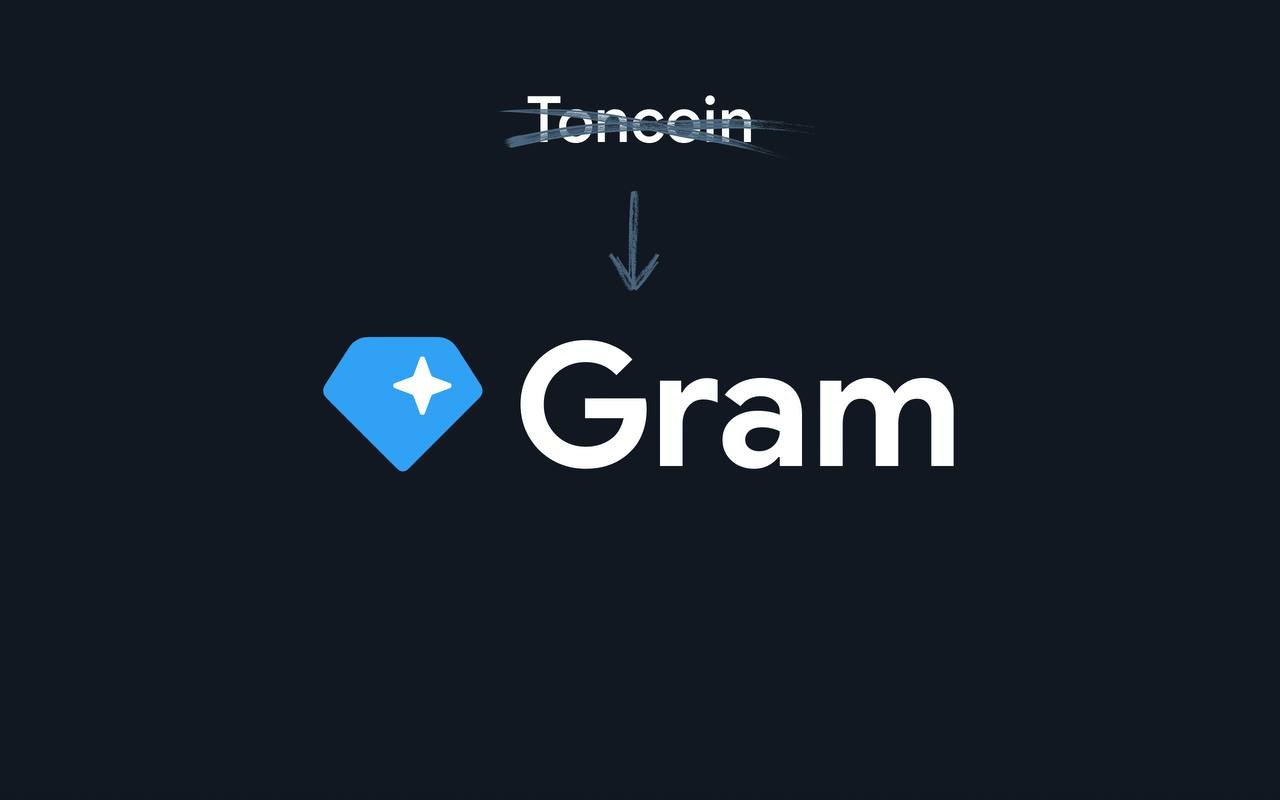
    The TON Foundation is rebranding its native token, Toncoin, to Gram. This move revives the name associated with Telegram’s original 2018 blockchain project and signals a strategic effort to convert the messaging platform’s 900 million monthly active users into on-chain participants.

    The change is primarily cosmetic, involving no token swap, technical migration, or new asset issuance. However, the strategic rationale behind it is significant.

    The rebrand aligns with Telegram founder Pavel Durov’s publicly stated “Make TON Great Again” roadmap, where this name change is designated as step four of seven, with the remaining steps yet to be revealed.

    A key factor driving this decision is the regulatory history surrounding the original Gram token. Gram was at the center of a landmark Securities and Exchange Commission (SEC) enforcement action that compelled Telegram to return $1.2 billion to investors in 2020. By reviving the Gram name, the TON ecosystem is making a calculated bet that its current structure is sufficiently distanced from that legal episode to reclaim the brand without inheriting its past liabilities.

    The intended mechanism for user acquisition through this name change is straightforward: to reduce the cognitive dissonance between Telegram’s established brand identity and its native cryptocurrency. For a new Telegram user, “Toncoin” held no inherent meaning. In contrast, “Gram,” a short, familiar name tied to Telegram’s initial vision, is intended to resonate more directly.

    The historical significance of the name “Gram” is substantial. In 2018, Telegram raised approximately $1.7 billion through private token sales linked to Gram, positioning it as the intended currency for the Telegram Open Network. The SEC intervened in 2019, alleging that the offering constituted an unregistered securities sale. Telegram settled the case in 2020, agreeing to return roughly $1.2 billion to investors and pay an $18.5 million civil penalty, after which it withdrew from the project.

    The network persisted through open-source development and community management, eventually relaunching as The Open Network under the TON Foundation, with Toncoin serving as its community-governed asset. Now, with Telegram signaling its intention to become the primary ecosystem administrator and largest validator—a governance shift explicitly outlined in the “Make TON Great Again” roadmap—the ecosystem is reasserting its original identity while structurally distinguishing itself from the entity that faced SEC enforcement.

    The rebrand will be implemented across wallets, infrastructure providers, and ecosystem applications over approximately three weeks. User balances, staking positions, and network operations will remain unaffected throughout this transition.

    Telegram’s vast monthly active user base represents one of the largest untapped distribution channels for cryptocurrency. The potential for user conversion is not speculative but conditional on adoption rates. If the TON ecosystem successfully converts even 1% of Telegram’s active user base into regular Gram wallet users, that would amount to 9 million participants, a figure comparable to the active user counts of several top-ten blockchain networks.

    A persistent challenge has been brand coherence. Telegram users have encountered TON Space wallets, mini-apps, and bot-based payment tools referencing a token called Toncoin with the ticker TON. This label lacked an intuitive connection to the Telegram product they use daily. “Gram” aims to bridge this gap. The analogy to WeChat Pay’s embedded finance model is pertinent: WeChat did not require users to understand digital payment architecture; instead, it made transactions feel native to the messaging interface. “Gram” positions The Open Network to achieve a similar depth of integration within Telegram’s super-app environment, encompassing payments, gaming, stablecoins, and mini-app monetization.

    Market participants reacted swiftly to the announcement. Toncoin saw a surge of 19% in early trading following the news, reaching approximately $2.21 before settling back towards $2.00.