Tag: Market Trends

  • Zcash Surges to Eight-Year Peak Amidst Doubled Futures Bets

    Zcash Surges to Eight-Year Peak Amidst Doubled Futures Bets

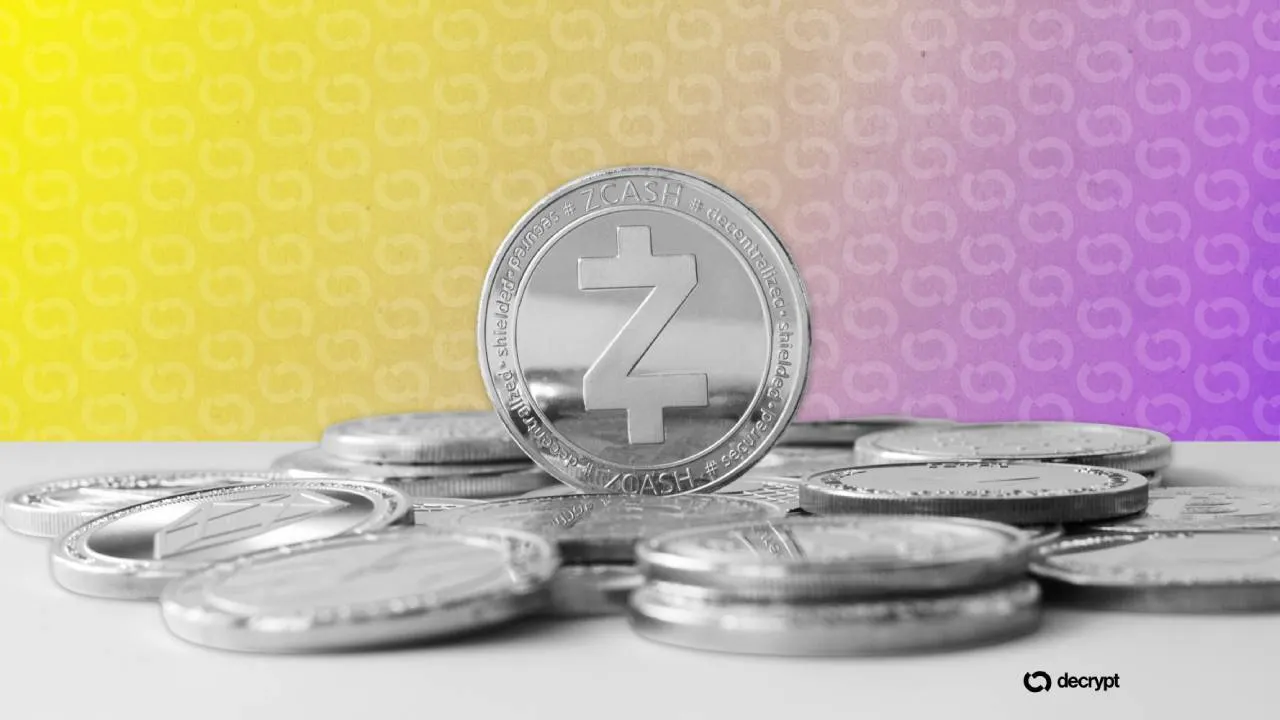
    Zcash briefly surged to $888, its highest point since 2018, before retreating to approximately $843. The cryptocurrency, trading under the ticker ZEC, is up nearly 7% in the past 24 hours and has seen a substantial 48% increase since August 20.

    Despite this recent rally, ZEC remains significantly below its all-time high of $3,191.93, recorded in October 2016 during its early trading days when market liquidity was considerably thinner. The coin experienced a sharp decline to as low as $16 just two years ago, but has since embarked on a remarkable recovery, appreciating by over 1,800% in the last year alone.

    Data from crypto derivatives platform Loris Tools indicates a significant uptick in trading activity. ZEC perpetual futures open interest nearly doubled from $962.5 million on August 19 to $1.8 billion by Monday. Concurrently, 24-hour trading volume reached $5.3 billion. The average eight-hour funding rate stood at 0.0106%, suggesting traders were willing to pay a premium to maintain long positions.

    ZEC futures allow traders to speculate on Zcash’s price movements without directly owning the cryptocurrency, often employing leverage. Open interest measures the number of outstanding contracts, while a positive funding rate signals robust demand for long positions. This dynamic can heighten the risk of a short squeeze if ZEC’s price rises or lead to long liquidations if it declines.

    Investor interest in Zcash has been on the rise over the past year, driven by a search for alternatives to Bitcoin that offer enhanced privacy protections. As a privacy coin, Zcash employs techniques to obscure transaction details and shield balances, making it more difficult to track compared to transparent cryptocurrencies like Bitcoin and Ethereum.

    Further fueling interest, Grayscale filed in November to convert its Zcash Trust into an exchange-traded fund (ETF). This proposal is currently under regulatory review.

    However, the optimism surrounding the Grayscale news faced a significant test in June. ZEC experienced a sharp decline from $635 to $309 after developers disclosed a vulnerability in its Orchard shielded pool. The flaw, identified by developers using Claude Opus 4.8, could have potentially allowed for undetectable counterfeiting.

    In response, developers issued an emergency patch in June and subsequently activated the Ironwood upgrade in July. The Ironwood upgrade retired the Orchard protocol and introduced accounting safeguards designed to detect and trap any counterfeit ZEC within the older pool. At the time of the upgrade, developers were unable to determine if the vulnerability had been exploited.

    Adding to recent developments, Winklevoss-backed Cypherpunk Technologies launched a Zcash mining operation in August. The company estimates its operation accounts for 18% of the network’s total hashrate. Cypherpunk Technologies currently holds approximately 323,394 ZEC, valued at around $268 million, and has stated its intention to acquire 5% of the circulating supply.

  • Strategy Sells Over $2 Billion in Stock, Establishes New Liquidity Account for Treasury Needs

    Strategy Sells Over $2 Billion in Stock, Establishes New Liquidity Account for Treasury Needs

    Strategy has sold over $2 billion of its own MSTR stock, allocating the majority of the proceeds to a newly established ‘USD Cash’ account intended for general treasury purposes. The company reported the sale of 18,261,118 shares for $2.01 billion net last week, according to an 8-K filed Monday.

    Of the total proceeds, $136.4 million was used to repurchase Strategy’s preferred stock (STRC), and $300 million was added to its existing USD Reserve. The remaining $1.57 billion was placed into the newly created USD Cash account. This account is designated for a broad range of treasury functions, including the potential acquisition of Bitcoin, payment of dividends and interest, stock repurchases, and debt repayment.

    The USD Cash account, which stood at $1.59 billion as of August 23, 2026, is distinct from Strategy’s USD Reserve, which held $5.10 billion on the same date. The USD Reserve is primarily designated for covering preferred dividends and interest on debt. The new USD Cash account, however, carries no such restriction and is designed to allow management to respond more quickly to market conditions, such as dislocations in the markets for bitcoin or Strategy’s securities, Strategy said.

    Strategy’s Bitcoin holdings remained unchanged at 840,447 BTC as of August 23, 2026, acquired at an average price of $75,385 per BTC. The company has not purchased Bitcoin since June and has not sold any for the past two weeks, having disposed of 6,948 BTC for approximately $432.5 million since May.

    At the time of the report, Bitcoin was trading around $78,400, making Strategy’s BTC holdings worth approximately $65.9 billion. This marks a significant improvement from a week prior, when Bitcoin was trading at $63,553, resulting in an unrealized loss on Strategy’s holdings. In July, with Bitcoin near $58,000, the company faced a larger unrealized loss.

    The repurchase of STRC preferred stock involved 1,431,212 shares, leaving $516.6 million available under the $1 billion STRC repurchase program announced on June 29. A separate $1 billion authorization for MSTR stock repurchases remains untouched.

    Strategy’s decision to sell its own stock rather than its Bitcoin holdings for liquidity purposes, coupled with the establishment of a flexible cash account, indicates an active approach to treasury management. The recent rally in Bitcoin has also substantially improved the company’s overall financial position, turning previous unrealized losses into gains.

    Why This Matters

    The materials describe a narrow update: Strategy sold 18,261,118 shares of MSTR for $2. The exact timing of the ‘last week’ stock sale relative to the August 23rd reporting date.

    Broader Context

    Source materials place the factual news in this context: Strategy raised just over $2 billion selling its own shares last week without touching its Bitcoin, according to an 8-K filed Monday, and put most of the proceeds into a liquidity account it created the same day.

  • Prediction Markets Show Divergent Odds on US Government Shutdown Amid Definition Discrepancies

    Prediction Markets Show Divergent Odds on US Government Shutdown Amid Definition Discrepancies

    Prediction markets are indicating a declining probability of a US federal government shutdown by October 1, 2026. However, differing definitions of what constitutes a shutdown across platforms like Kalshi and Polymarket are creating price discrepancies, suggesting a complex and nuanced market signal.

    On August 14, 2026, Kalshi’s contract for a federal government shutdown on October 1 was priced at 15-16 cents, implying odds of approximately 10-16%. This represents a significant drop from around 35% just three weeks prior. Polymarket’s parallel market, as of the same date, showed its shutdown contract priced at 16.5 cents. These figures, while close, highlight a divergence that stems from the specific rules governing each platform’s contracts.

    Kalshi’s contract resolves as ‘YES’ only if a part of the government is shut down at precisely 10:00 a.m. ET on October 1. In contrast, Polymarket offers two distinct contracts for the same deadline. One requires an actual shutdown, defined as agencies suspending non-excepted operations, by 11:59 p.m. ET. The second, broader contract pays out for an ‘any-duration lapse,’ which could include even a brief technical gap with no operational impact. On August 14, Polymarket priced its ‘shutdown’ version at 16.5 cents and its ‘lapse’ version at 13.5 cents.

    This gap in pricing and resolution rules suggests that the market’s assessment of shutdown risk is not uniform. While the overall trend indicates a repricing toward Congress avoiding the specific October 1 date, rather than a complete elimination of shutdown risk, the precise meaning of these market signals requires careful interpretation. Traders are separating the October 1 deadline from broader fiscal-year uncertainties, as evidenced by a separate Polymarket contract bundling a shutdown by January 31, 2027, with the 2026 House winner. The ‘no-shutdown’ legs for this longer-term market had already settled at zero cents by August 14, while the ‘shutdown-plus-Democratic-House’ leg traded at 87.3 cents.

    The trajectory of Kalshi’s odds, falling from 35% on July 31 to approximately 12-13% by mid-August, reflects a market sentiment shifting away from the immediate October 1 deadline. This movement occurred on roughly $193,000 in contract volume over two weeks prior to August 14. However, market participants are advised that current liquidity in these prediction markets is relatively thin compared to previous years. For instance, related shutdown contracts on Polymarket saw approximately $157 million in cumulative volume in 2025. The current lower liquidity means prices can be more exposed to spread and single-trade repricing.

    Understanding prediction market data involves more than glancing at headline probabilities. The precision of contract resolution rules, timing, and triggers is crucial. Kalshi’s appeal lies in its ability to allow traders to express views on defined real-world outcomes, separating specific events like an October 1 shutdown from potential subsequent funding crises. This allows for a cleaner way to trade on political events compared to guessing broader market reactions.

    While the odds for a shutdown on October 1, 2026, have decreased, uncertainty remains regarding future government funding. The market’s current pricing reflects a nuanced view, distinguishing between specific deadlines and broader fiscal risks. Traders and analysts must consider these differing definitions and liquidity levels when interpreting the signals from prediction markets.

    Why This Matters

    The materials describe a narrow update: Prediction markets, specifically Kalshi and Polymarket, are showing decreasing probabilities for a US federal government shutdown on October 1, 2026. The exact definition and trigger for a government shutdown, leading to different contract resolutions on prediction markets.

    Broader Context

    Source materials place the factual news in this context: Kalshi’s contract on a federal government shutdown on October 1, 2026 priced YES at 15-16 cents, an implied odds near 10% and down sharply from 35% just three weeks earlier.

  • Cardano Surges Past $0.20: AI Trio Debates $1 Rally Potential in 2026

    Cardano Surges Past $0.20: AI Trio Debates $1 Rally Potential in 2026

    Cardano’s ADA Token Shows Strong Weekly Gains, But Can It Reach $1 by 2026? AI Chatbots Weigh In

    In a market experiencing a notable revival, finding popular altcoins still trading in the red on a weekly basis has become a rarity. Cardano’s native token, ADA, has bucked this trend, delivering a robust 28% gain over the past week, much to the relief of its investors and supporters.

    To gauge the potential for a sustained rally and the possibility of ADA reaching the $1 mark by the end of 2026, we consulted three prominent AI-powered chatbots.

    ChatGPT’s Outlook

    Currently trading around $0.22, ADA has indeed surpassed the $1 milestone in the past, making a return to that level before the end of the year not entirely unprecedented, according to ChatGPT. However, the AI platform cautioned that such an ascent would necessitate an exceptional market-wide rally, coupled with sustained growth in Cardano’s user base, DeFi activity, and overall ecosystem development.

    “The immediate challenge is proving this move is more than a relief rally,” ChatGPT stated. “ADA would first need to recover and hold above progressively tougher areas around $0.30, $0.50, and its 52-week highs before $1 becomes a credible target.”

    Perplexity’s Analysis

    Perplexity echoed a similar sentiment, suggesting that a move to $1 is theoretically achievable but contingent upon “an exceptional confluence of catalysts and a very strong altcoin/bull market.”

    The AI placed particular emphasis on the $0.22-$0.24 price range, indicating that a decisive break and sustained close above this zone could pave the way for more significant upward momentum. Crucially, Perplexity highlighted Bitcoin’s performance as a key determinant of ADA’s potential success.

    “If BTC pushed to new highs and liquidity rotates aggressively into large-cap alts, ADA can outperform,” the chatbot advised.

    The primary cryptocurrency has experienced a remarkable surge recently, with its valuation approaching $80,000 following a 25% weekly increase. Whether this upward trend will persist and translate into benefits for altcoins like Cardano’s token remains to be seen.

    Perplexity also identified the potential launch of a spot ADA ETF as a significant catalyst that could positively influence the price. However, Grayscale’s recent withdrawal of its filing for such a product has cast uncertainty on whether this financial instrument will materialize this year.

    Gemini’s More Cautious Prediction

    Google’s Gemini offered a more conservative outlook, predicting that ADA’s ascent to $1 is more probable next year than within the remaining months of 2026. The AI noted that capital remains largely concentrated in top-tier cryptocurrencies like BTC and ETH, anticipating increased interest in other assets next year as an altseason becomes more plausible.

    “Crypto capital moves like a waterfall: money enters at the top in Bitcoin, and only after Bitcoin tops out and stabilizes do investors move profits down into riskier altcoins like Cardano,” Gemini explained. “Because this multi-step profit rotation takes significant time to build, 2027 provides a much more realistic timeline for that capital to cascade into coins like ADA.”

  • BitMine Nears 5% Ethereum Supply Milestone Amidst Aggressive Accumulation and Staking

    BitMine Nears 5% Ethereum Supply Milestone Amidst Aggressive Accumulation and Staking

    BitMine is nearing its strategic objective of accumulating 5% of Ethereum’s total supply, currently holding approximately 5.85 million ETH. As of August 23, the company’s Ethereum holdings reached 5,847,611 ETH, representing about 4.8% of the total supply. This accumulation is a key component of BitMine’s ‘Alchemy of 5%’ strategy, initiated in late June last year and now reported as 97% complete.

    Recent Accumulation and Valuation
    In the past week, BitMine acquired an additional 32,447 ETH. This marks a significant increase compared to previous weeks, where purchases typically hovered around 10,000 ETH. Specifically, the company bought 10,270 ETH last week and 9,926 ETH the week prior. As of August 23, the total value of BitMine’s ETH holdings was approximately $14.3 billion, an increase of about $3 billion from the previous week.

    Staking Activities and Revenue Projections
    Alongside its acquisition efforts, BitMine has substantially increased its ETH staking. The company has now staked over 5,067,300 ETH, which constitutes 87% of its entire Ethereum treasury and is valued at approximately $12.4 billion at current prices. Based on a seven-day annualized yield of 2.67%, BitMine could generate an estimated $330 million in annualized revenue from its current staking activities. If the company were to stake its entire portfolio through its institutional platform, MAVAN, projected annualized revenue could rise to $381 million.

    Market Context and Historical Performance
    This significant accumulation and staking activity by BitMine coincides with a notable price surge in Ethereum. ETH traded at around $1,900 last Wednesday and has since risen by 30%, briefly exceeding $2,500 before settling below that level. Yesterday, Ethereum’s price reached $2,440. This recent weekly surge represents ETH’s largest since May 2025. Historical data indicates that comparable weekly rallies in July 2021 and May 2025 were followed by gains of 167% and 170%, respectively. However, it is important to note that historical performance provides no guarantees that the asset will repeat either move.

    The company’s aggressive accumulation and staking strategy may signal a strong conviction in Ethereum’s future value. While the recent market movements and historical rally comparisons provide context, the uncertainty surrounding whether past performance will be replicated remains.

    Why This Matters

    The materials describe a narrow update: BitMine has significantly increased its Ethereum (ETH) holdings, acquiring 32,447 tokens in the past week, bringing its total to 5,847,611 ETH as of August 23. Whether the asset will repeat previous rally gains.

  • Analyst Projects Ethereum Could Reach $20,000, Contingent on Bitcoin and Market Rotation

    Analyst Projects Ethereum Could Reach $20,000, Contingent on Bitcoin and Market Rotation

    An analyst has outlined a scenario where Ethereum (ETH) could potentially reach $20,000 within the next few years. However, this projection is heavily contingent on the performance of Bitcoin (BTC) and a broader market rotation into higher-risk assets, according to Credible Crypto.

    The analyst’s thesis is built upon Ethereum’s historical trading range, its relative underperformance compared to Bitcoin, and the potential for a shift in market dynamics. Credible Crypto noted that ETH has traded within a range of approximately $1,500 to $5,000 for about five years. Currently, Ethereum is trading above $2,400, having seen recent gains of 3.5% in 24 hours, 30% in seven days, and 32% over 30 days. Despite these gains, ETH remains about 50% below its all-time high.

    Conditional Price Targets

    The projection for ETH to reach $20,000 is not presented as a certainty but rather as a possibility dependent on specific market conditions. Credible Crypto outlined that if Bitcoin reaches approximately $80,000, and the ETH/BTC ratio recovers to its earlier high of 0.156, Ethereum could surpass $12,000. In a more optimistic scenario, with Bitcoin at $100,000, ETH could exceed $15,000. The analyst suggested that a “most realistic scenario” involves Bitcoin breaking its previous highs, potentially reaching $126,000, which could then push Ethereum above $20,000.

    Technical Foundation and Market Context

    Credible Crypto also highlighted Ethereum’s higher risk profile compared to Bitcoin, suggesting this could lead to larger returns during a bull cycle. However, the technical foundation for this bullish outlook rests on Ethereum defending a higher-timeframe low near $1,388. A break below this level would invalidate the bullish structure, though the analyst considers a move below $1,500 increasingly unlikely, estimating a 90% chance that ETH will not fall below $1,900.

    Market data provides some context for potential upward movements. Recent upticks in ETH prices have historically been followed by significant gains, with one market watcher, Jamie Coutts, noting similar past instances where ETH prices rose as much as 60% within 180 days. Furthermore, the broader altcoin market segment has shown strength, adding $215 billion between August 19 and 22, pushing its total market capitalization above $1 trillion. The percentage of Binance-listed altcoins trading above their 200-day moving average also increased significantly, from 15% to 56%.

    Broader Altcoin Potential

    While Credible Crypto projects Ethereum could reach $20,000, he also noted that some altcoins with stronger fundamentals might outperform ETH if the market cycle continues. He has previously indicated end-of-cycle targets for such altcoins could be 30 to 50 times higher than their current trading prices.

    Significant uncertainty remains regarding the exact timing and magnitude of these potential price movements. The analyst’s projection is contingent on multiple unpredictable factors, including Bitcoin’s future price action and overall market sentiment, underscoring the speculative nature of cryptocurrency price forecasting.

    Why This Matters

    The materials describe a narrow update: An analyst, Credible Crypto, has outlined a thesis for Ethereum (ETH) potentially reaching $20,000 in the coming years. The exact timing of the potential Ethereum rally.

  • XRP Price Surge: Divergent Analyst Views Amid Market Uncertainty

    XRP Price Surge: Divergent Analyst Views Amid Market Uncertainty

    XRP has experienced a significant price increase over the past several days, surging by nearly 50% weekly and reaching approximately $1.50. This notable market movement has coincided with a divergence of opinions among analysts regarding its future trajectory, with some anticipating continued recent price movement and others forecasting a potential pullback.

    Verified data indicates that XRP’s weekly gain has been substantial, pushing its market capitalization above $93 billion. During this period, XRP briefly surpassed BNB to become the fourth-largest digital asset before settling back to fifth place. The performance of Spot XRP Exchange Traded Funds (ETFs) has also been strong, with the last reported red day being August 5th. Last week marked the best performance for these ETFs since May, suggesting growing institutional interest.

    Why This Matters

    The materials describe a narrow update: XRP has seen a substantial price increase, rising by nearly 50% weekly and reaching approximately $1. Whether XRP will experience a 15% upside or a 10% pullback.

    Broader Context

    Source materials place the market analysis in this context: The past several days have been quite beneficial for the cryptocurrency market, with Ripple’s XRP being among the top performers.

    Bullish Perspectives

    Amidst this price action, analyst predictions vary. According to X user CW, XRP has re-entered an ascending channel, and a golden cross has occurred between the EMA lines of the RSI indicator, suggesting that “a bullish rally has begun.” This perspective aligns with the view that the current price surge is the beginning of a more significant upward trend.

    Further adding to the spectrum of predictions, Celal Kucuker and Cup have argued that XRP’s current price action mirrors the macro structure that coincided with its significant gains in 2017. In their view, this historical parallel could indicate a potential for a substantial ascent, with Cup predicting a rise to $6 “soon,” and Kucuker forecasting a new all-time high of $15.

    Cautionary Outlooks

    Conversely, other analysts express caution. Analyst Diana noted that XRP’s Relative Strength Index (RSI) has cooled from extreme overbought territory. While this is seen as positive, indicating that momentum is easing without erasing the gains, it suggests the market may be resetting before another potential move. Diana believes that if XRP can maintain support within the $1.42-$1.30 range, a further surge to $1.70 is possible. However, she cautioned that a break below $1.42 could trigger a pullback below $1.30, signaling a weakening notable move structure.

    X user ChartNerd also suggested that a correction is plausible, viewing such a downturn as a potential “final opportunity” for investors. This perspective implies that while a short-term pullback might occur, it could precede a larger upward move.

    Navigating Uncertainty

    These divergent outlooks highlight the inherent uncertainty in predicting cryptocurrency prices. While the recent performance and institutional interest in Spot XRP ETFs provide a positive backdrop, the market remains at a critical juncture. The potential for a 15% upside exists, as does the possibility of a 10% pullback. It is not possible to definitively state whether XRP has entered a major bull run or may provide specific price targets.

    The current data suggests that while XRP’s price movement is notable, the future remains subject to various interpretations and market forces. Investors and observers are advised to consider the evidence, the range of analyst predictions, and the inherent uncertainties when evaluating XRP’s market position.

  • XRP Surges on $1.5B ETF Inflows and Institutional Support

    XRP Surges on $1.5B ETF Inflows and Institutional Support

    XRP Price Surges Amidst Significant ETF Inflows, But Questions Linger

    XRP is currently trading at $1.47, marking a 1.25% dip over the past 24 hours. This minor pullback, however, occurs against the backdrop of substantial activity within the U.S. spot XRP ETF market. Cumulative net inflows into these products have reached approximately $1.51 billion, with total net assets currently standing between $940 million.

    ETF Inflows Show Resilience

    Data from Friday indicated inflows of around $18 million, with Bitwise, Grayscale, and Franklin leading the charge. This rebound follows a challenging period earlier in August, where weekly inflows plummeted by roughly 93% to just $1.01 million. The market appears to be reflecting this renewed optimism in real-time.

    Institutional Conviction Under Scrutiny

    The key question now is whether the $1.5 billion in cumulative inflows signifies sustained institutional confidence or if it’s a headline figure masking a decline in week-to-week engagement.

    XRP Breaks Key Resistance Levels

    At its current price of $1.47, XRP has already surpassed levels previously identified as resistance in recent analyses. Earlier reports this month had indicated the token fluctuating between $0.98 and $1.01, having briefly lost the crucial psychological $1 mark.

    XRP is undergoing a significant structural shift. The $1.20 resistance zone, closely watched by bullish investors, has been decisively overcome, and the token is now trading well above the consolidation range that characterized most of August.

    Potential Upside and Downside Scenarios

    Should ETF inflows continue their upward trend, coupled with positive regulatory clarity developments, XRP could see a significant rally. If the token consolidates within the $1.40–$1.55 range, traders are likely to digest the recent gains and await further flow updates. A potential target for such a rally, with $1 acting as newly established support, could see XRP aiming for its $2 high.

    Conversely, a sharp reversal in ETF sentiment or a broader macroeconomic shift towards risk aversion, exacerbated by the persistent $40 trillion federal debt overhang, could drag XRP back towards the $1.20 support level. The next ETF flow report is expected to provide further clarity on which scenario is more likely to unfold.

    The Challenge of Scaling Gains

    While investors who bought XRP near $1 in early August are currently enjoying substantial gains, achieving similar percentage increases at XRP’s current market capitalization would require billions in additional capital. Institutional flows, while beneficial, tend to be gradual. Traders seeking rapid, multi-fold returns often explore assets further down the risk curve, particularly those still in the price discovery phase.

    LiquidChain Aims to Unify Blockchain Liquidity

    In a separate development, LiquidChain ($LIQUID), a Layer 3 infrastructure project, is aiming to simplify cross-chain liquidity. The project seeks to fuse liquidity from Bitcoin, Ethereum, and Solana into a single execution environment, addressing the fragmentation of deployments across different blockchains.

    The presale token is priced at $0.01493, with approximately $950,000 raised to date. LiquidChain’s core proposition is its “deploy-once” architecture, allowing developers to build applications that can access liquidity across all three major ecosystems simultaneously. Verifiable settlement and single-step execution are also highlighted as key technical advantages. Investors are advised to conduct their own research before committing capital to LiquidChain.

  • XRP Rally: Navigating High Leverage and Regulatory Uncertainty

    XRP Rally: Navigating High Leverage and Regulatory Uncertainty

    XRP’s price has seen a significant surge, moving from under $1 to approximately $1.50 in less than two weeks. This rapid ascent has prompted discussions among investors about whether to secure profits or maintain exposure to the asset, amidst ongoing regulatory uncertainties. The rally occurs within a broader strong cryptocurrency market, with Bitcoin also experiencing substantial gains during the same period.

    Drivers of the Rally: Spot Demand vs. Leverage
    The surge in XRP’s price appears to be fueled by a combination of factors, including inflows into spot XRP Exchange Traded Funds (ETFs) and increased activity in derivatives trading. On August 21, spot XRP ETFs recorded net inflows of $18.38 million, with Bitwise accounting for a substantial portion. While weekly inflows have approached $40 million, reportedly the strongest week since May, the source states these figures remain relatively small compared to XRP’s market capitalization, which stood at $92.95 billion on August 23.

    However, the rally is also being significantly boosted by aggressive derivatives positioning. XRP futures open interest saw a notable increase of 34.49% over seven days, reaching approximately $3.66 billion. Data from Binance indicated that 72.1% of accounts were long on XRP futures, compared to 27.9% short. This heightened leverage has coincided with substantial liquidation volumes, with $70.74 million in liquidations occurring within a 24-hour period, the majority of which were long positions. Three-day liquidations reached $145.15 million, underscoring the significant risk associated with these leveraged positions.

    Technical Indicators Signal Overbought Conditions
    Technical indicators also suggest that XRP may be overbought. One widely cited reading placed the daily Relative Strength Index (RSI) near 85.4, deep into overbought territory, with other estimates ranging between 70 and 83. While these indicators do not guarantee a reversal, they highlight the rapid price movement and the potential for increased volatility.

    Regulatory Landscape and Persistent Uncertainties
    Adding complexity to XRP’s market dynamics is the ongoing regulatory landscape. Ripple CEO Brad Garlinghouse recently attended the CFTC’s Innovation Advisory Committee meeting. The source states that while this engagement is a positive step within a policy forum, it does not constitute a formal legal classification or resolve the separate case involving the SEC. Furthermore, proposed legislation such as the CLARITY Act could potentially classify XRP as a digital commodity under CFTC oversight, but its passage remains uncertain, leaving the rally exposed to potential disappointment if expectations outpace reality.

    The RLUSD stablecoin, also associated with Ripple, has seen its market cap grow to approximately $2.1 billion from $1.5 billion at the start of the year. However, the source notes that this growth does not necessarily suggest direct demand for XRP, as the two assets serve different functions.

    Investor Strategy Considerations
    Given the confluence of high leverage, overbought technical signals, and persistent regulatory uncertainty, investors face a critical decision. The source suggests that taking some profit may be a reasonable strategy, allowing investors to lock in gains while retaining some exposure to potential further upside. A partial trim of positions could mitigate the risk of losing already-realized gains, especially in a market characterized by significant liquidation potential. Ultimately, the current situation presents a scenario where balancing profit-taking with maintaining exposure to the upside, while acknowledging the inherent risks, is a key consideration for investors navigating XRP’s volatile market.

    Why This Matters

    The materials describe a narrow update: XRP’s price surged significantly, driven by a combination of spot ETF inflows, a strong overall crypto market, and increased leverage in derivatives trading. Whether to take profit or maintain full exposure to XRP remains an open question.

    Broader Context

    Source materials place the market analysis in this context: XRP has moved from under $1 to around $1.50 in less than two weeks, crowding news headlines with its rally.

  • Matt Hougan: Three Investor Mistakes Leading to Underestimation of Crypto’s Future Potential

    Matt Hougan: Three Investor Mistakes Leading to Underestimation of Crypto’s Future Potential

    Current investor assumptions about crypto’s future potential may be constrained by outdated metrics and a narrow view of market applicability, according to Bitwise Chief Investment Officer Matt Hougan. Hougan identified three common errors that can lead investors to underestimate the industry’s long-term prospects: misjudging the future use cases and addressable market for crypto applications, assuming traditional finance (TradFi) companies will inevitably dominate crypto-native businesses, and relying on current transaction volumes to predict future blockchain activity.

    Expanding the Horizon: Tokenization and Market Size

    One significant area where investors may be falling short is in assessing the true addressable market for crypto platforms. Hougan pointed out that platforms like Uniswap should not be valued solely against the current crypto market, which is approximately $2 trillion. As traditional assets such as stocks, bonds, and real estate are increasingly tokenized and moved onto blockchains, the potential market for these decentralized applications could expand dramatically. Tapping into these broader markets could create an opportunity roughly 100 times larger than the current crypto market alone, Hougan believes. This expansion is a key factor that investors might be overlooking when evaluating the future potential of crypto infrastructure.

    Crypto-Native vs. Traditional Finance: A Competitive Edge

    Another common pitfall, according to Hougan, is the assumption that established TradFi companies will ultimately take over crypto-native businesses. While companies like PayPal have entered the crypto space with products such as its stablecoin PYUSD, which currently holds 1% of the stablecoin market, and Fidelity launched its crypto custody service in 2019, crypto-native firms often possess distinct advantages. Hougan said these firms tend to move faster, maintain a singular focus on the crypto sector, and have already cultivated user trust within the ecosystem. Coinbase, for instance, has become the largest crypto custodian in the US, demonstrating the strength of crypto-native players.

    The Future of Activity: AI, 24/7 Markets, and Transaction Volume

    The third major error identified by Hougan involves using current transaction volumes as a reliable predictor of future blockchain activity. The current trading hours for US stocks, for example, are limited to 33 hours per week. However, as tokenized assets become more prevalent, the potential for 24/7 trading, akin to a 168-hour market, emerges. Furthermore, the integration of AI agents is expected to significantly alter transaction dynamics. Hougan suggests that the combination of round-the-clock trading and AI-driven activity could push stock transactions up to 10 times higher. He even envisions scenarios where transaction volumes could increase by 50x or 100x, particularly in areas like payments where AI agents might favor blockchain systems due to their suitability for autonomous software compared to TradFi systems that often require human authentication.

    While the exact future transaction volumes remain uncertain, Hougan emphasized that even with potential fee reductions from higher volumes, the overall growth is likely to be substantial. He anticipates agentic trading and payments to emerge within months, with AI-related activity potentially adding to, rather than competing with, existing crypto trading volumes. This suggests a significant underestimation of future activity based on current metrics.

    These insights highlight a critical need for investors to re-evaluate their assumptions about crypto’s future. By looking beyond current market sizes, established brands, and present-day transaction volumes, investors can gain a more accurate perspective on the vast potential driven by technological advancements like tokenization and AI, and the unique advantages of crypto-native innovation.

    Why This Matters

    The materials describe a narrow update: Matt Hougan outlined three key errors in crypto investment strategy: underestimating the future use cases and addressable market for crypto applications, assuming TradFi companies will dominate crypto-native businesses, and using current transaction volumes to predict future blockchain activity. The exact future addressable market size for crypto applications.

    Broader Context

    Source materials place the market analysis in this context: Bitwise Chief Investment Officer Matt Hougan’s recent post.