Tag: Neutral

  • Claude AI Predicts Massive XRP Surge by End of 2026

    Claude AI Predicts Massive XRP Surge by End of 2026

    Anthropic’s Claude AI Model Predicts Starkly Different XRP Futures Based on Key Legislation

    A new artificial intelligence model from Anthropic, Fable 5, has forecast two dramatically divergent price paths for XRP in the latter half of the year, hinging on a single legislative event that could be resolved within days. The AI predicts XRP could reach $5.00 by year’s end if the CLARITY Act is passed, but would fall to $0.85 if it is not.

    Legislative Catalyst Drives Bull Case

    The bullish outlook for XRP is more precisely tied to legislative timing than any other prediction in this analysis. XRP is currently trading at $1.10, and the Fable 5 model identifies the CLARITY Act as the sole pivotal factor for its entire second-half forecast. This bill successfully passed the Senate Banking Committee on May 14 and is now awaiting a vote on the Senate floor. The White House is reportedly pushing for its signing by July 4.

    Key figures in the financial regulatory landscape, including SEC Chair Atkins, CFTC Chair Selig, and Treasury Secretary Bessent, have publicly expressed their support for the CLARITY Act. Its passage would formally classify XRP as a digital commodity. This classification would legally open the door for pension funds, sovereign wealth funds, and endowments, which are currently prohibited from holding XRP, to invest regardless of their interest. This institutional access is identified as the primary driver for a potential re-rating of XRP’s valuation.

    Institutional Inflows and Partnerships Bolster Outlook

    The potential for institutional adoption is further underscored by existing market trends. Spot XRP Exchange-Traded Funds (ETFs) have already seen cumulative inflows of $1.48 billion since November 2025 and have experienced only two negative weeks since mid-March, indicating consistent net buying by institutions even during market downturns.

    This week also saw significant developments in partnerships. Mastercard named Ripple as a settlement partner for its new AI payments network, Rakuten launched its XRPL integration, and Standard Chartered has set a base target of $2.80 for XRP, factoring in the CLARITY Act’s passage in the later cycle. A swift signing of the bill in July alone could propel XRP towards the $5.00 mark, as ETF inflows are projected to accelerate into the $4 to $8 billion range, a scenario modeled by analysts for such an outcome.

    Bear Case Hinges on Legislative Failure and Market Pressure

    Conversely, the bear case presented by the Fable 5 model is stark and unsoftened. Polymarket currently prices the likelihood of the CLARITY Act passing this year at just 42%, suggesting that the market perceives failure as more probable than success.

    Adding to this bearish sentiment, 1 billion XRP are scheduled to unlock from escrow each month, creating consistent selling pressure. If this legislative delay is indefinite and Bitcoin fails to reclaim the $80,000 level, the model anticipates selling pressure will continue to overwhelm demand from ETFs. Under such circumstances, Fable 5 projects XRP to grind back to the $0.85 zone. This level represents the 2024 pre-breakout base, the price point XRP held before the rally driven by the ETF era.

    Technical Analysis Shows Indecision Amidst Downtrend

    The daily chart illustrates XRP trading at $1.0990, following a year-long decline from highs above $3.65 reached in early August. This downward trend has been largely unidirectional, punctuated only by brief bounces that consistently set lower highs.

    Currently, XRP is hovering around the $1.00 psychological floor, oscillating between $1.03 and $1.10 over the past several days with no clear directional momentum. This tight range trading at a significant round number, following an extended downtrend, typically resolves in a sharp move once a catalyst emerges. The Fable 5 model has explicitly identified this catalyst.

    Immediate resistance is observed near $1.20, a level XRP has failed to close above in recent weeks. A more substantial resistance barrier lies around $1.60, where multiple rallies earlier this year faltered. Support is holding at $1.00, the psychological floor that has been tested repeatedly this past week. The $0.85 zone, representing the bear case scenario, sits clearly below this level on the chart as the next significant structural support if the $1.00 floor gives way.

    The broader technical pattern continues to show a series of lower highs dating back to August. The most recent price action features small candle bodies and indecisive wicks, reflecting genuine market uncertainty rather than directional conviction. Given that the timing of the CLARITY Act vote and the price prediction are intrinsically linked, the outcome of the bill in the coming weeks will likely determine which of these two scenarios plays out by December.

    Broader Market Dynamics and Emerging Opportunities

    Bitcoin, Ethereum, and XRP have been consolidating against similar resistance levels for weeks, with the catalyst for the next significant move seemingly always one data print away.

    In contrast, early-stage infrastructure projects operate under different dynamics, according to Copilot AI. Capital that would be negligible at the scale of Bitcoin can significantly impact smaller, undiscovered projects, leading to substantial multiples. The potential for asymmetric returns lies in the gap between a project’s intrinsic value and its current market perception, a gap that exists until the project gains wider recognition.

    The persistent fragmentation across different blockchain networks has been extracting value from decentralized finance (DeFi) participants since the advent of cross-chain bridges. Bitcoin, Ethereum, and Solana were designed as independent systems with no inherent interoperability. Every transaction that crosses these boundaries incurs costs in fees, slippage, and execution failures. Bridges, intended as a solution, have instead become a mechanism for extracting these fees.

    LiquidChain aims to eliminate these fees entirely by operating three networks within a single execution layer, allowing a single deployment to reach all of them without any cross-chain tax on interactions. Claude AI identifies LiquidChain as a project worth watching. Its presale is currently priced at $0.01454, having raised over $890,000.

  • Trump Defends $1.2B Crypto Gains: ‘No Illegality, No Wrongdoing’

    Trump Defends $1.2B Crypto Gains: ‘No Illegality, No Wrongdoing’

    Trump Defends Billions in Crypto Earnings, Citing No Illegality

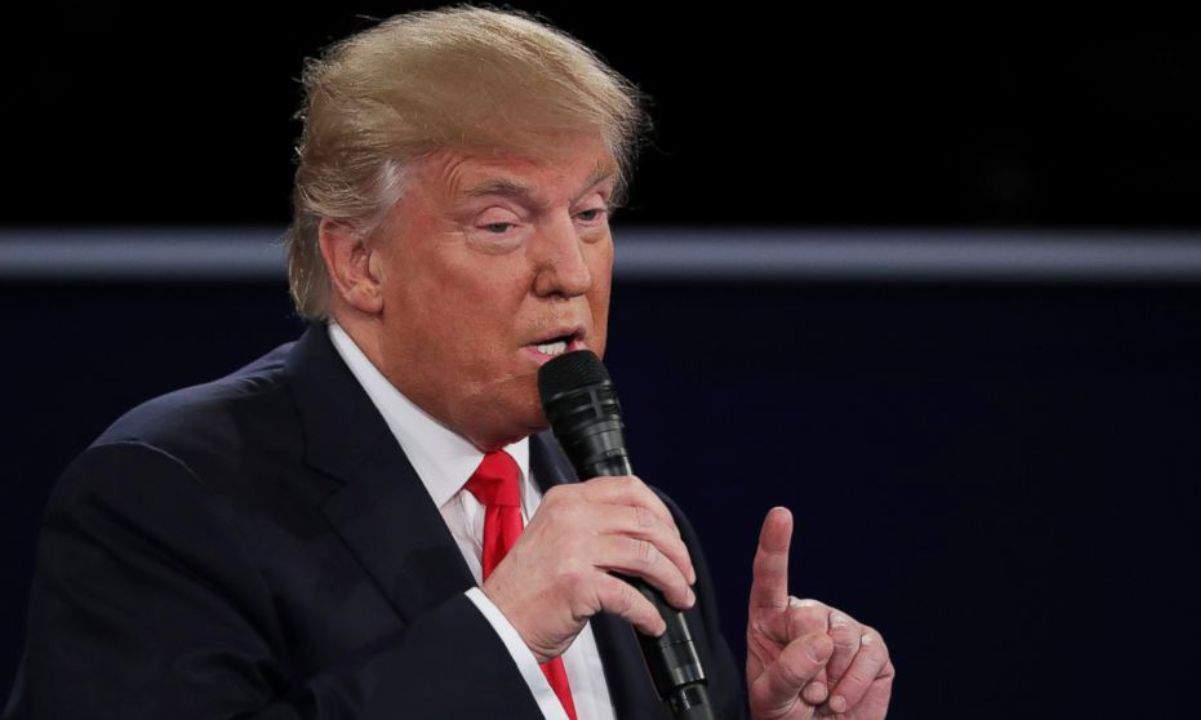
    President Donald Trump has defended his family’s substantial cryptocurrency earnings, asserting that there is “nothing illegal” and “nothing wrong” with businesses generating billions of dollars while he occupies the White House. The comments come just days after new federal financial disclosures revealed the extent of his digital asset holdings and crypto-related income, reigniting debate over the compatibility of a sitting president’s private business interests with public office.

    Financial Disclosures Detail Massive Windfall

    During a July 2 interview with CNBC’s Joe Kernen at the White House, Trump addressed the significant financial gains highlighted in his annual disclosure. The 927-page document, released by the U.S. Office of Government Ethics, indicated that the president’s income exceeded $2.2 billion in 2025, with a substantial portion derived from cryptocurrency. This included $594 million from World Liberty Financial (WLFI), a decentralized finance (DeFi) venture he co-founded with his sons, and $636 million from the sale of Trump-branded meme coins. Reports also suggest he holds over $50 million in Bitcoin in a cold wallet.

    When questioned about his awareness of his family’s crypto activities, the president initially responded, “No,” before quickly amending, “I could know about it. I didn’t, I mean, there’s nothing illegal, there’s nothing wrong with it. I could know.”

    Trust Structures and Family Involvement

    Trump emphasized that his assets are managed through trusts overseen by his sons, Eric and Donald Jr., as well as by external investment firms with whom he has no direct contact. “I don’t even know who they are,” he stated, adding that he does not discuss investment decisions with his sons. This suggests that nearly any business transaction involving his children could potentially be viewed as a conflict of interest, given the broad scope of presidential policy.

    “I tell my kids: stay away from as much as you can stay away from. But they also have a life,” Trump told Kernen.

    Crypto as a Strategic Industry

    The U.S. president reiterated his stance that cryptocurrency represents a strategic industry that the United States cannot afford to cede to global rivals. “The way I look at crypto is if we’re not going to do it, China’s going to get it,” he said. “It’s a big deal, and anything we do, I want to be number one in, and we’re number one in crypto.”

    The White House had previously dismissed allegations of conflict of interest following the disclosure, asserting that Trump and his family have not engaged in conduct that conflicts with the public interest.

    Criticisms of Trump’s Crypto Earnings

    Despite the White House’s dismissal, prominent Bitcoin critic Peter Schiff remains unconvinced. In a podcast aired on June 3, the economist argued that Trump’s earnings are intrinsically linked to his presidency rather than representing ordinary investment returns. Schiff posited that buyers of Trump-branded tokens were essentially purchasing access and political influence, rather than making conventional investments. Data from CoinGecko indicates that the Official Trump (TRUMP) and Melania Meme (MELANIA) tokens are trading significantly below their peak values, down 97% and 99% respectively, a point Schiff used to support his argument about influence-buying.

    “It’s really a way to bribe the president,” Schiff alleged. “You don’t have to give him money directly; just buy his token, because who else would buy the token? It’s a lousy investment.”

  • CRWDUSDT Perpetual Contract Launched with 20x Leverage

    CRWDUSDT Perpetual Contract Launched with 20x Leverage

    Bybit Launches New Perpetual Contract for CrowdStrike Holdings

    Cryptocurrency exchange Bybit has announced the listing of a new perpetual contract for CrowdStrike Holdings Inc. (CRWD), now available for trading against Tether (USDT). The CRWDUSDT Perpetual Contract allows traders to speculate on the price movements of CrowdStrike’s stock with up to 20x leverage.

    The new contract is also accessible through Bybit’s suite of Futures bots, including Futures Grid, Futures Martingale, and Futures Combo, offering automated trading strategies for users.

    Key details of the CRWDUSDT Perpetual Contract include:

    • Underlying Asset: CrowdStrike Holdings Inc. (CRWD)
    • Settlement Asset: USDT
    • Tick Size: 0.01
    • Maximum Leverage: 20x
    • Capped Funding Rate: 2.5%
    • Funding Fee Settlement Interval: Every 8 hours
    • Trading Hours: 24/7

    CrowdStrike Holdings Inc. is a leader in cloud-native cybersecurity solutions. The company’s official website can be found at https://www.crowdstrike.com/.

  • Crypto Market Pulse: ETH, XRP, ADA, BNB, and HYPE

    Crypto Market Pulse: ETH, XRP, ADA, BNB, and HYPE

    Ethereum Recovers, Eyes Key Resistance

    Ethereum has managed to rebound from support at $1,500, erasing last week’s losses and closing the week with an impressive 10% rally as buyers regained control. However, for a sustained recovery, the price must break through the current resistance at $1,800. A failure to do so would likely result in a brief respite before sellers reassert dominance.

    Looking ahead, Ethereum has an opportunity to establish a local bottom and initiate a rally. The critical question is whether buyers possess the volume and strength to sustain this momentum and overcome the key resistance in the coming days and weeks.

    XRP Defends $1 Amidst Resistance

    This week, buyers successfully defended the $1 mark, pushing XRP’s price up by 6%. However, resistance at $1.1 has so far held firm against bullish advances.

    Similar to Ethereum, XRP needs to capitalize on this bounce to fuel a sustained rally and break its current downtrend. Even if the $1.1 resistance is breached, the price must then claim $1.3 to confirm a significant breakout.

    The price reaction at $1 was anticipated, given its status as a key psychological level. If buyers fail to leverage this momentum in the near future, sellers are likely to return and apply renewed pressure.

    Cardano Shows Strength, But Faces Lower High

    Cardano impressed this week with a 16% bounce after briefly dipping below the $0.15 support level. With this support secured, the cryptocurrency appears poised for further gains. However, as of this report, the price has formed a lower high.

    For a confident sustained recovery, Cardano must surpass its previous high of 19 cents. Falling short of this mark would suggest a bearish bounce, potentially leading to further declines for ADA.

    While market sentiment has improved with the start of July, the month is still in its early stages, making it premature to confirm the sustainability of current price action. At a macro level, ADA’s trend remains bearish.

    Binance Coin Stagnates, Faces Regulatory Headwinds

    In contrast to other cryptocurrencies on the list, Binance Coin has remained flat this week. This lack of movement is atypical and signals a bearish outlook, particularly as the price failed to reclaim its $580 support. Consequently, sellers maintain the upper hand and may target $500 next.

    The $500 support level has yet to be tested but represents the next significant hurdle if bearish sentiment continues. Furthermore, Binance’s failure to secure a MiCA license in the EU at the beginning of July has resulted in the loss of a key market to competitors.

    Looking ahead, any weakness experienced by the Binance exchange is likely to impact its native token, BNB. The current chart pattern confirms this, showing a persistent bearish trend with no immediate signs of a bounce or recovery.

    Hyperliquid Consolidates in Bullish Pennant

    Hyperliquid (HYPE) found solid support above $60 and experienced a 6% bounce this week, resulting in flat price action since early June. This consolidation is forming a large pennant pattern, the resolution of which will indicate the cryptocurrency’s next direction.

    Pennant patterns typically see prices respecting the underlying trend, which in this case is bullish. Therefore, the higher probability suggests a breakout and a move towards new highs.

    To challenge its current all-time high of $77, HYPE must secure $68 as key support and hold above it. A break below $60 or failure to maintain $68 would serve as a bearish signal, likely leading to lower lows.

  • XRP Signal Weakens: Analyst Sees Potential Setup

    XRP Signal Weakens: Analyst Sees Potential Setup

    XRP experienced a roughly 5% surge over the past 24 hours, allowing the token to reclaim the $1.10 mark. Despite this short-term recovery, XRP remains more than 50% below its value from a year ago.

    Recent on-chain data indicates that the sustained downturn has driven key holder metrics to historically extreme levels.

    According to Santiment, XRP holders are currently experiencing some of the weakest average returns in the asset’s history. Its 30-day MVRV has dropped to -45%, and its 365-day MVRV stands at -47%, signaling that both short-term and long-term holders are significantly underwater.

    For the first time in XRP’s nearly 12-year history, both short- and long-term holders are facing record-low average returns, a situation that reflects unusually high levels of fear and frustration. Santiment cautioned that this does not preclude further price declines if the broader cryptocurrency market remains under pressure.

    However, from a risk-reward standpoint, the firm believes that buying or increasing exposure to XRP at current levels carries less risk than usual. This is because much of the potential downside has already been absorbed by existing holders, a condition that has historically preceded stronger market setups.

    In parallel, crypto analyst Ali Martinez noted that the SuperTrend indicator has issued its first buy signal for XRP since mid-June. He pointed out that the previous buy signal was followed by a 14% rally, and the indicator had also accurately identified the last two major declines of 19% and 16%.

    Martinez’s earlier analysis also revealed an uptick in XRP’s network activity. Daily active addresses have climbed from 23,000 on June 14 to nearly 40,000, suggesting increased on-chain participation.

    On the institutional front, U.S.-based spot XRP ETFs attracted over $59 million in net inflows throughout June. Following two consecutive days of outflows, these funds returned to positive territory on July 3, bringing in $6.55 million.

    Data from SoSoValue indicated that Bitwise’s ETF accounted for the largest portion of the day’s inflows.

  • XRP Echoes March Surge: Will $1 Support Hold?

    XRP Echoes March Surge: Will $1 Support Hold?

    XRP ETFs Face Outflows, Raising Concerns Over $1 Barrier

    Ripple’s cross-border token, XRP, has recently experienced a shift in market sentiment, moving from robust institutional demand to facing potential downward pressure. This comes as spot XRP Exchange Traded Funds (ETFs), which had previously seen significant inflows, are now grappling with substantial outflows, a stark contrast to their earlier performance.

    ETF Performance Reverses Trend

    The launch of the first spot XRP ETF in the U.S. by Canary Capital in November marked a significant development, offering investors direct exposure to the asset. This was followed by similar products from Bitwise, Franklin Templeton, 21Shares, and Grayscale. Collectively, these ETFs had amassed nearly $1.5 billion in net inflows since their inception, demonstrating sustained investor interest even during a broader market downturn that affected XRP’s price.

    However, the trend appears to have reversed in recent days. For the first time since March, outflows have surpassed inflows over two consecutive days. This development suggests a potential reduction in exposure to XRP by institutional investors such as pension funds and hedge funds. Consequently, ETF issuers may be compelled to sell their holdings, adding further downward pressure on the token.

    Price Volatility and Analyst Outlook

    The asset’s price recently dipped close to the $1 mark, sparking fears among some that bears could push it below this critical psychological level for the first time since late 2024. While bulls managed to reclaim some ground, XRP is currently trading around $1.11, according to CoinGecko.

    Analyst Diana, on the X platform, expressed caution, predicting a potential fall to $0.87 if XRP breaks below $1.08 again. Conversely, she noted that maintaining this level could pave the way for an increase to $1.30.

    Factors Suggesting Potential Upswing

    Despite the recent ETF outflows, several indicators suggest a potential upcoming upswing for XRP. The amount of XRP held on the Binance exchange has recently fallen to a four-month low, indicating reduced selling pressure.

    Furthermore, popular analyst Ali Martinez highlighted that the Tom DeMark (TD) Sequential Indicator has flashed a buy signal for XRP on a monthly scale, a signal also observed for other major cryptocurrencies like Bitcoin, Ethereum, and Solana. Martinez explained that such trend-exhaustion setups on higher timeframes carry significant weight, and historically, concurrent monthly buy signals across multiple assets have indicated seller fatigue and a high probability of a long-term market bottom.

  • Treasury Sanctions 130+ ISIS-Linked Tron Wallets

    Treasury Sanctions 130+ ISIS-Linked Tron Wallets

    Treasury Sanctions ISIS-Linked Crypto Wallets, Primarily on Tron Network

    The U.S. Treasury Department has imposed sanctions on over 130 cryptocurrency wallet addresses linked to ISIS, with a significant majority operating on the Tron blockchain.

    The department’s Office of Foreign Assets Control (OFAC) added 134 crypto wallets to existing sanctions against ISIS-K, the Islamic State’s affiliate active in Afghanistan, Pakistan, and Central Asia. Of these, 131 were identified on the Tron network and three on Monero.

    According to blockchain analytics firm Chainalysis, the sanctioned Tron addresses have collectively received more than $1.4 million since 2023 and disbursed over $880,000 during the same period. Chainalysis also reported that stablecoin issuer Tether has frozen the balances associated with all 131 sanctioned Tron wallets.

    ISIS-K’s media wing, the al-Azaim Media Foundation, has a documented history of soliciting cryptocurrency donations through websites and messaging platforms. Chainalysis indicated that several of the newly sanctioned wallets transferred cryptocurrency to exchanges based in Syria.

    The Tron blockchain, founded by cryptocurrency entrepreneur Justin Sun, has previously been utilized by entities subject to U.S. government sanctions or scrutiny. Earlier this year, Tether froze $344 million worth of USDT held in Tron wallets that federal authorities had flagged for connections to illicit activities.

    The latest sanctions targeting ISIS-related Tron wallets occur amidst a notable deterioration in Sun’s relationship with the family of former President Donald Trump. Sun, once a prominent financial supporter of the Trump family’s cryptocurrency ventures, filed a lawsuit in April against their crypto platform, World Liberty Financial, alleging unlawful freezing of his tokens and removal of governance rights.

    World Liberty has since filed a countersuit for defamation, accusing Sun of orchestrating a campaign to depress the token’s price and subsequently defaming the company after his assets were frozen.

    In a separate action on Wednesday, OFAC also sanctioned two Brazilian nationals and four companies connected to the criminal organization Primeiro Comando da Capital (PCC). The department alleges these entities used cryptocurrency to move more than $30 million in drug trafficking proceeds, generated in the United States, back to Brazil.

  • OpenAI Offers US Government $42 Billion Stake: Report

    OpenAI Offers US Government $42 Billion Stake: Report

    OpenAI in Talks to Grant U.S. Government 5% Stake

    OpenAI has engaged in discussions with the Trump administration regarding the potential transfer of a 5% equity stake in the company to the U.S. government, according to a report by the Financial Times, which cited two individuals familiar with the negotiations. At OpenAI’s valuation of $852 billion from its March funding round, this proposed stake would be worth approximately $42.6 billion.

    OpenAI CEO Sam Altman is reportedly framing this proposal as a means to democratize the economic benefits of artificial intelligence, asserting it as the most effective strategy to ensure Americans participate in the sector’s expansion. The Financial Times reported that Altman presented this idea directly to President Trump, Commerce Secretary Howard Lutnick, and Treasury Secretary Scott Bessent.

    The proposed structure would draw inspiration from sovereign wealth funds, such as the Alaska Permanent Fund. Established in 1976, this state-owned fund invests surplus oil revenues and distributes annual dividends to state residents.

    The initiative is not limited to OpenAI. Altman is reportedly seeking similar 5% equity concessions from other prominent U.S. AI developers, including Anthropic, Google, and Meta, to be channeled through the same governmental vehicle. As of now, none of these companies have indicated any interest in participating.

    This development follows OpenAI’s limited release of GPT-5.6 just days prior. The White House’s Office of the National Cyber Director had requested a restricted rollout while officials worked on a testing framework for advanced AI systems. This marked the second instance of government intervention within the month. Anthropic, for example, operated under emergency export controls for much of June, with its Mythos 5 and Fable 5 models restricted, after the Defense Department had previously designated the company a “supply chain risk.” Access was reportedly restored this week.

    OpenAI has demonstrated a more cooperative stance than Anthropic concerning its dealings with the U.S. government, entering into partnerships where Anthropic declined.

    Equity has emerged as the administration’s preferred method for managing its relationships with technology companies. Last August, the government acquired a 9.9% stake in Intel for $8.9 billion, converting CHIPS Act grants into shares at $20.47 each. This position is now valued at well over $50 billion. AMD and Nvidia have agreed to cede 15% of their chip revenues from China in exchange for export licenses. President Trump stated in May that he believed he should have negotiated a larger stake in Intel.

    The Financial Times characterized the discussions as conceptual and in their early stages, noting that any potential agreement would likely require Congressional approval.

    Should this deal materialize, it would represent the first time Washington holds equity in a private AI company. For OpenAI, which is currently navigating a confidential IPO filing and an investigation by a coalition of 42 state attorneys general, the potential benefits of such an arrangement may outweigh the complexities.

    Senator Bernie Sanders, who met with Altman recently, is advocating for legislation that would mandate the largest AI companies to surrender 50% of their equity to a public fund, with the proceeds distributed to Americans as direct payments. Both OpenAI and Anthropic have filed confidentially for IPOs, meaning any government equity stake agreed upon now would precede the dilution of ownership that typically accompanies a public offering.

  • Meme Coin Surges 80%, Challenges Shiba Inu

    Meme Coin Surges 80%, Challenges Shiba Inu

    Meme Coin Surges 80% in a Day, Challenging Shiba Inu’s Dominance

    The cryptocurrency market has seen a notable rebound in the past 24 hours, with Bitcoin (BTC) gaining 4% and Solana (SOL) climbing 9%. However, MemeCore (M) has dramatically outperformed all top 100 digital assets, skyrocketing 80% in a single day. This surge has propelled it to become the third-largest meme coin, with the potential to soon surpass Shiba Inu (SHIB) if its momentum continues.

    Currently valued at approximately $1.50, MemeCore boasts a market capitalization just under $2 billion, positioning it as the 40th-largest cryptocurrency according to CoinGecko. This significant revival comes just days after M experienced a 76% crash, following allegations of market manipulation.

    MemeCore Team Addresses Manipulation Claims

    In response to the allegations, the team behind MemeCore issued a statement hours ago, announcing the completion of a “comprehensive internal and on-chain review.” The review, they stated, found no suspicious activity related to the manipulation claims.

    “Our review confirms: – No issues affecting the protocol or infrastructure. – All core systems continue to operate normally. – No token sales were conducted by the MemeCore Foundation. – No unusual activity has been identified regarding the Foundation’s treasury or project operations,” the announcement read.

    This clarification may have served as the primary catalyst for M’s price increase on July 2. Despite the sharp rise, many analysts remain wary, advising investors to exercise extreme caution.

    Skepticism and Warnings Persist

    Concerns about the token’s trajectory are widespread. One X user, Suf, suggested the price climb was driven by short-sellers being “forced to buy” rather than genuine bullish interest. Another user, CryptoBuffett, declared an intention to short M “to infinity,” stating, “My whole reputation and net worth will go into shorting this manipulative team and coin to ZERO. It’s worth ZERO; they want to rug you twice. If you’re buying, you will be REKT.”

    Further fueling skepticism, MemeCore’s Relative Strength Index (RSI) has climbed to 82, indicating an extremely overbought condition, which often precedes a price pullback.

    In recent months, numerous prominent analysts have labeled MemeCore as a scam. In April, blockchain investigator ZachXBT publicly questioned the coin’s valuation and token distribution, alleging that insiders control over 90% of its supply.

  • Binance Futures to Implement Last Price Protection on GUAUSDT Perpetual Contract

    Binance Futures to Implement Last Price Protection on GUAUSDT Perpetual Contract

    Binance Futures to Implement Last Price Protected Mechanism on GUAUSDT Perpetual Contract Amidst Spot Price Divergence

    Binance Futures announced today that it will implement a Last Price Protected (LPP) mechanism on its USDⓈ-Margined GUAUSDT Perpetual Contract, effective July 2, 2026, at 15:45 UTC. This measure is being taken in response to observed divergences in the spot price of GUA (SUPERFORTUNE) across multiple exchanges. The exchange emphasized that user funds on Binance remain secure.

    Gradual Transition and Price Stability

    The LPP mechanism will be introduced gradually through a mark price smoothing process. This approach aims to minimize sudden price fluctuations and ensure greater price stability during the transition period.

    End of LPP Period

    The LPP period for the USDⓈ-Margined GUAUSDT Perpetual Contract will conclude once the spot price of GUA converges across various exchanges, allowing for the derivation of a stable index price from spot markets, as determined by Binance. A separate announcement will be issued to notify users when the LPP period ends and the contract is ready to revert to the standard Mark Price calculation. The duration of this transition period will be contingent on price volatility and the availability of a stable index price.

    Last Price Protected Mechanism Explained

    Under the LPP mechanism, the mark price is calculated based on the average of recent transaction prices for the perpetual contract within a defined timeframe. Specifically, it is the average of trade prices over the last 10 seconds, recalculated every second. If fewer than 21 transaction prices are recorded within the 10-second interval, the system will extend its lookback to the past 100 seconds. If more than 21 transaction prices are available within that longer period, the average will be based on those; otherwise, it will use the last 100 transaction prices of the contract.

    Furthermore, a price cap of ±1% will be applied to the mark price, limiting its change to within a 1% range per second.

    Return to Standard Mark Price Calculation

    Upon the conclusion of the LPP period, the Mark Price will revert to the standard calculation: Mark Price = Median (Price 1, Price 2, Contract Price). Users can refer to the Mark Price and Price Index sections within USDⓈ-Margined Futures for the formulas governing Price 1 and Price 2.

    Funding Rate Adjustments

    The funding interval for the GUAUSDT Perpetual Contract will be adjusted from every hour to every four hours, commencing on July 2, 2026, at 18:45 UTC. Concurrently, the capped funding rate will be revised from ±2.00% to ±0.005%.

    The detailed schedule for these funding rate adjustments is as follows:

    • July 2, 2026, 16:00 (UTC): Maximum Funding Rate +2.000% / -2.000%
    • July 2, 2026, 20:00 (UTC): Maximum Funding Rate +0.005% / -0.005%
    • July 3, 2026, 00:00 (UTC): Maximum Funding Rate +0.005% / -0.005%
    • July 3, 2026, 04:00 (UTC): Maximum Funding Rate +0.005% / -0.005%

    The contract is exempt from rule 8.1 concerning the Adjustment of Funding Interval. The funding interval will not revert from four-hour to one-hour intervals if the previous funding rate settlement reaches the capped funding rate.

    Once the LPP period concludes, the funding rate will adhere to the standard rules for perpetual futures contracts, with maximum and minimum rates potentially reaching ±2.00%. The funding interval will then be adjusted back to every hour when the previous funding rate settlement reaches ±2.00%.

    Users can find further details on trading rules, funding rate history, mark price, and price index by referring to the provided links:
    Trading Rules to Trading Parameter
    Funding Rate History
    Mark Price and Price Index
    Binance Futures Contract Specification

    This information is issued as a Notice under Binance Exchange Rule 17.

    During the LPP period, Binance Futures will be the sole component of the price index. Binance also noted that a stricter maximum price will be enforced during the LPP period, and this maximum price may be adjusted by Binance based on market risk conditions. API users can access this information via GET /fapi/v1/exchangeInfo, while UI users can refer to the designated webpage.

    Binance reserves the right to adjust the specifications of the aforementioned Futures contract, including funding fees, tick size, maximum leverage, and initial and maintenance margin requirements, based on market risk conditions. Users are advised to consult the Trading Rules for the most up-to-date adjustments.