Tag: Positive

  • Analyst Forecasts XRP’s Fate as Exchange Supply Dwindles

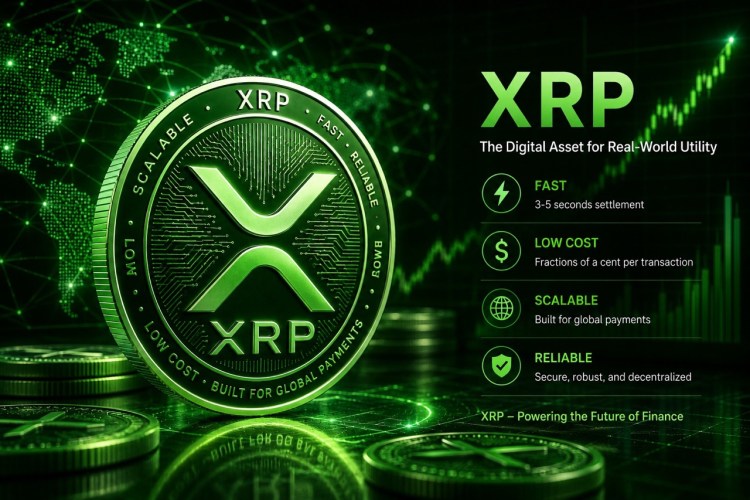
    Analyst Forecasts XRP’s Fate as Exchange Supply Dwindles

    XRP Supply Dynamics Spark Debate Amidst Potential Market Shift

    The supply mechanism of XRP is a subject of considerable debate within the cryptocurrency market. Recent on-chain data indicates a decline in XRP exchange reserves, prompting speculation about potential price movements. One cryptocurrency analyst on X has linked this structural shift to a series of events that could drive XRP’s price to unprecedented levels.

    Potential for a Liquidity Crisis

    Crypto analyst DelCrxpto has proposed a scenario where heightened demand for XRP could outstrip the available supply on exchanges, potentially forcing a restructuring of liquidity around Ripple’s XRP reserves. The fundamental principle is that when demand surpasses supply, prices must adjust. This could lead to a situation where exchanges struggle to procure sufficient spot supply to meet the needs of buyers, institutions, and liquidity providers.

    The analyst suggests that exchanges could eventually exhaust their XRP supply, leading to a surge in demand and potentially destabilizing the entire XRP supply ecosystem. However, this squeeze could also prompt the market to develop new liquidity channels through derivative contracts.

    DelCrxpto further predicts that Ripple might intervene by deploying portions of its XRP reserve as a liquidity pool and issuing XRP derivative contracts to exchanges. These exchanges would then sell the contracts at market price, allowing Ripple to generate yield from the structure.

    Supply Dynamics Under Scrutiny

    The circulating supply of XRP is a key factor in evaluating the likelihood of exchanges running out of the cryptocurrency. According to CoinMarketCap, the circulating supply of XRP is approximately 61.82 billion. However, the critical question is the amount of that supply that is readily available for immediate sale on exchanges.

    Recent on-chain data suggests a tightening of XRP’s liquid supply. For example, the amount of XRP held on Binance has decreased from roughly 3.05 billion tokens to below 2.75 billion in less than a year, bringing the exchange’s XRP reserves near multi-year lows.

    This decline in wallet balances has coincided with an increase in XRP holders. The number of wallet addresses holding at least 10,000 XRP has reached a new all-time high of 332,000, indicating that larger holders are accumulating positions despite XRP’s price volatility.

    Whale activity also provides insights. Data indicates that XRP’s largest holders have reduced the rate at which they send tokens to crypto exchanges. The 30-day cumulative whale inflow indicator has fallen below 736 million XRP, its lowest level since November 2021.


  • Zcash Surges 90% in a Month: Is This Sustainable?

    Zcash Surges 90% in a Month: Is This Sustainable?

    Major altcoins, including Ethereum (ETH), Ripple (XRP), and Solana (SOL), have experienced declines over the past 30 days, mirroring the market’s overall bearish trend. However, Zcash (ZEC) has bucked this trend, recording a price increase of approximately 90% during the same period.

    Zcash’s Recent Surge

    The privacy coin ZEC gained significant attention late last year when its price surged from around $50 to over $700 within two months. While the entire crypto market was booming at that time, Zcash’s recent surge appears more unexpected. Earlier this month, the token’s valuation briefly surpassed $630 before settling around its current price of $585, according to CoinGecko data. Its market capitalization neared $10 billion, positioning ZEC as the 14th-largest cryptocurrency, surpassing Cardano (ADA) and Bitcoin Cash (BCH). The overall uptrend in privacy coins, with Monero (XMR) and Dash (DASH) also showing gains, may have contributed to Zcash’s rise.

    Market Sentiment and Technical Analysis

    Crypto social media platforms are buzzing with users anticipating further gains for ZEC. For example, CryptoJack suggested the asset has broken out of a descending channel, indicating a potential upward move. Sjuul | AltCryptoGems and JAVON MARKS also shared their perspectives, with the former noting a “bullish” outlook due to a potential bull flag breakout, and the latter forecasting a possible rise above $700.

    Despite these bullish predictions, ZEC’s Relative Strength Index (RSI) suggests a potential near-term cooling off. The RSI, a technical analysis tool ranging from 0 to 100, indicates that readings above 70 signal an overbought condition, potentially leading to a pullback. ZEC’s RSI briefly exceeded 80 but is now around 66.

    Analyst Perspectives

    Some analysts anticipate a correction. Altcoin Sherpa, for instance, expressed interest in buying if the price drops to $470 or lower.

  • Hyperliquid ETFs Drive HYPE Toward Record Highs

    Hyperliquid ETFs Drive HYPE Toward Record Highs

    Market analyst Aletheia released a report on Wednesday analyzing the first six days of trading for Hyperliquid ETFs launched by 21Shares and Bitwise. The report examines early inflows across major crypto assets and what these movements may indicate for future demand.

    Initial Trading Performance

    Aletheia’s analysis, adjusted for market capitalization, revealed that the Hyperliquid ETFs generated more inflows than Bitcoin (BTC) on three of the first six trading days. The comparison also showed strength against Ethereum (ETH), with Hyperliquid’s ETF products logging higher inflows than Ethereum on five out of six days.

    The Solana (SOL) spot exchange-traded fund sector presented a different picture. According to the report, Solana recorded higher market-cap-adjusted flows than Hyperliquid on four of the first six trading days. However, on Tuesday, Hyperliquid spot ETFs experienced significantly stronger inflows than their competitors. The analyst cautioned that it is premature to determine whether this surge signals a sustained trend or a short-term increase in demand that may stabilize in the coming days.

    Hyperliquid Nears Bull Run Highs

    Beyond the raw inflow data, the report highlights another factor: the Hyperliquid spot ETFs are competing with the Assistance Fund – the platform’s economic structure for token buybacks – in terms of market buying pressure. In the initial six trading days, the ETFs purchased 2.5 times more HYPE than the Assistance Fund bought and burned. The “burning” aspect is significant, as it differs from a simple accumulation mechanism. Aletheia argues that, considering buying pressure and market impact, the ETFs are clearly contributing to the momentum.

    The combined effect of ETF-driven activity and rising token demand has pushed Hyperliquid close to its current price peak of $59, reached during last year’s bull run. Data from CoinGecko shows the altcoin trading at $51.88 at the time of writing, up 33% over the past week. At this level, the token is only 12% below its current record, potentially allowing for a “discovery” phase if ETF-related inflows continue to grow.

  • Zcash (ZEC) Technicals Improve, Holding Above Key Resistance

    Zcash (ZEC) Technicals Improve, Holding Above Key Resistance

    Zcash Technical Strength Builds After Breakout

    The technical structure of Zcash (ZEC) continues to strengthen after surpassing a key macro resistance level that had previously capped price action for an extended period. Following a successful breakout above a long-standing descending trendline, the asset has maintained its position above key levels that previously acted as strong resistance throughout the broader downtrend. This move signals a potential shift in momentum as bullish pressure gradually returns to the chart.

    How Zcash Momentum Continues Building After Technical Breakout

    Zcash is demonstrating signs of renewed technical strength after completing a significant compound breakout above both a long-standing descending trendline and the critical $540 macro resistance zone. Technical analyst Ardi noted on X that the asset has also closed above the previous lower high near $560 for the first time since the broader shift in market structure.

    This level now becomes a critical pivot point, determining whether ZEC can hold its reclaimed level as support and build momentum toward the next major resistance region between $590 and $600. However, if ZEC fails to maintain this structure, the price could quickly revert back toward the $540 level as the next key support zone. Ardi highlighted that the cleanest risk setup and reward remain at the extremes, either a confirmed breakout above $640 highs or a retest into $540 support with a clear invalidation below. The current range of ZEC is likely to remain choppy, with price action lacking clear direction between key levels. Ardi advises that with further consolidation still possible before a decisive breakout, the more strategic approach is to avoid chasing price in the middle of the range. Instead, the better trade structure is to position longs at support.

    Will Zcash Rally Gains Strength Following Clean Breakout Confirmation

    Zcash has continued to strengthen technically after successfully confirming a breakout from a well-defined daily bull flag continuation pattern, signaling a sustained upside bullish continuation momentum following weeks of consolidation. According to a post on X from an analyst known as Team LAMBO, the setup move inside the premium from the $510 breakout zone toward $560 has already delivered nearly 20% expansion from the previously identified local bottom, reinforcing growing optimism around the ZEC higher timeframe structure. Despite this move, the broader structure still appears incomplete. As long as the price holds above the breakout region, the bullish bias will remain intact, with momentum favoring further upside. From a higher timeframe (HTF) perspective, the next key expansion targets are positioned around $625, followed by the $680 resistance zone, where a significant pool of liquidity is expected to be situated.

  • Analyst: XRP Price Discovery Will Be “Biblical”

    Analyst: XRP Price Discovery Will Be “Biblical”

    A recent analysis suggests that structural shifts within the global financial system could trigger a significant market repricing for XRP. Crypto analyst Pumpius posits that a pattern of institutional alignment involving Ripple technology, central banks, and emerging digital infrastructure could set the stage for a historic price discovery phase.

    XRP Catalysts Emerging From Global Financial Infrastructure

    The analyst’s thesis centers on developments within the Bank for International Settlements (BIS). On May 12, the BIS appointed central bank governors from Italy, Brazil, Australia, and Japan to several key leadership positions. These appointments include Fabio Panetta of the Bank of Italy, Gabriel Galípolo of the Central Bank of Brazil, Michele Bullock of the Reserve Bank of Australia, and Kazuo Ueda of the Bank of Japan.

    According to the analyst, the significance lies in how these regions already interact with Ripple’s technology. For example, Italian banking giant Intesa Sanpaolo has implemented Ripple custody infrastructure, while financial institutions in Brazil have explored Ripple-powered payment services as the country develops digital asset licensing frameworks. Japan maintains close ties with Ripple through the partnership between SBI Holdings and Ripple, which has supported payment pilots and helped classify XRP as a financial asset within the Japanese market. Australia is also involved through digital asset research programs such as Project Acacia, while Ripple continues to pursue licenses across multiple jurisdictions.

    Pumpius further highlighted BIS-led cross-border interoperability initiatives that include both SWIFT and Ripple, as well as experiments such as Project Nexus and the multi-CBDC initiative known as mBridge. In the analyst’s view, these developments collectively form the structural catalysts that could boost XRP’s role in global payment infrastructure and, consequently, its price.

    Price Discovery Narrative Gains Momentum

    Beyond institutional positioning, the analyst argues that the next phase of XRP adoption could be driven by new technological layers forming around the XRP Ledger. Among the developments highlighted is Ripple’s work on zero-knowledge proof capabilities designed to support tokenization and privacy-focused financial infrastructure. One emerging project within this ecosystem is DNA Protocol, which has conducted zero-knowledge proof transactions on the XRP Ledger. The initiative aims to anchor sensitive biological or genomic data onto blockchain networks, potentially creating a compliance and identity layer for financial systems.

    The analyst suggests that this type of infrastructure could enable institutions to verify identity and regulatory requirements without exposing private data, effectively linking payments, digital identity, and compliance within a single blockchain framework. He also referenced remarks from Japanese commentator Yuto Kanzaki, who indicated that a close associate had recently assumed a highly influential role at the Bank for International Settlements.

    In summary, the analyst outlines a pattern: Ripple built banking partnerships, central banks began testing the technology, and global financial bodies started involving blockchain firms in policy discussions. If these trends lead to real cross-border payment flows on XRPL infrastructure, XRP could become the liquidity layer linking financial institutions, potentially triggering the price discovery he predicts.

  • South Carolina Bans CBDCs, Safeguards Crypto Users and Miners

    South Carolina Bans CBDCs, Safeguards Crypto Users and Miners

    Individuals, businesses, and Bitcoin miners in South Carolina now have legal protections for the use, custody, and mining of digital assets, following the signing of a new bill by Governor Henry McMaster.

    Key Provisions of the Bill

    Originally introduced in January 2025, Bill 163 also prohibits the state from using any central bank digital currency (CBDC), often referred to as a “digital dollar,” and from participating in any CBDC trials.

    The bill states that individuals and businesses cannot be prevented from accepting digital assets for legal goods or services, nor can they be restricted from using self-hosted or hardware wallets to maintain self-custody of their digital assets.

    Furthermore, the legislation prevents restrictions on digital asset mining businesses operating in industrial zones, provided they adhere to general sound pollution limits and do not overburden the electrical grid. The bill also clarifies that miners, node operators, and blockchain software developers are exempt from money transmitter licensing requirements.

    Legislative Process

    The Senate passed the bill in April 2025, after which it was referred to the House Labor, Commerce and Industry Committee in May. The committee issued a favorable report nearly a year later, in April. A House vote in early May resulted in 110 “yeas” and 1 “nay.”

    Related Legislation

    This crypto-friendly legislation is not the only such bill considered by the state’s general assembly. Last year, a South Carolina representative introduced the Strategic Digital Assets Reserve Act, also known as House Bill 4256.

    That bill proposed allowing the state treasurer to allocate up to 10% of certain public funds into Bitcoin, based on the general assembly’s finding that “inflation has eroded the purchasing power of assets held in state funds managed by the State Treasurer, as well as state retirement funds.”

    The bill was referred to the Committee on Ways and Means in March 2025, but has not been updated since.

    A representative for South Carolina Governor Henry McMaster did not immediately respond to a request for comment.

  • Japan Eyes Crypto Growth: Low Tax, ETF Access

    Japan Eyes Crypto Growth: Low Tax, ETF Access

    Japan’s Crypto Regulatory Shift

    Japan is undergoing a significant regulatory shift in the cryptocurrency space, potentially becoming a more attractive jurisdiction for crypto businesses. The country, which previously imposed a high tax rate of up to 55% on crypto gains, driving liquidity offshore, is now implementing new rules. These rules, effective June 1, will allow foreign trust-type stablecoins to operate as regulated payment instruments. This is part of a broader regulatory reform package being developed in Tokyo.

    Tax Reform and Reclassification

    Currently, Japan’s National Tax Authority classifies most crypto gains as “miscellaneous income,” subject to progressive tax rates that can reach 55%. This has led high-frequency traders, market makers, and Web3 startups to relocate to locations like Singapore and Dubai.

    The proposed reform aims to introduce a flat 20% settlement tax, mirroring the rate applied to equities and investment trusts under Japan’s Financial Instruments and Exchange Act (FIEA). The Japan Cryptoasset Business Association has highlighted that competing Asian hubs tax retail crypto gains at rates between 0% and 15%.

    Beyond the tax rate, the reclassification of crypto assets is crucial. For the 20% rate to apply, assets like Bitcoin (BTC) and Ethereum (ETH) must be reclassified as financial instruments under the FIEA, rather than remaining under the looser framework of the Payment Services Act. This reclassification would make spot and derivative ETFs legally viable, managed by licensed financial instruments business operators.

    Institutional Framework and Market Dynamics

    Japanese regulators are drawing inspiration from the U.S. market. The U.S. Securities and Exchange Commission’s (SEC) approval of Bitcoin ETFs in January 2024 led to billions in institutional inflows, validating a market structure that Japan has been unable to replicate under its existing legal framework.

    Japan’s institutional groundwork is already underway. Nomura’s digital-asset subsidiary Laser Digital and Mitsubishi UFJ Trust and Banking have been testing tokenized securities and fund units under existing FIEA frameworks. They have publicly stated that similar structures could be applied to spot Bitcoin and Ethereum products once classification and tax rules align.

    SBI Holdings has filed for crypto ETF products in Japan, positioning itself at the forefront of a potentially new domestic market.

    The Financial Services Agency’s (FSA) June 1 stablecoin framework is part of this institutional logic. SBI VC Trade is exploring licensed services involving USDC under the new rules, which reclassify qualifying foreign trust-type stablecoins as Electronic Payment Instruments under the Payment Services Act. This provides the regulated stablecoin infrastructure, licensed intermediaries, and equivalence standards for foreign issuers, which are essential for a functional ETF market.

    Global Context and Strategic Advantage

    Regulatory reform is occurring within a global context. The U.S. Senate Banking Committee advanced the CLARITY Act, which defines jurisdictional boundaries between the SEC and CFTC. The EU’s MiCA framework is already in effect, and Hong Kong has launched spot Bitcoin and Ethereum ETFs. Singapore maintains a 0% capital gains tax on crypto. Japan’s advantage lies in its substantial domestic savings pool.

    Analysts at Latham & Watkins have described Japan’s approach as a convergence toward a “rules-first but innovation-tolerant” stance, aligning more closely with MiCA than with the ongoing jurisdictional disputes in the U.S.

  • Ripple and Project Eleven Partner on Quantum-Resistant XRP Ledger

    Ripple and Project Eleven Partner on Quantum-Resistant XRP Ledger

    A comprehensive audit of the XRP Ledger’s validators, custody systems, wallets, and networking layers is underway, led by quantum security firm Project Eleven in collaboration with Ripple. The review is part of a broader initiative to prepare the XRP Ledger ecosystem for a future where quantum computers could pose a threat to the cryptographic systems currently underpinning blockchains.

    Scope of Project Eleven’s Work

    Project Eleven describes the collaboration as one of the first major efforts in the industry to move post-quantum blockchain security from theoretical research into practical application. The firm stated that the work will produce actual code, real-world performance testing, and a roadmap for production. Plans also include developing hybrid signature systems that combine current cryptographic standards with quantum-resistant protections, along with a prototype quantum-secure custody wallet.

    Alex Pruden, CEO of Project Eleven, noted that most discussions surrounding quantum risk in the blockchain space have remained at the research level. He added that Ripple is approaching the issue as a practical engineering challenge.

    The XRP Ledger is designed for the quantum era, utilizing a native account-based architecture with built-in key rotation. This design allows businesses, projects, and users to seamlessly transition to quantum-resistant signatures while retaining the same r-addresses for their customers.

    Industry-Wide Transition

    The U.S. government has set a 2035 deadline for federal systems to transition away from encryption standards vulnerable to quantum attacks. Google and Cloudflare have both targeted 2029 for their respective transitions to quantum-safe systems.

    XRP Ledger’s Structural Advantages

    The XRP Ledger Foundation emphasized that the network is not starting from scratch. According to the foundation, XRPL already supports key rotation and coordinated validator upgrades, features that provide structural advantages as the broader ecosystem moves toward quantum-resistant cryptography.

    A key advantage highlighted by the foundation is that users and businesses will be able to switch to quantum-resistant signatures without changing their existing XRP wallet addresses. These addresses, known as r-addresses, are already recognized by customers, and maintaining them during a migration eliminates a significant technical and operational hurdle.

    J. Ayo Akinyele, head of engineering at RippleX, stated that the goal is to have XRPL production-ready well before quantum threats become a real danger.

    Project Eleven stated that the partnership with Ripple is its most comprehensive blockchain security engagement to date. The firm added that the cryptography protecting major blockchains, including Bitcoin, Ethereum, XRP, and Solana, could eventually be compromised by sufficiently advanced quantum computers.

  • Markets Rebound Ahead of Nvidia Earnings

    Markets Rebound Ahead of Nvidia Earnings

    Markets Rebound Ahead of Nvidia Earnings

    Markets experienced an overnight recovery following a period of uncertainty. Bitcoin is trading above $77,400, Ethereum at $2,128, and Solana at $84, all showing gains in the past 24 hours. This rebound coincided with a sharp decline in oil prices, with West Texas Intermediate (WTI) falling 2.1% to $101.72 and Brent crude dropping 2.2% to $104.30. Stock futures also saw gains.

    Hyperliquid’s HYPE token is up 5% today, reaching $49.80, and has increased by 27% over the past week, driven by Hyperliquid’s volume records and the Coinbase/USDC partnership announcement.

    All eyes are now on Nvidia’s earnings report this afternoon. Historically, Bitcoin has seen price fluctuations of 6-10% around previous Nvidia earnings announcements. A strong performance and positive guidance could boost the AI infrastructure trade and positively impact crypto. Conversely, a disappointing report could test the market’s recent gains.

    Echo Protocol Suffers Exploit, Minimizes Losses

    Echo Protocol, a Bitcoin-focused DeFi platform, experienced an admin key compromise on its Monad blockchain deployment. While the initial appearance suggested a $76 million loss, the actual realized loss was approximately $816,000. The team regained control of the compromised keys and burned the attacker’s remaining tokens.

    The attacker gained access to Echo’s admin key, granted themselves admin roles on the eBTC contract, and minted 1,000 eBTC worth approximately $76.7 million. They deposited 45 eBTC as collateral on Curvance, borrowed 11.29 WBTC, bridged it to Ethereum, swapped it to ETH, and routed roughly 385 ETH through Tornado Cash. The remaining 955 eBTC, worth around $73 million, remained in the attacker’s wallet. The limited DeFi liquidity depth on Monad provided the Echo team with time to regain control, burn the remaining eBTC, and shut down cross-chain functionality on the Monad deployment.

    Monad co-founder Keone Hon confirmed that the network itself was unaffected.

    Polymarket Introduces $5 Trillion Market for Retail Traders

    Polymarket has launched private company prediction markets in partnership with Nasdaq, allowing retail traders to bet on startup milestones. This initiative provides retail investors access to markets previously limited to Wall Street insiders and institutional investors.

    Initial markets include predictions on OpenAI’s next funding round valuation, SpaceX’s IPO date, Anthropic’s revenue milestones, and Stripe’s path to profitability. These contracts utilize the same binary outcome structure as Polymarket’s political and sports markets, with yes/no resolutions based on verifiable events.

    This announcement comes as SpaceX’s S-1 is expected this week ahead of a June 12 Nasdaq listing, OpenAI is expected to IPO later in 2026, and Anthropic is raising at a $900B+ valuation.

    Google Launches AI Agent, Gemini Spark

    Google unveiled Gemini Spark, a 24/7 personal AI agent, at its Google I/O 2026 keynote. The agent operates in the cloud and continues working even when the user closes their device.

    Unlike standard chatbots, Spark autonomously performs actions such as monitoring Gmail for deadlines, analyzing credit card statements, booking reservations, tracking RSVPs, and managing multi-step tasks across various platforms.

    Spark is rolling out to trusted testers this week and will enter a US beta for AI Ultra subscribers ($100/month) next week.

    Google also announced Gemini 3.5 Flash, Gemini Omni for video generation, Samsung Intelligent Eyewear with Gemini integration, and a Universal Cart feature.

    Americans Arrested in Japan for Meme Coin Promotion

    Two American men were arrested by Japanese police after entering the enclosure of Punch, a viral Japanese macaque monkey, at Chiba City Zoological Park. The men reportedly attempted to film promotional content for a Solana meme coin called $PUNCH.

    The men trespassed into Punch’s habitat before zoo staff intervened and police were called. Punch was unharmed. The men face charges under Japan’s trespassing laws.

    $PUNCH, a Solana-based meme coin, saw a brief price spike before losing most of its gains.

  • Trump Directs Fed to Examine Crypto Firms’ Master Account Access

    Trump Directs Fed to Examine Crypto Firms’ Master Account Access

    U.S. President Donald J. Trump signed an executive order on Tuesday directing federal financial regulators to streamline regulations within 90 days, potentially opening Federal Reserve payment systems to digital asset companies.

    Regulatory Review Mandate

    The order mandates that the Federal Reserve, Consumer Financial Protection Bureau, Securities and Exchange Commission, Commodity Futures Trading Commission, Federal Deposit Insurance Corporation, Office of the Comptroller of the Currency, and National Credit Union Administration complete their regulatory reviews by mid-August.

    The Federal Reserve faces the most specific directive: to submit a report within 120 days evaluating its legal authority to extend direct access to Federal Reserve payment accounts for non-bank financial companies, including digital asset firms. If existing law permits such access, the Fed must establish transparent application procedures and render decisions within 90 days of receiving complete applications.

    “The Federal Government must update regulations to allow integration of digital assets and innovative technology into traditional financial services and payment systems,” Trump stated in the order. The directive also calls for removing “overly burdensome and fragmented regulations and supervisory practices that form barriers to entry and primarily benefit incumbent financial services firms.”

    Industry Response

    Ari Redbord, Global Head of Policy and Government Affairs at blockchain analytics firm TRM Labs, called the order a “concrete step” toward positioning the U.S. at the forefront of digital asset adoption. He framed digital asset dominance as an “American strategic interest,” citing the sector’s rapid growth, which has seen stablecoins achieve a transaction volume of $33 trillion in 2025 and a market capitalization exceeding $300 billion.

    Existing Access and Applications

    The Federal Reserve has already begun granting limited access to crypto firms, with the Kansas City Fed approving a “limited purpose account” for Payward, the parent company of crypto exchange Kraken, in March 2026.

    This move followed the Fed’s board of governors’ discussion last year of “skinny” master accounts designed to enable access for select firms, representing a shift from the central bank’s historically restrictive stance toward digital asset companies seeking direct payment system access.

    To date, crypto companies including Coinbase, Circle, Ripple, Paxos, the Stripe-owned Bridge, and Crypto.com have received conditional approval for national trust bank charters from the Office of the Comptroller of the Currency. This approval allows them to offer some bank-like services, including federally regulated digital asset custody, staking, and trade settlement. In a letter to the OCC, Senator Elizabeth Warren (D-MA) argued that the approvals violated the National Bank Act and pose “serious risks” to the safety of the U.S. banking system.

    Trump-linked DeFi firm World Liberty Financial also has a pending application, which Warren has urged Comptroller of the Currency Jonathan Gould to either reject or review, describing it as being “at the center of perhaps the most disgraceful Presidential corruption scandal in U.S. history.”