Tag: Positive

  • Russia Registers First Crypto Exchanges and Custodians Under New Regulations

    Russia Registers First Crypto Exchanges and Custodians Under New Regulations

    Russia has officially registered its first cryptocurrency exchange operators and digital custodians, marking a significant step in establishing a regulated environment for digital assets. The Bank of Russia published these initial registers on September 1, the same day new crypto regulations took effect.

    The regulations stem from a law signed in August by Russian President Vladimir Putin, which created a supervised framework for exchanges, custodians, brokers, and investors. The Bank of Russia will oversee the market, though the law maintains a ban on using cryptocurrency for payments.

    Four exchange operators and five custodians are included in the initial registers. Among them, Sberbank, Russia’s largest bank, has been added to the custodian list. Sberbank stated it plans to launch its first crypto products by December 1, initially supporting Bitcoin, Ether, and USDt through its SberBank Online, SberInvestments, and SberBusiness platforms.

    Other registered custodians include Atomyze, Voltari, and Cloud Infrastructure. T-Invest Lab, Zefir, and Sistema-Crypto are listed as crypto exchange operators. VTB Bank appears on both the exchange operator and custodian lists.

    These registrations signify the establishment of a regulated environment for cryptocurrency operations in Russia, with the Bank of Russia actively overseeing the market. Sberbank’s planned product launch indicates a potential move towards integrating digital assets into traditional banking services within this new regulatory framework.

    Why This Matters

    The materials describe a narrow update: Russia has officially registered its first set of cryptocurrency exchange operators and digital custodians following the implementation of new crypto regulations on September 1. The registrations signify the establishment of a regulated framework for cryptocurrency operations in Russia.

    Broader Context

    Source materials place the factual news in this context: Russia registered its first crypto exchanges and custodians, including its largest bank, Sberbank, which plans to launch crypto products on Dec. 1.

  • Coinbase Integrates Deribit Infrastructure, Relaunches Pro Platform Under Global Exchange

    Coinbase Integrates Deribit Infrastructure, Relaunches Pro Platform Under Global Exchange

    Coinbase announced on October 6, 2026, the relaunch of its Pro platform, now integrated into a broader Coinbase Global Exchange. This strategic development follows Coinbase’s acquisition of Deribit in August 2025.

    The newly integrated platform aims to consolidate various trading products, offering enhanced order routing and spot margin trading with leverage. The integration involves migrating clients to Deribit’s infrastructure and merging liquidity pools. The relaunch is being implemented in stages based on region and client type, with full integration anticipated by the end of 2026.

    Coinbase claims this integration creates the first connection of U.S. and international derivatives markets into a single regulated liquidity pool. The relaunched platform is designed for high-volume traders and is intended to support spot, futures, perpetuals, options, and equities trading. Plans include offering spot margin trading with up to 10x leverage on major assets and up to 5x leverage on other assets.

    The acquisition of Deribit, completed in August 2025 for approximately $2.9 billion, is a key component of this integration. As of September 30, 2026, Deribit held over $30 billion in Bitcoin options open interest and processed more than $1 trillion in trading volume in the year leading up to October 2026.

    Clients of the Coinbase International Exchange were migrated to Deribit, and the legacy platform transitioned to read-only mode on October 1, 2026. This migration and the read-only status of the legacy platform signal a commitment to the new integrated architecture.

    The full relaunch of the Coinbase Pro product is scheduled for the end of 2026. The success of the Deribit acquisition, valued at approximately $2.9 billion, will be a key indicator of the strategy’s payoff.

    Uncertainties remain regarding the exact timeline for options access for U.S. retail users and the overall success of the Deribit acquisition.

    Why This Matters

    The materials describe a narrow update: Coinbase announced the return of its Pro platform, integrated into a larger Coinbase Global Exchange formed after acquiring Deribit. The exact timeline for options access for US retail users.

    Broader Context

    Source materials place the factual news in this context: Coinbase Pro is coming back. This time it lives inside something much bigger than the old trading interface ever was.

  • Chainlink’s McCormick Pitches Tokenized Markets at TOKEN2049

    Chainlink’s McCormick Pitches Tokenized Markets at TOKEN2049

    Wall Street’s 4 PM Closing Bell Faces a New Challenge

    For decades, Wall Street has operated on a rhythm dictated by a 4 p.m. market close and settlement processes that can take days. Now, Andrew McCormick is leading the charge to argue that this established model is nearing its expiration date.

    McCormick, who recently took the helm as Chainlink Labs’ Head of Institutional and Market Development on June 4, 2026, is slated to speak at TOKEN2049 Singapore 2026. His presentation will focus on the evolving landscape of institutional finance and its migration onto the blockchain. His central argument is that tokenized equities represent the next significant frontier in finance, and the necessary infrastructure to support this transition is finally coming to fruition.

    TOKEN2049 Singapore is scheduled to take place from October 7-8 at Marina Bay Sands. Organizers anticipate an attendance exceeding 25,000 participants, with a speaker lineup featuring over 300 industry leaders. This year’s roster notably includes a growing number of heavyweights from traditional finance, with Nasdaq and BlackRock among the confirmed institutional participants.

    McCormick’s career trajectory reads like a comprehensive overview of legacy brokerage firms, having held leadership positions at Morgan Stanley, E*Trade, and eToro US before joining Chainlink Labs.

    The Pillars of a New Financial Era

    Across his public engagements, McCormick consistently emphasizes three core themes that he believes are reshaping financial markets:

    • 24/7 Trading: This concept envisions markets that operate continuously, without closures for weekends, holidays, or even the evening commute.
    • T+0 Settlement: Moving beyond finance jargon, this means that a trade’s clearing process is completed the moment it occurs. This eliminates the current state of limbo where trades remain unresolved while back-office operations reconcile paperwork.
    • Programmable Collateral: This refers to collateral assets that are imbued with automated instructions. These assets can move, lock, or be released based on pre-coded rules, bypassing the need for manual human approval for transfers.

    Ambitious Growth Projections

    McCormick frequently cites substantial growth projections to underscore the potential of this shift. He has referenced multiple McKinsey studies that forecast the tokenized asset market could surge from its current valuation of several hundred billion dollars to an impressive $4 trillion by 2030.

    Two key products are central to realizing this ambitious vision. The first is Data Streams, a solution designed to support onchain equities and ETFs for 24/7 perpetual markets. The second is the Cross-Chain Interoperability Protocol, or CCIP. Recognizing that blockchains do not inherently communicate with each other, CCIP is engineered to facilitate the seamless movement of assets and messages between different blockchain networks.

    Beyond Technology: Market Demand and Regulation

    McCormick does not view this transformation as solely a technological advancement. He attributes the shift to evolving market demands and to supportive regulatory developments in the United States. He specifically highlights the GENIUS Act and the CLARITY Act as crucial enablers, believing these legislative measures are vital for the widespread adoption of tokenized equities.

    For investors, the most significant implication is that the conversation around tokenization has moved from a question of “if” to a focus on “how.” The presence of major players like Nasdaq and BlackRock at crypto conferences, alongside former Morgan Stanley executives leading discussions on onchain equities, signals that the audience now extends far beyond crypto enthusiasts.

    The advent of around-the-clock trading and instant settlement holds the potential to significantly enhance liquidity and broaden access for investors globally. This is particularly impactful for those in time zones that are currently underserved by traditional exchange operating hours.

    Should tokenized assets indeed reach the $4 trillion mark as projected by McKinsey, the infrastructure providers responsible for data feeds and cross-chain asset transfers are poised to become central players in this burgeoning ecosystem. Chainlink Labs’ recruitment of McCormick, a seasoned executive from the brokerage world, to lead its institutional development efforts, clearly indicates the company’s strategic focus on targeting trading desks rather than solely DeFi users.

  • China’s Crypto Ban Fuels 43x Surge in P2P Transactions

    China’s Crypto Ban Fuels 43x Surge in P2P Transactions

    Chinese Crypto Activity Surges Despite Strict Bans, Stablecoins Lead the Way

    Despite China’s stringent cryptocurrency ban, peer-to-peer (P2P) transactions among Chinese users have surged by 3.5 times in the past year, according to a recent study. This trend highlights a growing reliance on informal channels to circumvent the nation’s heavily restricted centralized crypto operations.

    Blockchain intelligence firm Chainalysis reports that Chinese individuals and entities have moved over $176 billion in crypto transactions in the last two years. A significant driver of this volume has been a remarkable 43-fold increase in stablecoin turnover between the first quarter of 2024 and the second quarter of 2026. These transactions have largely occurred on underground and over-the-counter platforms.

    The growth in smaller transactions has been particularly dramatic. Since March 2025, transactions under $100 have increased by 996%, while those between $100 and $1,000 have grown by 1,057%, and transactions ranging from $1,000 to $10,000 have seen a 1,321% rise.

    During the same period, analysts recorded 18.1 million P2P stablecoin transactions, totaling $104.1 billion. China’s annual stablecoin turnover reached 33.2 times, a substantial figure when compared to the global average of 9.3 times.

    These statistics suggest that China is primarily using stablecoins as a medium of payment rather than for long-term savings. The adoption of stablecoins has also been influenced by the 2025 expansion of the social credit system, which monitors the trustworthiness of individuals and entities. Stablecoins offer a way to bypass this government oversight, in addition to existing crypto restrictions.

    Mining Operations Continue Abroad

    Even though cryptocurrency mining remains illegal within China, entities linked to the country still contribute an estimated 15% of the global Bitcoin hashrate. These mining operations are predominantly located outside of China’s jurisdiction, with hubs established in regions such as Africa, Central Asia, and Latin America.

    In contrast to countries like Japan, Hong Kong, Singapore, and South Korea, which are focusing on crypto regulation, China’s crypto activity is largely centered on stablecoins. Chinese regulators have recently moved to prohibit unauthorized individuals and companies from issuing a digital yuan.

  • Canary Capital Launches TRXS ETF, Offering Regulated TRX Exposure with Staking Rewards

    Canary Capital Launches TRXS ETF, Offering Regulated TRX Exposure with Staking Rewards

    Canary Capital has launched the Canary Staked TRX ETF (TRXS) on the Cboe BZX Exchange, providing investors with regulated market access to TRON’s native token, TRX, alongside integrated staking rewards. The launch, reported on September 9, 2026, marks a new avenue for traditional finance to engage with the TRON ecosystem.

    Why This Matters

    The materials describe a narrow update: Canary Capital launched an exchange-traded fund (ETF) named TRXS that provides direct exposure to TRON’s native token (TRX) and collects staking rewards from the TRON network. The exact amount of TRX held unstaked.

    ETF Mechanics and Staking

    The TRXS ETF is described as the first U.S.-listed exchange-traded product to offer direct exposure to TRX while also collecting staking rewards from the TRON network. Unlike products that might use derivatives, the fund holds TRX directly. Approximately 90% of its eligible TRX holdings are targeted for staking under normal conditions, with the staking rewards accruing directly to the fund’s net asset value. This structure aims to turn the ETF from a passive price tracker into a potentially income-generating holding.

    To facilitate its operations, the TRXS ETF charges an annual sponsor fee of 1.10%. Fees on staking rewards are capped at 20%, meaning the fund retains 80% of the earned rewards. This mechanism is designed to balance the generation of yield with the need to maintain liquidity for redemptions.

    Regulated Access and Institutional Appeal

    On September 29, 2026, TRON DAO and founder Justin Sun marked the listing by participating in Cboe’s closing bell event in Chicago. This event underscored the growing integration of digital assets within traditional financial markets.

    In a prior development, TRX was listed on Bitnomial, an exchange regulated by the CFTC, in June 2026, providing an earlier regulated venue for the token. The launch of the TRXS ETF builds on this trend, offering a product that fits neatly into existing compliance frameworks for institutional investors and advisors who may face rules barring direct crypto holdings.

    TRON Network Context and Investor Considerations

    The TRON network itself supports a significant volume of stablecoin activity, with over $94 billion in circulating USDT. At the time of TRXS’s debut in September 2026, TRX had a market capitalization of approximately $32.1 billion. This ecosystem context is important, as TRON’s value proposition leans heavily on its role in USDT transfers, linking its fortunes to the evolution of stablecoin activity.

    However, investors should note that the underlying asset remains a volatile crypto token, regardless of the regulated wrapper. Uncertainties remain regarding the exact amount of TRX held unstaked and how the fund will manage the balance between earning rewards and maintaining sufficient liquidity for redemptions. The future evolution of USDT activity on the TRON network also presents an ongoing consideration for the ETF’s performance.

  • CFTC Proposes Federal Framework for Crypto Exchanges Offering Leveraged Trading

    CFTC Proposes Federal Framework for Crypto Exchanges Offering Leveraged Trading

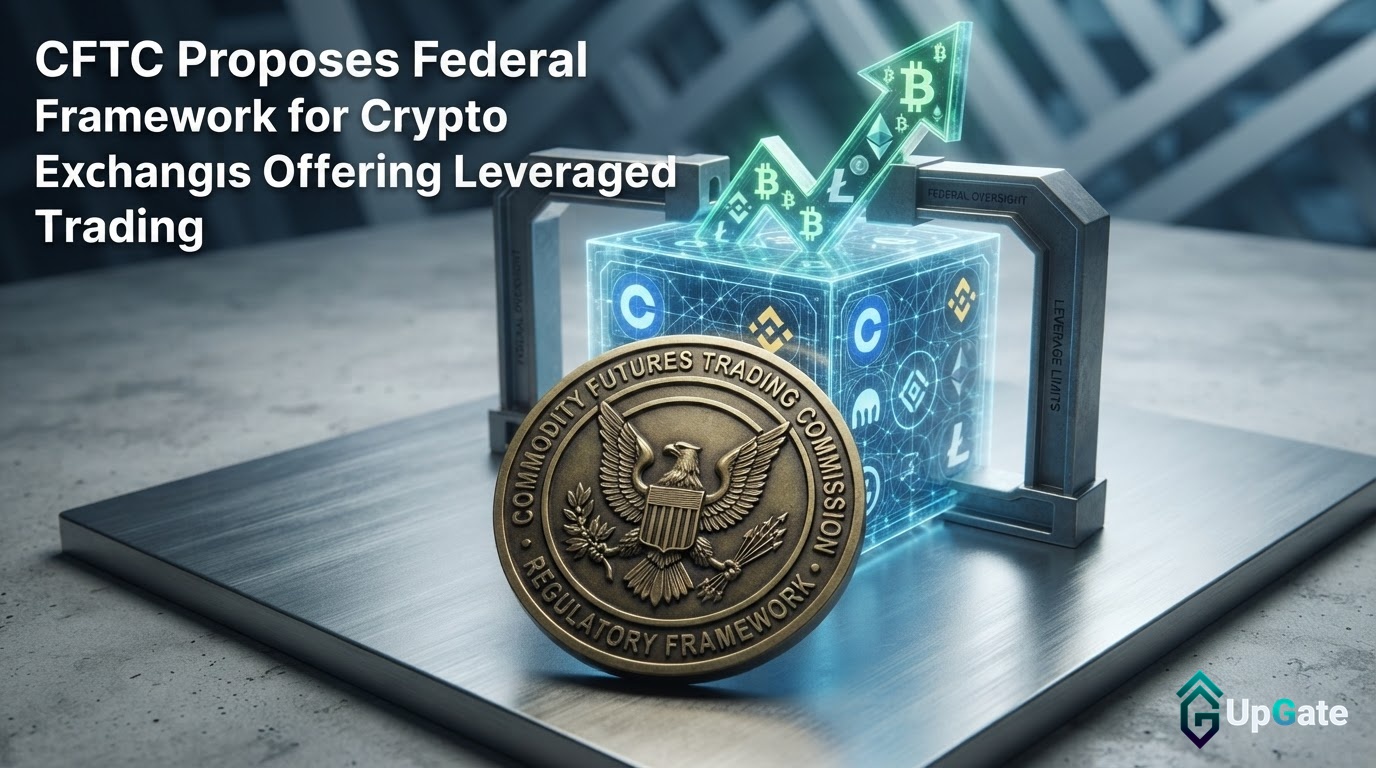
    The U.S. Commodity Futures Trading Commission (CFTC) has proposed a new federal framework to provide clearer oversight for cryptocurrency exchanges offering leveraged trading to retail customers. Announced October 5 by CFTC Chairman Michael S. Selig at the Fordham Law Blockchain Regulatory Symposium in New York, the proposals include potential registration as a crypto asset market (CAM) and address crypto asset transactions (CTX).

    This initiative offers U.S. crypto platforms a potential pathway to federal regulation amid a lack of comprehensive crypto market legislation. “The framework I have outlined is an important step towards bringing crypto asset markets within the protections of the CEA,” Selig stated. “It may establish clear rules of the road for firms that want to serve American customers, strengthen the integrity of these markets, and provide a path for responsible innovation to take place here in America.”

    The proposed framework is a federal option, not a mandatory system. Exchanges can continue operating under state licenses if their business models allow. However, those already offering certain leveraged crypto trading are already subject to CFTC registration under existing law.

    The CFTC views the crypto market through a three-level structure. Ordinary spot exchanges would largely remain under state money transmission rules, with the CFTC retaining anti-fraud and anti-manipulation authority. The new proposals primarily target exchanges offering retail margin, leveraged, or financed crypto trading. Platforms offering derivatives like perpetual contracts fall into the third category.

    Under the plan, exchanges seeking to offer leveraged crypto transactions could register as a new type of derivatives exchange, a crypto asset market (CAM). Existing CFTC-registered derivatives exchanges could also offer these products under the proposed rules. The framework aims to introduce customer protections such as market surveillance, financial safeguards, and rules for customer funds.

    The CFTC is also considering proof-of-reserves rules for exchanges holding customer assets in omnibus accounts. A significant component involves futures commission merchants (FCMs), who would manage customer accounts and funds, adhering to existing customer protection requirements. Their involvement would also integrate anti-money laundering and customer identification protocols.

    The agency is examining how the proposed rules might interact with self-custody. Under the proposal, crypto assets sent to a customer’s external wallet within 28 days could generally satisfy the agency’s interpretation of “actual delivery.”

    Selig also noted the agency’s broader interest in on-chain finance, stating that developers who solely publish software and do not control trades or hold customer assets should not automatically be classified as traditional intermediaries.

    It is crucial to note that the proposal does not establish a complete federal crypto regime on its own. Congress would still need to determine if all exchanges should be mandated to register federally. The CFTC is seeking public input on these proposals, which cover Regulation Crypto Asset Transactions (CTX) and Regulation Crypto Asset Markets (CAM). Uncertainties remain regarding the specific details of proof-of-reserves rules, how the proposed regulations will function with self-custody, and whether Congress will ultimately require universal federal registration for all exchanges.

    Why This Matters

    The CFTC’s proposal represents a significant step towards federal oversight for crypto exchanges offering leveraged trading, aiming to enhance customer protection and market integrity. However, it is presented as a voluntary framework and does not constitute a complete federal regime, with key uncertainties remaining about its ultimate scope and implementation.

    Broader Context

    The proposed framework is a federal option for crypto exchanges, not a mandatory system, and aims to provide clearer federal oversight at a time when the U.S. lacks a broad crypto market law. The CFTC is seeking public input on these proposals.

  • FNB Introduces Crypto Trading for Retail Clients via VALR Partnership, Capping Transfers

    FNB Introduces Crypto Trading for Retail Clients via VALR Partnership, Capping Transfers

    First National Bank (FNB) has launched a cryptocurrency trading feature, ‘Crypto Investing,’ within its banking app, granting its approximately 9 million retail clients access to buy, sell, and trade digital assets. This new service, developed in collaboration with local crypto exchange VALR, became available on October 6, 2026, in South Africa.

    The ‘Crypto Investing’ feature supports five digital assets: Bitcoin (BTC), Ethereum (ETH), XRP, Solana (SOL), and Tether (USDT). FNB clients can begin trading with a minimum investment of R10 (approximately $0.60). The service operates 24/7, with purchases funded directly from clients’ FNB accounts. It is integrated into the bank’s existing share-trading platform, which also hosts other investment products.

    Despite the expanded access, FNB has implemented a key restriction: cryptocurrency acquired through the feature must remain within the bank’s ecosystem and cannot be transferred to external wallets or third-party exchanges. FNB attributes this limitation to two primary factors: compliance with South African exchange-control regulations and security measures designed to mitigate the risk of customers falling victim to scams or fraudulent platforms.

    FNB executives cited strong customer demand for alternative investments as a primary driver for the feature’s introduction. They framed the bank as a secure gateway to these markets, highlighting its established risk management framework. FNB has indicated plans to broaden the range of supported digital assets and intends to provide educational resources to help clients understand the complexities and risks associated with digital currencies.

    For VALR, the partnership offers a significant distribution channel, enabling access to FNB’s extensive client base. This move mirrors a similar arrangement made by Discovery Bank with crypto exchange Luno in November 2025.

    These developments occur amid growing cryptocurrency adoption in South Africa. By late 2025, an estimated over 6 million South Africans held crypto assets, with more than R25 billion in crypto assets reported under custody at major platforms. FNB’s introduction of this feature signifies a trend of traditional financial institutions integrating cryptocurrency trading into mainstream retail banking, with regulatory and security considerations shaping the implementation.

    Why This Matters

    The materials describe a narrow update: FNB has introduced a ‘Crypto Investing’ feature within its banking app, allowing approximately 9 million retail clients to buy, sell, and trade five digital assets (Bitcoin, Ethereum, XRP, Solana, and USDT) with a minimum trade of R10 ($0. The exact number of clients who will utilize the crypto trading feature.

    Broader Context

    Source materials place the factual news in this context: FNB is the retail banking arm of the FirstRand group.

  • BTCPay Server 2.4.5: Enhanced Security, Faster Invoices

    BTCPay Server 2.4.5: Enhanced Security, Faster Invoices

    BTCPay Server Releases Update With Enhanced Security and Faster Invoices

    BTCPay Server has rolled out version 2.4.5, bringing significant improvements in security and invoice processing speed. However, a notable change requires attention from users operating their stores via the Tor network.

    Tor Support Now Optional

    A key adjustment in this release is that Tor support is no longer enabled by default. Users who rely on an onion address for their BTCPay Server instance will need to manually re-enable Tor after updating to ensure their service remains accessible. This change is particularly relevant for those using Docker deployments, which have undergone a substantial cleanup in this version.

    Addressing Server-Side Request Forgery

    The most significant security enhancement targets Server-Side Request Forgery (SSRF), a vulnerability where an attacker can trick a server into making requests on their behalf, potentially accessing sensitive internal systems. Version 2.4.5 introduces protections against SSRF across Lightning and LNURL outbound requests, as well as invoice webhooks, making the server more discerning about the traffic it forwards.

    Stricter Refund and Privacy Measures

    Refund processes have also been tightened, with the update requiring more stringent permissions for approval. This limits the number of individuals within a store’s team who can initiate outgoing payments, thereby reducing insider risks and the potential damage from a compromised account.

    Privacy has also received a boost. Public invoice details will now be automatically hidden one month after an invoice is issued, preventing old payment pages from indefinitely broadcasting sensitive information.

    Performance and Integration Updates

    On the performance front, the development team has focused on accelerating invoice generation. The release also marks the retirement of several older, unmaintained integrations, including Bitcoin Plus, Trezarcoin, and JoinMarket.

    A new command-line tool, btcpay-routes, has been introduced, granting administrators greater control over Lightning API routes. This offers operators more flexibility in managing and exposing their Lightning network configurations.

    Developer-Focused Enhancements

    Beyond these headline features, the GitHub release notes detail breaking changes, new Greenfield APIs, and improvements to plugins and database functionality. Greenfield serves as BTCPay Server’s API for building custom applications on the platform.

    Furthermore, the Plugin Builder registration has reopened with enhanced sandboxing capabilities. Sandboxing isolates plugins, making it more difficult for faulty or malicious ones to affect the core system.

    Previous Releases and Recommendations

    Version 2.4.5 follows closely behind 2.4.4, released in September, and 2.4.2, released in August 2026, both of which also emphasized security enhancements.

    For all BTCPay Server users, the primary recommendation is to update the software through the server’s settings menu. Immediately after updating, administrators are advised to verify their Tor configuration. Developers working with custom integrations, plugins, or scripts are urged to review the GitHub release notes for any breaking changes before upgrading production environments. The new one-month privacy default for public invoices is considered a sensible measure to limit the long-term exposure of payment details.

  • Nvidia Nears $6 Trillion Market Cap on Record Stock Surge

    Nvidia Nears $6 Trillion Market Cap on Record Stock Surge

    Nvidia Nears $6 Trillion Valuation as Stock Hits New High

    Nvidia approached a $6 trillion market capitalization on Tuesday, with its stock climbing to another all-time high and extending a rally that has already made the chipmaker the world’s most valuable listed company.

    Stock Surge and Market Dominance

    Shares rose as much as nearly 2% on Tuesday morning, reaching a record $243.37 before paring some gains. Nvidia remained higher on the day, pushing its market value above $5.8 trillion and inching closer to a valuation milestone no company has previously achieved. To reach $6 trillion, Nvidia’s stock would need to trade at approximately $249 per share.

    The company’s stock has surged about 28% in 2026, adding roughly $1.2 trillion to its market capitalization. Apple, the second-largest company by market value, was valued at about $4.86 trillion as of Monday, creating a gap of approximately $900 billion between the two tech giants. Nvidia has also been the single largest contributor to the S&P 500’s roughly 14% advance this year, according to Bloomberg data.

    Strong Earnings Fueling Growth

    This remarkable rally follows another robust earnings report from Nvidia. The company announced $96.2 billion in fiscal second-quarter revenue, a 106% increase from the previous year. It forecast third-quarter revenue between $108 billion, with a 2% margin of error. Data center revenue for the quarter reached $89 billion, up 117% year-over-year.

    Adding further momentum, Nvidia’s board authorized an additional $150 billion for its share repurchase program in late September, bringing the total remaining authorization to $235 billion. The company anticipates completing this program by fiscal 2028.

    “This authorization reflects our confidence in the long term opportunity ahead,” said Nvidia CEO Jensen Huang. Huang has characterized Nvidia as “the world’s first and only growth value stock,” asserting that the company merges rapid expansion with a valuation that remains comparatively modest against its historical performance.

    Reversal of Fortune and Shifting Sentiment

    The current surge marks a significant turnaround from earlier in the year. As of March 30, Nvidia shares were down approximately 11% for 2026, a period when investors expressed skepticism about the potential returns from substantial investments in AI infrastructure.

    Investor sentiment has since shifted dramatically, buoyed by continued spending on AI infrastructure and Nvidia’s sustained strong revenue outlook.

    Expanding Beyond Chip Sales

    Nvidia’s expanding influence now extends beyond its core chip manufacturing business. As of July 26, the company’s equity investments in AI firms had reached $99 billion, a substantial increase from roughly $7 billion a year prior. In 2026 alone, Nvidia has committed over $40 billion to investments across frontier AI laboratories, infrastructure providers, and other entities within the AI ecosystem.

    In September, the chipmaker also announced its agreement to acquire the open-source AI platform Hugging Face for approximately $12.9 billion. This transaction includes roughly $11.9 billion for shareholders and up to $1 billion in equity-based retention awards, with the deal slated to close in the first half of 2027.

    Nvidia’s Presence in Crypto Markets

    Nvidia’s ascent has also increasingly intersected with cryptocurrency markets, coinciding with the growth of tokenized stocks on the blockchain. As the world’s largest company by market capitalization, Nvidia is now represented by several tokenized equity issuers, enabling eligible investors to gain exposure to its shares through blockchain-based assets.

    xStocks offers Nvidia as NVDAx, a token directly backed by underlying Nvidia shares held in custody. Ondo Finance provides Nvidia exposure through NVDAon, a token fully backed by underlying shares and cash in transit, available across networks including Ethereum, Solana, and BNB Chain.

    Other platforms have also brought Nvidia onto the blockchain. Coinbase offers NVDAc via its tokenized stocks platform on Base. Robinhood Europe provides its own NVDA Stock Token, though its structure differs as it operates as a derivative contract that tracks Nvidia shares rather than representing ownership of the underlying stock.


  • Crypto Card Spending Surges to Record $12.5 Billion as Jupiter Targets Stablecoin Users

    Crypto Card Spending Surges to Record $12.5 Billion as Jupiter Targets Stablecoin Users

    Crypto Card Payments Surge to Record $12.5 Billion, Driven by Stablecoins and QR Codes

    Cryptocurrency card payments have reached an unprecedented $12.5 billion, marking a substantial 140% increase since the beginning of the year. This surge is primarily attributed to the growing adoption of stablecoins and QR code payment methods.

    Jupiter Global’s card product, Jupiter Spend, is among the companies participating in this market shift. However, the headline volume figure reflects the broader industry trend, with Jupiter’s own market share being considerably smaller. The $12.5 billion total encompasses crypto card payment volume across the entire sector, and available data does not support attributing this cumulative sum solely to Jupiter Spend.

    Stablecoin Spending Hits New Highs

    In July 2026, industry-wide stablecoin card spending surpassed $1 billion in a single month for the first time. The precise figure for July reached $1.03 billion, distributed across more than 10 million transactions.

    Jupiter’s individual performance is more modest. The company reported a card settlement volume of $7.6 million in September 2026, an 8% increase from the preceding month.

    Jupiter Spend Product Details

    Launched in January 2026, the Jupiter Spend card allows users to deposit USDC or USDT via the Jupiter app on the Solana blockchain. These stablecoins are then converted into a U.S. dollar balance, which can be used for purchases at over 150 million Visa merchants globally.

    Deposits of USDC or USDT made through Solana are fee-free. For non-U.S. dollar transactions, a foreign exchange fee of either 1% or 1.8% applies, depending on the card issuer.

    QR Pay and Cashback Incentives

    A more distinctive feature of the Jupiter Spend card is its QR Pay functionality. This allows for fee-free payments in select markets within the Asia-Pacific region, with daily spending capped at $5,000 and individual transactions limited to $500.

    Jupiter offers a base cashback rate of 2% on card purchases, which can be increased to 4% through referrals. Transaction volumes for Jupiter saw a notable rise once a cashback promotion was introduced, compared to the period prior to its implementation. The July milestone of over $1 billion in industry-wide spending was largely propelled by QR Pay adoption and these cashback incentives.

    Bridging On-Chain and Off-Chain Transactions

    Stablecoins such as USDC and USDT are designed to maintain a one-to-one peg with the U.S. dollar. Products like Jupiter Spend effectively transform these digital assets into a balance akin to a checking account, facilitating the transition of on-chain funds to merchant point-of-sale terminals through Visa’s extensive network. Solana’s low-cost transfer capabilities make fee-free deposits practical, reducing friction in moving funds onto the card.

    Market Position and Future Outlook

    For Jupiter, the product possesses key advantages: access to Visa’s merchant network, the efficiency of Solana’s blockchain, fee-free QR payments in APAC, and a competitive cashback rate of up to 4%. However, its $7.6 million in monthly settlement volume indicates it remains a smaller player in a competitive landscape.

    A significant risk to monitor is the product’s reliance on cashback incentives. Jupiter’s transaction volumes were considerably lower before its cashback promotion began, raising questions about the proportion of organic versus rewards-driven usage.