Tag: Positive

  • FinCEN Scraps Crypto Wallet and Mixer Rules

    FinCEN Scraps Crypto Wallet and Mixer Rules

    FinCEN Scraps Proposed Rules on Self-Custody Wallets and Crypto Mixers

    The Financial Crimes Enforcement Network (FinCEN) on Monday rescinded two proposed rules, one concerning self-custody cryptocurrency wallets and another targeting crypto mixers.

    In its decision, the Treasury bureau cited the Trump administration’s “deregulatory agenda” as the reason for ending the proposed rule on wallets, which had been pending since December 2020.

    The first withdrawn rule, published on December 23, 2020, aimed to regulate what it termed “unhosted wallets”—those where users manage their own transactions without the involvement of a bank or other financial institution. Under the proposal, banks and money service businesses would have been required to file reports and verify customer identities when a counterparty used such a wallet for a transfer exceeding $10,000, or if multiple transfers summed to over $10,000 within a 24-hour period. Record-keeping requirements would have commenced at $3,000, and the rule also encompassed wallets held at foreign institutions outside the purview of the Bank Secrecy Act, in jurisdictions specified by the agency.

    The second proposal, originating in 2023, sought to impose special measures on crypto mixing services. These services blend coins from multiple users, making it more difficult to trace their origins. The proposal was based on a finding under section 311 of the USA PATRIOT Act, which identified international crypto mixing as a class of transactions of primary concern for money laundering. Had it been enacted, the rule would have mandated that covered financial institutions report any transaction they knew or suspected involved mixing with a foreign link. This would have included details such as amounts, wallet addresses, transaction hashes, and IP addresses, along with maintaining records of each customer’s full identity.

    Deputy Director Jimmy L. Kirby signed the notice for the wallet rule withdrawal, stating the bureau would take no further action and referencing a July 2025 White House report from the President’s Working Group on Digital Asset Markets. FinCEN indicated it had considered public comments submitted on both proposals before deciding to withdraw them.

    The Crypto Council for Innovation (CCI), an industry group that had submitted comments on the mixing proposal, described both withdrawals as “positive for the digital asset ecosystem” in a post on X. The CCI had previously warned that the proposal’s broad definition of mixing could inadvertently encompass legitimate activities and characterized the outcome as “the rulemaking process working.” Regarding the wallet rule, the CCI argued that its withdrawal would help prevent regulators from prohibiting or restricting the use of self-hosted wallets.

    These decisions come at a time when privacy-focused crypto services are facing increased legal scrutiny. For instance, Samourai Wallet co-founders Keonne Rodriguez and William Lonergan Hill have agreed to plead guilty in connection with their mixing service. Prosecutors allege the wallet processed over $2 billion in illicit transactions and laundered more than $100 million. The founders’ legal team had sought dismissal of charges following an April 2025 Justice Department memo suggesting prosecutors would no longer pursue cases based solely on user actions or regulatory technicalities. They also alleged that officials withheld internal FinCEN communications that indicated Samourai was not considered a money transmitter.

    Rodriguez and Hill were subsequently sentenced to five and four years in prison, respectively. During Rodriguez’s sentencing, the judge remarked that he had “used his talent to enable fraud.” Supporters, including analyst Kyle Chasse, maintain that the platform was designed to facilitate anonymous cryptocurrency transfers rather than to conceal illicit activities.
  • Bitcoin Buys Surge as $3.3B Drains from Binance

    Bitcoin Buys Surge as $3.3B Drains from Binance

    Binance Exchange Sees Significant Bitcoin Reserves Drop Amidst Accumulation Trend

    The cryptocurrency exchange Binance has experienced a substantial decrease in its Bitcoin reserves, shedding nearly 40,000 BTC in just 15 days, a withdrawal valued at approximately $3.3 billion. This outflow coincides with Bitcoin consolidating around the $85,000 mark, even as exchange-held supply dwindles.

    Outflows Reach Multi-Month Highs

    Weekly outflows from Binance reached 23,100 BTC, the highest level recorded since June 2023. This significant withdrawal suggests a growing trend of Bitcoin accumulation by investors.

    Despite circulating rumors of an impending Bitcoin crash, recent analysis by X user Darkfost indicates that the ongoing Bitcoin accumulation is becoming increasingly difficult to overlook. The substantial drop in Binance reserves, valued at roughly $3.3 billion over a 15-day period, occurred while Bitcoin maintained its consolidation around $85,000.

    This trend follows a surge in exchange outflows, reaching levels not observed in years. Data reveals that nearly 14,300 BTC exited Binance in the latest incomplete daily reading, surpassing the 13,800 BTC outflow recorded the previous week.

    The weekly figures are particularly noteworthy. Last week saw 23,100 BTC leave Binance, marking the strongest net weekly outflows since June 2023, representing an accumulation of approximately $1.4 billion in a single week.

    Reserves Decline Sharply

    Further data indicates a decline in Binance’s Bitcoin reserves, falling from 704,800 BTC on September 20 to 663,100 BTC. This represents a considerable reduction in the available supply held by the exchange over a mere 15-day span.

    Market Behavior Indicators

    Exchange netflows are frequently monitored for insights into market behavior. The analyst’s observation suggests that Bitcoin leaving a widely accessible exchange can be indicative of accumulation and a shift towards longer-term holding patterns.

    An additional detail warrants attention: the current outflow pattern bears resemblance to a period in 2023 when Bitcoin’s price was attempting to recover from a bear market. However, historical patterns do not guarantee future outcomes, and outflows alone do not definitively prove that prices are poised to rise.

    For the present, Bitcoin accumulation is occurring alongside consolidation near the $85,000 level. The data also points to a decrease in selling pressure, creating a scenario where reduced exchange-held supply and continued withdrawals could potentially support a price movement beyond the current trading range.

  • Changer+ Launches User-Friendly, Self-Custodial Stablecoin Wallet

    Changer+ Launches User-Friendly, Self-Custodial Stablecoin Wallet

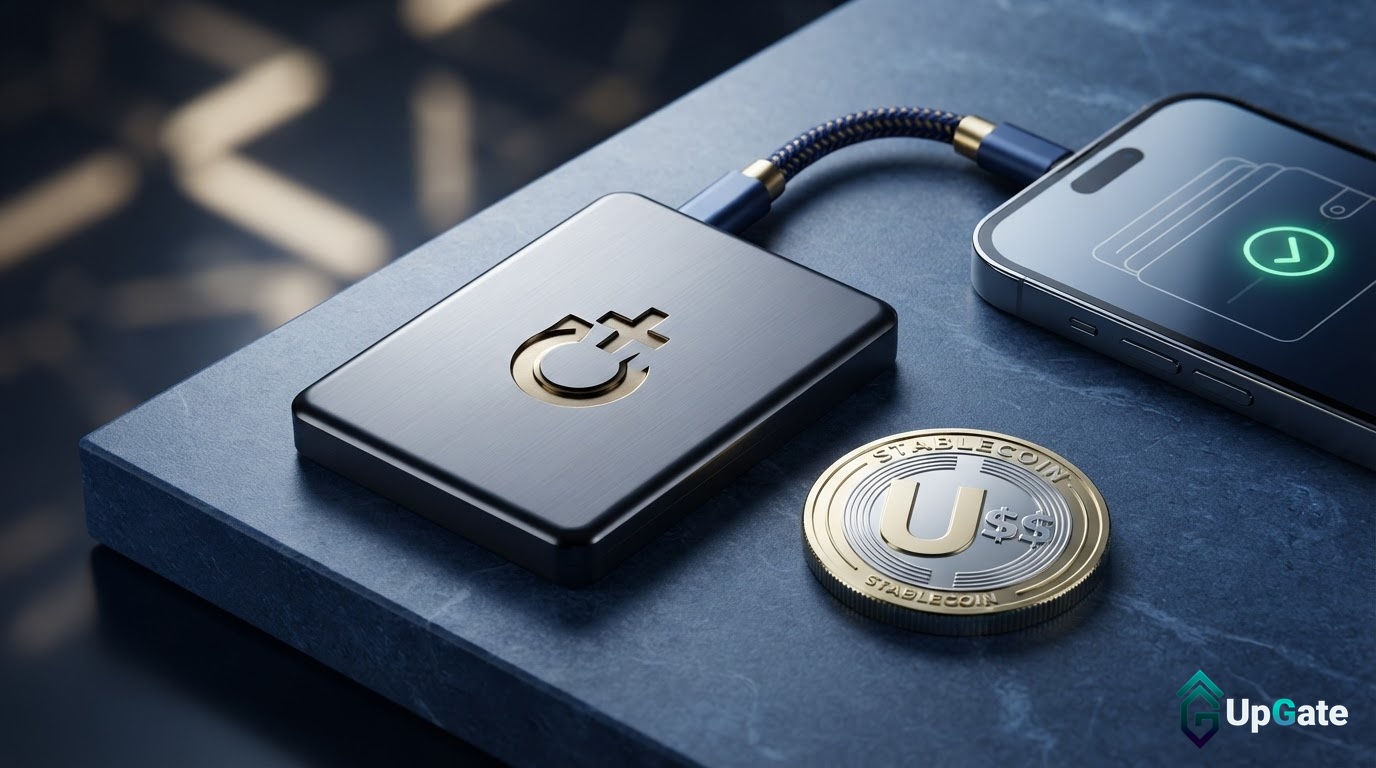
    Changer+ has introduced a self-custodial stablecoin wallet designed to simplify stablecoin management by abstracting away common blockchain complexities. The wallet aims to make holding, transferring, and using stablecoins more accessible, particularly as their adoption expands beyond cryptocurrency trading into everyday digital commerce and payments.

    This launch addresses the fragmented user experience often encountered when managing stablecoins across different networks and wallets. According to Changer+, users should not need to understand intricate blockchain mechanics, such as gas tokens or transaction processes, simply to utilize stablecoins. The company’s ambition is to provide a wallet where “stablecoins should just work.”

    Wallet Features and Support
    The new wallet supports major stablecoins, including USDT and USDC, across multiple blockchain networks such as Ethereum, TRON, BNB Chain, and Solana. A key feature is its ability to allow users to cover network transaction costs without requiring the native gas token for supported transactions. This abstraction aims to streamline the user experience, making it more akin to traditional digital payment systems.

    Changer+ emphasizes that convenience does not come at the expense of control. The wallet is self-custodial, meaning users retain ownership of their private keys and authorize their own transactions. This aligns with the Web3 principle of user ownership and control over digital assets.

    Security and Availability
    To ensure security and build trust, Changer+ has completed an independent security audit, vulnerability assessment, and penetration testing (VAPT) conducted by Echo Pulse. The wallet is available for download on both iOS and Android platforms.

    Launch Promotion
    To encourage adoption and allow users to experience the simplified functionality, Changer+ is offering a launch special. From October 6 to November 6, 2026, new users will receive three free transactions per device on Ethereum, Solana, and BNB Chain. This promotion aims to lower the barrier to entry for users to try out the wallet’s features.

    Company Background and Future Outlook
    Changer+ is a Singapore-incorporated entity and is backed by a private family office. The company states its focus is on long-term product building, emphasizing good engineering to reduce user-managed complexity while maintaining a clear and reliable experience. The wallet’s design prioritizes usability, self-custody, security, and practical utility, rather than relying on a project token or speculative rewards.

    While the wallet aims to simplify stablecoin management, some aspects remain to be detailed. Specifics regarding the exact number of stablecoins and networks planned for future support, as well as the full details of future practical use cases beyond initial mentions of eSIM data plans and a lifestyle ticket marketplace, are not yet fully elaborated. The precise terms and conditions of the launch special offer also require further clarification.

    Despite these uncertainties, the launch of Changer+’s wallet signals a potential step towards addressing the usability challenges that may hinder broader stablecoin adoption. The emphasis on self-custody alongside simplified management could appeal to a growing segment of users seeking both control and convenience in their digital asset interactions.

    Why This Matters

    The materials describe a narrow update: Changer+ has launched a new self-custodial stablecoin wallet that supports major stablecoins across multiple blockchain networks. The exact number of stablecoins and networks planned for future support.

    Broader Context

    Source materials place the announcement in this context: Changer+ is a Singapore-incorporated entity.

  • Bitcoin Poised for $100,000 Surge: Expert Cites ‘Explosive Catalyst’

    Bitcoin Poised for $100,000 Surge: Expert Cites ‘Explosive Catalyst’

    Bitcoin Poised for $100,000 Surge as Treasury Yields Spark New Bull Case

    New York, NY – While typically a harbinger of trouble for risk assets, rising Treasury yields may be setting the stage for Bitcoin’s next significant upward move, according to Fundstrat’s Sean Farrell. He anticipates the cryptocurrency could reclaim the $100,000 mark before the end of the year.

    The Bullish Outlook

    Farrell, who heads digital asset strategy at Fundstrat, believes Bitcoin has already established a “durable” cycle low, signaling the commencement of a new upward trend.

    “I actually do think we could get above that $100,000 level before 2026 wraps up,” Farrell stated. He conceded that his earlier target of $115,000 for this year now appears less attainable.

    On Monday, Bitcoin was trading near $86,000. A climb to $100,000 would represent a roughly 16% increase from that level.

    How High Yields Could Fuel Bitcoin

    The 10-year Treasury yield is currently at its highest point since 2007, with markets factoring in four interest rate hikes over the next twelve months. This scenario would typically present headwinds for cryptocurrencies. However, Farrell views this dynamic as a “bull case in and of itself,” explaining his reasoning:

    The Mechanism for Bitcoin’s Gain

    Farrell characterized the Treasury’s actions as a form of market intervention akin to economic stimulus. He explained that banks absorb newly issued Treasury bills, which in turn inject money into the private market. “This leads to monetary debasement, and monetary debasement leads to Bitcoin outperformance,” he asserted.

    He noted that policymakers have adhered to a similar strategy for the past five to six years: allowing inflation to rise while keeping borrowing costs suppressed. Farrell argued that a further reduction in long-term bond issuance could serve as an “explosive catalyst” for Bitcoin and the broader cryptocurrency market.

    Tokenization Adds to Demand

    Farrell also connected the Securities and Exchange Commission’s (SEC) innovation exemption to this trend. He pointed out that the exemption mandates that each tokenized stock be backed by a stablecoin or a money market fund. If trillions of dollars in equities transition onto the blockchain, this would inevitably drive increased demand for the short-term bills that the government needs to sell.

    He highlighted Ethereum as the strongest performer in the third quarter, while Solana continues to be traded as a higher-risk play on the same underlying theme.

    Farrell’s Advice to Investors

    Farrell does not foresee a “straight shot up” for Bitcoin. He acknowledged the possibility of a 10% pullback but advised that leveraged investors should remain unconcerned. He anticipates that buyers will quickly emerge to support the price on any dips.

    “It is time to think about getting more aggressive over a medium to longer-term time horizon,” he concluded.

  • Polymarket Launches Protocol V2, New Markets Switch Nov 2

    Polymarket Launches Protocol V2, New Markets Switch Nov 2

    Polymarket Unveils Major Protocol Upgrade, Protocol V2, Set for November 2 Launch

    Polymarket, a decentralized prediction market platform, has announced the launch of Protocol V2, a significant overhaul of its core architecture. This new system is slated to power all new markets on the platform starting November 2. The upgrade marks a departure from the Gnosis Conditional Tokens Framework, which Polymarket has utilized since 2019.

    A Unified and Modular Architecture

    The rollout of Protocol V2 commenced on October 5, 2026, spearheaded by Polymarket’s development team and protocol head, Rajath Alex. The platform describes the new system as unified, modular, and thoroughly audited. A key change under V2 is that every outcome share will now reside within a single ERC-1155 positions token contract. The ERC-1155 standard allows a single smart contract to manage multiple distinct token types simultaneously, streamlining operations.

    pUSD as the Sole Collateral

    With the implementation of V2, pUSD will become the exclusive form of collateral accepted for backing positions on the Polymarket platform. This move aims to simplify accounting and settlement processes by concentrating all collateral into a single asset.

    Enhanced User Experience and Operational Efficiency

    The protocol also introduces market-specific exchanges, integrated with a router. This router acts as a front-end intermediary, directing orders to their appropriate destinations. Polymarket asserts that this enhancement will significantly improve both user experience and operational efficiency.

    Pluggable Oracles for Flexible Resolution

    Protocol V2 features an OracleAggregator that makes oracles pluggable, supporting a range of providers including UMA and Chainlink. This flexibility means Polymarket is no longer tied to a single method for determining market outcomes. Instead, it can now select the most suitable resolution source for each individual market, ensuring greater accuracy and adaptability.

    Phased Rollout and Testing

    A limited set of live test markets, known as canary markets, have been running from October 5 through October 30 to facilitate testing and gather feedback. All new markets will transition to V2 on November 2. Importantly, existing markets built on the Conditional Tokens Framework will remain unaffected, with no forced migration of open positions occurring mid-trade.

    Developer Upgrades and Data Access

    Developers will benefit from an upgraded Data API v2. This new API operates on an in-house on-chain indexer, enabling Polymarket to directly read and organize blockchain data rather than relying on external tools. The Data API v2 offers standardized data formats and cursor-based pagination, which Polymarket states will reduce friction for developers building dashboards, trading tools, and analytics on top of its data.

    Robust Security Measures

    Polymarket has prioritized security for Protocol V2, with six independent firms, including Certora, conducting audits. Furthermore, the platform is running a bug bounty program offering rewards of up to $5 million for the discovery of critical vulnerabilities.

    The key dates for this transition are October 30, marking the conclusion of the canary markets, and November 2, when Protocol V2 becomes the standard for all new market creations on Polymarket.

  • Solana Launches Institutional Settlement Standard with J.P. Morgan Collaboration

    Solana Launches Institutional Settlement Standard with J.P. Morgan Collaboration

    Solana Foundation Targets Institutional Finance with New Settlement Tool

    The Solana Foundation is making a direct bid for institutional finance, launching an open-source program designed to enable banks to settle trades on its network with the same certainty they expect from traditional markets.

    Announced Monday, the tool, named Solana DvP (Delivery-versus-Payment), is an open-source escrow program that provides financial institutions with a standardized API for delivery-versus-payment settlement. This mechanism is fundamental to ensuring that an asset and its corresponding payment are exchanged simultaneously.

    Released under the permissive MIT license, the initiative aims to bring this settlement guarantee to public blockchain infrastructure as a reusable standard, moving away from the bespoke smart contracts that institutional trades have historically relied upon.

    The foundation stated that J.P. Morgan provided input on institutional settlement practices, which informed the design of the tool.

    “Atomic settlement removes counterparty risk that is inherent in traditional finance,” said Catherine Gu, the foundation’s head of product for digital assets. She added that the program offers institutions a single open standard “with finality in seconds instead of days.”

    Rhodel D’souza, J.P. Morgan’s head of markets digital assets, commented that a shared, open standard for atomic delivery-versus-payment is “exactly the kind of foundational infrastructure institutional market participants require.”

    In conventional markets, delivery-versus-payment involves a multi-day process through clearinghouses, depositories, and custodians, which can tie up capital for one to two days. Solana DvP streamlines this into a single atomic transaction, where both legs of the settlement occur together or not at all. The program supports SPL Token and Token-2022, including extensions crucial for regulated issuers such as permanent delegate, pausable tokens, and transfer hooks. It has also undergone external security audits. The foundation indicated plans to incorporate privacy features to ensure settlement confidentiality.

    This launch builds upon Solana’s increasing appeal among institutions focused on tokenized real-world assets.

    In August, BlackRock, the world’s largest asset manager, introduced a tokenized money market fund for stablecoin reserves, recording ownership on Solana alongside Ethereum. This fund was structured to qualify as a reserve asset under the GENIUS Act.

    Meanwhile, Kraken has utilized Solana to offer tokenized U.S. stocks to overseas customers through its xStocks product. Solana has emerged as a prominent platform for tokenized equities, and infrastructure like DvP is intended to solidify this position by providing regulated players with a trusted method for on-chain settlement.

  • Solana Unveils Open-Source DvP for Institutional Settlement

    Solana Unveils Open-Source DvP for Institutional Settlement

    Solana Unveils Open-Source DvP Program to Streamline Institutional Trades

    Solana has launched an official delivery versus payment (DvP) program, an open-source initiative designed for institutions seeking to settle trades on-chain in a single step. The program enables both parties in a transaction to settle atomically on the Solana blockchain, achieving finality in seconds rather than days, according to Decrypt. This represents a significant shift for an industry accustomed to waiting one to two business days for many trades to clear.

    DvP: Ensuring Simultaneous Exchange

    Delivery versus payment, or DvP, addresses the challenge of simultaneous exchange by ensuring that an asset and its payment are transferred at the exact same moment, or neither transaction occurs. Solana’s reference implementation applies this logic directly on-chain, facilitating the atomic exchange of tokenized securities, such as commercial paper, for payments in USDC.

    An atomic transaction is designed to either complete entirely or fail entirely, preventing scenarios where one party receives both the asset and the payment while the other is left with nothing. This structure effectively eliminates counterparty risk from the swap.

    Speed and Efficiency

    Research underpinning the implementation indicates atomic execution can occur in under one second. Solana’s finality is achieved at approximately 400 milliseconds, with transaction fees remaining very low. This stands in stark contrast to traditional settlement processes, which can take one to two days.

    The tokenized securities leverage SPL Token-2022 extensions, Solana’s advanced token standard that integrates additional features directly into the token itself. This approach eliminates the need for issuers to develop custom smart contracts to represent their assets.

    Compliance and Control

    The DvP program also incorporates compliance features, such as whitelisting, which restricts asset ownership and receipt to approved wallets. This ensures that regulated securities remain within a controlled environment.

    A Landmark Transaction

    A significant early demonstration of the program’s capabilities occurred on December 11, 2025, when J.P. Morgan facilitated a $50 million commercial paper issuance for Galaxy Digital Holdings LP on the Solana blockchain. This transaction utilized the DvP functionality for both the issuance and redemption of the commercial paper, a form of short-term corporate debt typically used for operational funding, using USDC. Galaxy Digital Holdings LP acted as the issuer in this deal.

    Solana further bolstered its enterprise offerings with the launch of its Solana Developer Platform on March 24, 2026, providing a suite of APIs for issuing and settling tokenized assets.

    Institutional Adoption

    Several major financial institutions are already exploring or implementing solutions leveraging Solana’s capabilities for asset workflows. Among them are Morgan Stanley, BNY, State Street, and Société Générale, all of whom have participated in pilots or deployed solutions.

    Open-Source Advantage

    By releasing the DvP program as open-source, Solana is lowering the barrier for institutions to review the code, customize it, and implement it without the need for lengthy proprietary license negotiations.

    Potential Market Impact

    An increase in institutions settling tokenized securities against USDC could drive demand for USDC as a settlement asset, given its role as the payment component in these transactions.

    Navigating Risks

    The primary risks associated with this development are operational and regulatory. Institutions will require assurance of the network’s reliability under heavy load, while regulators will seek clarity on how on-chain finality aligns with existing legal definitions of a completed trade.

    Future Outlook

    Key developments to monitor include whether the J.P. Morgan and Galaxy Digital deal serves as a blueprint for future issuances, the extent to which the named institutions transition from pilot programs to full production, and any subsequent growth in USDC settlement volumes related to tokenized securities in the coming months.

  • CFTC Unveils New Crypto Market Rules

    CFTC Unveils New Crypto Market Rules

    CFTC Unveils Proposed Rules for Crypto Trading and Markets

    The U.S. Commodity Futures Trading Commission (CFTC) has officially released comprehensive details regarding the regulation of crypto asset transactions and markets. The proposed framework aims to provide clearer directives for the burgeoning digital asset industry.

    Delivery and Self-Custody Clarification

    One key aspect of the proposal addresses the delivery of crypto assets in leveraged or margin trading. Under the new guidelines, retail-financed, leveraged, or margin trading will be considered complete if crypto assets are delivered to a non-custodial wallet within 28 days. This provision is intended to distinguish normal crypto purchases and self-custody from activities requiring more stringent exchange regulation.

    Federal Licensing Option for Crypto Exchanges

    The CFTC is also proposing a new, optional federal licensing system for crypto exchanges. This federal license would allow exchanges to bypass individual state registration requirements. Crucially, it would enable these licensed entities to offer retail margin, leveraged, and financed crypto trading, activities currently prohibited at the state level for spot market trading.

    Framework Details

    The proposals are divided into two main areas:

    • Derivatives and Financing Layer: This framework focuses on regulating retail crypto trading that utilizes borrowed funds, leverage, and margin, operating under Section 2(c)(2)(D) of the Commodity Exchange Act. The agency’s recognition of crypto sent to non-custodial wallets as “actual delivery” within 28 days falls under this section.

    • Market Structure and Platform Registration: This part of the proposal introduces customized, optional federal licenses for crypto exchanges under the CFTC’s Designated Contracts Management (DCM) system. These licenses would necessitate robust operational protections, including proof-of-reserves audits, anti-money laundering safeguards, and mandatory intermediation by commission-registered merchants. The primary benefit for exchanges would be the ability to operate under a single federal registration, avoiding the complexities of state-by-state compliance, and the authorization to offer leveraged and financed trading to retail customers.

    Oversight and Public Comment

    While the federal and state licensing structures offer different benefits, the CFTC would maintain ultimate oversight across the entire system. Following the publication of the proposals in the Federal Register, stakeholders, industry participants, and the public will have a 60-day period to submit comments.

    Industry Reaction and Caution

    The CFTC’s move is seen as a positive step towards regulatory clarity for the crypto sector. However, industry lawyers have cautioned that the proposed guidelines may lack permanence and could be subject to changes with shifts in agency or presidential administrations.

  • Bitcoin Rally Fuels Excitement for TOKEN2049 Singapore

    Bitcoin Rally Fuels Excitement for TOKEN2049 Singapore

    Crypto Leaders Descend on Singapore Amidst Renewed Optimism

    The titans of the cryptocurrency world are converging on Singapore this week, bringing with them a sentiment the industry has largely lacked in recent times: optimism.

    The TOKEN2049 Singapore conference, scheduled for October 7-8 at the Marina Bay Sands, arrives on the heels of a significant Bitcoin rally, fueling whispers among investors of a potential new bull market.

    Organizers anticipate approximately 25,000 attendees, representing over 7,000 companies from more than 160 countries. The event’s exhibition floor will feature over 500 exhibitors, with more than 300 speakers set to address attendees across the two-day program.

    TOKEN2049 Week, an extended series of events, runs from October 5-11 and encompasses over 1,000 associated gatherings. The conference’s timing also coincides with the highly anticipated Formula 1 Singapore Grand Prix, adding to the city-state’s vibrant atmosphere.

    The recent surge in Bitcoin’s value has been a key driver of this positive outlook. The cryptocurrency traded around $58,000 at the close of June and has since climbed to approximately $86,000. This performance marks Bitcoin’s strongest quarterly gain since late 2024.

    Major financial institutions are expected to have a significant presence at the conference, with representatives from BlackRock, J.P. Morgan, Nasdaq, and Franklin Templeton confirmed to attend.

    Industry leaders such as Hyperliquid CEO Jeff Yan and Polymarket CEO Shayne Coplan are scheduled to speak. Eric Trump, co-founder of World Liberty Financial, is also slated to appear.

    TOKEN2049 Singapore has seen substantial growth in attendance. In 2022, the event drew around 7,000 participants. By 2025, this figure had surged to a record 25,000, representing more than a threefold increase in three years. This year’s projected attendance of approximately 25,000 is expected to match last year’s record turnout.

  • Strive CEO: ASST to Outpace Strategy in Next Bitcoin Bull Run

    Strive CEO: ASST to Outpace Strategy in Next Bitcoin Bull Run

    Strive CEO Positions Company as Top Contender for Next Bitcoin Bull Market

    Matt Cole, CEO of Strive, is asserting his company’s position as the most likely “fastest horse” among Bitcoin treasury firms heading into the next bull market. He outlined his strategy in a series of seven principles on competition, shared via the social media platform X.

    Cole’s overarching argument, however, extends beyond direct competition. He contends that Strive and MicroStrategy, another prominent Bitcoin treasury firm, are mutually beneficial in expanding the market for Bitcoin-backed digital credit, rather than merely vying for the same investor base.

    “I think Strive has emerged as the leading contender to be the fastest horse in the next bull market,” Cole stated in an interview with podcaster Robin Seyr. He elaborated that achieving the highest total returns will depend on three key factors: maintaining a high amplification ratio, sustaining that ratio over time, and crucially, not sacrificing potential Bitcoin upside for amplification.

    Amplification, in this context, measures a company’s preferred stock and debt relative to its Bitcoin holdings. Strive’s internal tracker indicates an amplification ratio of 51.4%, derived solely from SATA preferred shares and with no outstanding debt. In contrast, MicroStrategy’s ratio stands at approximately 25%, placing Strive’s firm at roughly double the amplification of Michael Saylor’s company.

    Cole presented a bullish outlook for Bitcoin, forecasting a potential surge to between $400,000 and $500,000 by late 2029. He linked this projection to a potential U.S. debt crisis that could drive down long-term yields and weaken the dollar, a scenario he described as conservative.

    The Strive chief also sought to de-escalate any perceived rivalry with MicroStrategy, referencing a detailed article by MicroStrategy’s co-founder that envisioned the two firms collaborating.

    Cole pointed out that SATA’s daily trading volume is between 25% and 50% of MicroStrategy’s STRC. While some MicroStrategy investors interpret this as lost market share for Strive, Cole dismissed this as a “really bad argument.” He reasoned that even if MicroStrategy had captured all of SATA’s approximately $1 billion in market capitalization, STRC would only have grown by about 10%. According to Cole, the more critical metric is the potential for exponential growth in the digital credit market over the next three and a half years.

    He further noted that institutional investors face issuer limitations, necessitating multiple issuers for large buyers. Cole also claimed that both firms have adopted strategies from each other, citing MicroStrategy’s move to daily dividends and its cash reserve policies.

    “I’m glad that they innovate based on what we do and we innovate based on what they do,” he told Seyr.

    On X, Cole emphasized that management teams have a primary duty to their shareholders and that “competing and collaborating are not mutually exclusive.”

    As previously reported by CryptoPotato, Strive acquired 2,000 BTC for $169 million on October 5. On the same day, MicroStrategy announced a purchase of 334 BTC for $28.7 million. These acquisitions bring Strive’s total holdings to 29,462 BTC and MicroStrategy’s to 848,000 BTC.

    At the time of writing, ASST was trading near $30, marking a roughly 137% increase over the past three months, though down approximately 42% over the past year. Meanwhile, SATA is offering a daily dividend of 13%, compared to the 12% dividend on MicroStrategy’s STRC.