Tag: Positive

  • Fairshake Endorses 32 House Candidates Amid Crypto Spending Surge

    Fairshake Endorses 32 House Candidates Amid Crypto Spending Surge

    Crypto’s Political Powerhouse Targets House Races

    Fairshake, the cryptocurrency industry’s largest political spending network, is launching a significant push into the general election with a broad campaign targeting U.S. House candidates ahead of the November midterms. The organization has identified 32 incumbent lawmakers it plans to support, a slate that is notably bipartisan, comprising 19 Republicans and 13 Democrats.

    Multi-Million Dollar Investment in Key Races

    The initial phase of Fairshake’s campaign involves a substantial financial commitment, with six races each slated to receive $1 million in independent expenditures. This brings the disclosed initial investment to at least $6 million. These six races are evenly split between the two major parties.

    Bipartisan Support Driven by Crypto Policy

    The candidates receiving the largest financial backing from Fairshake are Democrats Janelle Bynum, Steven Horsford, and Derek Tran, alongside Republicans French Hill, Bill Huizenga, and Bryan Steil. The broader list of 32 supported candidates also reflects this bipartisan approach. The unifying factor among these lawmakers is not their party affiliation, but rather their voting records on digital asset legislation. All 32 candidates have backed the House CLARITY market-structure bill, a key priority for the cryptocurrency sector.

    This focus provides Fairshake with a clear objective: to support lawmakers who have championed the regulatory framework the crypto industry seeks to advance.

    Independent Spending, Not Direct Donations

    It is important to note the operational mechanics of Fairshake’s support. The organization functions as a super PAC, meaning its expenditures are made independently of candidate campaigns and are not transferred directly into their accounts. This independent spending can be used for advertising and other electioneering activities aimed at supporting or opposing candidates. While substantial, this is distinct from candidates directly receiving large sums of money.

    The scale of this investment underscores the growing entanglement of cryptocurrency policy with electoral strategy. Major players within the industry have channeled significant funds into Fairshake and affiliated groups, recognizing that congressional votes can profoundly influence the progression of legislation concerning market structure, stablecoins, and securities.

    The upcoming election results will represent only the initial benchmark. The subsequent challenge will be to determine whether a pro-crypto bloc that emerges from the November elections can translate political backing into tangible legislative progress when the next Congress convenes.

  • Winklevoss Seeks SEC Approval for Spot Zcash ETF

    Winklevoss Seeks SEC Approval for Spot Zcash ETF

    Winklevoss Twins Eye Zcash ETF Market with New Filing

    Tyler and Cameron Winklevoss are making a play for the Zcash exchange-traded fund (ETF) business. Their firm, Winklevoss Asset Services, LLC, submitted a Form S-1 registration statement to the U.S. Securities and Exchange Commission (SEC) on October 6, 2026.

    The proposed product, tentatively named the Winklevoss Zcash ETF, would directly hold ZEC, the native token of the Zcash network. If approved by regulators, the ETF is slated to trade on the Nasdaq under the ticker symbol WINK.

    This fund is structured as a spot ETF, meaning it will acquire and hold actual ZEC rather than relying on futures contracts or other derivative instruments. The filing outlines a cash-create and cash-redeem model for authorized participants. In this model, these participants would provide U.S. dollars to create new ETF shares, with the fund itself responsible for purchasing the underlying ZEC.

    Custodial services for the ETF’s ZEC holdings are designated for Gemini Trust Company, LLC, the cryptocurrency firm founded by the Winklevoss twins. Additionally, the filing indicates a partnership with Cypherpunk Technologies to provide Zcash network-related services.

    Competitive Landscape and Regulatory Environment

    The Winklevoss filing enters a market where Grayscale already has a presence. Grayscale launched its Zcash ETF, trading as ZCSH, on NYSE Arca on August 25, 2026. This fund marked the first spot ETF for Zcash in the United States and quickly amassed over $500 million in assets under management within approximately two weeks of its debut.

    Grayscale’s ZCSH currently charges a management fee of 2.5%. The Winklevoss filing has not yet disclosed a competing fee structure.

    The regulatory landscape for Zcash products saw a significant development in January 2026 when the SEC concluded a review of Zcash-related matters without initiating enforcement actions. This resolution cleared a notable hurdle, paving the way for the introduction of products like the ZCSH ETF. Gemini has been providing custody and trading support for ZEC since 2018.

    The Winklevoss team appears poised to challenge Grayscale’s 2.5% management fee. Their proposed ETF benefits from Gemini’s established custody infrastructure, years of experience supporting ZEC, and the partnership with Cypherpunk Technologies, which could be leveraged to highlight the fund’s ecosystem depth.

    It is important to note that an S-1 filing represents an initial step in the registration process and does not guarantee approval. Furthermore, the arrangement where an affiliated company, Gemini, serves as the custodian for the Winklevoss ETF could prompt scrutiny regarding the management of potential conflicts of interest between the fund sponsor and its custodian.

  • Ethereum’s Glamsterdam Upgrade Successfully Deployed on Sepolia Testnet

    Ethereum’s Glamsterdam Upgrade Successfully Deployed on Sepolia Testnet

    Ethereum’s Glamsterdam upgrade has successfully completed a critical test phase with its deployment on the Sepolia testnet, marking a significant step towards enhancing the network’s efficiency and scalability. The upgrade went live on Tuesday at 1:53 pm UTC, corresponding to epoch 353,024.

    This deployment on Sepolia serves as a vital rehearsal before Glamsterdam’s eventual activation on the Ethereum mainnet. The upgrade introduces two key technical advancements: enshrined proposer-builder separation (ePBS) and block-level access lists (BALs). According to the Ethereum Foundation, these features are designed to improve transaction processing, boost network throughput, and advance Ethereum’s layer-1 scaling roadmap.

    Key Technical Advancements

    ePBS, outlined in EIP-7732, aims to create a distinct separation between block proposers and builders within Ethereum’s consensus protocol. This separation also differentiates consensus validation from execution validation, potentially allowing validators more time to process execution payloads. BALs, specified in EIP-7928, introduce enforced lists that record accounts and storage locations accessed during a block, alongside post-transaction state changes. These lists are intended to enable clients to read state from disk in parallel, validate transactions concurrently, and compute state roots more efficiently.

    The Ethereum Foundation has established a proposed gas limit floor of 200 million for Glamsterdam, a substantial increase from the current network limit of approximately 60 million. This adjustment is anticipated to provide a significant post-upgrade boost to the network’s capacity.

    Development Roadmap and Future Steps

    The successful deployment on Sepolia is a crucial step in the testing process. Following this phase, developers will determine the activation date for Glamsterdam on the Hoodi testnet, before setting a final date for its mainnet launch. The Glamsterdam upgrade follows the Fusaka upgrade and is designed to improve scalability, harden the layer-1, and enhance the network’s user-friendliness.

    While the testnet launch represents a positive development, the specific activation dates for the Hoodi testnet and the eventual mainnet launch of Glamsterdam have not yet been determined. After Glamsterdam’s mainnet activation, Ethereum developers are slated to begin implementing the Hegotá upgrade, which is expected to focus on introducing more privacy capabilities into the protocol.

    This deployment on Sepolia is a key part of Ethereum’s strategy to iteratively improve its performance and scalability, with Glamsterdam representing a significant advancement in that ongoing journey.

    Why This Matters

    The materials describe a narrow update: The Glamsterdam upgrade, designed to enhance Ethereum’s efficiency and scalability, has been deployed on the Sepolia testnet. The activation date for Glamsterdam on the Hoodi testnet has not yet been determined.

    Broader Context

    Source materials place the factual news in this context: Sepolia marks one of the final major rehearsals before the final activation of Glamsterdam, aimed at bringing more efficiency and scalability to the Ethereum mainnet.

  • Grayscale Ethereum Staking Mini ETF Surpasses $33.5 Million in Staking Rewards in First Year

    Grayscale Ethereum Staking Mini ETF Surpasses $33.5 Million in Staking Rewards in First Year

    The Grayscale Ethereum Staking Mini ETF has distributed over $33.5 million in staking rewards since enabling the feature in October 2025, marking a significant milestone in its first year of offering yield-generating capabilities. The fund, renamed the Grayscale Ethereum Staking Mini ETF effective January 5, 2026, launched on July 23, 2024, initially as a spot Ether exposure vehicle.

    Key Performance Metrics

    As of early October 2026, the ETF reported a gross staking yield of approximately 2.67%, with about 80.4% of its assets staked. This yield comfortably exceeds the fund’s 0.15% management fee. The fund’s assets under management (AUM) stand at approximately $2.52 billion, with roughly 97.45 million shares outstanding and a recent net asset value per share around $25.80.

    Over the past year, the Grayscale Ethereum Staking Mini ETF has also seen an average daily trading volume of $5.5 million. Research compiled on the product describes it as a pioneer among US-listed spot Ether ETPs in offering staking rewards. This feature transforms spot Ether exposure into a yield-bearing asset, providing holders with a return that exists independently of Ether’s price movements in a given month.

    Structural Considerations and Uncertainties

    According to Grayscale, the fund operates as a grantor trust, a structure that allows it to bypass the regulatory constraints of the Investment Company Act of 1940. This structure may have facilitated the integration of staking rewards.

    However, the effective yield to shareholders is partly dependent on the fund’s staking ratio. The current ratio of approximately 80.4% means that the fund’s actual yield distributions are influenced by how much Ether it keeps staked versus held in reserve. Any shifts in this ratio could impact future distributions.

    Furthermore, staking rewards on Ethereum can fluctuate as network conditions change. This inherent variability means that the yield generated by the ETF is not fixed. The fund aims to track the CoinDesk Ether Benchmark Rate, and its performance is subject to the underlying asset’s market dynamics and network-specific factors.

    While the ETF has demonstrated a functional model for yield generation within a US-listed Ether product, potential investors should be aware that staking rewards can move as network conditions change. The effective yield to shareholders also depends on the fund’s staking ratio, and any change in that ratio would ripple through to distributions. This could pave the way for similar offerings across the crypto ETP landscape, potentially attracting both institutional and retail participants seeking yield-bearing crypto exposure.

    Why This Matters

    The materials describe a narrow update: The Grayscale Ethereum Staking Mini ETF, which began offering staking in October 2025, has distributed over $33. Staking rewards on Ethereum can move as network conditions change.

    Broader Context

    Source materials place the factual news in this context: The fund operates as a grantor trust, which lets it sidestep the regulatory constraints of the Investment Company Act of 1940.

  • Cardano’s ADA Rally Driven by New Leverage, Not Just Short Covering, On-Chain Data Indicates

    Cardano’s ADA Rally Driven by New Leverage, Not Just Short Covering, On-Chain Data Indicates

    On-chain data suggests that Cardano’s recent price increase was primarily fueled by new leveraged positions rather than solely short covering. While ADA experienced a significant rally, analysis by Santiment indicates that increased open interest points to traders establishing new positions.

    Cardano’s native token (ADA) nearly doubled in price from a multi-year low of under $0.14 in late June, reaching a multi-month peak of over $0.27 by early October. Between October 3 and October 5, a period where ADA’s price rose approximately 10%, Santiment data shows open interest increased by about 25% in dollar terms to over $300 million. Measured in ADA, open interest also climbed by roughly 13% during the same two-day span. This rise in open interest alongside a price increase typically signifies the addition of new leveraged positions.

    Santiment data challenges the narrative that the rally was solely a short squeeze. According to Santiment, covering shorts normally reduces open interest, whereas the observed increase suggests new capital entering the market through leverage. Although ADA’s funding rates reached their most negative level of the past month on October 2 before shifting positive, this may reflect changing conditions in sentiment, but the subsequent rise in open interest points to new positions being established.

    Further indicating heightened market activity, Santiment recorded 314 whale transactions worth over $100,000 on October 5. This represents approximately 2.2 times the weekday average for such transactions during the previous month, suggesting increased interest from larger holders.

    While short covering may have contributed to the price movement, the data indicates it was not the primary driver. The increase in open interest, even when measured in ADA, points to traders actively establishing new leveraged positions as the price moved higher. This distinction is crucial for understanding the market dynamics.

    Looking ahead, some analysts maintain a bullish long-term outlook for ADA. Crypto Patel noted that the token is roughly 98% above his previous accumulation zone and believes it could enter its next macro expansion phase. However, specific long-term price targets, such as $0.50 to $5.00, are considered optimistic and carry a low confidence level, contingent on the broader market structure continuing to develop favorably. Uncertainty remains regarding the exact extent to which short covering contributed to the price increase and whether the market structure will support these higher long-term price targets.

    Why This Matters

    The price of Cardano’s native token (ADA) rose by nearly 100% from a multi-year low in late June, reaching over $0.27 in early October. On-chain data from Santiment suggests this rally was primarily driven by an increase in open interest, indicating new leveraged positions were added rather than solely short covering. This distinction is important for understanding market dynamics beyond simple narratives.

    Broader Context

    Understanding the drivers of cryptocurrency price movements, such as the recent ADA rally, is crucial for investors assessing risk. The data indicates that leveraged positions played a more significant role than short covering, highlighting the importance of analyzing on-chain metrics like open interest for a more accurate market picture. The long-term outlook for ADA remains uncertain, with optimistic price targets carrying a low confidence level.

  • Capital Group ETF Boosts Strategy Holdings

    Capital Group ETF Boosts Strategy Holdings

    Capital Group Growth ETF Boosts Strategy Inc. Stake

    The Capital Group Growth ETF has significantly increased its holdings in Strategy Inc., the company formerly known as MicroStrategy, by acquiring an additional 535,304 shares. This latest purchase brings the fund’s total ownership to 2.19 million shares. The value of this stake is estimated to be between $336 million and $366 million, depending on the stock’s trading price at the time of filing. While this may seem modest for a firm managing approximately $3.3 trillion, it underscores a growing institutional interest in Strategy Inc.

    ETF Activity

    The recent acquisition was made through the Capital Group Growth ETF, which trades under the ticker CGGR. Regulatory disclosures indicate that these purchases occurred in mid-2026. However, CGGR is not the sole Capital Group entity showing an appetite for Strategy Inc. stock. In April 2026, another Capital Group fund, ANCFX, purchased 4.32 million Strategy shares for approximately $747 million. This earlier transaction boosted ANCFX’s total holdings to around 10.33 million shares, valued at roughly $1.78 billion.

    Strategy Inc.’s Bitcoin Focus

    Strategy Inc. has evolved beyond its origins as a traditional software company. It now operates as a leveraged vehicle for Bitcoin, holding hundreds of thousands of the cryptocurrency on its balance sheet. The company has financed these substantial Bitcoin acquisitions primarily through the issuance of equity and convertible notes. Convertible notes offer investors the opportunity to lend money with the potential to convert that debt into equity at a later date, providing a flexible financing mechanism.

    Appeal to Traditional Fund Managers

    This corporate structure holds significant appeal for traditional fund managers. By investing in Strategy Inc. shares, these managers can gain exposure to Bitcoin through a regulated stock exchange. This approach bypasses the complexities and risks associated with direct cryptocurrency ownership, such as securing digital wallets, managing private keys, and navigating compliance requirements for custody providers.

    Institutional Ownership and Market Dynamics

    As of June 30, 2026, institutional investors held approximately 61.55% of Strategy Inc. stock. Capital International Investors, a division of the broader Capital Group, is recognized as one of the largest institutional shareholders. Research suggests that periods of significant institutional buying in MicroStrategy (MSTR) have historically correlated with positive stock performance. However, this correlation is not a guarantee, and Strategy Inc.’s share price remains closely tied to the volatile movements of Bitcoin.

    The substantial institutional ownership, representing over 61% of the company, indicates a significant presence of professional money managers in its shareholder base. This can contribute to market stability during periods of strong sentiment. Conversely, it also has the potential to amplify market swings if a considerable number of large holders decide to divest their positions simultaneously.

    Given that Strategy Inc. funds its Bitcoin acquisitions through equity and convertible debt, its stock can exhibit amplified movements mirroring those of Bitcoin. Funds investing in Strategy Inc. are effectively accepting this amplified exposure, which can work in both positive and negative directions. The wide valuation range for CGGR’s stake—where the same 2.19 million shares could be valued at $336 million or $366 million—neatly illustrates this inherent volatility.

  • CFTC Seeks Public Input on Crypto Exchange Regulation Plan, Outlining Potential Framework

    CFTC Seeks Public Input on Crypto Exchange Regulation Plan, Outlining Potential Framework

    The U.S. Commodity Futures Trading Commission (CFTC) has initiated a 60-day public comment period for its newly released plan aimed at regulating cryptocurrency exchanges. This move signifies a formal step towards establishing federal guidelines for the digital asset industry, with the agency seeking input before drafting concrete rules.

    The CFTC’s plan, published on October 5, 2026, outlines a proposal for a federal license for crypto exchanges. The agency’s stated goals are to prevent fraud and provide clearer regulatory pathways for businesses operating in the cryptocurrency space. This initiative comes weeks after the Clarity Act, a previous legislative attempt to regulate digital assets, failed to pass the Senate.

    Regulatory Process and Public Comment

    According to the CFTC’s plan, the public will have 60 days from its publication in the Federal Register to submit comments. This period is crucial for shaping the final regulations. The agency’s approach is designed to address issues such as the fraud seen in cases like FTX, by establishing preventative measures rather than solely relying on post-event enforcement actions. The notice also appears to reframe past CFTC actions against entities like Kraken, Ooki DAO, and Uniswap as “regulation by enforcement,” suggesting a shift towards a more proactive and defined regulatory framework.

    Potential Implications and Industry Context

    Proponents suggest that a federal license could allow U.S. exchanges to offer leveraged products, which are currently restricted. This could pave the way for a more robust onshore market for perpetual futures. Furthermore, clear regulatory guidance is expected to simplify engagement with the crypto market for traditional financial institutions such as banks and brokers, who have historically faced uncertainty regarding which regulator has jurisdiction. The author suggests that this increased clarity could lead to easier onboarding for users, potentially driving user growth and broader industry expansion.

    Uncertainties Remain

    However, significant uncertainties remain. The specific details of the rules that may ultimately be drafted are not yet known, as the current document is a proposal open for public input. The ultimate impact on asset prices is also uncertain, with the possibility of gains for some assets but not necessarily all. The plan itself is a step in a process, and its final form and effectiveness are yet to be determined.

    This regulatory initiative by the CFTC represents a notable development in the ongoing effort to establish a comprehensive framework for the cryptocurrency industry in the United States. The agency’s call for public comment underscores the importance of stakeholder input in shaping future regulations. The outcome of this comment period and the subsequent rule-making process will be closely watched by investors, industry professionals, and policymakers alike.

    Why This Matters

    The materials describe a narrow update: The CFTC has published a plan to regulate crypto exchanges, which includes a proposal for a federal license. The specific details of the drafted rules are not yet known.

  • Hong Kong to Introduce Licensing for Four Virtual Asset Business Types by End-2026

    Hong Kong to Introduce Licensing for Four Virtual Asset Business Types by End-2026

    The Hong Kong government is set to introduce a bill by the end of 2026 that may establish licensing requirements for four key types of virtual asset businesses: dealing, custody, advisory, and management. This initiative represents a significant expansion of the city’s regulatory oversight for the digital asset sector.

    Secretary for Financial Services and the Treasury Christopher Hui reported the end-2026 target for submitting the bill to the Legislative Council on October 5, 2026. The proposed legislation is a joint effort by the Financial Services and the Treasury Bureau (FSTB) and the Securities and Futures Commission (SFC), with the SFC designated as the primary supervisory authority for these new licensing regimes.

    The new framework aims to regulate virtual asset dealing, custody, advisory, and management services under the guiding principle of “same business, same risks, same rules.” This approach mirrors the existing Securities and Futures Ordinance, ensuring that each new virtual asset license category aligns with a corresponding type under the established ordinance.

    This move is part of Hong Kong’s broader 2026-2030 financial market development strategy and aligns with the government’s Policy Statement 2.0 on Digital Assets. Public consultations on the proposed regimes have already been conducted. Conclusions from consultations concerning dealing and custody services, which garnered over 190 responses, were published on December 24, 2025. Separately, conclusions from consultations on advisory and management services were released on May 26, 2026, following 51 responses.

    A critical aspect of the proposal is the absence of transitional or grandfathering provisions. Consequently, businesses currently operating in these four virtual asset sectors that do not already possess licenses from the SFC or the Hong Kong Monetary Authority (HKMA) may be required to cease operations once the new regulations come into effect.

    This planned legislation builds on Hong Kong’s recent regulatory actions in the virtual asset space. The licensing of virtual asset trading platforms commenced in 2023, bringing centralized exchanges under SFC supervision. The Stablecoins Ordinance also took effect on August 1, 2025. The forthcoming bill extends this regulatory reach to over-the-counter (OTC) desks, custodians, advisers, and managers, encompassing areas that have previously operated outside the city’s primary crypto regulatory framework.

    The SFC will oversee the implementation and enforcement of the four licensing regimes, ensuring compliance with the evolving virtual asset regulations.

    Why This Matters

    The materials describe a narrow update: The Hong Kong government plans to submit a bill to the Legislative Council by the end of 2026 to license four types of virtual asset businesses: dealing, custody, advisory, and management. The bill extends oversight into areas that have so far sat outside the city’s main crypto framework.

    Broader Context

    Source materials place the factual news in this context: The guiding philosophy is “same business, same risks, same rules.”.

  • Tokenized Stocks Market Cap Reaches Record $3.8 Billion Amidst Rapid User Growth and Evolving Regulatory Landscape

    Tokenized Stocks Market Cap Reaches Record $3.8 Billion Amidst Rapid User Growth and Evolving Regulatory Landscape

    The market capitalization of tokenized stocks has surged to a new record of $3.8 billion, signaling substantial growth and increasing adoption in the sector. This milestone surpasses previous projections and highlights a significant increase in user participation, with holder addresses climbing by over 60% in the last 30 days to approximately 4.1 million.

    BNB Chain, Ethereum, and Solana are currently leading the market in terms of tokenized stock activity. Data from Token Terminal, RWA.xyz, and Binance Research shows that BNB Chain was the first blockchain to surpass $1 billion in combined tokenized stocks and ETFs. While earlier snapshots placed BNB Chain’s market share between 30% and 34% ($1.0 to $1.1 billion), Ethereum held approximately 22% to 25% ($750 to $830 million), and Solana accounted for about 20% to 23% ($680 to $740 million).

    The market crossed the $3 billion threshold for the first time in early September 2026, reaching $3.1 billion. Projections for late September or early October had anticipated a total market cap between $3.5 and $3.7 billion, a range that has now been exceeded.

    Key issuers are driving much of this activity. Ondo Finance typically holds assets above $900 million, while Binance’s bStocks and xStocks product lines are also significant contributors. Securitize has emerged as a top-tier issuer, with its SECZ product alone attracting over $430 million in inflows since July.

    User Adoption and Trading Activity

    The rapid increase in holder addresses, climbing by more than 60% in the past month, suggests broad retail participation beyond institutional involvement. This growth is further supported by increased trading activity, with decentralized exchange volume in tokenized stocks reaching $3.96 billion during one notable weekend period. Total value locked in DeFi protocols associated with tokenized equities is currently in the hundreds of millions.

    Year to date, tokenized stocks have experienced growth ranging from 300% to 800%, depending on the metric used. This rapid expansion, however, occurs within the context of the broader US equity market, which is valued at approximately $80 trillion. Tokenized stocks currently represent about 8% of the overall real-world asset market.

    Regulatory Landscape and Future Outlook

    The evolving regulatory landscape is a critical factor influencing the future of tokenized stocks. Discussions involving the Commodity Futures Trading Commission (CFTC) and the Securities and Exchange Commission (SEC)’s innovation sandbox have coincided with this period of rapid expansion. While these conversations point towards a potentially more accommodating environment, the intersection of securities law and crypto infrastructure remains an area where enforcement actions have historically occurred. The New York Stock Exchange (NYSE) is also reportedly preparing for tokenized securities trading.

    Uncertainties remain regarding the precise total value locked in DeFi protocols tied to tokenized equities and the exact year-to-date growth percentages. Furthermore, the future regulatory framework and the potential impact of traditional exchanges directly offering tokenized securities are key variables that may shape the market’s trajectory. It is important to note that tokenized stocks are not presented as fully regulated, and enforcement actions remain a historical concern in this space.

    Why This Matters

    The materials describe a narrow update: The total market capitalization of tokenized stocks has reached $3. The exact total value locked in DeFi protocols tied to tokenized equities.

    Broader Context

    Source materials place the factual news in this context: Tokenized stocks now carry a combined market cap of $3.8 billion. That is the highest figure the sector has posted, and it sits just under the $4 billion mark.

  • Circle Adds Aave as Second Lending Option for Bitcoin-Backed Borrowing Service

    Circle Adds Aave as Second Lending Option for Bitcoin-Backed Borrowing Service

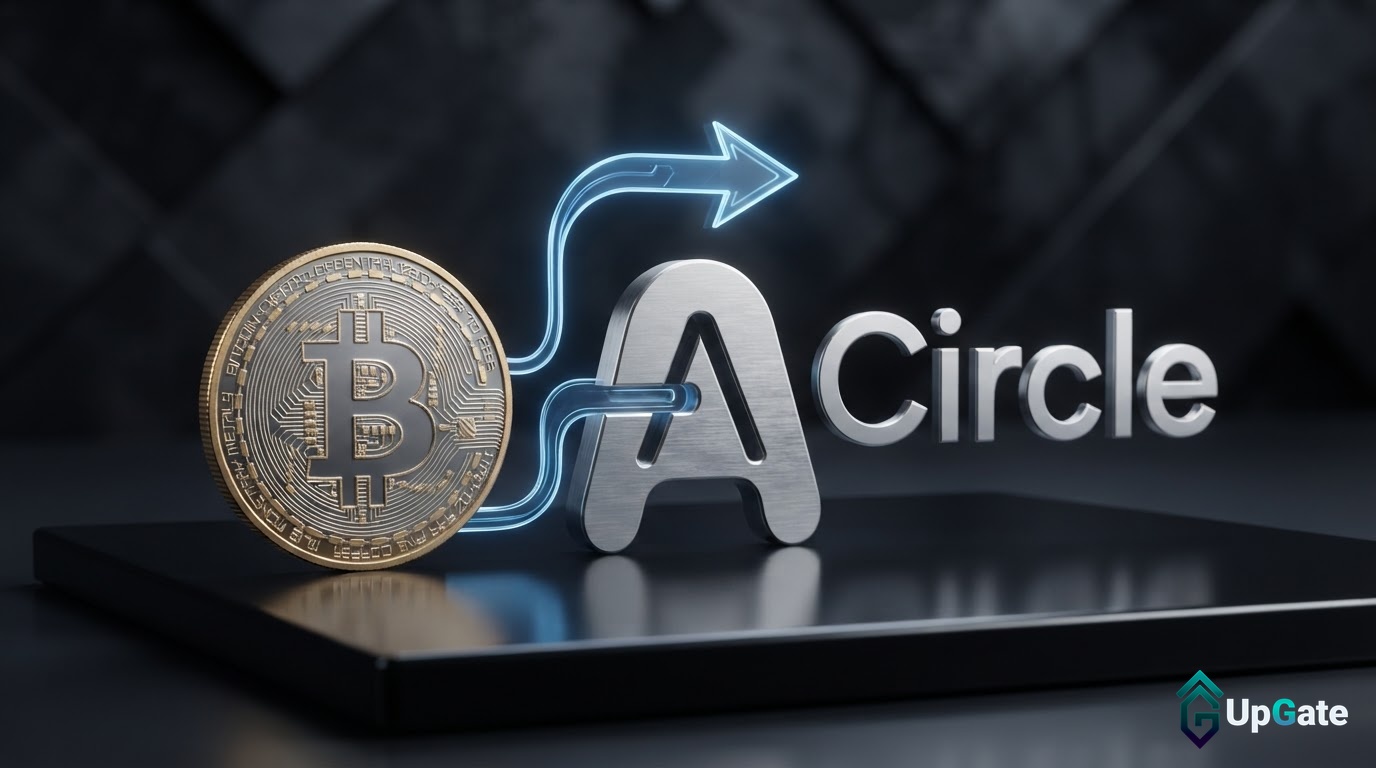
    Circle has integrated Aave as a second lending protocol within its Digital Asset-Backed Borrowing (DABB) service, enabling institutional clients to borrow USDC against Bitcoin collateral. This expansion, which became operational in early October 2026, offers clients using Circle Mint more options for leveraging their digital assets.

    The DABB service, formally launched on September 21, 2026, allows eligible institutional clients to obtain liquidity without selling their Bitcoin. The process involves clients depositing Bitcoin with Circle, which mints an equivalent amount of cirBTC on a 1:1 basis. This cirBTC is backed by Bitcoin reserves held at Circle National Trust and functions as collateral for borrowing USDC, Circle’s dollar stablecoin.

    Initially, the DABB service operated exclusively with the Morpho protocol. The integration of Aave was planned from the outset but was not functional at the service’s launch. With Aave now live, clients have a choice between two distinct lending protocols for their cirBTC collateral.

    Circle serves as the custodian and token issuer, but the borrowing rates, liquidity, and liquidation procedures are governed by the third-party protocols, Aave and Morpho. Customer positions are managed within smart wallets they control, adhering to each protocol’s specific rules.

    Early activity in the DABB service, when it utilized only Morpho, demonstrated significant engagement. Shortly after launch, Morpho’s cirBTC market saw approximately $18.86 million borrowed against a liquidity pool of $157.85 million. The liquidation loan-to-value threshold on Morpho was set at 86%. By October 2, 2026, Morpho deposits on Arc, Circle’s EVM-compatible Layer 1 blockchain, had surpassed $500 million, with the cirBTC/USDC borrowing market accounting for a substantial portion of this activity.

    The addition of Aave introduces a new competitive dynamic to the DABB service. It allows borrowers and lenders to split their activity between two protocols, potentially fostering competition and enabling diversified strategies. However, borrowers engaging with Aave will need to familiarize themselves with that protocol’s specific parameters and liquidation thresholds, which may differ from those on Morpho.

    The service has limitations, notably excluding customers based in New York. This restriction impacts the potential reach of the service, particularly for major US financial institutions located in that region.

    Details regarding the specific parameters and liquidation thresholds for Aave’s cirBTC/USDC market are yet to be fully disclosed. The exact date beyond ‘early October 2026’ when the Aave integration became fully functional also remains unspecified.

    Why This Matters

    The materials describe a narrow update: Circle has added Aave as a second lending protocol for its Digital Asset-Backed Borrowing (DABB) service, which allows institutional clients to borrow USDC against Bitcoin collateral tokenized as cirBTC. The specific parameters and liquidation thresholds for Aave’s cirBTC/USDC market.

    Broader Context

    Source materials place the factual news in this context: Circle has added Aave as a lending option inside its Bitcoin-backed borrowing service for Circle Mint clients, according to The Defiant.